A real-life story · Seville, Spain, 2010
Emilio Carrillo’s near-death experience
In November 2010, Emilio Carrillo, an economist and former deputy mayor of Seville, was admitted to the ICU with an infarction in one lung. He later said he left his body, saw his parents, who had already died, and met Christ, who asked him to go back. He also said that among the dead he saw his aunt María, whom he believed to be alive. According to Carrillo, the aunt had died that same day.
Carrillo has described his experience in books and in talks with millions of views. For him, his aunt María is the proof that he did not imagine his experience. A death notice published the next day confirms that a 101-year-old woman, who shared Carrillo’s second surname, died in Seville that same day. In Spain, everyone has two surnames. We tell it step by step and then look at what can be checked. If you only want the evidence, skip straight to what can be checked. Did Carrillo know his aunt had died before anyone told him?
Step 1
November 7, 2010 · Near Seville · Told by Emilio Carrillo and his blog
Carrillo falls on his way down a hill and breaks his fibula
Emilio Carrillo was 52. He was an economist and had been a university lecturer. He was a Socialist city councilor in Seville from 1999, and deputy mayor for urban planning until 2008. In 2010 he worked for the Seville Provincial Council.
Since 2008 he had also been giving talks on spirituality in Seville, and he wrote every day on his blog, “El Cielo en la Tierra” [Heaven on Earth]. He says that before 2010 he knew nothing about near-death experiences.
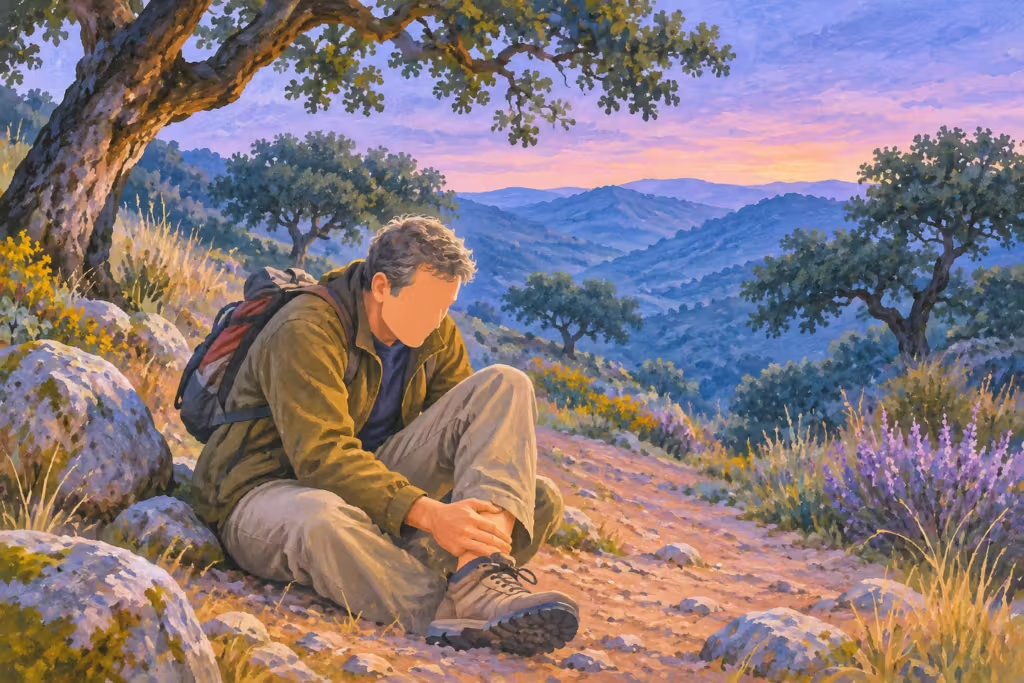
He fell on his way down a hill in the early hours of Sunday, November 7, 2010. He broke his fibula, one of the bones of the leg. He wrote about it on his blog nine days later. He said it had been a silly fall and that he would give his next talks in a wheelchair.
Three weeks later, the broken leg put him in the ICU.
Step 2
November 26 to 29, 2010 · Critically ill · Told by Carrillo and the Seville press
A thrombosis causes an infarction in one lung, and he is admitted to the ICU
According to Carrillo, on Friday, November 26, the fracture caused a thrombosis. A thrombosis is when a clot blocks a blood vessel. That clot reached one of his lungs and caused a pulmonary infarction. At first, he says, it was wrongly diagnosed as pneumonia.
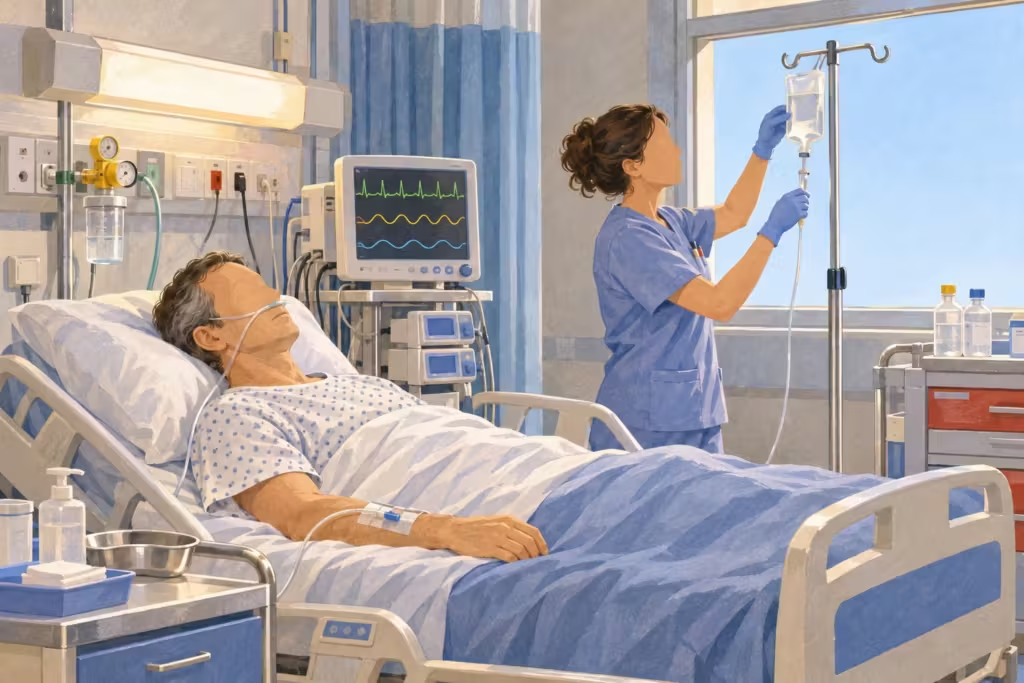
In the early hours of Monday, November 29, Carrillo went to the Sagrado Corazón clinic in Seville. He had a sharp pain in his side and was coughing up blood. That is how the Seville press reported it the next day, based on what people close to him said. According to those reports, he walked in, accompanied by his family, and was admitted to the ICU.
Carrillo says he entered the ICU in a critical state, with more clots in his leg. But in his talks Carrillo places his arrival at the emergency room or the ICU later than the press does. He gives times ranging from eleven in the morning to half past one in the afternoon.
Carrillo says that, that afternoon, he left his body.
Step 3
Afternoon of November 29, 2010 · In the ICU · Carrillo’s account
Carrillo says he sits up above his body and sees his whole life at once
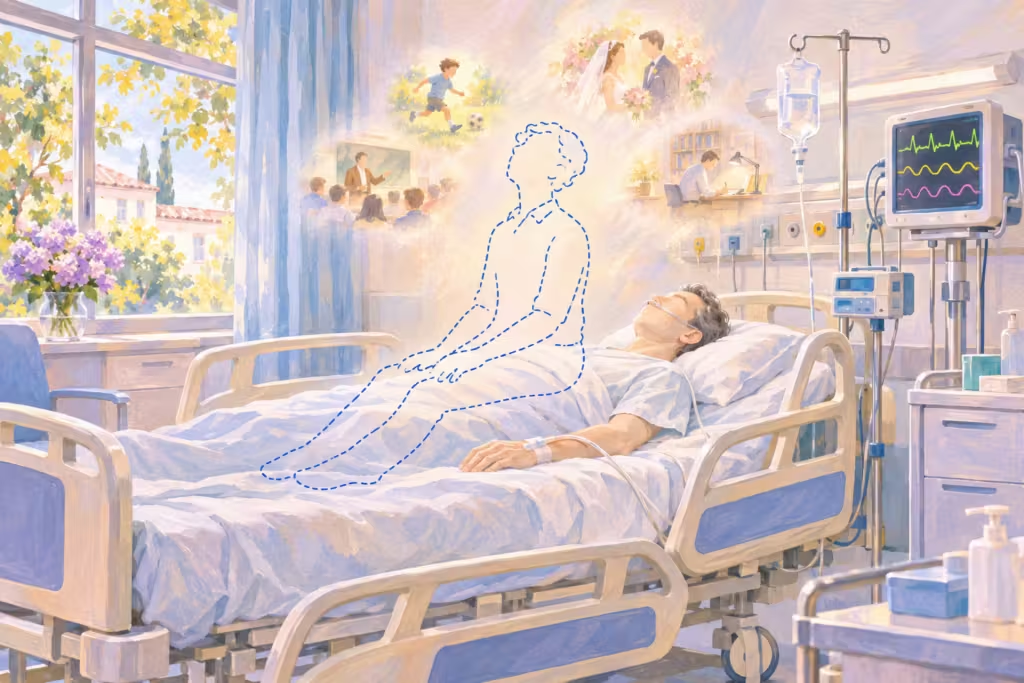
His body was lying face up on the ICU bed. Suddenly, Carrillo felt himself sit up. It was as if he were sitting on top of his body, and he could see that body lying still on the bed.
Right away he saw his whole life. It was not a summary. It was all 52 years, without gaps, from his birth to that moment. And he saw them all at the same time, in an instant. He compares it to swallowing a chip shaped like a pill that lets you see everything at once.
He says he understood then that there had been no mistakes in his life.
Then he saw that he was not alone.
Step 4
During the same experience · Carrillo’s account
Carrillo says he sees his dead parents and, among his mother’s brothers and sisters, his aunt María, whom he believed to be alive
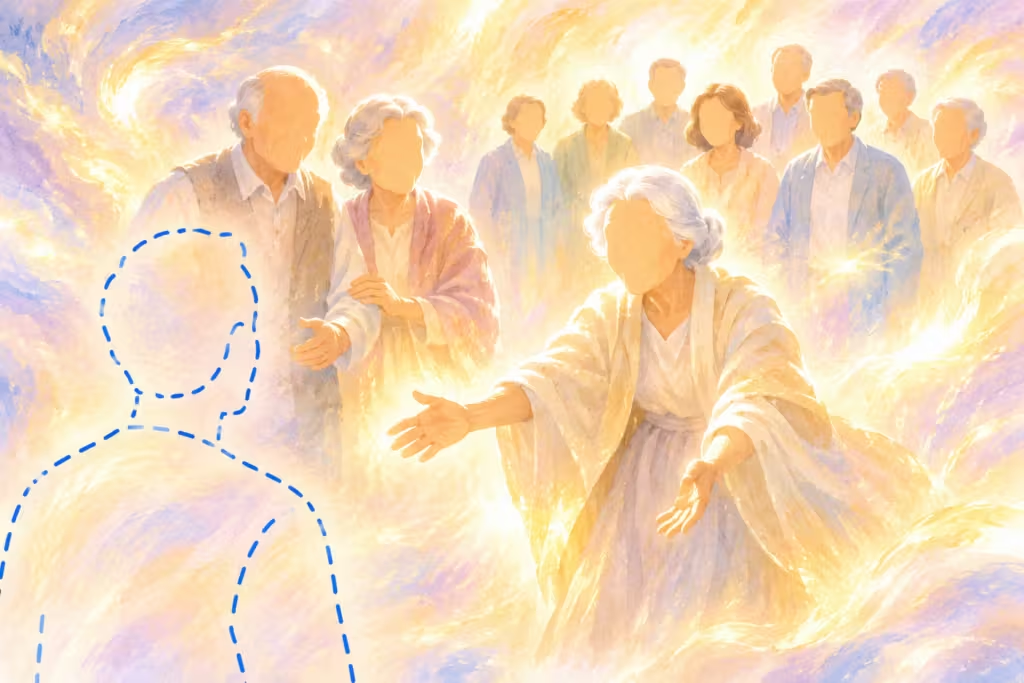
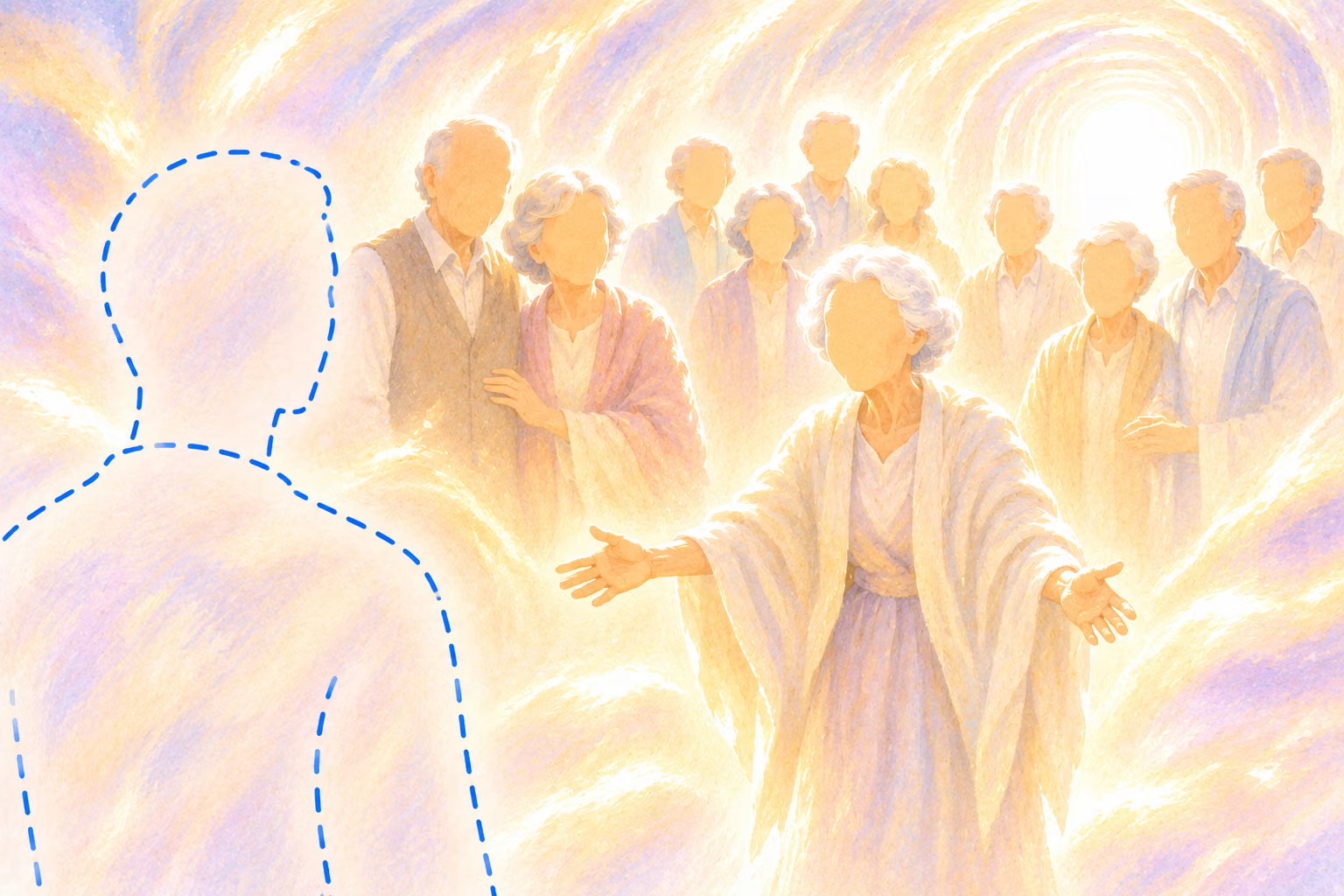
First he saw bright white lights around him. Little by little, they took on the appearance of loved ones who had already died. Carrillo did not see them in bodily form. He recognized them by something he compares to a fragrance.
His parents were there. They gave him a deep sense of peace. Without words, they asked him if he was all right.
A little farther away were his mother’s brothers and sisters, who had also died. His mother was the youngest of them all. Carrillo was surprised to see them there, because he had hardly had anything to do with them in life.
And among them was his aunt María. According to Carrillo, his aunt was 101, had never been ill, and was alive and in great shape. Carrillo didn’t understand what she was doing there.
Then a tunnel of light appeared.
Step 5
During the same experience · Carrillo’s account
Carrillo says he meets Christ, who asks him whether he would be at peace if he went back
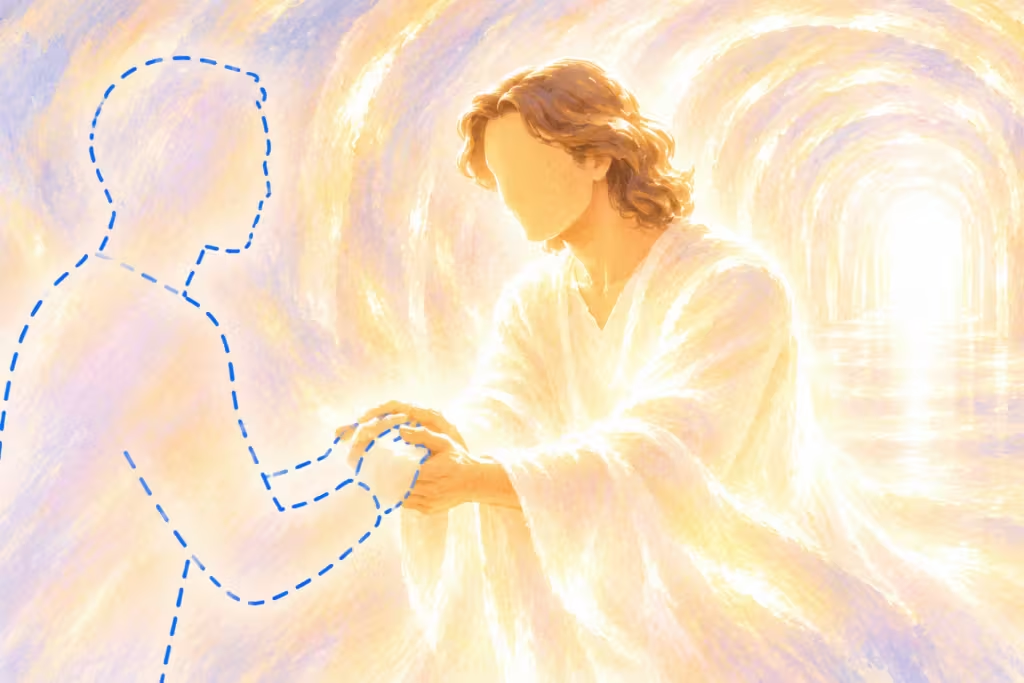
The tunnel opened in front of him, horizontal, with no slope. Going into it was like walking on. The light was very bright and almost dazzling, but it had no color.
Before entering the tunnel, Carrillo saw a presence in the form of Jesus of Nazareth. It had a body of white light and short brown hair that fell to its shoulders. Its face was mature and young at the same time. He says this presence held out its hands to him and that they laced their fingers together.
Carrillo calls this presence a “Christic or Buddhic” energy (translated from Spanish), that of Christ or of the Buddha. He says that he saw it in the form of Christ.
In a 2025 talk, he recounted what they said to each other. Christ asked him whether he was at peace and in harmony, and he said yes. Then Christ asked whether he would also be at peace if he went back. Carrillo said yes again. And Christ answered:
“Well then, go back.”
At that moment he found himself back in the ICU bed. He says the experience lasted almost two hours. The earliest start time we have found is in a talk from November 2013. There he says it began “at around half past four in the afternoon.” Later he would say it lasted from half past four to half past six, and later still, from four to six. His 2018 book says something different. He writes that his condition was critical “twenty-four hours after being admitted to the ICU,” yet he still dates the account to November 29.
Carrillo says the first person he spoke to was his wife.
Step 6
After the experience · Carrillo’s account
Carrillo says he tells his wife about aunt María, and her face changes
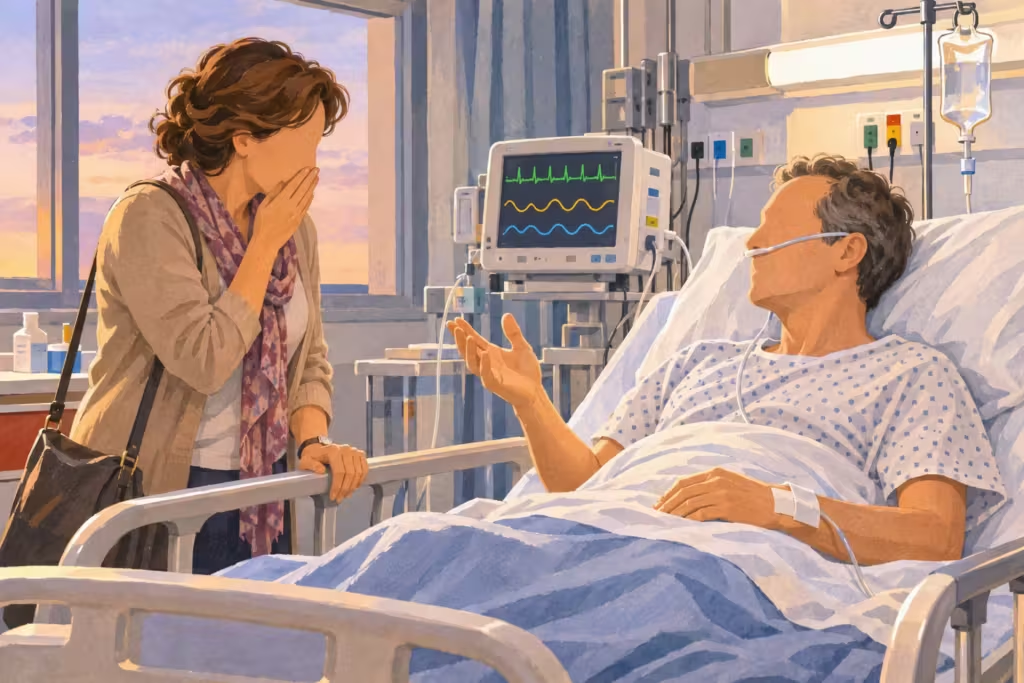
Carrillo says he told his wife, María Jesús, about the experience and that she listened without quite believing it. Until he told her that his aunt María, whom he believed to be alive, was among the dead.
According to Carrillo, María Jesús’s face changed. She told him that aunt María had died that same day, at two in the afternoon. Carrillo says there was no way he could have known. According to the times he gives, he had been in the ICU since the morning, and the aunt had died two and a half hours before the experience began.
Carrillo does not always place that conversation at the same moment. He says it was right after the experience ended, when his wife was allowed into the ICU. That is how he tells it in October 2014 and in his 2015 book. But in two talks in 2016, he says it was when he was already beginning to recover. In one of them he adds that his wife didn’t want to tell him. She didn’t want to upset him while he was so ill. In those two talks he gives another time of death, a quarter past two.
Every time he recounts that conversation, he speaks about the aunt first, and she tells him afterward that the aunt has died.
The aunt’s death was in the newspaper the next day.
Step 7
November 30, 2010 · In the ICU · Told by the Seville press and a death notice
A death notice announces that María Benito Martínez has died at 101, and the press says Carrillo has been conscious
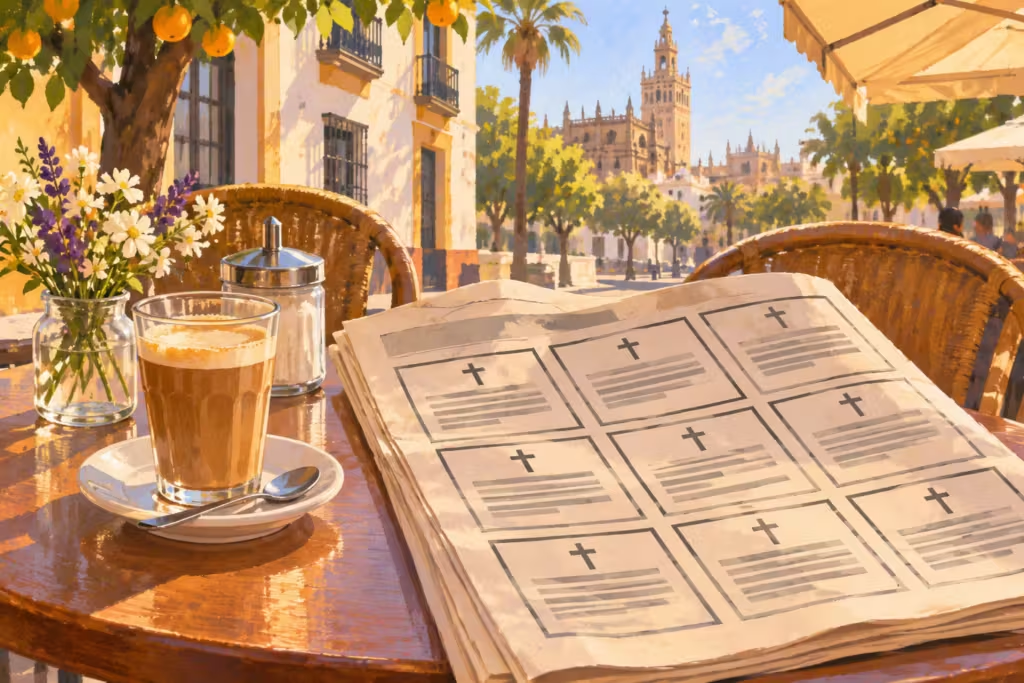
On November 30, 2010, the newspaper ABC de Sevilla printed, on its death notices page, the notice for Doña María Benito Martínez. It says she died in Seville on November 29, 2010, at age 101. It was placed by her nephews and nieces and her great-nephews and great-nieces. The mass was held on the morning of the 30th, at a funeral home in Seville.
Benito is Carrillo’s second surname. The age and the day match those of his aunt María. And the notice mentions no children, only nephews and nieces, which fits what Carrillo says of his aunt, who never had children. Carrillo has never given his aunt’s surnames, so we can’t be sure it is her. Everything suggests it is. The notice does not give the time of death.
That same day, the news agency Europa Press reported that Carrillo had been admitted. The story ran in Diario de Sevilla and El Correo de Andalucía, and in ABC the following day. According to the people close to him who spoke to the agency, Carrillo had been conscious the whole time and was as talkative as ever. Those reports say nothing about an experience.
On December 10, after twelve days in the clinic, Carrillo went home.
Step 8
December 2010 to 2013 · Told by Carrillo’s blog, talks, and books
Carrillo describes his experience in talks and in a book, without mentioning the aunt yet
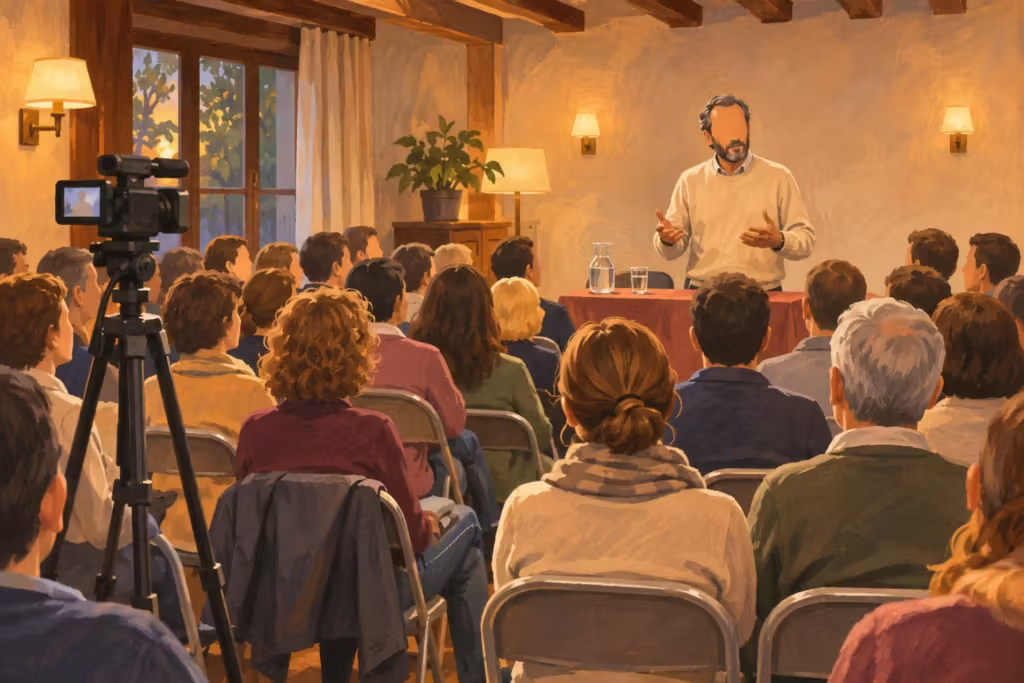
On December 11, 2010, María Jesús wrote on her husband’s blog. She said he had been discharged the previous afternoon, after twelve days in the hospital, and that he had been in a very serious condition. She added that he would later share some “recent experiences.” On December 30, Carrillo wrote on the blog about his illness. He said nothing about the experience or about anyone in the family dying.
In October 2011, in a talk in Lleida, Carrillo said that at one point he had been dead “from a clinical point of view.” He spoke about his experience between 2011 and September 2014, in recorded talks in Lleida, Málaga, Tarifa, Barcelona, Valencia, Linares, and Andorra. We have reviewed ten of those recordings, and he does not mention the aunt in any of them.
At the end of 2012, he published a free book, “Amor: Vida y Consciencia” [Love: Life and Consciousness], with a chapter on his experience. He describes the tunnel, what Christ looked like, and why he came back. He speaks of the dead people who were with him in general terms, as grandparents, parents, or siblings, and he does not name the aunt. In January 2014 he published the same text on his blog.
The aunt appeared for the first time almost four years after the experience.
Step 9
October 2014 to today · Told by Carrillo’s talks and books
Carrillo first speaks about aunt María in a 2014 talk, and presents her as his proof
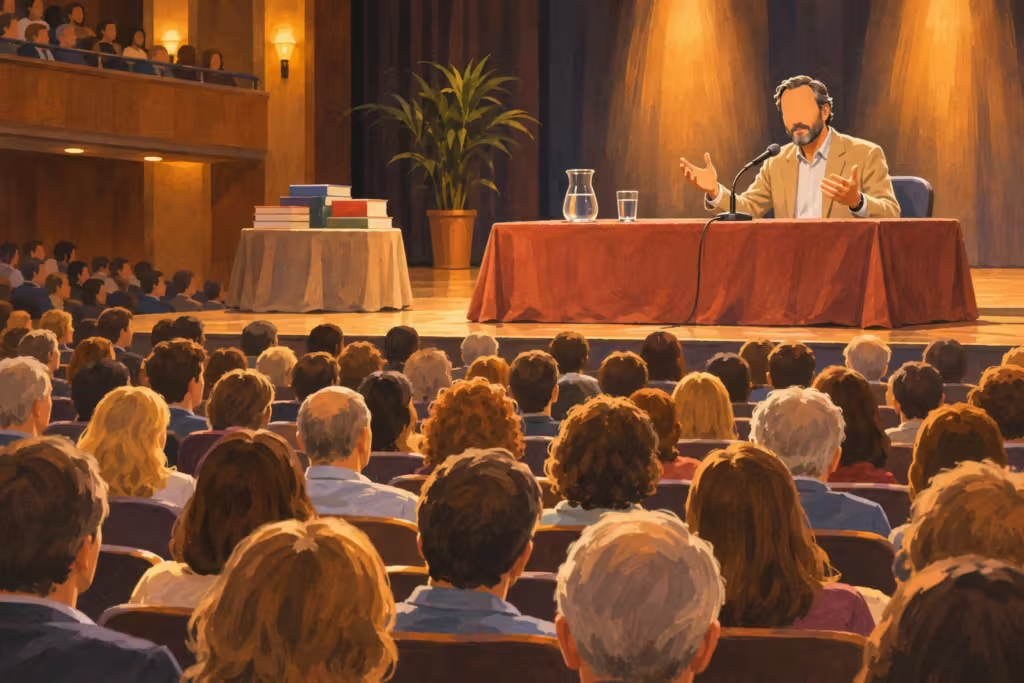
In October 2014, Carrillo gave a talk at a conference on life after death in Albacete. There he told the whole story of aunt María. He gave her name, her age of 101, the time of two in the afternoon, and his wife’s reaction. It is the first time we have found the aunt in anything he has said or written.
A year later, in 2015, he told it the same way in his book “El tránsito” [The passage]. There he presents it as the fact that cleared up his doubts about what he had been through. In 2016 he told it in several talks. One of them, in Valencia, now has almost a million and a half views.
Over the years, some details have changed. In 2016 and in 2018 he said the aunt was 102, not 101. In 2016 he gave the time as a quarter past two. And in a 2016 feature in El Español, he calls her “one of my mother’s sisters,” with no name and no time. There he says the aunt died while he was in the ICU, and that he was told afterward. In several recent talks he no longer mentions her.
Today Carrillo is a writer and gives talks on spirituality. He says his experience changed his life.
One question remains: did Carrillo know his aunt had died before anyone told him?
Do you have to be close to death to have an NDE?
In Carrillo’s case, we don’t know what state his body was in during the experience, because he has not published his medical records. That is why a study that checked other people’s medical records, to see whether they had really been close to death, is useful.
In 1990, three researchers at the University of Virginia reviewed the medical records of 58 people who described an NDE. Most of them believed they had been close to death.
| According to their medical records | People | Saw a very bright light |
|---|---|---|
| Had really been close to death | 28 | 21 |
| Had not been close to death | 30 | 12 |
What these figures don’t tell you
- The experiences were very similar in both groups. The same share of people in both groups said they had left their body. The tunnel and believing they were dying came up a little more often among those who had really been close to death, but the difference was so small it could have been chance. Only two things stood out among those who had really been close to death. They more often saw a bright light, and they more often said they were thinking more clearly.
- These are people who wrote to the university on their own. Half of them did so seven years or more after their experience.
So an NDE alone doesn’t tell you how close someone came to dying. Without his medical records, there is no way to measure how ill Carrillo was. His case stands out for what he said about his aunt María.
Frequently asked questions
What did Emilio Carrillo see in his near-death experience?
Emilio Carrillo said that, in the ICU in November 2010, he left his body and saw his whole life at once. Then he saw his parents and other relatives who had died, a tunnel of light, and Christ, who asked him to go back. Among those relatives was his aunt María, whom he believed to be alive. According to Carrillo, the aunt had died that same day.
Who was Emilio Carrillo’s aunt María?
According to Carrillo, she was one of his mother’s sisters, she was 101, and she had never been ill. A death notice in ABC de Sevilla from November 30, 2010, announces the death of María Benito Martínez, age 101. She died in Seville on the 29th. Benito is Carrillo’s second surname. Here we explain what can be checked.
Was Emilio Carrillo clinically dead?
It is not known. Carrillo said in 2011 that at one point he had been dead “from a clinical point of view,” and in his recent talks he speaks of losing his vital signs. The next day’s press said, according to people close to him, that he had been conscious the whole time. Carrillo has not published his medical records.
Where does Emilio Carrillo describe his near-death experience?
He describes it in his book “El tránsito” [The passage], from 2015, and in “¿Qué hay después de la muerte?” [What comes after death?], from 2018. He also describes it in many recorded talks since 2011. The most watched is one from Valencia, in 2016. The oldest written version is a chapter of his free book “Amor: Vida y Consciencia” [Love: Life and Consciousness], from 2012.
Where this story comes from
The books
- Emilio Carrillo, El tránsito. Vida más allá de la vida y experiencias cercanas a la muerte [The passage: Life beyond life and near-death experiences] (Sirio, 2015), in SpanishBuy the book
- Emilio Carrillo, Amor: Vida y Consciencia [Love: Life and consciousness] (self-published, free, 2012), chapter 7, in Spanish
- Emilio Carrillo and Francesc Prims, ¿Qué hay después de la muerte? [What comes after death?] (Martínez Roca, 2018), in SpanishBuy the book
- Xavier Melo and Luján Comas, Vida más allá de la vida [Life beyond life] (Kairós, 2025), chapter with Carrillo’s account, in SpanishBuy the book
Case documents
- Death notice for Doña María Benito Martínez, ABC de Sevilla, November 30, 2010, page 72, in SpanishView the page
- Europa Press, “El ex concejal Emilio Carrillo entra en la UCI” [Former councilor Emilio Carrillo admitted to the ICU], in El Correo de Andalucía, November 30, 2010, in SpanishRead
- “Ingresado en la UCI el ex concejal Emilio Carrillo por una complicación pulmonar” [Former councilor Emilio Carrillo admitted to the ICU with a lung complication], Diario de Sevilla, November 30, 2010, in SpanishRead
- “Emilio Carrillo, ingresado en la UCI por una trombosis en el pulmón” [Emilio Carrillo admitted to the ICU with a thrombosis in the lung], ABC de Sevilla, December 1, 2010, in SpanishRead
- María Jesús, “Evolución médica de Emilio: gracias a tod@s” [Emilio’s medical progress: thank you all], on Emilio Carrillo’s blog, December 11, 2010, in SpanishRead
- Emilio Carrillo, “Querid@s amig@s…” [Dear friends…], on his blog, December 30, 2010, in SpanishRead
Talks and interviews
- Emilio Carrillo, “El tránsito y las experiencias cercanas a la muerte” [The passage and near-death experiences], 7th Congreso Vida después de la Vida, Albacete, October 2014. Mindalia channel, in SpanishWatch on YouTube
- Emilio Carrillo, “¿Qué te espera cuando vivas eso que llamas muerte?” [What awaits you when you live what you call death?], Valencia, May 2016. Tú Mismo channel, in SpanishWatch on YouTube
- Emilio Carrillo, “La muerte y el más allá explicado por Emilio Carrillo tras su ECM” [Death and the beyond, explained by Emilio Carrillo after his NDE], 2025. Mindalia channel, in SpanishWatch on YouTube
- Feature “10 experiencias cercanas a la muerte” [10 near-death experiences], El Español, October 30, 2016, in SpanishRead
Learn more
- What is a near-death experience?Read
- What does science say about near-death experiences?Read
- How we check each storyRead
Our archive
- Our reading of his 2012 and 2015 books, his blog from 2010 to 2014, the 2010 press, and 28 recordings of his talks from 2011 to 2026, and the case’s score on our five criteria, as of November 1, 2026
Keep reading
Bogotá, 2021
Andrés Arévalo
Andrés Arévalo says that while he was in a COVID coma he dreamed Trump would be president again. Trump returned in 2025. There is nothing to show that Andrés told anyone about his dream before it happened.
Mexico City, 2001
José Manuel Ramos Montalvo
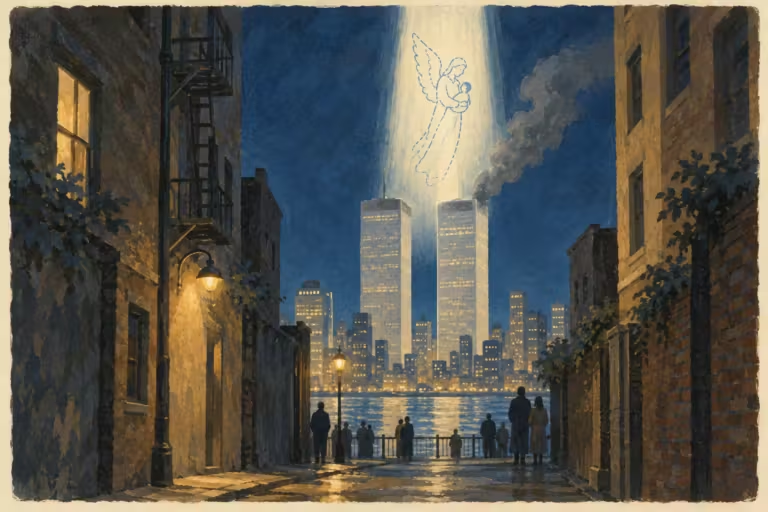
He says he was in a coma after being hit with a rock and that he saw the Twin Towers burn on September 11. The attack is public record. Only he says he knew about it before anyone told him.
Hong Kong, 2006
Anita Moorjani
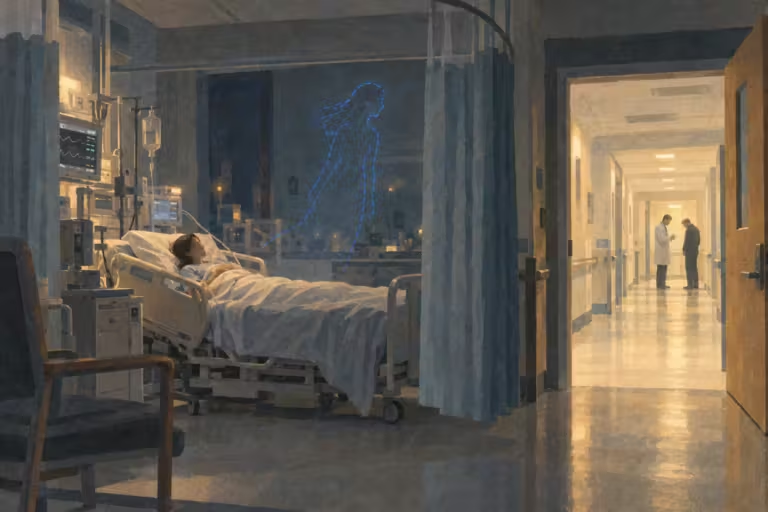
Anita Moorjani was in a coma from cancer. She says she heard a doctor in the hallway tell her husband she would not survive the night. The coma is in her medical records. The doctor’s words appear only in Anita’s own account.
Reincarnation: The top 5 people who remember past lives
We asked them the same five questions as this story. A 32-page PDF, free in your inbox.
Check your email
We have sent you an email. Open it and press the button to confirm. If you cannot see it, check your spam folder.