A real-life story · Los Angeles, California, United States, 2010
Rajiv Parti’s near-death experience
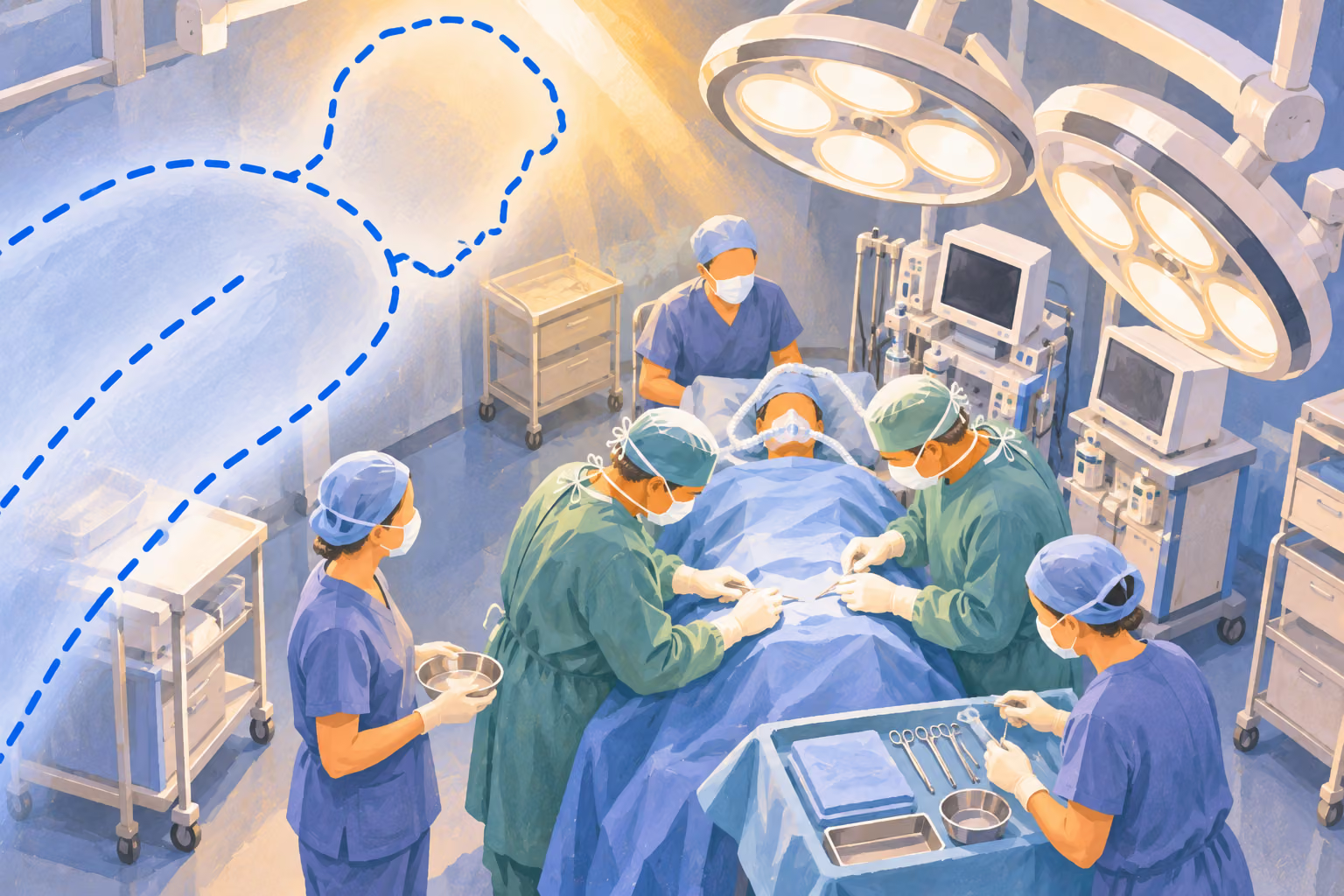
Rajiv Parti, a doctor born in India, was the chief of anesthesiology at a hospital in California. In December 2010 he was taken to another hospital, in Los Angeles, with a very serious infection. He had emergency surgery under general anesthesia. He later said he had watched the operation from the ceiling and had heard the anesthesiologist tell a joke. He also said he saw his mother and his sister in New Delhi and met a being of light.
Rajiv was no ordinary patient. He had been an anesthesiologist for many years, and he knew what a person can and can’t hear under anesthesia. His story also has details that, in principle, can be checked. One is the joke he says he heard. Another is the scene he says he saw at his mother’s home, thousands of miles away. We tell it step by step and then look at what can be checked. If you only want the evidence, skip straight to what can be checked. Did Rajiv really hear that joke from the ceiling?
Step 1
2008 to 2010 · Bakersfield, California · Rajiv’s account
A successful anesthesiologist gets cancer and becomes hooked on painkillers

Rajiv Parti was born in India and studied medicine in New Delhi. He moved to the United States, became an anesthesiologist, and ended up in Bakersfield, a city in California about 100 miles from Los Angeles. There he became the chief of anesthesiology at Bakersfield Heart Hospital. He was married to Arpana, a dentist, and they had three children.
He made a lot of money. He lived in a huge house next to a golf course and owned a Mercedes, a Porsche, and a Hummer. He himself says that back then he measured his life by what he owned.
In 2008 he was diagnosed with prostate cancer. He had surgery, but it left him incontinent and in pain. Over the next two years he went through several more operations. He took strong painkillers to cope with the pain, and he ended up hooked on them and depressed.
On December 13, 2010, at the UCLA hospital in Los Angeles, he was fitted with an artificial sphincter. It is a device placed inside the body to help control urination.
A few days later, the fever began.
Step 2
Night of December 23, 2010 · From Bakersfield to Los Angeles · Rajiv’s account
With a fever over 104°F, his wife drives him to Los Angeles at night
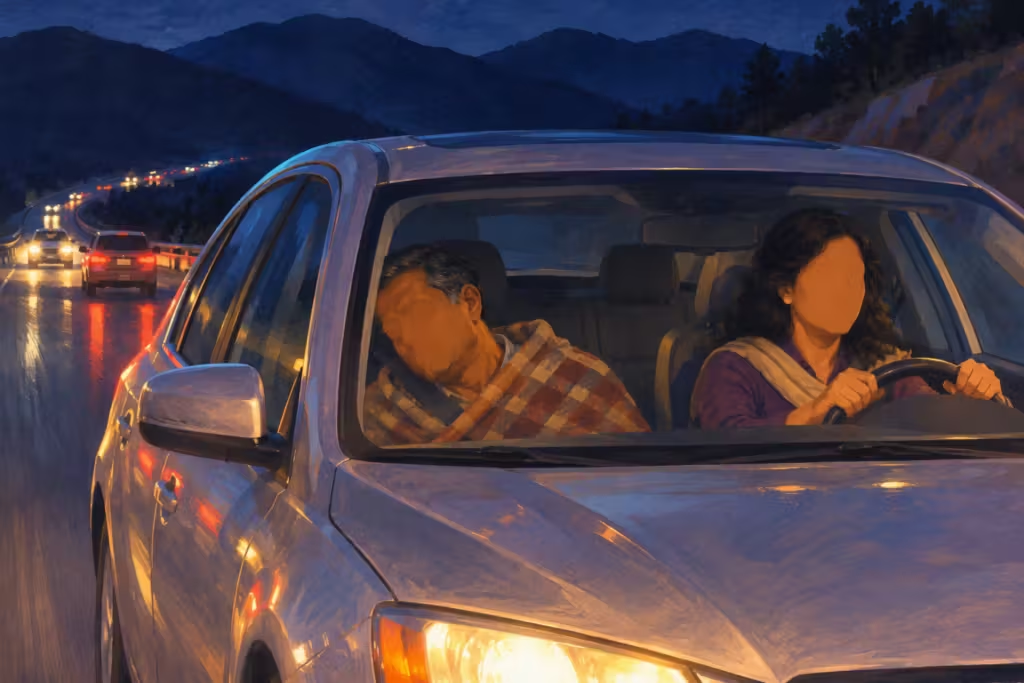
The antibiotics weren’t working. On the night before Christmas Eve, Rajiv lay shivering in bed even though he was under blankets. Arpana took his temperature, and it read 105°F, over 40°C. The area of the operation was red and swollen.
Arpana called the hospital in Los Angeles, and the surgeon told her to come right away. Their children helped him down the stairs and into the car. Arpana drove through the night on the freeway to Los Angeles, crying.
In the emergency room, they told him he was full of infection.
Step 3
December 24–25 · In an operating room at the hospital · Rajiv’s account
He has emergency surgery to clear the infection
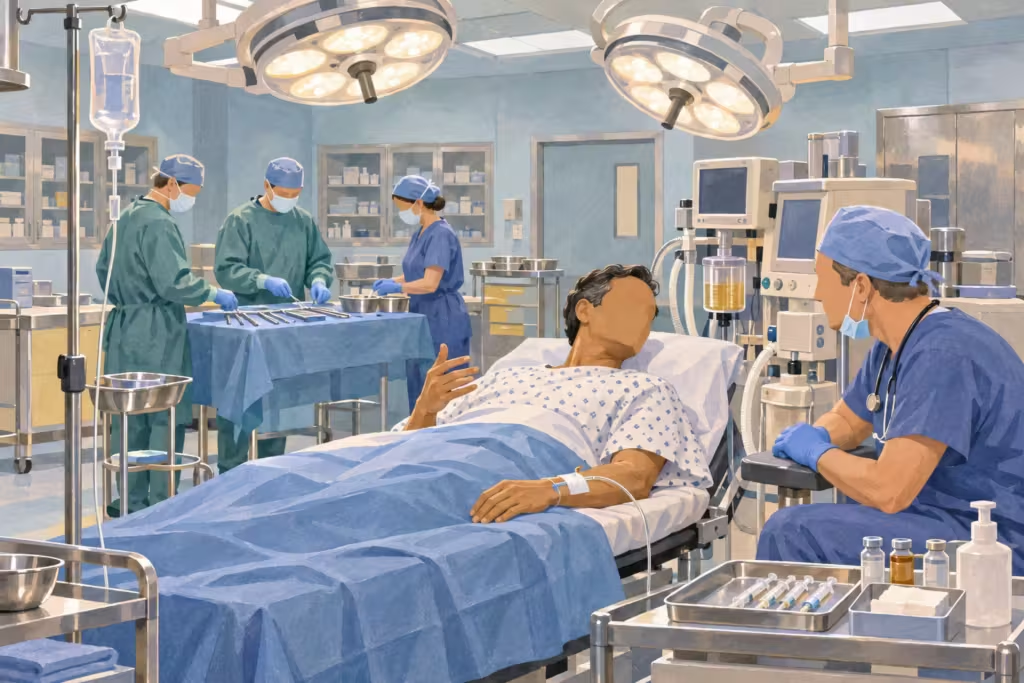
An ultrasound showed that the infection had spread through the area of the operation. He needed emergency surgery to clean it out and remove the device.
In the operating room, Rajiv told the anesthesiologist that he was an anesthesiologist too and asked what he was going to give him. The anesthesiologist said, “The usual.” Rajiv took that to mean the same two drugs he used to put his own patients to sleep.
He was put under general anesthesia with a breathing tube. The surgeons opened several incisions to drain the pus, and another surgeon removed the sphincter.
Rajiv says that, at that moment, he began to rise.
Step 4
During the operation · In the operating room · Rajiv’s account
Rajiv says he watches his operation from the ceiling and hears a joke
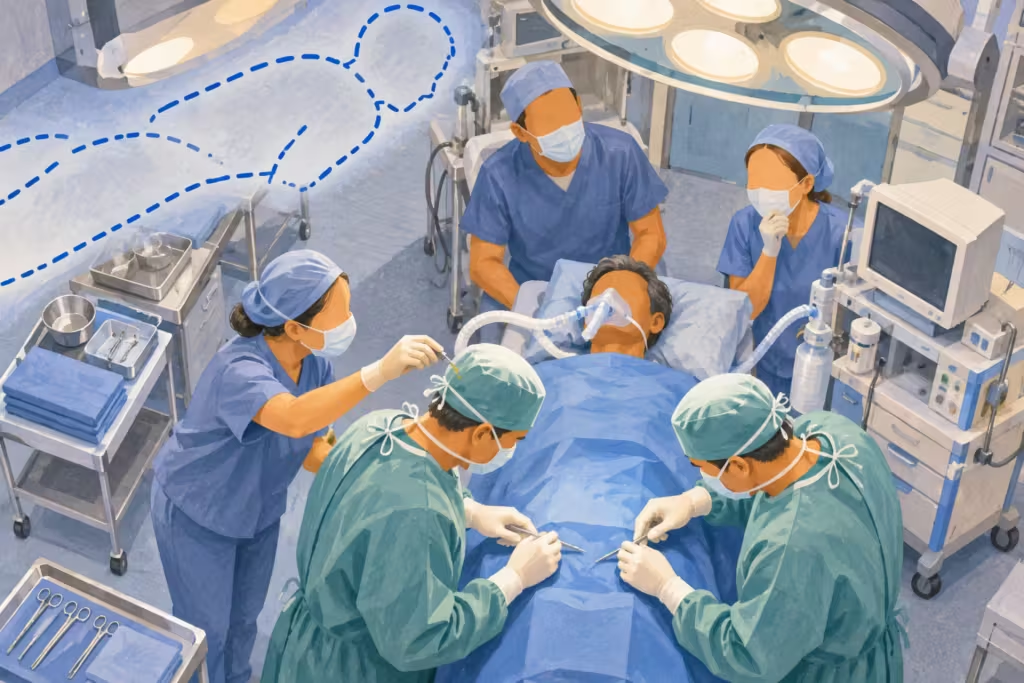
Rajiv says he rose, as if in an elevator, up to the ceiling of the operating room. From there he saw his body asleep and the surgeons working on his abdomen. It smelled terrible, because of the pus.
He says a nurse put eucalyptus oil on the surgeons’ masks to cover the smell. And he says the anesthesiologist, putting up with the smell, told a dirty joke. Everyone laughed, and so did he, from the ceiling. Rajiv has never written the joke down, but he says he learned it by heart.
From the ceiling, he says, he wondered as an anesthesiologist whether they had given him ketamine, an anesthetic that can cause strange sensations.
Then he saw another scene, far away.
Step 5
During the operation · In New Delhi, India · Rajiv’s account
Rajiv says he sees his mother and his sister at their home in New Delhi
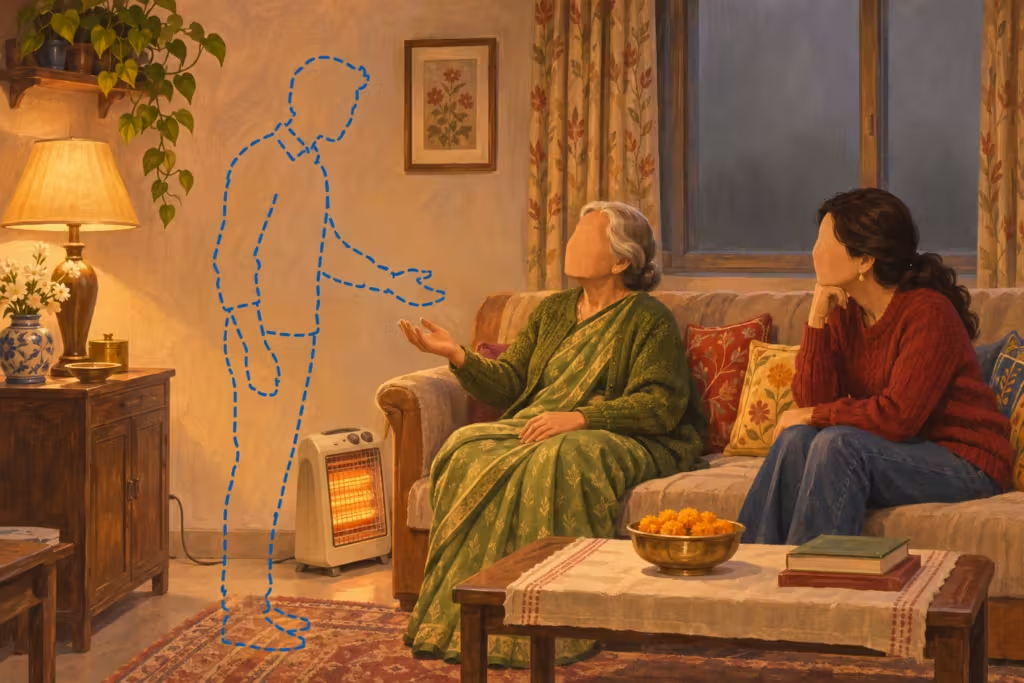
Rajiv says that, while still seeing the operating room, he also saw the living room of his family’s home in New Delhi. His mother and one of his sisters were sitting on a sofa. It was night there, and it was cold.
In the book he published in 2016 he gives more details. His mother was wearing a green sari and a green sweater. His sister was wearing jeans and a red sweater. He says he called out to his mother and that, when he touched her, his hand went right through her. They were talking about what to have for dinner, and his mother suggested lentil soup. Then they talked about the pollution in the city and about a friend who had bought a very fast car.
The first time he put it in writing, on his website in 2013, he told it differently. He said he heard his mother and his sister talking about dinner, which was going to be rice, vegetables, yogurt, and legumes. He said nothing about their clothes.
Then, he says, the operating room and the house disappeared.
Step 6
During the operation · Rajiv’s account
Rajiv says he reaches the edge of a kind of hell and his father pulls him away
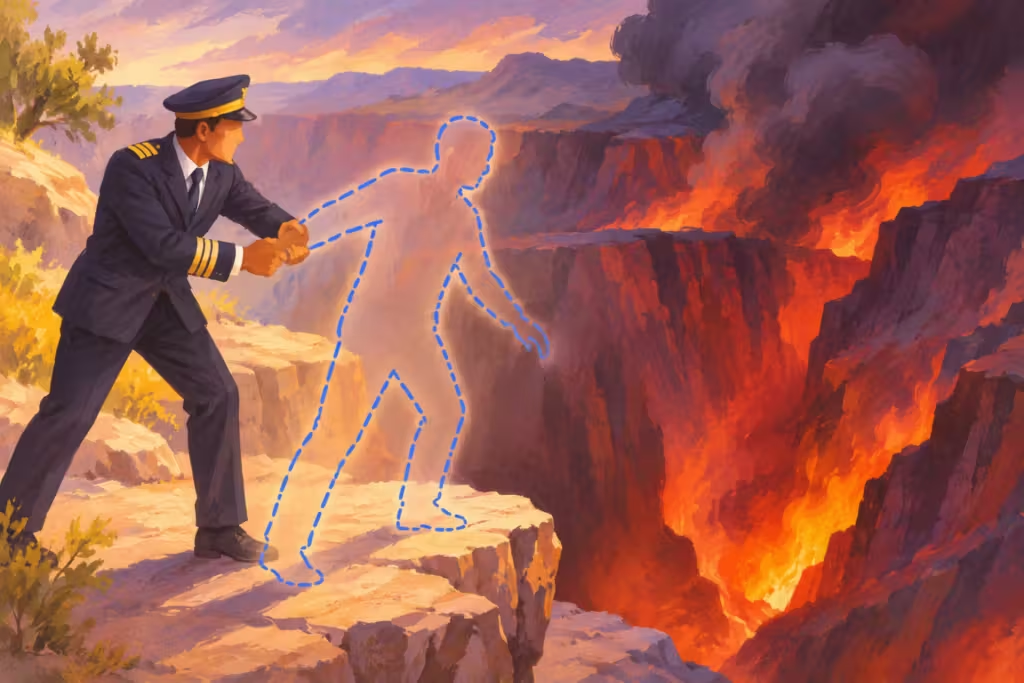
Rajiv says he came to a canyon full of fire that smelled of burning flesh. A voice told him he had lived for money and had not known how to love others. He remembered patients he had treated coldly.
Then his father appeared. He had died many years earlier. He was wearing his work uniform and looked thirty years younger. His father had been very harsh with him as a child, and Rajiv resented him for it. He says that at that moment he understood why his father had been that way. His father took his hand and led him away from the fire.
His father led him toward a tunnel.
Step 7
During the operation · Rajiv’s account
Rajiv says he sees past lives in a tunnel and meets a being of light
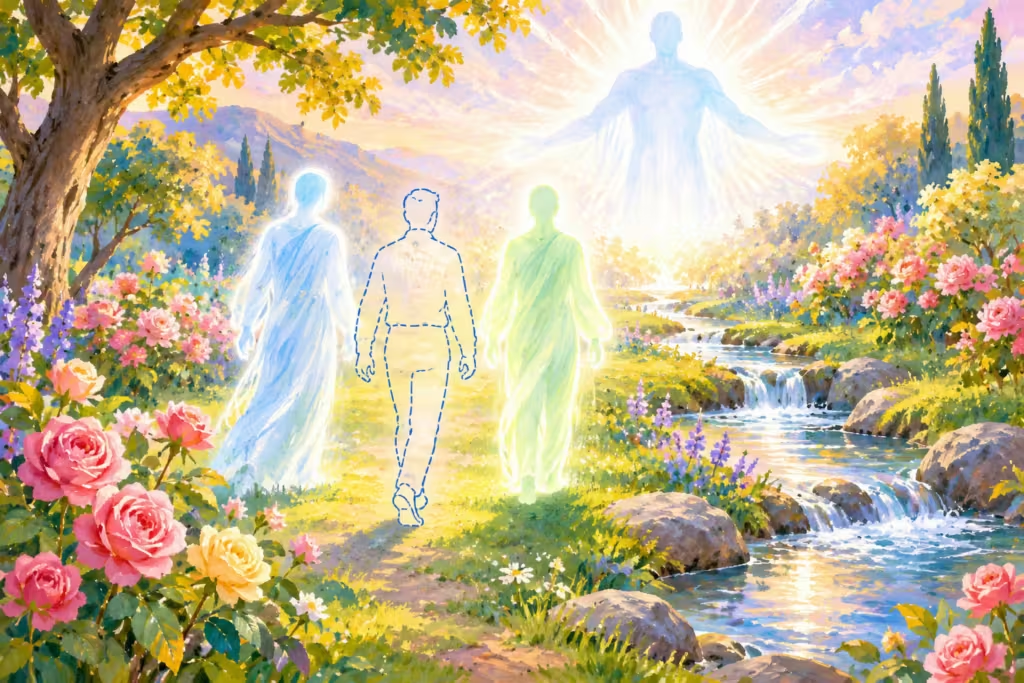
Rajiv says that in the tunnel he saw scenes from his childhood and from what he believes were past lives. In one he was a prince in India who treated the peasants badly. In another he was an opium grower in Afghanistan, addicted to the drug.
At the end of the tunnel there was a very bright light. Two beings walked with him through a meadow, and he recognized them as the archangels Michael and Raphael. Then he met a being of light. Rajiv says he didn’t know who it was, and that perhaps it was Jesus.
He says the being of light told him everything would be all right and that he was going back. It also told him his life was going to change. He would leave anesthesiology and become a “healer of the soul,” helping people with addiction, depression, and pain.
Rajiv says he fell through white clouds and opened his eyes.
Step 8
After the operation · In the recovery room · Rajiv’s account
Rajiv repeats the joke to the anesthesiologist, who blushes
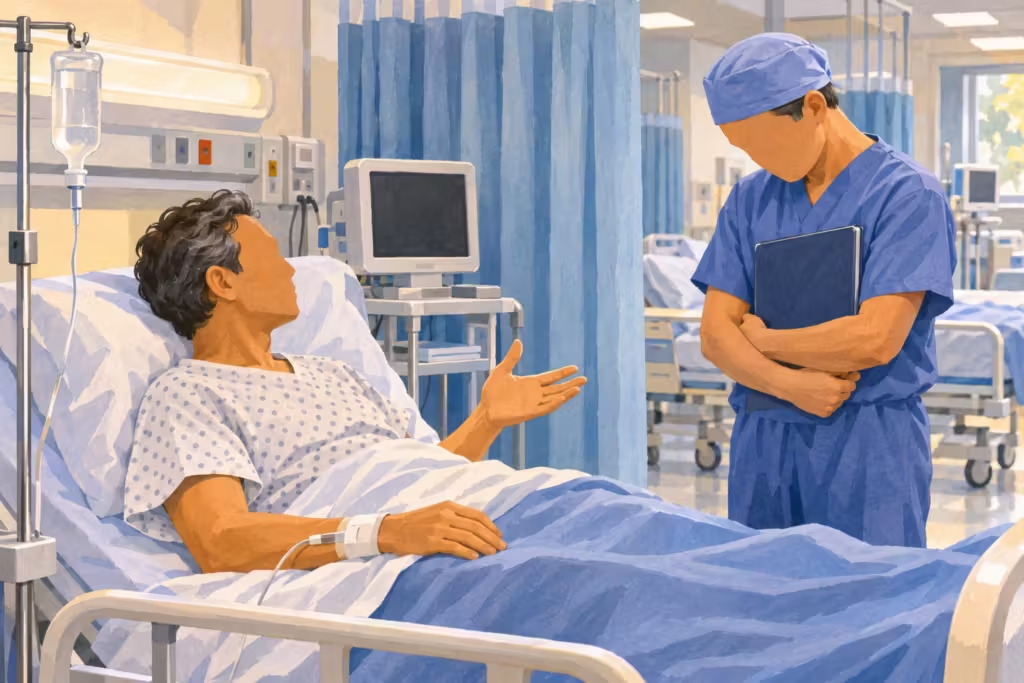
Rajiv woke up in the recovery room. The anesthesiologist came by to see him and told him the operation had been difficult. Rajiv told him he had seen him from the ceiling and had heard him tell a joke. The anesthesiologist asked him what the joke was.
Rajiv says he repeated it and the anesthesiologist blushed. Without looking him in the eye, he answered, “I must not have given you enough anesthesia.” Rajiv says he replied that no, he had given him plenty, and told him the amount he had seen him give. The anesthesiologist promised to come back and talk with him, and he never did. Rajiv has never given that anesthesiologist’s name.
When Arpana arrived, he told her everything in a rush. He says he was afraid she would think he had gone crazy. Arpana thought it had been a dream. A few days later he was discharged.
At home, he says, he began to change his life.
Step 9
The following weeks · Bakersfield · Rajiv’s account
Rajiv leaves anesthesiology, sells the house, and keeps his experience to himself

Rajiv says he traded his house for a much smaller one and his Hummer for a simple car. Little by little, he came off the painkillers. At a dinner with the hospital’s anesthesiologists, he announced that he was leaving his job.
At first he told only his family and a few friends. He says that at a conference a colleague told him these experiences were the work of the devil. From then on he decided to keep quiet for a while, and he left it out of what he wrote about health.
In 2012 he published a book on health and wellness. The foreword tells the story of the night of the fever and the emergency surgery, but not the experience. He says he left anesthesiology because, on so much medication, he could make a mistake with a patient. In another book, from 2014, he tells the story of that night again, also without the experience.
In 2013 he began telling it in public.
Step 10
2013 to today · From his website, his talks, and his book
Rajiv talks about his experience at conferences and in a book with a foreword by Raymond Moody
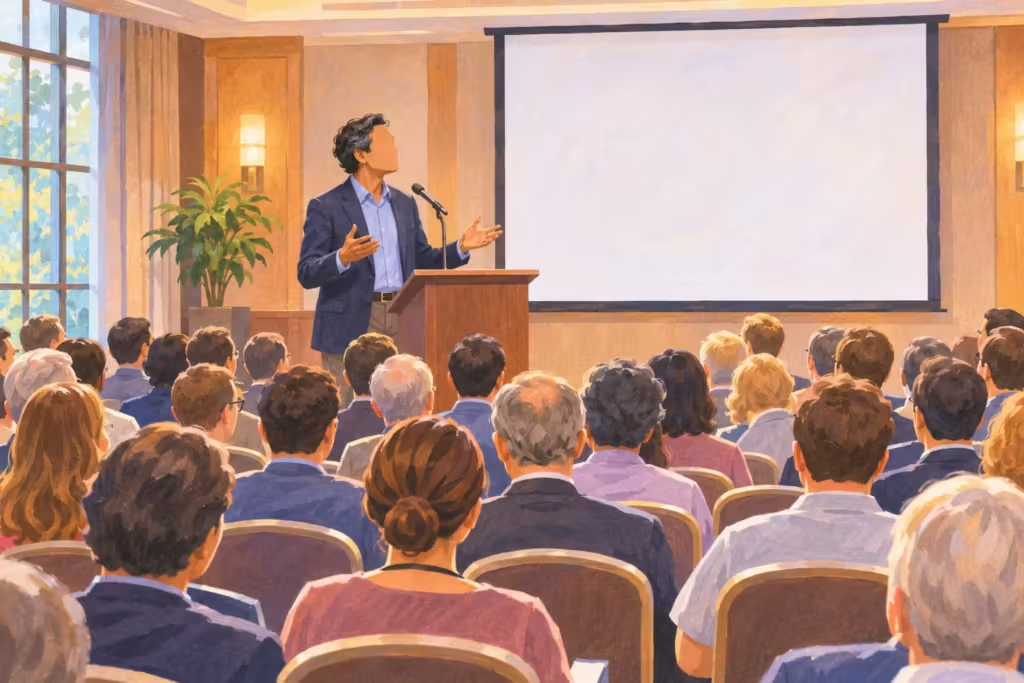
In June 2013 he published the account of his experience on his website. That same year he began speaking at conferences on near-death experiences in the United States. Since then he has given talks and worked with people who have pain and addictions.
In 2016 he published the book “Dying to Wake Up” with the writer Paul Perry. The foreword is by Raymond Moody, the author who made these experiences widely known in the 1970s. It is the most complete account.
One question remains: did Rajiv really hear that joke, and did he really see his mother and his sister?
How many people have an NDE?
Rajiv Parti is not a one-off. His heart did not stop, but the most reliable figures come from people who survive a cardiac arrest. For more than thirty years, several teams of doctors have asked them what they remember. They do it in the hospital, a few days afterward.
Picture 100 of those people:
Each dot is a person. The 18 filled-in dots are the ones who described a near-death experience. That is what the largest study found. It was done in the Netherlands in 2001, with 344 people.
The other 82 didn’t describe one. Many remember nothing of their cardiac arrest.
| Where and when | People interviewed | Described an NDE |
|---|---|---|
| England, 2001 | 63 | 6% |
| Netherlands, 2001 | 344 | 18% |
| United States, 2002 | 30 | 23% |
| United States, 2003 | 116 | 10% |
| United Kingdom, United States, and Austria, 2014 | 101 | 9% |
| Vienna, Austria, 2023 | 126 | 4% |
| United States and United Kingdom, 2023 | 28 | 21% |
What these figures don’t tell you
- Only some people are asked. In the 2014 study, 330 people survived, but only 140 could be interviewed, and 101 reached the second interview. The rest died later, were too ill, or didn’t respond.
- Most cardiac arrests are never counted. These studies run in a few hospitals for a limited time. Outside them, no one keeps track. Also, the 2003 study interviewed 1,595 cardiology patients, not just the 116 with cardiac arrest in the table, and 81 of them described an NDE from an earlier occasion. The study did not count them, because it only counted those from that hospital stay.
- Some people keep quiet. In the accounts in our archive, at least 13 people say they kept their experience to themselves for a while. They kept quiet because they weren’t believed or because they were afraid of how others would react.
- It depends on how you count. If you count any memory of the cardiac arrest, the numbers go up. If you use a strict scale, they go down. In England in 2001, 7 of 63 people remembered something. But on the scale, only the memories of 4 people qualified as an NDE.
That’s why no one knows the real figure. But every study shows that it isn’t rare. Between 4 and 23 of every 100 survivors who are asked describe an NDE. Rajiv Parti’s case stands out for another reason. He is an anesthesiologist who says he heard what was going on during his own operation.
Frequently asked questions
Who is Rajiv Parti?
Rajiv Parti is a doctor born in India who was the chief of anesthesiology at Bakersfield Heart Hospital, in California. In December 2010 he had emergency surgery for a serious infection, and he later described a near-death experience. He tells it in his 2016 book “Dying to Wake Up.”
Did the anesthesiologist confirm the joke Rajiv Parti says he heard?
According to Rajiv, the anesthesiologist blushed when he repeated it to him and told him he probably hadn’t given him enough anesthesia. Rajiv says he replied that he had given him plenty. That is all that is known, and it comes from Rajiv. The anesthesiologist is not named in his accounts and has said nothing on his own. Here we explain what can be checked.
Did Rajiv Parti see Jesus in his near-death experience?
Rajiv says he met a being of light and didn’t know who it was. He says that perhaps it was Jesus. He also says he was accompanied by two beings he recognized as the archangels Michael and Raphael.
Why didn’t Rajiv Parti talk about his experience until 2013?
He says that at first he told only his family and a few friends. At a conference, a colleague told him these experiences were the work of the devil, and he decided to keep quiet for a while. He published it on his website in June 2013.
Where this story comes from
His books
- Rajiv Parti and Paul Perry, Dying to Wake Up (2016). Foreword by Raymond MoodyBuy the book
- Rajiv Parti, The Soul of Wellness (2012). The foreword tells the story of the night of the fever and the operation, without the experience. Available to borrow on Internet ArchiveView
- Rajiv Parti, Pain: Forgive, Love, Heal (2014). It tells the story of the same night, also without the experience
His first account
- Rajiv Parti, “My Near Death Experience, December 24, 2010,” on his website. Copy saved in June 2013View
Learn more
- Raymond Moody, “Life After Life” (1975)Read
- What is a near-death experience?Read
- What does science say about near-death experiences?Read
- How we check each storyRead
Our archive
- Our reading of his three books, his website from 2012 and 2013, seventeen talks and interviews recorded between 2013 and 2016, and the scoring against our five criteria, as of November 6, 2026
Keep reading

Nebraska, United States, 1963
Ken Leth
As a boy he was put to sleep with ether for surgery. He says spirits attacked him and that he saw the future in heaven. Starting in 2017, he said on the radio that Trump would be pushed out and that Trump would speak to a crowd.
Paris, France, 1985
Howard Storm
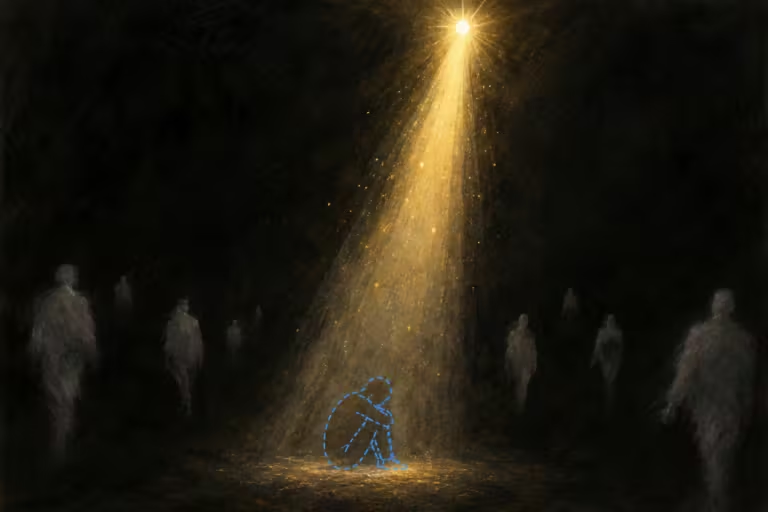
Howard Storm was a professor who didn’t believe in God. He nearly died in Paris. He said beings dragged him into the darkness and a light rescued him.
Nebraska, 2003
Colton Burpo
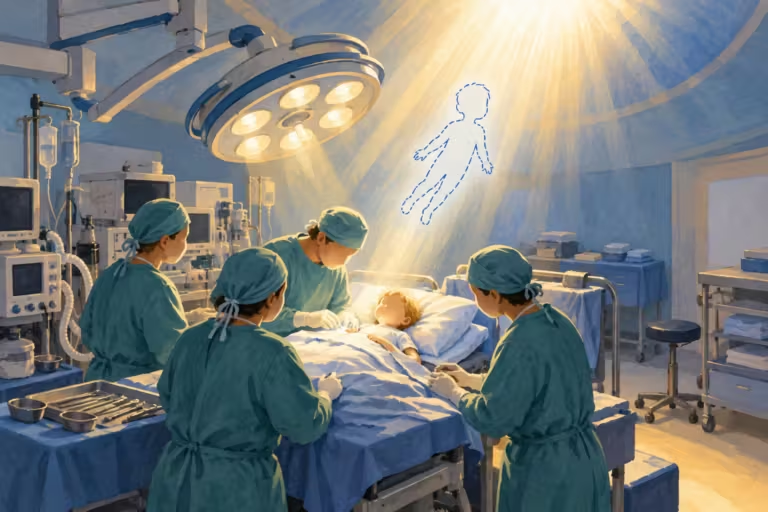
A boy who was almost 4 had surgery for a serious case of appendicitis. Months later he said he had been in heaven and had seen his parents during the operation.
Reincarnation: The top 5 people who remember past lives
We asked them the same five questions as this story. A 32-page PDF, free in your inbox.
Check your email
We have sent you an email. Open it and press the button to confirm. If you cannot see it, check your spam folder.