A book · United States, published in 1975
“Life After Life”: the Raymond Moody book that gave near-death experiences their name
In 1975, the medical student Raymond Moody published a book of accounts from people who had come close to dying. He knew of about 150 cases and had interviewed about 50 people in detail. He saw that the accounts were very much alike and drew out fifteen elements that keep coming up. Among them are a tunnel, leaving the body, a being of light and seeing one’s life pass by. Moody himself warned that his book was not a scientific study and did not prove anything.
The book’s question is: what do people experience when they are about to die, and are their accounts alike? We tell it step by step, with what Moody gathered, what he himself admits he did not have and what was measured later. If you only want to know what he found, skip straight to the results.
Step 1
1965 · University of Virginia · Raymond Moody’s account
A philosophy student hears a professor say he was “dead” twice

In 1965, Raymond Moody was studying philosophy at the University of Virginia. There he met a professor of psychiatry at the medical school. He learned that this professor had been “dead” twice, the second time ten minutes after the first. He also learned that the professor told people what he had experienced.
Later, Moody heard him tell it to a small group of students and recorded it on tape. He did not know what to make of it, so he put the tape away and dropped the subject.
The book does not give the professor’s name. It is dedicated to the psychiatrist George Ritchie, but it does not say whether he was the professor. In 1978, in his foreword to Ritchie’s book, Moody says that in 1965 he heard Ritchie tell his experience, when Ritchie was a psychiatry resident. We tell George Ritchie’s story here.
A few years later, Moody heard almost the same story from a student.
Step 2
Early 1970s · North Carolina · Raymond Moody’s account
A student tells him what his grandmother went through, and it is almost the same

Moody earned his PhD in philosophy in 1969 and was teaching at a university in North Carolina. One day, after a class on Plato, a student stayed behind to talk with him. He told Moody that his grandmother had been “dead” during an operation. Afterward, his grandmother had told him what she experienced.
It was almost the same series of things Moody had heard from the psychiatry professor.
From then on, Moody brought up the subject of life after death in his classes. In every class of thirty students, at least one came to see him afterward to tell him about an experience of their own.
In 1972 he started medical school, and the accounts kept coming.
Step 3
1972 to 1975 · From the book
Doctors, talks and letters: Moody comes to know of about 150 cases
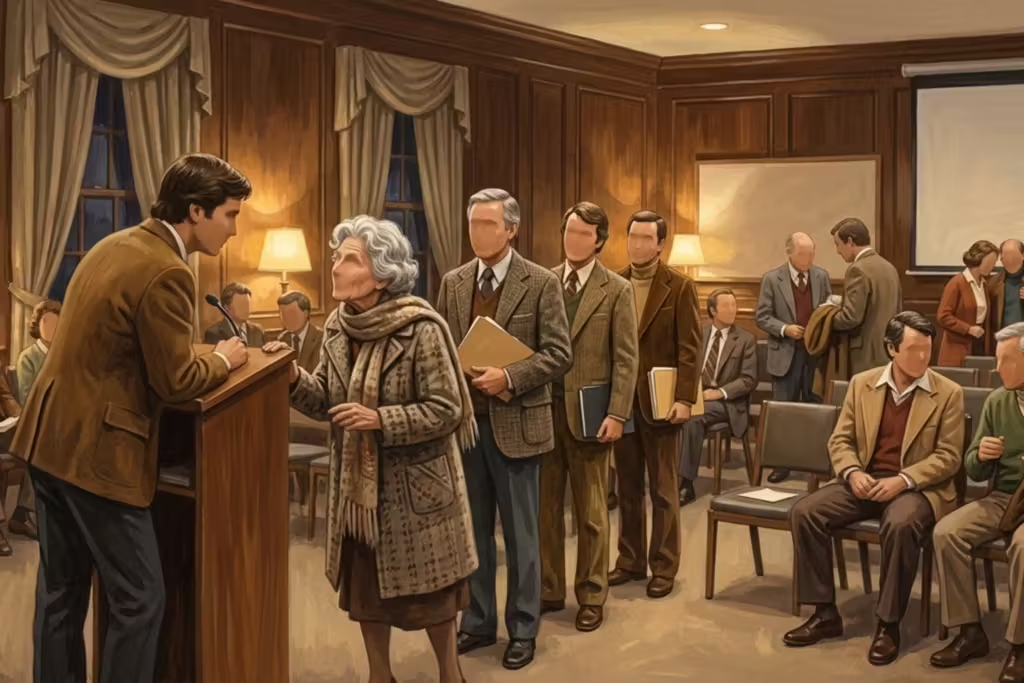
Moody told some doctors about the accounts he was gathering. A friend suggested he give a talk at a medical society, and other talks followed. After each one, someone would come up to tell him about their experience. Some doctors introduced him to patients they had resuscitated. Other people wrote to him after reading about him in the newspapers.
He came to know of about 150 cases of three kinds:
- People who were resuscitated after their doctors had judged them clinically dead.
- People who came very close to death in an accident or a serious illness.
- People who, as they died, described what they were experiencing to those who were with them.
Moody left out the third kind, so as to keep only what each person told in their own words. He interviewed about 50 people in detail.
Moody gathered many accounts, but he did not gather them the way a study is done.
Step 4
The method · From the book
No questionnaire, no count and the names changed

In the book, Moody himself explains how he worked:
- He did not use a questionnaire or make a count. The book does not say how many people described each thing.
- The cases reached him because people wanted to tell them. Moody admits that people who had had an experience were more likely to come to his talks than people who had not. He also admits that he did not choose his cases at random and that they all come from his own culture.
- He changed the names and some details so that no one could recognize the people. He says he did not change what they said.
- He had no group to compare with. He spoke with resuscitated people who remembered nothing, but he does not say how many.
From the first page, Moody warns that he is not trying to prove that there is life after death. He believes such proof is not possible today.
What he did do was compare the accounts with one another.
Step 5
The central chapter · From the book
The accounts are so alike that Moody draws out fifteen elements
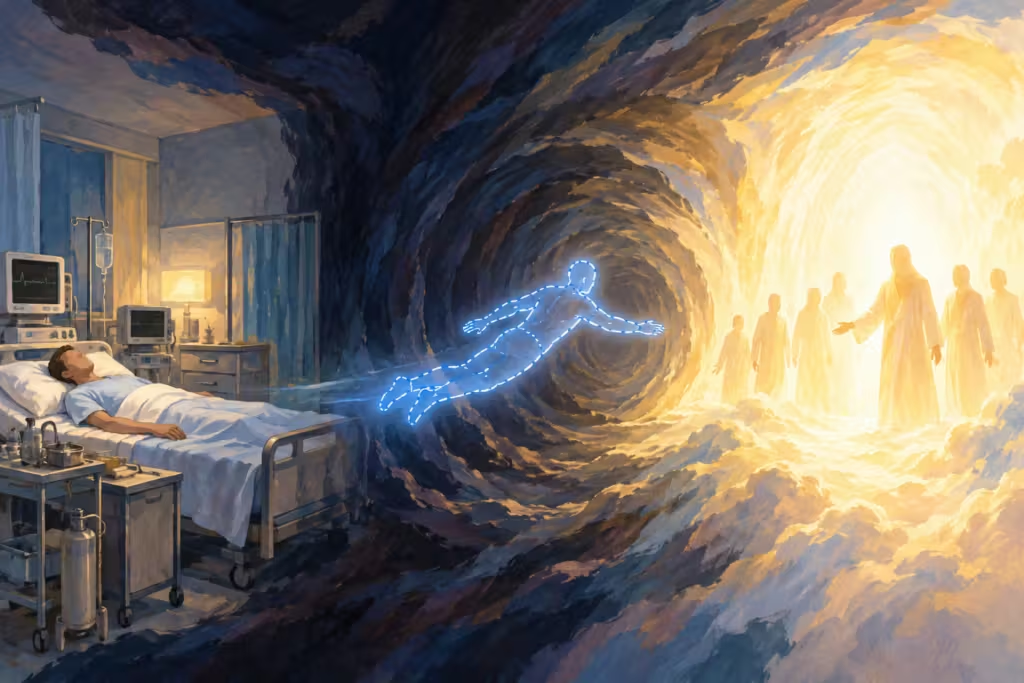
Moody saw that the accounts were very much alike, even though the people were very different. He drew out fifteen elements that keep coming up. With them he wrote a “model” experience, which is not anyone’s in particular:
- The person hears the doctor declare them dead.
- They hear a buzzing noise and move quickly through a long, dark tunnel.
- They find themselves outside their body and see it from outside, like a spectator.
- Relatives and friends who had already died come to meet them, and so does a being of light.
- The being of light asks them, without words, to look back over their life, and shows it to them all at once.
- They reach a kind of border and understand that they have to go back.
- They return to their body even though they do not want to, filled with joy, love and peace.
- Afterward they cannot find words to describe it, and the experience changes the way they see death.
Moody adds a few cautions. No account has all fifteen elements. Several people describe eight or more, and a few reach twelve. No element appears in every account, and none appears in only one. Those who were “dead” for longer describe fuller experiences.
Moody does not say how many people described each element. He describes it with words like “many,” “often” or “some.”
Step 6
After the experience · From the book
Almost all say they no longer fear death, and many keep quiet for fear of ridicule
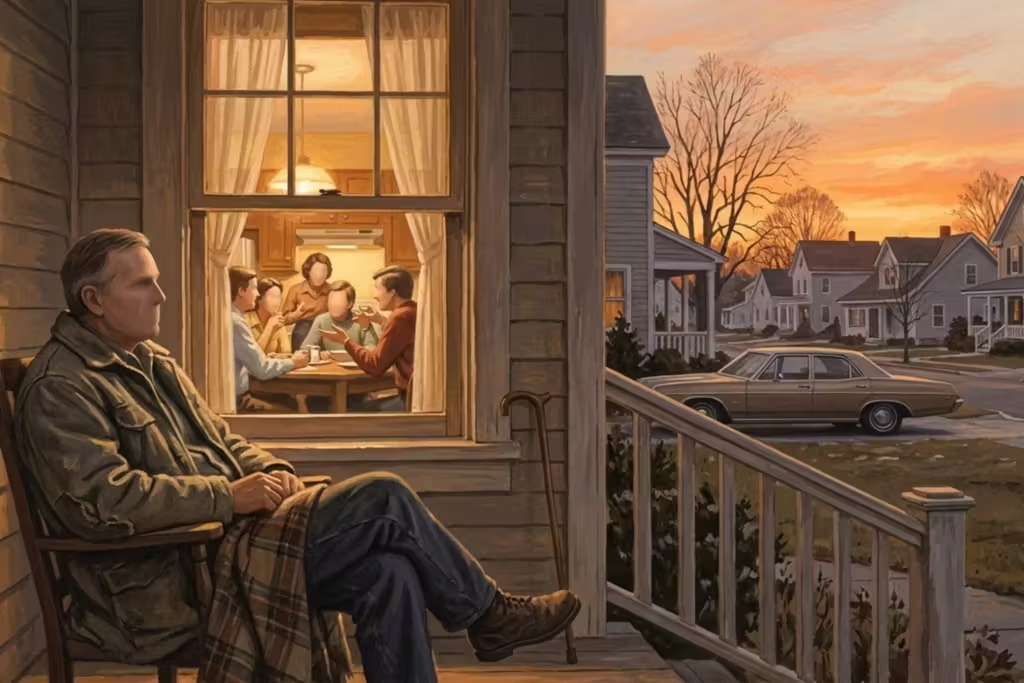
According to Moody, almost all of these people say they are no longer afraid of dying. Many do not tell anyone, because they fear people will laugh at them. Those who do tell it do not try to convince anyone.
Moody writes that no one described to him a heaven with pearly gates and streets of gold, or a hell with flames. He also says that the people who had tried to kill themselves had unpleasant experiences. One of them said they went to a horrible place.
One question remained. Was there any evidence of these experiences apart from what each person said?
Step 7
The “Corroboration” chapter · From the book
Moody looks for evidence that does not depend on the account, and admits he cannot show it
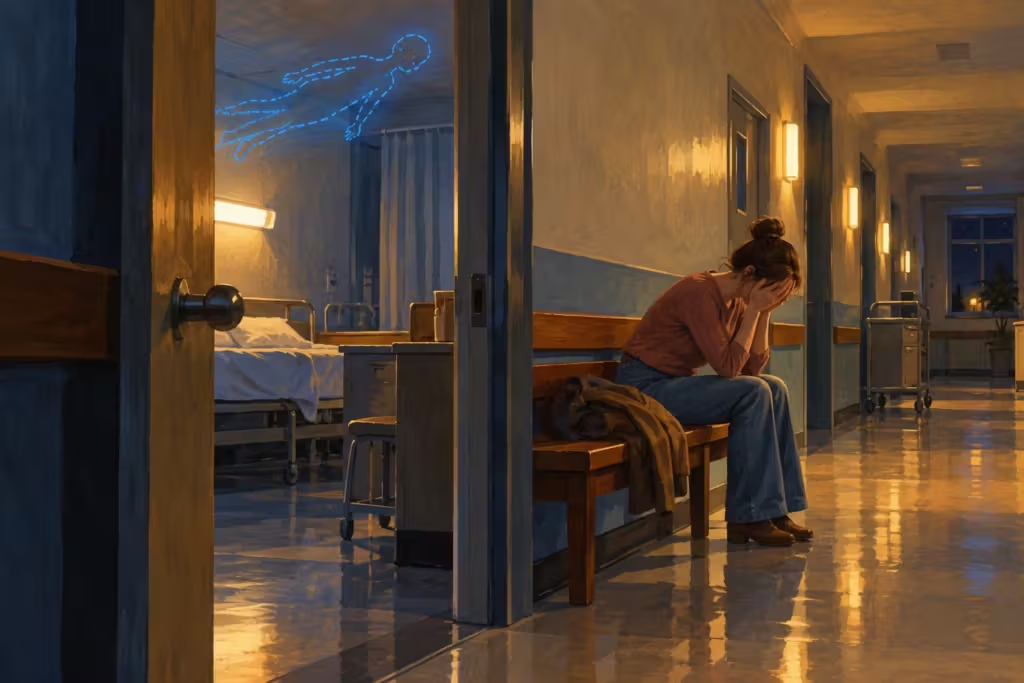
Moody writes that in quite a few cases there is evidence apart from the account, and he gives some examples:
- A woman Moody calls Kathy said she left her body, went to another room and heard her older sister crying. Her sister was asking her not to die. According to Moody, when Kathy told her about it later, her sister was surprised. The book does not say whether Moody spoke with the sister.
- A young man who had an accident in a building described to his father who carried his body out of there. He also told him what color that person was wearing and what people said. According to the young man, his father told him it was true.
- A man Moody calls Jack said that, days before his surgery, a light showed him the bed where he would wake up. When he woke up, already lying in that bed, he told the anesthesiologist that it was the one he had seen, the first one on the right. The book does not say that he told anyone before the operation.
- Some doctors told Moody that patients with no medical training described their resuscitation accurately. Moody does not give their names.
Moody admits that these events are told only by the person themselves and, at most, by a couple of close friends or relatives. He had promised not to give names. And he writes that, even if he gave them, he does not think these events would be proof.
Next, he compared the accounts with very old texts.
Step 8
The “Parallels” chapter · From the book
Moody finds similarities in the Bible, in Plato, in the “Tibetan Book of the Dead” and in Swedenborg
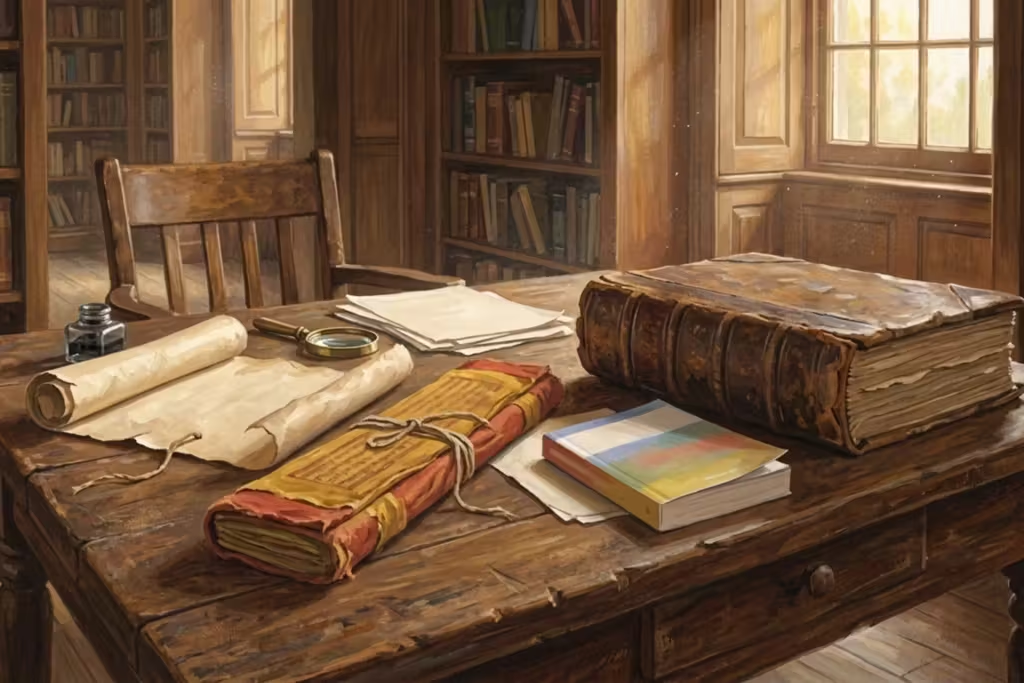
Moody compared the accounts with texts from other times:
- In the Bible, Paul sees a light on the road to Damascus. Moody points out two differences from his accounts. Paul was not close to death, and that light left him blind.
- Plato tells the myth of Er, a soldier who comes back to life on his funeral pyre and tells what he saw. Moody notes that Plato himself did not take those details as certain and called them probabilities.
- The “Tibetan Book of the Dead” speaks of leaving the body, of noises, of not being heard by one’s relatives and of a pure light.
- The 18th-century Swedish thinker Emanuel Swedenborg wrote that he went almost through the state of death. He spoke of communicating through thought and of remembering everything one has done.
Moody admits that some of these texts may have influenced others. But he believes they do not all share that common origin. According to Moody, all the people he interviewed knew the Bible and two or three knew something of Plato. None had read Swedenborg or the Tibetan book. To him, the similarity is a fact that has not yet been explained.
Another question remained: had they really been dead?
Step 9
The “Questions” chapter · From the book
Were they dead? By the strictest definition, Moody answers no
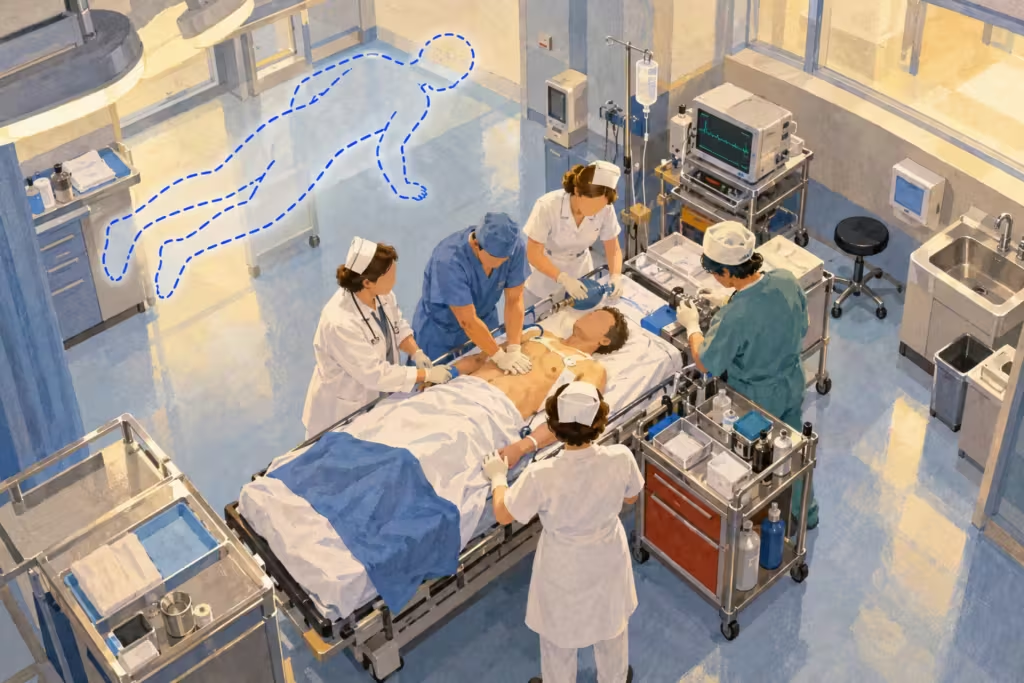
Moody set out three ways of understanding the word “dead.” By the strictest one, death from which there is no coming back, none of his people had been dead.
He adds that no one was wearing a device that measured brain activity during their resuscitation. And that, even if someone had been, the device would not tell at what moment the experience happened.
Moody takes it for granted that in all his cases some activity remained in the body. For him, the question is whether that activity is enough to explain the experience.
That is why he devoted a chapter to the explanations people suggested at his talks.
Step 10
The “Explanations” chapter · From the book
Moody reviews drugs, lack of oxygen and dreams, and puts forward no explanation
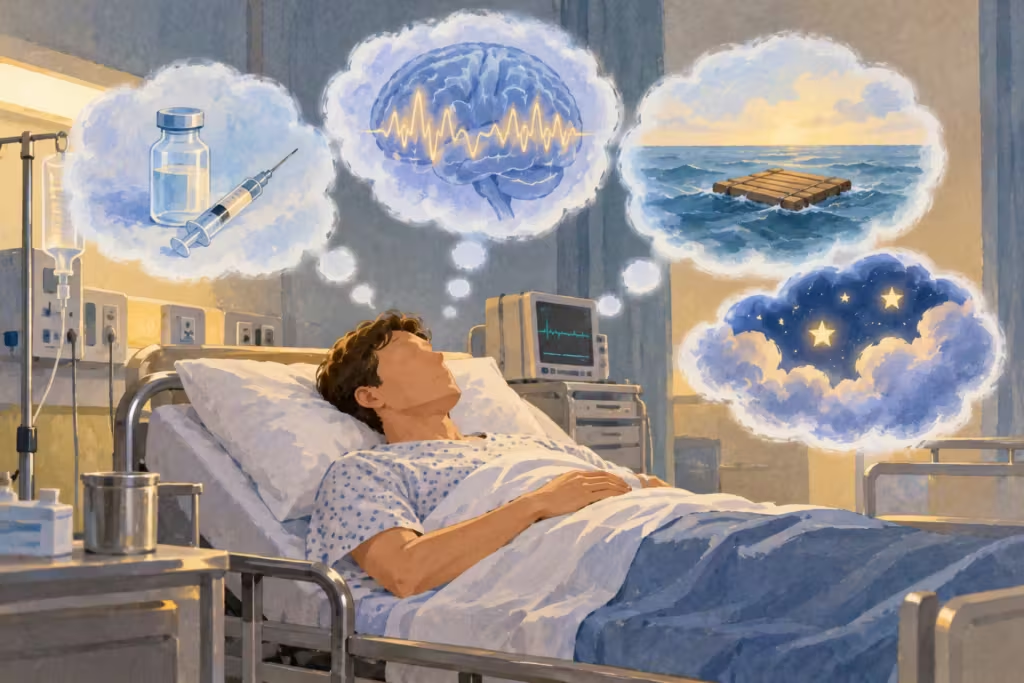
Moody went through the explanations of the time and gave his reasons against each one:
- Drugs and anesthesia. Moody says that experiences with drugs are vaguer and more varied. He also says that many people received none, or received them afterward, and that he saw no differences between those who received them and those who did not. He gives no figures.
- Lack of oxygen in the brain. He answers that many experiences begin before the body is harmed, and some happen with no injury at all.
- Brain seizures, as in epilepsy. He compares the life review with the memories a patient with epilepsy sees. He says those memories are scattered and out of order, and that they are forgotten.
- Total isolation, like that of castaways or polar explorers. He admits that isolation produces similar experiences. But he says that no one knows why it produces them either, so it cannot explain NDEs.
- Dreams and hallucinations. He answers that the accounts are too much alike, that these people can tell a dream from reality and that they describe what happened as facts.
Moody puts forward no explanation. He only asks that people leave open the possibility that it is something new, which needs new explanations.
At the end of the book, he made clear what his work was not.
Step 11
1975 · The conclusion · From the book
Moody writes that his book is neither a scientific study nor proof

In the last chapter, Moody writes that what he has done is not a scientific study. He says he does not fool himself into thinking he has proved that there is life after death, and he refuses to draw a conclusion.
Even so, he says that something in the way these people tell their experience convinces him. And he admits that this is a psychological reason, not a logical one.
The book’s foreword says something else. It is signed by the psychiatrist Elisabeth Kübler-Ross, known for her books on the dying. For her, the book confirms that there is life after death. The publisher’s text on the cover also says that the cases reveal there is life after death. Neither of those two statements is Moody’s.
The book sold in huge numbers, and others set out to test it more rigorously.
Step 12
1975 to today · What came after
A worldwide success, criticism for lack of method and studies that counted what Moody described

According to the Australian newspaper The Age, the book has sold more than 13 million copies. Moody finished medical school in 1976 and trained as a psychiatrist. His supervisor in the emergency room was the psychiatrist Bruce Greyson, who would later create a scale to measure these experiences. We tell how Greyson began to study these experiences in the story of Holly, one of his patients.
In 1976, the cardiologist Michael Sabom heard about the book at his church and said, “I don’t believe it.” He thought the book was not a study, and he designed one with medical records. He published it in 1982, and we tell it in “Recollections of Death,” Sabom’s book.
The psychologist James Alcock, in 1981, and the philosopher Paul Kurtz, in 1991, criticized the book for not analyzing its data. Alcock added that it set aside what was already known about hallucinations.
The studies done later in hospitals asked all resuscitated people, not only those who wanted to tell something, and gave figures. One of them is the study by the Dutch cardiologist Pim van Lommel, published in 2001. We tell it in the van Lommel study. Out of every 100 people with an NDE, 31 described a tunnel and 24 said they left their body. And 13 said they saw their life pass by.
The question from the beginning remains: are the accounts of people who are about to die alike? Let’s see what could be known and what could not.
From 150 cases to no count at all
Moody gathered many accounts, but he did not count how many people experienced each thing.
That is why his book describes the experience, but does not say how often each part appears.
| What | How many |
|---|---|
| Cases he knew of | about 150 |
| People interviewed in detail | about 50 |
| Elements that keep coming up | 15 |
| Elements in the fullest account | 12 |
| Frequency figures the book gives | 0 |
| Documents the book shows | 0 |
What Moody says and what was counted later
Moody describes each element in words. The van Lommel study asked all resuscitated people in ten hospitals and counted how many experienced it.
| Element | Moody | Van Lommel |
|---|---|---|
| Peace or pleasant emotions | “many” | 56 |
| Meeting people who had already died | “some” | 32 |
| A tunnel | “often” | 31 |
| Leaving the body | no word for frequency | 24 |
| Seeing one’s life pass by | no word for frequency | 13 |
| A border | “in some cases” | 8 |
What these figures don’t tell
- Moody’s words are not figures. “Often” cannot be compared exactly with 31.
- They are not the same people. Van Lommel asked only people resuscitated after a cardiac arrest. Moody also included accidents and illnesses.
- Counting does not explain. Knowing how many people see a tunnel does not say why they see it. More figures in How many people have a near-death experience?
Frequently asked questions
What is Raymond Moody’s book “Life After Life”?
It is a 1975 book in which Raymond Moody gathered accounts from people who came close to dying. He saw that they were very much alike and arranged them into fifteen elements that keep coming up. This book made the expression “near-death experience” famous.
How many people did Raymond Moody interview for “Life After Life”?
Moody knew of about 150 cases and interviewed about 50 people in detail. The book does not say how many of them described each thing.
What are the fifteen elements of a near-death experience according to Moody?
The first are not finding words to describe it, hearing oneself declared dead, feeling peace, hearing a noise and going through a tunnel. Then come leaving the body, meeting other people, seeing a being of light, reviewing one’s life and reaching a border. The last are returning to the body, keeping quiet about it for fear of ridicule, changing one’s life and losing the fear of death. The fifteenth is that, according to Moody, others sometimes confirm what was seen. No account has them all.
Does Raymond Moody’s book prove there is life after death?
No. Moody himself writes that his book is neither a scientific study nor proof that there is life after death. The one who says the book confirms it is the psychiatrist Elisabeth Kübler-Ross, in the foreword.
Was Raymond Moody a doctor when he wrote “Life After Life”?
No. He had a PhD in philosophy and was studying medicine. He finished medical school in 1976, a year after publishing the book, and trained as a psychiatrist.
Where this page comes from
The book
- Raymond A. Moody, Life After Life (Mockingbird Books, 1975). In Spanish, Vida después de la vida (EDAF), translated by Rafael LassalettaBuy the book
Assessments and critiques
- Michael Sabom, Recollections of Death (1982)Read our page
- The critiques by James Alcock (1981) and Paul Kurtz (1991), and the sales figure from The Age (2004), as cited in the Wikipedia article on the bookSee the source
To understand more
- The van Lommel study: 344 resuscitated people in ten hospitalsRead
- Holly’s story, which led Bruce Greyson to study NDEsRead
- What is a near-death experience?Read
- What happens when a near-death experience is frightening?Read
Our archive
- A full reading of Moody’s book, in the Spanish edition published by EDAF, as of October 17, 2026
More studies
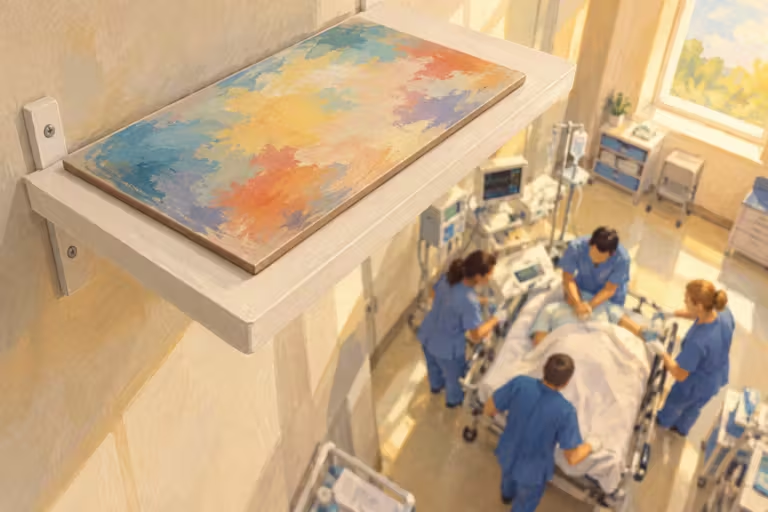
AWARE: the pictures hidden on the shelves
Fifteen hospitals put up pictures that could only be seen from the ceiling, to check whether anyone saw them during a cardiac arrest.
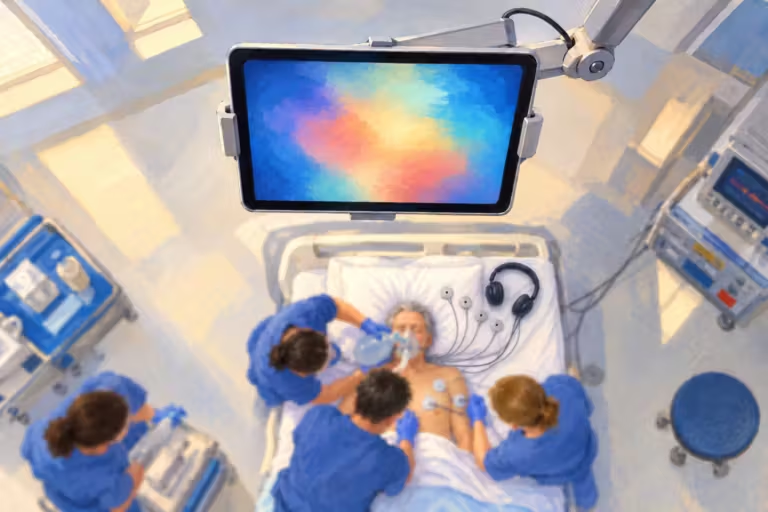
AWARE II: a random picture and the brain on the screen
Above the patient was a tablet with a random picture. Headphones said the names of three fruits. And the doctors measured the brain during resuscitation.

Van Lommel: 344 cardiac arrest survivors in ten hospitals
Ten hospitals asked every cardiac arrest survivor what they remembered. They saw them again after 2 and 8 years.