
A real-life story · Oklahoma, United States, 2009
Crystal McVea’s near-death experience
Crystal McVea was a teacher and mother of four in southwestern Oklahoma, in the United States. In December 2009 she was in the hospital with an inflamed pancreas, and she stopped breathing. It took the doctors a few minutes to revive her. She later said that during those minutes she was with God and saw a little girl playing with a basket.
Her book, “Waking Up in Heaven,” was one of the best-selling books in the United States. Crystal doesn’t say she saw her body or the doctors who were reviving her. But there is one detail that can be checked. After hearing what that little girl looked like, her mother found an old photo. We tell it step by step and then look at what can be checked. If you only want the evidence, skip straight to what can be checked. Who was the girl with the basket?
Step 1
Before 2009 · Oklahoma · Crystal’s account
A teacher with a hard childhood who doubted God
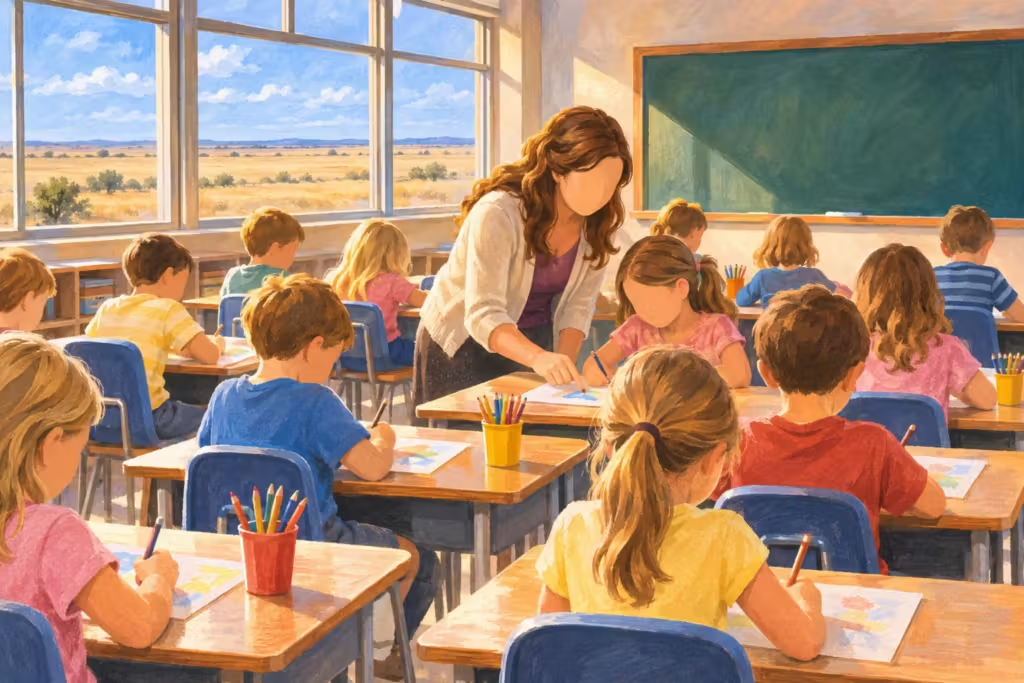
Crystal McVea lived in southwestern Oklahoma. She was a teacher with four children, and the two youngest were twins. She says she had a very hard childhood at home and that she was abused as a girl.
She doubted God. She says she thought it had to be one of two things. Either God existed and didn’t love her, or he didn’t exist.
In 2009 she began having panic attacks.
Step 2
Late 2009 · A hospital in southwestern Oklahoma · Crystal’s account
A medical procedure inflames her pancreas and she goes back to the ER in severe pain
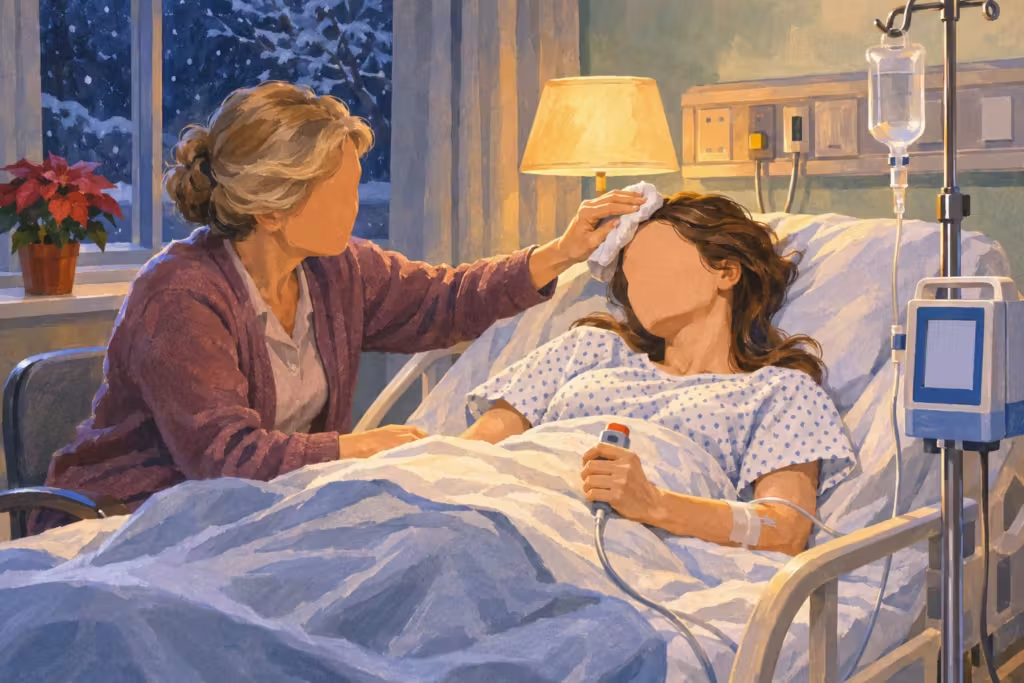
Because of the panic attacks, she had several tests. During one of them, the doctor found a blocked duct between her pancreas and her liver and put in a small tube to open it. When she woke up, she was in terrible pain. The procedure had inflamed her pancreas.
The doctor wanted her to stay in the hospital, but Crystal went home. That same night the pain doubled her over, and she went back to the ER in the early hours of the morning.
They gave her a pump with Dilaudid, a very strong painkiller. By pressing a button, she could give herself a dose whenever she was in pain. Her mother, Connie, stayed by her side in the room.
The next day, Crystal kept getting worse.
Step 3
December 10, 2009 · In her hospital room · Her mother’s account
Crystal stops breathing and her mother sees her turning blue
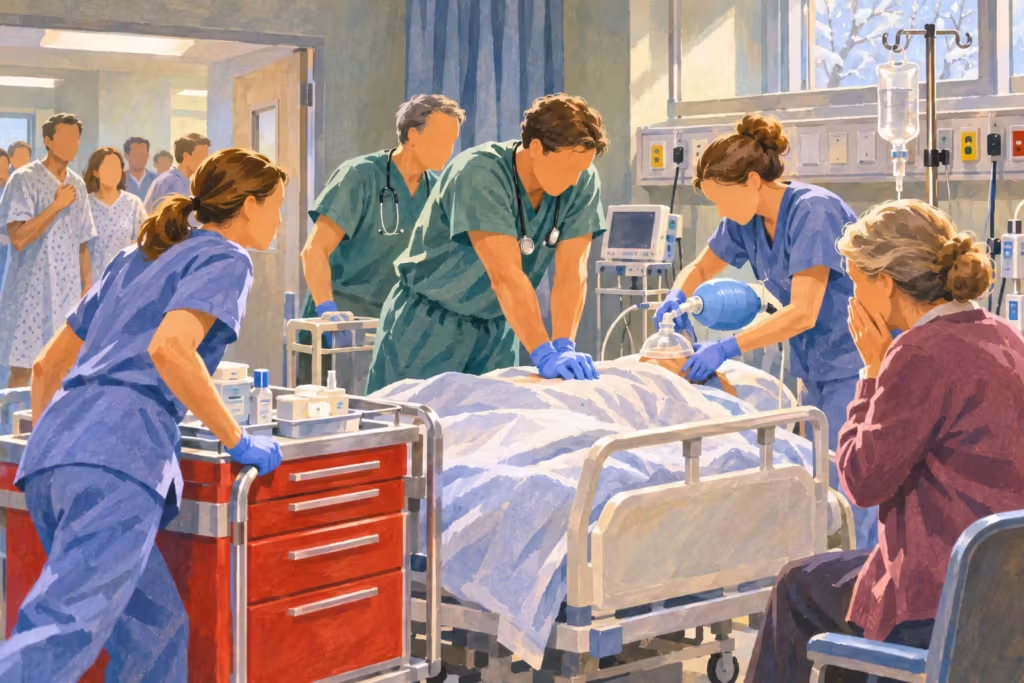
Crystal told her mother she loved her, closed her eyes, and fell asleep. Her mother noticed her legs were cold and covered her up. Then she saw that her lips were blue.
Her mother knew CPR. She checked for breathing and found none. She checked for a pulse in her neck and found none there either. She shouted for a nurse.
Nurses, doctors, and more people came in until the room was full. They called a code blue, the hospital’s most serious emergency alert. They pressed on her chest and pushed air into her with a bag and a mask. Crystal says she went nine minutes in all without breathing on her own. Two of those minutes passed before the first nurse came in, and seven were resuscitation.
Crystal remembers nothing of what happened in the room.
Step 4
During those nine minutes · Crystal’s account
Crystal says she wakes up before God, with two angels beside her
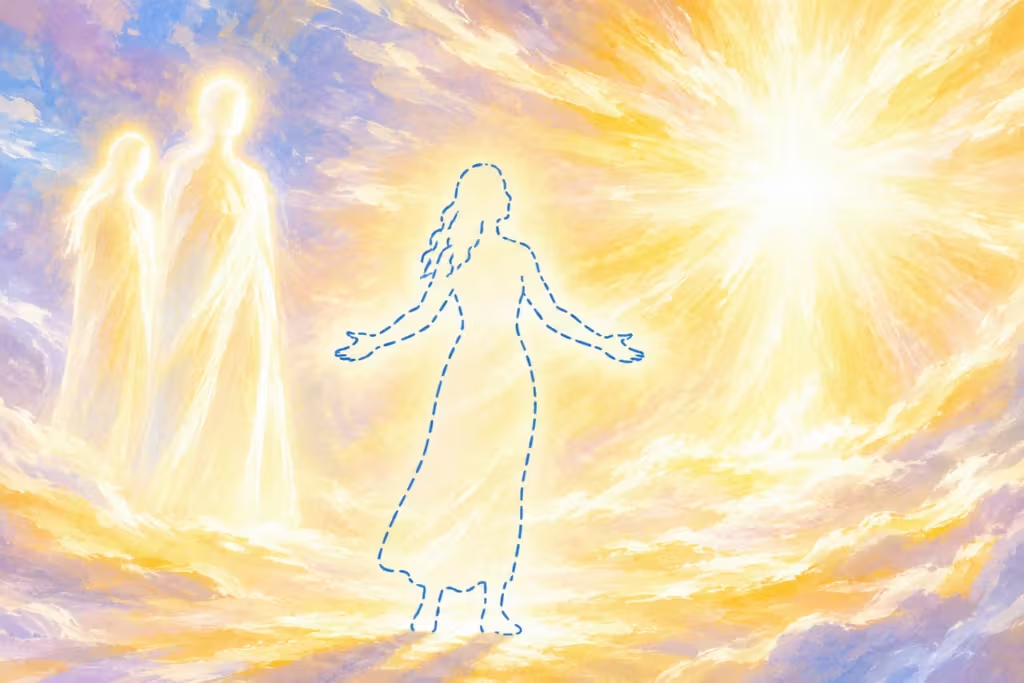
Crystal says she closed her eyes in the bed and, when she opened them, she was in an immense brightness. On her left there were two angels. On her right there was a being she recognized at once as God.
She felt no fear and no shame. She felt that God loved her completely. All her questions about God disappeared.
She says God showed her her four children and told her she could go back to them or stay. She chose to stay.
Crystal, God, and the two angels, she says, began moving forward through a tunnel of light.
Step 5
During those nine minutes · Crystal’s account
Crystal says that in the tunnel she sees a little girl playing with a basket
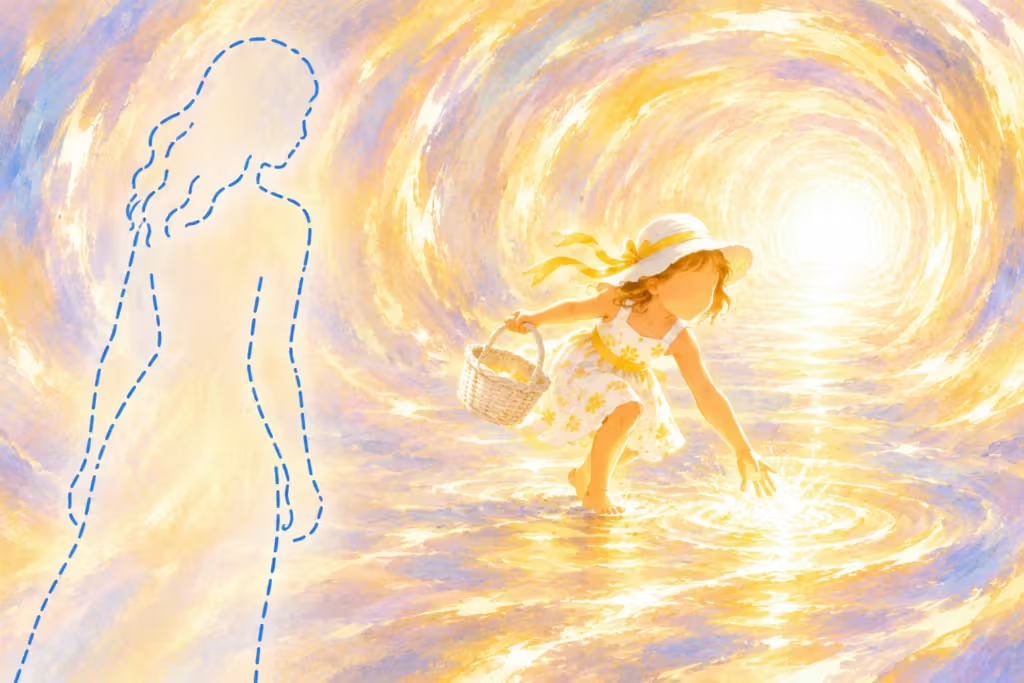
Crystal says that at the far end of the tunnel there was an even stronger light. Before reaching it, she saw a little girl of three or four.
The girl wore a white bonnet and a white summer dress with touches of yellow. She had a small white wicker basket. She was skipping and laughing, and she dipped the basket into the light the way you scoop up water.
Crystal felt a love for her so great that she thought she was going to burst. She says that was when she knew the little girl was herself at three. She says the abuse began at that age.
Then, she says, she heard a voice coming from far away.
Step 6
At the end of those nine minutes · Crystal’s account
Crystal says she hears her mother shouting her name and decides to go back
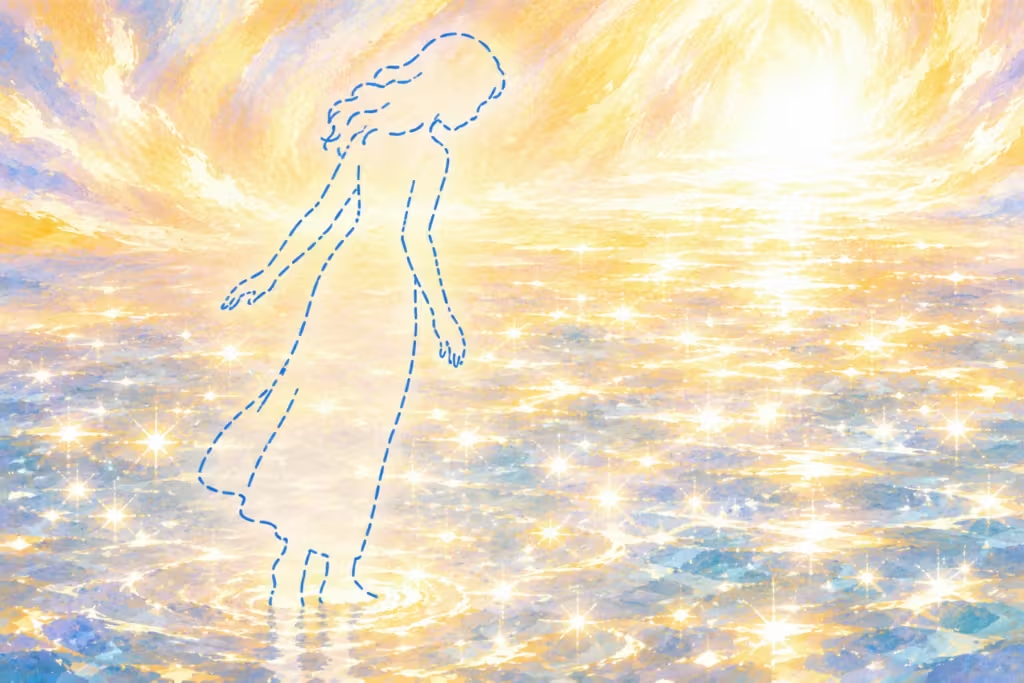
Crystal says she heard her mother shout, “Crystal! Crystal!” It was the first time she had heard anything from Earth.
She says that until then she hadn’t thought about her hospital room. She didn’t see herself from above or see anyone around her bed. But when she heard her mother, she wanted to tell her she was all right. God answered that the decision was hers.
Crystal says she turned around and opened her eyes in the bed.
Step 7
Right afterward · In her hospital room · Crystal’s and her mother’s accounts
Already awake, she is given a drug that reverses an overdose
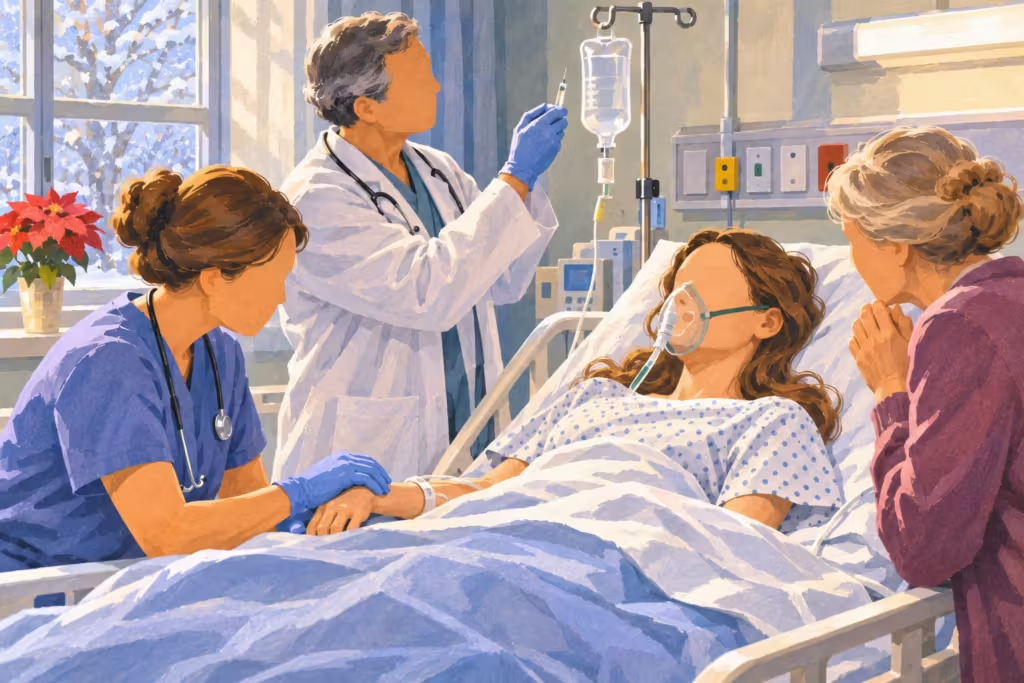
Her mother heard a doctor say that Crystal had moved her eyelids. That was when she began shouting her name. The doctors gave Crystal a shot of Narcan, a drug that reverses the effect of very strong painkillers when someone has been given too much.
Crystal says the most likely explanation is that the painkiller pump was set wrong and gave her more than her body could take. She says no one can know for sure.
She was taken to the ICU. Her mother says the doctor who had revived her burst into tears when Crystal said she had been with God. Eight days later she was discharged.
Soon afterward, Crystal told her mother about the little girl.
Step 8
After she was discharged · At her mother’s home · Crystal’s account
Her mother searches the albums and finds a photo of Crystal at three
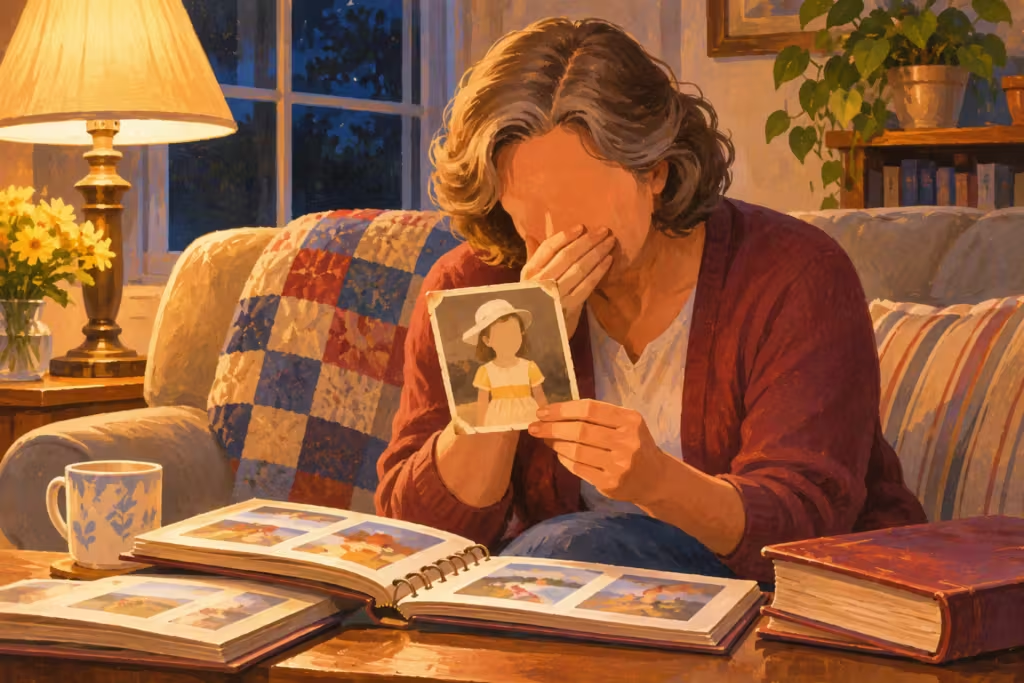
Crystal says that when she described the little girl to her mother, her mother started to cry. When she got home, Crystal’s mother took out the family photo albums and searched through them.
She found a faded photo of Crystal at three. She was wearing a white bonnet and a white summer dress with touches of yellow. There is no basket in the photo, but her mother remembers that she had bought her one too and that Crystal took it everywhere.
Crystal says she didn’t remember the photo, the dress, or the basket.
For a while, Crystal didn’t dare tell anyone outside her family.
Step 9
2010 to 2013 · Oklahoma · Crystal’s account
Crystal changes her life and begins telling her story
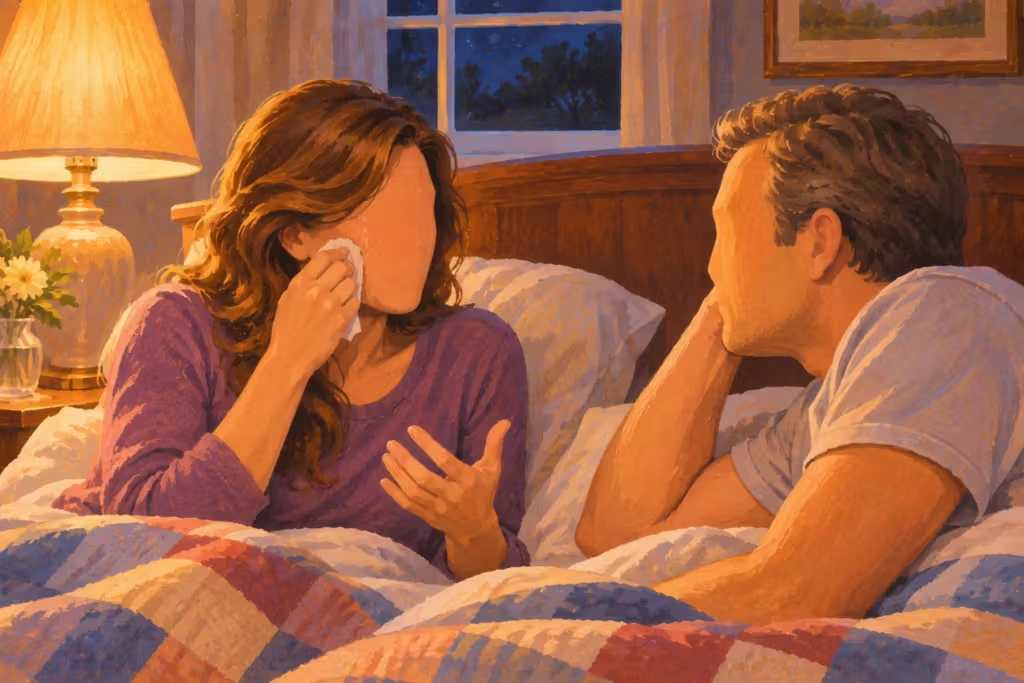
Crystal says that after those nine minutes she forgave the people she had been angry with. She asked her mother, her brother, and her father for forgiveness. She stopped caring about material things.
At first she told everyone who came into her room. When she noticed they didn’t believe her, she stopped telling it. Only her husband, Virgil, asked her every night to tell it again. Months later she began telling it in public, and she wrote her story with the journalist Alex Tresniowski.
In 2013 the book came out.
Step 10
From 2013 on · From her book and television
Her book becomes a hit and Crystal tells her story on television

“Waking Up in Heaven” came out in April 2013 and was one of the best-selling books in the United States. The photo of Crystal at three is at the end of the book.
Crystal told her story on several television networks. In January 2014, the Oklahoma station KFOR said the medical reports confirmed that her heart had stopped. It did not show those reports.
One question remains: who was the girl with the basket?
How many people have an NDE?
Crystal McVea is not a one-off. The most reliable figures come from people who survive a cardiac arrest. For more than thirty years, several teams of doctors have asked them what they remember. They do it in the hospital, a few days afterward.
Picture 100 of those people:
Each dot is a person. The 18 filled-in dots are the ones who described a near-death experience. That is what the largest study found. It was done in the Netherlands in 2001, with 344 people.
The other 82 didn’t describe one. Many remember nothing of their cardiac arrest.
| Where and when | People interviewed | Described an NDE |
|---|---|---|
| England, 2001 | 63 | 6% |
| Netherlands, 2001 | 344 | 18% |
| United States, 2002 | 30 | 23% |
| United States, 2003 | 116 | 10% |
| United Kingdom, United States, and Austria, 2014 | 101 | 9% |
| Vienna, Austria, 2023 | 126 | 4% |
| United States and United Kingdom, 2023 | 28 | 21% |
What these figures don’t tell you
- Only some people are asked. In the 2014 study, 330 people survived, but only 140 could be interviewed, and 101 reached the second interview. The rest died later, were too ill, or didn’t respond.
- Most cardiac arrests are never counted. These studies run in a few hospitals for a limited time. Outside them, no one keeps track. Also, the 2003 study interviewed 1,595 cardiology patients, not just the 116 with cardiac arrest in the table, and 81 of them described an NDE from an earlier occasion. The study did not count them, because it only counted those from that hospital stay.
- Some people keep quiet. In the accounts in our archive, at least 13 people say they kept their experience to themselves for a while. They kept quiet because they weren’t believed or because they were afraid of how others would react.
- It depends on how you count. If you count any memory of the cardiac arrest, the numbers go up. If you use a strict scale, they go down. In England in 2001, 7 of 63 people remembered something. But on the scale, only the memories of 4 people qualified as an NDE.
That’s why no one knows the real figure. But every study shows that it isn’t rare. Between 4 and 23 of every 100 survivors who are asked describe an NDE. Crystal McVea’s case stands out for another reason. Her experience has a detail that can be compared with a photo from her childhood.
Frequently asked questions
Who is Crystal McVea?
Crystal McVea is a teacher from Oklahoma, in the United States, and a mother of four. In December 2009 she stopped breathing in a hospital and later described a near-death experience. She tells it in her 2013 book “Waking Up in Heaven.”
How long was Crystal McVea dead?
Crystal says she went nine minutes without breathing on her own. Two of those minutes passed before the first nurse came in, and seven were resuscitation. In her book she says she was never declared dead and that she doesn’t know whether she technically died. No medical report has been published.
Who was the little girl Crystal McVea saw in heaven?
Crystal says the little girl was herself at three. After hearing what she looked like, her mother found a photo of Crystal at that age with a similar bonnet and dress. Here we explain what can be checked.
Where this story comes from
Her book
- Crystal McVea and Alex Tresniowski, Waking Up in Heaven (Howard Books, 2013)
Interviews
- “Woman Says She Visited Heaven,” WHNT, February 3, 2014, a copy of the KFOR reportView
- ABC News, October 28, 2013, and TheBlaze, October 26, 2013
Learn more
- What is a near-death experience?Read
- What does science say about near-death experiences?Read
- How we check each storyRead
Our archive
- Our reading of her book, interviews from 2013 and 2014, and the scoring against our five criteria, as of November 6, 2026
Keep reading
San Diego, 2004 or 2005
Randy Kay
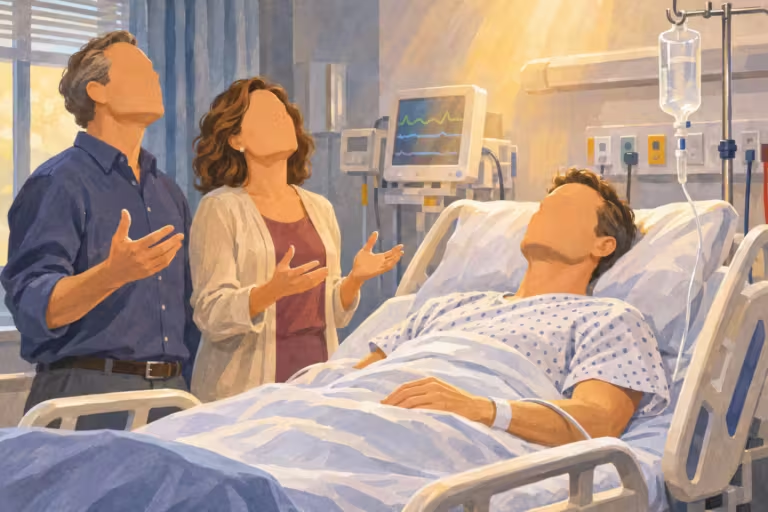
Randy Kay, a medical-company executive in San Diego, was hospitalized with blood clots in his lungs and caught a very serious infection in the hospital. He said his heart stopped, that he met Jesus, and that when he came back he heard beside him the same song he had heard with Jesus.
Asturias, Spain, 2005
María Teresa Álvarez Aramendía
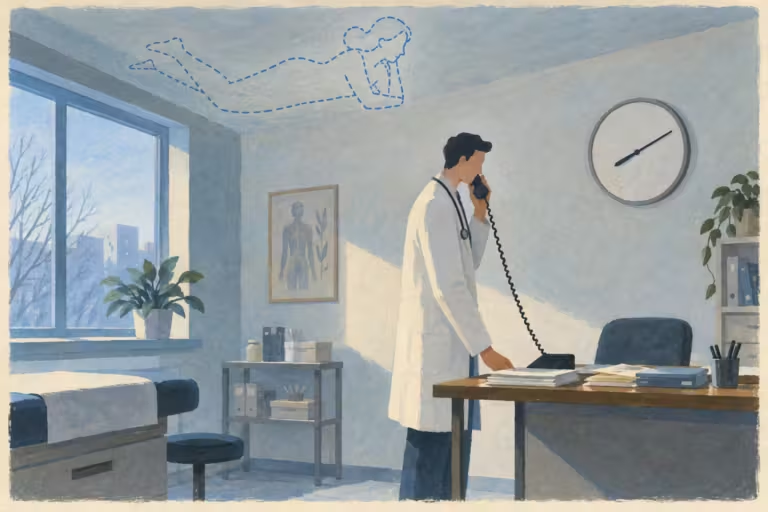
She says that while she was in a coma she saw her doctor call another doctor from the health center at 8:10. According to her, months later he told her that he had made that call.
Leeds, 1880
John Ogle
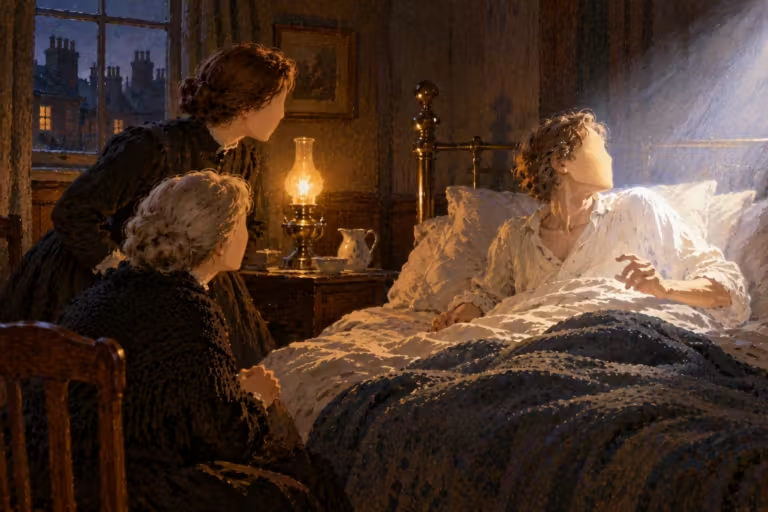
John Ogle was dying in Leeds and said George Hanley’s name in surprise. According to his mother, George Hanley had died ten days earlier, and no one had told John.
Reincarnation: The top 5 people who remember past lives
We asked them the same five questions as this story. A 32-page PDF, free in your inbox.
Check your email
We have sent you an email. Open it and press the button to confirm. If you cannot see it, check your spam folder.