Studies
46 studies
How near-death experiences are studied. Each study, told step by step: what they wanted to find out, how they did it, what they found, and what they couldn't find out.
The studies
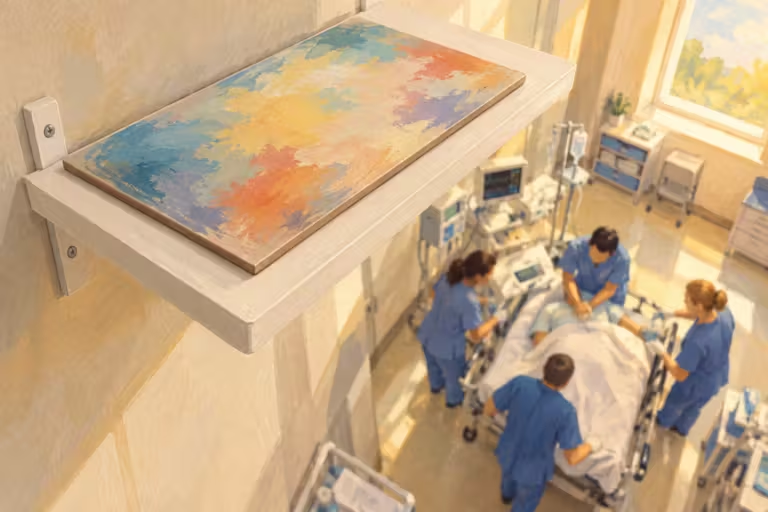
AWARE: the pictures hidden on the shelves
Fifteen hospitals put up pictures that could only be seen from the ceiling, to check whether anyone saw them during a cardiac arrest.
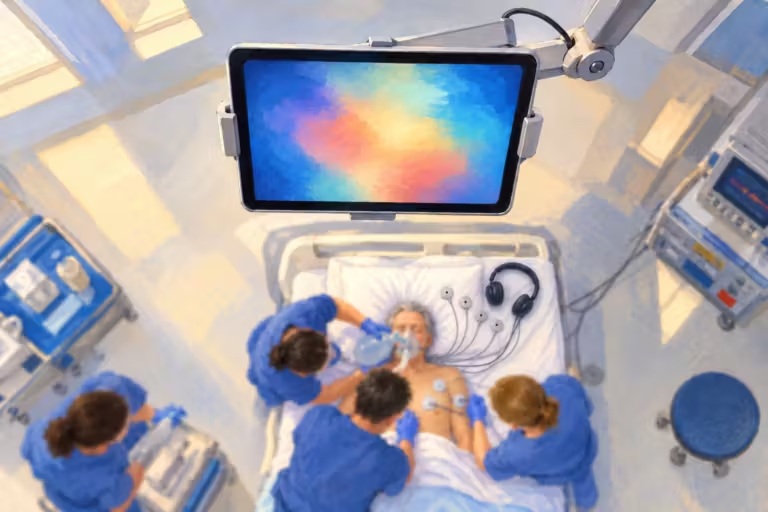
AWARE II: a random picture and the brain on the screen
Above the patient was a tablet with a random picture. Headphones said the names of three fruits. And the doctors measured the brain during resuscitation.
Van Lommel: 344 cardiac arrest survivors in ten hospitals
Ten hospitals asked every cardiac arrest survivor what they remembered. They saw them again after 2 and 8 years.
Greyson: 1,595 heart patients and 27 NDEs
A hospital asked its cardiology patients what they had been through. With a cardiac arrest, an NDE was ten times more common than without one. But most happened without one.
Schwaninger: 174 cardiac arrests and 7 NDEs
A hospital followed all its cardiac arrests for almost three years. Of 30 survivors interviewed, 7 described an NDE. Six months later, they said their lives had changed more.
Cold circulatory arrest in surgery: 3 memories and none
Two teams asked patients who had aortic surgery with their body cooled and circulation stopped. In Montreal, 3 of 33 remembered something. In Rennes, none of 101 did.
The Liège ICU: 126 patients and 19 NDEs
A hospital asked patients who spent more than a week in the ICU. 19 of 126 described an NDE, almost none after a cardiac arrest. A year later, their quality of life was no different from that of the other patients.
The Murcia ICU: 170 patients and 10 NDEs
A researcher asked the patients in an ICU in Murcia, Spain. 10 of 170 described an NDE, and none saw themselves outside their body. In the accounts that came in through Facebook, more than half did.
Sartori: five years in a Welsh ICU
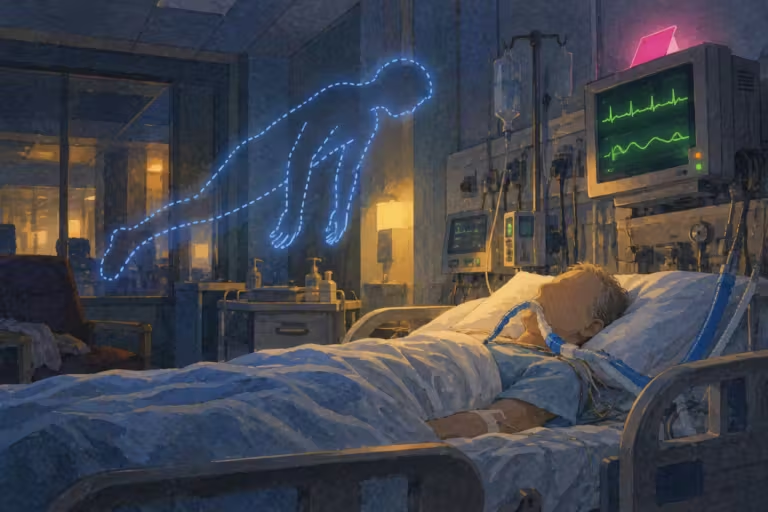
A nurse hid pictures above the monitors for five years. She collected 15 NDEs and 8 out-of-body experiences, and nobody saw the pictures.

The 14 Virginia cases: seeing what could not be known
Three researchers gathered 14 accounts from people who, close to death, said they saw things they could not have known. They themselves acknowledge that almost all were poorly investigated.
The dentures case: the nurse, 29 years later
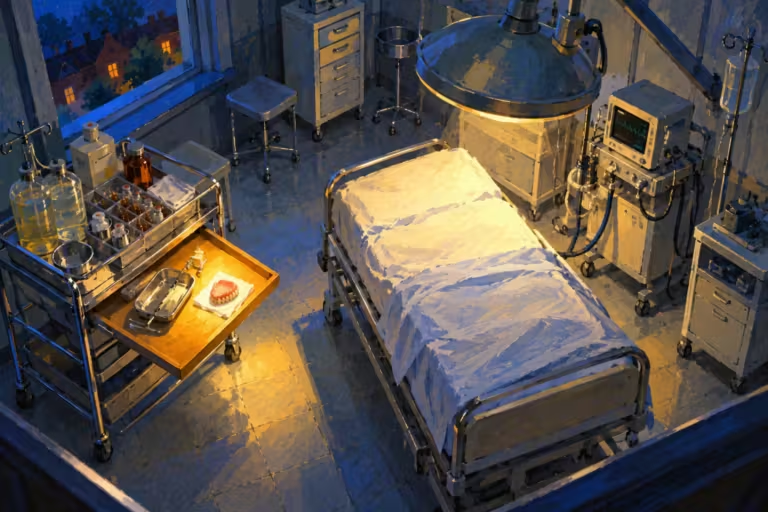
A nurse says he took out the dentures of a man in a coma. More than a week later, the man was awake. According to the nurse, he recognized him and knew where he had left the dentures. A researcher tracked the nurse down 29 years later.

Greyson: the same NDE told twice, 19 years apart
72 people described their near-death experience twice, 19 years apart. Their answers barely changed.
52 induced arrests, a hidden screen and no NDE
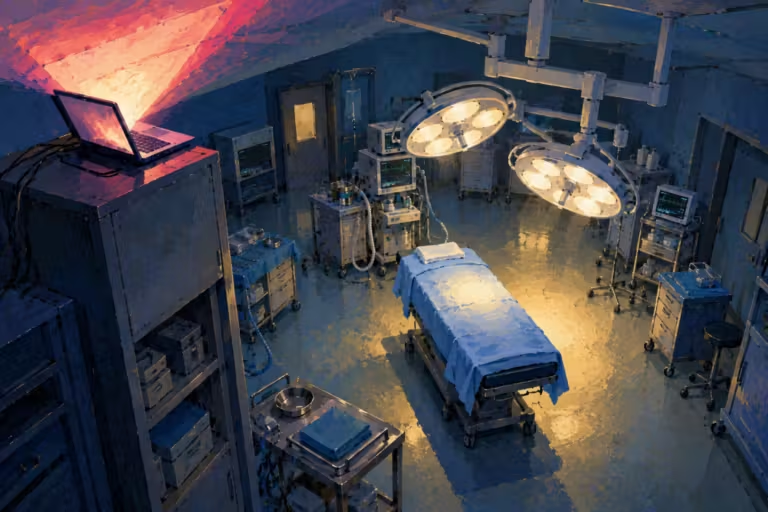
Doctors stopped the heart 52 times to test a device, with a screen only visible from the ceiling. Nobody reported a near-death experience.
The Murcia MRI study: the brain recalling an NDE
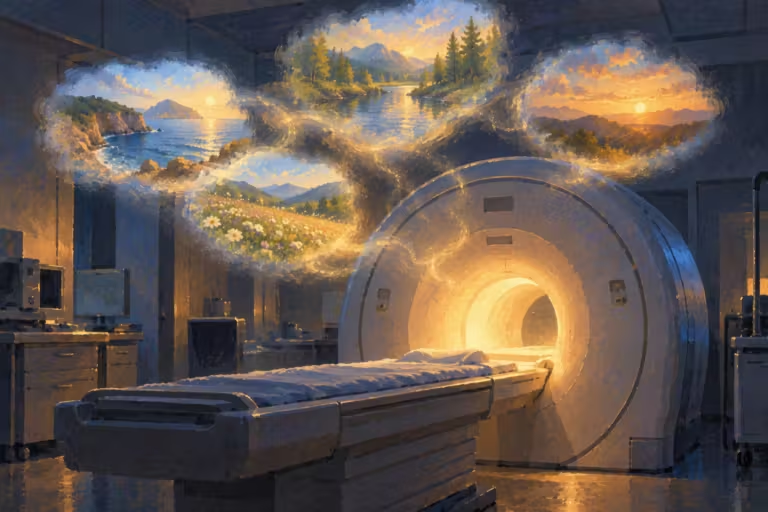
15 people recalled their near-death experience inside an MRI scanner. Areas used to remember one’s own life became active.
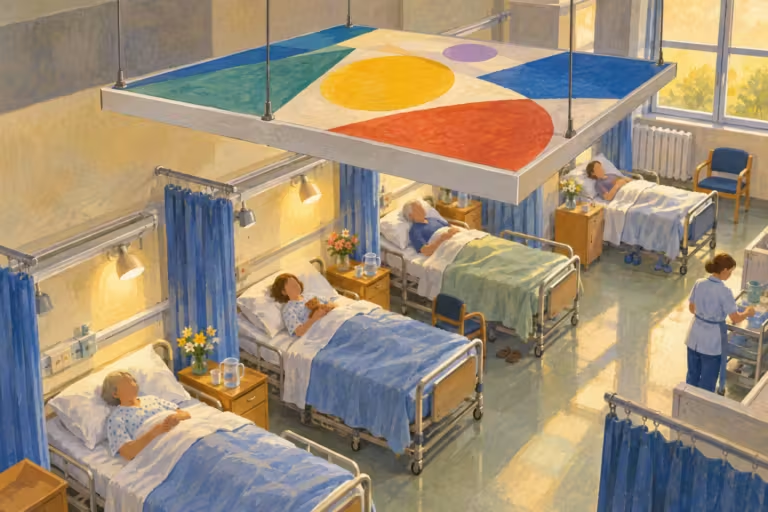
Southampton: 63 cardiac arrest survivors and boards on the ceiling
A hospital asked every cardiac arrest survivor what they remembered. It also hung drawings from the ceiling that could only be seen from above.
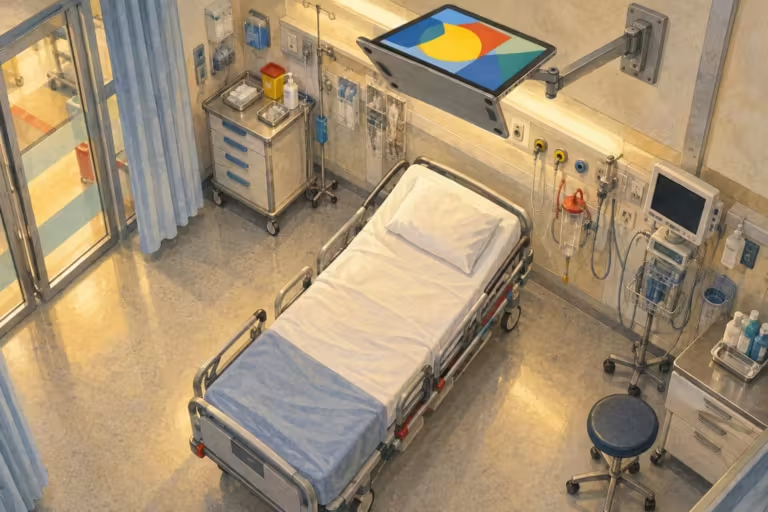
Vienna: 126 cardiac arrest survivors and a screen hidden above a bed
A Vienna hospital asked cardiac arrest survivors what they remembered, without mentioning NDEs. A screen was hidden above one bed.
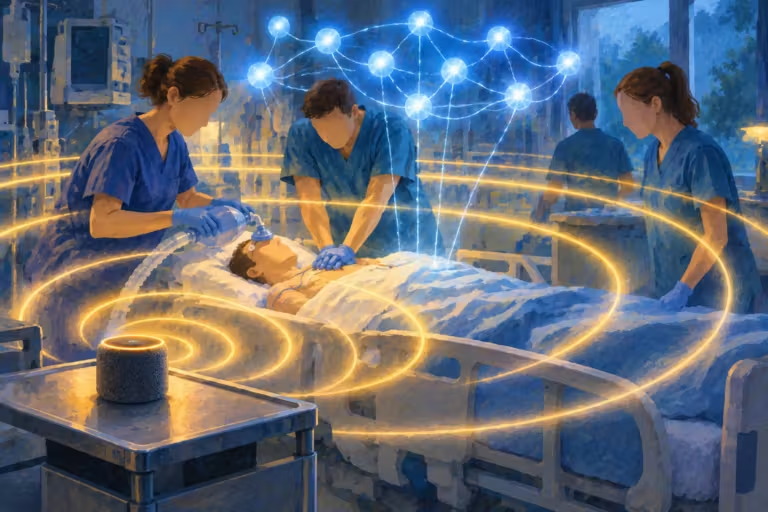
Sounds during cardiac arrest, chosen by a quantum computer
Two of the three groups remembered the sounds from a speaker in the room a little better than chance would predict. The quantum part can’t be checked.
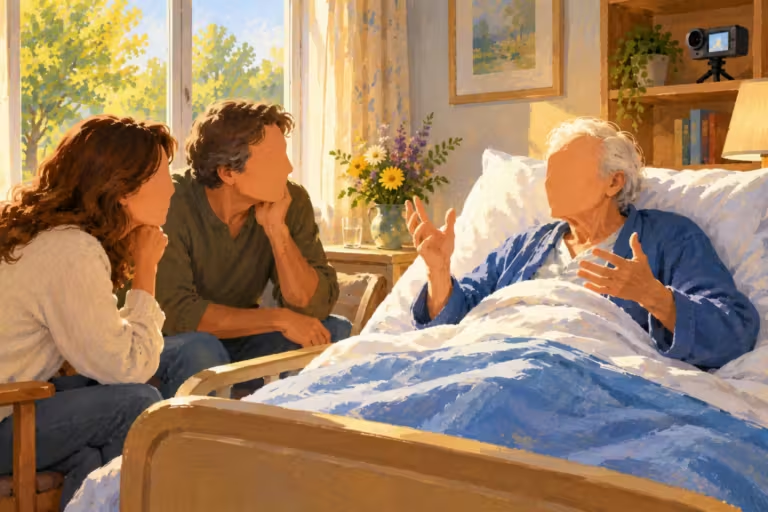
People with dementia who suddenly speak again
A team recorded 1,433 hours of people with very advanced dementia. Three suddenly began speaking coherently again. No one measured their brains.
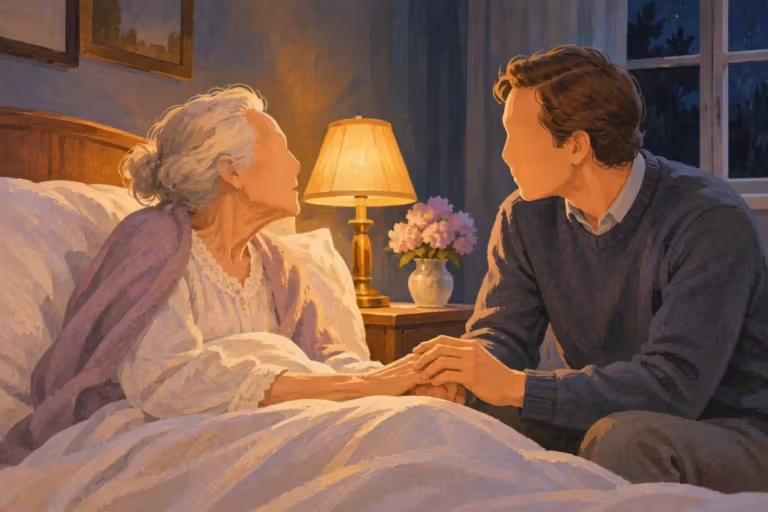
Patients who regain clarity shortly before death
Patients who had long stopped making sense and said goodbye with a clear mind. These are 83 cases from 250 years, and no one has measured the brain during any of them.

Dreams that foretold a death (1886)
Three researchers gathered 24 dreams about the death of someone the dreamer knew. Each came less than 12 hours from that death. In six, someone heard the dream before the news.

337 encounters with the dead in Iceland
Hundreds of Icelanders say they perceived someone who had died. According to national records, three in ten of those people died violently.
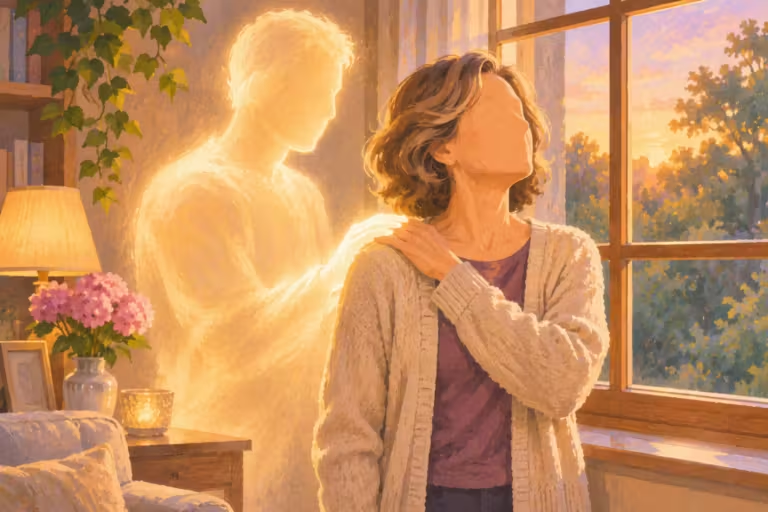
991 people who say they sensed a loved one after death
They saw them, heard them, felt them touch them or sensed them in dreams. Most say it comforted them. One in four says they received information they did not know, and no one has checked it.
The census of hallucinations (1894)
17,000 people answered a survey on apparitions. The authors calculated that those coinciding with a death were not chance.
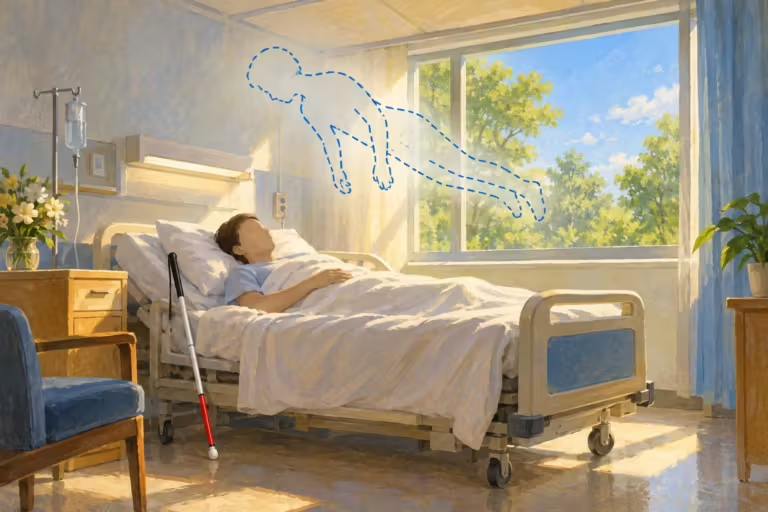
Ring and Cooper: 31 blind people who describe an NDE
Two researchers sought out blind people who had come close to death and asked them whether they had seen anything.
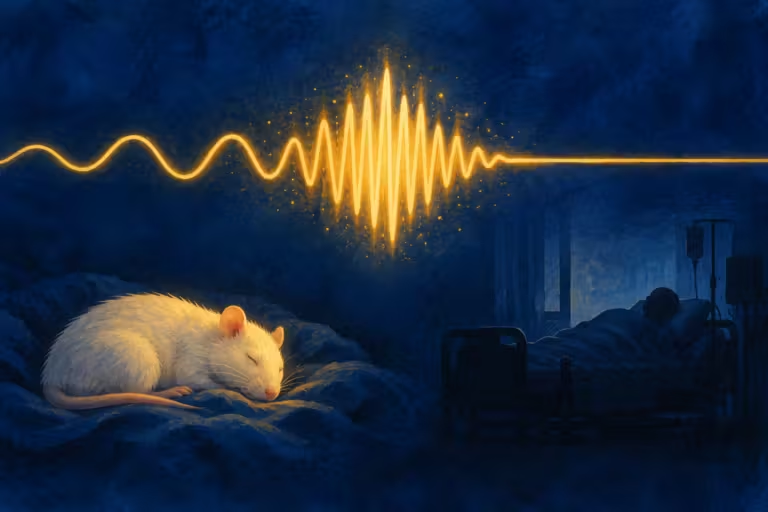
Gamma waves in the dying brain: 9 rats and 4 patients
When their hearts stopped, the brains of 9 rats gave off a burst of fast, orderly waves. In 2023 the same was looked for in 4 people in a coma.
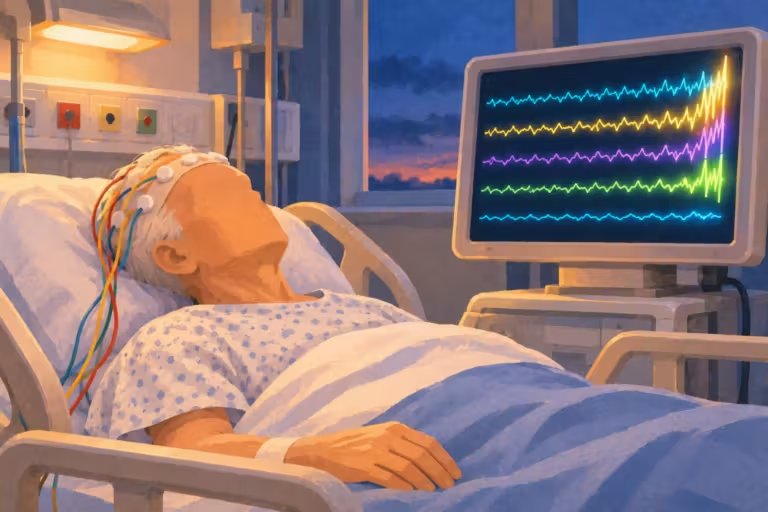
Vicente: the brain of an 87-year-old man, recorded as he died
An 87-year-old man died while hooked up to an EEG. His gamma waves rose just before his heart stopped and fell afterwards. The press said life flashes before your eyes.
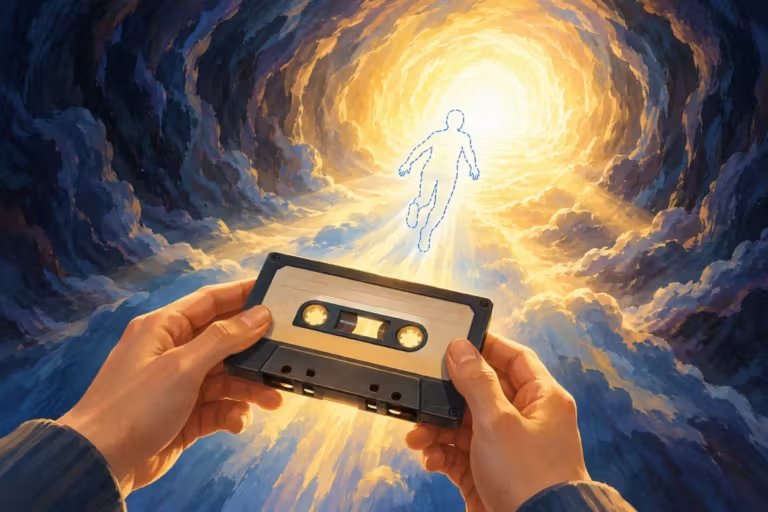
Life After Life: the Raymond Moody book that gave near-death experiences their name
In 1975, a medical student gathered about 150 accounts from people who had nearly died and found fifteen elements that keep coming back. He himself warned that it was not proof.
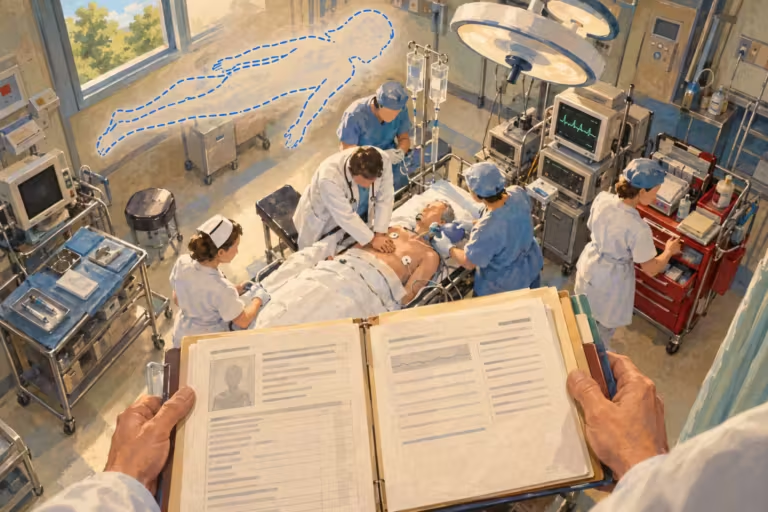
Recollections of Death: a cardiologist compares what they saw with their resuscitation
A cardiologist who didn’t believe in NDEs compared what 32 patients say they saw of their resuscitation with their medical records.

DMT and NDEs: 13 volunteers and 165 drugs compared
On DMT, 13 healthy volunteers reached the score of an NDE. In written accounts, the most similar drug was ketamine.
The NEPTUNE model: the most complete brain-based explanation of near-death experiences to date
In 2025, a team in Liège brought almost every brain-based explanation of near-death experiences together in one model. Its authors call it theoretical. None of its pieces has been measured during a near-death experience.
Kevin Nelson’s study of near-death experiences and sleep: 55 people and four questions
A neurologist asked 55 people with an NDE in 2006 about things typical of sleep that happened to them while awake. Far more of them said yes than other people did. No one measured their sleep or asked what came first.

Thonnard’s study: the memory of a near-death experience, compared with real and imagined events
A team in Liège compared NDE memories with memories of real and imagined events in 2013. The NDE had more detail and more emotion. That says how it is remembered, not what caused it.

Does the story of an NDE change over the years? We compare 13 accounts, first version against last
We compare, detail by detail, two interviews of people who have told their NDE for years. What repeats, what is added and how they explain it themselves.

Sans Segarra and supraconsciousness: what the studies he relies on say
The surgeon who argues that consciousness goes on after death, set against the studies he cites: where they back him and where they do not.

The Kondziella survey: 106 of 1,034 people described an NDE
An online survey of 1,034 people: 106 described a near-death experience. Almost half were in no real danger, and almost half found it unpleasant.
The Klemenc-Ketis study: 52 resuscitated people and the CO₂ in their blood
In 52 people resuscitated in Slovenia, the 11 who described an NDE had more CO₂ in their blood. Does the gas cause it, or does it only show that their blood was flowing better?

Jeffrey Long and NDERF: nine reasons to believe near-death experiences are real, and what the studies he cites say
The founder of NDERF, the largest collection of NDE accounts, gives nine reasons to believe they are real. We set them beside the studies he relies on.
The Martial study: 31 people compare their NDE with a psychedelic trip
31 people who had both an NDE and a psychedelic trip compared the two. They agree on the peace and the light, and part ways on the feeling of dying.
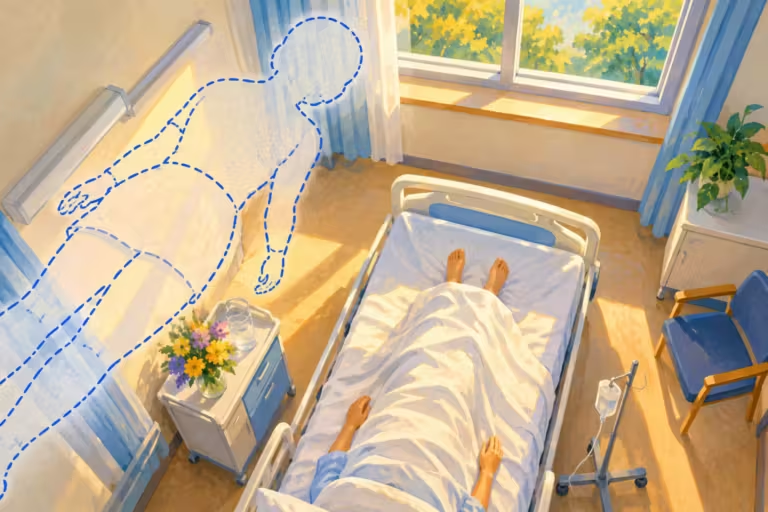
Blanke's experiment: a woman says she sees herself from above when her brain is stimulated
When a spot in her brain was stimulated, a woman with epilepsy said she saw herself from above. It is cited to explain the out-of-body part of NDEs through the brain, and its critics say the two are not much alike.

The Osis and Haraldsson study: what the dying saw, according to doctors and nurses
Doctors and nurses in the United States and India reported 877 cases. The dying mostly saw dead relatives and religious figures who came to take them away.
Distressing NDEs in six studies: how common they are and what is known about them
Six studies on frightening NDEs: how common they are, how they are remembered, and why the famous “one in five” isn’t the figure its own author gave.

Dying to Live: Susan Blackmore’s brain explanation
A psychologist who felt she left her body in 1970 wrote, in 1993, the classic book that explains NDEs with the brain.

“There is no death”: the Mays’ case for survival
A pair of researchers argued in 2021 that NDEs prove life after death. We go through their cases one by one.
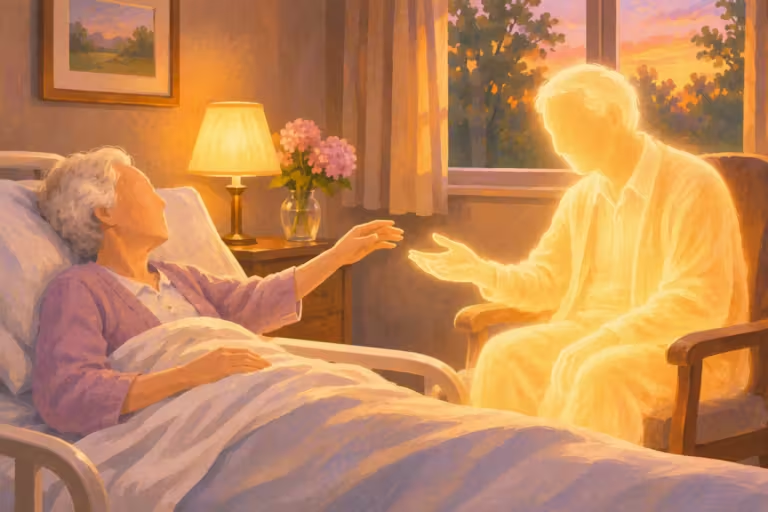
Kerr: the dreams and visions of 59 dying patients
Of 59 patients at a hospice in Buffalo, 52 described dreams or visions before they died, mostly of loved ones who had died. In India and Brazil, the figures come out very differently.
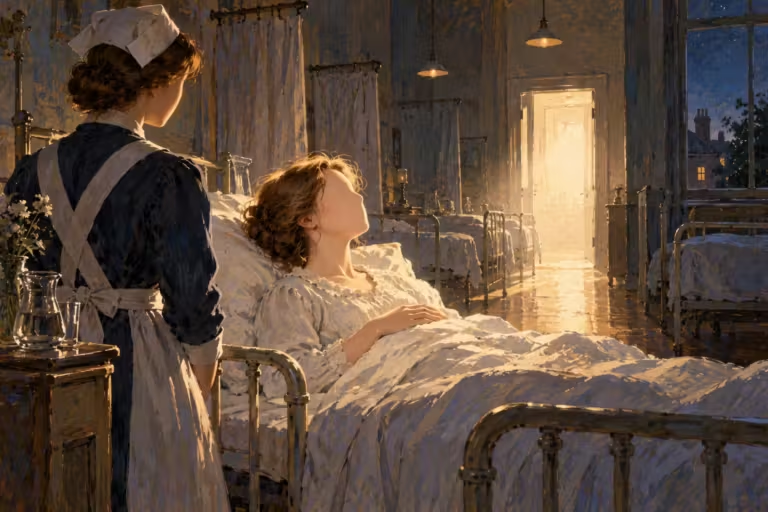
What the dying see (1926)
William Barrett gathered about 60 accounts of dying people who say they see their dead. In the best case, a mother sees her sister. Nobody had told her that her sister had died.
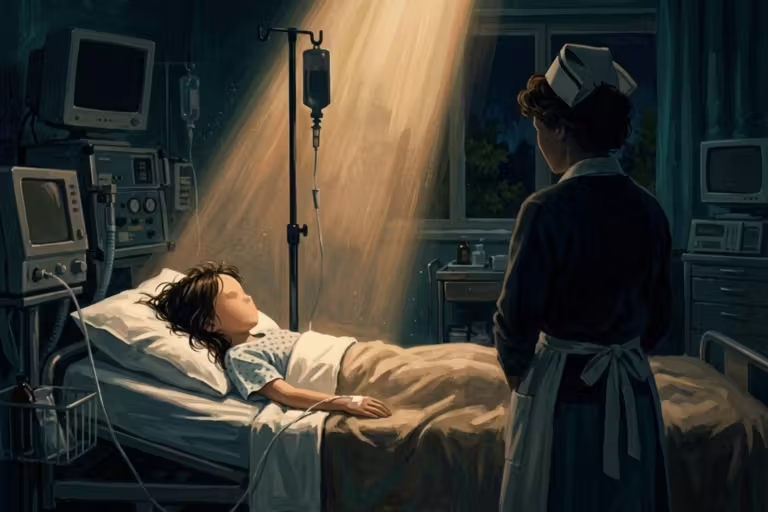
Closer to the Light: NDEs in children who nearly died
A pediatrician compared 11 children who nearly died with 29 very sick children on strong medicines. 7 of the 11 remember something. None of the 29 reported an NDE. Four remembered something of what happened in the hospital.
What has been studied about NDEs?
Since the 1970s, doctors and psychologists have asked people who came close to dying what they remember. Others look for the cause in the brain or test what people say they saw outside their body.
How we tell each study
We tell what the authors wanted to find out, how they did it, what they found and what they couldn’t find out. Studies from both sides, with the same care.
What does science say, in short?
There are two explanations: that it all happens in the brain, or that consciousness goes on without it. Neither has been proven. We explain it in the Guide.