
An article · published in 2014, with accounts from the NDERF website
Jeffrey Long and NDERF: nine reasons to believe near-death experiences are real, and what the studies he cites say
A near-death experience, or NDE, is a very intense experience that some people have when they are about to die. Jeffrey Long is an American physician who in 1998 created NDERF, a website where thousands of people have written about their NDE. In 2014, he published an article with nine reasons, drawn from those accounts and from other people’s studies. According to Long, together they prove that NDEs are real. To him, that means medicine can’t explain them with what is known about the brain. On this page we go through each reason and what the studies he relies on say.
The article’s question is: do thousands of accounts prove that NDEs are real? We go through his nine reasons one by one. If you only want to know what is known, skip straight to the results.
Step 1
Since 1998 · The NDERF website · As Jeffrey Long tells it
A physician in Louisiana creates a website where people can tell their NDE

Jeffrey Long is a radiation oncologist, the doctor who treats cancer with radiation. In 1998, he and his wife, Jody, created a foundation and a website called NDERF. The name stands for Near Death Experience Research Foundation.
On the website, anyone can write about their NDE and fill in a long questionnaire about it. Almost everyone lets their account be published. In 2014 there were more than 3,700 accounts, and Long says it is the largest public collection in the world. Parts of the website are in more than 20 languages.
Long argues that NDEs prove there is life after death. His 2010 book is titled Evidence of the Afterlife.
In 2014, he summed up in an article what, in his view, those accounts prove.
Step 2
2014 · The article · As Jeffrey Long tells it
Long studies the accounts on his website and nine studies by others

Long took the accounts in the order they arrived on the website, without picking. He used only accounts written in English by the person who had the NDE, and that described a single experience. The experience also had to score at least 7 points on the scale created by the psychiatrist Bruce Greyson. It is a 16-question questionnaire that researchers use to decide whether an experience is an NDE.
For several of his reasons, he used the same group of 617 accounts. In his book, he explains that these are all the accounts that met those conditions between October 2004 and October 2008. For reasons 4 and 7 he counts 613, four fewer, and the article doesn’t explain why. For others, he used the answers of 1,122 people to individual questions in the questionnaire.
The person who assessed each account was Long himself. In the book, he explains his rule. If any part of an account seemed unreal to him or to the person who wrote it, he counted it as unreal. With that rule, he decided which accounts were “realistic.” No one else reviewed them.
Reasons 1 and 4 are about how awake the mind is during the NDE.
Step 3
Reasons 1 and 4 · The mind without an active brain · As Jeffrey Long tells it
Long says there are clear NDEs while the brain has no activity, but none of them is known to have happened at that moment
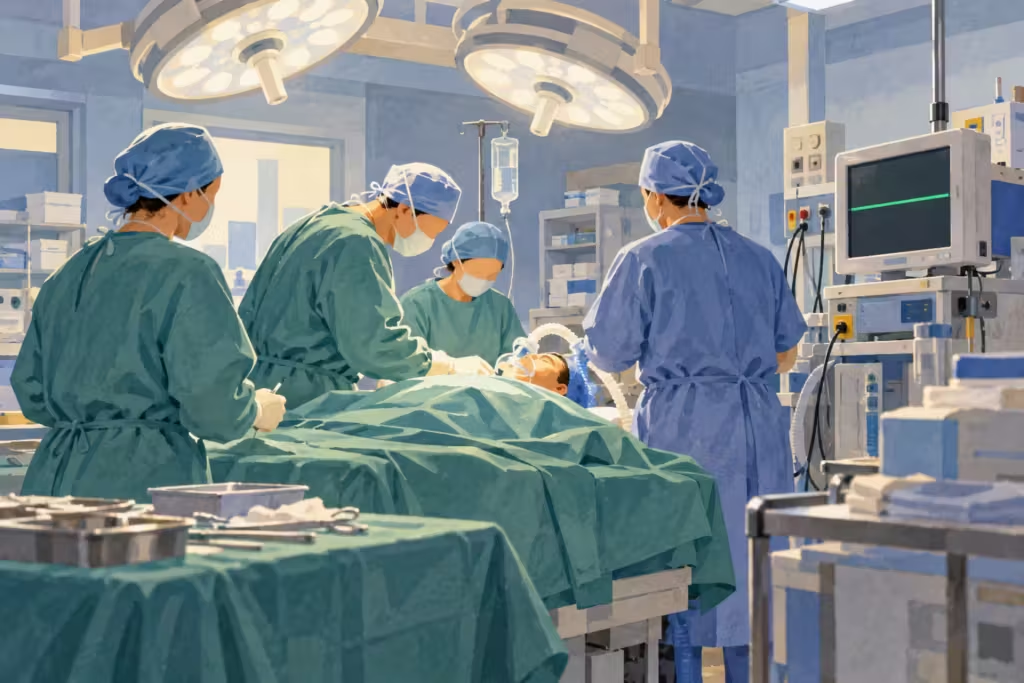
Reason 1. According to Long, NDEs happen when a person is unconscious, in a coma, or with their heart stopped. Even so, they are clear and orderly. On his website, 835 of 1,122 people said that during the NDE they were more awake and alert than usual. Long cites studies in which the brain’s electrical activity shuts down 10 to 20 seconds after the heart stops.
Reason 4. According to Long, no orderly memory should remain under general anesthesia. Yet in 23 of 613 accounts, the NDE happened under anesthesia. Long compared those 23 accounts with the other 590 on 33 questions. He found only one difference. Under anesthesia, people talked more about tunnels.
Studies confirm that the brain shuts down during a cardiac arrest, soon after it begins. But no one has been able to place an NDE at that exact moment. The person tells it afterward, and no one knows whether they had it before, during, or after the cardiac arrest. We explain this in the AWARE II study, which recorded patients’ brains during cardiac arrests in hospitals.
The second reason carries the most weight in his argument. It is about what some people say they saw from outside their body.
Step 4
Reason 2 · Leaving the body · As Jeffrey Long tells it
When Long says an account is “realistic,” he means that neither he nor the person saw anything odd in it
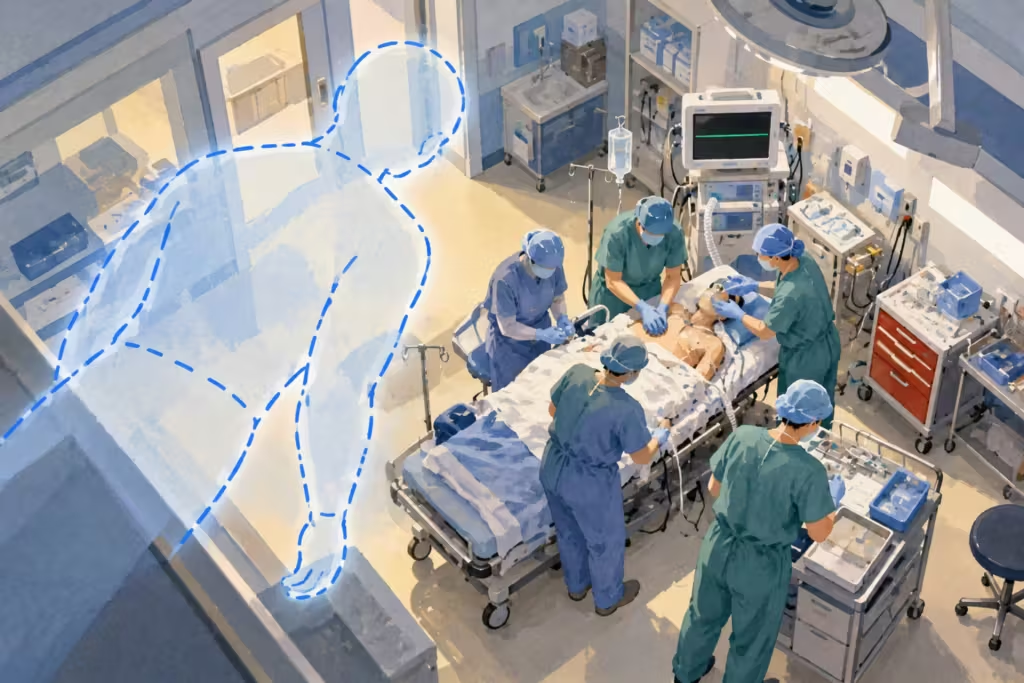
Many people say that, during the NDE, they saw themselves from outside their body and saw what was happening around them. Long bases this reason on four pieces of work:
- His own group of accounts. Of 617, 287 described things that could be checked. According to Long, 280 were “entirely realistic,” with nothing that seemed unreal. Of those 287, 65 people said they later checked for themselves what they had seen and found no errors. No one else looked at medical records or asked witnesses.
- The study by the cardiologist Michael Sabom, from 1982. Long writes that those who had an NDE described their resuscitation much better than other patients. Those other patients had not been through a resuscitation and had to imagine it. Someone going through a resuscitation can hear or feel things, and someone imagining it can’t. We cover this in Sabom’s study.
- The study by the nurse Penny Sartori, from 2008. Long writes that her patients with an NDE were very accurate. Sartori hid pictures high up in the ICU, to see whether anyone who left their body would see them. No one saw them. Only one account was checked, and it came from a patient who didn’t have a cardiac arrest, so it doesn’t say what is perceived during one. We cover this in Sartori’s study.
- A review by the researcher Janice Miner Holden, from 2009. She gathered 89 cases published in books and articles. Long takes from it that 92% were accurate, and other authors give different figures from that same review.
In a note, Long gives the case of Al Sullivan as an example. Sullivan said he saw his surgeon flapping his elbows as if they were wings. Long writes that the surgeon confirmed it. The case comes from a 1998 study by Cook, Greyson, and Stevenson. There, the surgeon couldn’t confirm that he made that gesture during that operation. He only confirmed that he often did it. We tell it in Al Sullivan’s story.
The third reason is about blind people.
Step 5
Reason 3 · Blind people · As Jeffrey Long tells it
Nine people blind from birth say they saw during their NDE

Long relies on the 1999 study by Kenneth Ring and Sharon Cooper. They interviewed 31 people who were blind or nearly blind. Of the 14 who were blind from birth, 9 said they saw something during their experience.
That study also describes its limits. When the researchers asked more, that “seeing” sounded more like knowing with all the senses at once, and several people compare it to touch. And the two best-known cases, those of Vicki Umipeg and Brad Barrows, have no records from the time and no witnesses. We cover this in the Ring and Cooper study.
Long adds Marta’s account. Marta wrote on the website that at age five she almost drowned in a lake. She was legally blind, and she says she saw leaves and birds in detail. Long copies a piece of the account she wrote on the website. “Legally blind” does not say how much she could see. It could be very little or nothing.
The next three reasons are about what people experience inside the NDE.
Step 6
Reasons 5, 6, and 7 · What people experience · As Jeffrey Long tells it
The life review, relatives who had died, and young children
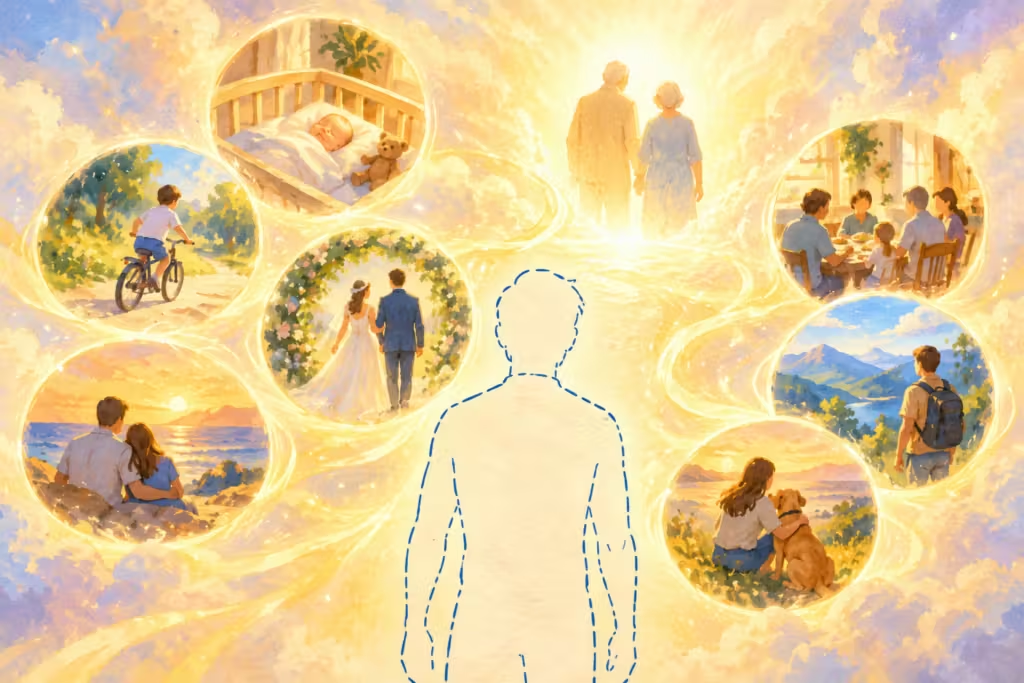
Reason 5, the life review. In 88 of the 617 accounts, the person saw their life pass before them. According to Long, none of those reviews had anything unreal in them.
Reason 6, relatives who had died. Long cites a 2001 study by the researcher Emily Williams Kelly. People who saw someone they knew in their NDE almost always saw someone who had already died. Only 4 in 100 saw someone who was alive. On his website, Long found the same proportion. According to him, in dreams it is the other way around, and people mostly see the living. Long adds two more things, without counting the cases in the article. Some people saw someone in their NDE whom they believed was alive and who had just died. And in Kelly’s study, one in three of the dead was someone they had little to do with. Or someone who died before they were born. For Long, this can’t be explained by what the person expected to see.
Reason 7, children. Long compared 26 accounts from children aged 5 or younger with 585 from older people, on 33 questions. He left out two accounts that didn’t give the age. He found no differences. To him, that means the NDE doesn’t depend on what a person has learned about death.
These data say what the NDEs on his website are like. They don’t say where they come from. Similar experiences in children and adults fit with NDEs coming from outside the brain. They also fit with every brain responding the same way to death.
The last two reasons look at cultures and at what changes afterward.
Step 7
Reasons 8 and 9 · Cultures and aftereffects · As Jeffrey Long tells it
NDEs are alike all over the world and change the lives of those who have them

Reason 8, cultures. Long compared 19 accounts from non-Western countries with Western accounts. According to him, all the features of Western NDEs also appear in the others. He cites two studies of NDEs in Muslim people that say the same. The authors of one of them warn that their cases are poorly documented. What is known about NDEs in other cultures is in Are near-death experiences the same in other cultures?
Reason 9, aftereffects. His questionnaire asked whether the experience had changed people’s lives. Of 278 people who answered, 152 said their NDE changed their life a lot. Only 14 said it didn’t change it at all. Long also relies on the study by the Dutch cardiologist Pim van Lommel, who compared patients with and without an NDE after a cardiac arrest. Those who had an NDE changed more.
A life-changing experience says a lot about how it is lived, but not about where it comes from. A very intense memory can change a life whether the brain produces it or not.
With the nine reasons together, Long draws his conclusion.
Step 8
2014 and 2025 · The conclusion and what came next
Long concludes that NDEs are real, and in 2025 he signs a scale that asks for them to be checked with witnesses

Long concludes that the nine reasons together are very strong evidence that NDEs are real. To him, medicine can’t explain them with what is known about the brain. He adds that more than 20 explanations based on the body or the brain have been proposed, and that if any one of them were convincing, so many wouldn’t be needed.
He also cites a question from his website, which 1,006 people answered. Of them, 962 said their experience was “definitely real.” Only 4 said it wasn’t or probably wasn’t. Long asks that we accept what they say, unless there are good reasons against it.
In 2025, Long and eleven other researchers signed a scale for assessing cases in which someone says they saw something during their NDE. It is called the vNDE scale. If what the person says they saw isn’t confirmed by someone independent, the scale stops and the case scores nothing. Al Sullivan’s case did score, because two doctors confirmed part of it. They confirmed that Sullivan told them about his experience when he woke up, and that the surgeon often made that gesture. No one confirmed that he made it during that operation. We tell it in Al Sullivan’s story.
The question from the beginning remains: do these accounts prove that NDEs are real? Let’s look at what is known and what isn’t.
The nine reasons and what their sources say
What Long says in each reason, and what the study he relies on says, when we have read it.
| Reason | What Long says | What the source says |
|---|---|---|
| 1. A clear mind without an active brain | 835 of 1,122 say they were more awake than usual | The sources confirm that the brain shuts down, but they don’t place any NDE at that moment |
| 2. Leaving the body | 280 of 287 accounts “realistic” | No witnesses. Sartori checked one account, from a patient without a cardiac arrest. Sabom’s patients who imagined their resuscitation had never been through one |
| 3. Blind people | 9 of 14 people blind from birth saw something | That “seeing” resembles knowing with all the senses. The best-known cases have no witnesses |
| 4. Anesthesia | 23 accounts under anesthesia, the same as the others | Shows that they are alike. Doesn’t say when each one happened |
| 5. The life review | 88 accounts, none unreal | Same method as reason 2 |
| 6. Relatives who had died | Only 4 in 100 see someone alive | Matches Kelly’s 2001 study |
| 7. Children | 26 young children, no differences | Shows that they are alike. Doesn’t say where they come from |
| 8. Cultures | 19 non-Western accounts with the same features | One of the studies he cites warns that its cases are poorly documented |
| 9. Aftereffects | 152 of 278 say it changed their life a lot | Matches van Lommel. Doesn’t say where the NDE comes from |
What this table doesn’t tell
- NDERF’s figures come from the people who wrote to the website. They don’t cover everyone who has had an NDE.
- We haven’t read some of the sources in full. We know Holden’s review and Kelly’s study from what others cite.
Frequently asked questions
What is NDERF?
NDERF is a website created in 1998 by the American physician Jeffrey Long. On it, anyone can write about their near-death experience and fill in a questionnaire. In 2014 it had more than 3,700 published accounts, and according to Long it is the largest public collection in the world.
Does Jeffrey Long prove that NDEs are real?
No. Long believes he does. His 2014 article gives nine reasons drawn from the accounts on his website and from other studies. They show that NDEs are alike and that they change lives. No one independent checked what people say they saw.
Is it true that 97% of out-of-body experiences are accurate?
No one knows. That 97% comes from a count by Jeffrey Long: 280 of 287 accounts on his website were “entirely realistic.” It means that neither he nor the person saw anything odd. No one checked those accounts against medical records or with witnesses.
Why do people see relatives who have died in their NDE?
No one knows. According to Jeffrey Long and a 2001 study, people who see someone they know in their NDE almost always see someone who has already died. Only 4 in 100 see someone alive. To Long, this is a sign that the NDE is real. That figure says what the experience is like, not where it comes from.
Where this page comes from
The article
- Jeffrey Long, “Near-Death Experiences: Evidence for Their Reality,” Missouri Medicine 111(5):372–380 (2014)Read for free
- Jeffrey Long and Paul Perry, Evidence of the Afterlife: The Science of Near-Death Experiences, HarperOne (2010)Buy the book
Assessments and critiques
- Bruce Greyson, Jeffrey Long, and others, the vNDE scale, Frontiers in Psychology 16:1661390 (2025)Read for free
To understand more
- Sabom’s studyRead
- Sartori’s study in a Welsh ICURead
- The Ring and Cooper study of blind peopleRead
- The 14 cases of Cook, Greyson, and StevensonRead
- The van Lommel study: 344 people resuscitated in ten hospitalsRead
- What does science say about near-death experiences?Read
Our archive
- A full reading of Long’s article and of his book with Paul Perry, checked against the studies he cites, as of October 30, 2026
More studies
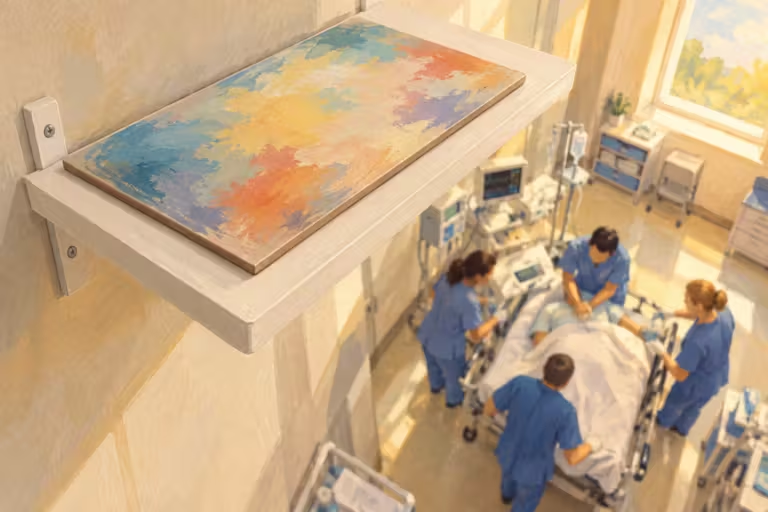
AWARE: the pictures hidden on the shelves
Fifteen hospitals put up pictures that could only be seen from the ceiling, to check whether anyone saw them during a cardiac arrest.
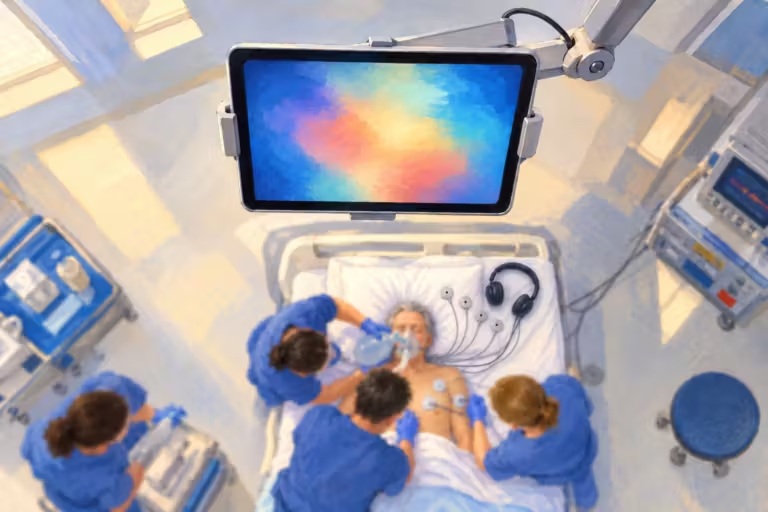
AWARE II: a random picture and the brain on the screen
Above the patient was a tablet with a random picture. Headphones said the names of three fruits. And the doctors measured the brain during resuscitation.
Van Lommel: 344 cardiac arrest survivors in ten hospitals
Ten hospitals asked every cardiac arrest survivor what they remembered. They saw them again after 2 and 8 years.