A study · Swansea (Wales), five years from 1998 (published in 2008)
Penny Sartori’s study: five years in a Welsh ICU and some hidden pictures
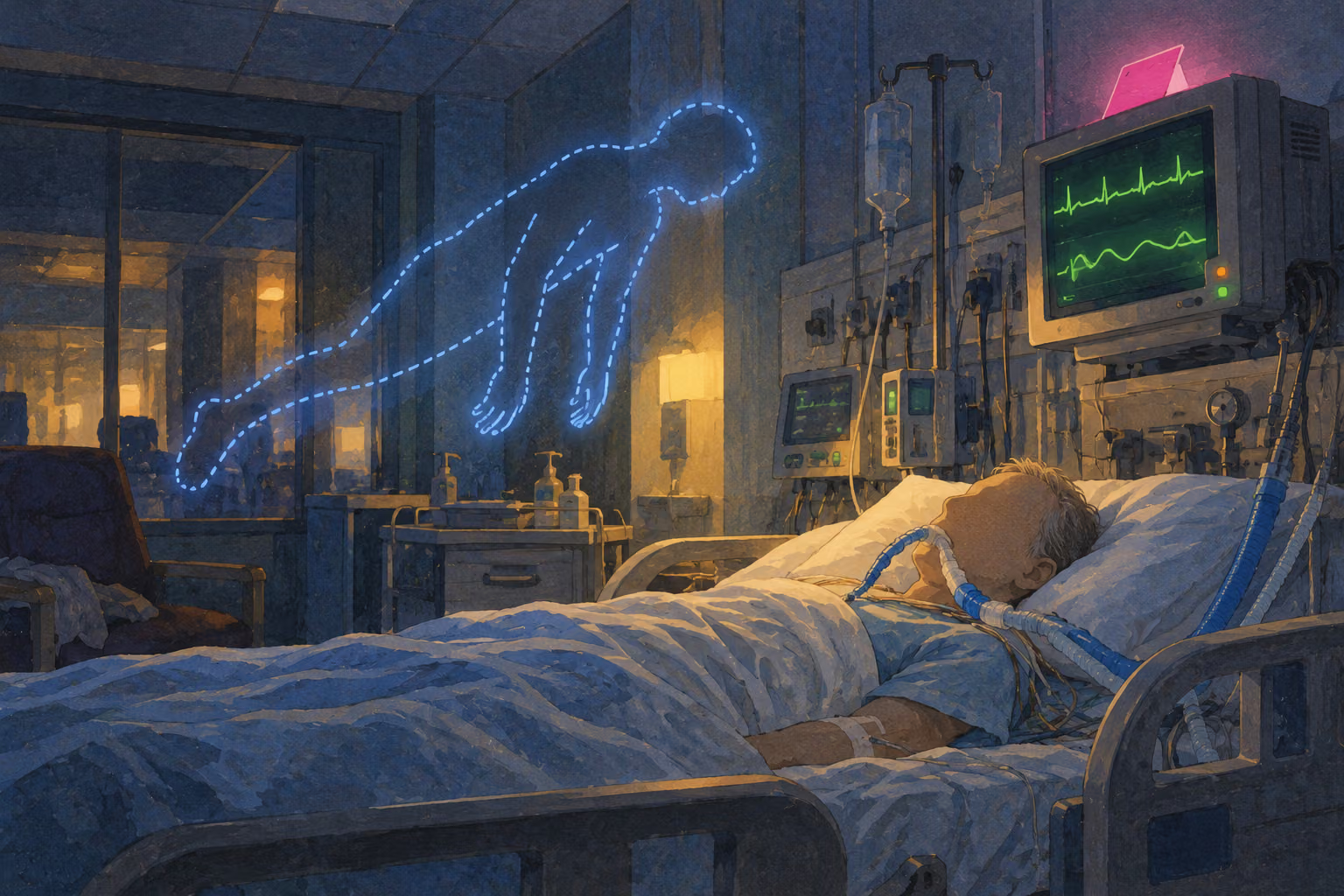
An intensive care nurse spent five years asking her patients what they remembered. She placed hidden pictures above the monitors, which could only be seen from the ceiling. She collected 15 near-death experiences. In 8 of them the patient said they had left their body, and nobody saw the pictures. The author believes that those who reported leaving their body described their resuscitation better than those who did not report it.
The study’s question is: are there NDEs in an ICU, and can what people say they see when they report leaving their body be checked? We tell it step by step. If you only want to know what it found, go straight to the results.
Step 1
Before the study · The question
A nurse wants to check what her patients see
Many people who come out of an NDE say they left their body and saw the scene from above. Those who doubt this answer that many patients know what a resuscitation looks like and can describe one without having seen it.
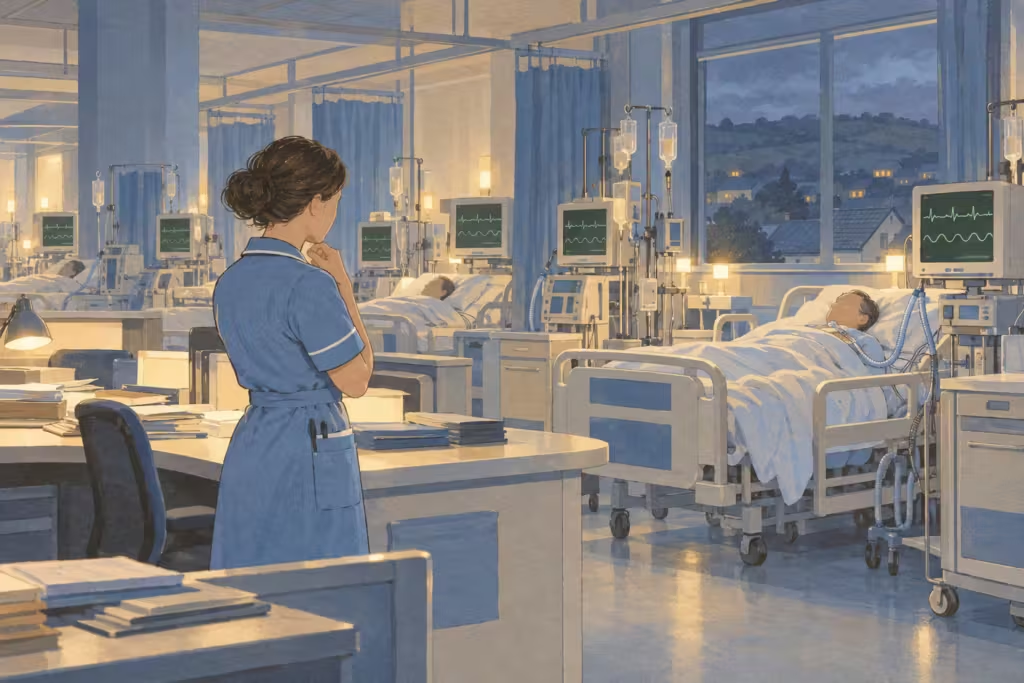
Penny Sartori worked as a nurse in the ICU of Morriston Hospital, in Swansea. She wanted to know whether there were NDEs in her unit and how often. She also wanted to test whether what patients said they saw from above could be checked.
To do that, she set up a test that nobody in the unit knew about.
Step 2
From summer 1997 · As the book tells it
Pictures hidden above the monitors
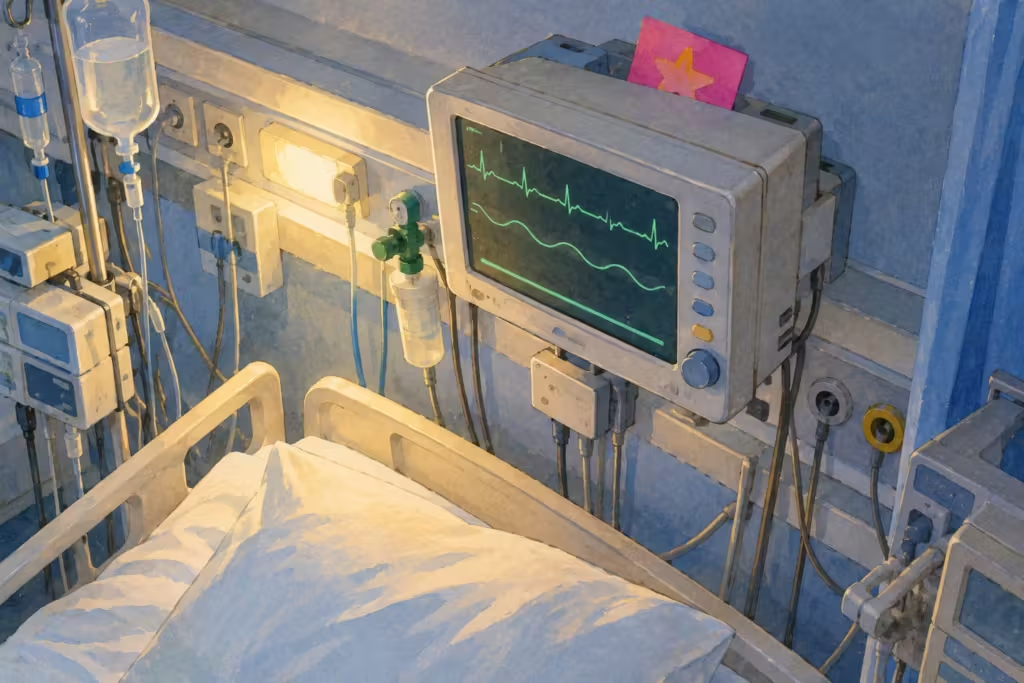
At each bed, the monitor was fixed to the wall, above the patient’s head. Sartori placed cards on top of each monitor. They had symbols and pictures on brightly colored paper, to catch the eye. She hid them behind the edge of the monitor, so they could only be seen from above.
Nobody else knew what was on the cards, not even the doctors or the nurses. That way, nobody could tell a patient without realizing it.
Before starting, she tested the setup during the summer of 1997.
Step 3
From 1998, for five years · As the book tells it
First she asks everyone, then those who had a cardiac arrest
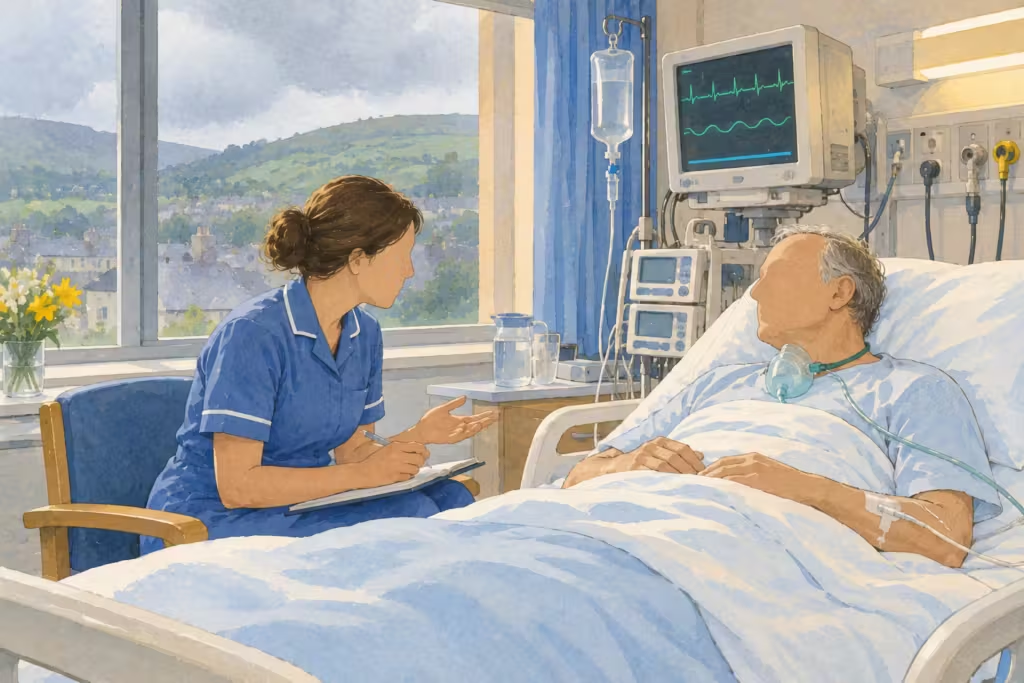
Sartori interviewed the patients herself. She asked an open question. She asked whether they remembered anything from the time they had been unconscious. If they described an NDE, she gave them the Greyson scale. It is a questionnaire the psychiatrist Bruce Greyson created to decide whether something is an NDE.
The study had two parts:
- In the first year, she asked every patient who left the ICU alive, whatever their illness.
- In the following four years, she asked mainly those who had survived a cardiac arrest. She also asked those who had been so ill that they were not expected to survive. And she collected the NDEs that some patients described without anyone asking.
She did a short first interview and, later, a longer one. She also recorded the drugs each patient had been given and the blood tests from the time they were unconscious.
Step 4
Counting the cases · As the book tells it
Few NDEs among all patients, and many more after a cardiac arrest
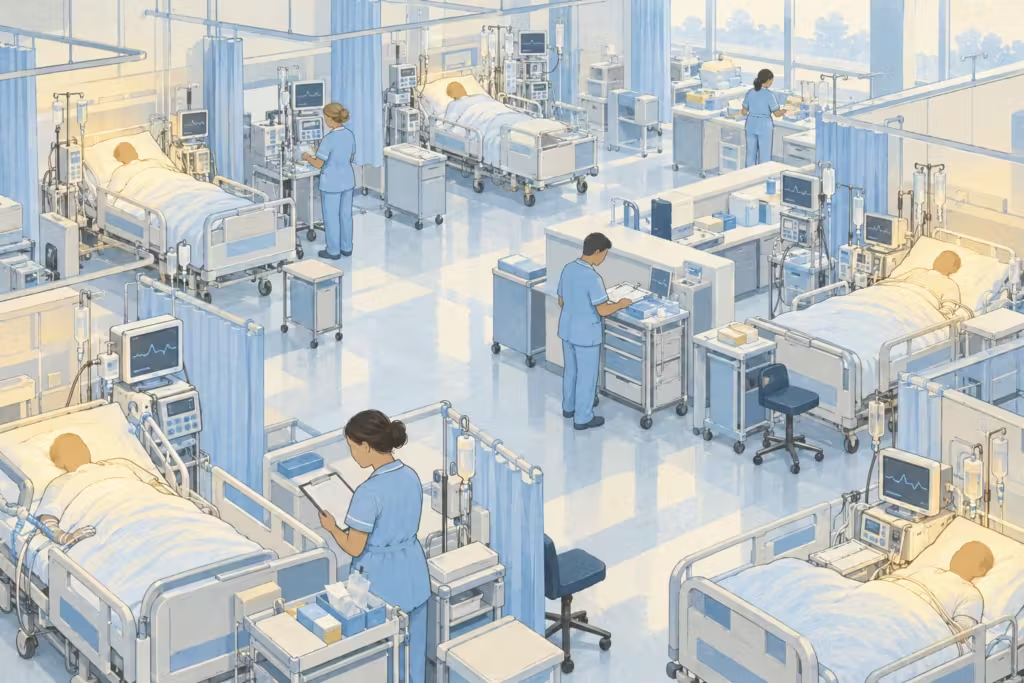
In the first year, 243 patients left the ICU. Only 2 described an NDE. That is fewer than 1 in 100.
Among those who had survived a cardiac arrest, the figure was much higher. Over the five years, 39 people survived a cardiac arrest, and 7 of them described an NDE. That is about 18 in 100.
The drawing has 100 circles. The 18 filled-in ones are, roughly, the share of cardiac arrest survivors who described an NDE.
Over the five years, Sartori collected 15 NDEs. Seven came from patients who had survived a cardiac arrest. The other 8 came from very ill patients who did not have a cardiac arrest, for example after a stroke or a road accident. The 2 NDEs from the first year are among these 15, one in each group.
In addition, in 8 of the 15 NDEs the patient said they had left their body.
She also recorded 12 cases of hallucinations and 3 visions of patients in their last days. Those visions happen to some patients shortly before they die, and they are not counted as NDEs. All three patients died between a few days and a few weeks later.
NDEs went from fewer than 1 in 100 among all patients to about 18 in 100 among those who survived a cardiac arrest. For the author, that difference shows that NDEs are more frequent the closer someone has come to death.
Step 5
Asking about the pictures · As the book tells it
Eight patients say they left their body, and none saw the pictures
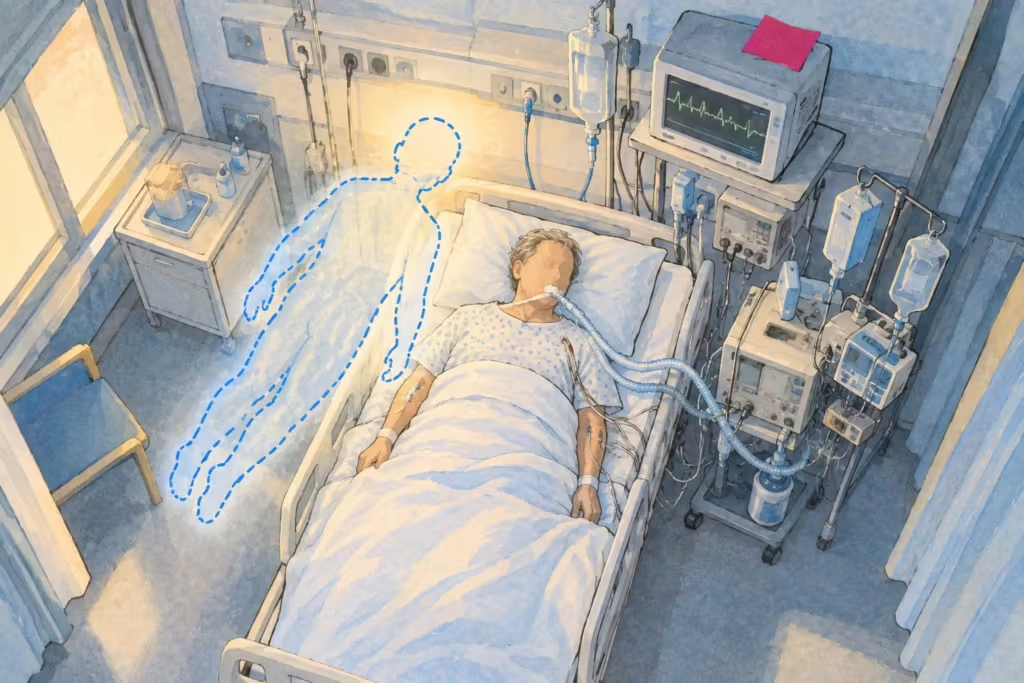
None of the 8 patients who said they had left their body saw the hidden pictures. They did not even remember looking at the monitors, because they were focused on their body.
Some gave a reason. One patient said she did not rise high enough to see them. A man said he had floated to the middle of the room and not toward the monitor.
The test with the pictures stayed in place for five years and gave no result. It does not count in favor of them seeing anything from outside the body, because nobody saw the pictures. It does not count against either, because none of the 8 remembered looking toward the monitors.
Step 6
Comparing with other patients · As the book tells it
Those who did not report leaving their body could not say how they were resuscitated
Sartori ran another test. She asked resuscitated patients who had not reported leaving their body to describe how they thought they had been resuscitated. Most were cardiac arrest survivors with no NDE. That way she could see whether a patient who does not report leaving their body can guess what was done to them.
- 28 people could not even guess.
- 3 people described scenes from TV hospital dramas.
- 2 people tried to guess and got the equipment wrong. For example, they said where they thought the defibrillator paddles had been placed, and in their case the paddles were not even used.
For Sartori, this shows that a resuscitated patient cannot describe their resuscitation without having seen it.
Step 7
Checking the accounts · As the book tells it
Only one account could be checked in detail: Patient 10’s

What remained was to compare that group’s mistakes with what the 8 patients who said they had left their body described. One of them gave a precise account that could be checked with the staff who were there. He is the one the study calls Patient 10.
Sartori was his nurse that day. He did not have a cardiac arrest. He lost consciousness for hours after a crisis in which he was short of oxygen. Afterward he described what the doctor, the physiotherapist and Sartori herself had done around him. His case was published separately in 2006, and we tell it in full in Patient 10’s story.
According to Sartori, the accounts of the other 7 were broadly correct, but they could not be checked. What they described could also have been seen from the bed, without leaving the body. Sartori herself found mistakes in part of two of those accounts. In a third case, she believes the patient pieced the scene together from what they heard and felt.
So the comparison with those who did not report leaving their body rests mainly on a single account.
Step 8
Looking at drugs and blood · As the book tells it
Sartori thinks sedatives do not cause the NDE, but she could not prove it
Sartori wanted to know whether NDEs were caused by strong painkillers or by sedatives. In the first-year sample, 71 in 100 patients received strong painkillers and almost half received sedatives. Even so, fewer than 1 in 100 described an NDE.
Eleven of the 15 people with an NDE had received sedatives. Even so, according to Sartori, the most vivid NDEs came from patients on no drugs.
Several patients who had been sedated for a few days remembered only pieces of the NDE. Two of them remembered just one thing, that they had seen dead relatives. That is why Sartori thinks the drugs, if anything, block the NDE or block the memory of it. She presents this as a possibility, because there were very few cases.
She also wanted to test whether NDEs were caused by a lack of oxygen or too much carbon dioxide in the blood. In the end she could not. The blood samples were not taken at a fixed time, and it was rarely known whether they came from before or after the resuscitation began.
Step 9
In the interviews · As the patients tell it
Short accounts, two of them with fear
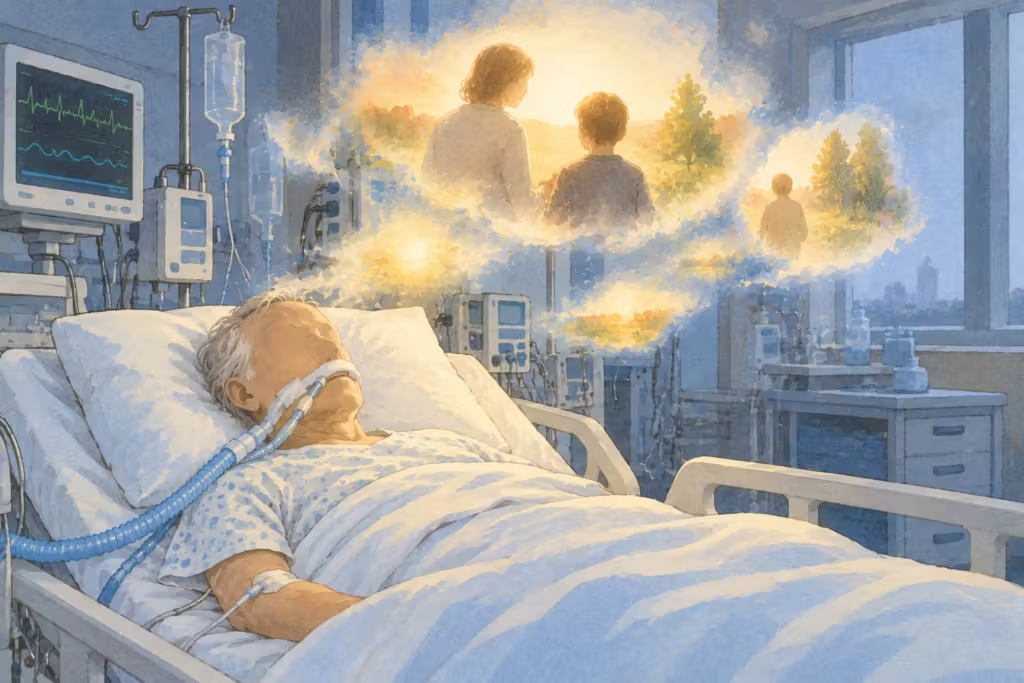
The NDEs in this ICU were different from the ones in books. Apart from the two deepest, they were short, with no story to tell, and the patients did not give them much importance. The most common element was seeing dead relatives.
Two of the 15 NDEs had frightening parts. Those two patients described the frightening part first, because it was what worried them most.
Sartori also wanted to know whether those who had an NDE lost their fear of death more than those who did not. She was only able to speak again with 6 of the people with an NDE and 2 of those without one. The two with the deepest NDEs said they were no longer afraid of dying at all.
Step 10
2008 · As the book tells it
The author draws four conclusions

Sartori presented the study as a doctoral thesis at the University of Wales and published it as a book in 2008. These are her conclusions:
- There are NDEs in an ICU, and they can be captured in a study. They are more frequent among those who have come closest to death.
- Drugs do not cause them. She believes that, if anything, drugs block them or make them remembered in fragments.
- Those who reported leaving their body described their resuscitation better than the others. Those who did not almost never managed to.
- This strengthens the idea that consciousness might exist without the brain. It is her final conclusion, and she presents it as something the study supports, not as something proven.
The author acknowledges that the number of cases was too small for statistical calculations.
Let’s see what can and can’t be known from these data.
Five years, 15 experiences and no picture seen
The study collected few NDEs.
And of the 8 out-of-body accounts, only one could be checked in detail.
| Group | People |
|---|---|
| Patients who left the ICU in the first year | 243 |
| … of whom described an NDE | 2 |
| Cardiac arrest survivors over the five years | 39 |
| … of whom described an NDE | 7 |
| NDEs collected in total | 15 |
| … with leaving the body | 8 |
| … who saw the hidden pictures | 0 |
| … with an account checked in detail | 1 |
What these figures don’t tell
- Only those who survived and could talk were included. More in How many people have an NDE?
- With 15 cases, no statistical calculations could be made. The author acknowledges it.
- Some patients died before the second, longer interview. For four of the 15 NDEs there is only the first interview.
Frequently asked questions
Did anyone see the hidden pictures in Penny Sartori’s study?
No. Sartori hid pictures above the ICU monitors, visible only from above, for five years. Eight patients said they had left their body, and none saw the pictures.
Do resuscitated patients know how they were resuscitated?
In Penny Sartori’s study, no. She asked resuscitated patients who had not reported leaving their body to describe their resuscitation. 28 could not even guess, 3 described scenes from TV dramas and 2 got the equipment wrong.
How many people have a near-death experience in a Welsh ICU?
In Penny Sartori’s study in Swansea, 39 people survived a cardiac arrest over five years. 7 of them described an NDE, about 18 in 100. Among all patients who left the ICU in the first year, it was 2 of 243.
How is Patient 10 related to Penny Sartori’s study?
He is one of the 15 patients with an NDE in the study. He is also the only one whose out-of-body account could be checked in detail with the staff who were there. He did not have a cardiac arrest, so his case does not show whether those who report leaving their body during a cardiac arrest describe their resuscitation well. We tell it in Patient 10’s story.
Where this page comes from
The study
- Penny Sartori (2008), The Near-Death Experiences of Hospitalized Intensive Care Patients: A Five Year Clinical Study, Edwin Mellen PressBorrow on archive.org
- Penny Sartori, Paul Badham and Peter Fenwick (2006), “A Prospectively Studied Near-Death Experience with Corroborated Out-of-Body Perceptions and Unexplained Healing,” Journal of Near-Death Studies 25(2):69-84, the case of Patient 10Read for free
Assessments and critiques
- Michael Rush (2013), critique of the case and the study, Journal of Near-Death Studies 32(1):3-14Read for free
- Penny Sartori (2013), reply to the critique, Journal of Near-Death Studies 32(1):15-36Read for free
To learn more
- 52 cardiac arrests induced on purpose, a hidden screen and no near-death experienceRead
- The near-death experience of Patient 10Read
- The AWARE study: the images hidden on the shelvesRead
- How many people have an NDE?Read
Our archive
- A full reading of the 2008 book, the 2006 article and the 2013 reply, checked on October 23, 2026
More studies
AWARE: the pictures hidden on the shelves
Fifteen hospitals put up pictures that could only be seen from the ceiling, to check whether anyone saw them during a cardiac arrest.
AWARE II: a random picture and the brain on the screen
Above the patient was a tablet with a random picture. Headphones said the names of three fruits. And the doctors measured the brain during resuscitation.
Van Lommel: 344 cardiac arrest survivors in ten hospitals
Ten hospitals asked every cardiac arrest survivor what they remembered. They saw them again after 2 and 8 years.