A study · University of Virginia (United States), published in 2006
52 cardiac arrests induced on purpose, a hidden screen and no near-death experience
Three researchers wanted to check whether people who say they see their resuscitation from above really see what happens in the room. To do so they used an operating room where doctors stop the heart for a few seconds on purpose, to test a device placed in the chest. In that operating room they set up a screen facing the ceiling, with a randomly chosen picture. In 52 arrests, nobody reported a near-death experience or seeing the screen. Greyson asked everyone about the screen, and none said they had seen it. Since nobody reported an NDE, the authors could not test whether someone who says they see the room from above really sees it.
The study’s question is: if someone leaves their body during a cardiac arrest, can they see an image that is only visible from the ceiling? We tell it step by step. If you only want to know what it found, go straight to the results.
Step 1
Before the study · The question
Accounts of people who say they saw their resuscitation from above
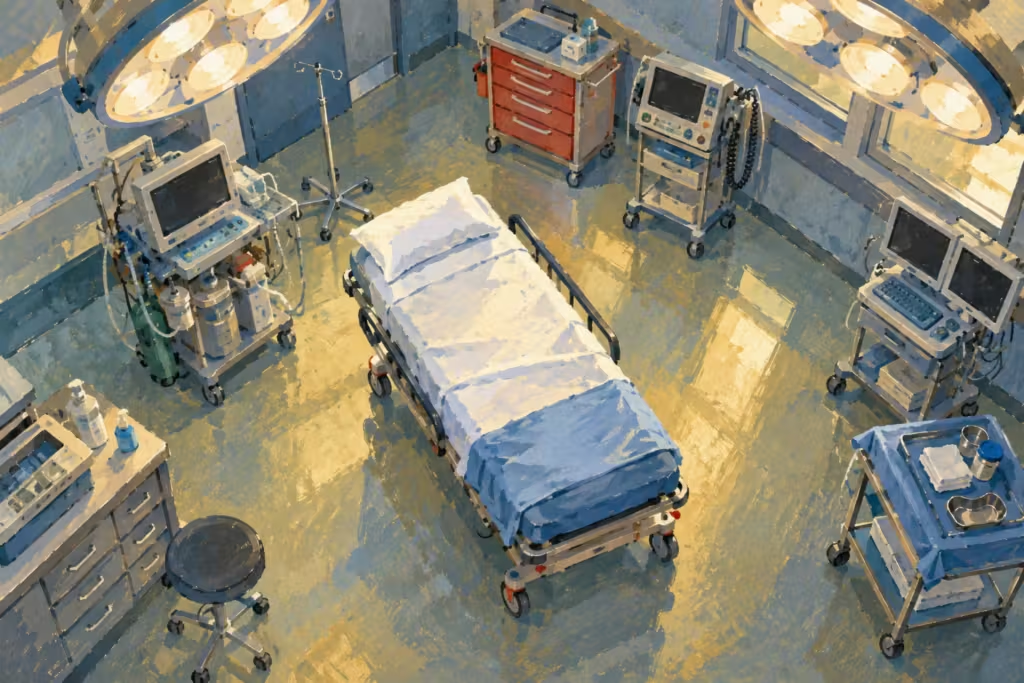
Some people who survive a cardiac arrest say they saw their resuscitation from near the ceiling. Cardiologists were already collecting accounts like these in the early 1980s. The authors of this study cite the case of Al Sullivan, a man who did not take part in this study. He said he had seen his surgeon flapping his elbows during his operation.
None of those accounts had been checked with a test prepared in advance. Cardiac arrests come without warning, and nobody knows beforehand who will have one or where.
The authors looked for a cardiac arrest that could be prepared for.
Step 2
Before the study · As the study tells it
A device that requires stopping the heart to test it
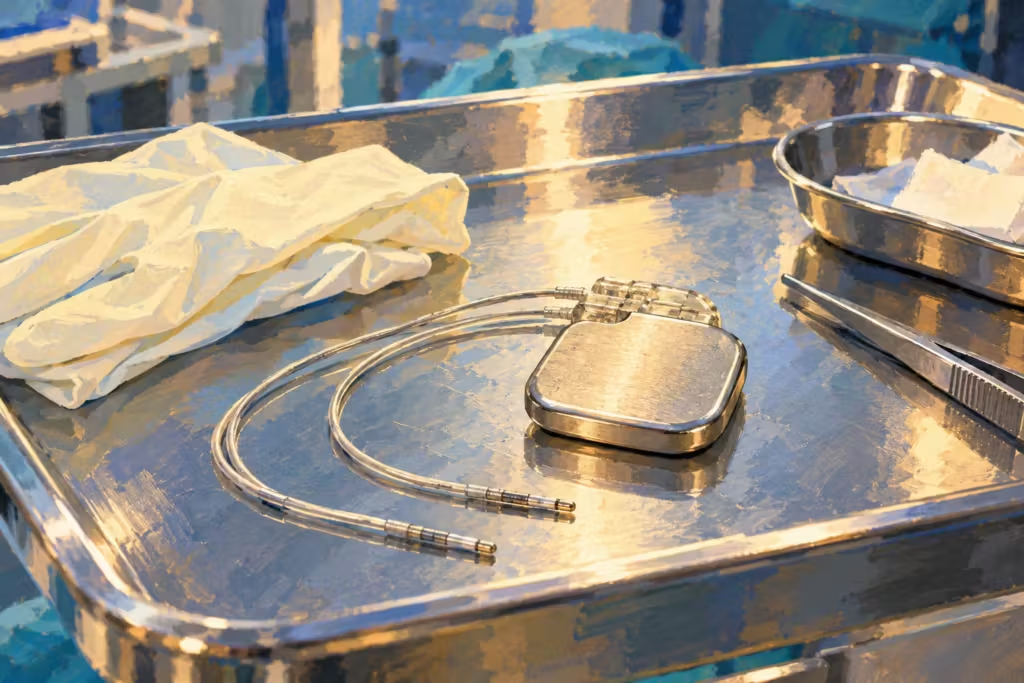
An implantable defibrillator is a small device placed inside the chest. It monitors the heartbeat and, if the heart stops, gives it a shock to make it beat again.
To check that it works, doctors stop the heart on purpose during the operation and let the device restart it. The arrest is short and is recorded, with its time and duration.
The nurse Christine Milne had studied patients having devices like these tested at two hospitals in 1995. Among those whose blood circulation dropped sharply during the test, 14 in every 100 reported an NDE. Among those without that drop, none did.
For the authors, this was the chance to prepare a test in advance.
Step 3
The team · As the study tells it
A psychiatrist, a researcher and a cardiologist

Bruce Greyson is a psychiatrist at the University of Virginia who has studied NDEs since the 1970s. He created the Greyson scale, the questionnaire used to decide whether something is an NDE.
Janice Holden is a professor at the University of North Texas. She had studied how people who say they leave their body describe what they see. Paul Mounsey is a cardiologist at the University of Virginia.
The study was funded by the Bial Foundation.
Step 4
The method · As the study tells it
A screen facing the ceiling, with a randomly chosen picture
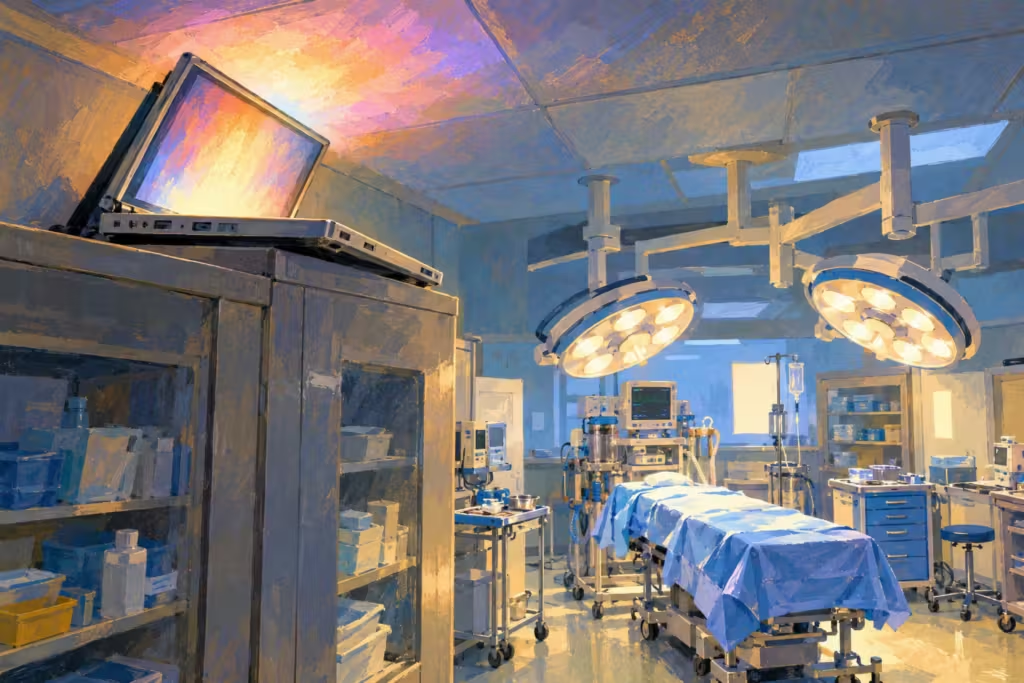
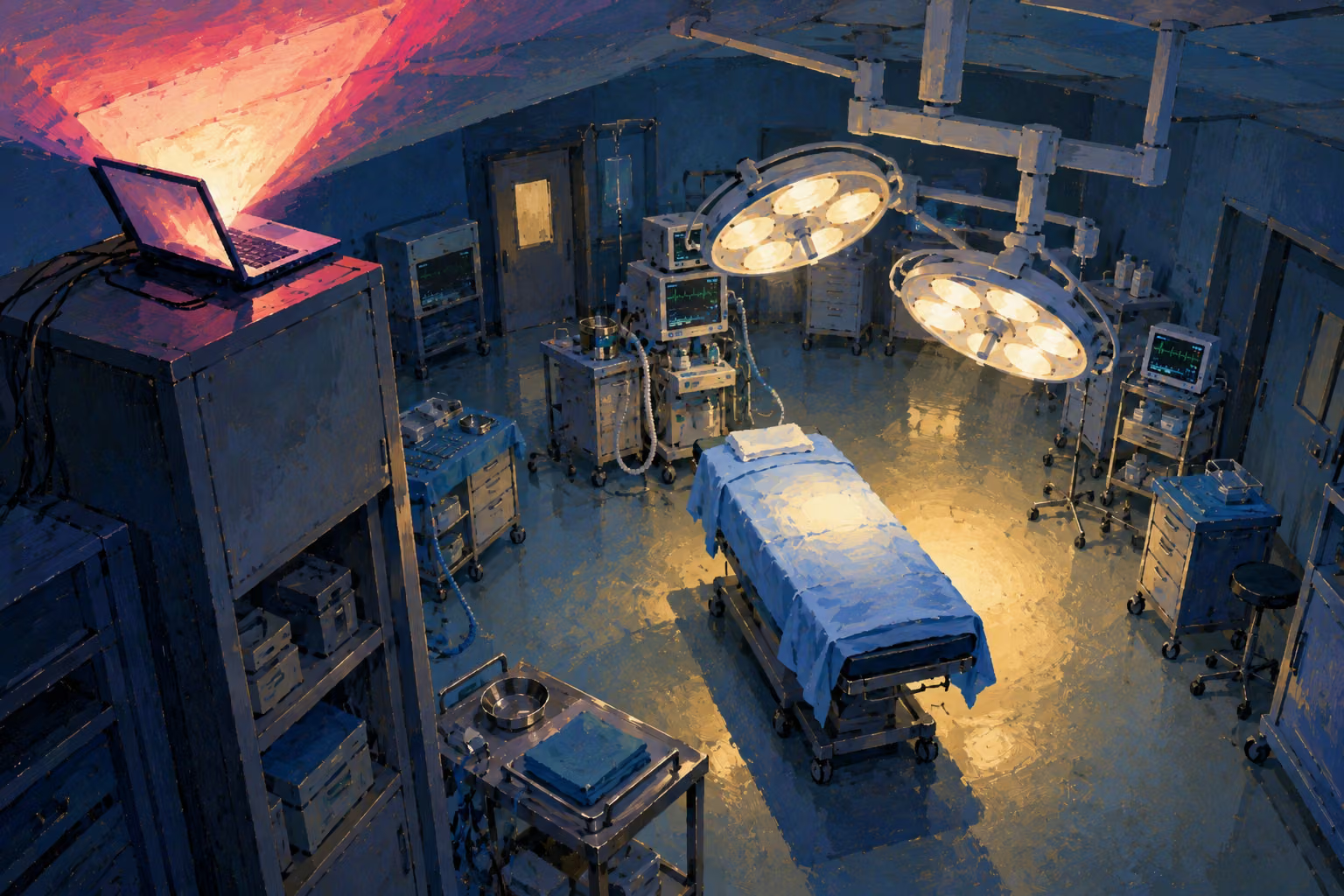
Before each operation, the researchers placed an open laptop on top of a cabinet or a monitor. The screen faced the ceiling, about 1.4 meters above the patient. It could not be seen from the operating table.
Just before the heart was stopped, the computer randomly chose one of 12 cartoon animations and one of 5 colors. They were easy-to-recognize pictures, such as a butterfly flying, a frog jumping or fireworks. With 12 pictures and 5 colors there are 60 combinations. Guessing right by luck was a 1 in 60 chance.
Nobody knew which picture appeared in each operation until the end of the study. The three authors were going to compare what each patient described with the 12 possible pictures. Each would do it separately, without knowing which one had appeared.
Step 5
The operations · As the study tells it
25 patients and 52 arrests of about 9 seconds
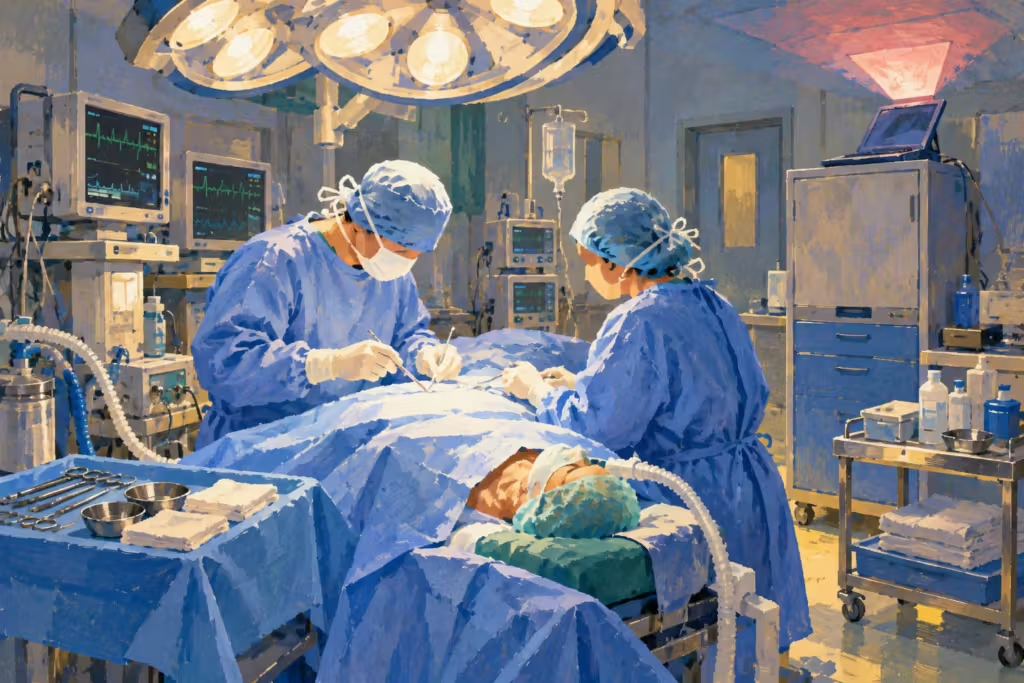
25 patients at the University of Virginia hospital took part. Their average age was 66 and 21 were men. 23 had their heart stopped twice and 2 had it stopped three times. That made 52 arrests in total.
Before the operation they were given sedatives, midazolam and fentanyl. During the operation they were given anesthesia. The patients were unconscious for about 10 minutes.
Each arrest lasted about 9 seconds on average. The shortest lasted almost 4 seconds and the longest, 25.
Step 6
After the operation · As the study tells it
An interview a few hours later
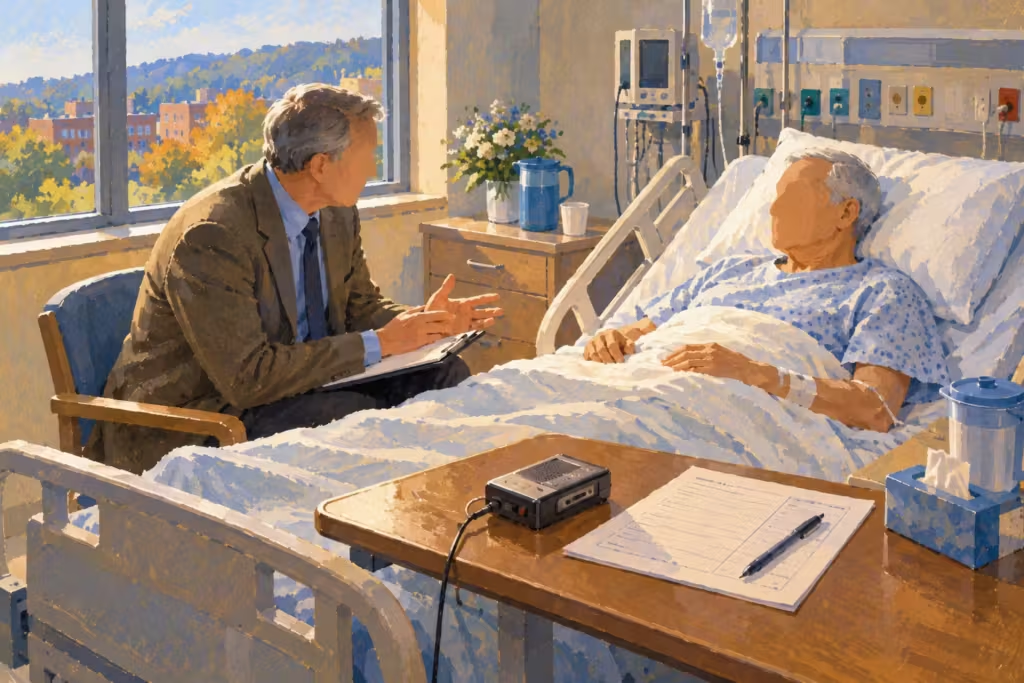
When the doctors judged that the patient had recovered, Greyson talked with them for about 15 minutes and recorded the conversation. On average, the interview took place about 13 hours after the operation.
Greyson asked what the patient remembered, whether they had lost consciousness and whether they saw anything unusual in the room. If the patient did not mention the screen, Greyson asked whether they had seen it. He also gave them the Greyson scale, which goes from 0 to 32 points. Anyone who scores 7 or more counts as a person with an NDE.
Step 7
The results · As the study tells it
Nobody reported a near-death experience
Nobody reached 7 points on the scale. 23 of the 25 patients scored 0 points, one scored 1 point and another, 6 points. Nobody said they had left their body or seen the room from above.
20 patients remembered nothing of the time they were unconscious. The other 5 remembered something.
On the scale, one patient said time stopped and another, a strong sense of peace. Three others reported things the authors consider doubtful. One felt they were no longer in conflict, another felt they were in an unfamiliar place and another perhaps sensed the presence of a dead loved one. None said they had left the body or seen a light.
Even so, Greyson asked everyone about the screen.
Step 8
The results · As the study tells it
Nobody reported seeing the screen
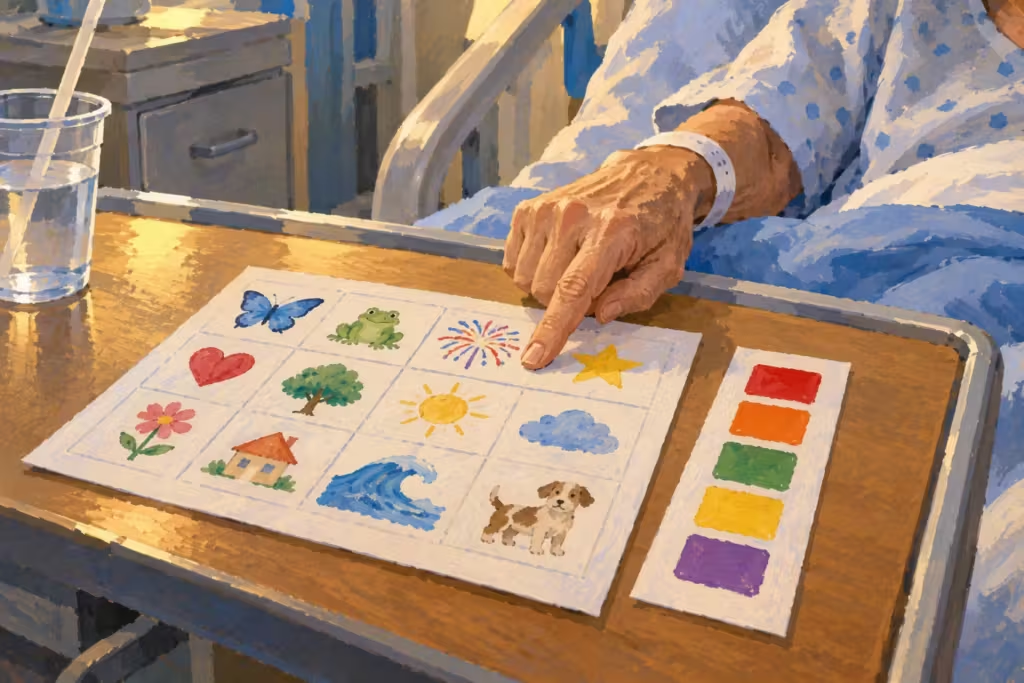
No patient said they had seen images during the operation. When told about the computer, none wanted to guess what had been on the screen.
They were then shown the 12 possible pictures. Only 2 were willing to guess which one had appeared, and both were wrong. With the 5 colors, only 3 were willing to guess, and one was right.
With 5 colors, a lucky guess happens 1 time in 5. One right answer in 3 tries is normal by pure luck.
Step 9
2006 · As the authors conclude
Three possible reasons, according to the authors

The authors expected between 5 and 10 NDEs in the 52 arrests, based on what other studies had found. They were surprised to find none. They suggest three reasons:
- The patients knew they were not in danger. The doctors had reassured them beforehand. The authors believe the fear of dying may help an NDE to occur.
- The arrests were very short. Other studies with these same devices found that the brain takes 10 or 11 seconds on average to show signs of lacking blood. The average arrest in this study was shorter, about 9 seconds.
- Midazolam erases memory. This sedative prevents people from remembering what happens after taking it. There may have been NDEs that the patients forgot.
They propose trying again in operations with more danger, with longer arrests and without midazolam. As an example, they cite an operation in which the body is cooled and the heart is stopped. The cardiologist Michael Sabom described it in 1998, and the patient was Pam Reynolds.
Let’s see what can and can’t be known from these data.
52 arrests and no NDE reported
The authors expected between 5 and 10.
Nobody reported one, and nobody said they had seen the screen.
| Item | Figure |
|---|---|
| Patients | 25 |
| Induced arrests | 52 |
| Average length of each arrest, in seconds | 9.2 |
| Patients who remembered something of the time unconscious | 5 |
| Patients who reported an NDE | 0 |
| Patients who reported seeing the screen | 0 |
What these figures don’t tell
- These arrests are not like those that come without warning, in the street or in hospital. They last seconds, they are done with sedatives and the patient knows they are being watched. In arrests without warning, according to the studies the authors cite, between 9 and 18 in every 100 survivors report an NDE. More in How many people have an NDE?
- There are few patients. 25 people in a single hospital.
Frequently asked questions
Can a near-death experience be induced by stopping the heart?
In a 2006 study, doctors at the University of Virginia stopped the heart 52 times in 25 patients to test a device. It was an implantable defibrillator, which is placed inside the chest. Nobody reported a near-death experience. The arrests lasted about 9 seconds and the patients were taking a sedative that prevents remembering.
Has anyone used a screen near the ceiling to test whether people see anything outside the body during a cardiac arrest?
Yes. In 2006, the psychiatrist Bruce Greyson and his team placed a screen facing the ceiling, with a random picture. They did it in 52 cardiac arrests induced on purpose. Greyson asked every patient about the screen, and none said they had seen it. Since nobody reported a near-death experience, it could not be tested whether someone who says they see the room from above really sees it.
Why were there no near-death experiences in the induced arrests of Greyson’s 2006 study?
The authors suggest three reasons. First, the patients knew they were not in danger. Second, the arrests lasted only about 9 seconds. Third, the sedative midazolam prevents remembering. The study could not tell which of the three mattered most.
What is an implantable defibrillator?
It is a small device placed inside the chest. It monitors the heartbeat and, if the heart stops, gives it a shock to make it beat again. To check that it works, doctors stop the heart for a few seconds during the operation.
Where this page comes from
The study
- Bruce Greyson, Janice Miner Holden and J. Paul Mounsey (2006), “Failure to Elicit Near-Death Experiences in Induced Cardiac Arrest,” Journal of Near-Death Studies 25(2):85-98Read for free
To learn more
- Pam Reynolds’ near-death experienceRead
- Cold circulatory arrest in surgery: 3 memories in Montreal and none in RennesRead
- The AWARE study: the images hidden on the shelvesRead
- Penny Sartori’s study: five years in a Welsh ICU and some hidden picturesRead
- Al Sullivan’s near-death experienceRead
Our archive
- A full reading of the article, checked on October 23, 2026
More studies
AWARE: the pictures hidden on the shelves
Fifteen hospitals put up pictures that could only be seen from the ceiling, to check whether anyone saw them during a cardiac arrest.
AWARE II: a random picture and the brain on the screen
Above the patient was a tablet with a random picture. Headphones said the names of three fruits. And the doctors measured the brain during resuscitation.
Van Lommel: 344 cardiac arrest survivors in ten hospitals
Ten hospitals asked every cardiac arrest survivor what they remembered. They saw them again after 2 and 8 years.