A real-life story · Hartford, Connecticut, United States, 1988
Al Sullivan’s near-death experience
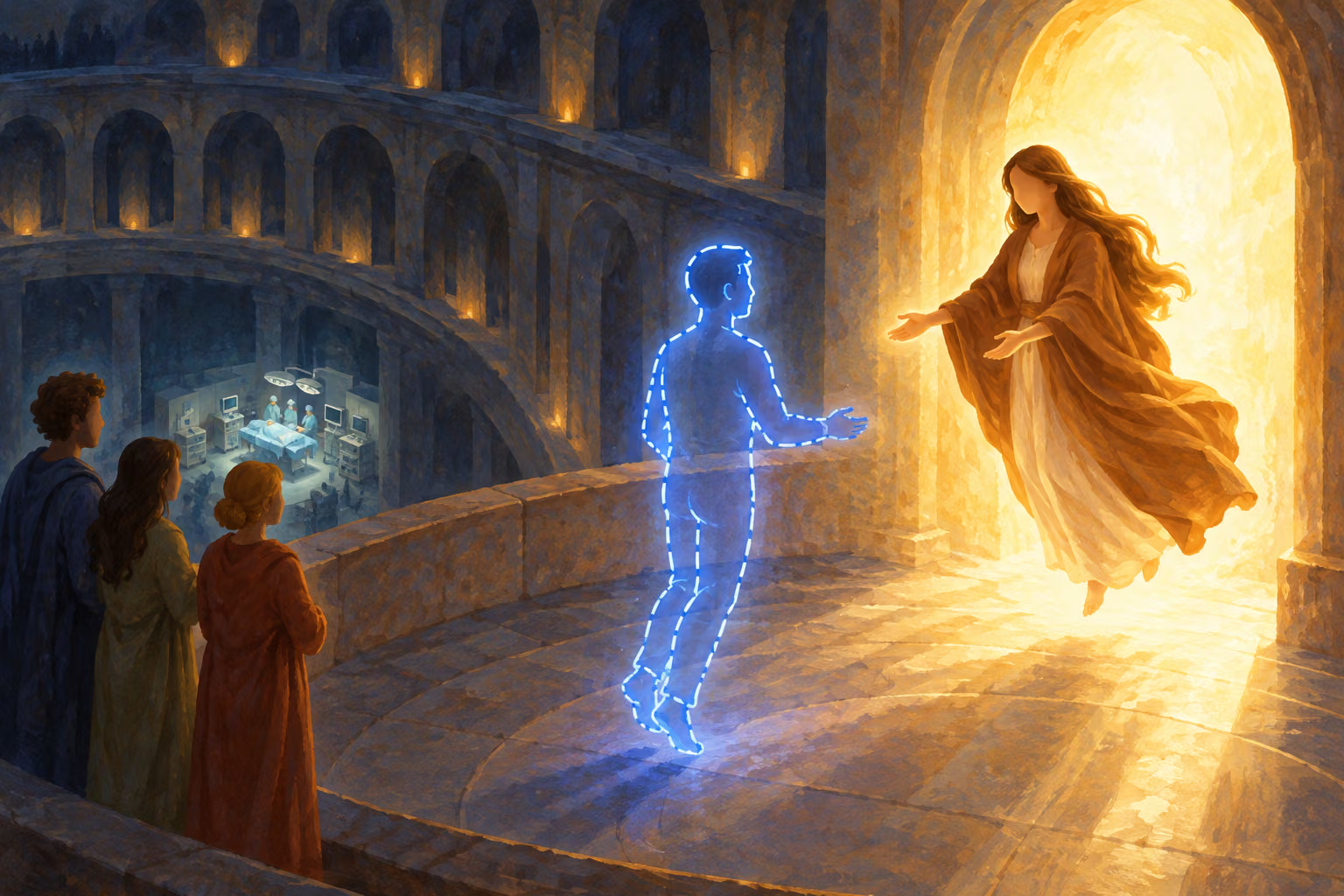
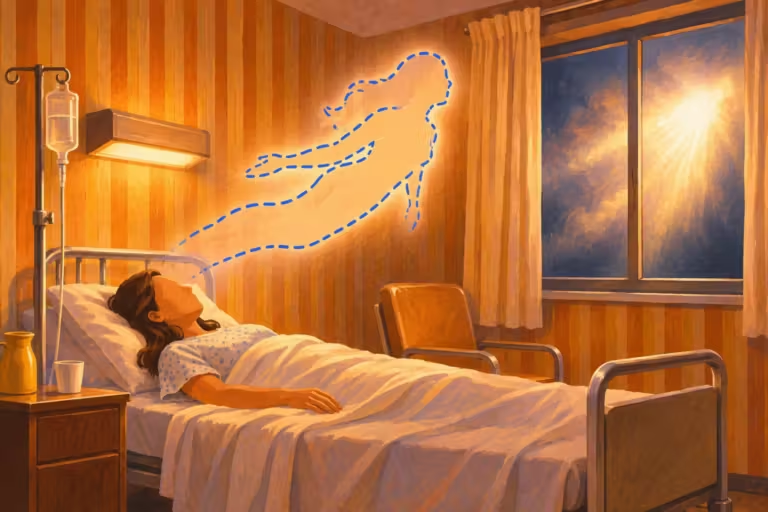
In January 1988, Al Sullivan had emergency heart surgery at a hospital in the United States. He later said he had left his body and watched from above as his surgeon moved his elbows as if he were trying to fly. He also said he saw a light and his mother. His mother had died when he was seven.
Sullivan’s story is one of the most cited because of one detail. Moving his elbows that way was a habit of his surgeon’s. His cardiologist says he never saw any other surgeon do it. In 1997, the surgeon could not confirm that he did it during Sullivan’s operation. Years later, on television, the surgeon said he could not explain how Sullivan saw it under complete anesthesia. How did Sullivan know about that gesture?
Step 1
Monday, January 18, 1988 · Before the operation
A van driver’s heart gives out at work

Al Sullivan was 56. He drove a van in Connecticut, in the northeastern United States.
That Monday morning, his heart started beating irregularly at work. He was taken to Hartford Hospital.
There they ran tests. One of his coronary arteries became blocked during the tests. These are the arteries that carry blood to the heart itself.
He was rushed into the operating room.
The operation turned into a quadruple bypass. In this operation, the surgeons build four new routes so the blood can get around the blocked arteries. The routes are made from the patient’s own veins or arteries.
Before starting, the surgeon came to talk to him.
Step 2
In the operating room · Awake
The surgeon explains the operation, and Sullivan stays awake for a while
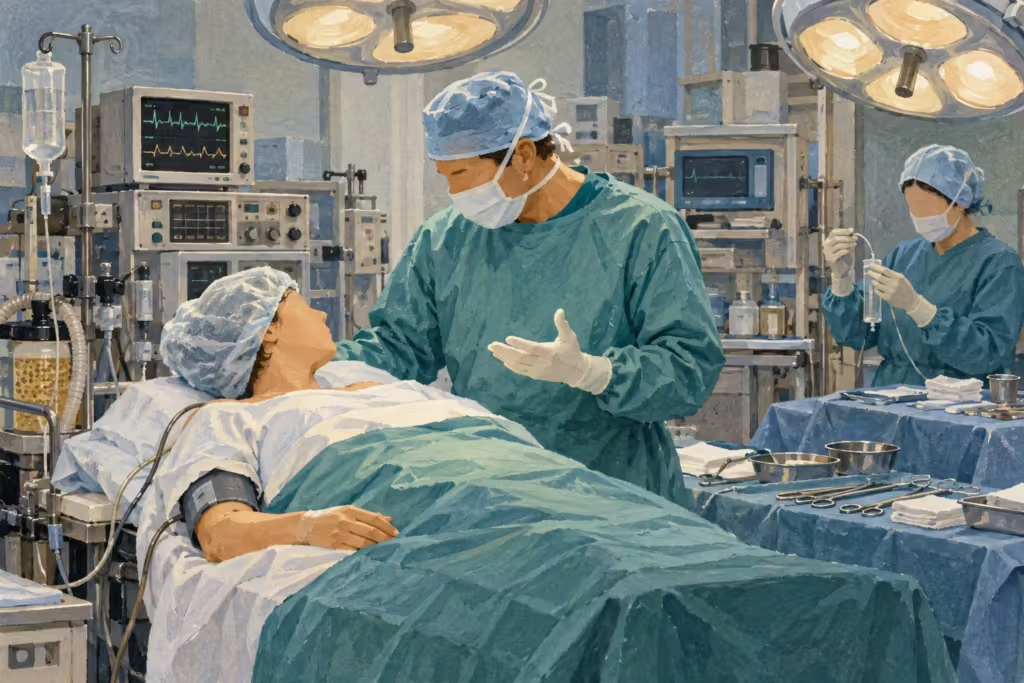
The surgeon’s name was Hiroyoshi Takata. According to Sullivan, he had never seen him before. The surgeon introduced himself and explained the plan. They would take veins from his legs and an artery from his chest. With them they would do four or five bypasses.
His medical record gives the order in which he was put under. The three researchers who studied the case quote it in a 1998 article. First he was given a local anesthetic, the kind that numbs only part of the body. With that anesthetic, they inserted an intra-aortic balloon. It is a small balloon placed in the aorta to help the heart pump. The aorta is the body’s largest artery.
Then he was given a general anesthetic, the kind that puts you fully to sleep. And the operation began.
He was awake in the operating room for a while, and the surgeon had talked with him there.
Anything he saw during that time, he saw in the ordinary way. And Sullivan places the start of his experience in that same stretch of time, while the surgeon was talking to him.
Step 3
In the operating room · Sullivan’s account
Sullivan says he stops listening to the surgeon and starts watching him from above
Years later, Sullivan told it like this in a television segment.
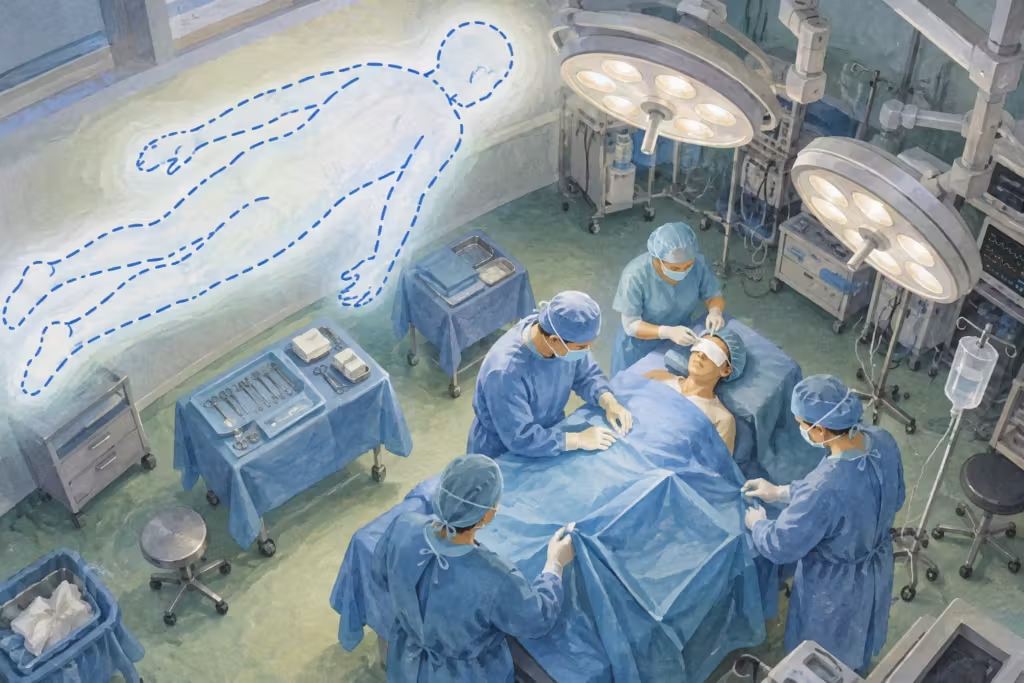
The surgeon was explaining the operation to him. Sullivan says that all of a sudden he didn’t need to listen anymore. He could see what the surgeon was doing.
“I just left my body and watched.”
He was up above, looking down at what used to be him. He felt that the one down there was no longer him. “The real me is up here watching.”
He says that from there he saw them cover his eyes and put drapes and blankets all around him. Even so, he could still see the surgeon and his team. He says he could see through the operating table, and that he noticed what boots the surgeon was wearing.
We don’t know whether Sullivan was already fully under when what he describes begins. He places it while the surgeon was talking to him.
Step 4
During the operation · Sullivan’s account
Sullivan says he rises through black smoke to a wall with light behind it
In 1990, two years later, Sullivan wrote down his experience. This is how he tells it there.
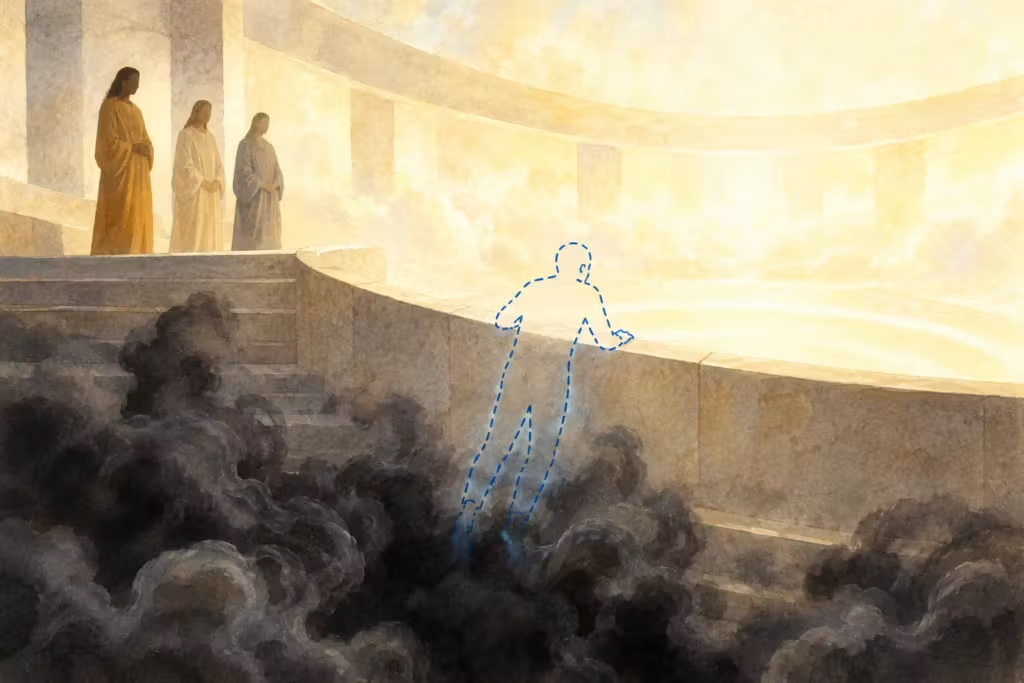
He began to rise. He found himself surrounded by thick black smoke. Whichever way he turned, the smoke was still there. But it was not going to stop him.
He reached a place like an amphitheater. In front of him was a wall that kept him from going in. Behind the wall shone a very bright light.
To his left he saw three humanlike figures.
He grabbed the wall and looked over it. Below, on the left, he saw himself.
Step 5
During the operation · Sullivan’s account
Sullivan says he sees his open chest and the surgeon “flapping”
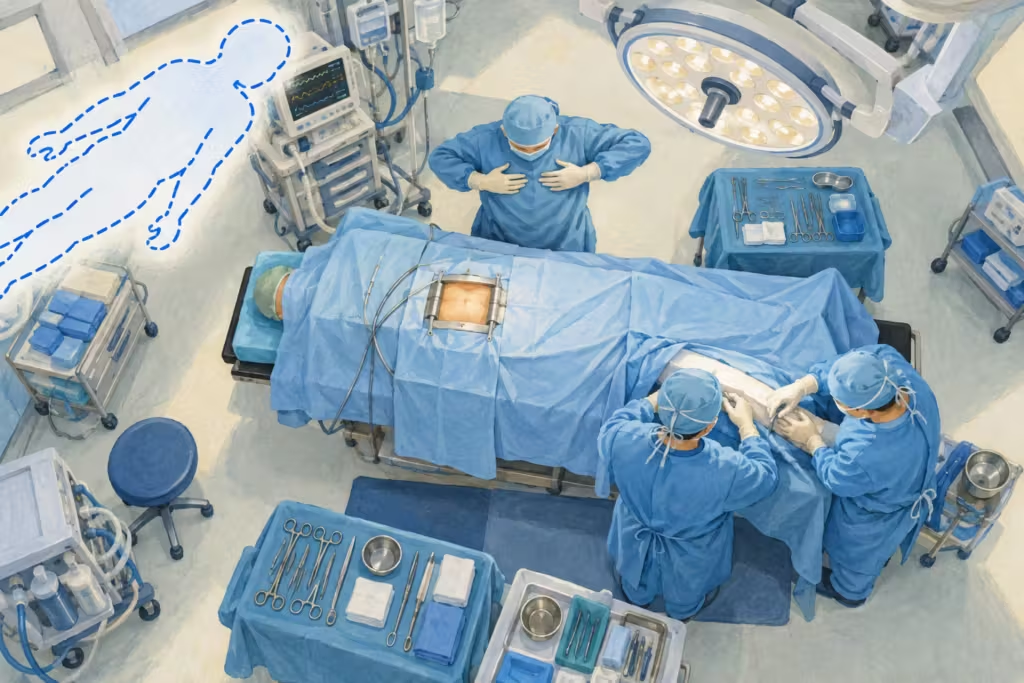
He was lying on a table, covered with light blue sheets. His chest was open. He says he could see his heart.
He also saw his surgeon. It was the same surgeon who had explained the operation to him shortly before. The surgeon seemed somewhat perplexed.
This is how he described the surgeon’s gesture in 1990:
“I thought he was flapping his arms as if trying to fly.”
Years later he gave more details to Bruce Greyson, a psychiatrist who investigated his case. The surgeon was standing alone over his open chest. Metal clamps held his chest apart. At the same time, two other surgeons were working on his leg.
That puzzled him. He didn’t understand what they were doing to his leg, if the problem was his heart. Today he knows they were taking out a vein to make the bypasses.
This gesture of the surgeon’s is the part of his story that can be checked. It was confirmed that this was a habit of the surgeon’s. In 1997, the surgeon could not confirm that he made the gesture during that operation. Years later, he talked about the case on television. At the end we’ll see everything that was checked.
Step 6
During the operation · Sullivan’s account
Sullivan says he sees his brother-in-law, and then his mother
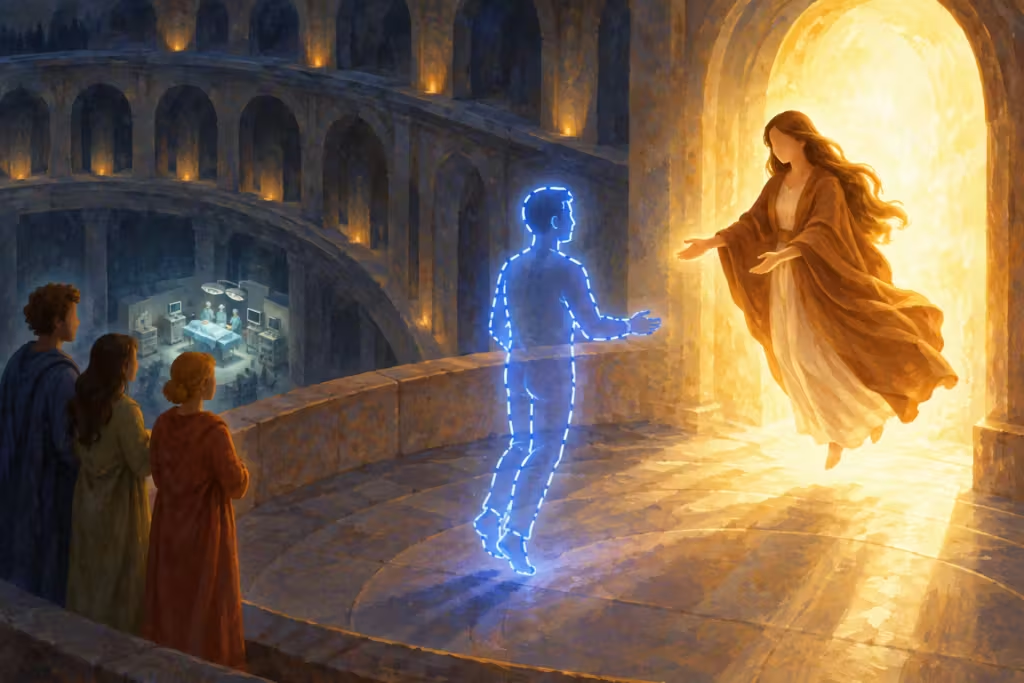
One of the three figures by the wall was his brother-in-law. He had died almost two years earlier.
Then, to his right, he saw a very bright yellow light. It came from what looked like a brightly lit tunnel. It was the brightest light he had ever looked into, but it did not hurt his eyes.
He felt warmth, joy, peace, and a sense of being loved. A figure in a brown cloak came out of the light and drifted toward him.
It was his mother. She had died at 37, when Sullivan was seven.
The first thing he thought was how young she looked. She smiled at him and moved her lips, but he couldn’t hear her. He says that soon they were able to understand each other through thought.
Then his mother’s face changed. She looked worried.
Step 7
During the operation · Sullivan’s account
Sullivan says his mother guides the surgeon’s hand to his heart
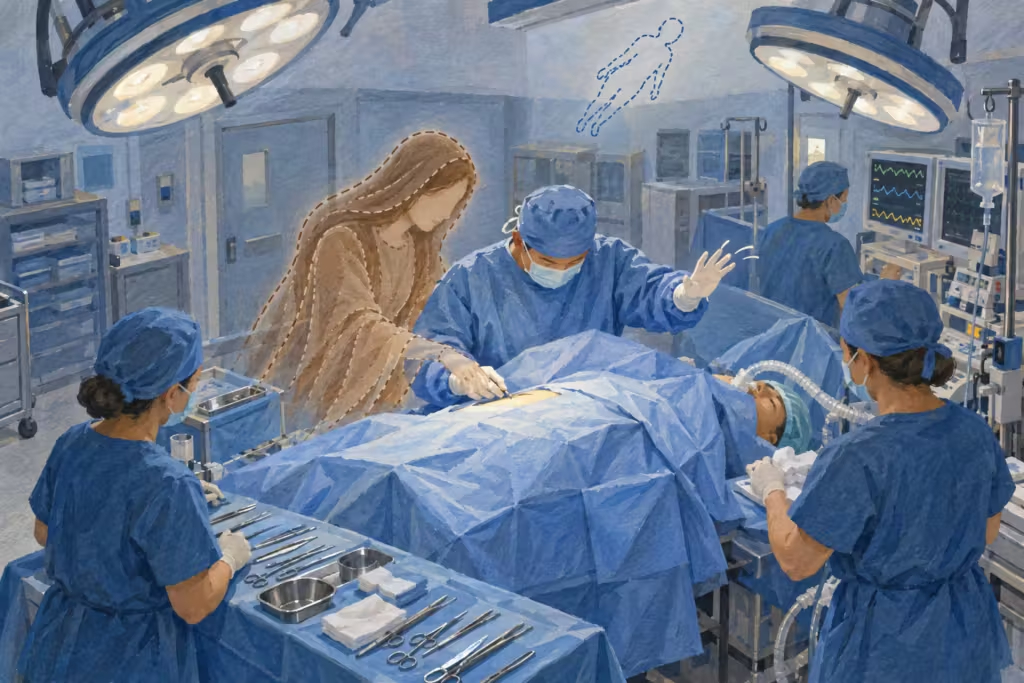
His mother left his side and floated down to the surgeon.
She took the surgeon’s hand and placed it on the left side of Sullivan’s heart. Then she came back to him.
Sullivan remembers the surgeon making a sweeping motion with his hand, like someone shooing away an insect.
Then his mother held out her hand to him. He tried, but he could not take hold of it. She smiled and drifted back toward the tunnel of light.
No one has confirmed or contradicted this part. But the doctors could be asked about the surgeon’s elbow gesture.
Step 8
After the operation · Awake · Sullivan’s account
Sullivan tells his cardiologist as soon as the tube comes out
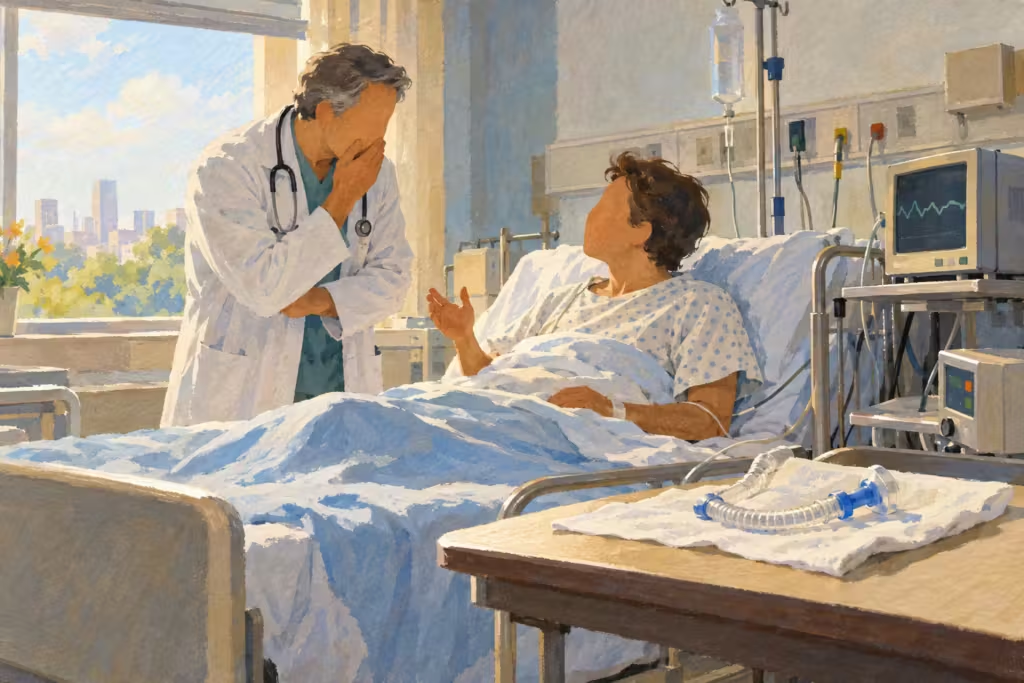
Sullivan woke up with a tube in his throat. He says he told his cardiologist what he had seen as soon as the tube was taken out and he could speak. The cardiologist was the doctor treating his heart. His name was Anthony LaSala.
At first the cardiologist thought it was an effect of the drugs. Then Sullivan told him about the surgeon. Here it is in our own words:
SullivanI saw the surgeon flapping his elbows, as if he wanted to fly.
The cardiologistWho told you that?
SullivanNo one. I saw it myself, from above, in the operating room.
He says the cardiologist’s eyes went wide. He also says the cardiologist explained it was a peculiar habit of Dr. Takata’s. The surgeon would press his palms flat against his own chest when he had not yet scrubbed in. That way his ungloved hands would not touch anything sterile. And he would give instructions to his assistants by pointing with his elbows.
Part of this conversation could be checked. Almost ten years later, the cardiologist confirmed that Sullivan told him about his experience very soon after waking up.
Step 9
The following years · Sullivan’s account
The surgeon replies that Sullivan never died
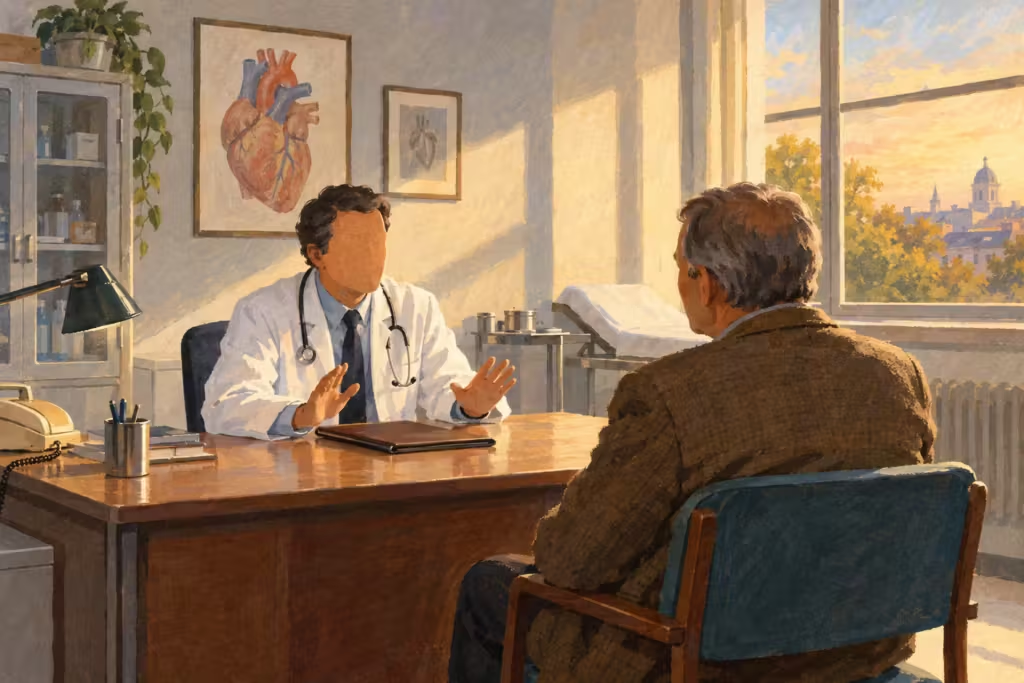
According to Sullivan, the cardiologist told the surgeon what had happened.
The surgeon got defensive. He only insisted that Sullivan had never “died” during the operation.
Sullivan did not talk to the surgeon about his experience until a follow-up visit. It was probably a couple of years later. He says this was all the surgeon told him:
“Well, you’re here, you’re alive, so I must do something right!”
Around that time, his story reached a researcher.
Step 10
1990 · According to the study
Sullivan meets a researcher and writes down his account

In 1990, two years after the operation, Sullivan went for the first time to a meeting of an association. That association studies near-death experiences. The meeting was in Connecticut.
There, Bruce Greyson learned about his case. Greyson is a psychiatrist who studies these experiences.
That same year, Sullivan wrote his account. It is the earliest written record of his experience.
In that account he says the surgeon was flapping his “arms.” But he told Greyson and the other researchers that he had spoken to the cardiologist about the “elbows.”
Seven more years went by before the researcher went to ask the two doctors.
Step 11
Fall 1997 · According to the study
The researcher asks the surgeon and the cardiologist
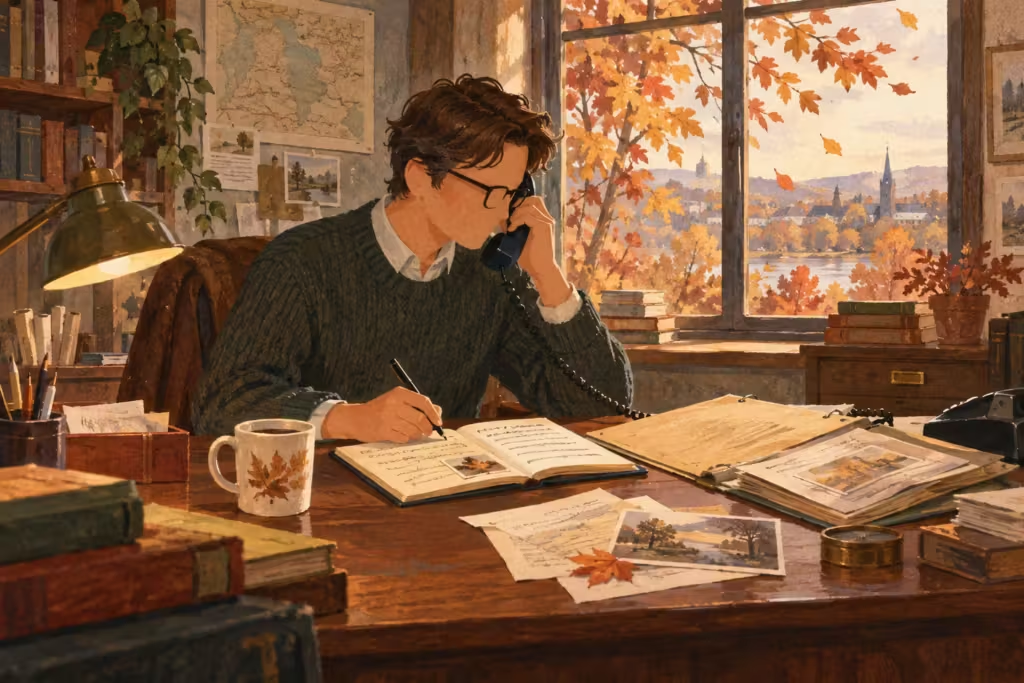
Bruce Greyson spoke with the surgeon and with the cardiologist in the fall of 1997, almost ten years after the operation.
The surgeon could not confirm that he moved his elbows during Sullivan’s operation.
He did confirm that it is a habit of his. But he gave a different reason. According to Sullivan, the cardiologist had told him the surgeon did it before scrubbing in. The surgeon said he does it after. Once he has scrubbed in, he does not want his hands to touch anything until it is time to operate.
The cardiologist confirmed two things. He confirmed that Sullivan told him about his experience very soon after waking up. And he confirmed that the surgeon has that habit.
The cardiologist added that he had never seen any other surgeon make that gesture.
Step 12
1998 · According to the study
The researchers look for an ordinary explanation
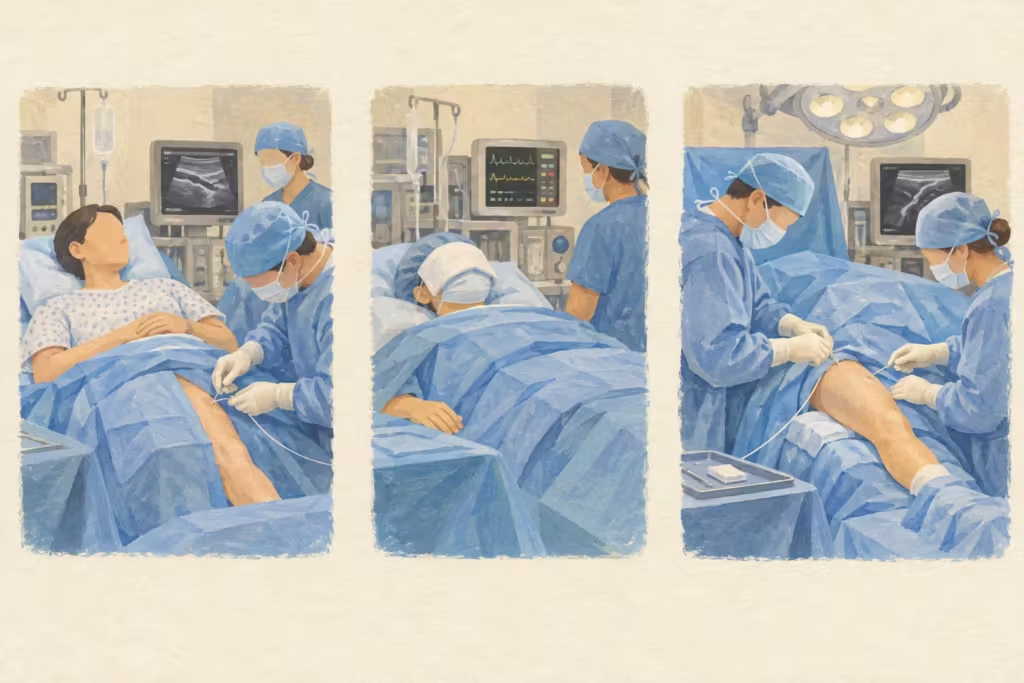
In 1998, Greyson published the case in a scientific journal. He wrote it with two other researchers, Emily Williams Cook and Ian Stevenson. All three were at the University of Virginia. The article gathered 14 similar cases, and we tell it in The 14 University of Virginia cases.
They themselves considered an ordinary explanation. Sullivan might have seen the gesture while the balloon was being inserted, when he was still awake. And later he might have confused the order of events.
To settle it, Greyson asked him for more details. Sullivan said that when he saw the gesture, his chest was open and two other surgeons were working on his leg.
That happens under general anesthesia. So the researchers concluded that he saw the gesture when he was already fully under.
But that detail comes from Sullivan’s memory, years later.
Of the 14 cases, the authors wrote that nearly all had been poorly recorded and poorly investigated. There was “one possible exception,” and it was Sullivan’s. They acknowledged one weak point. The gesture happened in the same room where his body was. So Sullivan could have learned about it through his senses, without leaving his body. Even so, they wrote that they knew of no way he could have learned about it like that, because he was deeply anesthetized and unconscious.
Step 13
Years later · Told by Sullivan and his doctors
On television, the surgeon says he can’t explain it

Years later, a segment from the National Geographic channel interviewed Sullivan and both doctors.
There, the cardiologist says he had not told Sullivan about that habit before Sullivan told him what he saw. He also says Sullivan could not have seen the surgeon even if he had been awake. His face was covered with a drape and his eyes were taped shut.
The surgeon also spoke in the same segment. This is what he said:
“I cannot explain how he saw these things under the, you know, complete sleep of anesthesia.”
The surgeon had already said so earlier. He said it in a 1994 book by the Japanese journalist Takashi Tachibana. There he said he had never had a patient describe the operation as if he had seen it, and that he could not explain it.
Neither doctor says in the segment that the surgeon made the gesture that day.
Sullivan has no doubts. “You can’t change my mind,” he says. Sullivan challenges anyone who doubts him. He asks them to explain with drugs how he knew about the surgeon.
The question from the beginning remains: how did Sullivan know about that gesture? Let’s look at what could be checked.
How do experts rate cases like Sullivan’s?
Sullivan is not a one-off case. Other people also say that, during their experience, they saw something that was later checked.
In 2025, thirteen researchers who study these experiences created a scale. It measures how strongly each case supports the idea that the person perceived something they could not have known. Then they used it themselves to rate 17 cases published in scientific journals. One of them was Sullivan’s.
Sullivan’s case received 10 expert ratings. The number is 10, not 13, because two experts submitted a joint rating, one could not finish in time, and another did not rate this case. Of those 10 ratings, 8 said “moderate.” Three artificial intelligence programs also rated it. Two of them said “strong.”
| Level | Cases |
|---|---|
| Strong | 4 |
| Between strong and moderate | 1 |
| Moderate, including Sullivan’s | 7 |
| Low | 3 |
| Very low | 2 |
What these figures don’t tell you
- The cases were not chosen at random. Two of the authors picked them from among those published in scientific journals.
- The experts did not always agree. They agreed little when choosing one specific level. They agreed much more when neighboring levels were counted together, such as “strong” and “moderate,” or “low” and “very low.”
- Who does the rating matters too. The authors themselves acknowledge this. An expert convinced that consciousness can work without the brain may give a case more points than it deserves. That is why they added the artificial intelligence programs.
- The scale rates the case as it was published. It asks how long it took for the investigation to begin, but not whether anything was written down at the time.
So this scale does not say that these cases are proof, or that they are not. There is more about this in What does science say about near-death experiences? Sullivan’s case stands out because a researcher went and asked the two doctors who could confirm it.
Where this story comes from
Books
- Titus Rivas, Anny Dirven, and Rudolf Smit, El yo no muere (2019), the Spanish edition of The Self Does Not Die, case 1.5, with the Japanese interview with the surgeon. We cite the first edition. The link goes to the English edition, where case numbers may differ.Buy the book
Case documents
- The medical record of the operation, as quoted by Cook, Greyson, and Stevenson (1998)
- The account Sullivan wrote in 1990, quoted in the same article
Television reports
- National Geographic segment with Sullivan, the surgeon, and the cardiologist (uploaded to YouTube in 2011)
Interviews
- Bruce Greyson on MientrasViva (2022), in Spanish. The case comes up at minute 3Watch on YouTube
- Janice Holden on Next Level Soul (2024). The case comes up from minute 45 to 48Watch on YouTube
Articles
- Jeffrey Long (2014), Missouri Medicine 111:372-380, note 14Read for free
Studies
- Cook, Greyson, and Stevenson (1998), Journal of Scientific Exploration 12:377-406, case 14Read for free
- Greyson and colleagues (2025), the scale for checked cases, Frontiers in Psychology 16:1661390Read for free
Learn more
- The 14 University of Virginia cases, the article that published this caseRead
- What does science say about near-death experiences?Read
Our archive
- Our assessment of the case with the five questions, as of October 11, 2026
Keep reading

United States, 1991
Pam Reynolds
Doctors stopped her heart to operate on her brain. She later said she had watched the operation from above. She talked about the saw they used and about what the doctors said about her groin. Some of what she described matches the surgical report.
California (United States), 1991
Nancy
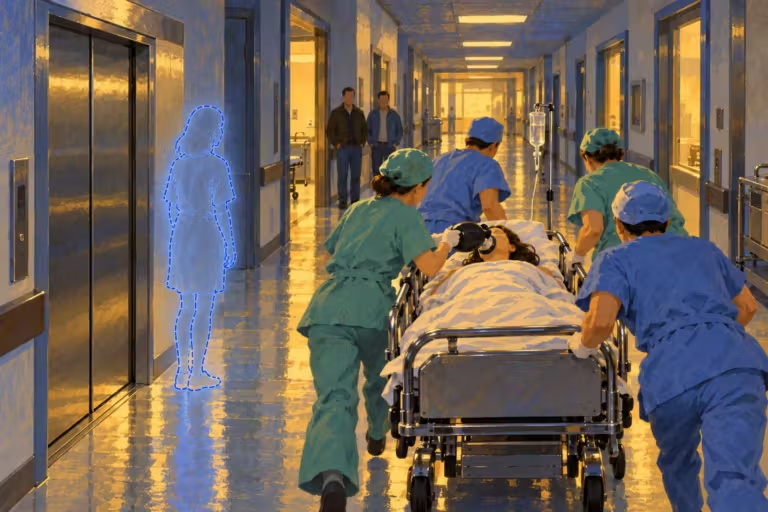
She went blind after a biopsy. She said she left her body and saw her partner and her son’s father standing still in the hallway. Her partner confirms they were there.
Seattle, United States, 1973
Betty Eadie
In 1973, alone in the hospital after an operation, Betty Eadie felt herself dying. She says she left her body and went to see her family. Her book reached number one on the New York Times best-seller list.

Reincarnation: The top 5 people who remember past lives
We asked them the same five questions as this story. A 32-page PDF, free in your inbox.
Check your email
We have sent you an email. Open it and press the button to confirm. If you cannot see it, check your spam folder.