
A study · University of Virginia (United States), published in 1998
The 14 University of Virginia cases: seeing from outside the body what could not be known
Three researchers at the University of Virginia gathered 14 near-death experiences. In all of them, the person said they had seen from outside their body things they could not have known. The authors themselves acknowledge that almost all the cases were poorly recorded and poorly investigated. Only one, that of Al Sullivan, a man who had heart surgery in 1988, seemed to them a possible exception. Even so, they believe these cases deserve to be sought out and investigated better.
The study’s question is: are there cases in which someone close to death saw things they could not have known through the senses? We tell it step by step. If you only want to know what it found, go straight to the results.
Step 1
Before the study · The question
A question almost nobody wanted to study

Many people are interested in NDEs because they believe NDEs show what comes after death. The authors write that researchers had avoided that question.
According to them, those who studied NDEs preferred less controversial topics, such as the changes in the lives of those who have them. And those who studied life after death thought NDEs were of no use. Those researchers saw them as private experiences, with nothing that could be checked.
The three authors wanted to see whether there were cases that could be checked.
Step 2
1998 · As the article tells it
Three researchers at the University of Virginia
All three worked in the Division of Personality Studies at the University of Virginia. It is a group that studies phenomena science does not explain, such as children who say they remember another life.
Ian Stevenson had founded the group and had been collecting cases for decades. Bruce Greyson is the psychiatrist who created the scale used to decide whether something is an NDE. Emily Williams Cook is a researcher in the same group. She later published as Emily Williams Kelly.
Step 3
In the article · As the authors propose
Three features that, together, would point to something beyond the brain
The authors propose looking for cases that have three features at once:
- A clear mind when the body is very ill or unconscious.
- Seeing oneself from outside, from another point in the room or farther away.
- Knowing something that could not be known through the senses. For example, seeing what happens somewhere else or meeting a dead person whose death was not known.
They acknowledge that none of the three features proves anything on its own. Seeing oneself from outside may be imagination. And an anesthetized patient can learn what is happening around them by hearing it.
For them, what matters is that all three appear together in the same case.
Step 4
In the article · Previously published cases
Seven cases that were already in books and newspapers

The authors gathered seven cases that others had published before. Some are very old:
- A British officer with typhoid fever in the Boer War. He says he saw a doctor die in another part of the hospital.
- An army doctor who crashed in a small plane in 1916. He says he saw from above the ambulance setting off, on the other side of a hill.
- A woman in an L-shaped ward. She says she saw, around the corner, a bandaged patient knitting with blue wool.
- A mountaineer freezing in the Alps. He says he saw his companions climb up the opposite side from the one he had told them to take.
- A 16-year-old boy hit on the head by a stone in 1911. He says he saw his parents at home, many miles away.
- And two other cases, of a salesman and of a sick woman, told in a few lines.
In almost none of them is anyone left who can confirm what they said.
Step 5
In the article · Cases from their archive
Seven cases from their own archive, investigated in person

The other seven cases came from their archive. They investigated them themselves, with letters, interviews and, when they could, medical records:
- Linda McKnight, after gallbladder surgery in 1930. She says she saw from the window a Christmas tree on the balcony below, in February. According to her, the nurse leaned out of the window and confirmed it.
- Jean Morrow, during childbirth in 1956. She says she saw her mother smoking in the waiting room, and her mother did not smoke. According to Jean, her mother admitted much later that she had smoked one or two cigarettes out of nerves. The researchers could not trace Jean to confirm it with her mother.
- Jennifer Edwards, in a skiing fall around 1973. She says she saw her parents reading a notice about half a mile away. Jennifer did not let the researchers talk to her parents.
- Peggy Raso, with a pulmonary embolism in 1960. She says she heard conversations in the hallway. Her husband confirmed one of the phrases.
- Stefan von Jankovich, in a car accident in 1964. He says he saw a woman pray for him. And that he read the name of her business on the side of her van, which is how he found her years later.
- Rose Heath, with scarlet fever around 1915. She says she saw her cousin, missing in the war, and knew he had died. He wore a uniform she had never seen.
- Al Sullivan, during heart surgery in 1988. He says he saw his surgeon flapping his elbows as if trying to fly.
Step 6
Reviewing the cases · As the authors acknowledge
Almost all were told decades later

The authors acknowledge that almost all the cases have the same problem. By the time they reached them, the witnesses who could confirm them had died or could not be found.
Moreover, many were written down long afterward. Rose Heath’s case was recorded about 55 years later, Jean Morrow’s about 35 years later, the mountaineer’s 30 years later and the plane-crash doctor’s more than 40 years later.
They write that all the cases, “with one possible exception,” are poorly recorded and poorly investigated. And that they prove nothing, except that recent cases need to be found and investigated in time.
The possible exception was Al Sullivan’s case.
Step 7
Case 14 · As the article tells it
The possible exception: the surgeon who flapped his elbows
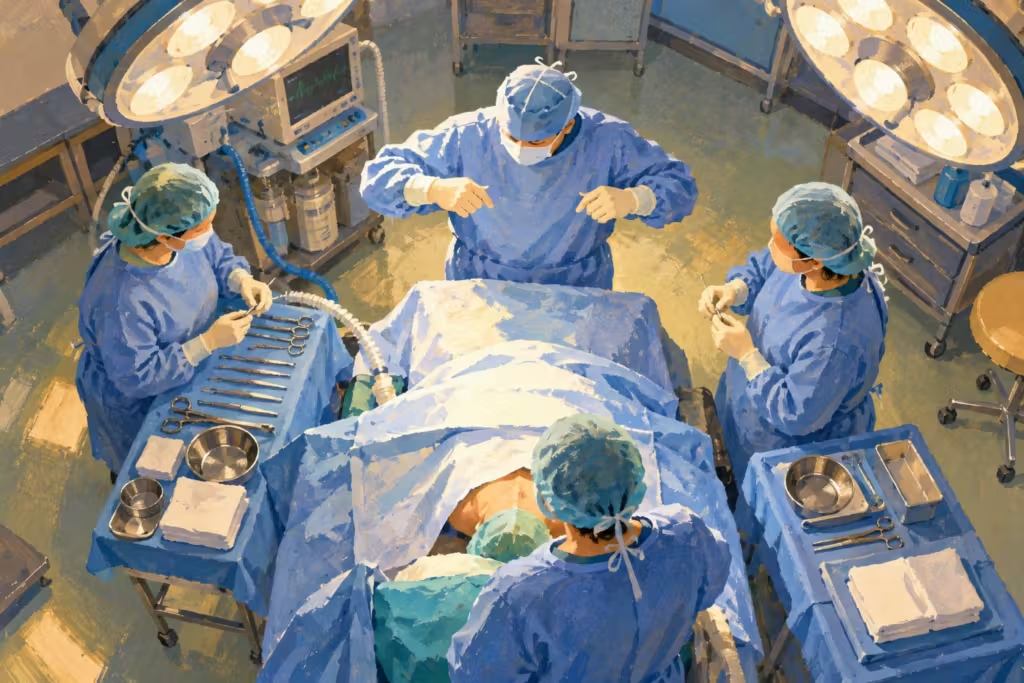
Al Sullivan said that during his heart surgery he saw his surgeon flapping his elbows as if trying to fly. According to Sullivan’s cardiologist, it was a habit of that surgeon.
Bruce Greyson learned of the case in 1990 and spoke with both doctors in 1997, almost ten years after the operation. The cardiologist confirmed that Sullivan told him about his experience as soon as he woke up. The surgeon confirmed that he had that habit, but could not confirm that he did it during that operation.
The authors saw a normal explanation. Before the general anesthesia, Sullivan was given local anesthesia to place a device that helps the heart. During that time he was awake and could have seen the gesture. They ruled it out because of what Sullivan said years later. According to him, when he saw the gesture his chest was already open. For the authors, that placed the gesture under general anesthesia.
We tell his full case in Al Sullivan’s story.
Step 8
In the discussion · As the authors reply
The reply to Susan Blackmore

Susan Blackmore is a British psychologist who explains NDEs through the brain. She had criticized the case of the plane-crash doctor. She said it did not count because it was written down more than 40 years later.
The authors agree with her that almost all these cases are poorly investigated. But they do not believe the years have entirely distorted those memories. They cite studies according to which memories of very serious moments are better preserved than others.
And they do not accept her conclusion. Blackmore proposed giving up the search for these cases. The authors ask for the opposite, to look for them sooner and better.
Step 9
In the discussion · As the authors propose
What they ask for: recent cases and tests prepared in advance
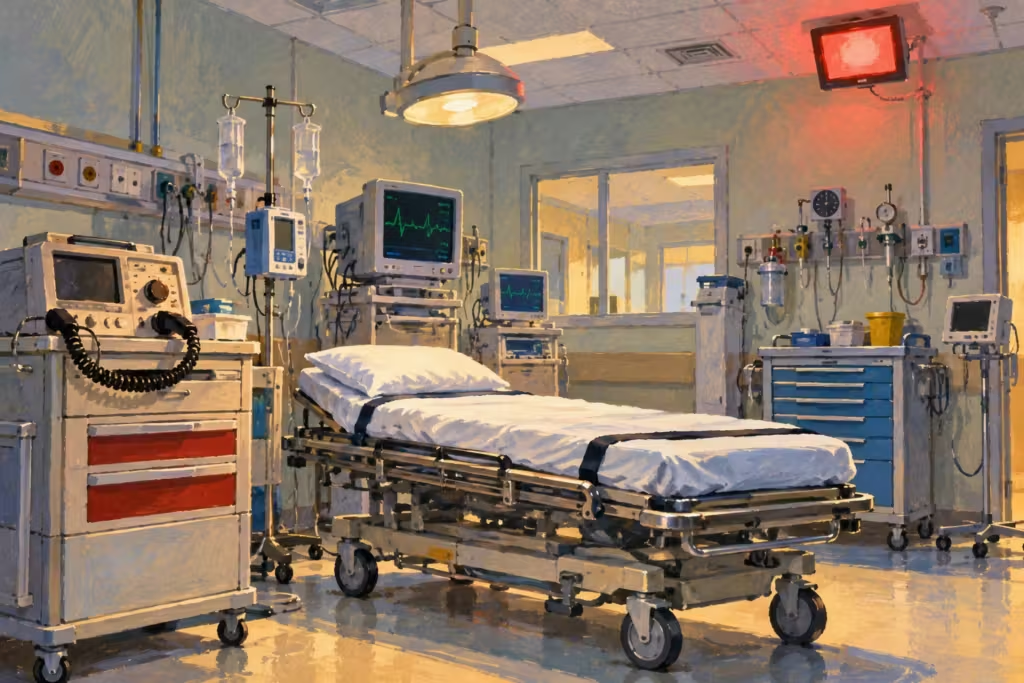
The authors ask for two things. The first is to find similar cases while they can still be investigated, with the witnesses alive and the hospital records available.
The second is to prepare tests in advance. They cite a proposal by Madelaine Lawrence, director of nursing research at Hartford Hospital. It involved placing a screen facing the ceiling, with a different message each day, in the room where shocks are given to the heart. If a patient read the message, it would be hard to explain in a normal way.
They write that tests like this had run into difficulties, mainly in finding hospitals willing to carry them out.
Step 10
1998 · As the authors conclude
A cautious conclusion

The authors believe that the three features, when they appear together, point to something. For them, they suggest that consciousness can work without the body and may survive death. But they insist that it is only a suggestion.
They explain why. Whoever tells of an NDE is still alive, because their body could be revived. That is why, they write, NDEs will never be able to prove what happens to consciousness once the body can no longer be revived.
Of Al Sullivan’s case, they write that it is a significant improvement in the evidence. They acknowledge its weak point. The gesture happened in the same room where his body was, so it cannot be fully ruled out that he saw or heard it. Even so, they know of no normal way in which Sullivan could have found out.
Let’s see what can and can’t be known from these data.
14 cases and one possible exception
The authors chose cases that had all three features.
And they themselves say only one was a possible exception.
| Group | Cases |
|---|---|
| Cases with all three features | 14 |
| … published before by others | 7 |
| … from their own archive | 7 |
| … possible exception, according to the authors | 1 |
What these figures don’t tell
- The cases were not chosen at random. They are the ones that had all three features. They do not say how many people close to death experience something like this. More in How many people have an NDE?
- Almost everything is told by the person themselves. In most cases, nobody else confirms what they saw.
Frequently asked questions
Are there near-death experiences in which someone saw something they could not have known?
There are accounts like that. In 1998, three University of Virginia researchers gathered 14. They themselves wrote that almost all were poorly recorded and poorly investigated. Only one was a possible exception, that of Al Sullivan, a man who had heart surgery in 1988.
Why is Al Sullivan’s case the most cited in the University of Virginia study?
Al Sullivan said that during his heart surgery in 1988 he saw his surgeon flapping his elbows as if trying to fly. Two doctors confirmed part of the story. His cardiologist confirmed that Sullivan told him about his experience on waking. And both confirmed that the surgeon had the habit of flapping his elbows. The surgeon could not confirm that he did it during that operation. We tell it in Al Sullivan’s story.
Do near-death experiences prove there is life after death?
The authors of this study believe NDEs may support the idea of life after death. But they write that they cannot prove it. Whoever tells of an NDE is still alive, so it is not known what happens to consciousness once the body can no longer be revived.
Where this page comes from
The study
- Emily Williams Cook, Bruce Greyson and Ian Stevenson (1998), “Do any near-death experiences provide evidence for the survival of human personality after death? Relevant features and illustrative case reports,” Journal of Scientific Exploration 12(3):377-406Read for free
Assessments
- Bruce Greyson et al. (2025), “The veridical Near-Death Experience Scale: construction and a first validation with human and artificial raters,” Frontiers in Psychology 16:1661390Read for free
To learn more
- Al Sullivan’s near-death experienceRead
- “Dying to Live”: Susan Blackmore explains NDEs with the brainRead
- Penny Sartori’s study: five years in a Welsh ICU and some hidden picturesRead
Our archive
- A full reading of the article, checked on October 23, 2026
More studies
AWARE: the pictures hidden on the shelves
Fifteen hospitals put up pictures that could only be seen from the ceiling, to check whether anyone saw them during a cardiac arrest.
AWARE II: a random picture and the brain on the screen
Above the patient was a tablet with a random picture. Headphones said the names of three fruits. And the doctors measured the brain during resuscitation.
Van Lommel: 344 cardiac arrest survivors in ten hospitals
Ten hospitals asked every cardiac arrest survivor what they remembered. They saw them again after 2 and 8 years.