A study · The Netherlands, 1988 to 1992, published in 2001
The van Lommel study: 344 cardiac arrest survivors in ten hospitals
Between 1988 and 1992, the team of a cardiologist in the Netherlands spoke with every person who survived a cardiac arrest in ten hospitals. They asked them what they remembered. There were 344 people in all. He then spoke with them again 2 years later and 8 years later.
Van Lommel wanted to know why some people have an NDE and others don’t, and whether the experience changes their lives. Was the difference due to a lack of oxygen, to medication, or to fear? We go through it step by step. If you only want to know what it found, skip to the results.
Step 1
Before the study · The question
Earlier studies asked people years later

Before this study, almost everything known about NDEs came from people who came forward on their own to describe them. Often they did so 5 to 10 years after the experience.
That makes it very hard to know what was going on in the person’s body. There is no way to know how long they went without a heartbeat, what medications they were given, or whether they were afraid.
What’s more, the people who come forward to describe an experience are usually the ones who had one. That is why those studies reported that between 43 and 48 out of every 100 people who came close to death had an NDE.
What happens if you ask everyone, within a few days, whether or not they have anything to tell?
A cardiologist in the Netherlands decided to do just that.
Step 2
1988 to 1992 · According to the study
A cardiologist sets up the study in ten hospitals

The study was led by Pim van Lommel, a cardiologist at Rijnstate Hospital in the city of Arnhem. He wrote the paper with three other researchers: Ruud van Wees, Vincent Meyers, and Ingrid Elfferich.
Ten hospitals in the Netherlands took part between 1988 and 1992. Some took part for only 4 months. One took part for nearly 4 years.
The rule was strict. They had to include every person who survived a cardiac arrest in the cardiac unit, one after another. If a hospital didn’t follow it, the hospital was dropped from the study.
That way, neither the doctors nor the patients chose who was asked.
Step 3
During a cardiac arrest · The heart stops pumping
All of them had a cardiac arrest, which the authors call clinical death
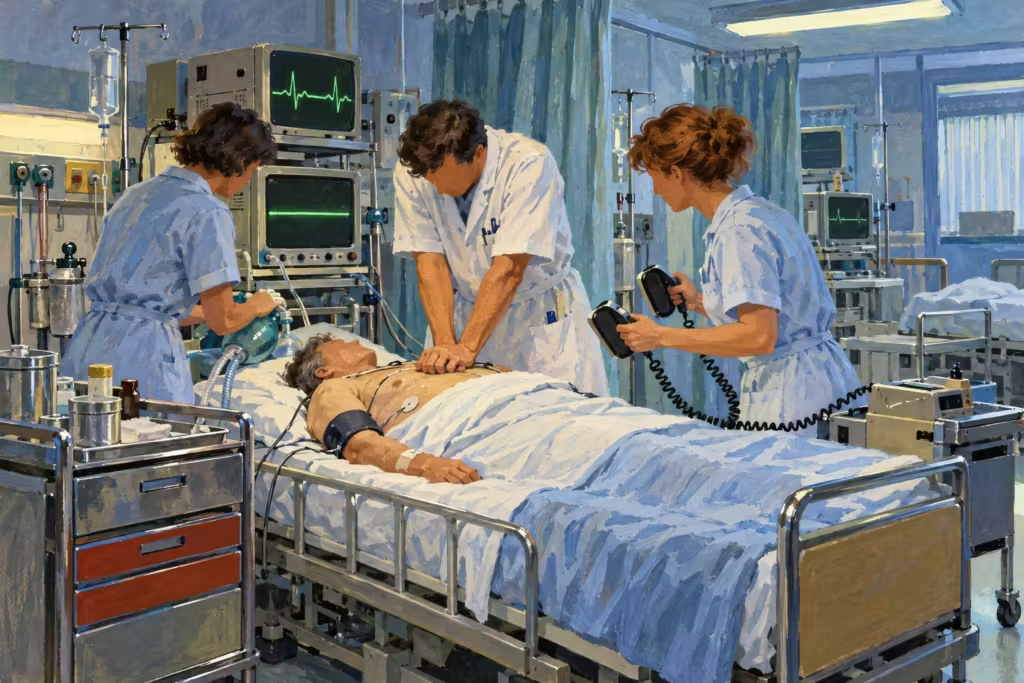
In a cardiac arrest, the heart stops pumping blood. The person loses consciousness and stops breathing. If they are not resuscitated within 5 to 10 minutes, the brain suffers damage that cannot heal, and the person dies.
The authors call that moment clinical death. In the study, each patient’s cardiac arrest was checked mainly with the electrocardiogram. It is the machine that records the heartbeat.
There were 344 people. They were resuscitated 509 times, because some had their heart fail more than once. Their average age was 62, and 73 out of 100 were men.
Nearly 7 out of 10 were resuscitated inside the hospital, and most of them in under 2 minutes. The rest were resuscitated outside the hospital.
Once they recovered, they were asked a question.
Step 4
A few days later · According to the study
A few days later, they are asked what they remember

Once a person was well enough, they were given a short interview. 248 of the 344 people had it within the first 5 days.
They were asked whether they remembered anything from the time they were unconscious. If they did, they were asked what it was.
Three researchers scored each account on the scale of the American psychologist Kenneth Ring. Each thing the person went through adds points, such as leaving the body, a tunnel, a light, seeing people who had died, or reviewing their life.
- 1 to 5 points: a superficial NDE.
- 6 points or more: a full NDE, which the authors call a “core” experience.
- 10 points or more: a deep NDE.
They also recorded everything else. They recorded how long the cardiac arrest lasted, how long the person was unconscious, what medications they were given, and whether a breathing tube was put in. And they recorded the person’s age, religion, and education, and whether they had heard of NDEs before.
That way they could see whether any of these things explained who had an NDE.
Step 5
At the first interview · According to the study
Out of every 100 people, 18 remember a near-death experience
Of the 344 people, 282 remembered nothing. The other 62 remembered something from the time they were unconscious.
In the drawing, each circle is one person out of 100. The 18 filled-in circles are the people who described an NDE, counting the superficial ones too.
Of those 62 people, 21 had a superficial NDE and 41 had a full NDE. Those 41 are 12 out of every 100 people in the study. And 23 of them had a deep NDE.
That is far fewer than in the studies where people came forward on their own. The authors think the true figure may be closer to 10 out of 100.
What did those 62 people describe?
Step 6
When they lived it is unknown · According to the patients
What they describe: peace, knowing they were dead, a tunnel, a light
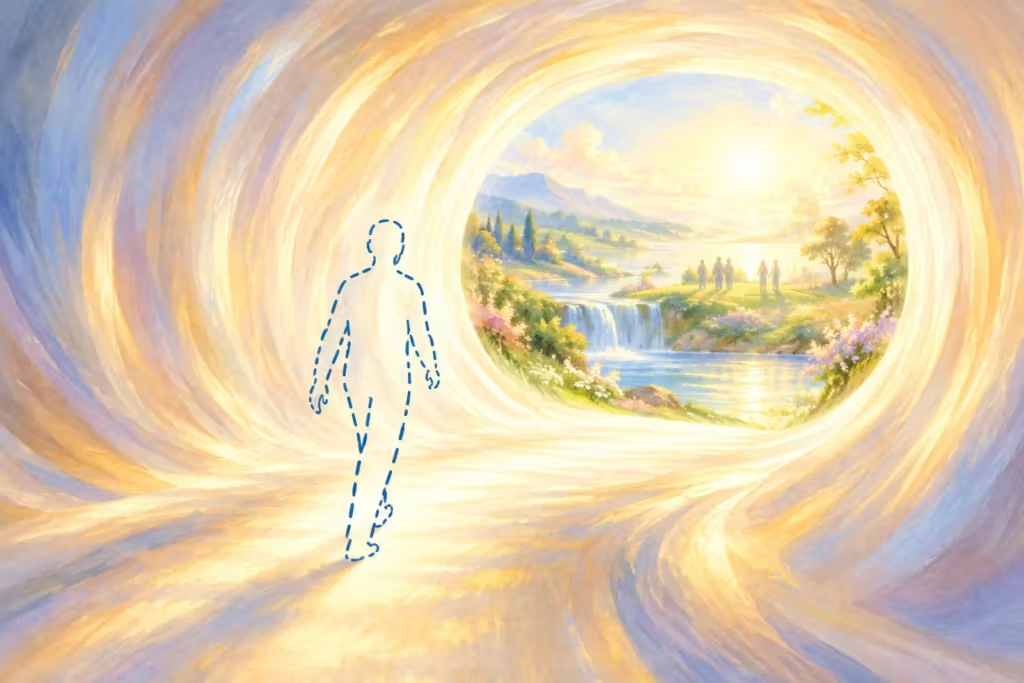
Of the 62 people who described an NDE, this is what they went through:
- 56 out of 100: pleasant emotions, such as peace.
- 50 out of 100: knowing they were dead.
- 32 out of 100: meeting people who had already died.
- 31 out of 100: moving through a tunnel.
- 29 out of 100: seeing a heavenly landscape.
- 24 out of 100: leaving the body.
- 23 out of 100: communicating with a light.
- 23 out of 100: seeing colors.
- 13 out of 100: seeing their life pass before them.
- 8 out of 100: reaching a boundary that could not be crossed.
None of the 62 described a distressing or frightening experience.
Fifteen people said they had left their body. The paper doesn’t say whether anyone checked what they saw. But it does tell of another case. It does not involve any of the 344 patients.
Step 7
One night, in the cardiac unit · According to a nurse
The man who knew where his dentures were
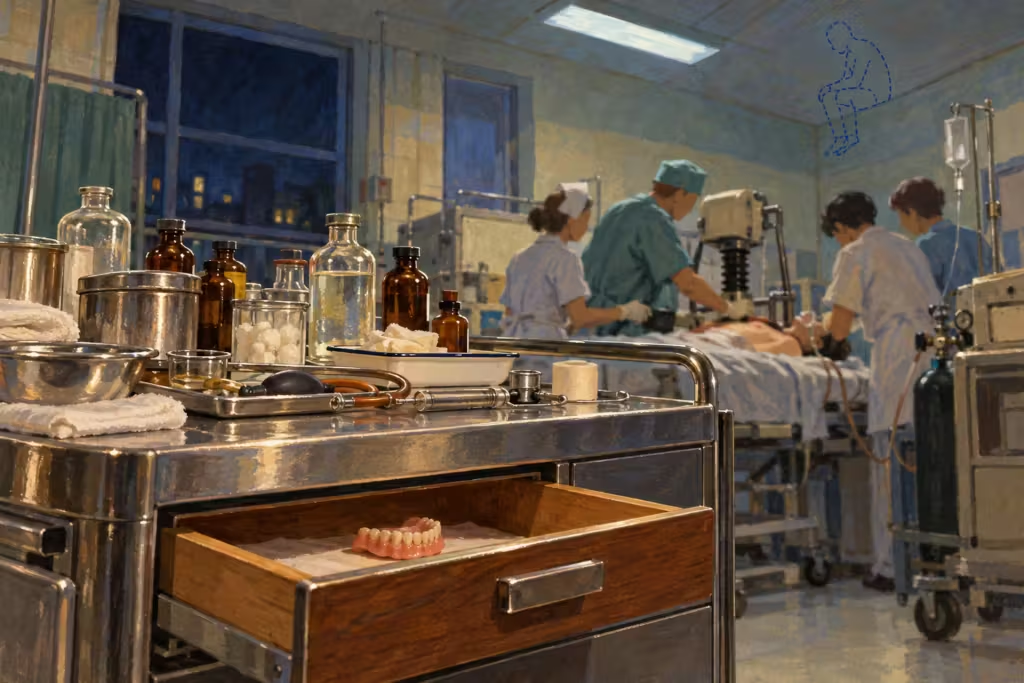
A nurse told the researchers about something that had happened to him years before. He told them while they were trying out the study’s method in one of the hospitals. The paper gives the nurse’s account in his own words.
One night, an ambulance brought in a 44-year-old man. Passersby had found him in a meadow an hour earlier. His skin was bluish, and he was in a coma.
To put in the breathing tube, the nurse took out the man’s upper dentures and left them on the crash cart. They went on resuscitating him for about 90 minutes. His heartbeat came back, but he was still in a coma, and he was moved to intensive care.
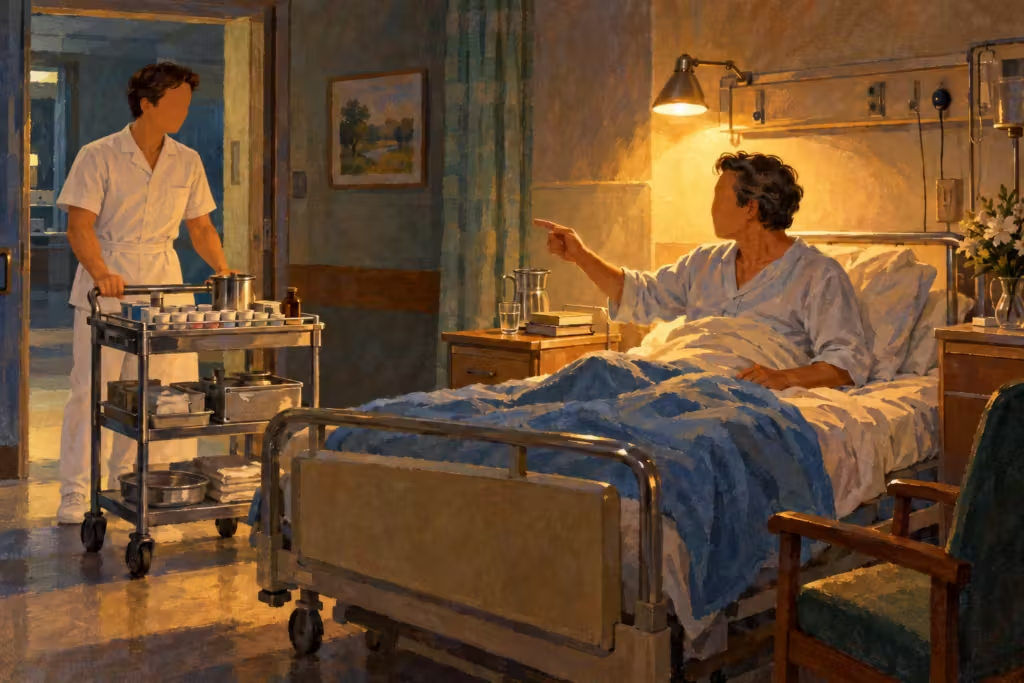
More than a week later, the nurse was handing out medication on the cardiac ward. There he saw the man again.
The patient“Oh, that nurse knows where my dentures are.”
Then he explained“…you took my dentures out of my mouth and put them onto that car, it had all these bottles on it and there was this sliding drawer underneath and there you put my teeth.”
According to the nurse, the man said he had seen himself from above while they were resuscitating him. He correctly described the small room and the people who were there. He had been afraid they would stop resuscitating him. He tried to tell them he was still alive, but he couldn’t.
What amazed the nurse was that all of this had happened while the man was in a deep coma. We tell that night in full in the story of the man with the dentures. Years later, other researchers looked for more details about the case.
Step 8
2008 to 2010 · According to other researchers
What came out later about the dentures case

Rudolf Smit researches these experiences in the Netherlands. In 2008 he tracked down the nurse and published what he found. Then the anesthesiologist Gerald Woerlee replied in the same journal, the Journal of Near-Death Studies. And Smit and Titus Rivas answered Woerlee.
According to those articles, the episode happened in late 1979, at a hospital in the city of Nijmegen. That was nine years before the study began. The nurse told the researchers about it while they were trying out their method.
- Nobody interviewed the patient. According to the nurse, he died a few years later.
- The hospital records were destroyed. There is no exact time or date for what happened.
- Everything the patient said comes to us through the nurse. He told the story 15 years later, and again 29 years later. Both times, he told the essentials the same way.
Those articles also give details that complicate the case. Before he saw the nurse, the patient had already asked where his dentures were, and no one knew. The patient also said he had felt the pain of the chest compressions. The nurse says his own voice is easy to recognize. He also says that the drawer was, in his words, “the only spot where I could have deposited it with some ease.”
The nurse has told the same story for years. What is missing is any record from the time that confirms it.
We tell that investigation step by step, with Woerlee’s response, in the dentures case.
Back to the study. Using the data from the 344 patients, the researchers looked for what the people who had an NDE had in common.
Step 9
Analyzing the data · According to the study
No link was found with the length of the cardiac arrest or with medication

They compared the 62 people who described an NDE with the 282 who remembered nothing.
The study found no clear link between the medical factors they measured and having an NDE.
The length of the cardiac arrest made no difference. In both groups it lasted about 4 minutes on average. How long the person was unconscious, the medications, and the breathing tube made no difference either. Fear before the cardiac arrest, religion, education, and having heard of NDEs before made no difference either.
They did find a few differences:
- Age. NDEs were more common in people under 60.
- Having had an NDE before.
- Having been resuscitated several times during the hospital stay.
- Memory. Of the people left with memory problems after a long resuscitation, almost none described an NDE.
And there was one more difference, which no one expected.
Step 10
In the first month · According to the study
More of those who had an NDE died in the first month

In the 30 days after resuscitation, 21 out of 100 people with an NDE died, and 9 out of 100 people without an NDE.
Among those who had a deep NDE, 43 out of 100 died.
The paper gives the figure, but doesn’t explain it.
The researchers went back to see the ones who survived.
Step 11
Two years later · According to the study
Two years later, they talk to them again

After 2 years, 19 of the 62 people with an NDE had died and 6 didn’t want to talk. The researchers interviewed the other 37 and recorded the interviews.
All of them told their experience almost exactly as they had the first time.
For comparison, they looked for people of the same age and sex who had also survived a cardiac arrest, but without an NDE. Six people in the NDE group turned out not to have had one. And four people in the group without an NDE described one they hadn’t mentioned at first. In the end, there were two groups: 35 people with an NDE and 39 without one.
Everyone filled out a 34-question questionnaire on how much their life had changed.
The people with an NDE had changed more on 13 of the 34 questions. They were less afraid of death and believed more in life after death. They said they were more loving, understood others better, and appreciated simple things more.
Step 12
Eight years later · According to the study
Eight years later, those without an NDE have changed too

After 8 years, 23 people with an NDE and 15 without one were left. This time the researchers also spoke with their partners.
All 23 still remembered their experience almost exactly.
Everyone had changed for the better, including the people who had not had an NDE.
All of them said they were more self-confident, more interested in others, and more religious than before. The fear of death had also gone down in some of the people who had not had an NDE.
But three things were still different:
- Interest in spirituality had grown in those who had an NDE, and had dropped sharply in the others.
- Belief in life after death was much stronger in those who had an NDE.
- Fear of death had gone down more in those who had an NDE.
The authors think the change takes years to settle in. One reason is that many people keep quiet about their experience for fear of being laughed at.
Step 13
December 2001 · According to the study
The study appears in The Lancet and starts a debate

The paper was published on December 15, 2001, in The Lancet.
The authors write that all their patients had been clinically dead. If a lack of oxygen in the brain caused NDEs, “most of our patients should have had this experience.” Yet only 18 out of 100 described one.
But the study measures what people remember, not what they experienced. And people left with memory problems after a long resuscitation hardly ever reported an NDE. Also, oxygen wasn’t measured. So this argument doesn’t rule out a lack of oxygen.
The authors accept that the brain must play some part, though no one knows how. But they also call for debate on the idea that consciousness and memories reside only in the brain. In their view, that idea is taken for granted without ever having been proven.
They ask how anyone could experience something so clearly when the brain is no longer working. To say the brain is no longer working, they rely on other studies. Those studies say that in a cardiac arrest, brain activity shuts down within about 10 seconds. This study did not measure anyone’s brain.
In the same issue, the journal published a critical commentary. Let’s look at what is known and what isn’t.
From 344 people to 23 eight years later
At every stage of the study, people dropped out along the way. Some remembered nothing, others died, and others didn’t want to or couldn’t continue.
That is why the conclusions about how life changes rest on only a few people.
| Step | People |
|---|---|
| Survived a cardiac arrest and joined the study | 344 |
| Were interviewed within the first 5 days | 248 |
| Remembered something: an NDE, by the broad definition | 62 |
| Described a full NDE | 41 |
| Described a deep NDE | 23 |
| Said they had left their body | 15 |
| After 2 years: with an NDE / without | 35 / 39 |
| After 8 years: with an NDE / without | 23 / 15 |
What these figures don’t tell you
- The figure of 18 out of 100 comes from a broad definition. The authors think the true figure is around 10 out of 100. More in How many people have a near-death experience?
- The out-of-body experiences were not checked. The dentures case does not involve any of these patients. It happened in 1979.
- Life changes are measured by what each person reports in a questionnaire. And there are only a few people. More in How does life change after a near-death experience?
Frequently asked questions
What did Pim van Lommel’s 2001 Lancet study find?
18 out of 100 people who survived a cardiac arrest described a near-death experience. Pim van Lommel asked 344 people in ten hospitals in the Netherlands. He found no clear link between the medical factors he measured and having an NDE. Eight years later, those who had an NDE were less afraid of death and believed more in an afterlife. It’s all in “What the van Lommel study found.”
Has Pim van Lommel’s study been debunked?
No. The criticisms we know of don’t dispute its figures. They dispute what the figures mean. The study didn’t measure the brain and can’t tell when each experience happened. So it doesn’t show that the mind works without the brain, or the opposite. We cover the dentures case in our FAQ.
What books has Pim van Lommel written?
His best-known book is Consciousness Beyond Life. Pim van Lommel first published it in Dutch in 2007, under the title Eindeloos bewustzijn, and the English edition came out in 2010. In the book, he argues that consciousness can continue even when the brain stops working.
Is Pim van Lommel still alive?
Yes, as far as we know. Pim van Lommel was born in 1943, and we have found no report of his death. In 2026 his website was still posting articles by him on consciousness.
Where this page comes from
The study
- van Lommel, van Wees, Meyers, and Elfferich (2001), “Near-death experience in survivors of cardiac arrest: a prospective study in the Netherlands,” The Lancet 358:2039–2045View in the journal (free with registration)
The dentures case
- The dentures case: a man in a coma and the nurse who took out his denturesRead
- Rudolf Smit (2008), “Corroboration of the dentures anecdote involving veridical perception in a near-death experience,” Journal of Near-Death Studies 27(1):47–61Read for free
- Gerald Woerlee (2010), reply to Smit, Journal of Near-Death Studies 28(4):181–191; and the rejoinder by Rudolf Smit and Titus Rivas (2010), 28(4):193–205Read for free
Assessments and criticism
- Christopher French (2001), “Dying to know the truth: visions of a dying brain, or false memories?” The Lancet 358:2010–2011View in the journal (free with registration)
- Greyson et al. (2025), the veridical NDE scale, Frontiers in Psychology 16:1661390Read for free
To learn more
- Greyson’s study: the same near-death experience, told twice 19 years apartRead
- The AWARE study: the images hidden on the shelvesRead
- What does science say about near-death experiences?Read
- How many people have a near-death experience?Read
- How does life change after a near-death experience?Read
- What does dying feel like?Read
Our archive
- Our reading of the full paper, with its five tables, and our assessment of the dentures case using the three articles from 2008 and 2010, as of October 12, 2026
More studies
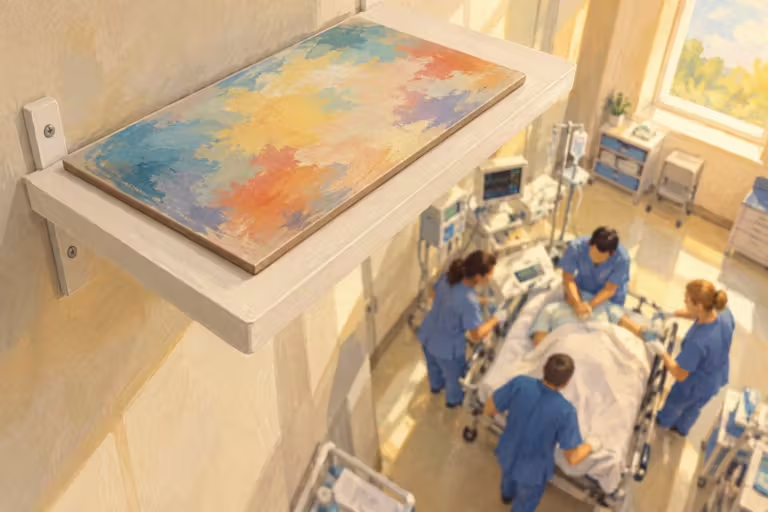
AWARE: the pictures hidden on the shelves
Fifteen hospitals put up pictures that could only be seen from the ceiling, to check whether anyone saw them during a cardiac arrest.
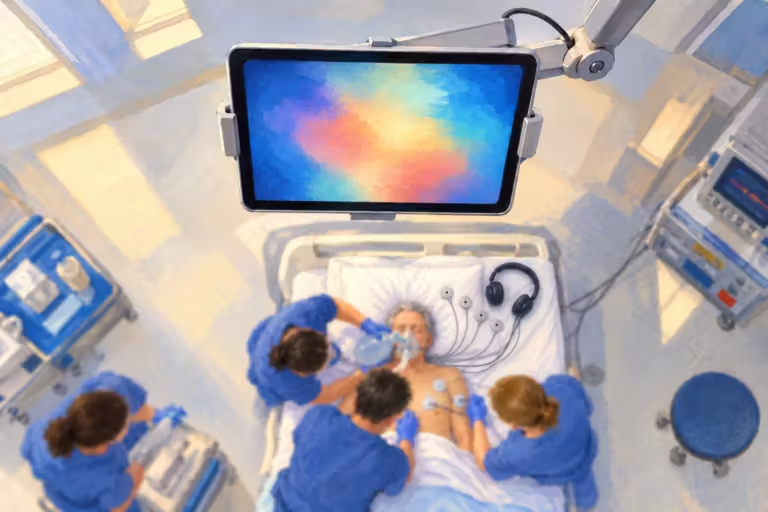
AWARE II: a random picture and the brain on the screen
Above the patient was a tablet with a random picture. Headphones said the names of three fruits. And the doctors measured the brain during resuscitation.
Greyson: 1,595 heart patients and 27 NDEs
A hospital asked its cardiology patients what they had been through. With a cardiac arrest, an NDE was ten times more common than without one. But most happened without one.