A study · United Kingdom, United States, and Austria, 2008–2012
The AWARE study: the images hidden on the shelves
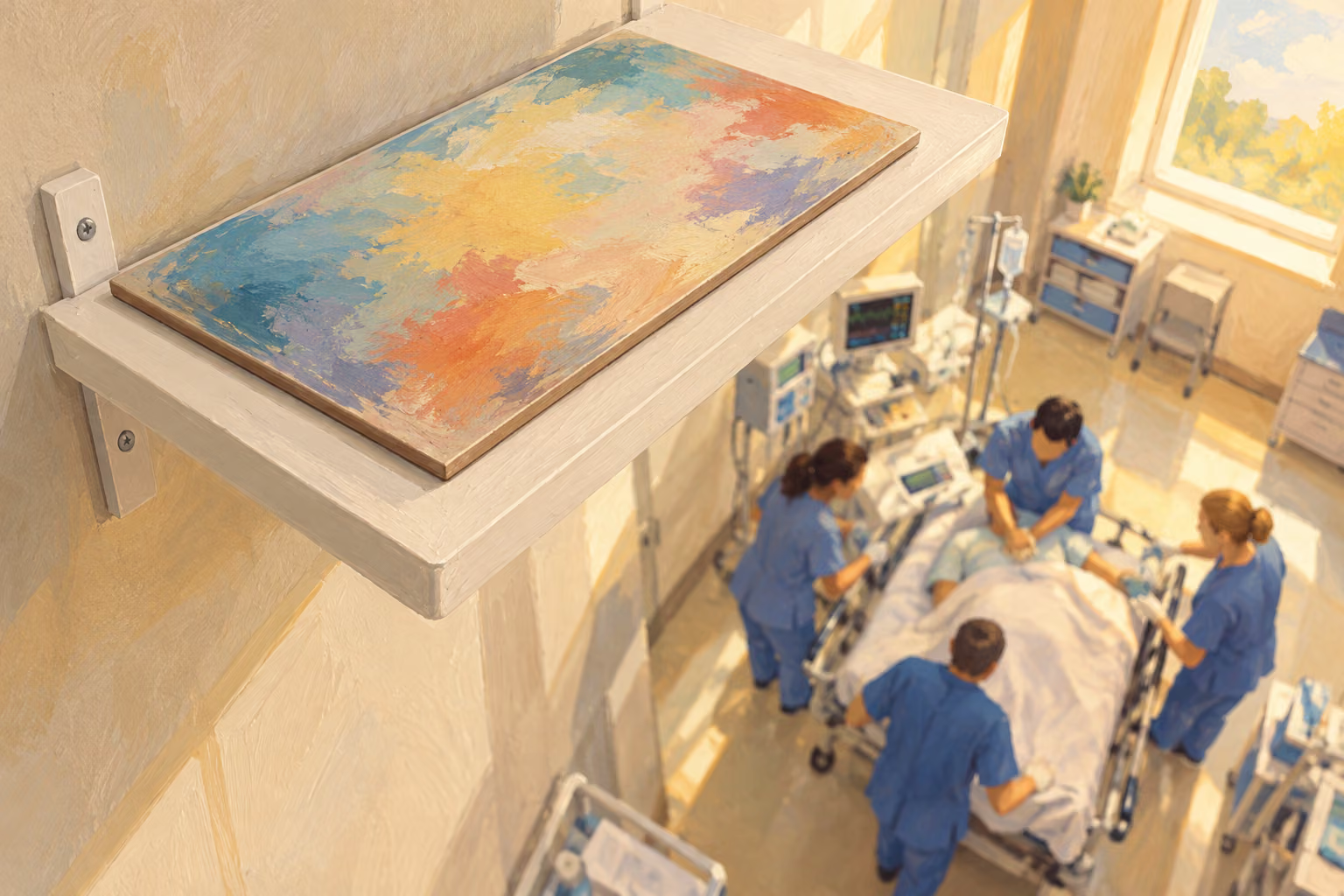
Between 2008 and 2012, fifteen hospitals put images on high shelves where they could only be seen from the ceiling. The goal was to check whether a person whose heart has stopped can see what is happening around them. The study followed 2,060 cardiac arrests.
According to its authors, it was the first large study to try to test the accounts of people who say they saw themselves from above. Did anyone see the images? Here is the story, step by step. If you only want to know what it found, skip straight to the results.
Step 1
Before the study · The question
Some survivors say they saw themselves from above
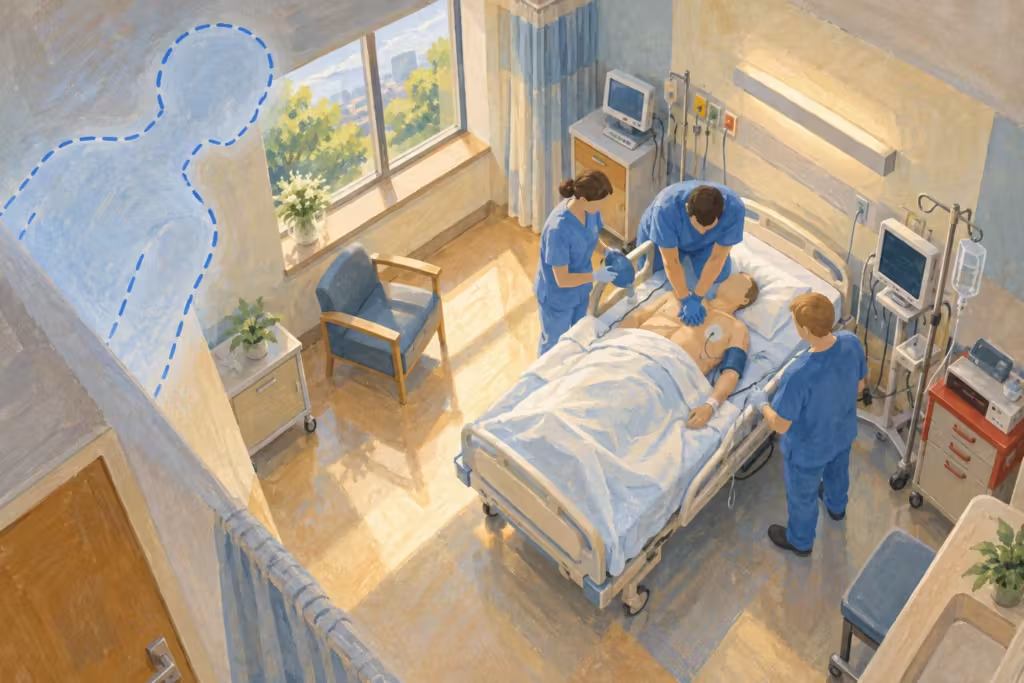
Some people who survive a cardiac arrest describe something specific. They say that while the doctors were trying to resuscitate them, they saw themselves from above, as if they were floating near the ceiling.
Some describe the doctors, what they were doing, and what they were saying.
Is it a memory of what happened, or something the brain makes up?
There are two explanations. One says it is an illusion created by the brain. The other says the person really does perceive what is going on around them. If all you have is the account, there is no way to tell which one is right.
According to the authors of AWARE, until then no study had put this to an objective test. One doctor decided to try.
Step 2
2007 to 2012 · According to the study
A doctor organizes the study in fifteen hospitals

The study was led by Sam Parnia, an intensive care physician. When it was published, he worked at Stony Brook University, in New York.
The paper has 31 authors. One of them is Bruce Greyson, the psychiatrist who created the scale used to measure these experiences.
First, the team tried out the method in 5 hospitals, between 2007 and 2008. Then they chose 25 hospitals. Of those, fifteen took part, in the United Kingdom, the United States, and Austria.
They followed the cardiac arrests in those hospitals from July 2008 to December 2012.
The Resuscitation Council (UK) and two private foundations paid for the study. The foundations were the Nour Foundation and the Bial Foundation. According to the paper, the funders played no part in the design or the results.
The best-known part of the study was high up on the walls.
Step 3
Before the cardiac arrests · According to the study
About a thousand shelves go up, with images that can only be seen from the ceiling
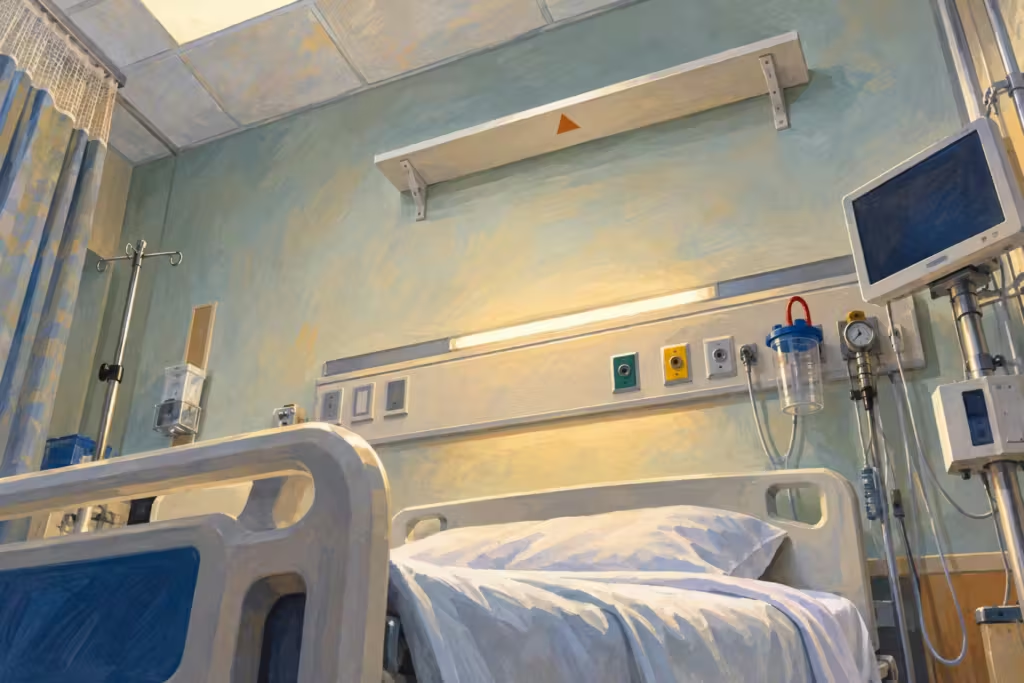
Each hospital put up between 50 and 100 high shelves. They went where the most cardiac arrests were expected, such as the emergency department and some wards for very sick patients. In all, they put up about a thousand shelves.
On top of each shelf was an image, lying face up. It couldn’t be seen from the floor. It could only be seen from above, near the ceiling.
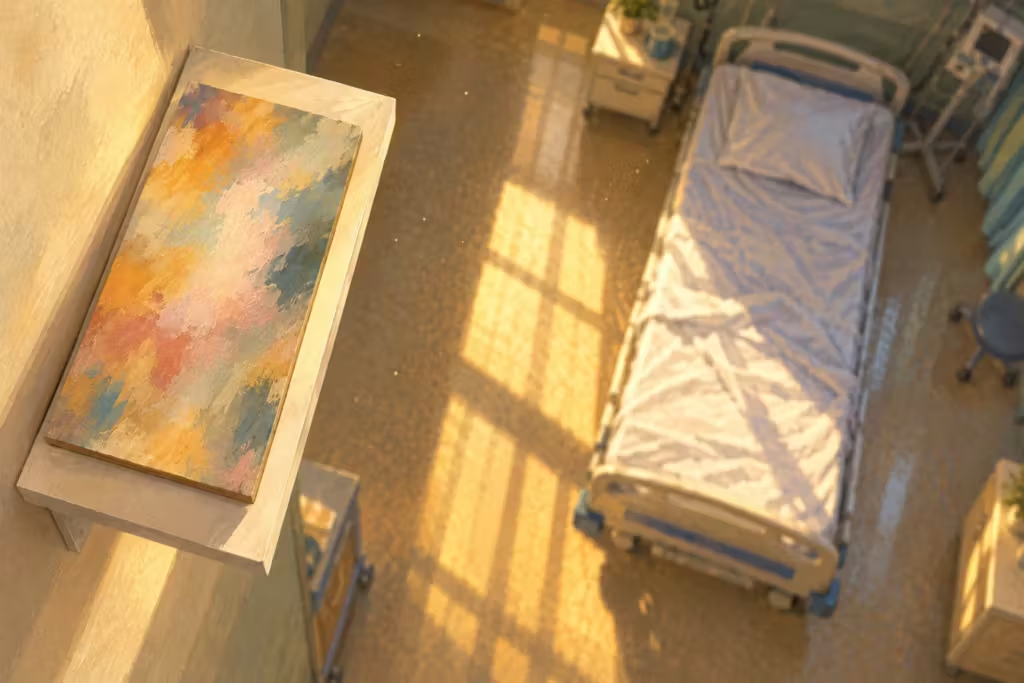
Each shelf had a different image. There were symbols of countries or religions, people, animals, or newspaper headlines.
- 1. HideAn image lying face up on a high shelf.
- 2. WaitFor someone to have a cardiac arrest in that room and survive.
- 3. AskIf the person says they saw themselves from above, ask what was on the shelf.
Under each shelf, the team put another image, a triangle. It was there to check whether a patient could see it in the ordinary way, with their eyes open and looking up.
The test could turn out two ways.
The authors explain it like this. If many people said they saw themselves from above and named the image correctly, what they described would match something they couldn’t see from the bed. If many said so and got it wrong again and again, that would support the idea that it is an illusion.
They also wanted to run a test with hearing. During resuscitation, the team would say the names of three cities or three colors out loud. It was dropped because, in the trial hospitals, it couldn’t be done in the middle of an emergency.
Someone had to have a cardiac arrest right below a shelf. That was the hardest part.
Step 4
During a cardiac arrest · The heart isn’t pumping
An alarm goes off for a cardiac arrest, and the team rushes to resuscitate
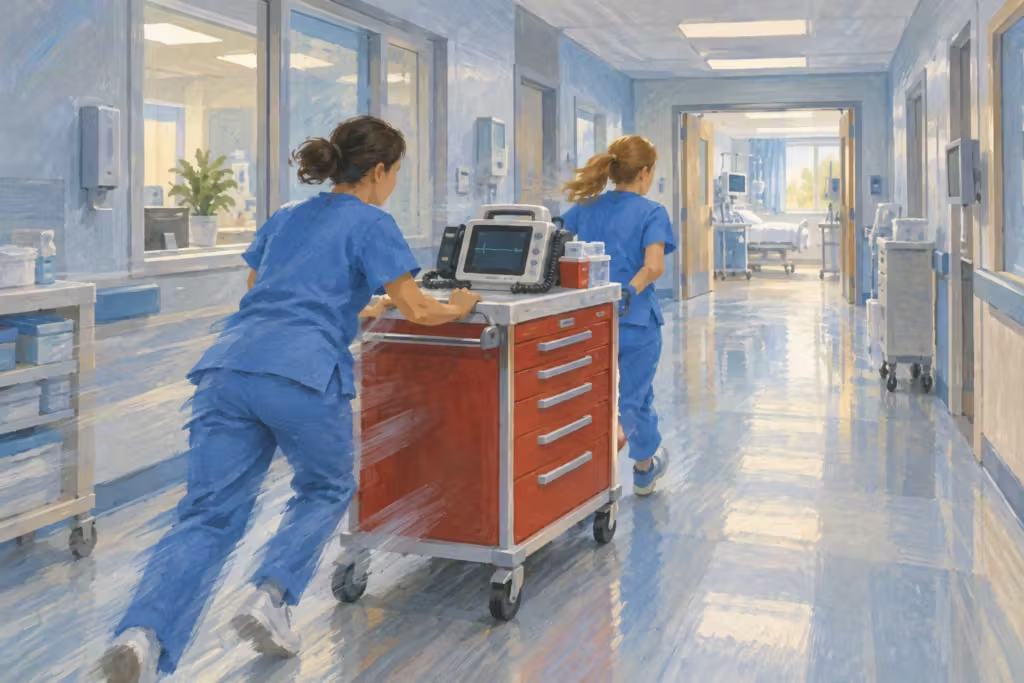
A cardiac arrest is when the heart stops pumping blood and the person stops breathing. According to the paper, within a few seconds there is usually no measurable activity in the brain.
When a cardiac arrest happens, an alert calls the team. The team presses down hard on the chest to keep the blood moving. These are called chest compressions. If the heart is quivering chaotically, the team uses a defibrillator. It is a device that gives an electric shock to get it beating properly again.
The study included people over 18. The cardiac arrest could happen in the hospital. It could also happen outside, if the person arrived at the emergency department while being resuscitated.
None of the people interviewed showed any sign of being conscious during resuscitation.
They didn’t open their eyes, move, or speak, not even in response to the pain of the chest compressions.
Later, the survivors were asked what they remembered.
Step 5
After the cardiac arrest · According to the study
Out of every 100 cardiac arrests, 16 people survive
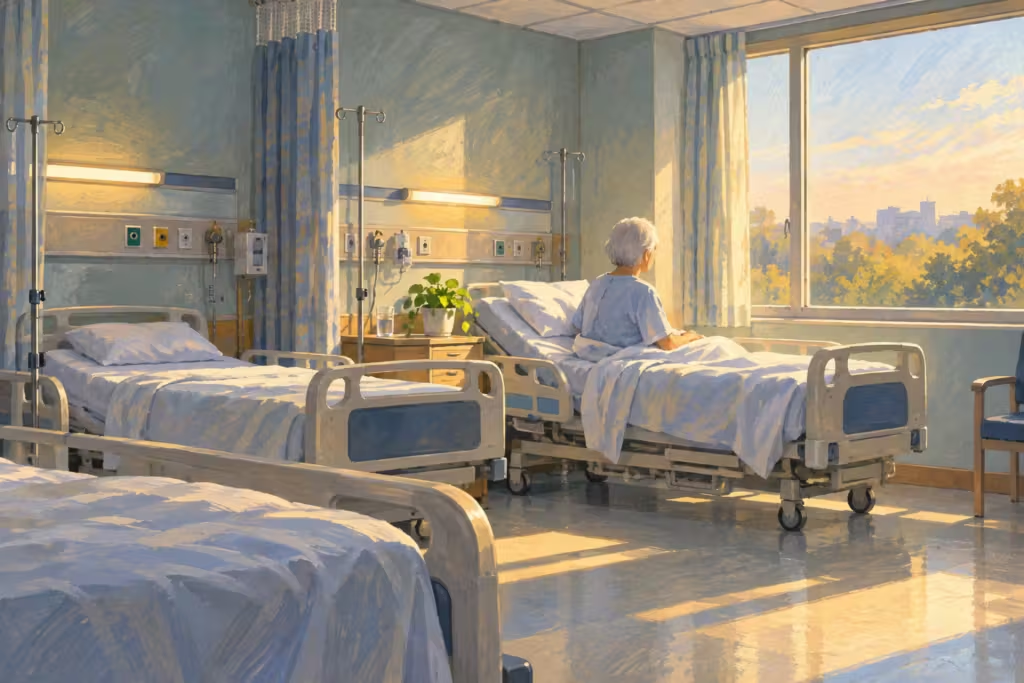
The study counted 2,060 cardiac arrests. Only 330 people left the hospital alive.
Each dot is a cardiac arrest in the study. The 16 filled-in dots are the people who left the hospital alive.
Of those 330 people, 140 were interviewed. Two declined. The rest were not interviewed for several reasons. Some died later. In other cases, their doctors did not consider them well enough. Others did not meet the study’s requirements. And others did not answer the letter inviting them to take part.
Those 140 people were all asked the same questions.
Step 6
Days to months later · According to the study
They are asked what they remember, in three interviews
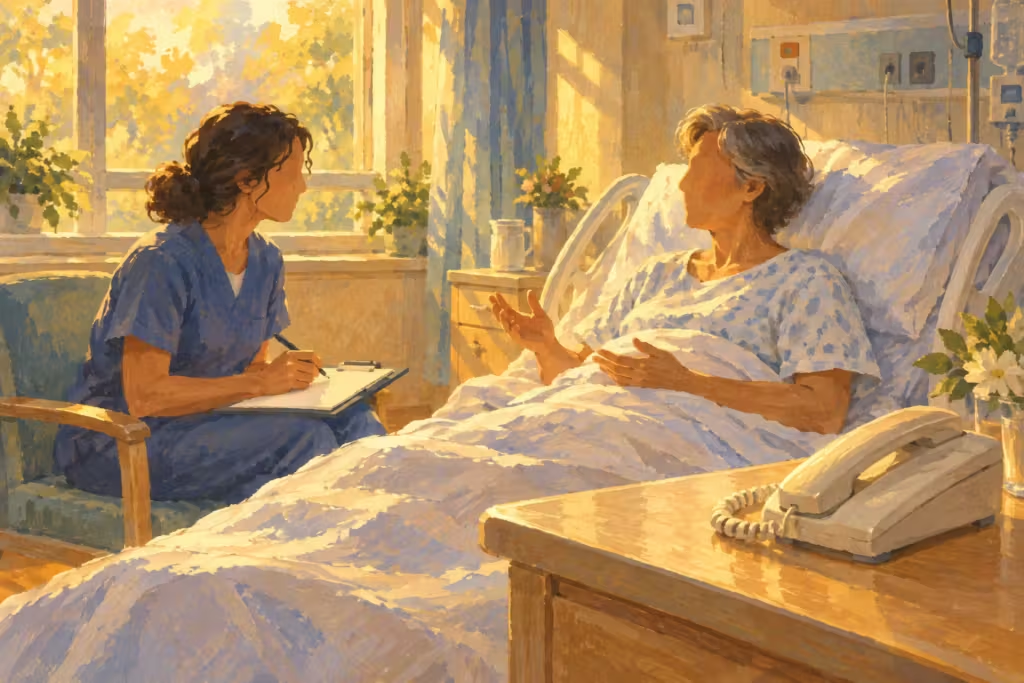
Some people were interviewed in the hospital, between 3 days and 4 weeks after the cardiac arrest. Most were interviewed by phone, back at home, between 3 months and 1 year after leaving the hospital.
The first interview was general. One of the questions was: “Do you remember anything from the time during your unconsciousness?”
The second went deeper. It used the Greyson scale. These are 16 questions about things people often experience in an NDE. For example, whether they felt peace, saw a very bright light, felt separated from their body, or saw people who had died.
Each answer scores 0 points if the person didn’t experience it, 1 point if they experienced it a little, and 2 points if they experienced it strongly. The highest possible score is 32. A score of 7 or more counts as an NDE.
The third was only for people who said they had seen or heard things from their resuscitation. Sam Parnia did these interviews himself.
Of the 140 people, 101 made it to the second interview. Most of those who dropped out did so because they were too tired.
What did they remember?
Step 7
In the interviews · The patients’ accounts
Many remember nothing, and many memories are frightening
In the first interview, 85 of the 140 people remembered nothing from the cardiac arrest. The other 55 did remember something. That is about 4 in 10.
In the second interview, 46 of 101 people remembered nothing. Another 46 remembered something that didn’t amount to an NDE.
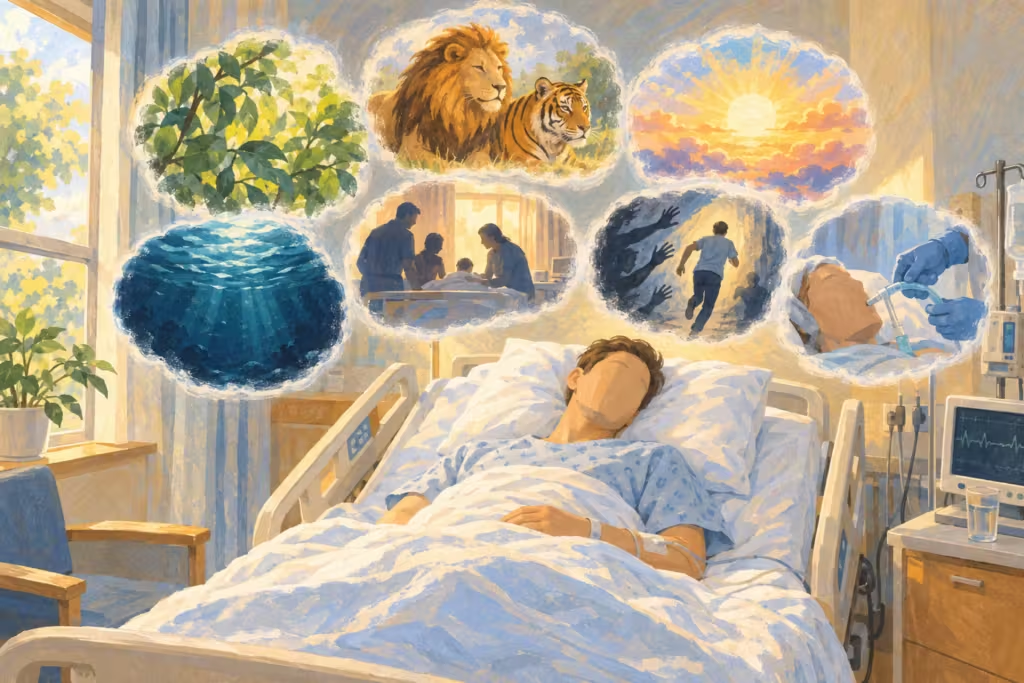
The researchers sorted these memories into seven themes:
- Fear.
- Animals and plants.
- A bright light.
- Violence or feeling persecuted.
- The feeling of having lived that moment before.
- Seeing family.
- Things that happened after resuscitation.
One patient“Saw lions and tigers.”
Another patient“Being dragged through deep water… and I hate swimming—it was horrid.”
Another patient“I was terrified.”
According to the authors, these frightening memories might affect the stress that some survivors go through afterward. They call for research on it.
And nine people described something more.
Step 8
Exact moment unknown · One patient’s account
Nine people describe a near-death experience
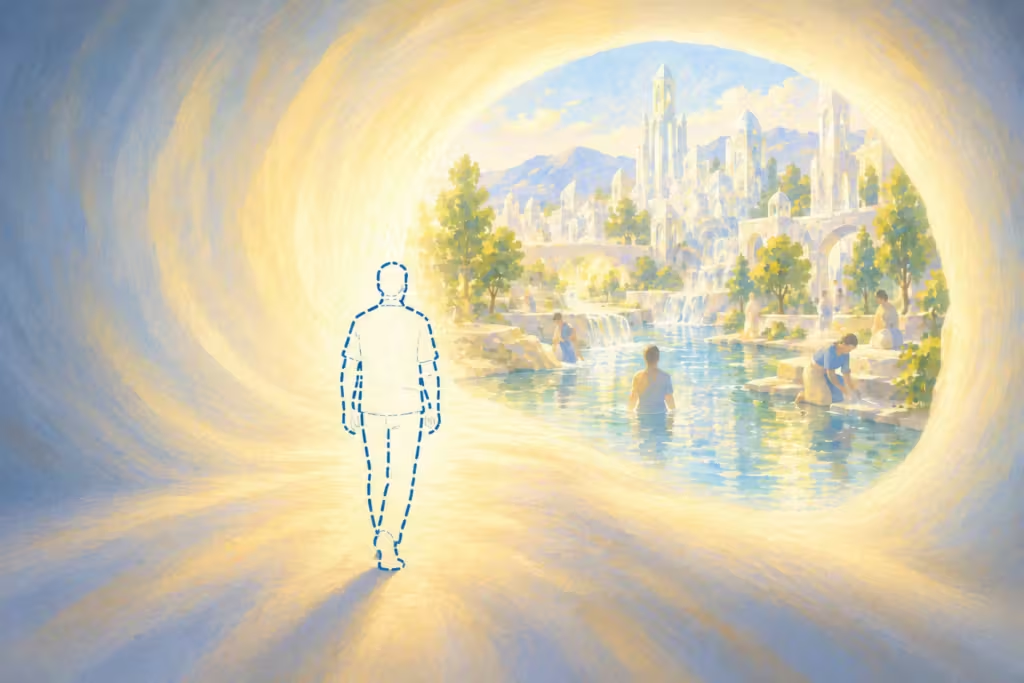
Of the 101 people, 9 scored 7 points or more on the scale. That is 9 out of 100. It is a figure similar to earlier studies.
The most common experiences among the 101 people were feeling that time was moving faster or slower, feeling peace, feeling separated from the body, and having senses more vivid than usual.
The paper summarizes the account of one of the nine. This person says they came back “from the other side of life.” They went through a tunnel toward a very strong light that didn’t hurt their eyes. They saw a crystal city with a river of clear water. Many people without faces were washing in it. There was beautiful singing. And God sent them back, because it wasn’t their time.
The next thing this person remembers is a doctor doing chest compressions on them.
Seven of the nine said nothing about their resuscitation. The other two did.
Step 9
During the cardiac arrest · Two patients’ accounts
Two people say they saw and heard their resuscitation
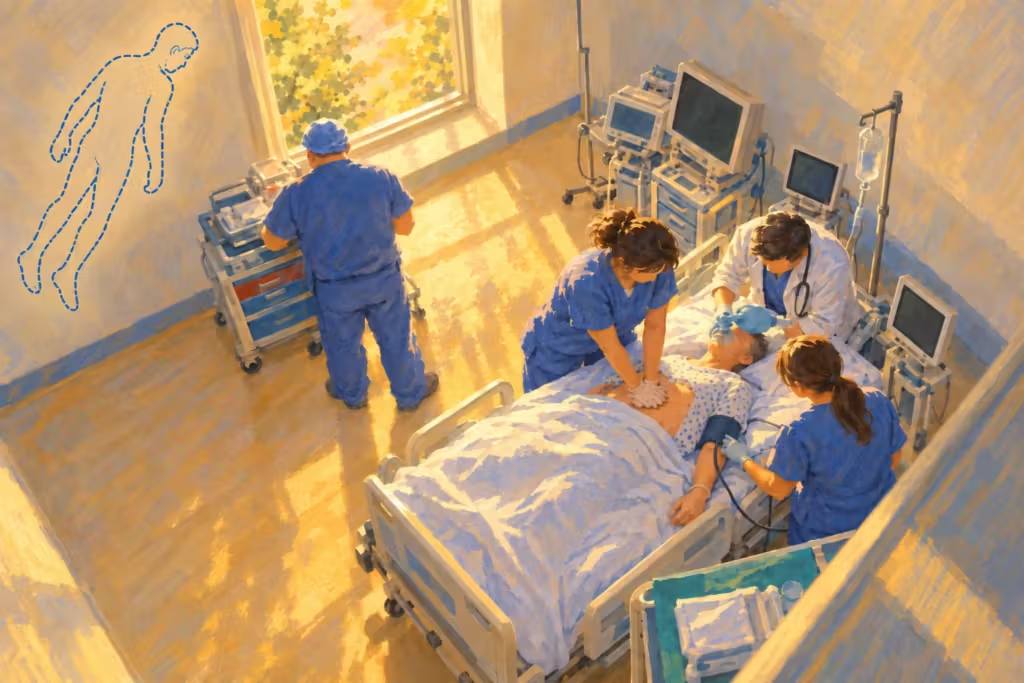
One of them says that, at the beginning, they heard a nurse say “dial 444 cardiac arrest.” They felt scared. They were on the ceiling, looking down, and could see their own body.
This person says they saw their blood pressure being taken, a doctor putting something down their throat, and a nurse pressing on their chest. They also say they saw a nurse they didn’t know. Later, they saw her in person.
This person was too ill to do the in-depth interview. What they described was not compared with their medical records.
The other is a 57-year-old man. He says he heard an automated voice saying “shock the patient.” He saw himself from a corner of the ceiling. And he saw a bald man in blue scrubs and a blue cap.
Both people had their cardiac arrests in ordinary rooms, without a shelf.
With the man, the researchers were able to do one more check.
Step 10
Afterward · According to the study
Hospital records confirm part of what one man described
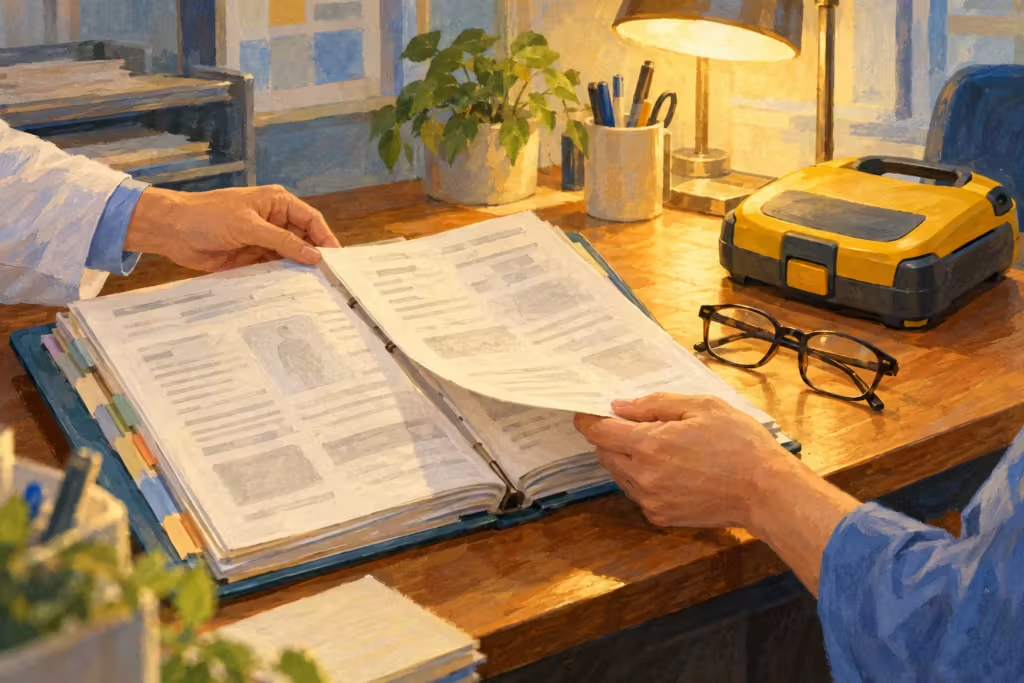
The researchers reviewed his medical records. Medical records are the hospital paperwork that records what was done to a patient.
According to the paper, the medical records confirm that an automated defibrillator was used. They also confirm which medical team was at the cardiac arrest and what role the man he recognized played in it.
The medical records don’t confirm the blue cap or what that man looked like. Also, the patient recognized him the next day, when that man came to visit him.
The researchers worked out how long his heart had been stopped. The defibrillator requires a wait of at least 2 minutes between the first shock and the second. If he heard two shocks, he had been in cardiac arrest for about 3 minutes.
It is a calculation, not a recorded time. The paper doesn’t give the time of any shock. Nor does it say whether the man heard two shocks or the same command twice.
His full account is in the story of the blue-cap patient.
But what happened with the images on the shelves?
Step 11
Counting the cardiac arrests · According to the study
Almost no cardiac arrests happened in a room with a shelf
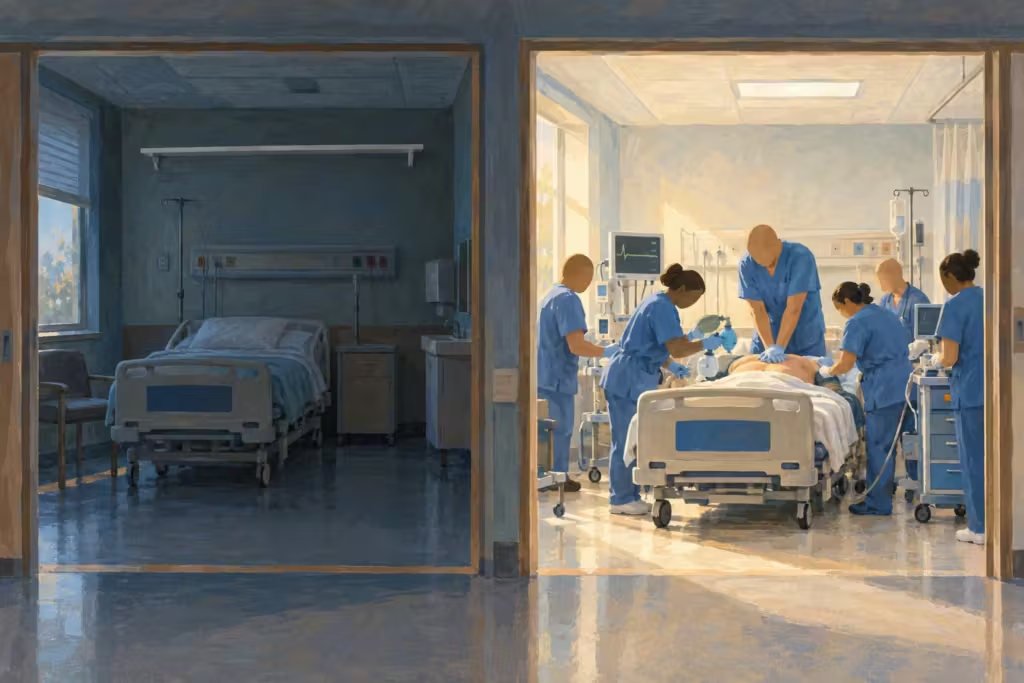
There were about a thousand shelves. But only 22 out of every 100 cardiac arrests happened in the rooms where they were. The other 78 happened in rooms without a shelf.
A cardiac arrest gives no warning. It can happen in any room in the hospital.
The two people who said they saw their resuscitation were in rooms without a shelf. No one had the chance to name an image, correctly or not.
The authors acknowledge in the paper that testing what people see from above will take a different method.
Even so, the study made headlines around the world.
Step 12
October 2014 · According to the press
The study is published and appears in newspapers around the world

The paper was published on October 7, 2014, in Resuscitation, a medical journal about resuscitation.
The authors write that the man’s case is hard to reconcile with what is known about the brain. He described in detail what was happening at a time when the brain is normally not working, or working very poorly. They add that it doesn’t look like a hallucination, because what he described matched real events.
Some newspapers ran headlines saying the study offered evidence of life after death. The paper doesn’t talk about life after death. It talks about what people remember from a resuscitation.
The opening question remains: is there a way to check whether someone sees anything during a cardiac arrest? Let’s look at what could be found out and what couldn’t.
From 2,060 cardiac arrests to one checked case
At every step of the study, many people dropped out along the way. Some died, others were too ill to talk, and others remembered nothing.
In the end, just one person described something from their resuscitation that could be compared with the hospital records. And none were in a room with a shelf.
| Step | People |
|---|---|
| Cardiac arrests followed | 2,060 |
| Left the hospital alive | 330 |
| Did the first interview | 140 |
| Did the second interview | 101 |
| Remembered something from the time they were unconscious | 55 |
| Described a near-death experience | 9 |
| Said they saw or heard their resuscitation | 2 |
| Could be compared with medical records | 1 |
| Had the cardiac arrest in a room with a shelf | 0 |
What these figures don’t tell you
- Only some people were asked. Of the 330 survivors, 190 were not interviewed. We don’t know what they remembered.
- 9 out of 100 is not an unusual figure. Other studies of cardiac arrest survivors find between 4 and 23 out of 100. More in How many people have a near-death experience?
- One case isn’t enough to draw conclusions, either way. What has been said about it is in What does science say about near-death experiences?
Frequently asked questions
What were the results of Sam Parnia’s AWARE study?
The AWARE study followed 2,060 cardiac arrests in 15 hospitals. It interviewed 140 survivors, and 55 remembered something. Of those 140 people, 101 did a second interview. In it, 9 described a near-death experience and 2 said they saw or heard their own resuscitation. Almost no cardiac arrests happened in a room with a hidden image, so no one could get one right or wrong. It’s all in “What AWARE found.”
What does AWARE stand for?
AWARE stands for “AWAreness during REsuscitation.” The study wanted to find out whether a person whose heart has stopped can be aware of what is happening around them. Some of what survivors remember are near-death experiences.
Is the AWARE study legit?
It is a real medical study. It was published in 2014 in Resuscitation, a peer-reviewed medical journal. The paper is signed by 31 authors. But it couldn’t answer its main question, because almost no cardiac arrests happened in a room with a hidden image. What its supporters and critics say is in “How each side reads it.”
Where this page comes from
The study
- Parnia et al. (2014), “AWARE—AWAreness during REsuscitation—A prospective study,” Resuscitation 85:1799–1805. The journal version includes an abstract in SpanishView in the journal (paywalled)
- Parnia et al. (2023), AWARE II, Resuscitation 191:109903Read for free
Assessments and criticism
- Greyson et al. (2025), the scale for rating veridical cases (perceptions of things the person had no ordinary way of knowing), Frontiers in Psychology 16:1661390Read for free
- Steven Novella, “AWARE Results Finally Published – No Evidence of NDE,” NeuroLogica Blog, October 9, 2014Read
- Keith Augustine (2022), “How not to do survival research,” Journal of Scientific Exploration 36(2):366–398Read for free
Press
- The Local (Austria), “Multi-nation study offers evidence of life after death,” October 10, 2014Read
To learn more
- 52 cardiac arrests induced on purpose, a hidden screen and no near-death experienceRead
- The near-death experience of the blue-cap patientRead
- What does science say about near-death experiences?Read
- How many people have a near-death experience?Read
Our archive
- Our reading of the full paper and our assessment of the case of the man in the blue cap, as of October 11, 2026
More studies
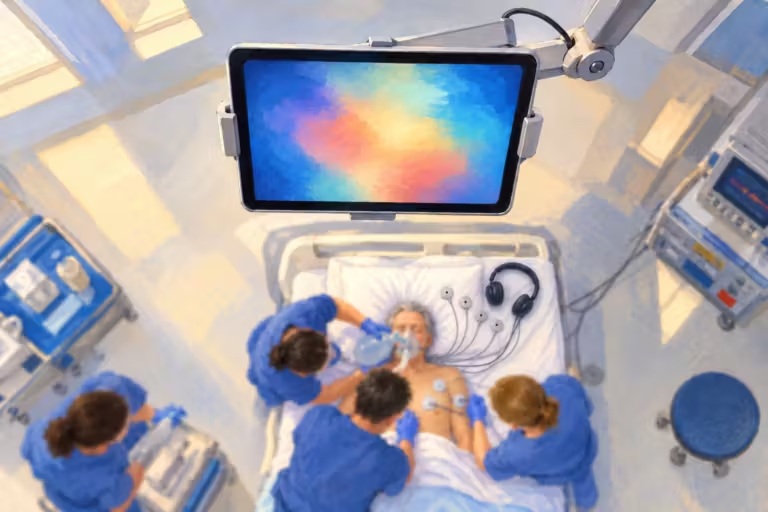
AWARE II: a random picture and the brain on the screen
Above the patient was a tablet with a random picture. Headphones said the names of three fruits. And the doctors measured the brain during resuscitation.
Van Lommel: 344 cardiac arrest survivors in ten hospitals
Ten hospitals asked every cardiac arrest survivor what they remembered. They saw them again after 2 and 8 years.
Greyson: 1,595 heart patients and 27 NDEs
A hospital asked its cardiology patients what they had been through. With a cardiac arrest, an NDE was ten times more common than without one. But most happened without one.