
A real-life story · Phoenix, Arizona, 1991
Pam Reynolds’ near-death experience
In 1991, doctors stopped Pam Reynolds’ heart so they could operate on her brain. She later said she had left her body and watched the operation from above. She also said she saw a light and relatives who had died.
Pam's NDE is one of the best-known cases. The reason is that some of the things she described match the surgical report. These things happened while Pam was asleep under anesthesia, with her eyes taped shut and her ears full of noise. Her heart was still beating. How could she have known about them?
Step 1
1991 · Before the operation
Doctors find a bulge in an artery in her brain
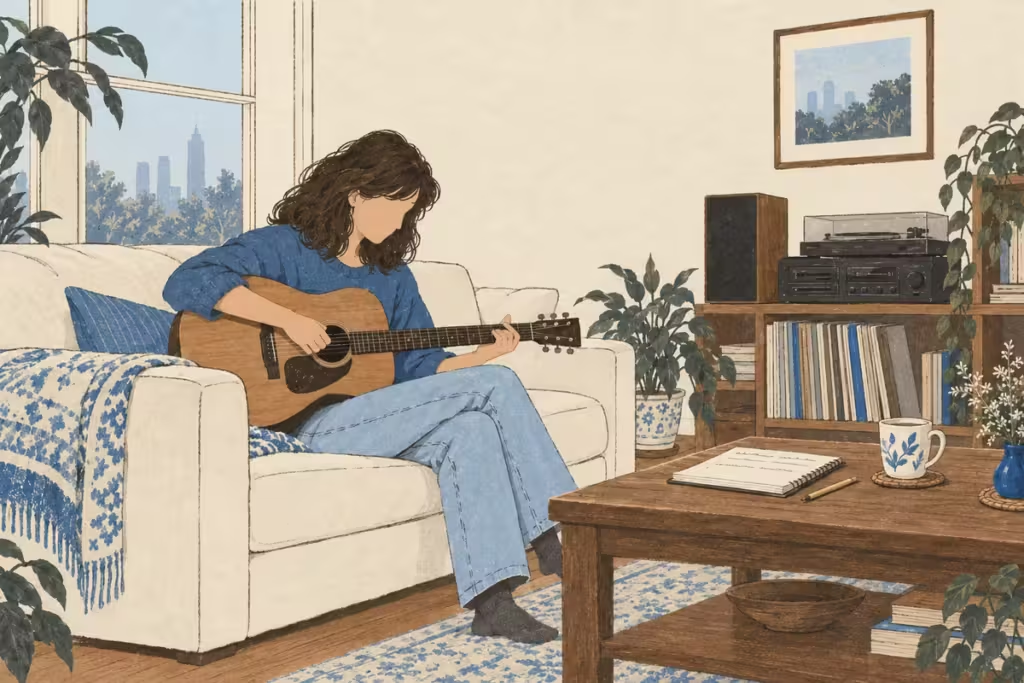
Pam Reynolds was 35. She was a singer, and she wrote her own songs.
One day, doctors found a large bulge in an artery in her brain. It was like a balloon. Doctors call it an aneurysm.
If that bulge burst, Pam could die.
The bulge sat at the base of her brain, very deep inside. It was too big and too well hidden. An ordinary operation wouldn’t work.
To remove it, the doctors would have to stop her heart.
Step 2
Before the operation
The plan: cool her down and stop her heart
She was taken to a hospital in Phoenix, Arizona. The surgeon Robert Spetzler worked there. His plan had four steps:
- 1. CoolLower her body temperature from 37 °C (98.6 °F) to about 15 °C (59 °F).
- 2. StopStop her heart and her breathing.
- 3. DrainDrain the blood from her head and remove the balloon.
- 4. Bring her backWarm her body slowly and get her heart beating again.
Cold protects the brain. With the blood drained, the balloon can’t burst while the surgeon works.
For a while, her body would be very close to death.
Step 3
In the operating room · Her heart is beating
They put her to sleep, tape her eyes shut, and fill her ears with noise
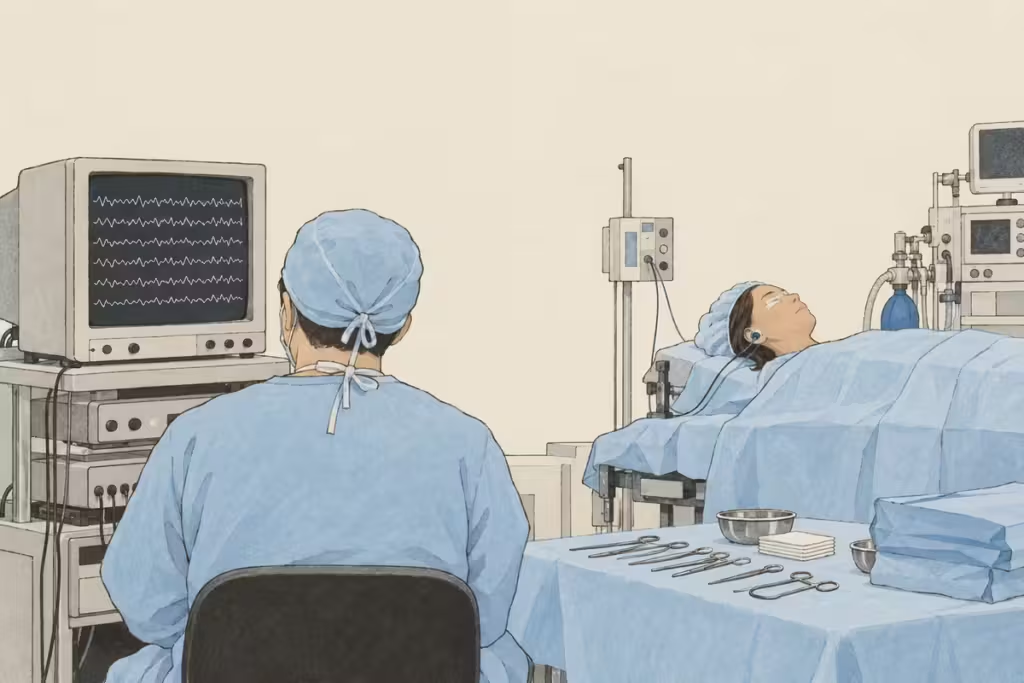
Pam was given general anesthesia and was completely asleep. Her eyes were also taped shut and her body was covered with drapes.
In her ears she wore special custom-made earpieces. In one ear they played very loud clicks. In the other ear they played a steady noise.
The clicks were there to check whether her brain was still responding. A doctor watched the readings on a screen the whole time.
Later, Pam said she had seen and heard things during the operation.
With her eyes taped shut she couldn’t see anything. And with the noise in her ears, it was very hard to hear.
Her heart was still beating. Later, it would be stopped.
Step 4
In the operating room · Her heart is beating · Pam’s account
Pam says she leaves her body
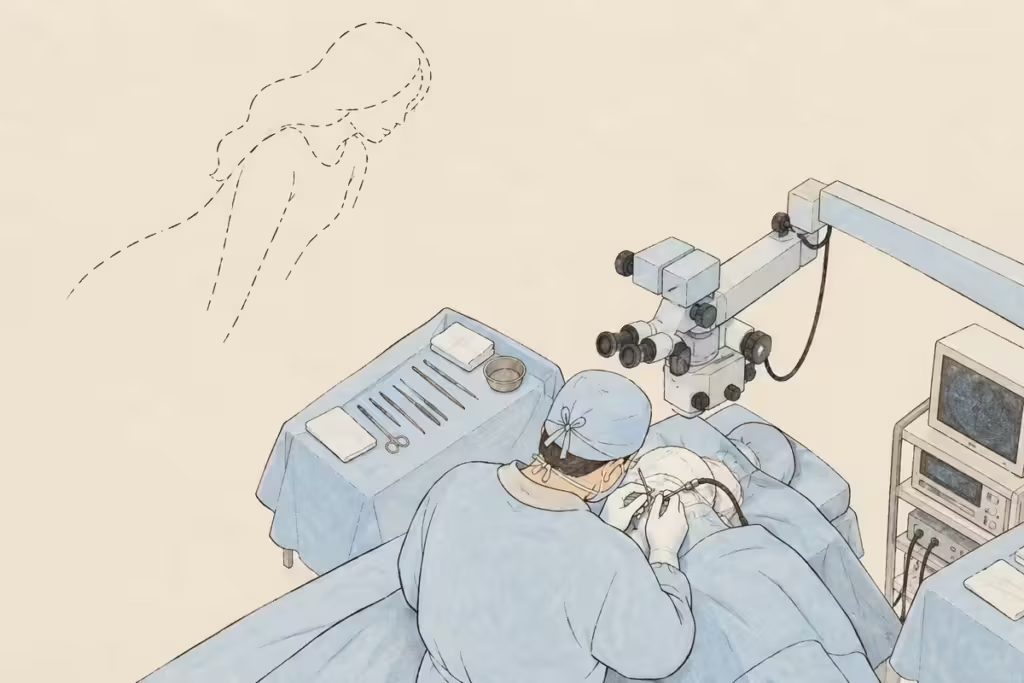
This is what Pam described later.
The first thing she remembers is a sound. It was a musical note, high and clear.
By her account, it came when the surgeon began to open her skull.
Then she felt herself leave her body.
She was floating above the table. The farther she drifted from her body, the clearer the note became.
She was watching the scene from above the surgeon’s shoulder. And from there she noticed something in the surgeon’s hand.
Step 5
In the operating room · Her heart is beating · Pam’s account
Pam says she sees the tool they use to open her head
To Pam, the tool looked like an electric toothbrush. It made an unpleasant noise. Next to it was a small case of spare parts, like one of those toolboxes full of bits.
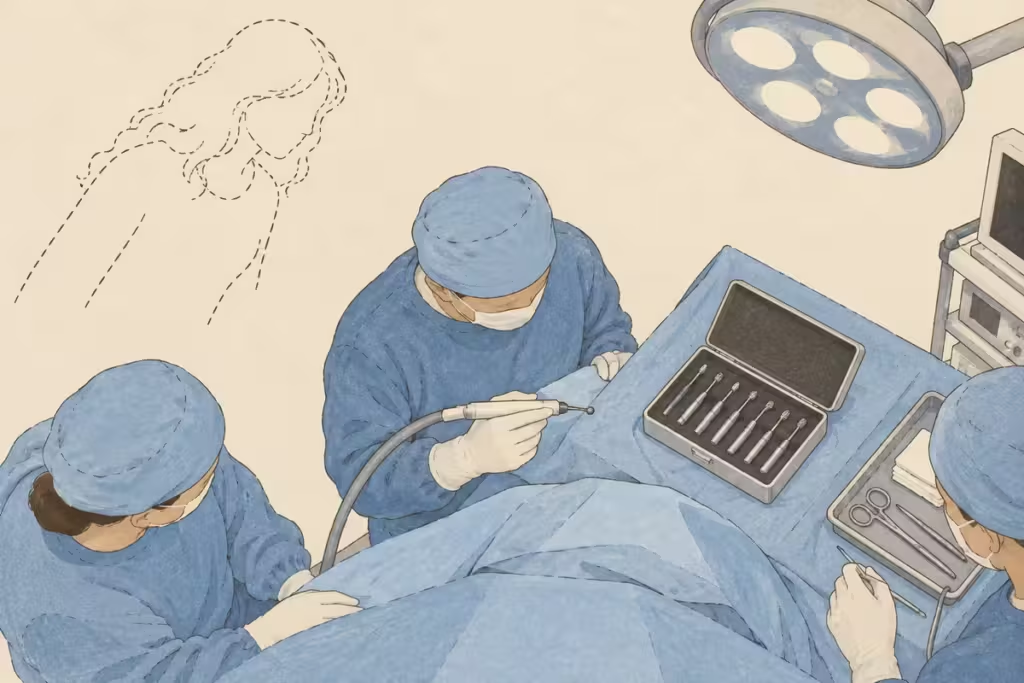
She said no one had shown her that tool before she was put to sleep.
Years later, a researcher asked for a photo of that saw so he could check. He said he was astonished. The saw really did look like an electric toothbrush.
Pam says that next she heard something that struck her as even stranger.
Step 6
In the operating room · Her heart is beating · Pam’s account
Pam says she hears the doctors talking about her leg
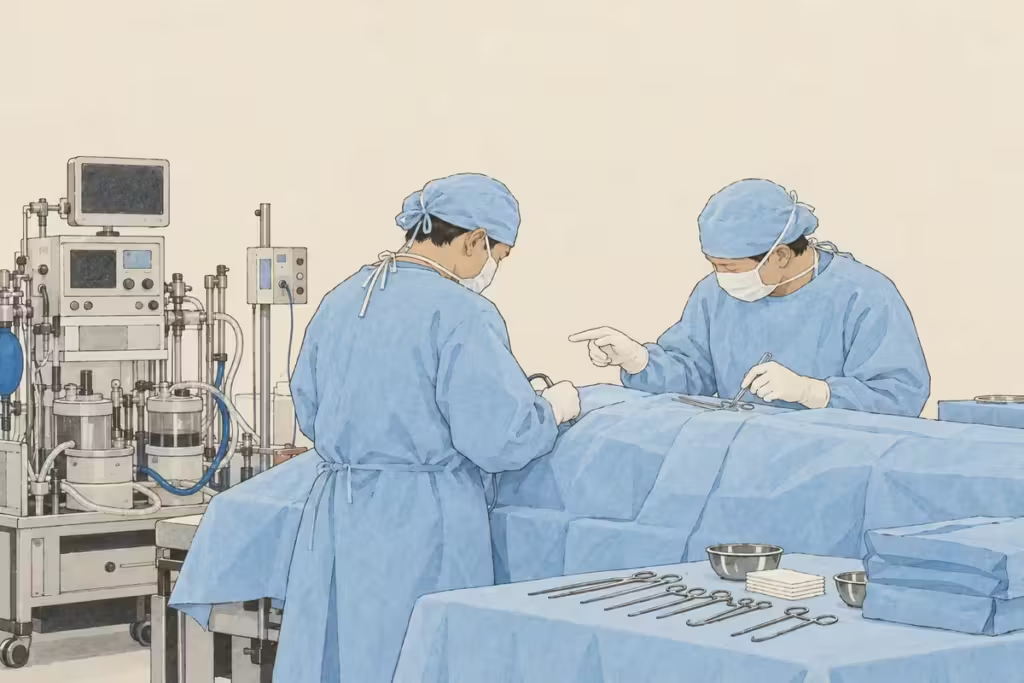
Pam remembers hearing the doctors talk. They weren’t talking about her head. They were talking about her groin, where the leg begins. Here it is in our own words:
A woman’s voiceHer veins and arteries are very small.
It struck her as very strange. What were they doing to her leg, if the operation was on her brain?
Pam didn’t know it, but it made sense. To cool her blood, they had to connect her to a machine through an artery in her leg.
The surgical report confirms it. The artery in her right groin was too small. So they connected the machine through both groins. The report also says this was discussed with the brain surgeons.
The machine was now connected. And it began to cool her.
Step 7
In the operating room · Her heart is stopped
They cool her to 15 °C and stop her heart
The machine cooled her blood. And with her blood, her whole body.
37 degrees. 30. 25. 20. Down to about 15.
Only now did they stop her heart. The blood drained out of her head.
At that point, the surgeon removed the balloon.
We don’t know whether what Pam describes next happened while her heart was stopped. She couldn’t know exactly when it happened.
Step 8
Unknown when it happened · Pam’s account
Pam says she sees a light and relatives who had died
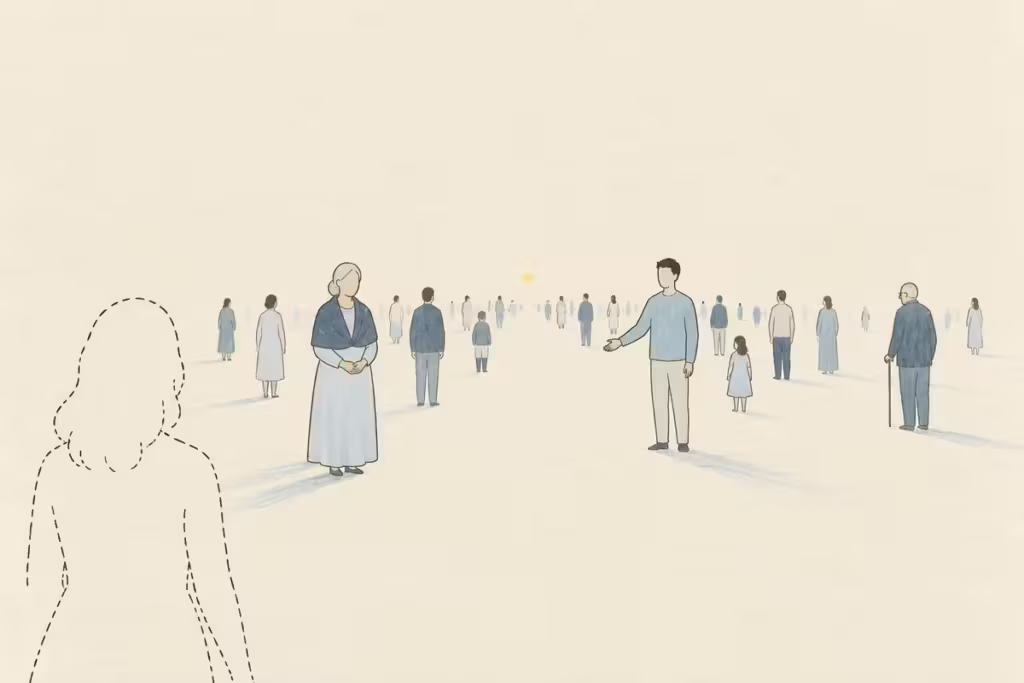
Pam felt a presence. She saw a tiny point of light far away. The light was pulling her in.
The closer she got, the more she could see. There were figures and people.
Pam heard her grandmother call her by name. Her grandmother had died a long time ago.
She saw an uncle of hers who had died at 39. This uncle had taught her to play the guitar.
There were a great many people. Some she knew and some she didn’t. But she felt they were all connected to her.
Pam asked whether the light she saw was God, and the answer was:
The light, she was told, is what happens when God breathes.
Step 9
Unknown when it happened · Pam’s account
Pam says her uncle sends her back
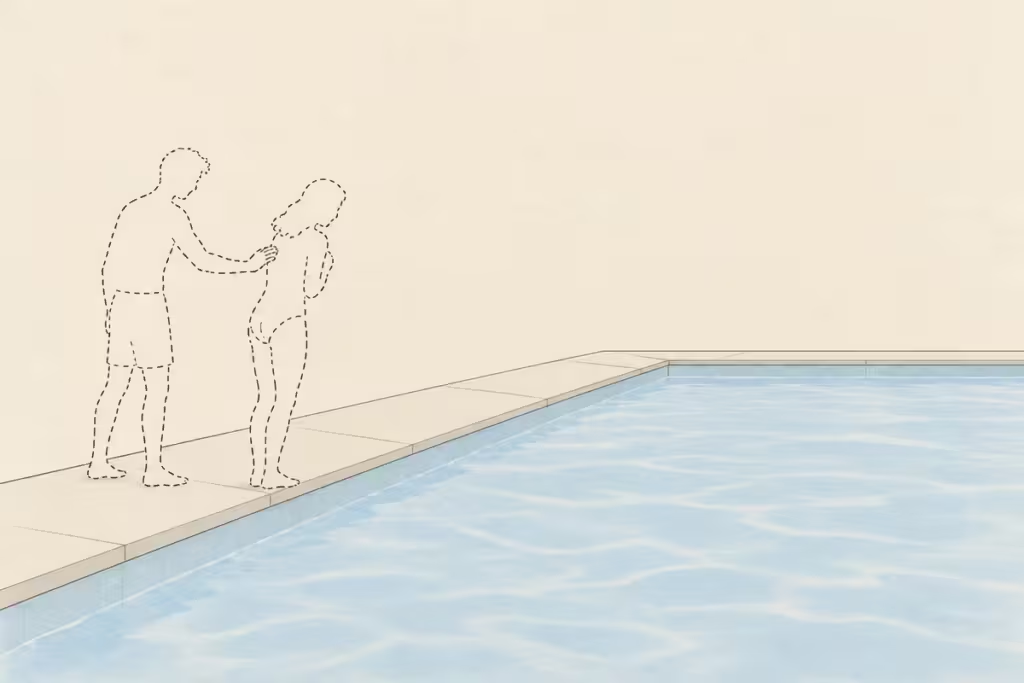
She was told she had to go back. Her uncle went with her.
But when she saw her body, Pam didn’t want to get back in. It looked empty to her, lifeless. And she knew it was going to hurt.
Her uncle insisted. He told her it was like diving into a swimming pool: you just have to jump.
She held back. She says with a laugh that in the end her uncle gave her a push.
Step 10
End of the operation · She is being rewarmed
Two shocks bring back her heartbeat
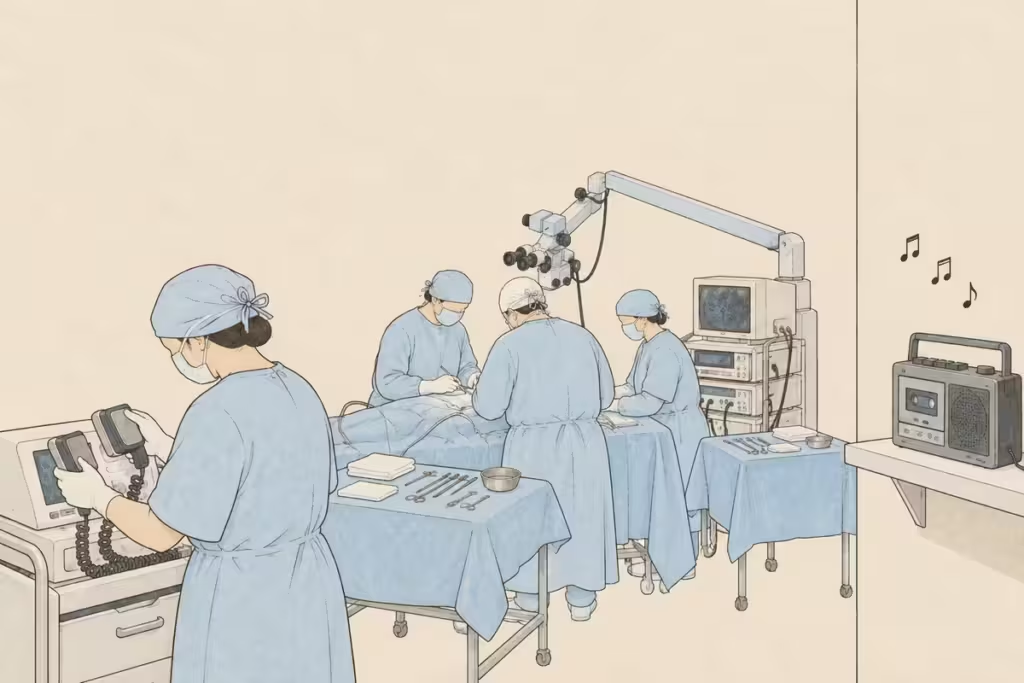
The doctors began to warm her up. Her heart started moving again, but without a rhythm. They gave her two electric shocks to make it beat properly.
Pam says she saw her body jolt. She says she felt the second jolt once she was back inside her body.
Music was playing in the operating room. She said it was “Hotel California.” One of the doctors later confirmed that the song did play in the operating room.
Step 11
After the operation
Pam recovers, and her case ends up in a book
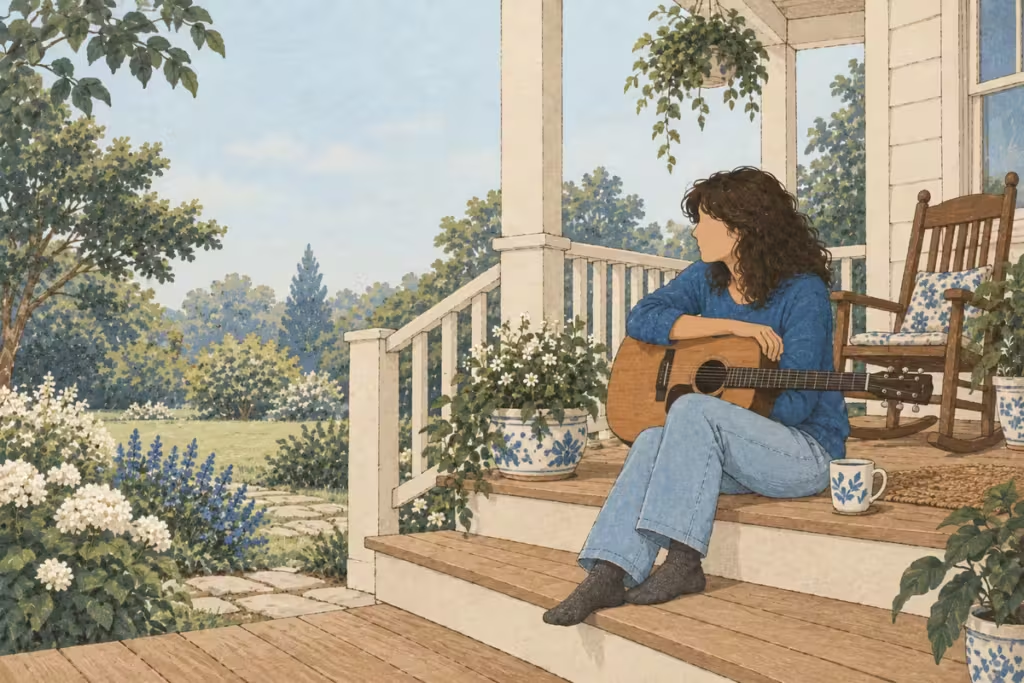
The operation was a success. Pam lived another nineteen years. She died in 2010.
She said she had never read anything about these experiences before the operation. And she thought her experience was caused by her brain misfiring.
She changed her mind when the cardiologist Michael Sabom looked into her case. A cardiologist is a heart doctor. Sabom wrote about the case in a book in 1998.
That leaves the question from the beginning: how did she know what was happening in the operating room? Let’s look at what could be checked.
How many people have an NDE?
Pam is not a one-off. For more than thirty years, several teams of doctors have asked people who survive a cardiac arrest what they remember. Some teams interview them in the hospital. Others do it months later.
Picture 100 of those people:
Each dot is a person. The 18 filled-in dots are the ones who described a near-death experience. That is what the largest study found. It was done in the Netherlands in 2001, with 344 people.
The other 82 people didn’t describe an NDE. Many remember nothing of their cardiac arrest.
| Where and when | People interviewed | Described an NDE |
|---|---|---|
| England, 2001 | 63 | 6% |
| Netherlands, 2001 | 344 | 18% |
| United States, 2002 | 30 | 23% |
| United States, 2003 | 116 | 10% |
| United Kingdom, United States, and Austria, 2014 | 101 | 9% |
| Vienna, Austria, 2023 | 126 | 4% |
| United States and United Kingdom, 2023 | 28 | 21% |
What these figures don’t tell you
- Only some people are asked. In the 2014 study, 330 people survived, but only 140 could be interviewed, and 101 reached the second interview. The rest died later, were too ill, or didn’t respond.
- Most cardiac arrests are never counted. These studies run in a few hospitals for a limited time. Outside them, no one keeps track. Also, the 2003 study interviewed 1,595 cardiology patients, not just the 116 with cardiac arrest in the table, and 81 of them described an NDE from an earlier occasion. The study did not count them, because it only counted those from that hospital stay.
- Some people keep quiet. In the accounts in our archive, at least 13 people say they kept their experience to themselves for a while. They kept quiet because they weren’t believed or because they were afraid of how others would react.
- It depends on how you count. If you count any memory of the cardiac arrest, the numbers go up. If you use a strict scale, they go down. In England in 2001, 7 of 63 people remembered something. But on the scale, only 4 qualified as an NDE.
That’s why no one knows the real figure. But every study shows that it isn’t rare. Between 4 and 23 of every 100 survivors who are asked describe an NDE. Pam’s case stands out because so much of it could be checked.
Frequently asked questions
Is Pam Reynolds still alive?
No. Pam Reynolds died on May 22, 2010, in Atlanta, at age 53. According to The Atlanta Journal-Constitution, the cause was heart failure, nineteen years after her surgery.
Is Pam Reynolds’ story real, or has it been debunked?
No one has shown it to be false. No one has shown that Pam actually left her body either. The anesthesiologist Gerald Woerlee thinks Pam heard the doctors. In his view, she had moments of awareness despite the anesthesia. Other researchers tried the same earpieces and could make out only scattered fragments. We explain this in “What can be checked.”
What did Pam Reynolds see during her surgery?
Pam said she saw the saw they used to open her skull. It looked to her like an electric toothbrush. The doctors confirm what the saw looked like. It was used early in the operation, while her heart was still beating. Pam also said she saw a light and relatives who had died. But no one knows when that happened.
Did Pam Reynolds write a book about her experience?
Not that we know of. The cardiologist Michael Sabom tells her case in his book Light and Death, from 1998. Titus Rivas, Anny Dirven, and Rudolf Smit tell it in The Self Does Not Die. Both books are in the sources at the end of the page. In 1984, years before her surgery, Pam co-wrote a children’s book. It is called Irving.
Was Pam Reynolds a Christian?
Yes. Pam described herself as a “liberal Christian.” She said she didn’t claim to know the nature of God, but that she knew “for a fact that God exists and permeates everything,” as The Atlanta Journal-Constitution reported when she died in 2010.
Where this story comes from
Books
- Titus Rivas, Anny Dirven, and Rudolf Smit, El yo no muere (2019), the Spanish edition of The Self Does Not Die, case 3.29 and chapter 11 (we cite the first edition; the link goes to the English edition, where case numbers may differ)Buy the book
- Michael Sabom, Light and Death (1998)Buy the book
Case documents
- The surgical report, as quoted by Sabom (1998) and by Rivas and colleagues (2019)
Documentaries
- Surviving Death (Netflix, 2021), episode 1, with a 2005 interview with PamWatch on Netflix
- After Death (Angel Studios, 2023): a neurosurgeon who was at the hospital describes the caseWatch on YouTube
- BBC, The Day I Died (2002), full documentary. Pam appears from minute 22 to minute 36
Interviews with Pam
- NBC (2001), television interview
- Art Bell, Coast to Coast AM (2001), radio interview
Articles on whether Pam could have heard
- Robert Spetzler et al. (1988), “Aneurysms of the basilar artery treated with circulatory arrest, hypothermia, and barbiturate cerebral protection,” Journal of Neurosurgery 68:868-879. The click protocol is on p. 869View in the journal (paywalled)
- Gerald Woerlee (2011), Journal of Near-Death StudiesRead for free
- Rudolf Smit (2012), letter in the Journal of Near-Death StudiesRead for free
Studies on how many people have an NDE
- Parnia et al. (2001), ResuscitationView in the journal (paywalled)
- van Lommel et al. (2001), The LancetView in the journal (free with registration)
- Schwaninger et al. (2002), Journal of Near-Death StudiesView in the journal (paywalled)
- Greyson (2003), General Hospital PsychiatryView in the journal (paywalled)
- Parnia et al. (2014), the AWARE study, ResuscitationView in the journal (paywalled)
- Sterz et al. (2023), Vienna, Journal of Clinical MedicineRead for free
- Parnia et al. (2023), the AWARE II study, ResuscitationRead for free
Our archive
- The accounts in the portalecm archive
Keep reading
United States, 1988
Al Sullivan
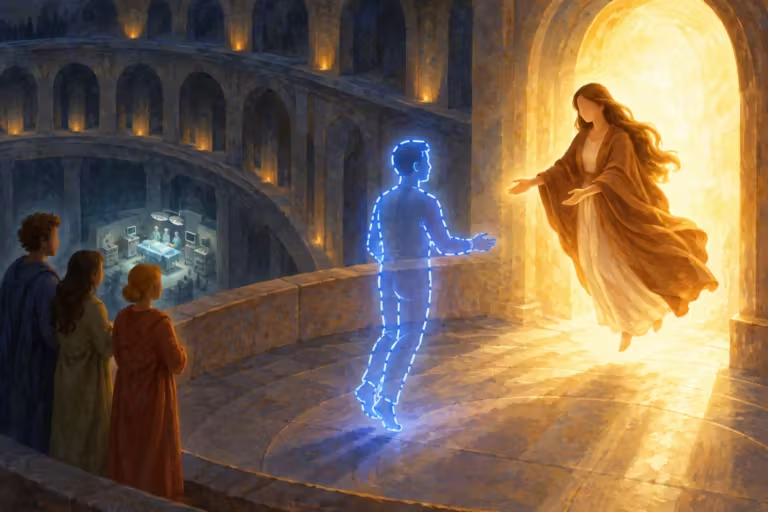
Al Sullivan had heart surgery. He says he saw his surgeon from above, moving his elbows as if trying to fly. Moving his elbows that way was a habit of the surgeon’s. On television, the surgeon said he could not explain how Sullivan saw the gesture under complete anesthesia.
Seattle, United States, 1973
Betty Eadie
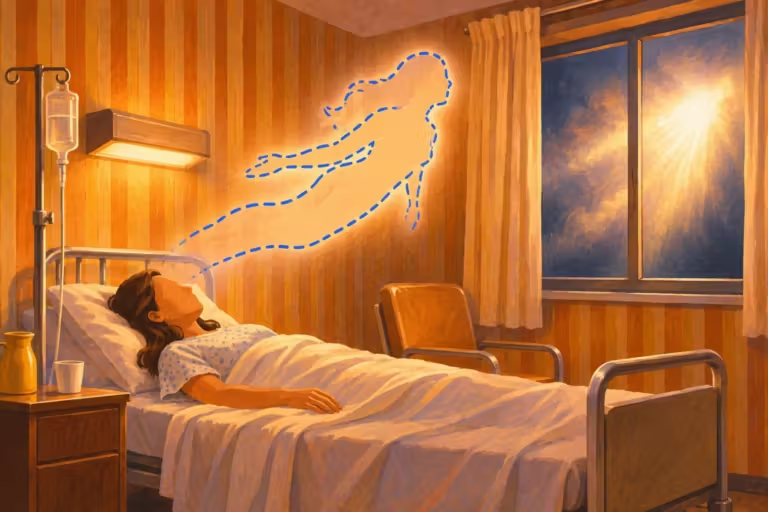
In 1973, alone in the hospital after an operation, Betty Eadie felt herself dying. She says she left her body and went to see her family. Her book reached number one on the New York Times best-seller list.
California (United States), 1991
Nancy
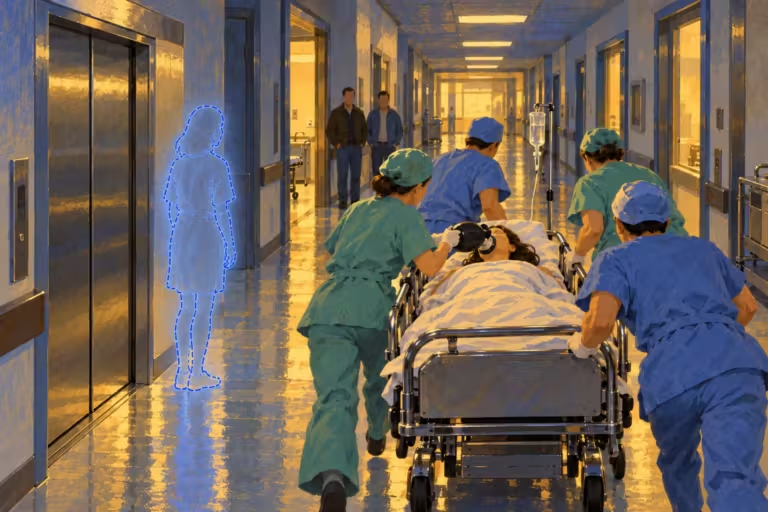
She went blind after a biopsy. She said she left her body and saw her partner and her son’s father standing still in the hallway. Her partner confirms they were there.

Reincarnation: The top 5 people who remember past lives
We asked them the same five questions as this story. A 32-page PDF, free in your inbox.
Check your email
We have sent you an email. Open it and press the button to confirm. If you cannot see it, check your spam folder.