A study · United States, published in 1997 and expanded in 1999
The Ring and Cooper study: 31 blind people who describe a near-death experience
In the mid-1990s, two American researchers went looking for blind people who had had a near-death experience or who said they had left their body. They found 31. Fourteen had been blind from birth. Most said that, during that experience, they had seen something.
Ring and Cooper wanted to know three things: whether blind people have NDEs, whether they say they see during them, and whether what they say they see can be checked. Only the third question can tell seeing apart from believing you see. We go through it step by step. If you only want to know what it found, skip to the results.
Step 1
Before the study · The question
Some doctors said blind people could see during an NDE, but no one had checked
Before Ring and Cooper’s study, several doctors and writers had told of blind people who had seen during an NDE. Kenneth Ring wanted to know where those cases came from.
- Two doctors had talked about cases like these, but never published the details.
- The psychiatrist Raymond Moody had heard one on an audio cassette. He no longer had the tape and couldn’t remember who had given it to him.
- The physician Larry Dossey began one of his books with the case of Sarah, a woman blind from birth who saw her own operation. Later, in a letter, he admitted to Ring that he had made it up.
In 1993, the British psychologist Susan Blackmore said that no case was convincing.
There was only one earlier study. The psychologist Harvey Irwin did it in Australia, and he asked 21 blind people. Three of them said they had left their body, but none of the three was completely blind.
The hardest part was still missing: finding someone blind from birth who said they had seen. Ring and Cooper set out to look for that person.
Step 2
Mid-1990s · According to the study
A notice in braille and on cassette looks for blind people
Ring and Cooper wrote to 11 organizations for blind people in the United States. All of them ran a notice in their newsletters. Almost all of those newsletters were in braille or recorded on cassette tapes. Braille is writing made of raised dots that you read with your fingers.
The notice said: if you are blind and believe you have had an NDE or have left your body, call us or write to us.
- They ran the same notice in Vital Signs, the newsletter of the association that studies NDEs.
- They asked other researchers to send them anyone they knew of.
- With each person who called, they first did a short phone interview to find out how much the person could see and what they had experienced. Then they did a long interview and recorded it.
In the interview, they looked above all for things that a witness or a medical record could confirm.
If there was a witness, they tried to talk to that person. If there was a record, they tried to read it. The study was funded in part by the Institute of Noetic Sciences, an American organization that studies consciousness.
Step 3
In the interviews · According to the study
46 people called, and 31 were included in the study

Almost all of them came through the notices. There were 20 women and 11 men, aged 22 to 70.
Not all of them had come close to dying:
- 21 had had an NDE. Most were ill or having an operation. Six had an accident, nearly always a car accident. The rest were mugged, raped, at war, or had attempted suicide.
- 10 said they had left their body without being close to death. It nearly always happened while they were resting or asleep.
And they didn’t all have the same degree of blindness:
- 14 were blind from birth. Eleven had been born prematurely between 1946 and 1958. In the incubator they were given too much oxygen, and it damaged their eyes. Some could make out a little light.
- 11 had lost their sight after age 5, through an illness or an accident.
- 6 could see very little, usually only shapeless blurs.
They were the ones who came forward. No one knows how many more blind people have had an NDE and never told anyone.
Step 4
Early 1973, in Seattle · In serious condition after an accident
A singer blind from birth is in a car accident

The best-known case in the study is Vicki Umipeg’s. She was born very prematurely in the 1950s. In the incubator she was given too much oxygen, and she went completely blind. According to the paper, the same thing happened to about 50,000 babies in the United States in those years.
Greg Wilson, from a Seattle group that studies NDEs, interviewed Vicki before Ring and Cooper did. He asked her whether she had ever seen anything. She answered: “Nothing, never. No light, no shadows, no nothing, ever.”
In early 1973, at 22, Vicki sometimes sang at a nightclub in Seattle. One night, at closing time, she couldn’t get a taxi. She accepted a ride home from two customers who had been drinking. There was an accident, and she was thrown out of their van.
- She fractured her skull and injured her neck, her back, and one leg.
- She was taken to Harborview Hospital, in Seattle.
- It took her a whole year to be able to stand up without the risk of fainting.
Ring and Cooper talked to her more than twenty years later. The paper doesn’t cite any medical record from that night.
Step 5
In the emergency room · Vicki’s account
Vicki says she saw herself from the ceiling of the emergency room
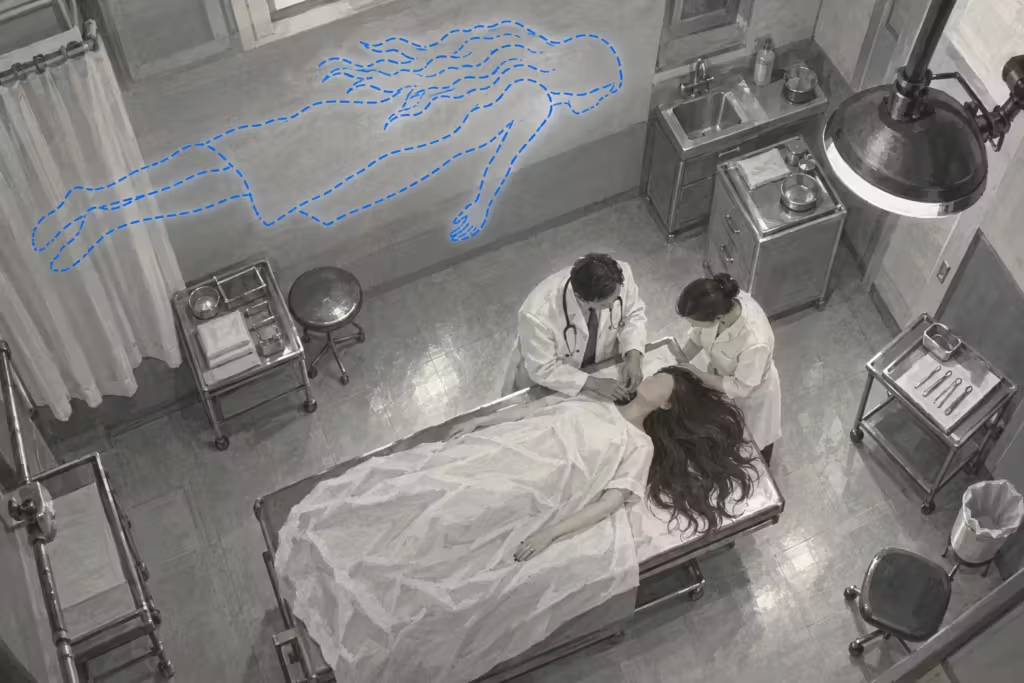
Vicki remembers little of the accident scene. She was out of her body and then back in it, and for a moment she saw the wrecked van.
Later, in the emergency room, she found herself up on the ceiling. Below there was a body. A doctor and a woman were working on it. The woman may have been a doctor or a nurse. Vicki could hear them talking. They were afraid she would end up deaf as well as blind, because of an injury to her ear. She tried to tell them she was fine, but nobody heard her.
Vicki“I recognized at first that it was a body, but I didn’t even know that it was mine initially. […] I thought, ‘Well, this must be me. Am I dead?’ […] I knew that it was mine because I wasn’t in mine. […] It was that quick.”
Vicki recognized herself: by how thin she was at the time, by her waist-length hair with one part shaved, and by the rings she was wearing. Vicki was sure it was her wedding ring.
Then she went through the ceiling of the hospital and rose up. She saw lights, the streets, and other buildings. It all happened “real quick.”
Vicki says she never made out colors. She only made out “different shades of brightness.”
Vicki knew her own hair, her thinness, and her rings by touch. And she heard the doctor and the woman talking. The authors themselves write that Vicki could have known by other means that she had long hair and was wearing those rings. That doesn’t mean that’s how she knew. It means that, with this case, there’s no way to know.
Step 6
Winter 1968, in Boston · Brad’s account
Brad says he saw the snow from above his school
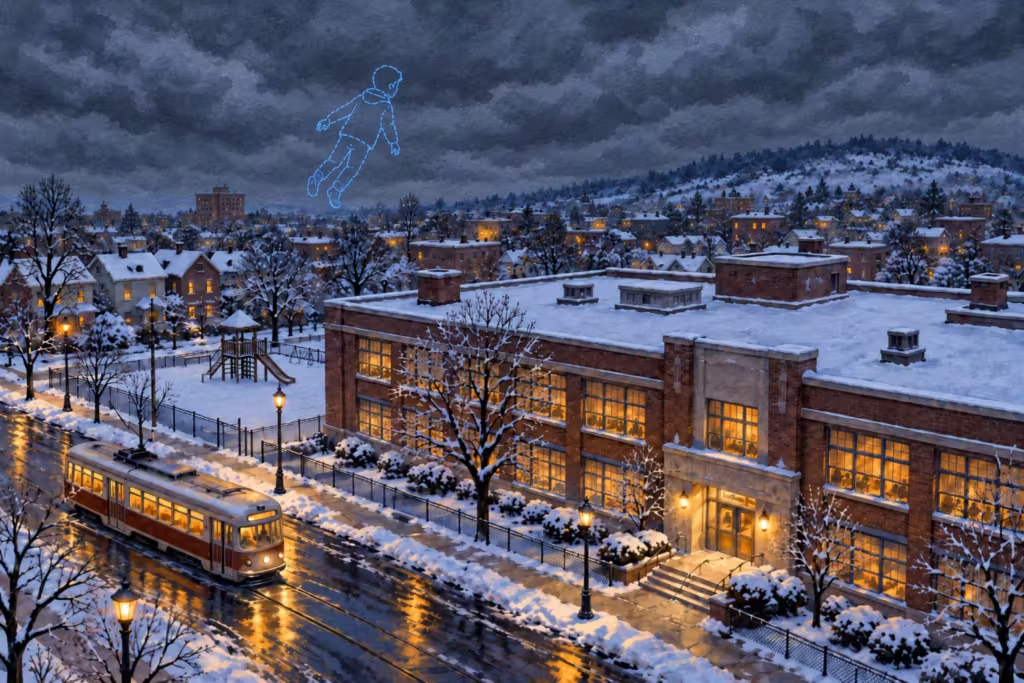
Brad Barrows has also been blind since birth. At 8, he was a student at a center for blind children in Boston. He came down with very severe pneumonia and reached the point where he couldn’t breathe. The nurses told him afterward that his heart had stopped for at least 4 minutes and that they had had to resuscitate him.
He says he rose from the bed up to the ceiling. He saw his body on the bed. He saw his roommate, who was also blind, get up and go out for help.
Then he went up above the roof. He estimates it was between 6:30 and 7:00 a.m.
- The sky was cloudy and dark. It had snowed the day before.
- There was snow everywhere except on the streets. The snowplows had cleared them and left snowbanks along the sides. There was still some slush.
- A streetcar went by. He recognized his school’s playground and a hill he used to climb.
“I clearly visualized them,” he said.
The paper says his roommate confirmed it. But in the book the authors explain that this comes from Brad. They themselves couldn’t talk to the roommate. The snow could not be confirmed or ruled out.
Step 7
Timing unknown · The participants’ accounts
What they describe: the same experience as sighted people
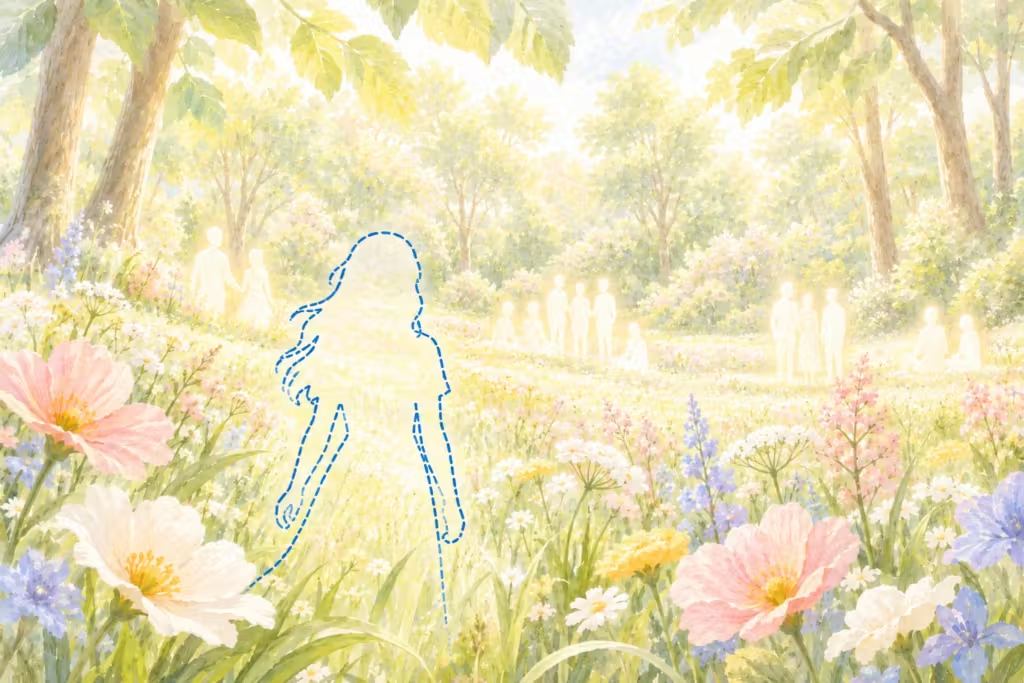
After the ceiling, Vicki and Brad describe a similar journey. Vicki went into a dark tube, heard music like wind chimes, and came to a meadow with trees, flowers, and a great many people. “Everybody there was made of light,” she says. Her grandmother was there. So were two blind classmates from her school who had died as children, and two people who had looked after her. A figure she recognized as Jesus told her it wasn’t her time yet. She saw her whole life pass before her.
Brad went through a tunnel, walked across a field of tall grass under an immense light, and went into a glittering stone building. A man he didn’t know gently pushed him back. He woke up in bed, gasping for air, with two nurses beside him.
These are the things the 21 people who came close to death described:
- 20 of 21: peace, well-being, or feeling loved.
- 14: leaving the body.
- 12: meeting others: spirits, angels, or religious figures.
- 10: seeing their own body.
- 10: choosing to come back, or being told to come back.
- 8: a tunnel or a dark space.
- 8: a very bright light.
- 7: noises or music.
- 6: a border.
- 4: seeing their life pass before them.
People blind from birth, people who lost their sight later, and people with very little sight all described the same things. And they are the same things sighted people describe.
There were too few people to run the numbers. The authors reach this conclusion by reading the accounts, not from statistics.
Step 8
In the interviews · According to the study
25 of the 31 people say they saw something
The authors asked each person whether they had seen anything.
- Of the 21 with an NDE, 15 said yes, 3 weren’t sure, and 3 saw nothing.
- Of the 10 blind from birth with an NDE, only half said clearly that they had seen.
- Of the 10 who only had an out-of-body experience, 9 said they saw.
Each dot stands for one person in 100. The 80 filled dots are those who said they saw something: 25 of the 31. Among those blind from birth it was 9 of 14, about 64 in 100.
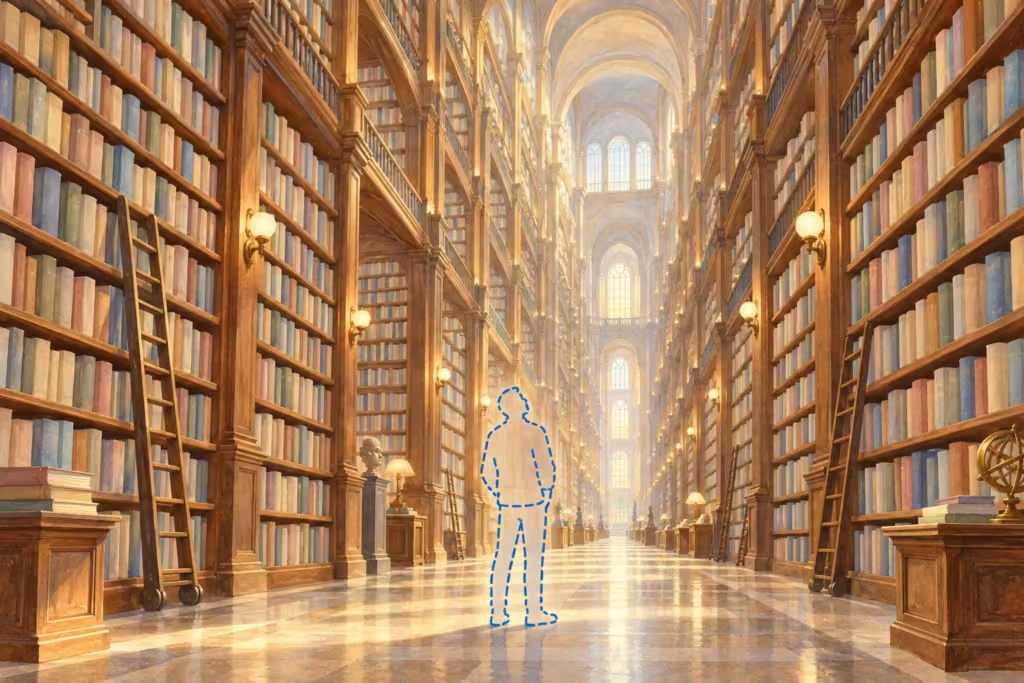
A man blind from birth found himself in an enormous library, with “thousands and millions and billions” of books. They asked him whether he was surprised that he could see. He answered: “Not in the least.” And he told them what he thought at that moment: “Well, of course I can see. Look at those books. That’s ample proof that I can see.” Marsha was a woman with very little sight. Marsha is another made-up name. She said that there she saw everything, in detail and in color: “Everything was the way it was supposed to be.”
At first, Vicki was frightened by seeing: “It was like hearing words and not being able to understand them, but knowing that they were words.” To Brad it felt natural, “almost as if I should have always been able to see like that.”
The authors compare this with blind people who get their sight back through surgery: they need many hours of training to recognize what they see. In these NDEs, the “sight” came almost immediately.
According to the authors, one man saw nothing. That man told them: “I don’t know what you mean by ‘seeing.’”
Step 9
In the interviews · The participants’ accounts
Their dreams have no images, but the NDE does
One possible explanation is that an NDE is a very vivid dream. That is why the authors asked everyone what their dreams were like.
There are studies of blind people’s dreams going back more than a hundred years. They agree on this:
- People blind from birth don’t see images when they dream.
- People who went blind before age 5 almost never do.
- People who went blind after age 7 usually do see images, though less and less clearly.
- Hearing dominates their dreams, followed by touch and movement.
Vicki put it this way: in her dreams she eats, plays the piano, sings, touches things, and smells them. “No color, no sight of any sort, no shadows, no light.” Vicki says her NDE was nothing like that.
That is why the authors believe NDEs are not dreams. For these people, the big difference is that the NDE has images and their dreams don’t.
But one question remains. If someone has never had an image, awake or dreaming, how do they know that what they had was an image? The authors went back and asked again.
Step 10
In later interviews, 1994 and 1995 · The participants’ accounts
Under closer questioning, “seeing” looked more like “knowing”

Going back over the interviews, the authors found that several people doubted it had really been seeing:
- “It wasn’t visual. It was almost like a tactile thing, except that there was no way I could have touched from up there.”
- “All these perceptions were being blended into some image in my mind, you know, the visual, the tactile, all the input that I had. I can’t literally say I really saw anything.”
In a second interview, in 1995, Brad qualified what he had said about the snow: “Whether it was seen visually through the eyes, I could not say. […] It was something like a tactual sense, like I could literally feel with the fingers of my mind.” Ring asked Vicki whether it had been seeing or knowing. She answered: “It’s both, Ken, it’s both seeing and knowing.”
The authors add another reason to be careful. Blind people use words about seeing more than other people do. Other studies confirm this. Vicki, for example, says she loves to “watch” TV.
The authors conclude that it shouldn’t be taken as something like eyesight. It should be taken as a blend of all the senses at once.
The authors called this way of perceiving transcendental awareness. In the book they call it mindsight. They say it sometimes feels like something that comes from everywhere at once, without looking from any one place. But the examples they give don’t come from the blind people in the study. They come from an eye specialist who meditated and from a woman with pneumonia.
Step 11
Checking the accounts · According to the study
They looked for witnesses, and almost never found them
To know whether what people described was accurate, someone had to confirm it. That is where the study got stuck. Many cases, like Vicki’s and Brad’s, had happened so many years before that no one knew anymore who the witnesses had been. Other witnesses had died or couldn’t be interviewed.
The authors put it this way: “Sincerity is not evidence and one’s own word is hardly the last word.”
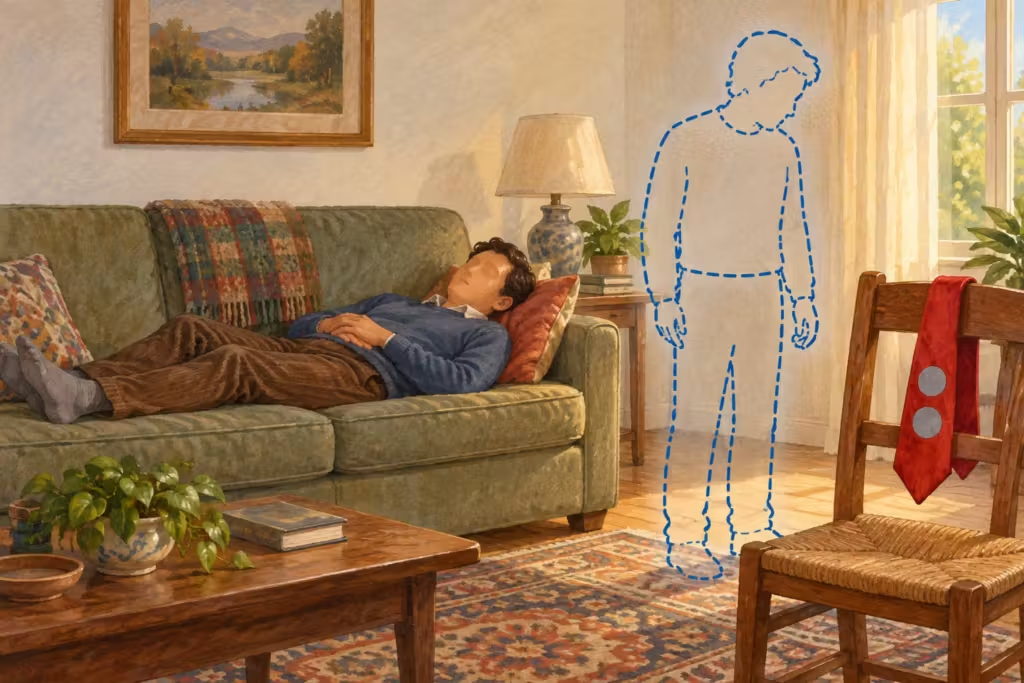
In the paper they present two cases with some support. The first is Frank’s, a made-up name. He went completely blind in 1982. He says that around 1992 a friend bought him a tie to wear to a wake. She didn’t tell him what it looked like. Lying on the couch, he left his body and saw the tie: red, with two gray circles. When his friend came back, he asked her whether the circles were gray. She said yes.
Sharon Cooper called the friend without telling her why. The friend confirmed that she had bought him a tie and taken him to the wake. But she didn’t remember the order of events that day, or the tie’s pattern or colors.
The authors acknowledge that they lack the facts that would confirm it, and that the case is not conclusive. In the book they add more cases. In almost all of them, there is only the word of the person telling it. In one, someone confirms it, but she is a friend of the person telling it, and the two of them remember it years later. The authors write that they are not independent witnesses.
About Vicki, the authors write that it is “impossible to provide any external corroboration.” What she described is “an uncorroborated and inherently unverifiable self-report.”
That leaves the second case in the paper. For the authors, it is the strongest.
Step 12
September 30, 1991, afternoon · Not breathing on her own · Nancy’s account
Nancy says she saw two men at the end of the hallway
Nancy was 41, and her eyesight was fine. She went into a hospital in California for a biopsy. A biopsy means removing a small piece of a tumor for testing, and hers was in her chest. With the first cut, the surgeon accidentally tore a large vein in the chest and sewed it up. That vein is called the superior vena cava.
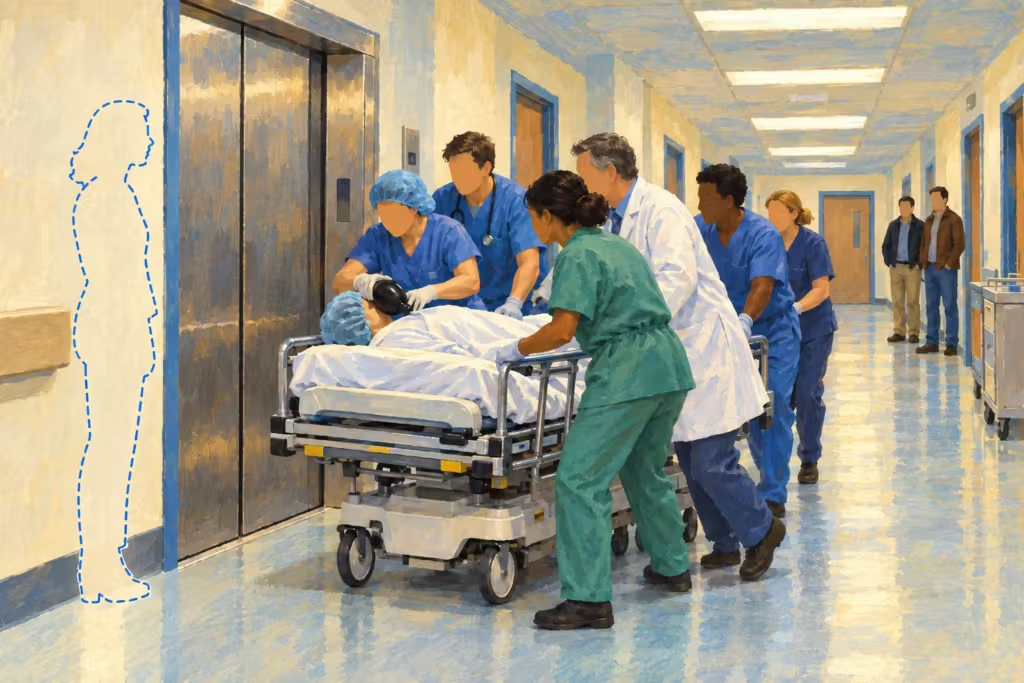
In the afternoon, in the recovery room, her face and arms swelled up and she stopped breathing on her own. She says that when she woke up, she was already screaming: “I’m blind, I’m blind!” She was rushed out on a gurney for a test. They were holding a black bag over her face to help her breathe.
She says the gurney slammed into an elevator door. With the jolt, she left her body and stood off to one side.
- She saw herself on the gurney, with the black bag over her face, a surgical cap, and a white sheet.
- She saw about six people around her, in a panic.
- She looked down the hallway and saw two men about 5 or 6 meters away: her son’s father and Leon, her partner at the time. They were standing still, not talking, just looking.
She thought: “Why aren’t they coming up and doing something or saying something?” Then came a very bright light. That night she was operated on again. She never got her sight back.
Nancy was not blind from birth: she says she lost her sight that same day, a few hours earlier.
Step 13
April 1995 · According to Leon and the hospital records
Leon confirms they were in the hallway
The authors talked to Leon twice. Nancy and Leon had been separated for years and hadn’t spoken for at least a year.
- Leon was in the hallway and saw her come out on the gurney, with four or five people. She was so swollen he barely recognized her.
- He called out to her: “Nancy, Nancy.” She didn’t react. The gurney passed within a meter or a meter and a half of him.
- He believes the child’s father was standing beside him.
- He walked over to the service elevator to watch her go in. He remembers that it was hard to get the gurney in.
The child’s father broadly agreed, but said more than once that his memory of it was hazy.
The authors also saw records from the time:
- The medical record confirms the biopsy and the second operation. It doesn’t mention the blindness until October 2, at 8 a.m.
- According to Leon’s notes, Nancy first tried to write that she had lost her sight that same day, the 30th, at 9:30 p.m. That is after the hallway.
- Another note of Leon’s, from the next day at 1:55 p.m., records what the anesthesiologist told him: her eyesight was affected by the swelling and would come back once the swelling went down.
- They tried out a bag like hers: for someone lying on a gurney, the bag blocks the view to the sides.
- An ophthalmologist explained to them that if blood stops getting through like this, the optic nerve can be damaged within minutes. At least six hours passed between the cut and the hallway.
But Leon didn’t know that Nancy was blind when she was being taken to the elevator: “Nobody knew,” he said. They found out later, in intensive care.
For the authors, the case confirms Nancy’s account in every important respect.
There are two things the book doesn’t make clear. The first is when Nancy first said she had seen the two men, and whether anyone had told her before that they were there. The second has to do with the fact that Leon called her by name as she went by. The book explains why Nancy couldn’t have seen them with her eyes, but it doesn’t say whether she could have heard them. These aren’t evidence against her. They’re questions no one asked, and they needed asking.
Nancy’s story, step by step: Nancy’s near-death experience.
Step 14
1997 and 1999 · According to the authors
The paper, the book, and a section they asked readers to ignore

The paper was published in the winter of 1997. These are its conclusions:
- Blind people have NDEs like anyone else’s. So do people blind from birth.
- Most say they see during them.
- “Occasionally,” what they say they see can be confirmed by other means.
To explain this, they propose that in these experiences consciousness works independently of the brain. Afterward, so that it can be told, the experience has to pass through the brain and through language. The authors say that this is why it is told in the language of seeing.
In 1999 they expanded the study into the book Mindsight. At the end of the book they added a case that reached them at the last minute. It was a woman blind from birth whom another researcher had interviewed. Ring was only able to speak with her for a few minutes by phone, because she was ill and declined to be interviewed.
Later, the authors asked readers to ignore that case, because they found out that parts of it were false. They say so in a note before the appendix.
The researcher who passed the case on to them believes she was deceived, and she apologized to them. Let’s see what can be said with what is left.
From 31 people to one witness
At each stage of the study, fewer cases were left. In the end, only one had a witness who confirmed what the person said they saw.
So its figures show what blind people describe, but not whether what they describe is accurate, nor to rule it out.
| Stage | People |
|---|---|
| Called because of the notice, or were sent by other researchers | 46 |
| Were included in the study | 31 |
| Had had an NDE (the rest, only an out-of-body experience) | 21 |
| Said they saw something (of the 31) | 25 |
| Were blind from birth | 14 |
| Blind from birth and said they saw something (of the 14) | 9 |
| Cases the paper presents with some confirmation | 2 |
| With a witness who confirms what the person said they saw | 1 |
| Blind from birth, with a witness who confirms it | 0 |
What these figures don’t tell you
- The 31 people came forward in response to a notice. They don’t tell us how many blind people have an NDE. More in How many people have a near-death experience?
- “Said they saw” is what each person described, often years or decades later. When questioned further, several doubted that it was seeing.
- The only case with a witness, Nancy’s, is not that of someone blind from birth: she lost her sight that same day, and according to her, a few hours earlier. More in What does science say about near-death experiences?
Frequently asked questions
Can blind people see during a near-death experience?
No one knows. In the Ring and Cooper study, 25 of 31 blind people said they saw something. So did 9 of the 14 who were blind from birth. But under closer questioning, that “seeing” was more like knowing or touching, and almost nothing they described could be checked. We explain it in “What the data allow us to say.”
Who is Kenneth Ring, and what did he study?
Kenneth Ring is an American psychologist who has studied near-death experiences since the late 1970s. He was a professor of psychology at the University of Connecticut. He helped found the International Association for Near-Death Studies (IANDS) and was the first editor of its journal, the Journal of Near-Death Studies.
What books did Kenneth Ring write?
Kenneth Ring wrote several books about NDEs. The best known are Life at Death (1980), Heading Toward Omega (1984), The Omega Project (1992), Lessons from the Light (1998, with Evelyn Elsaesser), and Mindsight (1999, with Sharon Cooper). Mindsight is the book based on this study, and it is listed in the sources at the end.
Is Kenneth Ring still alive?
Yes, as far as we know. Kenneth Ring was born in 1935, and we have found no report of his death. In August 2026, the International Association for Near-Death Studies announced an award for his life’s research and a documentary about his life that includes interviews with him.
Where this page comes from
The study
- Kenneth Ring and Sharon Cooper (1997), “Near-death and out-of-body experiences in the blind: a study of apparent eyeless vision,” Journal of Near-Death Studies 16(2):101–147Read for freeView in the journal (paywalled)
- Kenneth Ring and Sharon Cooper, Mindsight: Near-Death and Out-of-Body Experiences in the Blind (1999), the book that expands the study (we cite the first edition; the link goes to the second, from 2008, where page numbers may differ)Buy the book
Assessments and criticism
- Mark Fox, Religion, Spirituality and the Near-Death Experience (2003), chapter “Second sight? NDEs and the blind”Buy the book
- Susan Blackmore, Dying to Live (1993)Buy the book
- Titus Rivas, Anny Dirven, and Rudolf Smit, El yo no muere (2019), the Spanish edition of The Self Does Not Die, case 1.8 (we cite the first edition; the link goes to the English edition, where case numbers may differ)Buy the book
- Jeffrey Long on The Upgrade (2026). Vicki Umipeg comes up from minute 23 to 26Watch on YouTube
To learn more
- Maria’s shoe: the other Seattle caseRead
- The van Lommel study: 344 cardiac arrest survivors in ten hospitalsRead
- What does science say about near-death experiences?Read
- How many people have a near-death experience?Read
Our archive
- Our reading of the full paper and of the book’s chapters on the method, Vicki Umipeg, Brad Barrows, the witnesses, Nancy, and the appendix, as of October 14, 2026
More studies
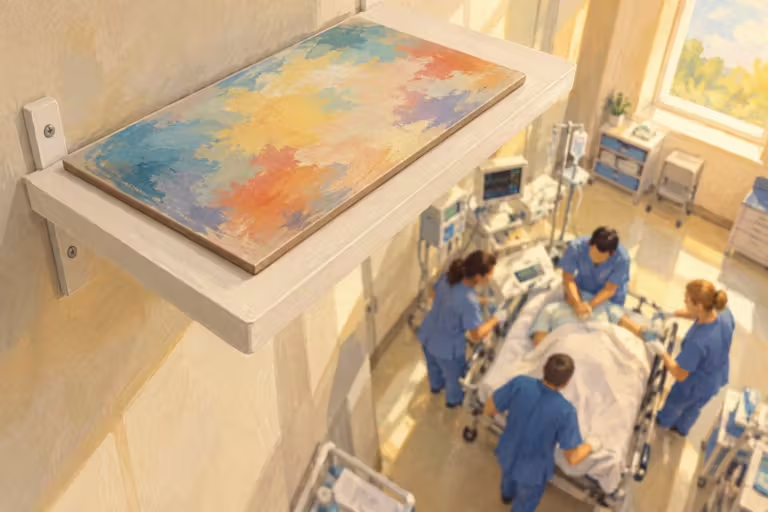
AWARE: the pictures hidden on the shelves
Fifteen hospitals put up pictures that could only be seen from the ceiling, to check whether anyone saw them during a cardiac arrest.
AWARE II: a random picture and the brain on the screen
Above the patient was a tablet with a random picture. Headphones said the names of three fruits. And the doctors measured the brain during resuscitation.
Van Lommel: 344 cardiac arrest survivors in ten hospitals
Ten hospitals asked every cardiac arrest survivor what they remembered. They saw them again after 2 and 8 years.