A real-life story · Seattle, United States, 1977
Maria’s near-death experience
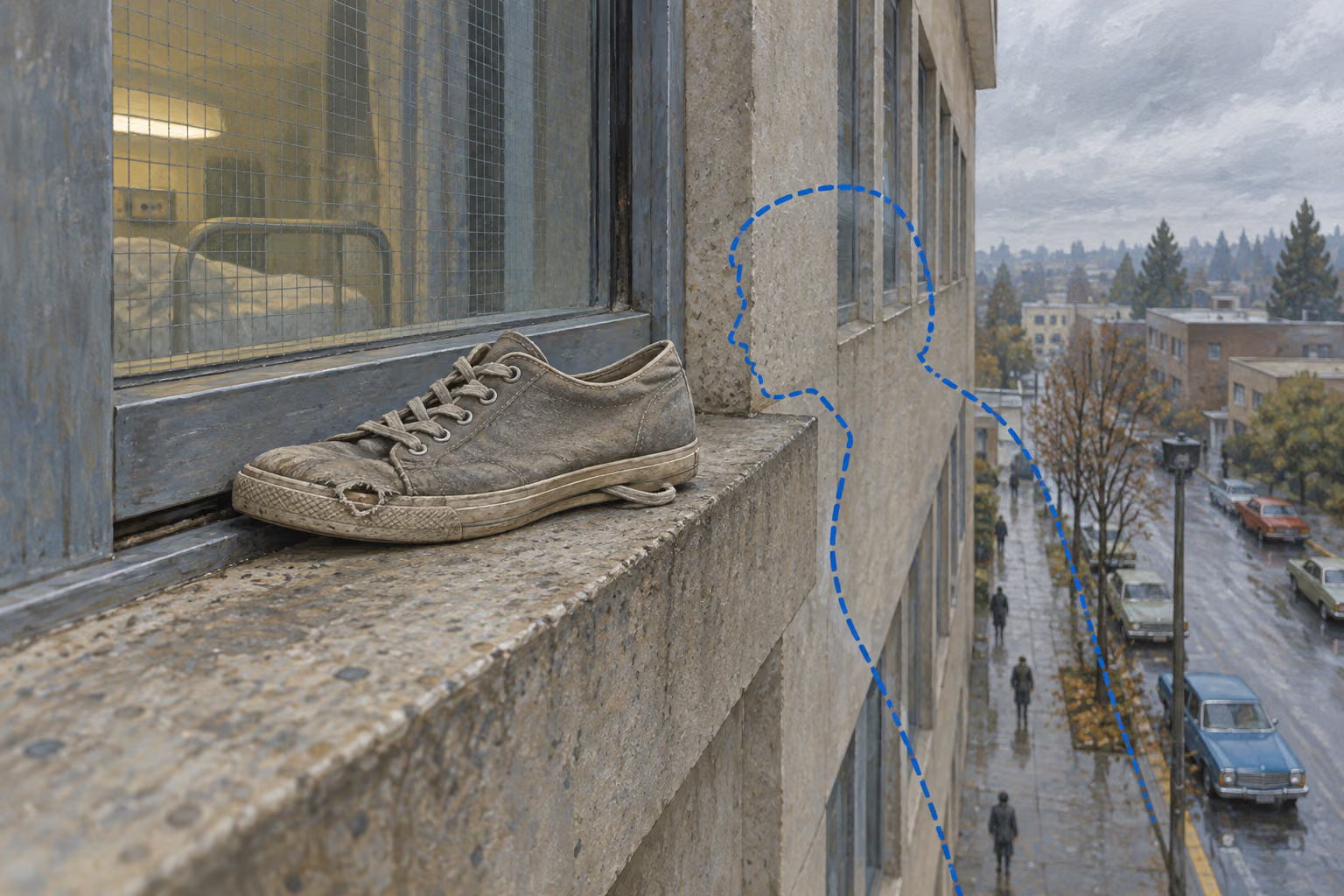
In 1977, Maria’s heart stopped in a hospital in Seattle, in the United States. Later that same day, Maria said she had seen herself from the ceiling while she was being resuscitated. And that afterward she found herself outside the building. She also said she saw a tennis shoe on the ledge outside a third-floor window. She asked the social worker who was looking after her to go and find it.
Maria’s near-death experience is one of the most often cited, and also one of the most disputed. What Maria said she saw wasn’t in her room. It was outside the building, on the ledge outside a window. And the social worker went upstairs to look for it. How did Maria know there was a shoe there?
Step 1
Seattle, 1977 · Kimberly Clark’s account
Kimberly Clark works with the sickest patients in a large Seattle hospital
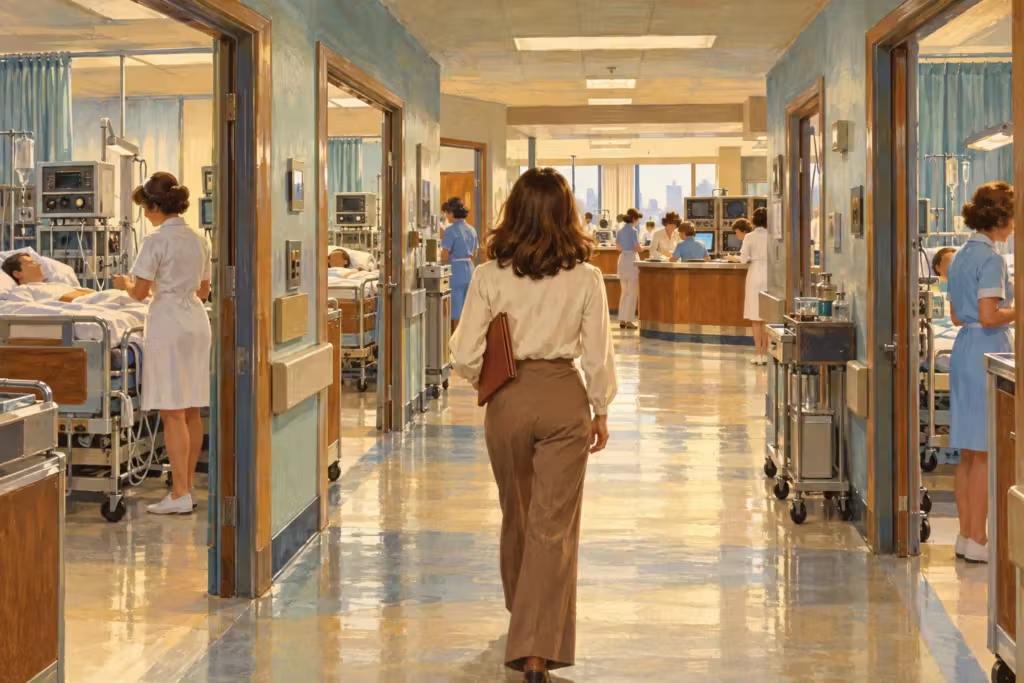
Kimberly Clark is a social worker at Harborview, a large hospital in Seattle, in the United States. She works in intensive care and in the coronary care unit, where patients with serious heart conditions are cared for.
A social worker doesn’t treat patients. She helps them with other things, such as money, paperwork or family.
Years later she will write under the name Kimberly Clark Sharp. She is the one who tells this story. She first put it in writing in 1984, and she has told it many times since.
According to her, it all happens in April 1977. One night, a rescue squad brings a woman with a heart attack to the hospital.
Step 2
One night · In the coronary care unit · Kimberly Clark’s account
Kimberly Clark says that one night Maria arrives with a very severe heart attack
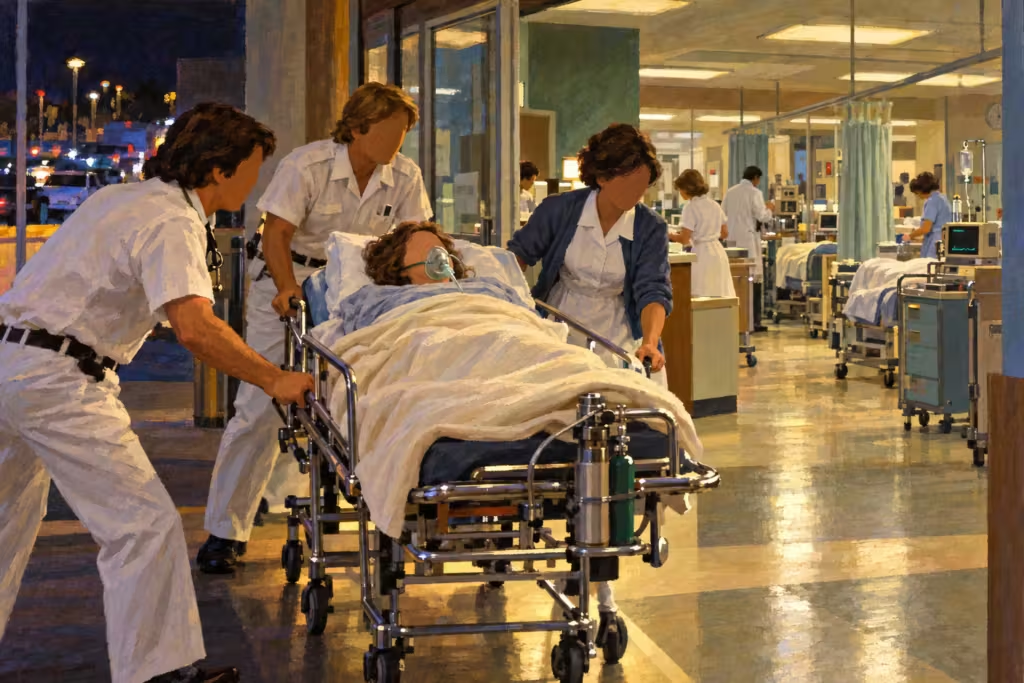
The woman’s name is Maria. She is a migrant farmworker who moves with the seasons. She has come to Seattle to visit some friends.
One night she has a very severe heart attack. She is taken to the hospital and admitted to the coronary care unit. Kimberly Clark is assigned to help her with her money problems and with everything that isn’t medical.
Kimberly Clark adds more in her 1995 book. Maria was middle-aged. Her family followed the harvests around the Yakima Valley, in the same state. And the two of them got by in a mix of English and Spanish. She writes that Maria’s English was better than the Spanish she herself had learned in high school.
A few days after she arrives, Maria’s heart stops.
Step 3
A few days later · Her heart stops · Kimberly Clark’s account
Kimberly Clark says Maria’s heart stops and she is resuscitated right away
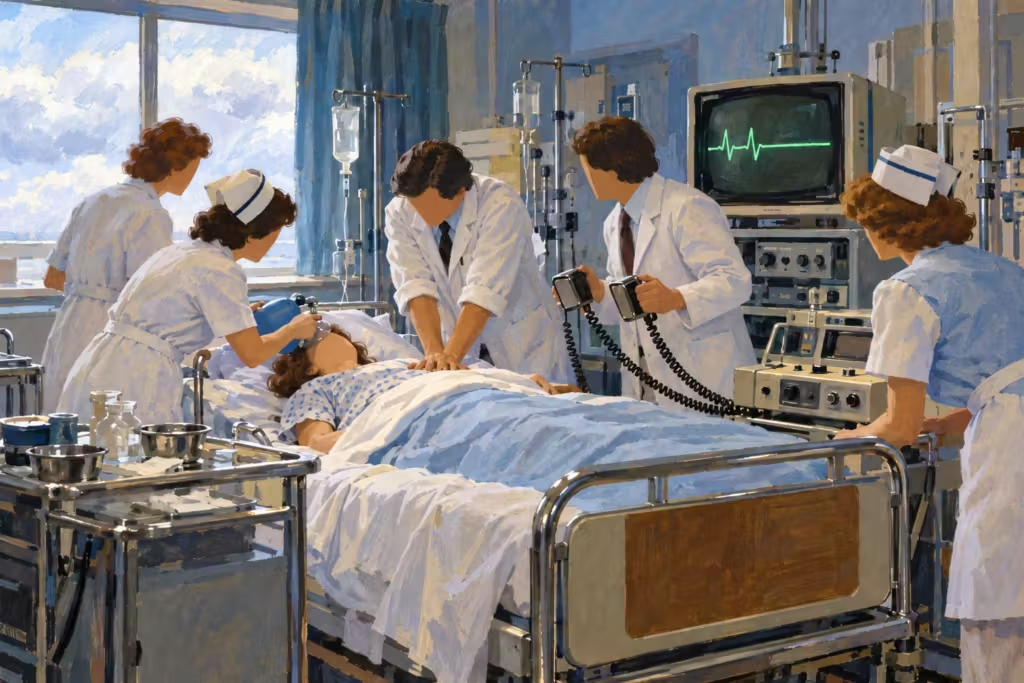
A cardiac arrest is when the heart stops pumping blood. Because Maria is being closely monitored, the doctors resuscitate her right away. They put in a breathing tube for a couple of hours, then take it out.
In the 1995 book she tells it in more detail. It was the morning of the fourth day. Kimberly Clark saw it from the nurses’ station. A couple of shocks got the heart beating again.
No hospital record with the day or time of this cardiac arrest has been published. What we know comes from Kimberly Clark.
Later that same day, Kimberly Clark finds Maria very agitated.
Step 4
During the resuscitation, according to Maria · Kimberly Clark’s account
Maria says she saw herself from the ceiling while the doctors worked on her body
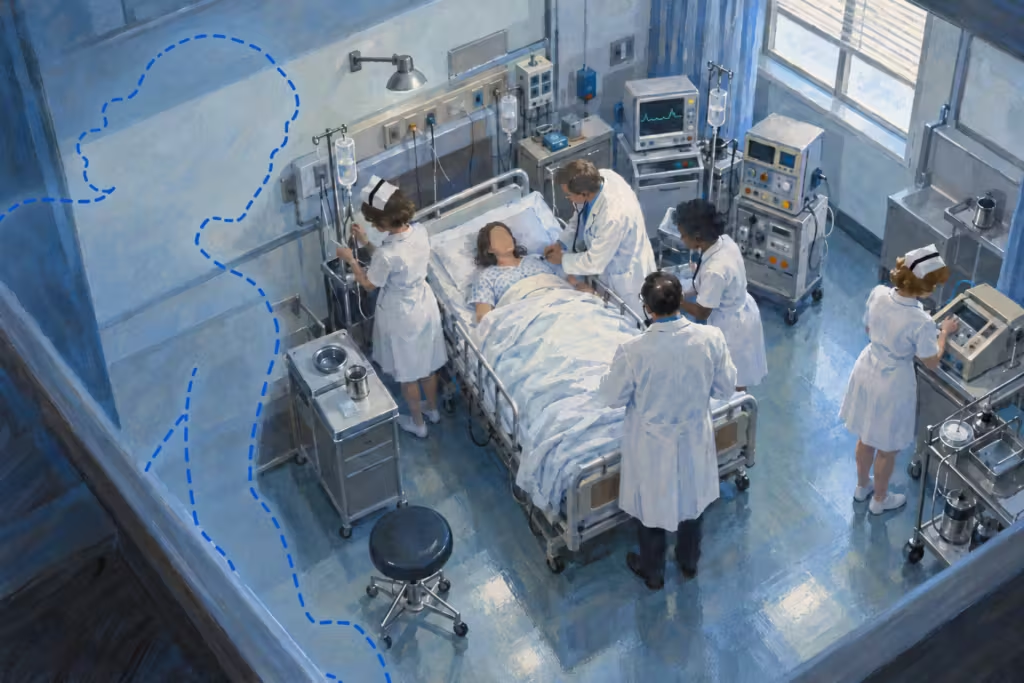
Maria wants to tell her about something that happened to her while she was being resuscitated. This is how she puts it:
“I found myself looking down from the ceiling at them working on my body.”
In the 1995 book, Kimberly Clark adds that Maria told her who was there, where each person was, and what each one was doing. And that Maria saw the electrocardiogram paper strewn across the floor. The electrocardiogram machine draws the heartbeat on a strip of paper.
Kimberly Clark isn’t impressed by this. She thinks of ordinary explanations. Maria had been in that unit for days, and she knew the machines and the people looking after her. Kimberly Clark also thinks Maria could have heard what was happening around her.
Kimberly Clark thinks it may be a confabulation. A confabulation is a memory the brain fills in with things it already knows, without the person lying. Before believing Maria, she looked for ordinary explanations herself.
But Maria isn’t finished.
Step 5
During the resuscitation, according to Maria · Kimberly Clark’s account
Maria says that suddenly she was outside the hospital, above the emergency entrance
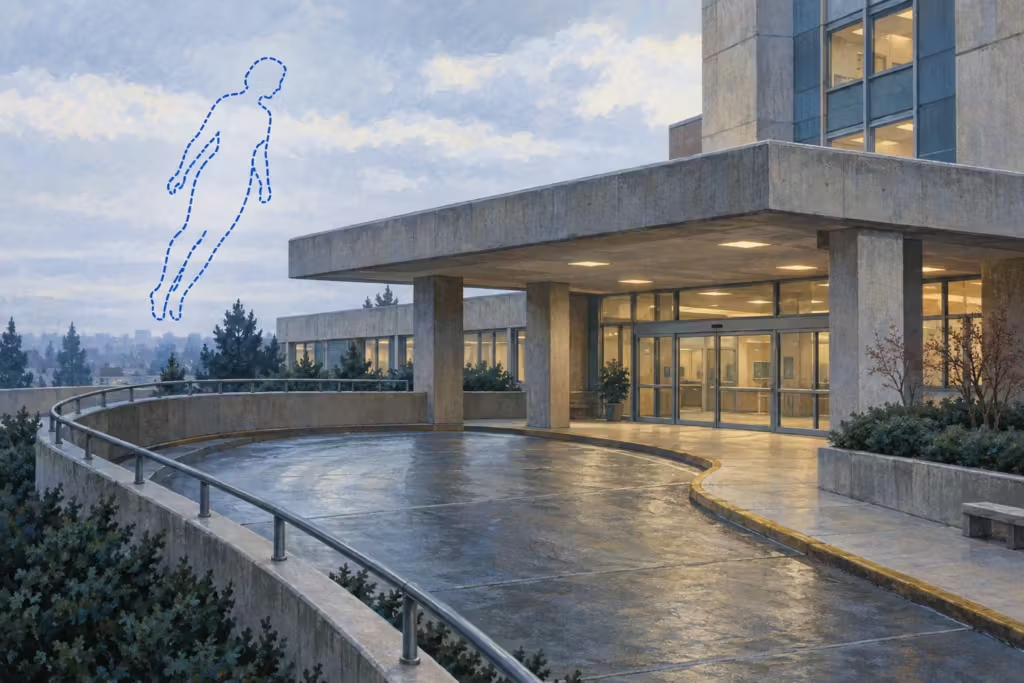
Maria says something distracted her. Suddenly she was outside the building, above the driveway where ambulances pull up to the emergency room. It was as if she had gotten there just by thinking about it.
Now Kimberly Clark is a little more impressed. Maria had arrived at night, by ambulance. How would she know what the entrance looked like? Even so, she thinks of another ordinary explanation. Maybe her bed had been by the window for a while.
In the 1995 book, she gives more details. Maria described the curve of the driveway, the one-way traffic, and the automatic doors. Kimberly Clark ruled out the window, because a patient hooked up to the machines doesn’t get moved. Besides, outside Maria’s window was a large canopy. That canopy kept the rain off the emergency entrance and blocked the view of everything below.
Maria says that then something distracted her again.
Step 6
During the resuscitation, according to Maria · Kimberly Clark’s account
Maria says she saw a tennis shoe on the ledge outside a third-floor window
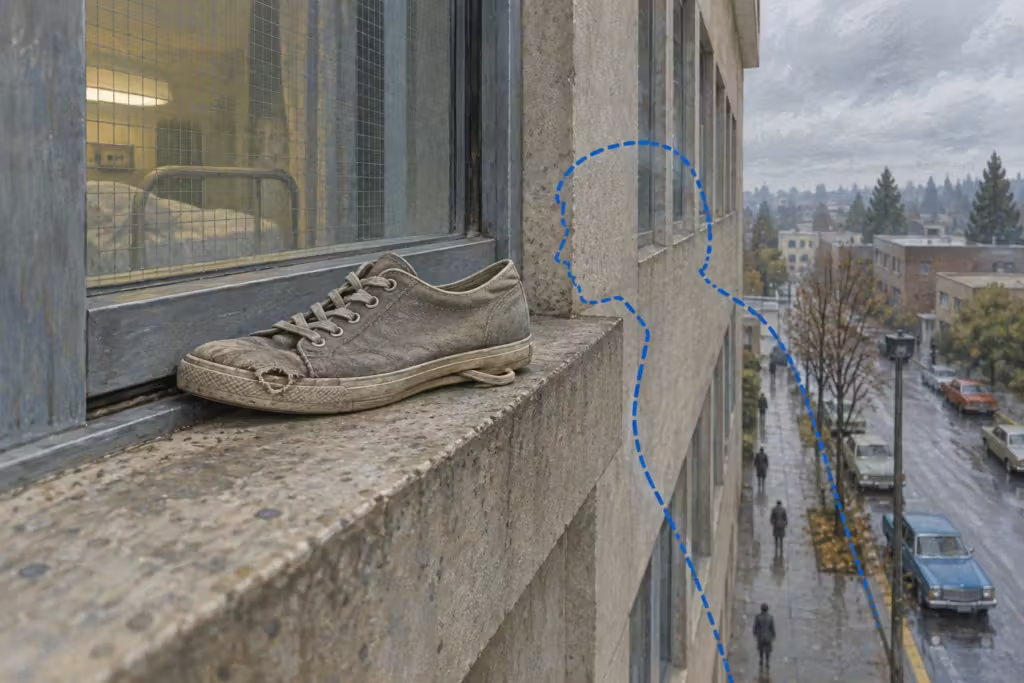
It was something on the ledge outside a third-floor window, at the north end of the building. Maria thought about it, and there she was, “eyeball to shoelace” with a tennis shoe.
She gives two details about the shoe. The little toe had worn a place in the fabric. And the lace was tucked under the heel.
She asks Kimberly Clark to find it. She needs someone to know that she really was there.
This is what was written down in 1984, the first time Kimberly Clark told the story in writing. There are four details. It is a tennis shoe. It is on the ledge outside a third-floor window, at the north end of the building. It is worn where the little toe goes. And its lace is tucked under the heel.
In the 1995 book, it is “a man’s dark blue tennis shoe,” “scuffed on the left side.” Those details weren’t there in 1984. At the end, we look at what was said and when.
Kimberly Clark isn’t convinced. But she goes to look for it.
Step 7
Afterward · Outside the hospital · Kimberly Clark’s account
Kimberly Clark looks for the shoe from the street and can barely see anything
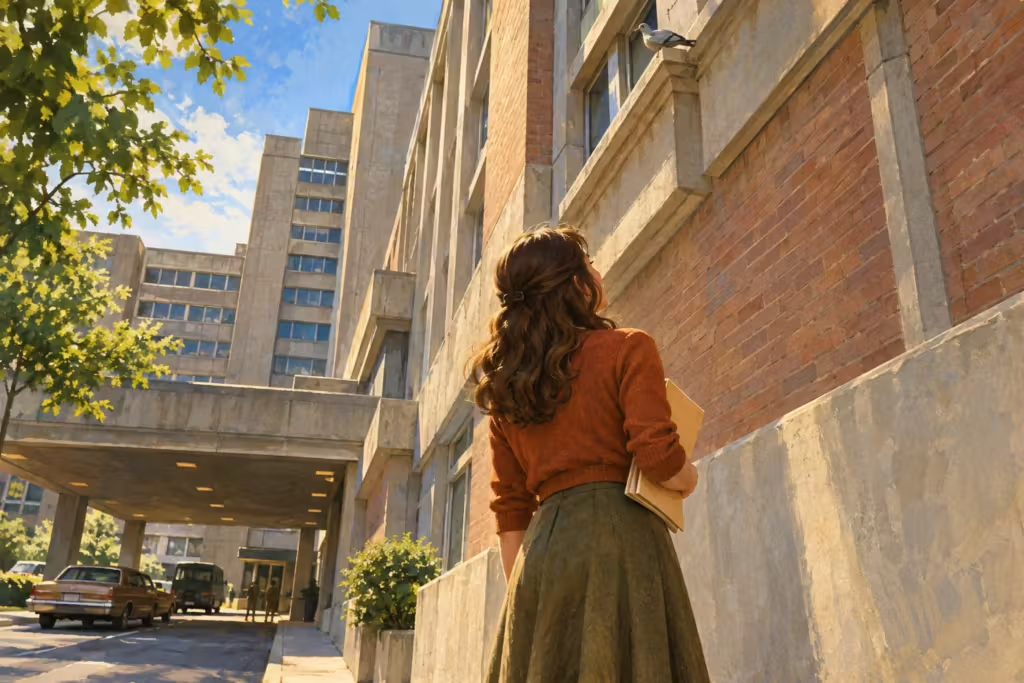
Kimberly Clark leaves the hospital and looks up at the window ledges. From below, she can barely see anything.
In the 1995 book she says she walked all the way around the building, and that from the ground the window ledges were hidden from view.
In 2007, she adds another detail. She was walking along a sidewalk right next to the wall. A bird landed on a ledge above her, and she lost sight of it. That was when she realized she would never find something so small from outside.
So she goes back in and up to the third floor.
Step 8
Afterward · On the third floor · Kimberly Clark’s account
Kimberly Clark says she goes from room to room and finally sees the shoe
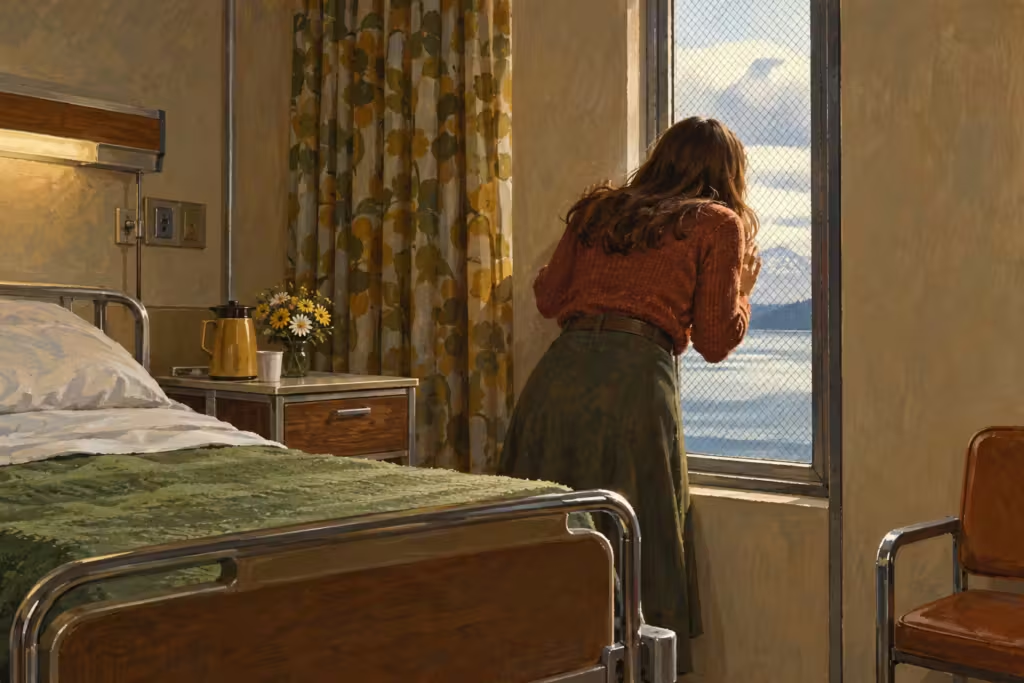
Kimberly Clark goes into one patient room after another and looks out the windows. In 1984 she writes that the windows are so narrow that she has to press her face to the screen to see the ledges.
In the 1995 book she describes her route. She searched the third floor of the north wing, the same wing as Maria’s room. There was nothing on the east side. There was nothing on the north side either. She found it in the fourth room on the west side.
In 1984 she described the moment she saw it like this:
“I pressed my face to the glass and looked down and saw the tennis shoe!”
But from that window, there is something she can’t see.
Step 9
Afterward · On the third floor · Kimberly Clark’s account
Kimberly Clark says the details Maria gave couldn’t be seen from the window
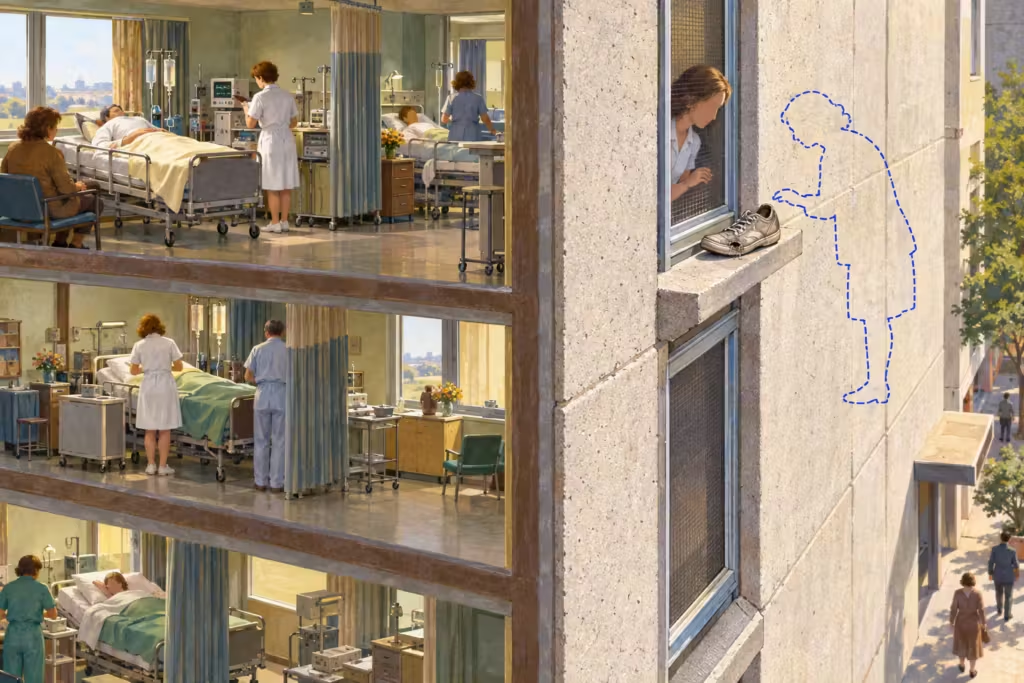
Kimberly Clark sees the shoe from inside and from above. Maria, by her own account, saw it from outside, up close, and at eye level.
In 1984 she writes that, from where she stood, she couldn’t see the details on the side of the shoe. These were the worn spot by the little toe and the lace under the heel. In the 1995 book she explains it better. She could see the end of the lace. She could not see the little-toe side.
In 1984, Kimberly Clark draws this conclusion:
“The only way she would have had such a perspective was if she had been floating right outside and at very close range to the tennis shoe.”
In 1995, she writes that she first considered two other explanations. One was that Maria had seen the shoe earlier, through binoculars, from a tall building about half a mile away. The other was that she had unhooked herself from the machines and gone there. She ruled both out.
Then she takes the shoe.
Step 10
Afterward · In Maria’s room · Kimberly Clark’s account
Kimberly Clark retrieves the shoe and brings it to Maria
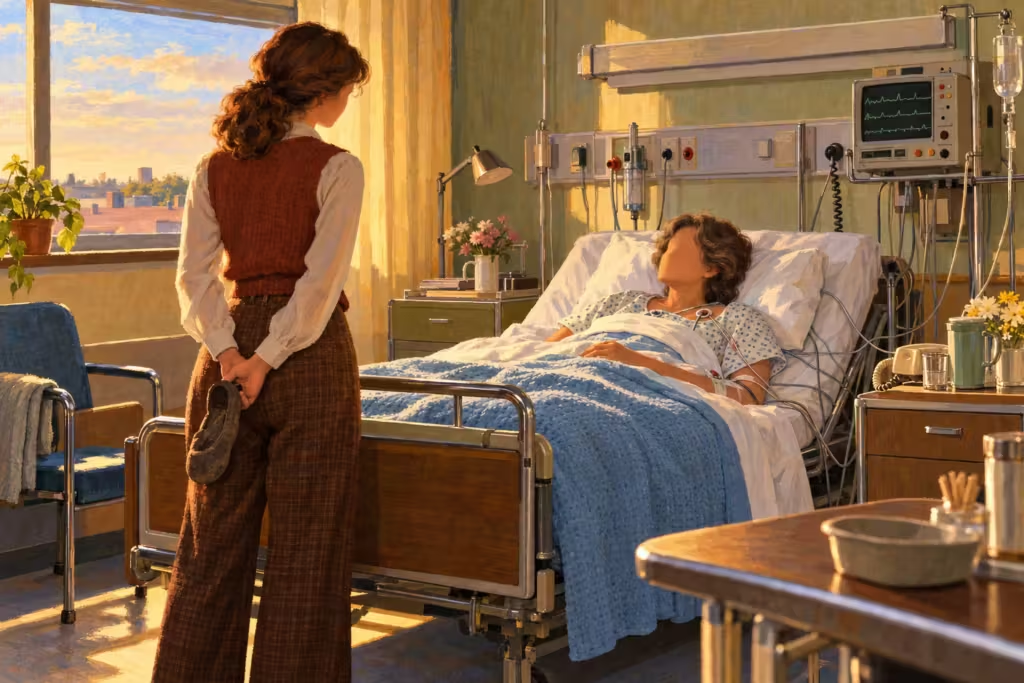
In 1984, Kimberly Clark writes only that she retrieved the shoe and brought it back to Maria. She says that for her it was “very concrete evidence.”
In the 1995 book she tells it in more detail. She opened the window and took the shoe. When she turned it over, she saw that the little-toe side was badly worn. At that moment she suddenly remembered that she herself had had a near-death experience seven years earlier.
In that book she also says that she hid the shoe behind her back before showing it. She asked Maria what the inside of the shoe looked like. Maria said she hadn’t seen the inside. She had seen the shoe at eye level, from the side facing away from the building.
Soon, everyone in the coronary care unit is talking about the shoe.
Step 11
The following days · In the coronary care unit · Kimberly Clark’s account
Kimberly Clark says doctors and nurses stop by to see the shoe
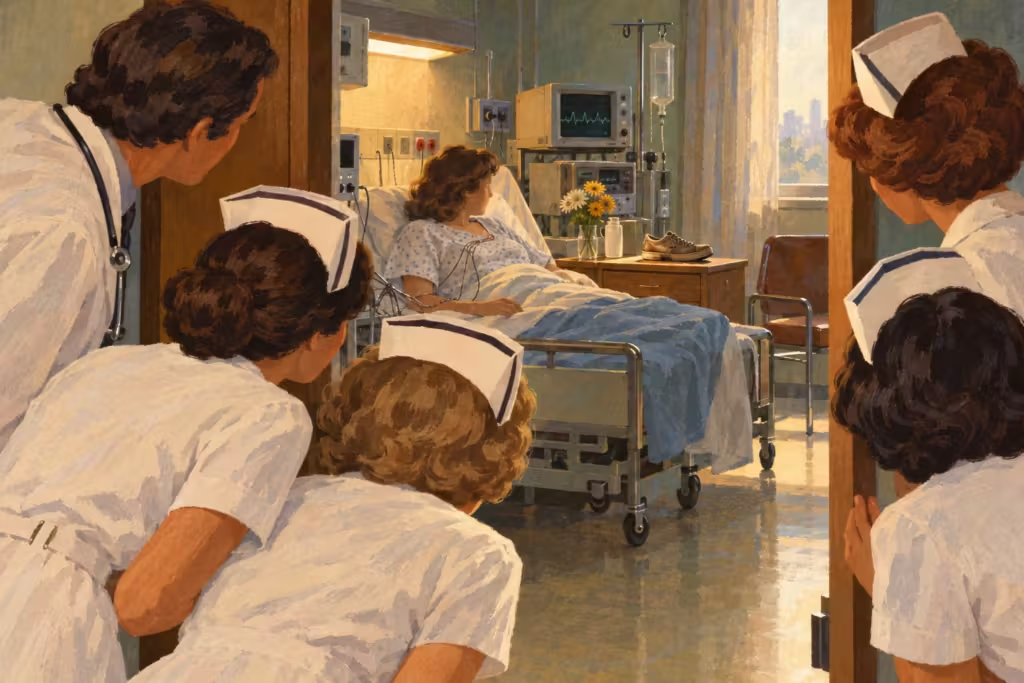
In 1984, Kimberly Clark writes that Maria was agitated because she didn’t want anyone to think she was crazy. So this story taught Kimberly Clark something. Some patients need a professional to listen to them and take them seriously.
In the 1995 book she adds what happened next. A nurse came in, and they told her the story. By the next day, every nurse in the unit knew it. The shoe sat on Maria’s bedside table, and doctors and nurses stopped by to see it.
None of those people is named in any book or article. And they saw the shoe in the room, not on the ledge.
There is just one hint of another witness, and it is secondhand. In 2011, the physician Melvin Morse wrote that he had spoken with the respiratory therapist who took part in Maria’s resuscitation. According to Morse, the therapist remembered Maria talking about the shoe and Kimberly Clark finding it. Morse did not give the therapist’s name or say when he spoke with her. Also, Morse had told the case differently in a 1990 book. In his version, the shoe was on a fifth floor and Kimberly Clark crawled out along the ledge.
According to Kimberly Clark’s 1995 book, Maria gave her the shoe on the day she was discharged, about two weeks after she arrived. The two of them stayed in touch for a few years. Then Kimberly Clark lost track of her.
For seven years, the story is passed on only by word of mouth.
Step 12
1984 · Kimberly Clark’s account
Seven years later, Kimberly Clark puts the story in writing

In 2007, Kimberly Clark wrote that she had already told the story before she put it in writing. She told it at a nursing conference and live on a Seattle television show.
In 1984 she publishes it in a chapter of a scientific book on near-death experiences. The chapter explains how to help someone who has had one. Maria is her example.
It is the first written version, and it is short. It doesn’t give the year, the name of the hospital, the color of the shoe, or what language Maria spoke.
About the shoe, that version says four things:
- It is a tennis shoe.
- It is on the ledge outside a third-floor window, at the north end of the building.
- It is worn where the little toe goes.
- Its lace is tucked under the heel.
To check the shoe, we use only these four details written in 1984.
Ten years later, two students decide to check it at the hospital.
Step 13
1994 to 1996 · Three skeptical investigators’ account
Two students put their own shoe on a hospital window ledge to see if it can be spotted
By then, the case is famous. In 1993, the researcher Kenneth Ring publishes an article in a scientific journal on NDEs. He says that, assuming the account is authentic, the facts of the case seem incontestable. In a 1998 book, Ring adds that he knows Kimberly Clark well and has no reason to doubt her.
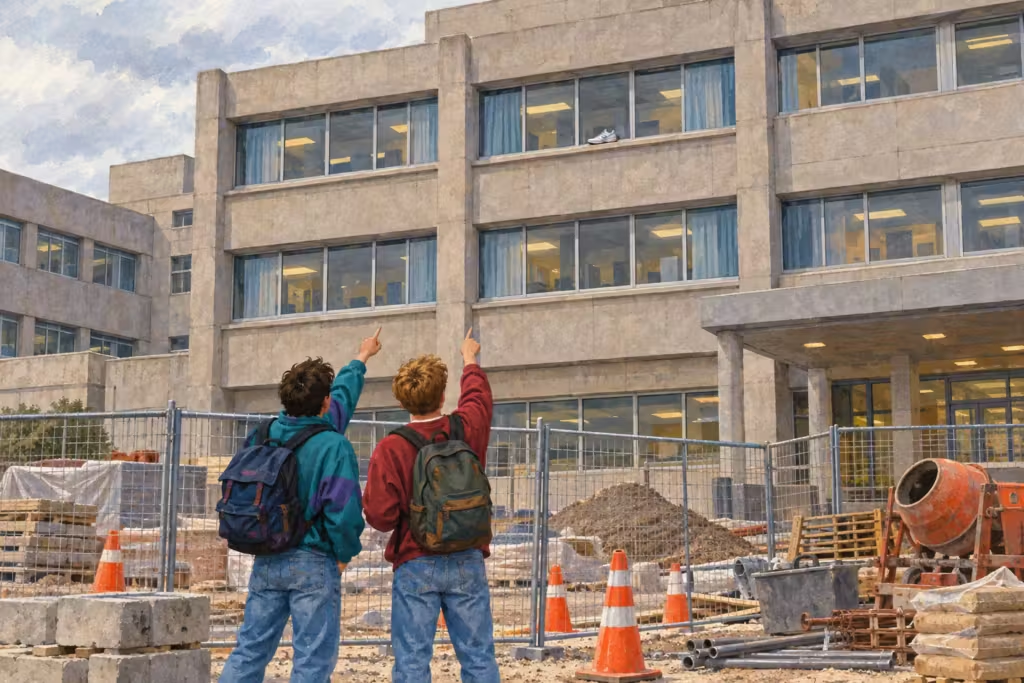
In 1994, two students from a Canadian university, Hayden Ebbern and Sean Mulligan, travel to Seattle to check it. They talk with Kimberly Clark several times and go to the hospital with her. In 1996 they publish their findings in Skeptical Inquirer, a skeptics’ magazine. They sign the article with their professor, Barry Beyerstein.
The students put a running shoe of their own on the ledge of a third-floor window, at the spot Kimberly Clark points out. From outside, they are astonished at how easy it is to see. They see it even though there is construction and they have to look from farther away. When they come back a week later, their shoe is gone. To them, the fact that the shoe disappeared proves that someone saw it without looking for it.
Then they test it from inside. They set the shoe on the ledge from one of the rooms. It can be seen from several spots in the room, just a few steps in. A patient would see it from the bed. And when they press their faces to the glass, they have no trouble seeing the side of the shoe that, according to Kimberly Clark, couldn’t be seen.
The students don’t find Maria. They also don’t find anyone, besides Kimberly Clark, who had dealt with her. Their idea is that someone could have seen the shoe and mentioned it within Maria’s hearing in the days before her cardiac arrest. The worn toe and the lace under the heel are ordinary details on an abandoned shoe. And Kimberly Clark took no notes, took no photos, and wrote it down seven years later.
In their 1996 article, the students and their professor write:
“Our investigation cannot prove that Maria’s spirit did not leave her body and return, nor that Kimberly Clark’s recollections and interpretations are wrong.”
They add that what their investigation does show is that the case is far from unassailable.
Kimberly Clark takes eleven years to reply.
Step 14
2007 · Kimberly Clark Sharp’s account
Kimberly Clark replies that she picked the window she showed the students without remembering the real one

By 2007, Kimberly Clark is writing as Kimberly Clark Sharp. That year she replies in the field’s scientific journal, the Journal of Near-Death Studies. She replies because another critical article had relied on the students’ piece. This is what she says:
- The window. Kimberly Clark didn’t remember exactly which one it was. There was construction and a fence, and the ground slopes steeply, so the floors are easy to mix up. The students pressed her hard. To make them stop, she pointed to the fourth window from the corner.
- The view from outside. The students were looking from half a block away. She had been walking along a sidewalk right next to the building. By 1994, that sidewalk no longer existed.
- The view from inside. The windows were different in each part of the hospital. In many rooms, things were stacked in front of them, so she had to go right up to the glass. She did have trouble seeing the side of the shoe.
- The language. Maria spoke very little English. She wouldn’t have understood a conversation about what a shoe looked like and where it was.
- The paper. No one explains to a heart patient that the electrocardiogram paper ends up on the floor.
- The seven years. She had already told the story in public before 1984.
- Permission. The students never told her they were going to publish an article. And they went into a patient room without permission.
She also writes that she has run into three former hospital workers by chance. All three remember “that patient who saw the shoe on the ledge when she died.” She doesn’t give their names.
And she mentions something about the shoe that she herself had forgotten.
Step 15
Since then · Kimberly Clark Sharp’s account
Kimberly Clark Sharp finds an old video with the shoe and keeps telling the story
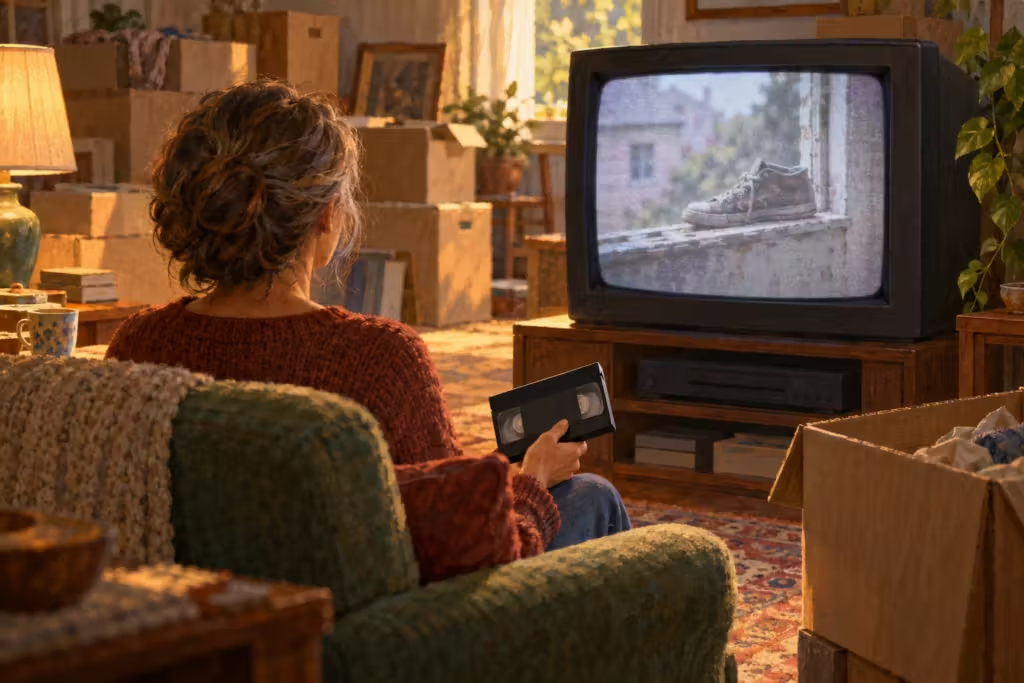
A few years before 2007, Kimberly Clark came across an old video. It was from a television show that had re-enacted the story using the real shoe. It surprised her. The shoe had a Nike logo on the ankle, and she hadn’t remembered that. She lent the video to a Philadelphia TV station, and the station aired it.
Where is the shoe today? In her 1995 book she wrote that it was lost during one of her moves. In 1994 and in later interviews, she has said it is probably tucked away somewhere in her garage.
She never heard anything more about Maria. In 2007 she wrote that she believed Maria had died. In a 2023 interview she said that Maria was her real name and that she no longer remembers Maria’s last name. She also said she keeps the admission papers of her favorite patients.
In Seattle, she founded a support group for people who have had a near-death experience. And she has kept telling Maria’s story in books, at conferences, and in interviews, almost fifty years later.
The question still stands: how did Maria know there was a shoe on that ledge?
How many people have an NDE?
Maria is not a one-off. Several teams of doctors have spent more than thirty years asking people who survive a cardiac arrest what they remember. They do it in the hospital, a few days afterward.
Picture 100 of those people:
Each dot is a person. The 18 filled-in dots are the people who described a near-death experience. That is what the largest study found. It was done with 344 people in the Netherlands, in 2001.
The other 82 didn’t describe one. Many remember nothing of their cardiac arrest.
| Where and when | People interviewed | Described an NDE |
|---|---|---|
| England, 2001 | 63 | 6% |
| Netherlands, 2001 | 344 | 18% |
| United States, 2002 | 30 | 23% |
| United States, 2003 | 116 | 10% |
| United Kingdom, United States, and Austria, 2014 | 101 | 9% |
| Vienna, Austria, 2023 | 126 | 4% |
| United States and United Kingdom, 2023 | 28 | 21% |
What these figures don’t tell you
- Only some people are asked. In the 2014 study, 330 people survived, but only 140 could be interviewed, and 101 reached the second interview. The rest died later, were too ill, or didn’t respond.
- Most cardiac arrests are never counted. These studies run in a few hospitals for a limited time. Outside them, no one keeps track. Also, the 2003 study interviewed 1,595 cardiology patients, not just the 116 with cardiac arrest in the table, and 81 of them described an NDE from an earlier occasion. The study did not count them, because it only counted those from that hospital stay.
- Some people keep quiet. In the accounts in our archive, at least 13 people say they kept their experience to themselves for a while. They did so because they weren’t believed or because they were afraid of how others would react.
- It depends on how you count. If any memory of the cardiac arrest counts, the numbers go up. If a strict scale is used, they go down. In England in 2001, 7 of 63 people remembered something, but only 4 qualified as an NDE on the scale.
That’s why no one knows the real figure. Every study shows that it isn’t rare. Between 4 and 23 of every 100 survivors who are asked describe one. Maria’s case stands out because of where the thing she said she saw was. It wasn’t in her room, but outside the building, on a window ledge. And someone went upstairs to check.
Where this story comes from
Books
- Kimberly Clark, “Clinical interventions with near-death experiencers,” in Bruce Greyson and Charles P. Flynn (eds.), The Near-Death Experience: Problems, Prospects, Perspectives (1984), pp. 242–244: the first written versionBorrow it on archive.org
- Kimberly Clark Sharp, After the Light (1995), chapter 1, “The Shoe on the Ledge”: the full storyBorrow it on archive.org
- Melvin Morse, Closer to the Light (1990), pp. 36–37: his version of the caseBorrow it on archive.org
- Kenneth Ring and Evelyn Elsaesser Valarino, Lessons from the Light (1998), pp. 65–67Borrow it on archive.org
Articles
- Hayden Ebbern, Sean Mulligan, and Barry Beyerstein (1996), “Maria’s Near-Death Experience: Waiting for the Other Shoe to Drop,” Skeptical Inquirer 20(4):27–33Read for free
- Kimberly Clark Sharp (2007), “The Other Shoe Drops,” Journal of Near-Death Studies 25(4):245–250, her replyRead for free
- Kenneth Ring and M. Lawrence (1993), “Further evidence for veridical perception during near-death experiences,” Journal of Near-Death Studies 11(4):223–229Read for free
In her own voice
- Kimberly Clark Sharp, talk at the IANDS conference (Denver, 2010)Watch on YouTube
- Kimberly Clark Sharp describes how she found the shoe, an excerpt from the 2010 talk
- Excerpt from a BBC documentary with a re-enactment of the case, 54 seconds. Below it, Melvin Morse’s note about the respiratory therapist (2011)
- Kimberly Clark Sharp, interview at the IANDS conference (Bellevue, 2018)Watch on YouTube
- Kimberly Clark Sharp responds to the critics, on Seeking I (July 2022)Watch on YouTube
- Kimberly Clark Sharp on the Good Mourning Grief Podcast (August 2022)Watch on YouTube
- Kimberly Clark Sharp on Seeking I (February 2023)Watch on YouTube
- Kimberly Clark Sharp on Grief 2 Growth (January 2024), the full versionWatch on YouTube
Our archive
- A comparison of every version of the case, from 1984 to 2024, as of October 12, 2026
Keep reading
Madrid, Spain, 2025
Eduardo Muñoz
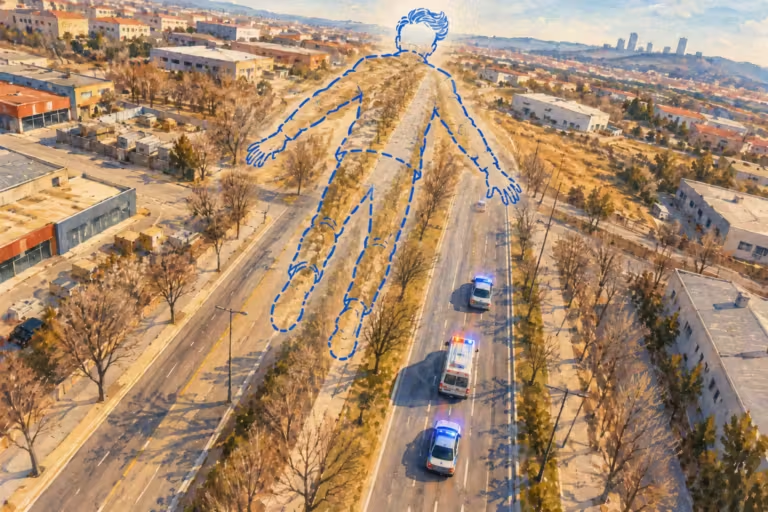
Eduardo Muñoz’s heart stopped three times. Afterward, his mother filmed him in the ICU describing his experience: a tribunal and his late grandfather. Eduardo says he also saw, from above, the ambulance that was carrying him, with the police. That part is not in the video.
Colombia, 2020
Israel Vargas
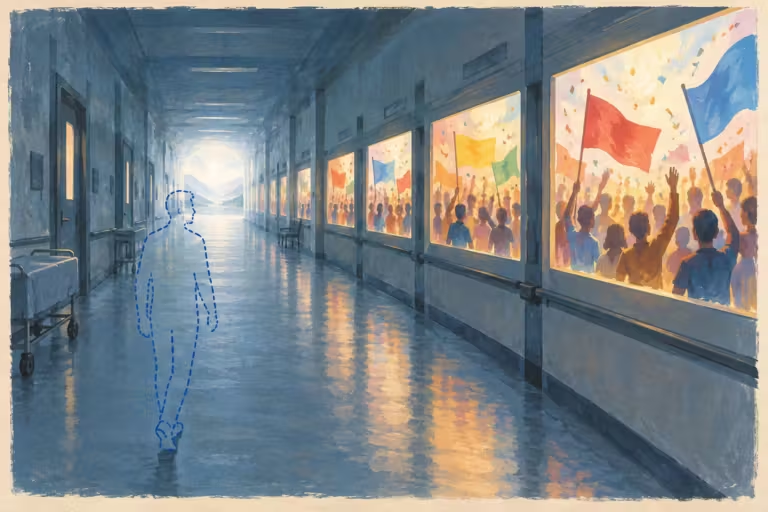
He was intubated with COVID and says he saw hell and a white valley. He says that on some screens he saw Joe Biden and América de Cali win before it happened.
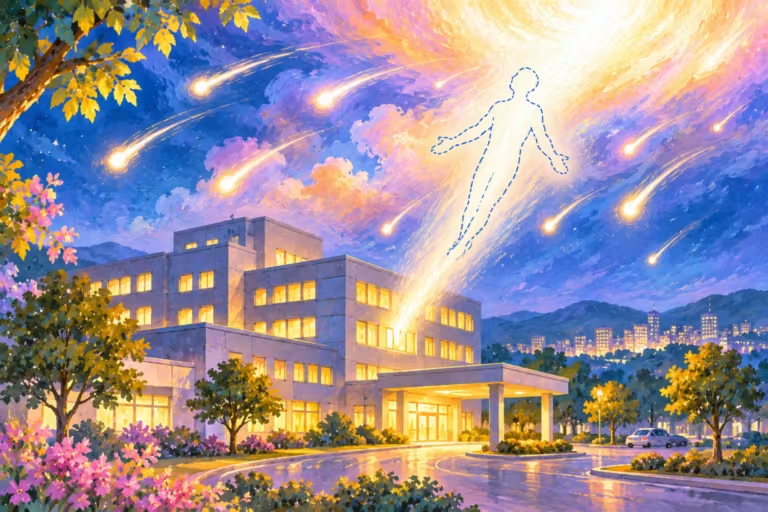
Seattle, 2006
Dean Braxton
Dean Braxton’s heart stopped in 2006, and doctors worked to resuscitate him for more than an hour. He said he stood before Jesus, who told him three times to go back.
Reincarnation: The top 5 people who remember past lives
We asked them the same five questions as this story. A 32-page PDF, free in your inbox.
Check your email
We have sent you an email. Open it and press the button to confirm. If you cannot see it, check your spam folder.