A book · Florida and Georgia (United States), published in 1982
“Recollections of Death”: a cardiologist compares what 32 patients saw with their resuscitation
In 1976, the cardiologist Michael Sabom did not believe in near-death experiences. Over five years he interviewed 116 people who had been close to death. When someone said they had seen their own resuscitation, Sabom looked for mistakes. He compared the accounts with the medical records. He also compared them with what 25 patients imagined. Those patients had not had the experience.
The book’s question is: when these people describe their resuscitation, did they really see it, or did they guess it well? We tell it step by step, with what Sabom measured, what his critics say and what was tested later. If you only want to know what he found, skip straight to the results.
Step 1
1976 · Gainesville, Florida · Michael Sabom’s account
A cardiologist says “I don’t believe it” in front of his whole church

Michael Sabom was in his first year as a cardiologist at the University of Florida. One Sunday in 1976, the social worker Sarah Kreutziger presented the book Life After Life, by Raymond Moody, at his church. The book collected accounts from people who had been close to death.
Sabom was the only doctor in the room, and they asked him what he thought. He answered: “I don’t believe it.”
Sarah Kreutziger asked him to help her present the book at a talk for the whole church. Sabom reluctantly agreed. To prepare the talk, they decided to ask some of their patients whether they had been through anything like that.
Sabom expected no one to say anything.
Step 2
1976 · In the hospital · Michael Sabom’s account
The third patient he asks tells him an experience like those in the book
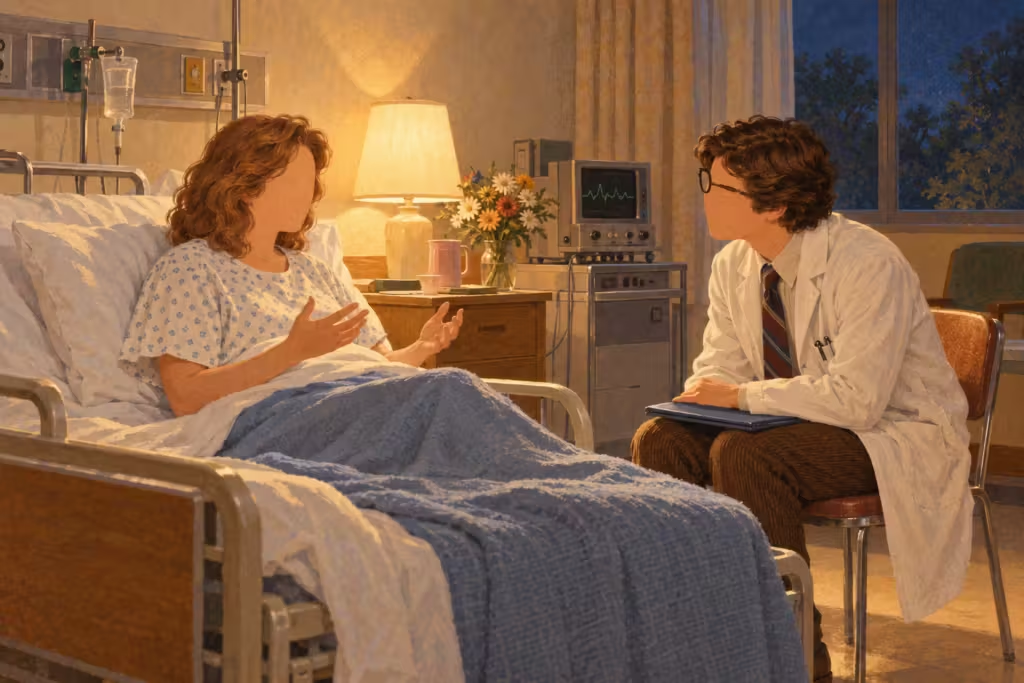
The third patient he asked was a housewife from Tampa who had been close to death several times. Sabom talked with her one evening, in her room, about her illnesses. At the end he asked whether she had experienced anything while she was unconscious.
The woman told him the first near-death experience Sabom had ever heard. The details matched those in Moody’s book. Sabom was struck by how sincere she was and by what that experience meant to her.
The next day, Sarah Kreutziger had similar news. One of her patients had told her about another experience. They recorded both and played them at the talk.
Sabom thought Moody’s book had a problem. It was not a study.
Step 3
1976 · The plan · Michael Sabom’s account
Sabom designs a study to find the mistakes
Moody had gathered his cases without a method. Many came to him after his talks, and he did not look for any medical records. Sabom wanted to do it differently:
- Ask survivors without knowing in advance whether they had had an NDE. That way he could find out how many have one.
- Not tell them at first what he was looking for. He asked about their illness, as in a normal visit. Only at the end did he ask what they remembered from the time they were unconscious.
- Look for each person’s medical records. That way he could compare what they said with what happened.
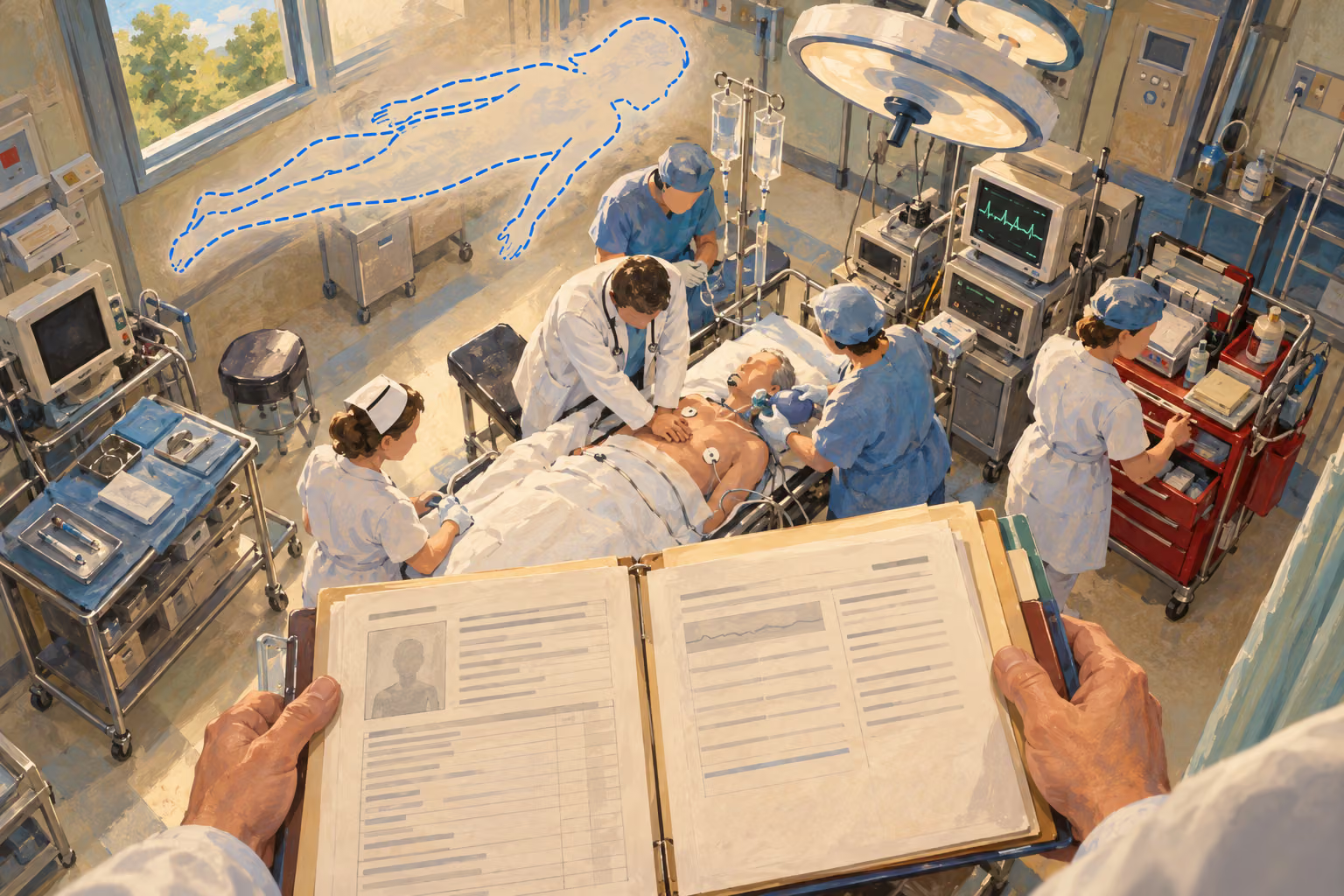
Sabom had taken part in more than a hundred resuscitations. He knew very well what one looks like. He was convinced he would find mistakes if a patient said they had seen their own. Those mistakes would show they were only guessing.
The book puts that idea to the test. According to that idea, the patients did not see their resuscitation. They guessed it well.
Step 4
May 1976 to March 1981 · From the book
Over five years he interviews 116 people who were close to death
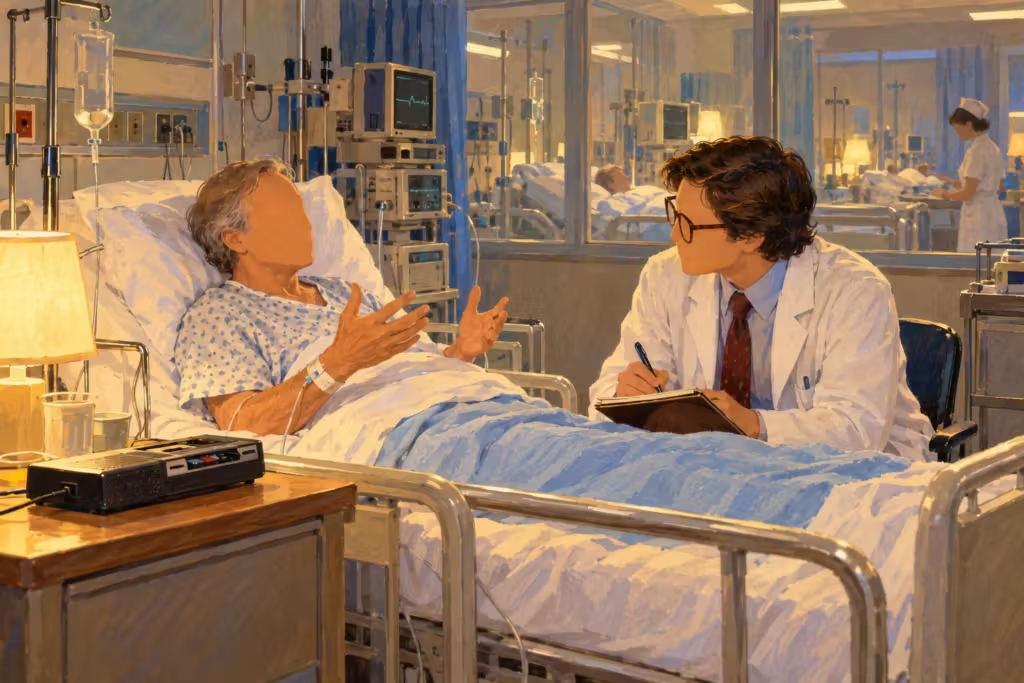
Sabom interviewed 116 people in Florida and, from 1978, in Atlanta. All of them had been unconscious and close to death. He kept two groups apart:
- 78 people he asked without knowing whether they had had an NDE. He found them in the intensive care and dialysis units. 66 had had a cardiac arrest, 8 had been in a coma and 4 had had a serious accident.
- The rest came to him because they were already telling of an NDE. Other doctors sent them, or they approached him after his talks. Sabom warns that these cannot be used to tell how many people have an NDE.
He set aside 10 people who had their experience during an operation, under anesthesia.
With the first 78, he could find out how many people have an NDE.
Step 5
The results · From the book
Almost half describe a near-death experience
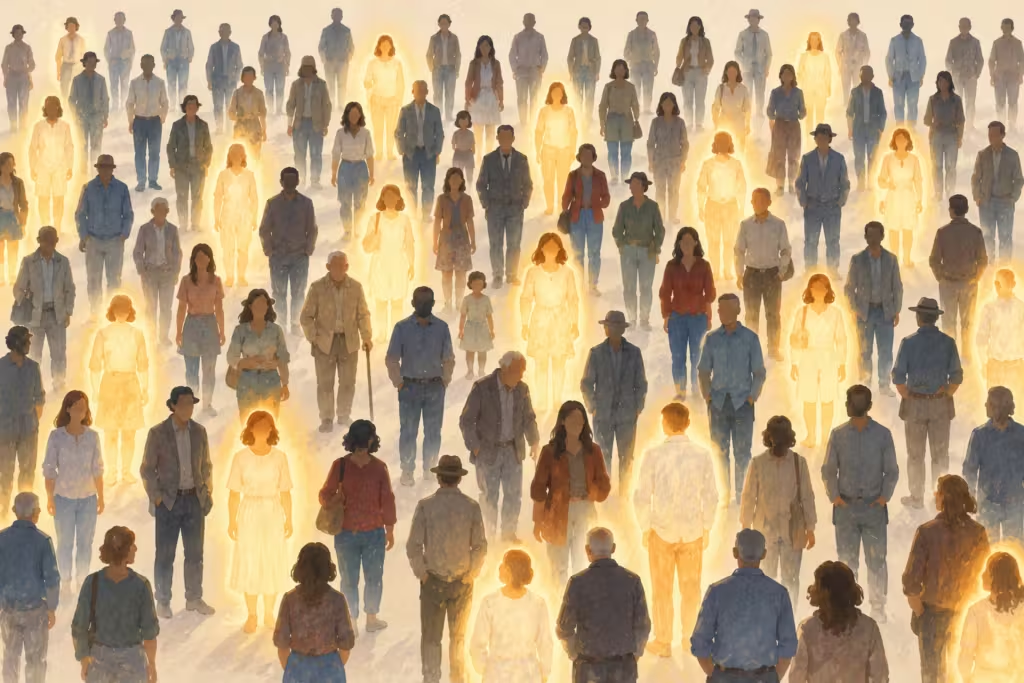
Of those 78 people, 34 described an NDE. That is 43 in every 100.
- Age, religion, education or job did not change who had one. Nor did they change what people described.
- Those who already knew about these experiences reported them less often, not more. Sabom thinks it is because their arrests were more recent, when the subject was already in the press.
- NDEs were more common when the crisis had been more serious. For example, when the crisis happened in hospital, when they were unconscious for more than a minute, and when they were resuscitated.
Sabom found three forms of experience: seeing oneself from outside the body, passing into another world with light and beings, or both one after the other.
The part that interested him most as a cardiologist was the first: seeing oneself from outside.
Step 6
After the experience · From the book
Those who had an NDE say they are less afraid of death

Moody had written that people lose their fear of dying after an NDE. Sabom wanted to know whether that came from the experience or just from having survived.
He compared those who had had an NDE with those who had been just as ill without one. Almost all who had an NDE said their fear of death had gone down and that they believed more in an afterlife. The others did not say so.
In 1978 he mailed out two questionnaires about fear of death. 44 people answered, 26 with an NDE and 18 without. Those who had had an NDE scored lower fear on both.
But the book’s main question was about something else. It was about what these people say they saw.
Step 7
Chapter 7 · From the book
32 people say they saw their own resuscitation, and six give specific details
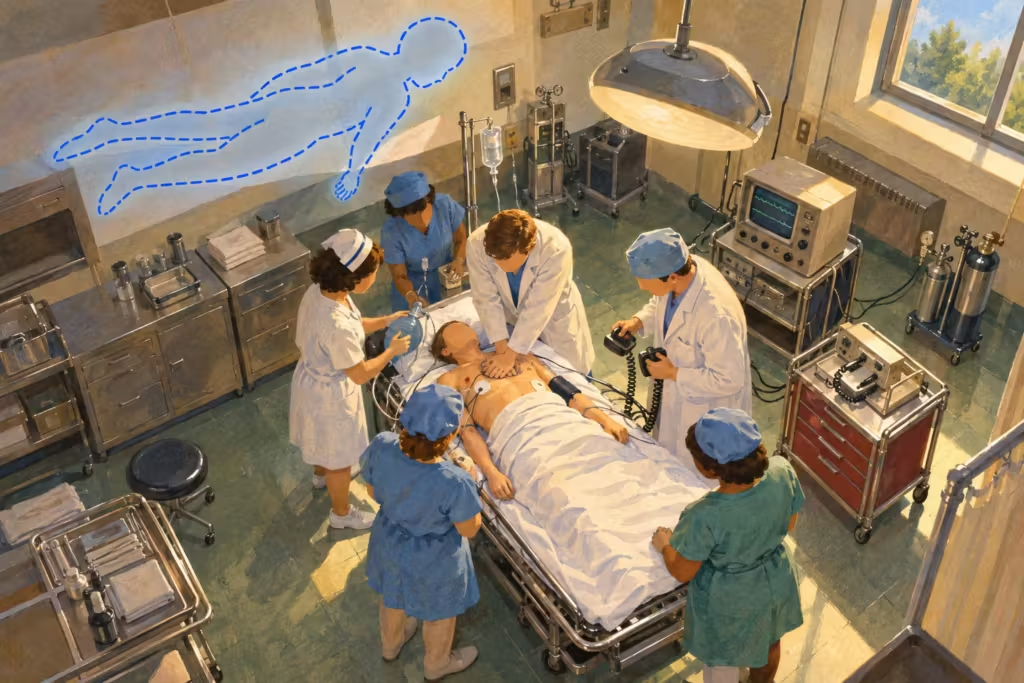
32 people said they had seen part of their resuscitation from outside their body. None was in an operation. All of them had had a cardiac arrest or another serious crisis.
- 26 gave only a general impression: doctors around, chest compressions, some shocks.
- 6 gave details that could be compared with the medical records.
Anyone who has watched television can give a general impression. That is why Sabom needed to know what someone making it up would say.
So he set up a comparison group.
Step 8
Chapter 7 · The comparison · From the book
He asks 25 heart patients to imagine a resuscitation, and 20 get it wrong
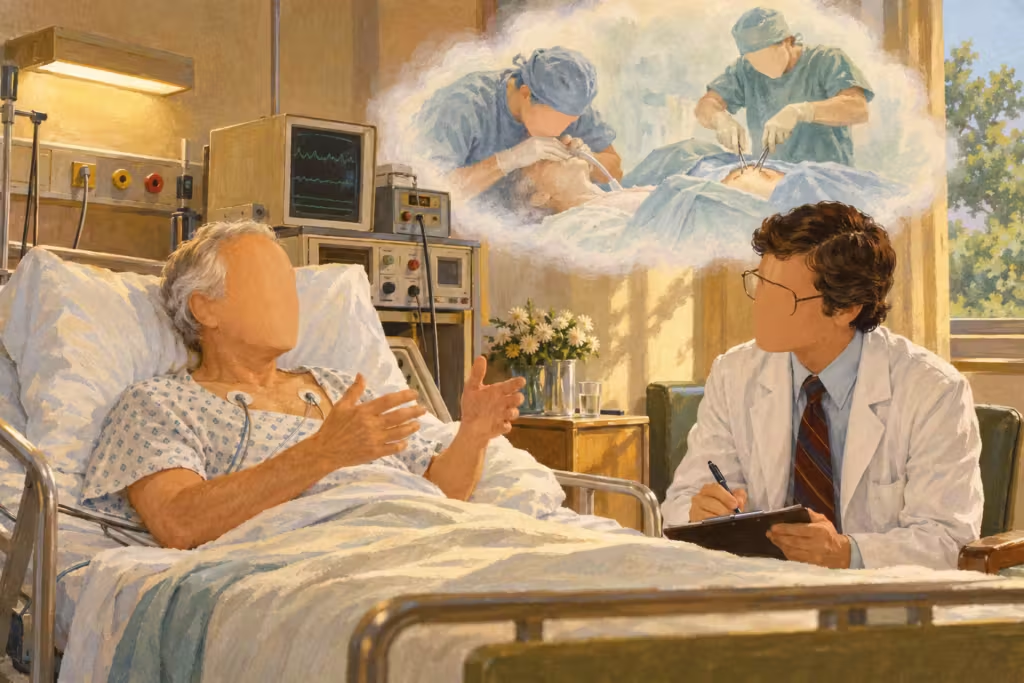
Sabom chose 25 heart patients admitted to a coronary care unit. They were similar to his NDE patients. They had been ill for years and almost all had had heart attacks. None had had an NDE.
He asked them to imagine they were watching from a corner as someone was resuscitated in hospital. And to describe only what they were reasonably sure would be seen.
- 20 of the 25 made at least one major mistake. The most common was mouth-to-mouth, which was hardly ever done in hospital. Others said blows to the back or opening the chest.
- 3 gave a short description with no mistakes. Two of them had seen someone resuscitated.
- 2 said they knew nothing.
The 32 accounts from people who say they saw their resuscitation had no mistakes of that kind. The 26 general accounts did not have them either.
It remained to see whether the six detailed accounts matched their own resuscitation.
Step 9
Chapter 7 · The six cases · From the book
He compares six accounts with their medical records
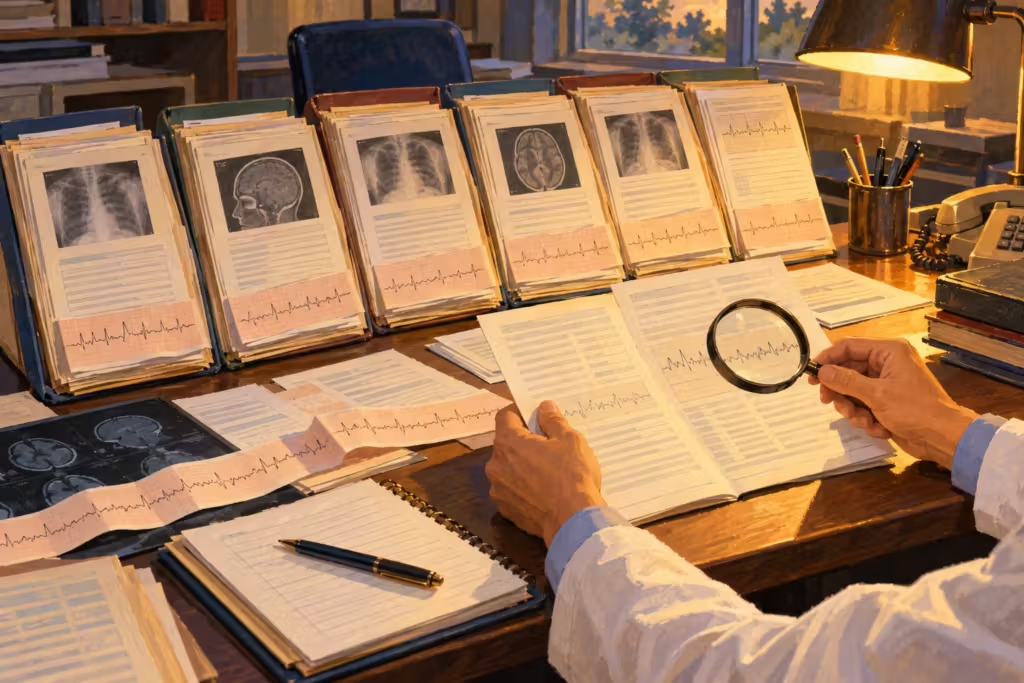
Sabom copied the medical records into the book and compared them with each account. Four of the six people came to him because they were already telling of their experience. The other two were among the people he asked without knowing anything beforehand.
- A 60-year-old woman said she saw blood being taken from her hand. The medical record notes at 7:30 that blood was taken from an artery. This is the story of Mrs. M.
- A retired mechanic said he saw a needle going into his groin. The medical record confirms that blood was taken from his groin during the resuscitation, but on the other side. This is the story of Mr. M.
- A retired pilot described the two needles on the shock machine. The medical record confirms the arrest and the shock, but not the machine. This is the story of Mr. S.
- A man said he saw his wife, his son and his daughter at the end of the corridor. His wife confirms that they came without warning and that a nurse stopped them far away. The part of the medical record about that arrest was not found. This is the story of Mr. O.
- One man described a single shock, and his medical record confirms it. Another described two shocks, and his did too. But the medical record does not mention the injection into his heart that he says he saw.
In none of them did he find the mistakes he expected. But what is confirmed is almost always something done in many resuscitations. And the most striking detail in several cases is not in the medical record.
So Sabom asked himself how else they could have known.
Step 10
Chapter 7 · The other explanations · From the book
Sabom checks whether they could have known it beforehand, been told, or heard it
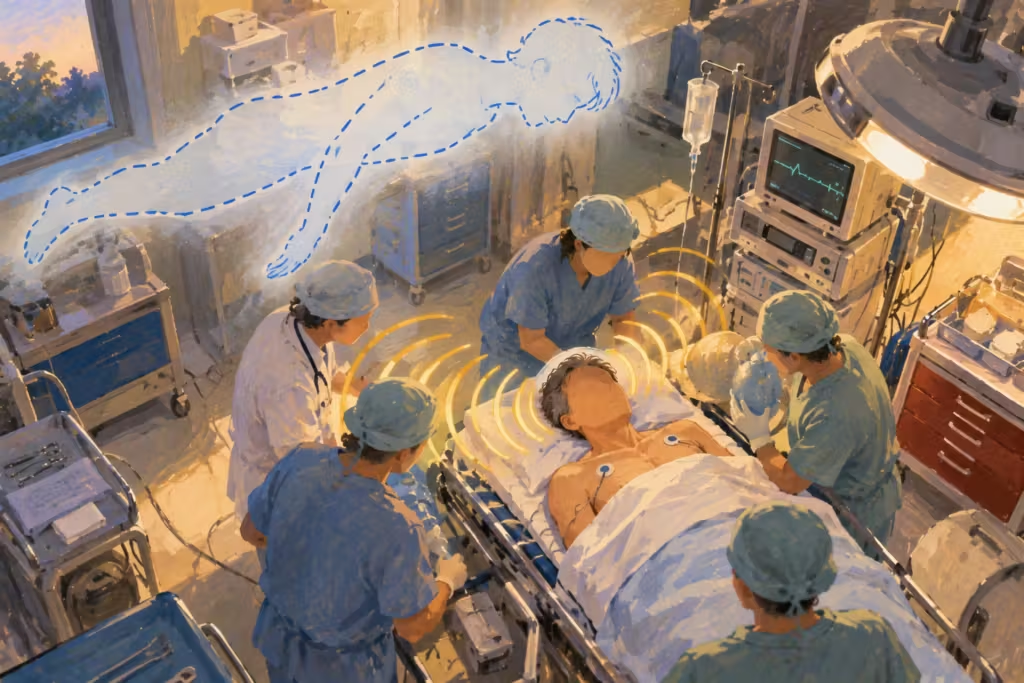
Sabom went through three normal ways of knowing what happened:
- Knowing it beforehand. The 25 patients who imagined a resuscitation got it wrong. And each account fitted its own resuscitation, not just any one.
- Someone telling them afterwards. Sabom thinks patients are not told about the needles on a machine or a blood test. Several told their family right away, and the family says they always tell it the same way.
- Half-hearing and half-seeing. Some things cannot be heard, like the movement of needles on a dial. And the mechanic mistook the blood test for an injection. Sabom thinks that is the mistake of someone seeing it from a distance, not of someone hearing it.
In no case did Sabom check what each patient knew beforehand or what they were told afterwards. He reasons from what they told him in the interview.
Then he went through the brain-based explanations.
Step 11
Chapter 10 · From the book
He reviews eleven explanations and uses one patient’s oxygen against lack of oxygen
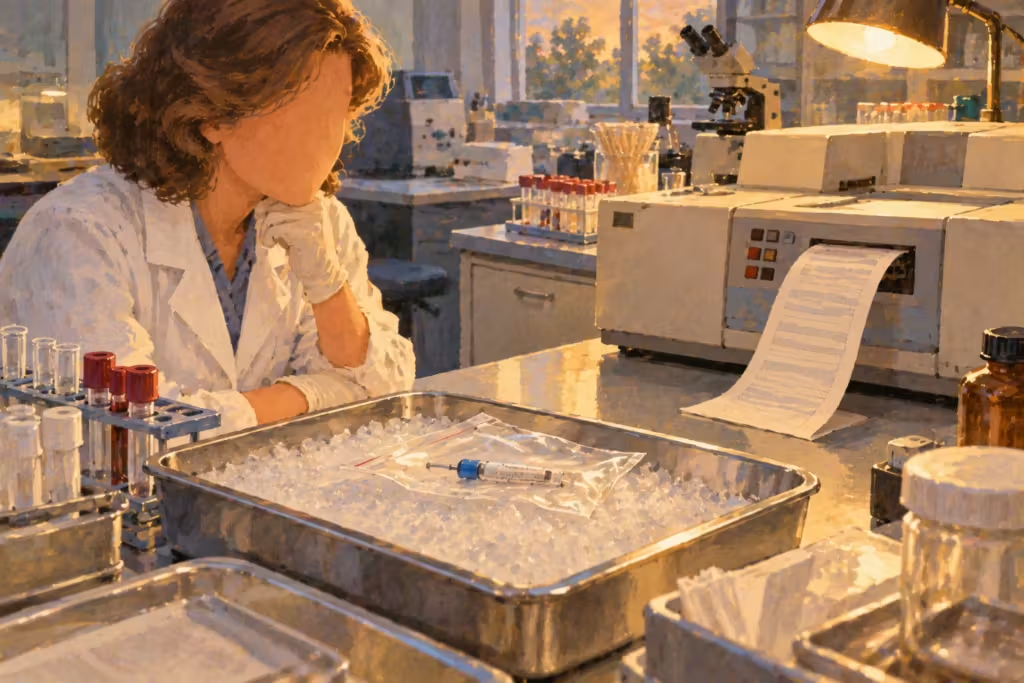
Sabom reviewed the explanations proposed in the 1970s. Among them were making it up, dreaming it, a hallucination and what the person expected to see. There were also medication, endorphins, epilepsy and lack of oxygen in the brain. For each one he gave his reasons against.
Against lack of oxygen he used a piece of data. Blood was taken from an artery in the mechanic’s groin during the arrest, precisely the needle he says he saw. The oxygen in that blood was high and the carbon dioxide was low. The same mechanic says he never fully lost consciousness and could hear the doctors giving orders.
In 1993, Susan Blackmore replied that the blood came from an artery in the leg. And that blood does not show how much oxygen was reaching the brain.
For Sabom, no brain-based explanation accounted for everything. He had one more explanation left.
Step 12
1982 · The conclusion · From the book
Sabom concludes that the out-of-body explanation fits best
In the last chapter, Sabom writes that the idea of the mind leaving the body “simply seems to fit best with the data at hand.” He draws on two doctors, the physiologist Charles Sherrington and the neurosurgeon Wilder Penfield. Both thought mind and brain might be two different things.
But he adds three warnings:
- It is based on very few cases.
- His arguments against the other explanations do not prove his own.
- These people did not come back from death, but from very close to it. He cannot say whether the NDE shows what happens when we die.
Sabom had begun by saying “I don’t believe it.” He ended the book believing the experience cannot be dismissed as something made up.
Other researchers disagreed.
Step 13
1985 to 2008 · What came after
A critique of the comparison, and a second test with resuscitated patients

In 1985, Susan Blackmore criticized the comparison with the 25 patients. Those patients had not been through a resuscitation. That is why they could not hear or feel what a patient hears or feels during their own resuscitation. In 1993 she added that the patients may have picked up the details afterwards, without realizing it.
In 2008, the nurse Penny Sartori published a five-year study in an intensive care unit in Wales. She asked resuscitated patients to describe how they thought they had been resuscitated. These were patients who had not left their bodies. This time, they had been through a resuscitation.
- 28 could not even guess what had been done to them.
- 3 described what they had seen in hospital TV dramas, and 2 tried to guess. All of them made mistakes. Several thought they had been given shocks when they had not.
Sabom kept studying NDEs. In 1998 he published another book with a case that would become famous, that of Pam Reynolds.
The question from the start remains: did they see their resuscitation, or guess it well? Let’s see what could be found out and what couldn’t.
From 116 people to six accounts compared
Sabom spoke with many people, but only six accounts could be compared in detail.
So these figures say how many describe an NDE, but very little about whether they really saw their resuscitation.
| Step | People |
|---|---|
| Interviewed over five years | 116 |
| Asked without knowing beforehand whether they had an NDE | 78 |
| Of those, described an NDE | 34 |
| Of all those interviewed, say they saw their resuscitation | 32 |
| Gave details that could be compared | 6 |
The 25 who imagined a resuscitation
None had had an NDE or been through a resuscitation.
| Result | People |
|---|---|
| Made at least one major mistake | 20 |
| Gave a short description with no mistakes | 3 |
| Said they knew nothing | 2 |
What these figures don’t tell
- 43 in every 100 is far more than in other studies. Sabom also asked about crises from years before, and not only about cardiac arrests. Figures from other hospitals are in How many people have an NDE?
- Imagining is not the same as having been through it. The 25 patients could not have heard or felt anything of a resuscitation.
- An account with no mistakes is not necessarily impossible to guess. Compressions, shocks and needles happen in almost every resuscitation. More on the explanations in What does science say about these experiences?
Where this page comes from
The book
- Michael Sabom, Recollections of Death: A Medical Investigation (Harper & Row, 1982)Buy the book
Assessments and critiques
- Susan Blackmore, Dying to Live (1993)Read our page
- Penny Sartori, The Near-Death Experiences of Hospitalized Intensive Care Patients (Edwin Mellen Press, 2008)Borrow it on archive.org
To understand more
- Mrs. M.: the needle in her hand, one of the six casesRead
- Mr. M.: the needle in his groin, another of the six casesRead
- How many people have an NDE?Read
Our archive
- A full reading of Sabom’s, Blackmore’s and Sartori’s books, as of October 19, 2026
More studies
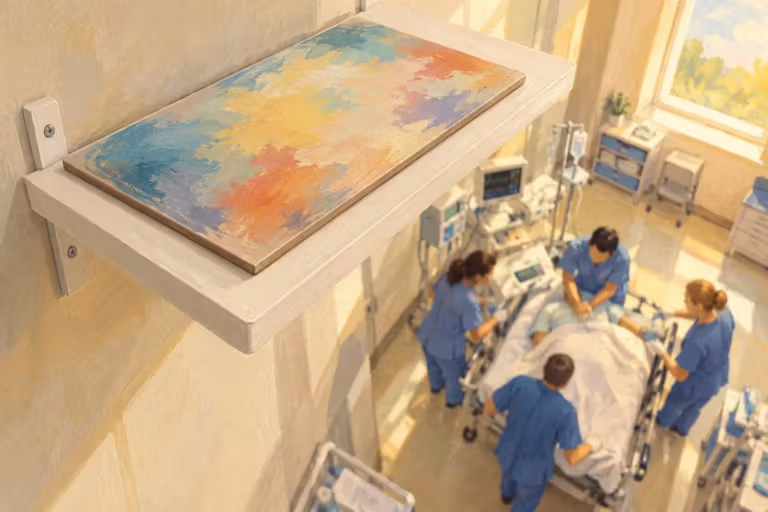
AWARE: the pictures hidden on the shelves
Fifteen hospitals put up pictures that could only be seen from the ceiling, to check whether anyone saw them during a cardiac arrest.
AWARE II: a random picture and the brain on the screen
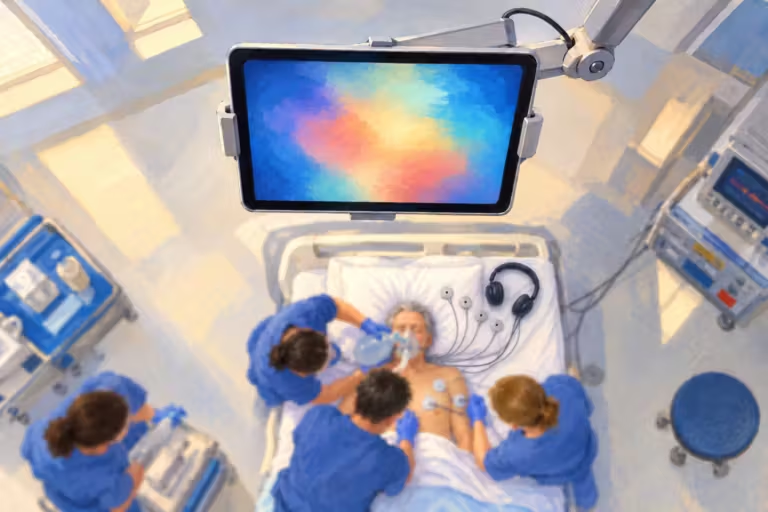
Above the patient was a tablet with a random picture. Headphones said the names of three fruits. And the doctors measured the brain during resuscitation.
Van Lommel: 344 cardiac arrest survivors in ten hospitals
Ten hospitals asked every cardiac arrest survivor what they remembered. They saw them again after 2 and 8 years.