
An essay · United States, 2021
“There is no death”: the Mays argue that the mind survives
Robert and Suzanne Mays are a husband-and-wife research team from the United States. In 2021 they wrote an essay for a contest that was looking for the best evidence of life after death. They called it “There is no death.” In their view, near-death experiences show that the mind leaves the body and lives on when the body dies.
The essay asks the biggest question of all: do NDEs prove that the mind lives on when the body dies? We go through it step by step. In each step we tell what Robert and Suzanne Mays propose, what evidence each argument has behind it, and what could be checked. If you only want to know what the essay argues, skip to the results.
Step 1
Since 2005 · According to Robert and Suzanne Mays
An engineer and a musician study NDEs and conclude that the self survives

Robert Mays studied chemistry at the Massachusetts Institute of Technology (MIT). He spent more than 30 years writing software, at Kodak and at IBM. Later he taught chemistry in high schools.
Suzanne Mays trained as a medical secretary. She is a musician. She played for patients in palliative care at hospitals of the University of North Carolina and Duke University. The two of them founded a school in Chapel Hill, North Carolina.
They are not doctors or university professors. Neither of them has had an NDE. They say they have studied these experiences together for more than 40 years, and that they began researching them in depth in 2005.
By 2005 they had already concluded that NDEs are the best evidence that the self is independent of the body and survives death.
Since 2008 they have published in the journal of the association that studies NDEs. They wrote the foreword to the English edition of The Self Does Not Die, a book that collects cases of perception that, according to its authors, were checked. And in 2025 they signed a scale with ten other researchers for measuring how strong each of those cases is.
Step 2
2020 and 2021 · According to the Bigelow Institute
A businessman launches a contest to reward the best evidence of life after death

In 2020, the aerospace businessman Robert Bigelow founded the Bigelow Institute for Consciousness Studies in the United States. Its goal is to support research into whether consciousness survives the death of the body.
In 2021, the institute launched an essay contest. The question was what the best evidence is that human consciousness survives the death of the body. Seven judges chose the winners. Their standard was which essay best showed survival “beyond a reasonable doubt.”
- They gave awards to 29 essays. First prize was $500,000.
- Fifteen essays received an honorable mention, worth $20,000 each. Robert and Suzanne Mays’s essay was one of them.
- In all, the contest gave out $1,800,000.
The researcher Keith Augustine, who does not believe in survival, criticized the contest in 2022. He says it asked for evidence in favor, not for a comparison of the two explanations. He reviewed eight of the winning essays, and the Mays essay was not among them.
The contest didn’t ask anyone to compare the two explanations. It asked for the best defense of one. Robert and Suzanne Mays’s essay is a defense of one explanation, not a study.
The essay brings no new data. It gathers cases from books, studies by other researchers, and some accounts that people told them in person. They organize it into ten lines of argument.
Step 3
The starting point · What the essay proposes
They start with what millions of NDEs have in common

NDEs are measured with a scale created by the psychiatrist Bruce Greyson. It has 16 questions, and each answer is worth 0, 1, or 2 points. A score of 7 or more counts as an NDE. The average is around 16.
Robert and Suzanne Mays point out that NDEs share a common core across many countries and cultures. According to several surveys, between 4 and 8 in every 100 people have had one. They take 5 in every 100 and multiply it by the world’s population. They get nearly 400 million people.
Then they make a comparison. Millions of tourists go to Paris and say they have seen the Eiffel Tower, and that is why we accept that it is real. Many people who have an NDE hear the same words: “It’s not your time; you must go back.” For the Mays, this makes what they experience something real, not imagined.
If millions of people describe the same thing, the experience has a common core. But that doesn’t say where it comes from.
The 400 million is an estimate built from surveys that didn’t use the same definition. The Mays make a similar calculation for the perception cases and get 60 million witnesses. These are people who say they saw something that was later confirmed, not cases that have been checked. Both explanations expect a common core. There would be one if the mind leaves the body. And there would also be one if all brains work in a similar way when dying. The Eiffel Tower can be photographed and measured. What people see in an NDE can’t be photographed or measured.
Step 4
The perception cases · What the essay proposes
They say some people saw real things they couldn’t have seen with their eyes
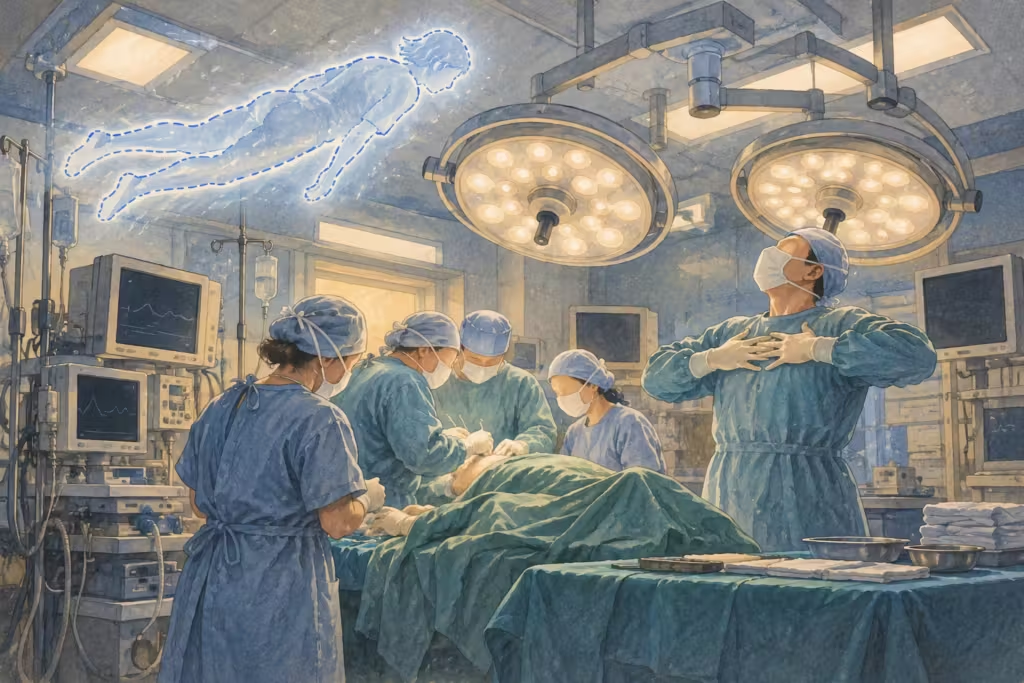
The first argument is the perception cases. These are people who say that, during their NDE, they saw something real that was confirmed later.
- Al Sullivan, during heart surgery in 1988. His eyes were taped shut and he was under anesthesia. He said he saw his surgeon flapping his elbows as if he wanted to fly. It was a habit of the surgeon’s. He told his cardiologist as soon as he recovered.
- Howard, a patient of the physician Laurin Bellg, had a cardiac arrest in the ICU. He said he rose up through the ceiling into a room with mannequins in beds and computers in the middle. Above his ICU there was a nursing training center, with mannequins.
- Tony Meo had heart surgery far from home, about 1,250 miles away. He said he went to his home in Florida and saw the mail scattered on the table, with a Danish catalog he had never ordered. When they got back, that is how they found it.
For Robert and Suzanne Mays, these cases meet every requirement. Other credible people confirmed them. They are unusual details that can’t be guessed. They couldn’t have been seen with the eyes. And the people told them right away.
For the Mays, these cases are checked because a doctor confirms them. With our five questions, a doctor’s word counts, but it isn’t enough on its own. We need to know what the patient said and when. And we need to rule out that they learned it in an ordinary way.
Al Sullivan is the strongest case. It meets 4 of the 5 checks. What’s missing is ruling out that he saw it in an ordinary way. The researchers who studied the case in 1998 cite his medical record. According to that record, he was given local anesthesia before the general anesthesia. He was awake in the operating room, with the surgeon in front of him. There is no proof that he saw the gesture then. The essay doesn’t mention that local anesthesia.
Howard doesn’t fully pass any of the five. What Howard said and what was confirmed come only from the physician Laurin Bellg. Howard told it after several days on a ventilator. And in a 2014 talk, Bellg described a very similar case without the room with the mannequins. For Tony Meo’s case there are no documents. It only appears in a table in a book, and another researcher tells it.
Step 5
With the heart stopped · What the essay proposes
They say a patient saw his surgeons when his brain was no longer working
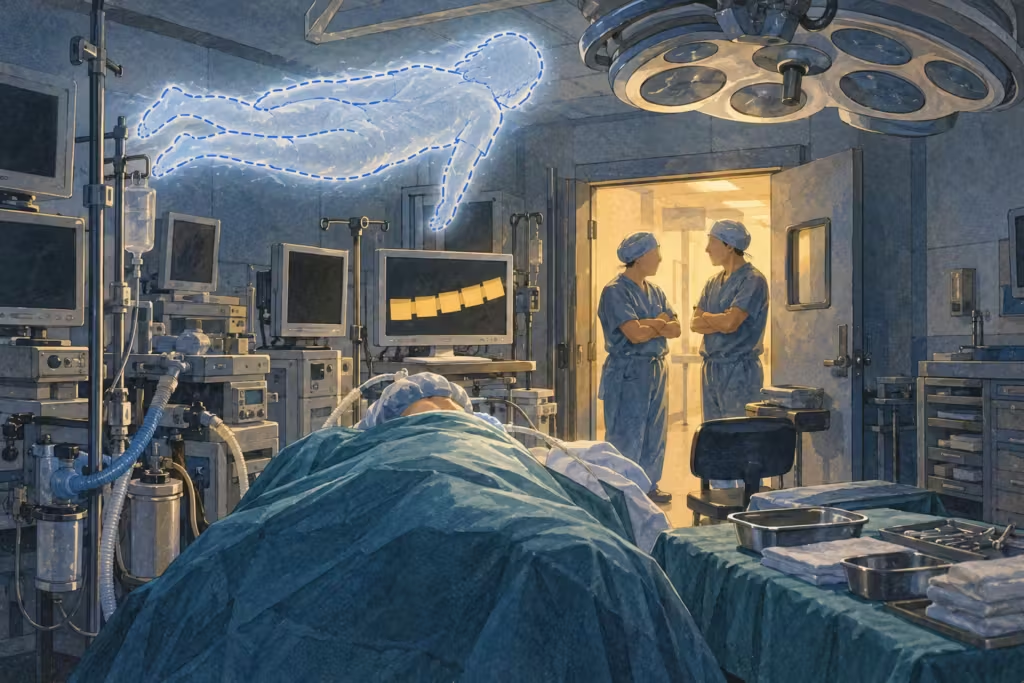
The surgeon Lloyd Rudy operated on a patient to replace a heart valve. Afterward, he couldn’t get the man’s heart to beat again. They gave him up for dead. He had no heartbeat, no blood pressure, and no breathing for 20 or 25 minutes. Rudy and his assistant waited at the operating room door, in short sleeves, talking.
Then the heart started beating again on its own. The patient recovered. Later he said he saw the two surgeons in the doorway, with their arms folded, and some sticky notes stuck together in a chain on a screen.
Robert and Suzanne Mays recall a finding from studies of cardiac arrest. When the heart stops, brain activity shuts down within 10 or 20 seconds. That is why they believe this patient saw the surgeons with his brain shut down, from the ceiling. For them, it is proof that the mind perceives without the brain.
Studies show that the brain shuts down within seconds. But no one has checked that this patient saw something while his brain was shut down. No one wrote down when what he described happened.
Lloyd Rudy told the case in a 2011 video, some 10 or 15 years later. His assistant confirmed it in 2013, after watching the video. No one knows who the patient was, and there is no document of any kind. At least one detail of what the patient described is from when his heart was already beating. It is the anesthesiologist who came running back in. Rudy had called him when he saw the blood pressure returning. For the rest, no one knows when he saw it. The assistant wrote in 2015 that the tape over the eyes is always removed at the end of the operation. And that operation had already been declared over. Afterward, the patient spent two weeks talking with the team about what he had experienced.
The case doesn’t fully pass any of the five checks. Even so, in 2025 it got the highest score on a scale the Mays signed with other researchers. That scale weighs the credibility of the doctor telling the story and doesn’t ask for a document from the time.
Step 6
Outside the body · As told by the experiencers they cite
They gather accounts in which the mind works fully, and better, outside the body
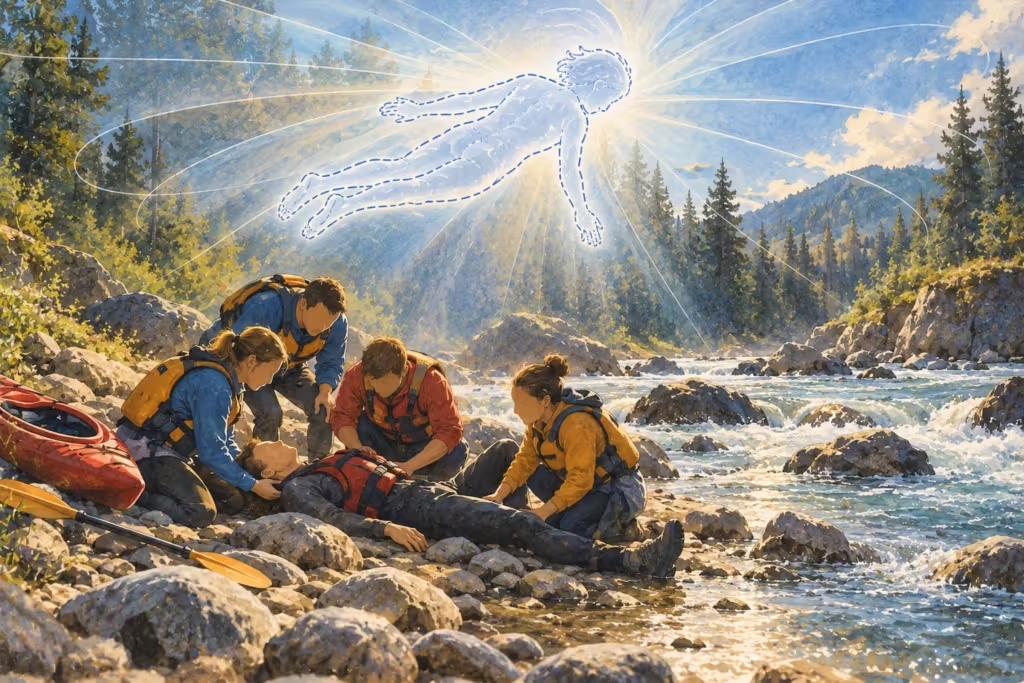
The second argument comes from what an NDE feels like. Robert and Suzanne Mays gather accounts from people who went through one.
- Joe McMoneagle, in 1970, after a seizure. His friend was pounding on his chest. With each blow he went back into his body and felt pain. Then he left again, with no pain, like a yo-yo.
- Mary Neal, a surgeon who drowned in a river. She says she kept going back to her body to breathe because her friends asked her to, and then she went on her way.
- A French patient says he could see in every direction at once. He says he saw a green plate under the operating table, covered by the sheet, and that he later checked it with the surgeon.
- Vicky says that as a baby she left her body, and that outside it she had an adult’s mind.
They also cite three studies on memory. According to those studies, memories of an NDE are more vivid than memories of real events. And they point out that some blind people say they could see during their NDE, as the Ring and Cooper study reports.
The Mays believe the mind stays whole outside the body, and that it even works better. For them, this means the mind doesn’t depend on the brain.
What experiencers describe is the best source on what an NDE is like. But it doesn’t say what causes it. If the brain produced the experience, it would also make it feel whole and real.
Of these accounts, only the one about the plate includes something that can be checked. We know it from the patient’s words. The researcher Jean-Pierre Jourdan quotes them in 2019, with no date for the operation and no documents. We haven’t looked at it with our five questions.
Step 7
Outside witnesses · What the essay proposes
They say other people, and even a dog, saw someone who was outside their body
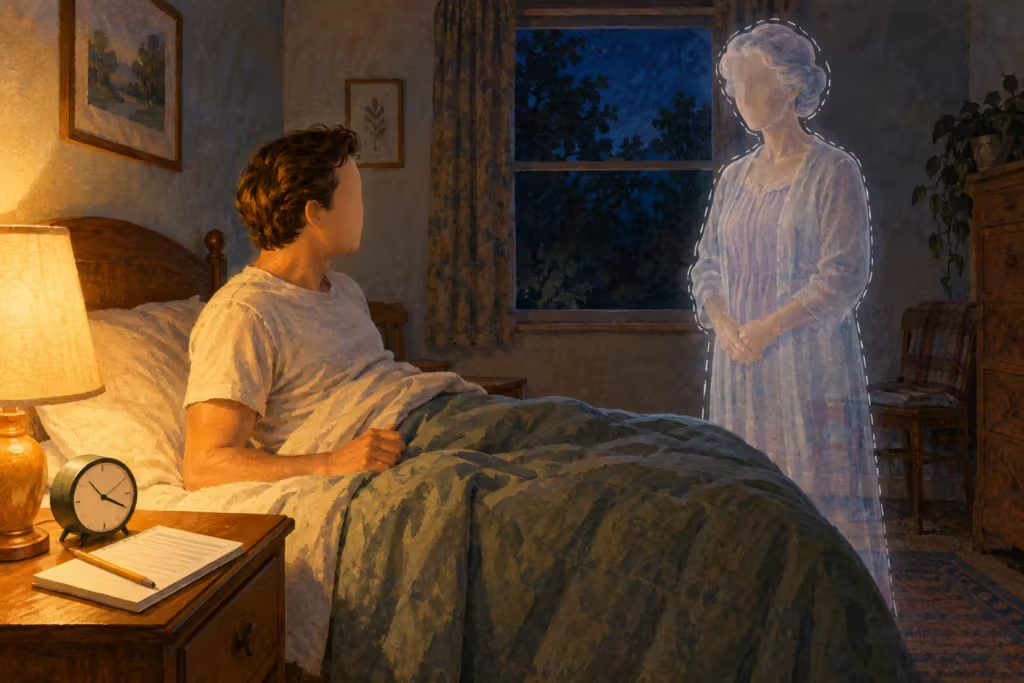
The third argument looks for outside witnesses. Robert and Suzanne Mays say the mind that left the body is something real if other people see it.
- Jerry Casebolt says he floated over a school playground when he was 7, and that a German shepherd barked at him and jumped toward him.
- Olga Gearhardt, in 1989. Her transplanted heart stopped at 2:15. Her son-in-law was asleep at home. He woke up at that time and saw her beside his bed. He wrote down the time and what she told him.
- A woman dying of cancer dreamed she saw her son crying in a bar. At that time, the son saw her walk into the bar.
- A group of 20 firefighters, trapped in a fire in 1989. Their chief says he saw the others standing in the air, above their bodies.
- May Eulitt and two friends, struck by lightning in 1971. She says the three of them were together in a large hall and shared what they saw.
For the Mays, these cases show that the separate mind really exists.
In all these cases, what the other person experienced comes from a single source.
The dog is described only by Jerry Casebolt, in a 1996 book and in a conversation with the Mays. In Olga Gearhardt’s case, the Mays write that the researchers checked the son-in-law’s note. That note has never been published. And only the doctor who wrote the book says the cardiac arrest was at 2:15. What remains is a match in time that can be neither explained nor confirmed. The physician Laurin Bellg tells the case of the son in the bar. She heard it from his sister.
The firefighters are described only by their chief, years later. No one knows which fire it was. Only one fire that year fits even a little. But that fire involved much less danger, and nothing links it to the chief’s account. In May Eulitt’s case, neither of her two friends left an account of their own. The cases of Olga Gearhardt, the firefighters, and May Eulitt don’t fully pass any of the five checks. According to the table in the casebook, the case of the bar doesn’t fully pass any of them either. We haven’t looked at the dog case with our five questions. No one else confirms it.
Step 8
The theory · What Robert and Suzanne Mays propose
They propose that a person is a mind without matter that moves the brain from outside
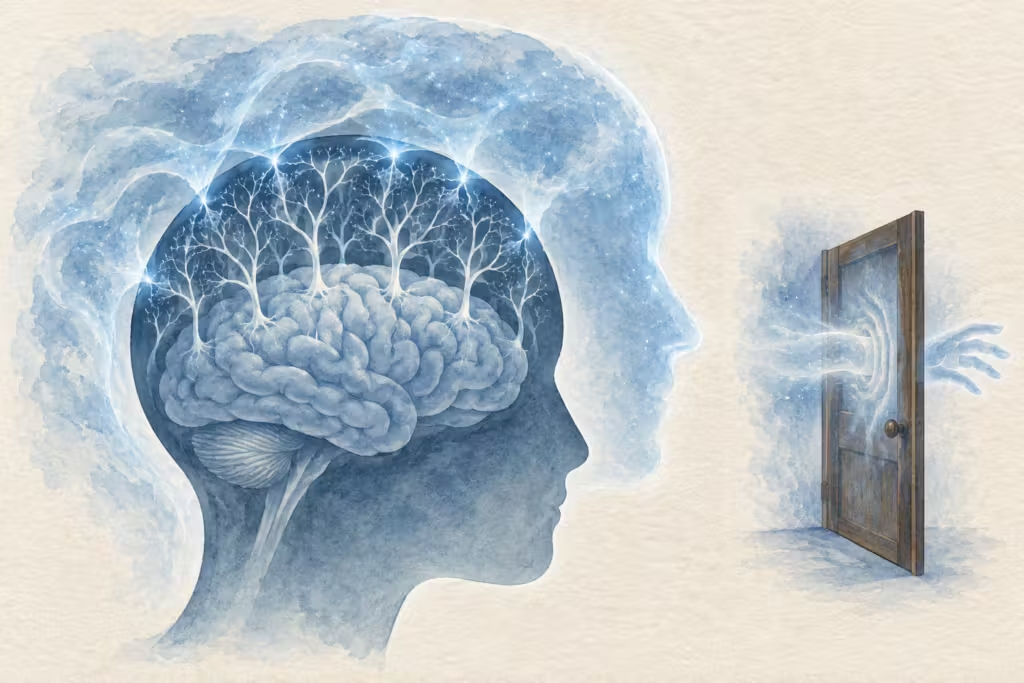
With all of the above, Robert and Suzanne Mays put forward their theory. A person is a “mind entity” that is not made of matter. It has no atoms. It takes up the same space as the body. It holds thought, feelings, will, memory, and awareness of oneself. These are not in the brain.
Inside the body, this mind depends completely on the brain to be conscious. That is why a blow to the head, alcohol, or anesthesia affect it. Outside the body, in an NDE, it perceives without eyes or ears.
- Where they join: in some branches of the neurons that reach up toward the surface of the brain. They are in its outermost layer, 2 to 4 millimeters thick.
- How they communicate: the mind opens tiny channels in those neurons and makes them fire. And it senses when they fire.
- A new force: some people say they felt a little resistance when they passed through a wall outside their body, like pushing through cotton. One patient felt her doctor’s arm like very thin gelatin with a current running through it. Jerry Casebolt says he made an old woman sneeze by tickling her nose.
Robert and Suzanne Mays use Newton’s third law. With that law they say there is a force if resistance is felt. That is why they conclude that there is a new physical force, very weak, between mind and matter. They also answer the philosophers who say that something without matter can’t move anything. For them, physics will have to expand.
The theory rests on sensations described afterward. No one has measured that force, and the essay doesn’t propose any experiment to measure it.
The Mays write that they are confident the theory can be tested. But they don’t say how. They also accept that the mind depends completely on the brain while it is inside the body. So any damage to the brain fits their theory. As written, no finding about the brain could contradict it.
Step 9
Against the skeptics · What the essay proposes
They reply that brain-based explanations only cover part of it, and change from case to case
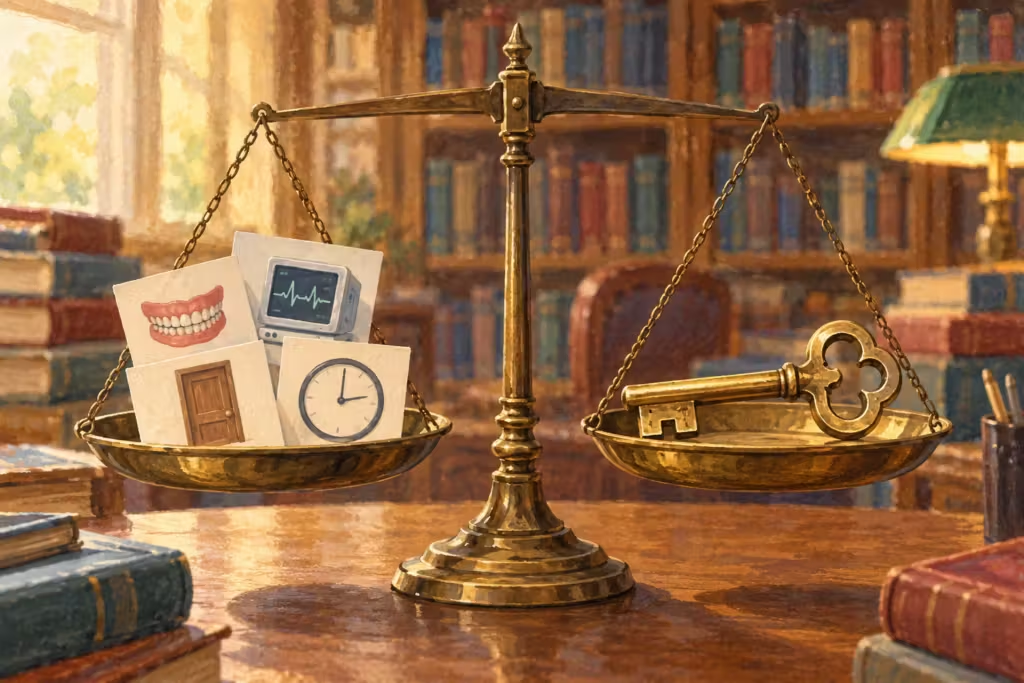
In 1980, the psychologist Kenneth Ring wrote that a brain-based explanation would have to explain everything at once. It would have to explain leaving the body, the tunnel, the light, relatives who had died, and what the person knows without any way of knowing it. Robert and Suzanne Mays take up that challenge. For them, no explanation meets it.
- On oxygen and carbon dioxide, they write three things. There are NDEs in patients who didn’t have lower oxygen or higher carbon dioxide in their blood. No study has shown lower oxygen during an NDE. And only 10 to 20 in every 100 people who are resuscitated have an NDE.
- On the cases: the philosophers John Martin Fischer and Benjamin Mitchell-Yellin explained four cases, each with a different ordinary route. The Mays say these are tailor-made explanations, one for each case.
- A mistake by those philosophers: in the dentures case, they said the patient learned the staff’s faces after he woke up. According to the nurse, the patient recognized him the first time he saw him, a week later.
Then they cite a 2014 study from the University of Liège, in Belgium. It compared NDEs when life was in danger with NDEs when it wasn’t, for example during sleep or fainting. It found no differences. The average was 16 points in the first group and 17 in the second. For the Mays, if an NDE is the same without being close to death, there must be a common cause. And they propose that this cause is the mind separating from the body. They admit they don’t know why it separates in some people and not in others.
They have a point on one thing. Sometimes every strong case needs its own ordinary explanation, possible but not checked. That comes at a cost. No one has measured how much it weighs.
But there are NDEs that are the same without any danger of death. That weakens “being close to death” as the cause. It doesn’t weaken the brain, because a brain mechanism that doesn’t require dying would predict the same thing. On carbon dioxide, the essay doesn’t cite a 2010 study from Slovenia. It is the only study that measured it in resuscitated people, and it says the opposite. Among 52 people resuscitated outside the hospital, the 11 who had an NDE had more carbon dioxide in their blood. It is a small study that hasn’t been repeated.
To answer Fischer, they also cite Pam Reynolds, who described the saw used to open her skull. Her case meets 3 of the 5 checks.
Step 10
Relatives who had died · What the essay proposes
They say some people in an NDE meet people who had died without their knowing it
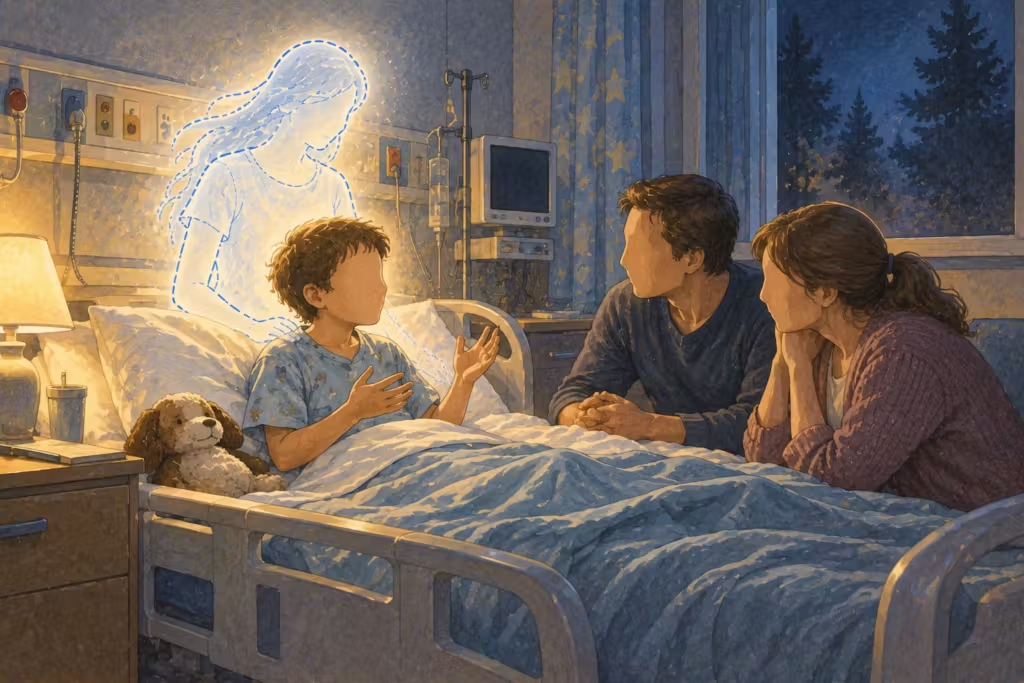
The second part of the essay sets out to show that the mind survives death, not just that it leaves the body. Almost half of people who have an NDE say they saw or felt someone who had died. According to the psychiatrist Bruce Greyson, in the cases he has gathered no one saw as dead a person who was still alive.
- Eddie Cuomo, a 9-year-old boy with a very high fever. He woke up at 3 in the morning and said he had seen his grandmother, his uncles and aunts who had died, and his 19-year-old sister Teresa. According to the doctor who tells the story, in the morning they learned that Teresa had died in a car accident before midnight.
- Jack Bybee, age 26, in Cape Town. He says that in his NDE he saw Anita, his nurse. She asked him to tell her parents she was sorry she had wrecked the red sports car. According to him, Anita had died that weekend in the car they had given her.
- A man saw a stranger in his NDE who looked at him with affection. More than ten years later, his mother showed him a photo of his biological father. It was him.
- A 5-year-old boy saw a girl who told him she was his sister Rietje. His parents confirmed that they had lost a daughter by that name.
- Ken Leth says he recognized his great-grandparents in some photos, many years after his NDE.
For Robert and Suzanne Mays, in these cases it doesn’t work to say that the person expected to see someone. The person didn’t know that someone had died, or didn’t know they existed.
If these accounts are accurate, they are the hardest to explain. None has a document from the time.
Eddie Cuomo’s case comes through a chain of people. A doctor told it to some writers, and Greyson took it from their book. Jack Bybee’s doesn’t fully pass any of the five checks. The Mays write that Anita’s friend confirmed the facts. But the only thing known is that, according to Jack, a nurse burst into tears. No one outside his account has confirmed Anita’s death or the red car. The cases of the biological father and of Rietje come from a book by Pim van Lommel, with no names and no documents. We haven’t looked at Ken Leth’s great-grandparents with our five questions.
Step 11
Beside the dying · What the essay proposes
They say people who sit with someone who is dying sometimes share that death with them
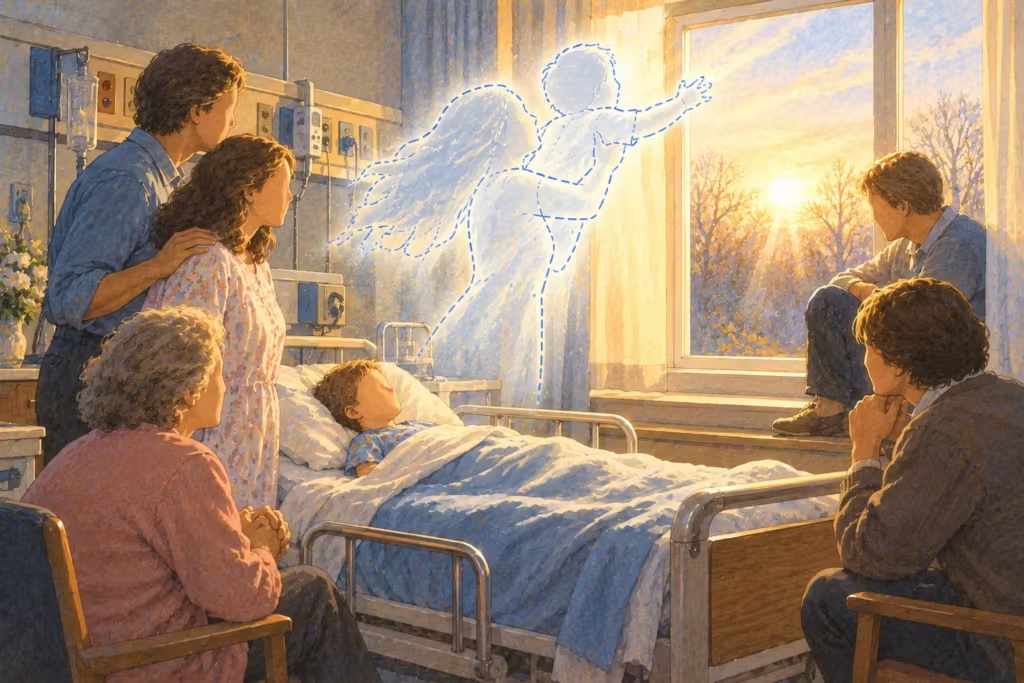
The essay moves on to shared death experiences. These are experiences that healthy people have while they are with someone who is dying.
- A physician, Dr. Jamieson, tried to resuscitate her mother for half an hour. She says she left her body, saw her mother beside her, and a light from which her mother’s friends who had died came out.
- Dana, while her husband Johnny was dying of cancer. She says she saw his whole life with him, including some girls he had dated when he was young. Later she looked them up in his high school yearbook and found them.
- Scott Taylor, in 1981, at the death of Nolan, a 7-year-old boy. He says he saw the boy’s mother, who had died in the same accident, lift him out of his body and take him to the light. About ten years later, a relative told him the same thing, using “the exact same words.”
For Robert and Suzanne Mays, someone who has a shared death experience is a healthy witness to the process of dying. And that process is the same as an NDE, except that the person doesn’t come back.
What Nolan’s relative saw is reported only by Scott Taylor.
The relative has no name and has never said anything in public. Scott Taylor told another version in 2023. In it he says that an aunt of the boy told him to go with his mother if she came for him. That was about 45 minutes before the death. No one knows whether the relative heard that. Nor does that sentence explain why both of them felt they were taken to the light. The case doesn’t fully pass any of the five checks. The cases of Dana and Dr. Jamieson come from a 2010 book by the psychiatrist Raymond Moody, with no further details.
Step 12
After death · What the essay proposes
They say some people who have died appear to the living and give them facts they didn’t know
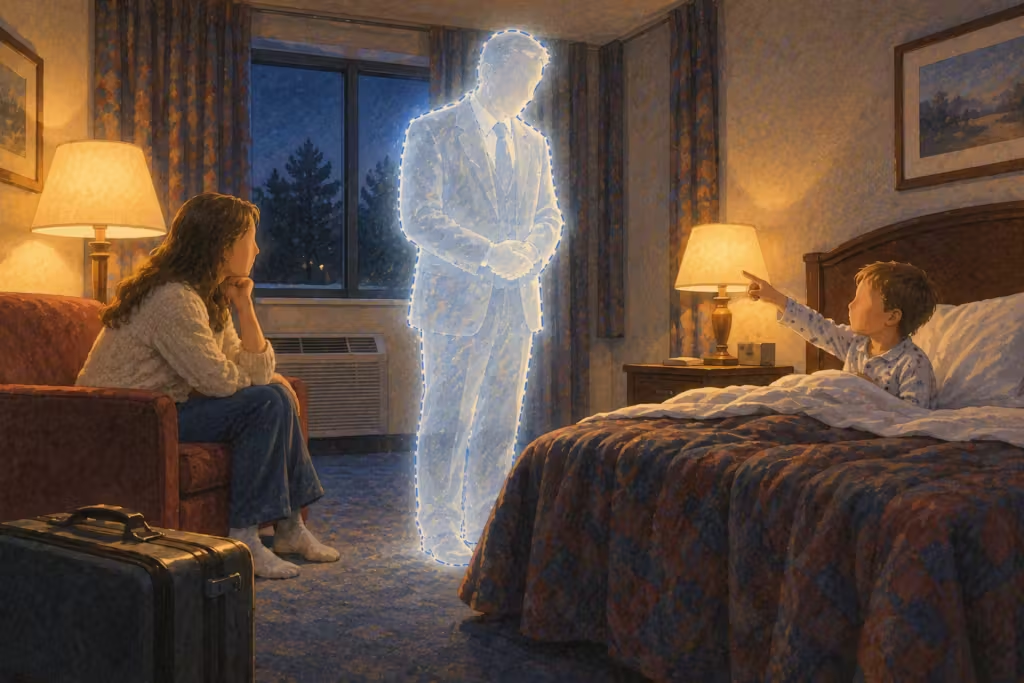
The last line of argument is after-death communications. These are people who say a relative who had died appeared to them or spoke to them. According to a 2011 review they cite, one in three people in the world has had one.
- Lucille, adopted at birth. She says an older man appeared at the foot of her bed, called her by her birth name, and told her that her mother was looking for her. She found her mother, who showed her a photo of her grandfather. It was the same man, in the same suit.
- Blair, the night before her father’s funeral. She says she saw him in the hotel room. Her 5-year-old son got up shouting that he had seen his grandfather.
- Eric Zimmerman’s father says he felt a huge hug that pushed him toward the bed 45 days after his son died.
For Robert and Suzanne Mays, the event is objective when two people see the same thing at the same time. And the hug shows that the mind of someone who has died can exert a force that can be measured.
No one measured that force. It is what a father felt who had just lost his son.
These three accounts come from books from 1997 and 1999 that collect cases without full names. There are no documents, and we haven’t looked at them with our five questions. Blair is the one who tells what her son saw.
Step 13
The end of the essay · What Robert and Suzanne Mays conclude
They conclude that survival is proven and that physics will have to change

Robert and Suzanne Mays bring the ten lines together. For them, taken together they prove, “beyond a reasonable doubt,” that the mind separates from the body and lives on after death.
Then they draw out what their theory would mean:
- For the brain: memories would not be stored in the neurons, but in the mind. And a person with severe brain damage would have a whole mind, locked inside a brain that doesn’t work.
- For physics: there would have to be a fifth dimension, a new force, and “spiritual beings.”
- For everyone: there would be no need to fear death, because what is essential in a person doesn’t die.
The essay’s last section closes on the words that give it its title: “There is no death.”
That leaves the question from the beginning: do NDEs prove that the mind lives on when the body dies? Let’s see what can be said and what can’t.
Of 21 cases, 2 with at least one check fully met
The essay uses 21 cases with something that can be checked. It can be a perception, a person seen who wasn’t known to have died, or a shared experience. This is what we know about each one using our five questions, as of October 17, 2026.
| Group | Cases |
|---|---|
| Cases with something that can be checked | 21 |
| Looked at with the five questions | 10 |
| Only in tables in other books | 5 |
| Not looked at yet | 6 |
| Of those looked at, no check fully met | 8 |
| Of those looked at, at least one check fully met | 2 |
One honorable mention among 29 awards
Robert and Suzanne Mays’s essay was one of the 15 that received an honorable mention in the Bigelow Institute’s contest.
| Item | Figure |
|---|---|
| Judges | 7 |
| Essays awarded | 29 |
| Honorable mentions | 15 |
| Dollars for each honorable mention | 20,000 |
| Dollars given out in total | 1,800,000 |
What these figures don’t tell you
- The two cases with at least one check fully met are Al Sullivan’s, with 4 of 5, and Pam Reynolds’, with 3 of 5.
- A case with no check fully met is not a false case. It means documents from the time are missing to know. Many of these cases partly meet the questions.
- The 6 cases we haven’t looked at are accounts from books or conversations with the Mays. None comes with documents from the time in the essay, but we haven’t scored them.
- An award is not proof. The judges rewarded how well argued each essay was. The contest didn’t ask anyone to compare the two explanations.
Frequently asked questions
Who are Robert and Suzanne Mays?
Robert and Suzanne Mays are a husband-and-wife research team from the United States who have studied near-death experiences since 2005. Robert studied chemistry at MIT and was a software engineer at Kodak and IBM. Suzanne is a musician and played for patients in palliative care. They don’t work at a university. They publish in the journal of the association that studies NDEs. In 2025 they signed a scale with ten other researchers for measuring perception cases.
Have Robert and Suzanne Mays had a near-death experience?
No. They say so themselves on their website. Neither of them has had an NDE. They study them from what other people describe and from what other researchers publish.
What was the Bigelow Institute’s contest?
It was an essay contest held in 2021. It was launched by the Bigelow Institute for Consciousness Studies, founded in 2020 by the aerospace businessman Robert Bigelow. It asked for the best evidence that consciousness survives the death of the body. Seven judges gave awards to 29 essays and gave out $1,800,000. The Mays essay received an honorable mention worth $20,000.
Do NDEs prove there is life after death?
It hasn’t been shown. Some cases remain unexplained, but none has the documents from the time that would be needed to check it fully. Robert and Suzanne Mays believe that the cases, added together, prove it. With the data we have, adding up cases that can’t be checked doesn’t make proof. We explain this in What does science say about near-death experiences?
Do NDEs prove there is no life after death?
No, they don’t either. Brain-based explanations propose possible causes, but no one has measured a person’s brain while they were having the NDE they later described. A case that can’t be checked isn’t necessarily false. The question remains open.
What is Robert and Suzanne Mays’s “mind entity”?
It is their idea of what a person is. For them, a person is a mind that is not made of matter and is the same size as the body. That mind holds thought, feelings, and memory. Inside the body it would depend completely on the brain. In an NDE it would leave the body, and at death it would live on. No one has measured it, and the essay doesn’t propose how to do so.
Has “There is no death” been translated into Spanish?
We haven’t found any Spanish translation. The essay is in English and can be read for free on the Bigelow Institute’s website. The link is in the sources at the end.
Where this page comes from
The essay
- Robert G. Mays and Suzanne B. Mays (2021), “There is no death: Near-death experience evidence for survival after permanent bodily death,” honorable mention essay in the Bigelow Institute’s contestRead for free
- Bigelow Institute for Consciousness Studies, the honorable mentions in the 2021 contestRead
- Bigelow Institute, how the contest was judgedRead
- Robert and Suzanne Mays, their CVs, on their websiteRead
The books and studies it uses
- Titus Rivas, Anny Dirven, and Rudolf Smit, El yo no muere (2019), the Spanish edition of The Self Does Not Die, cases 1.5, 2.12, 3.11, 3.29, 3.33, 7.3, and 7.5 (we cite the first edition; the link goes to the English edition, where case numbers may differ)Buy the book
- Bruce Greyson, After (St. Martin’s, 2021), with Jack Bybee’s account. In Spanish, Después de la muerte (Vergara, 2021)Buy the book
- Vanessa Charland-Verville et al. (2014), “Near-death experiences in non-life-threatening events and coma of different etiologies,” Frontiers in Human Neuroscience 8:203Read for free
- Bruce Greyson et al. (2025), “The veridical Near-Death Experience Scale,” Frontiers in Psychology 16:1661390, with Robert and Suzanne Mays among the authorsRead for free
Critiques and other data
- Keith Augustine (2022), “How not to do survival research,” Journal of Scientific Exploration 36(2):366–398Read for free
- Zalika Klemenc-Ketis, Janko Kersnik, and Stefek Grmec (2010), “The effect of carbon dioxide on near-death experiences in out-of-hospital cardiac arrest survivors,” Critical Care 14:R56Read for free
- Gerald Woerlee (2011), on what Pam Reynolds could have heard, Journal of Near-Death StudiesRead for free
- Charlotte Martial et al. (2025), the NEPTUNE model, Nature Reviews Neurology 21:297–311View in the journal
To understand more
- “Dying to Live”: Susan Blackmore explains NDEs with the brainRead
- Al Sullivan’s near-death experienceRead
- Pam Reynolds’ near-death experienceRead
- Ken Leth’s near-death experienceRead
- The Ring and Cooper study: 31 blind people who describe a near-death experienceRead
- The AWARE II study: a random image and the brain on screenRead
- What does science say about near-death experiences?Read
- How we check each story: the five questionsRead
Our archive
- Our reading of the whole essay and our notes on the ten cases we have looked at, as of October 17, 2026
More studies
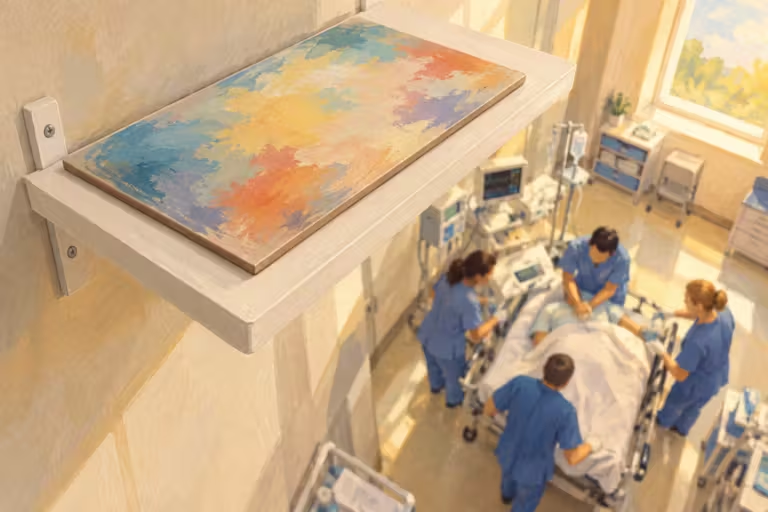
AWARE: the pictures hidden on the shelves
Fifteen hospitals put up pictures that could only be seen from the ceiling, to check whether anyone saw them during a cardiac arrest.
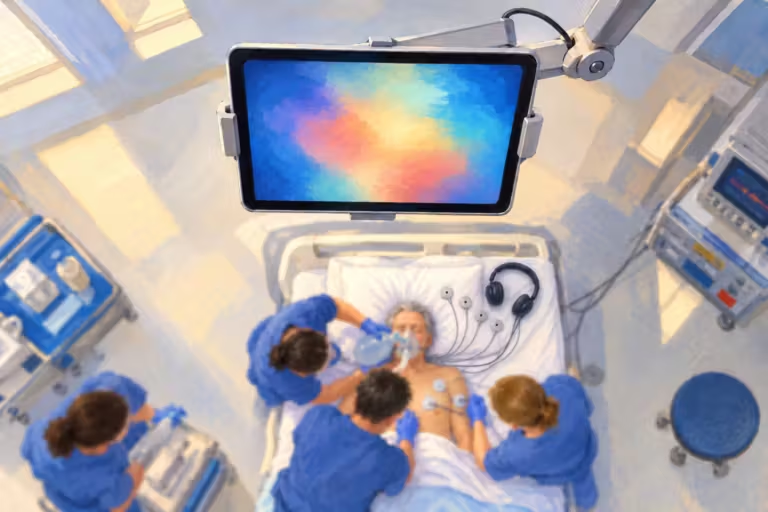
AWARE II: a random picture and the brain on the screen
Above the patient was a tablet with a random picture. Headphones said the names of three fruits. And the doctors measured the brain during resuscitation.
Van Lommel: 344 cardiac arrest survivors in ten hospitals
Ten hospitals asked every cardiac arrest survivor what they remembered. They saw them again after 2 and 8 years.