A real-life story · United States, 1973
The near-death experience of Mr. S.
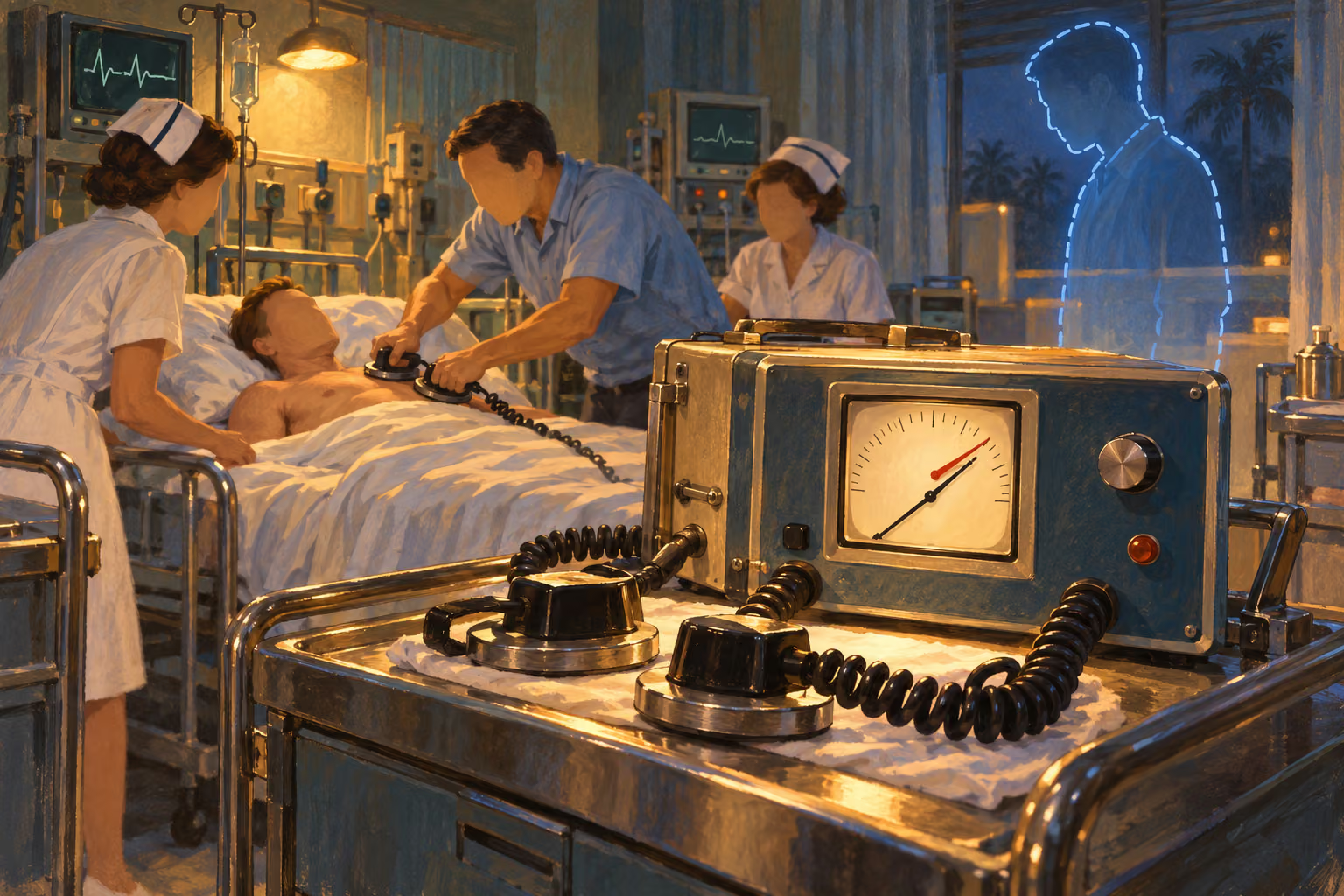
In 1973, a retired Air Force pilot had a cardiac arrest in the early hours in a coronary care unit, and he was resuscitated. Five years later he said he had watched his resuscitation from one side of the room. He also described how the two needles on the shock machine moved.
The cardiologist Michael Sabom calls him Mr. S. to keep his name private. For Sabom, only someone who had seen the machine working could know how those two needles moved. But the medical record does not say which machine was used. We tell it step by step and then look at what could be checked. If you only want the evidence, skip straight to what can be checked.
Step 1
1973 · In a coronary care unit in northern Florida · Mr. S.’s account
A retired pilot is admitted to a coronary care unit after his second heart attack
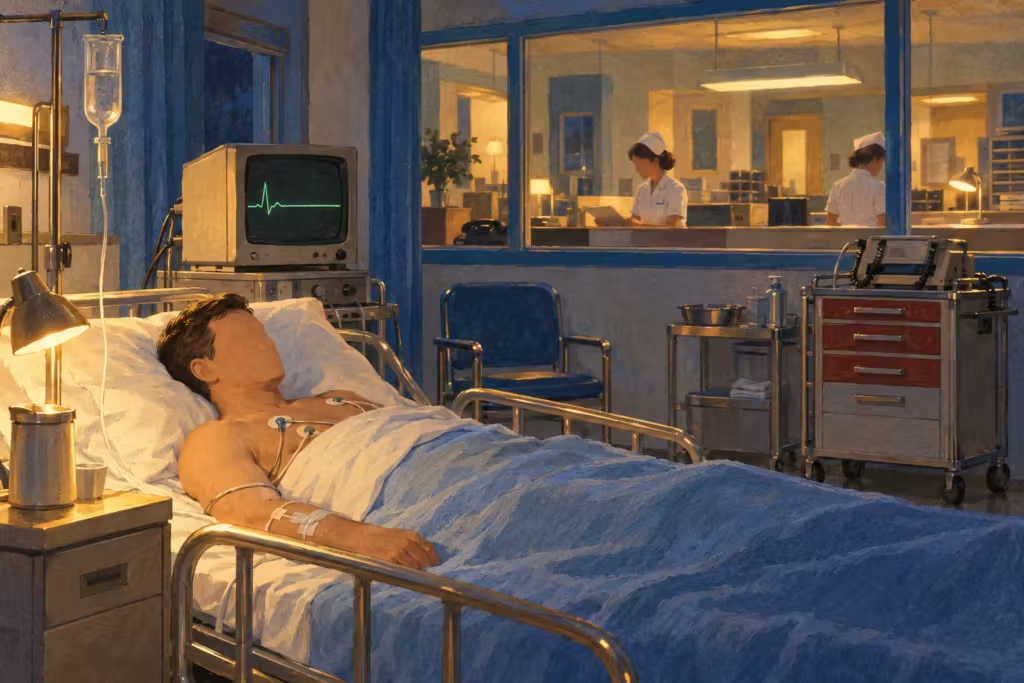
Mr. S. was a retired U.S. Air Force pilot who lived in northern Florida. In 1973 he had his second heart attack, a massive one. He was about 39.
He was admitted to a coronary care unit. His heart rhythm was irregular. Through his IV he was being given a drug called lidocaine.
The cardiologist Michael Sabom studied his case. On the page about his book we explain how Sabom worked and the limits of his study.
Step 2
At two or three in the morning · His heart stops · Mr. S.’s account
In the early hours, while he sleeps, his heart stops
It was the morning after his second heart attack, around two or three. He thinks he was asleep. He felt nothing.
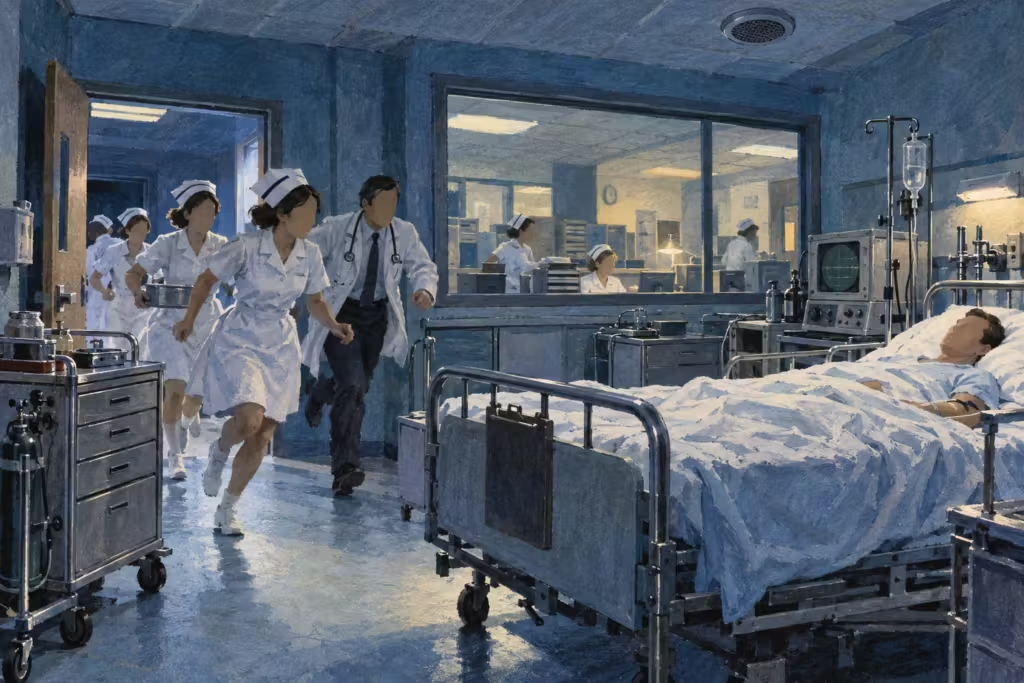
The first thing he remembers is hearing the cardiac arrest alert over the intercom. That alert is called a “Code Blue.” He also remembers everyone running into the room.
He says he would not have known anything was happening if he had not seen all those people come in.
Step 3
During the resuscitation · His heart is not beating · Mr. S.’s account
He says he watches it all from one side, like someone who doesn’t care
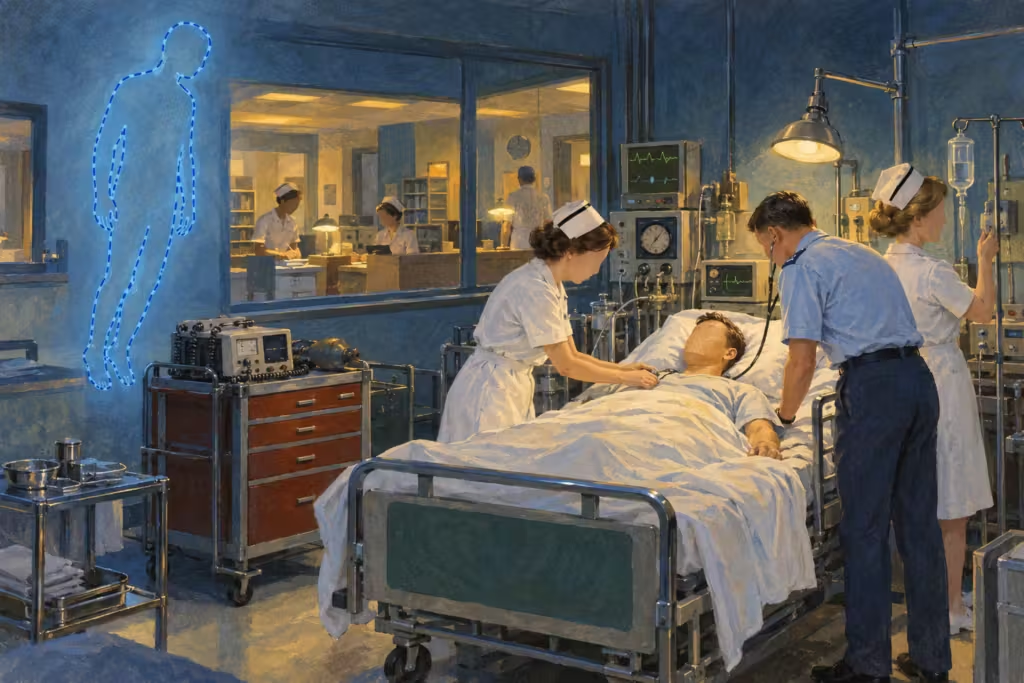
He cannot say where he was watching from. It was as if he were detached, standing off to the side, watching everything going on. He was not taking part. He was like an uninterested observer.
He saw the nurses come in, dressed in white, and Dr. A., the internist. Dr. A. was wearing his Air Force uniform, with dark-blue trousers and a light-blue shirt.
He was not scared and nothing hurt. He knew it was him, but it did not worry him. He thought something like: “Look what they are doing. Very interesting!”
And he watched closely what they did.
Step 4
During the resuscitation · Mr. S.’s account
He says they put a hissing green mask on him and pound on his chest
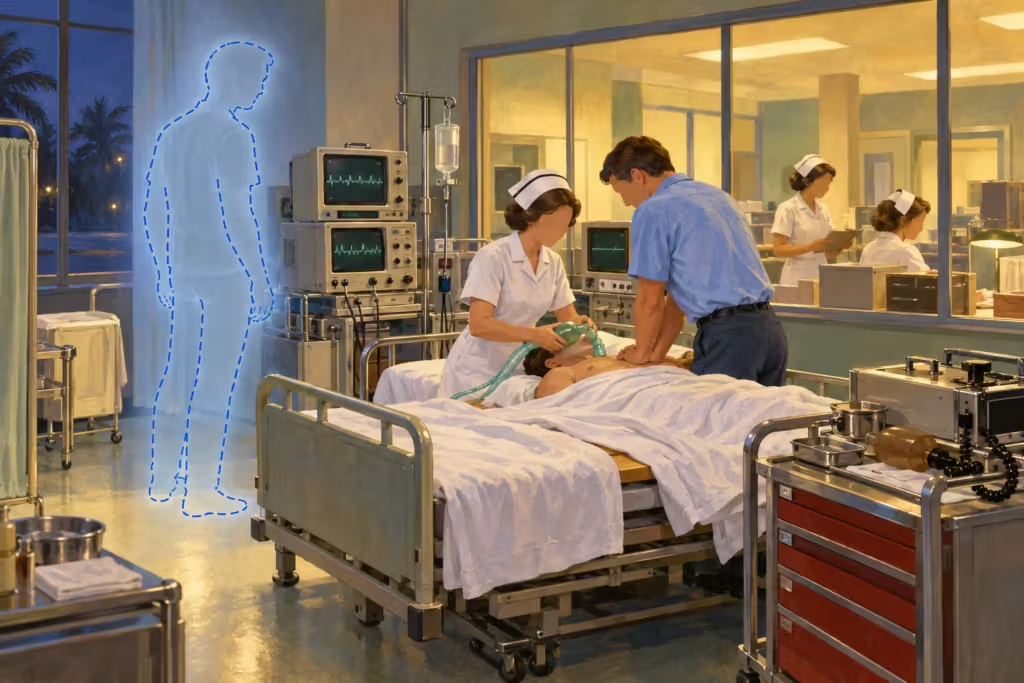
First they gave him an injection into his IV. Then they lifted him and put a wooden board under him. Dr. A. began pounding on his chest. He cracked a rib, but it did not hurt.
They took the small oxygen tube off his nose and put on a mask that covered his mouth and nose. It was soft plastic, light green. The oxygen was hissing, as if under pressure. Someone held it there most of the time.
Then he saw them pull over the cart with the shock machine.
Step 5
During the resuscitation · Mr. S.’s account
He says he sees the shock machine and its meter with two needles
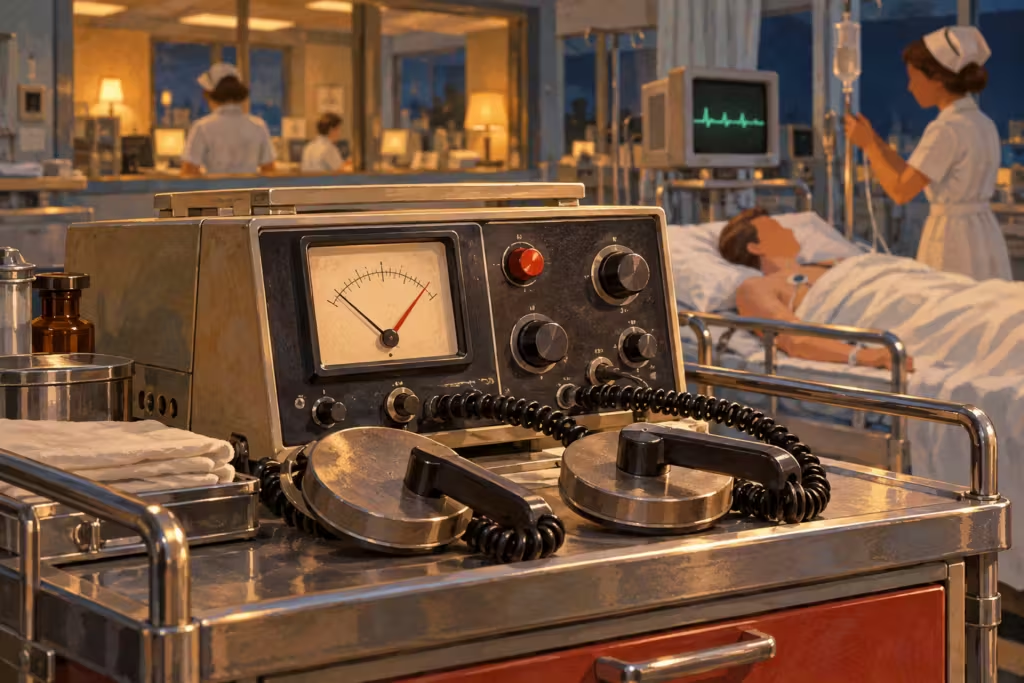
The shock machine is called a defibrillator. The defibrillator sat on a cart with wheels and a little railing. It was full of dials. It had two round paddles with handles, attached to the machine by wires.
He heard them ask for a number of watt-seconds for the shock. And he saw a meter on the front:
“It was square and had two needles on there, one fixed and one which moved. … It seemed to come up rather slowly, really. It didn’t just pop up.”
It seemed to him that they moved the fixed needle before each shock, and that it then stayed still while the other one came up.
This is the detail that struck Sabom most.
Step 6
During the resuscitation · Mr. S.’s account
He says they give him three shocks and the needle rises higher each time
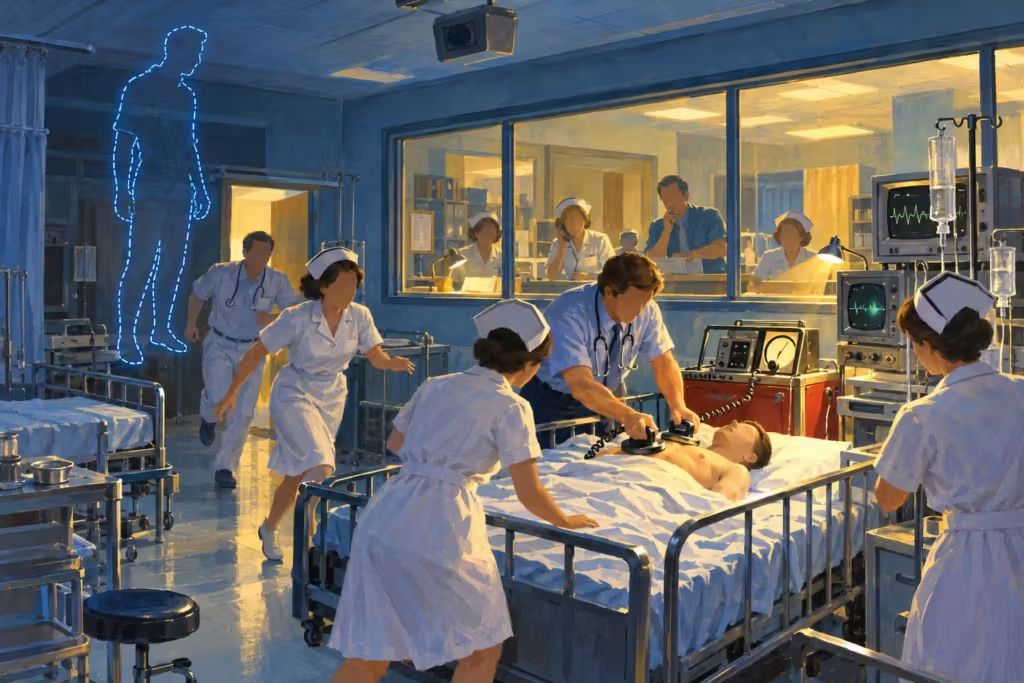
They put the paddles on his chest and pressed some buttons on the handles. He saw his body jolt, but it did not hurt the way a shock should.
They gave him three shocks, with blows to his chest in between. The moving needle rose higher each time. The first time, it reached between a third and half of the scale. The second time, it reached a little over half. The third time, it reached about three quarters.
He also saw people watching from outside, through a big window between the unit and the nurses’ station.
After the third shock he began to realize he was coming round.
Step 7
Coming round · Mr. S.’s account
He comes round and sees everything from the bed, looking up
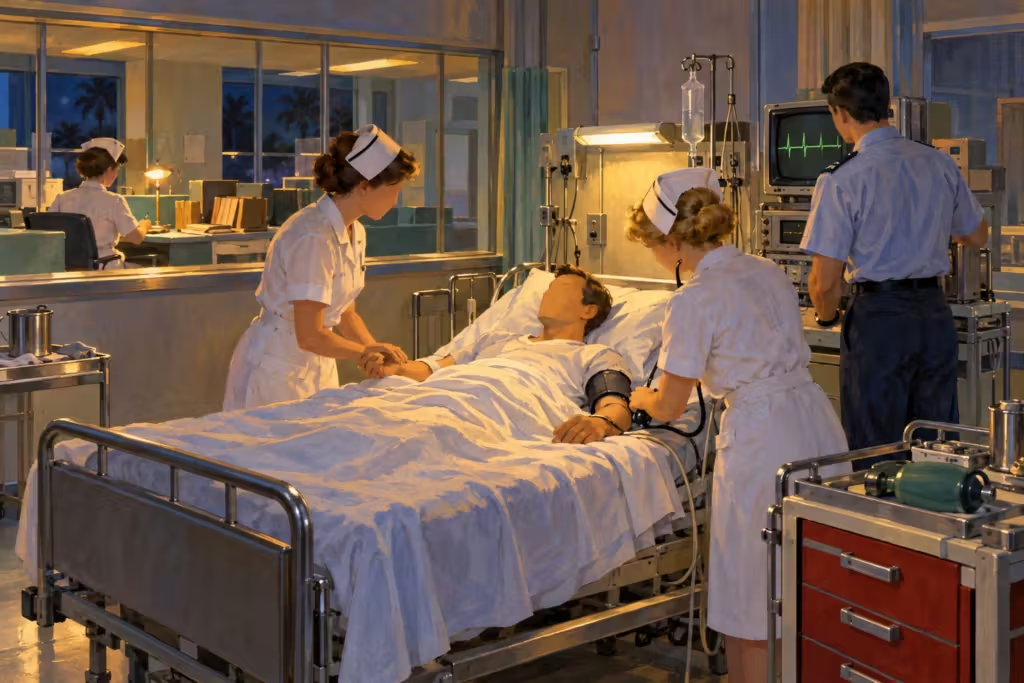
When he came round, all those people were still there. They were checking his pulse and blood pressure and looking at the monitor.
Now he was looking up from the bed. During the resuscitation it had been different. He cannot say where he had been watching from then, but it was like being in an amphitheater, at the foot of the bed or to one side.
Five years went by before he told Sabom.
Step 8
May 1978 · Five years later · Michael Sabom’s account
Five years later he tells Sabom, without making much of it
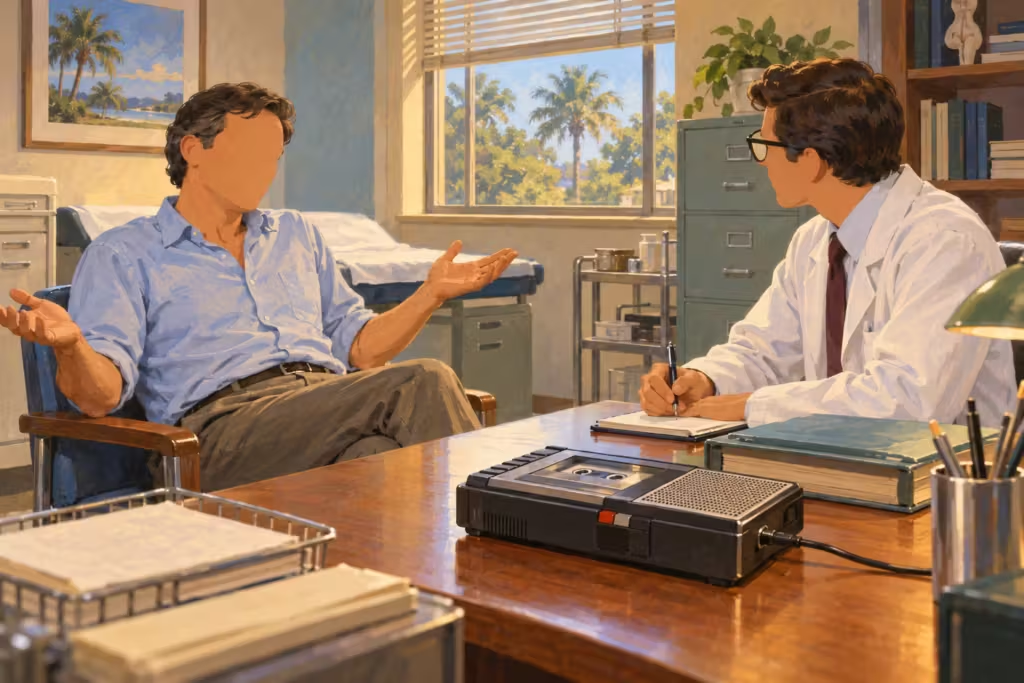
In May 1978, Mr. S. was 44. Sabom interviewed him and recorded the interview. He was one of the patients Sabom asked without knowing beforehand whether they had had such an experience.
Sabom asked whether he had ever seen a resuscitation, in person or on television. Mr. S. said no. He also said he had never seen a defibrillator working.
He used medical words, like “lidocaine” or “watt-seconds.” He explained that he had heard them from the doctors during the resuscitation.
Mr. S. did not think his experience was anything special. This is what he told Sabom:
“It’s like a dream. … Really the only explanation I can have is that the brain still functions even though it is partially dead, or starved from oxygen. … It hasn’t changed my thinking about life, death, the hereafter or anything else.”
Sabom then looked for his medical record.
Step 9
After the interview · Michael Sabom’s account
The medical record confirms the arrest and the shock, but nothing more
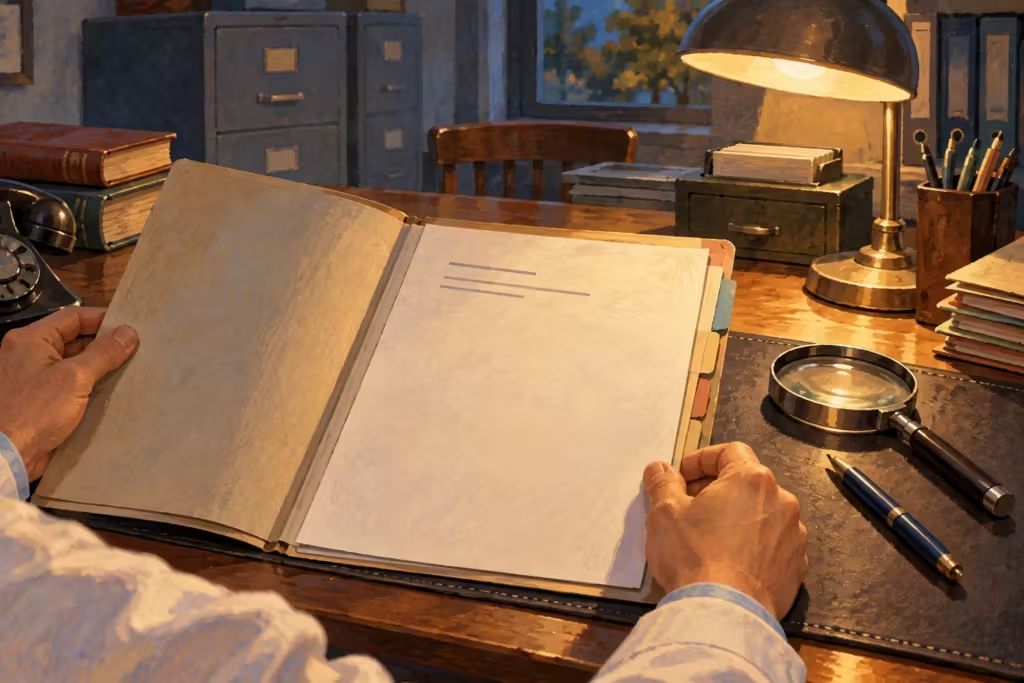
The medical record says that Mr. S. had a cardiac arrest in the coronary care unit in the early morning of his second day in hospital. It also says that he was successfully defibrillated.
It says nothing more about the resuscitation. It does not say how many shocks there were, which machine was used, or whether he was given a mask.
The detail of the needles could not be compared with any document.
Step 10
1982 · Michael Sabom’s account
Sabom explains what the two needles were for
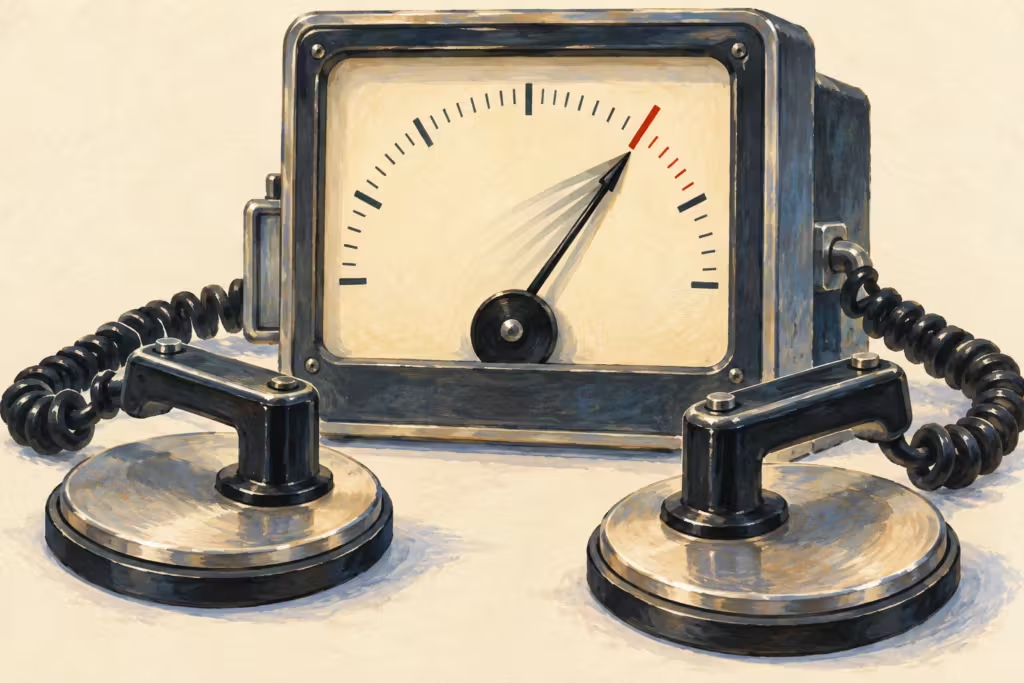
Sabom published the case in 1982. As a cardiologist, he explains what the two needles were for:
- The fixed needle was used to choose how much electricity would be delivered.
- The moving needle rose while the machine charged, until it reached the other one.
- The machine is only charged right before the shock, because once charged it is dangerous.
- Those meters were common in 1973, but were no longer found on the newer machines of 1982.
For Sabom, Mr. S. could not have known how those needles moved unless he had seen the machine working. And he believes Mr. S. had no reason to lie, because he himself played down what he had been through.
In 1993, the psychologist Susan Blackmore replied that Mr. S. may have picked up those details later, without realizing it.
What can be checked today about the needles Mr. S. says he saw?
Where this story comes from
Books
- Michael Sabom, Recollections of Death (Harper & Row, 1982), chapter 7 (case 4)Buy the book
- Susan Blackmore, Dying to Live (1993)Read our page
Case documents
- Mr. S.’s medical record, as summarized by Sabom in his book (1982)
Studies
- Michael Sabom’s study: 116 people and 25 who imagined a resuscitationRead
To understand more
Keep reading
California, 1997
Lucky Pettersen
At 4, Lucky came out of a coma and said his friend Big Gino had walked him back from heaven. Two weeks later, his family learned that Big Gino had died.
United States, 1978
Mr. M.
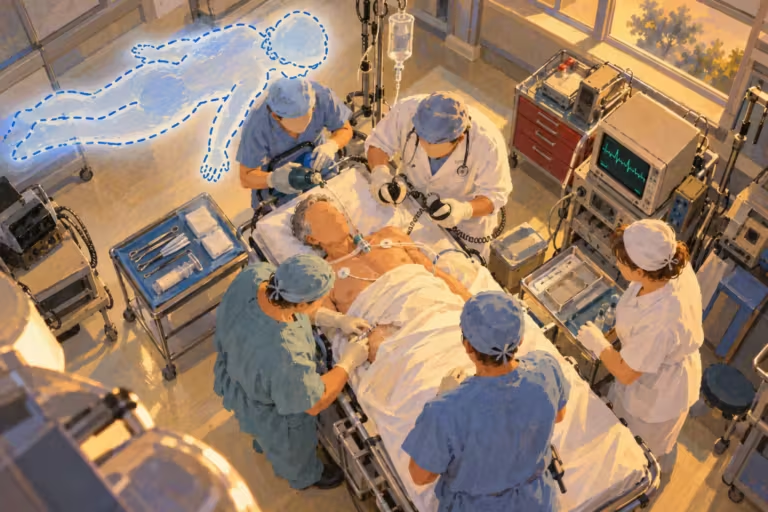
He was resuscitated in the ER. He said he saw them put a needle into his groin. The medical record confirms that blood was taken from his groin, but on the opposite side from the one he named.
AWARE study, 2014
The blue-cap patient
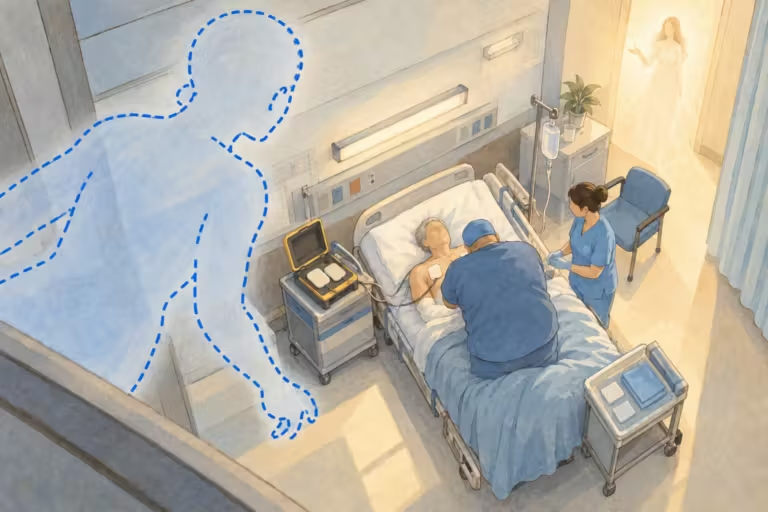
He was resuscitated after a cardiac arrest in a hospital taking part in a study. He said he saw himself from the ceiling during the resuscitation, heard the defibrillator’s voice, and saw a man in a blue cap. His medical records confirm part of what he said.

Reincarnation: The top 5 people who remember past lives
We asked them the same five questions as this story. A 32-page PDF, free in your inbox.
Check your email
We have sent you an email. Open it and press the button to confirm. If you cannot see it, check your spam folder.