A real-life story · United States, 1978
The near-death experience of Mr. M.
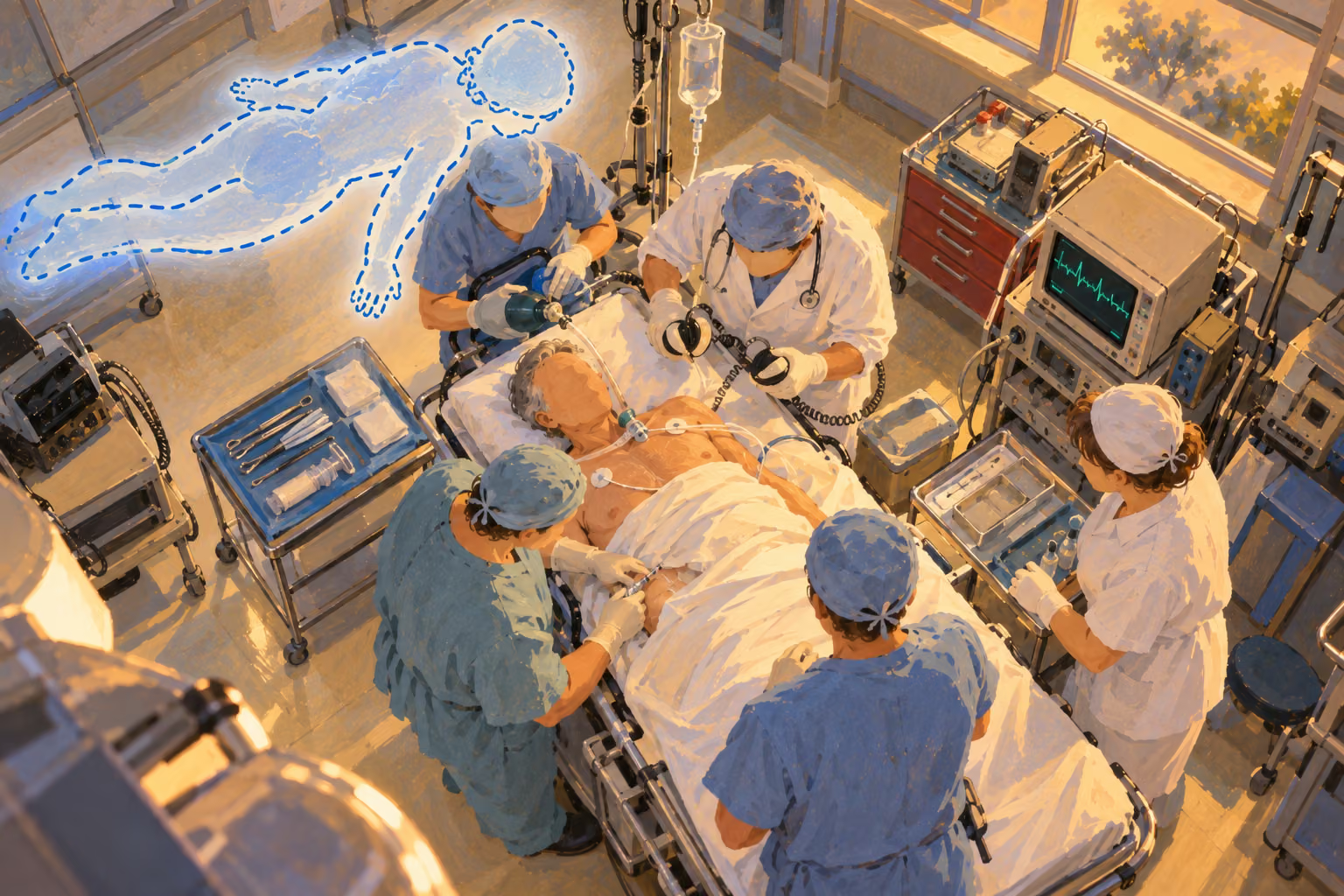
In 1978, a retired mechanic from Florida had a cardiac arrest in the emergency room, and the doctors resuscitated him. He later said he had watched his resuscitation from just above their heads. He also said they gave him a shot in the groin.
The cardiologist Michael Sabom calls him Mr. M. to keep his name private. Sabom found his medical record and saw that blood was taken from an artery in his groin during the resuscitation. But Mr. M. said it was on the right side, and the lab slip says it was on the left. We tell it step by step and then look at what could be checked. If you only want the evidence, skip straight to what can be checked.
Step 1
1978, in the afternoon · In a small town in northern Florida · Mr. M.’s account
A retired mechanic arrives at the emergency room with chest pain
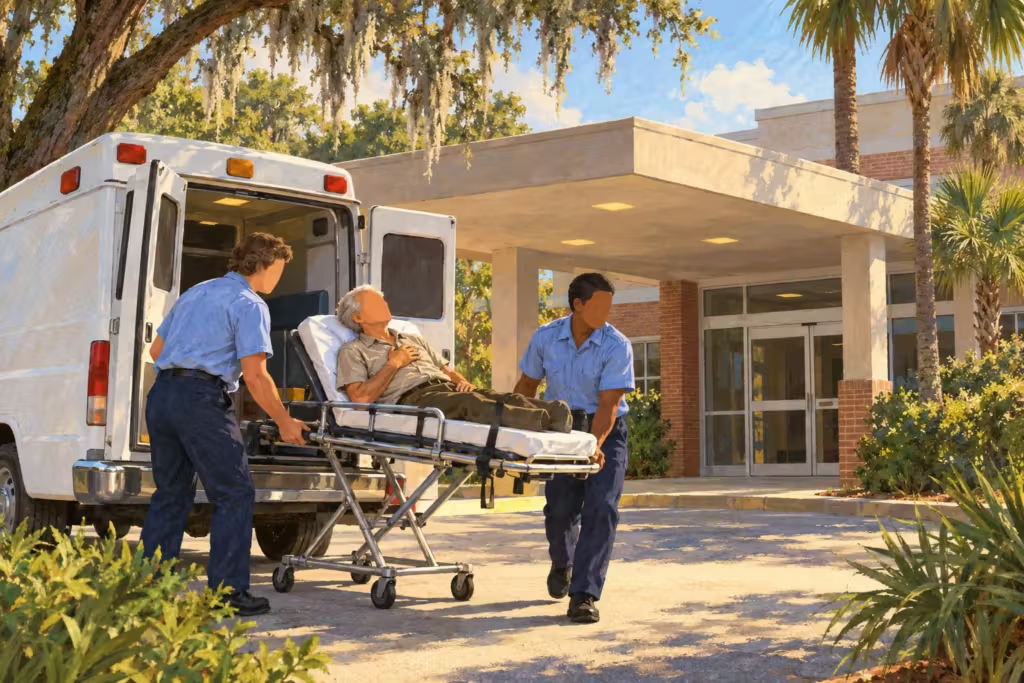
Mr. M. was 60 and a retired mechanic. He lived in a small town in northern Florida. One afternoon in 1978 he had a bad pain in his chest, and an ambulance took him to the emergency room.
The medical record shows that he arrived at 4:25 p.m. He was awake and anxious, and complaining of the pain.
In the emergency room they took his clothes off and put him on the table. This is how he remembers it: “That’s when I really had the heart attack.”
The cardiologist Michael Sabom studied his case. On the page about his book we explain how Sabom worked and the limits of his study.
Step 2
Shortly after 4:50 p.m. · His heart stops · From the medical record
At 4:50 they give him morphine, and soon after his heart stops
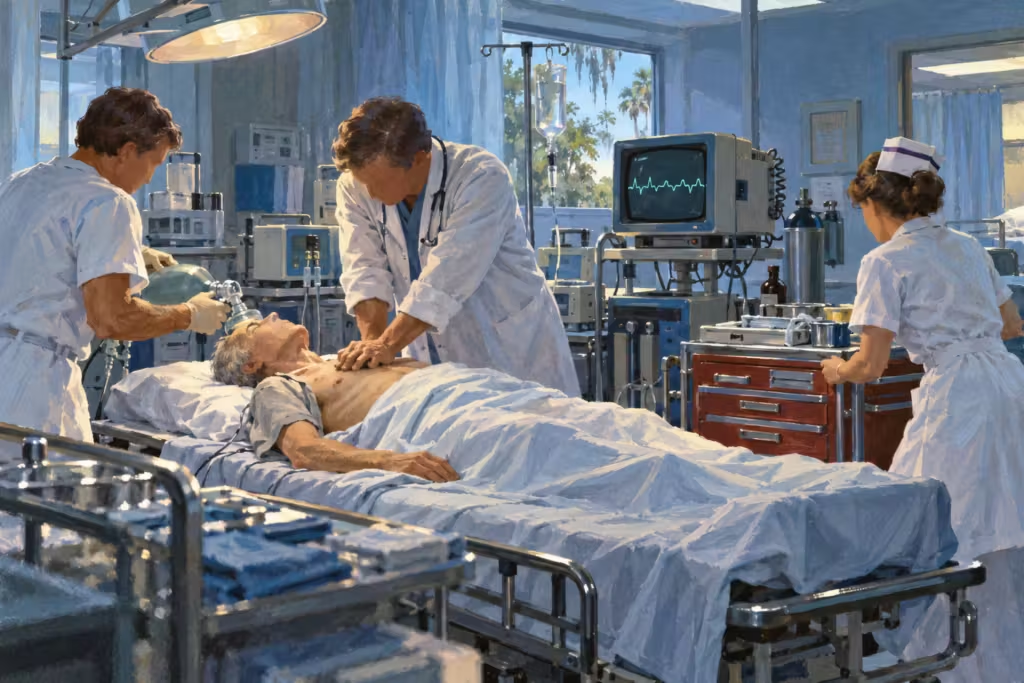
At 4:50 p.m. they gave him morphine for the pain. The electrocardiogram was normal.
Shortly after, his heart stopped beating in rhythm. The medical record calls it ventricular fibrillation. In ventricular fibrillation, the heart quivers and does not pump blood.
The doctors began a full resuscitation. They gave him shocks to get his heart beating properly again.
At 5:15 p.m., another electrocardiogram already showed his heart beating, though fast.
Step 3
During the resuscitation · His heart is not beating properly · Mr. M.’s account
He says he rises above their heads and watches them resuscitate him
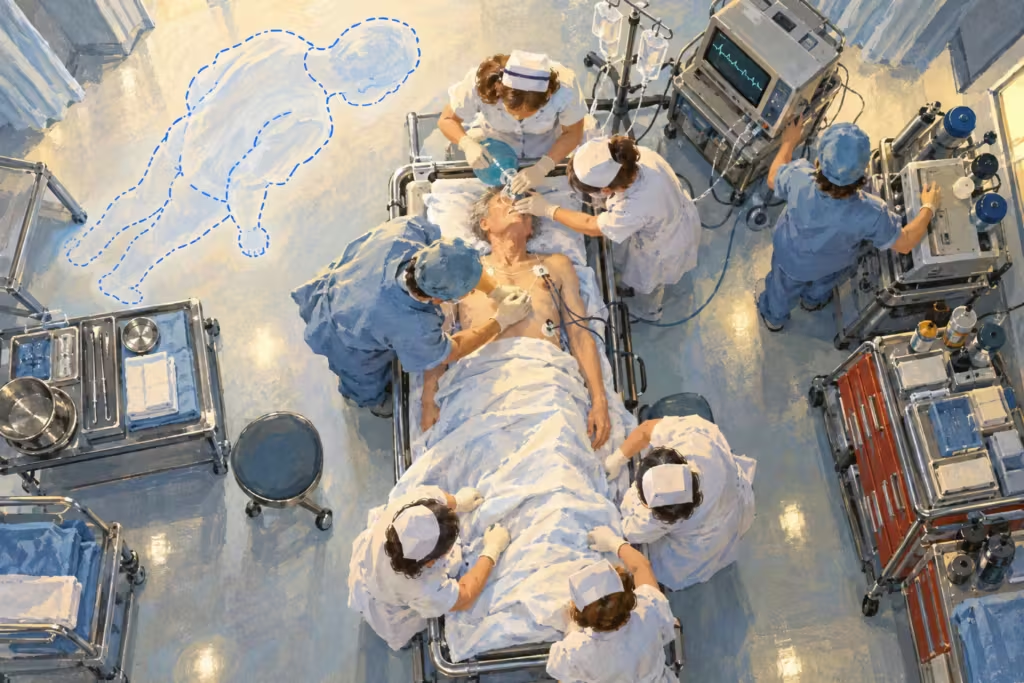
All of a sudden it seemed to him that he moved up. He got up, just like getting out of bed. The room seemed to be in a glow, and he did not know where the light was coming from.
He was looking down and saw the doctors working on a body. At first he did not realize it was his. Then he saw it was him they were working on.
He felt no pain at all. It was a very peaceful feeling.
He was just above their heads. He could see that most of them had their heads covered. There were two nurses at his head, two at his feet and others at a machine. He reckons there were five or six people.
Then he saw something he would later describe to Sabom in detail.
Step 4
During the resuscitation · Mr. M.’s account
He says they give him a shot in the groin, on the right side
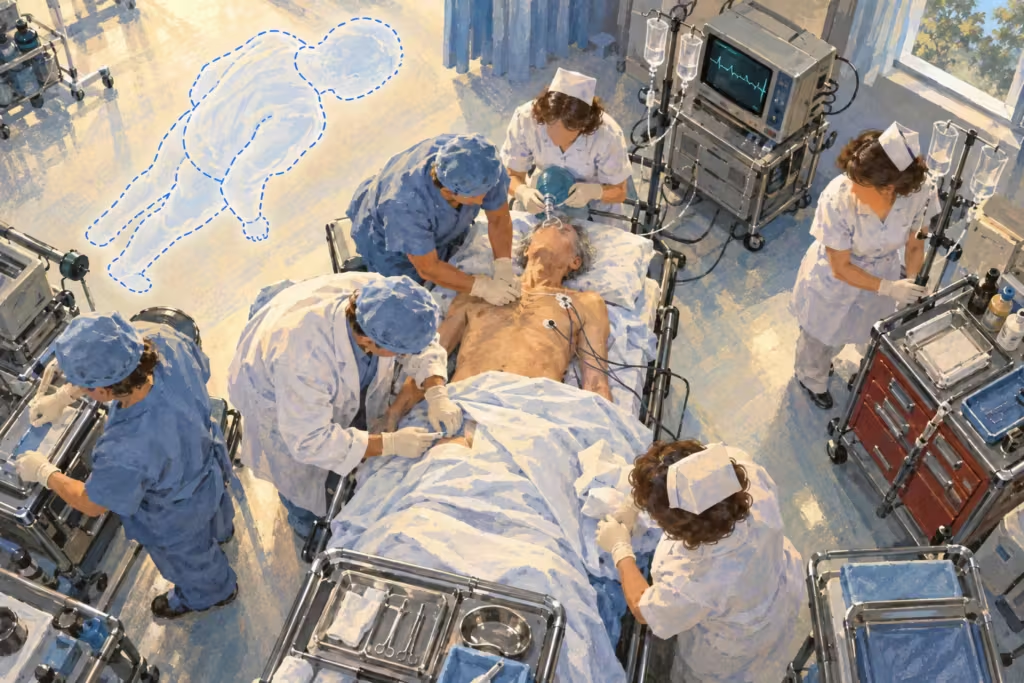
Before the shocks, he saw them put a needle into his groin. This is what he said:
“They gave me those shots first in the groin down there somewhere. It appeared to me they were putting a shot in there. My right side.”
Mr. M. thought it was an injection. And he said clearly that it was on the right side.
The injection and the right side can be compared with the medical record.
Step 5
During the resuscitation · Mr. M.’s account
He says a doctor tries to put a needle under one arm and switches sides
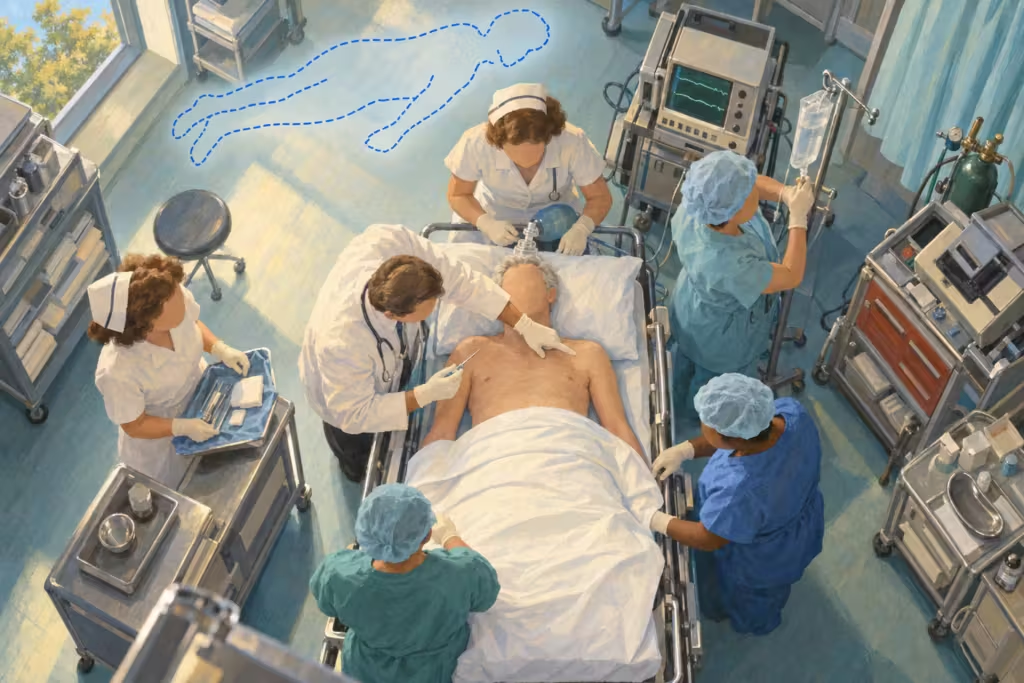
He saw a doctor, Dr. B., come up with a needle. First he started under the right armpit. Then he changed his mind and went to the other side, between the breast and the armpit, near the heart.
Sabom asked him whether they took blood there. Mr. M. said no, that it looked to him like another shot.
This detail is not in the medical record.
Step 6
During the resuscitation · Mr. M.’s account
He says he sees the paddles with lubricant and his body jumping with each shock
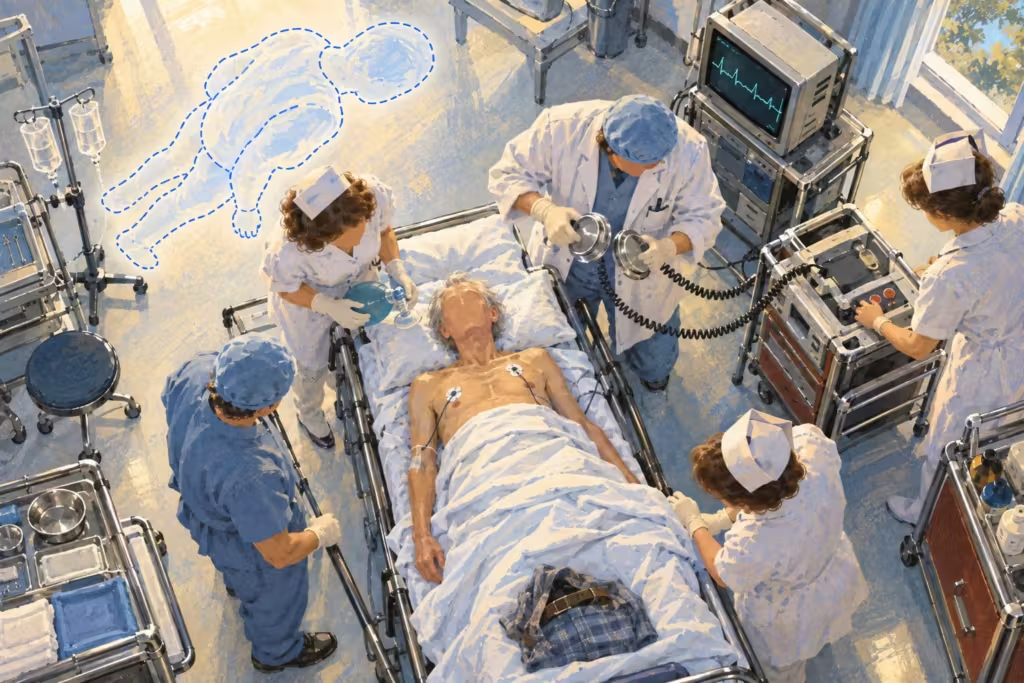
He saw them put something like a lubricant on the paddles. They rubbed them together and put them on his chest. Then his body jumped.
He reckons they gave him five or six shocks. He felt none of them. He saw the monitor to the right of the foot of the table. On the monitor, the line jumped a little and then stopped.
He also saw his clothes. First they put them between his legs, and later they moved them.
After one of the shocks, he was back in his body. He felt sore.
When he woke up in intensive care, he had burn marks all over his chest.
Step 7
The next day · In intensive care · Mr. M. and his wife’s account
The next day he tells his wife and daughter
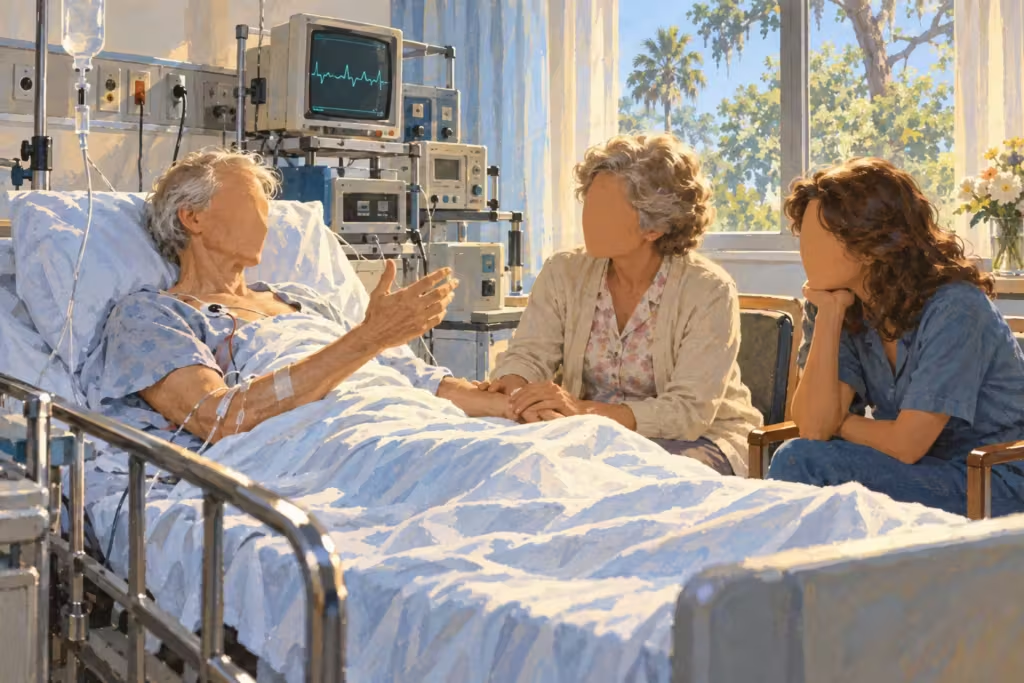
The day after the arrest, Mr. M. talked with his wife and his daughter. He told them the details of what he had seen during his resuscitation. He stressed how calm and peaceful he had felt.
His wife confirmed this later, when Sabom interviewed her separately. She also said her husband rarely tells the story, but when he does, he always tells it the same way.
No one wrote down which details he told them that day. It is not known whether he mentioned the groin.
Step 8
Days later · Mr. M.’s account
He says the doctor told him he was right, and that he couldn’t have seen it
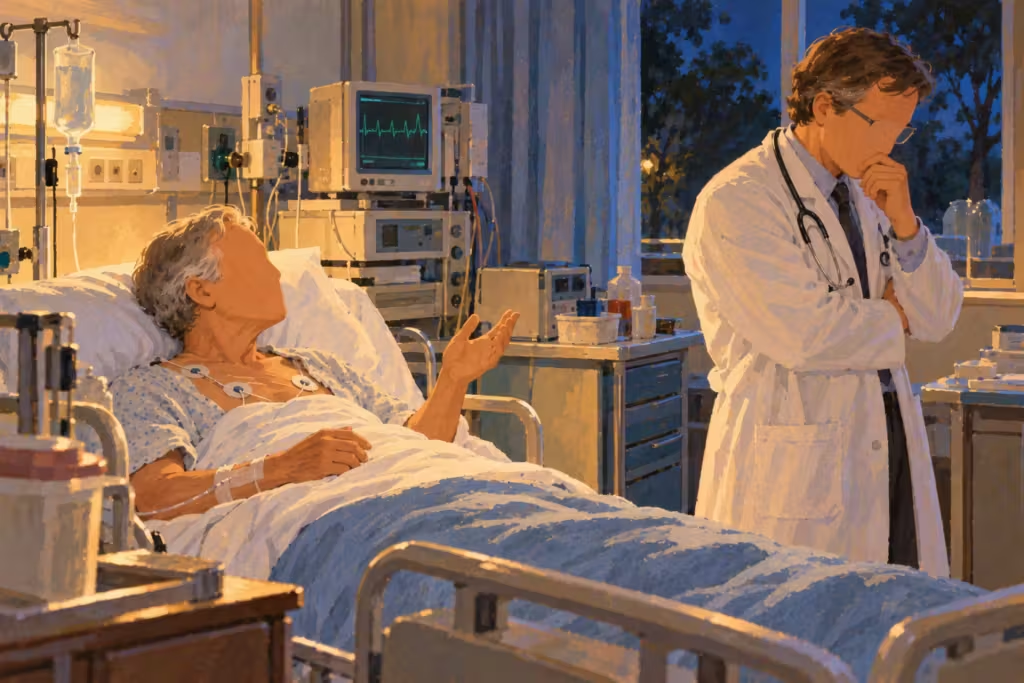
When Dr. B. came to see him, he told him he had had a close call and had died. Mr. M. answered that he could not have died, because he knew everything that went on.
He told him about the needle under his right armpit and the switch of sides. This is how he remembers the doctor’s answer:
“He said it was impossible and that I couldn’t have possibly seen that. … And I asked, ‘Am I right?’ He said, ‘Yes, you’re right!’ He just shook his head and went walking off.”
Only Mr. M. says this. More than two years later, Sabom spoke with the doctor, and the doctor no longer remembered that resuscitation.
Step 9
March 1979 · A year later · Michael Sabom’s account
A year later, Mr. M. tells Sabom, and he records it
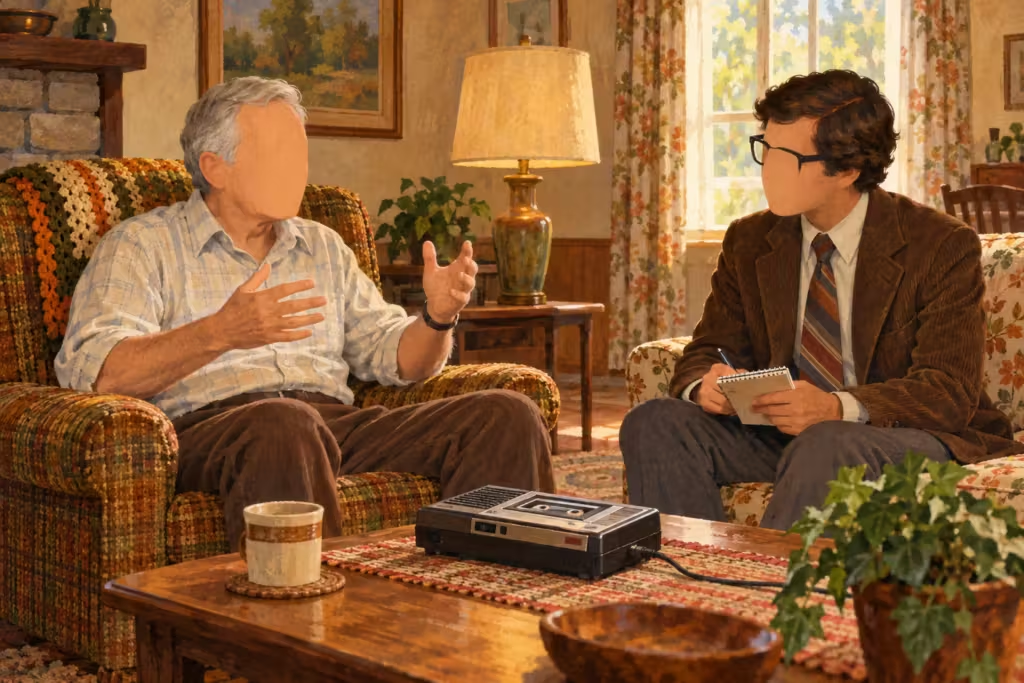
In March 1979, Mr. M. was 62. Sabom interviewed him and recorded the interview. Mr. M. was not one of the patients Sabom asked without knowing anything. He came to Sabom because he was already telling of his experience.
Sabom asked him specific questions. Mr. M. told him he never fully lost consciousness and that he heard the doctors giving orders. He also said he felt nothing, not even the shocks.
At the end, Sabom asked him what he thought had happened to him. This was his answer:
“Dr. Sabom, I think it’s God’s work. … From this experience, I know there is a life after death and not just death itself.”
Afterwards, Sabom looked for the medical record from that afternoon.
Step 10
After the interview · Michael Sabom’s account
The medical record confirms blood taken from the groin, but on the left side
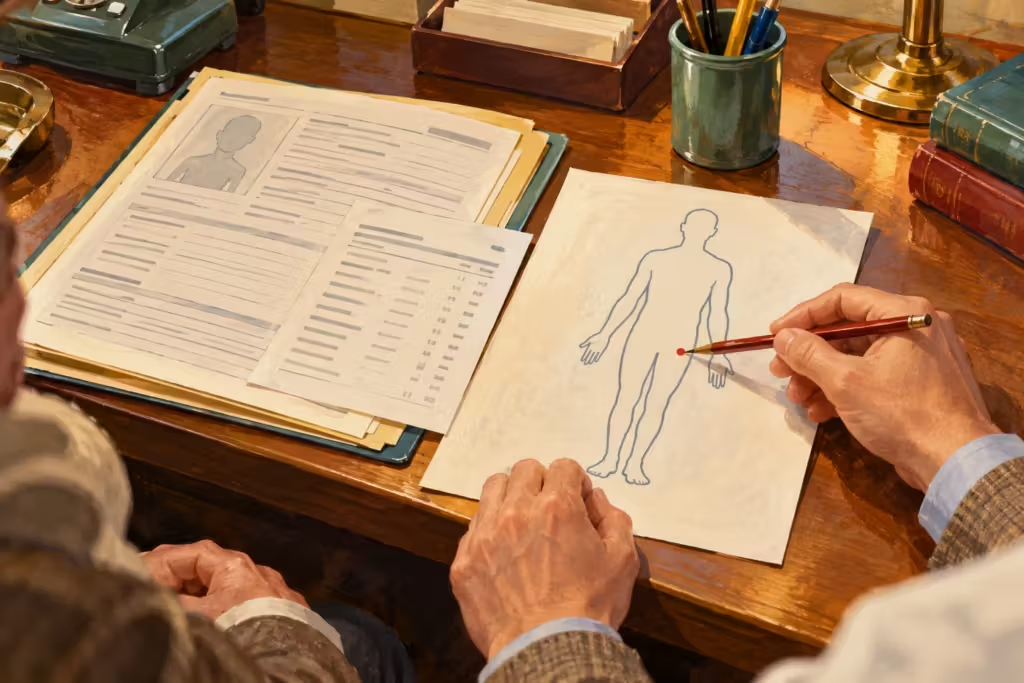
Sabom copied the medical record into his book. That record says that blood was drawn from an artery during the resuscitation and sent to the laboratory. It is a test to measure the oxygen in the blood.
This could be checked. The lab slip says that blood came from the artery in the groin. But it says “LF,” which means the left groin. Mr. M. had said the right.
The medical record also confirms the resuscitation and the shocks. It does not say how many shocks there were. And it does not mention the needle under the arm.
Sabom had two things to explain, the shot and the side.
Step 11
1982 · Michael Sabom’s account
Sabom thinks it is the mistake of someone who saw it from a distance
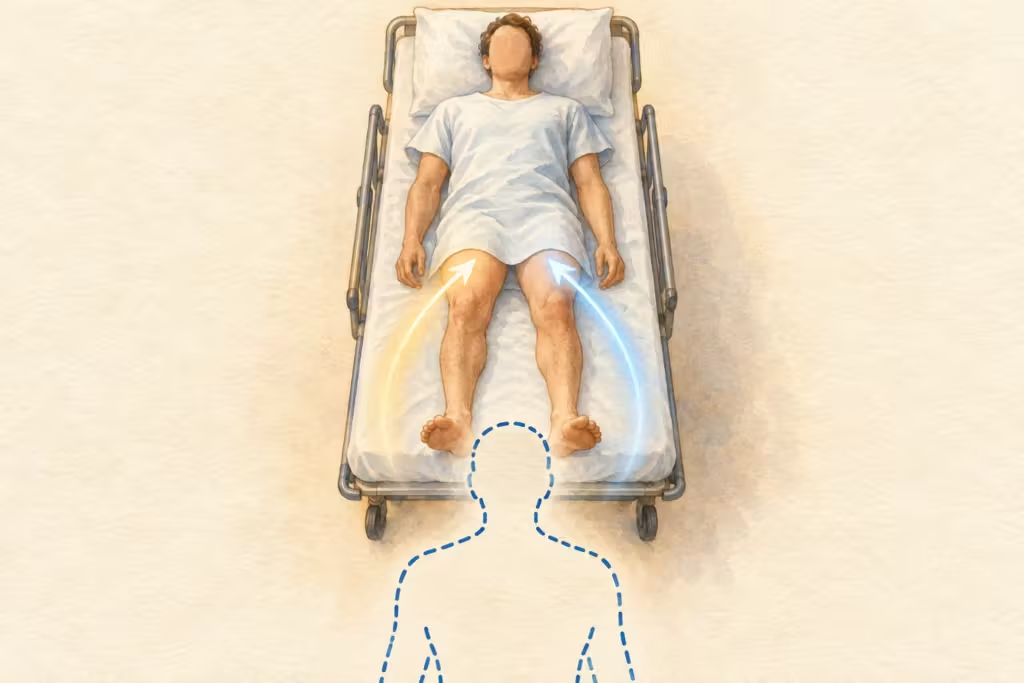
Sabom published the case in 1982. Sabom writes that it was not a shot: blood was being drawn. For Sabom, someone who only hears it would not make that mistake. Someone who sees it from a distance would. A small needle in the groin looks like a shot.
About the side, Sabom suggests two explanations. It could be a mistake on the lab slip or a mix-up by Mr. M. If he was looking from the foot of the table, the body’s right side would be on his left. In the interview, Mr. M. got the side wrong once more and then corrected himself.
Sabom thinks the needle under the arm was an attempt to reach a large vein under the collarbone. Doctors often try this first on one side and then on the other. That is Sabom’s deduction, because it is not in the medical record.
In 1993, the psychologist Susan Blackmore replied that Mr. M. may have felt the needle in his groin.
What can be checked today about the needle Mr. M. says he saw?
How many people have an NDE?
Mr. M. is not a unique case. For more than thirty years, several teams of doctors have asked people who survive a cardiac arrest what they remember. They do it in hospital, a few days later.
Picture 100 of those people:
Each dot is a person. The 18 filled dots are those who described a near-death experience. That is what the largest study found: 344 people in the Netherlands, in 2001.
The other 82 described none. Many remember nothing of the arrest.
| Where and when | People interviewed | Described an NDE |
|---|---|---|
| United States, 1982 (Sabom) | 78 | 43% |
| England, 2001 | 63 | 6% |
| Netherlands, 2001 | 344 | 18% |
| United States, 2002 | 30 | 23% |
| United States, 2003 | 116 | 10% |
| United Kingdom, United States and Austria, 2014 | 101 | 9% |
What these figures don’t tell
- Sabom did not only ask after cardiac arrests. Of his 78 survivors, 66 had had a cardiac arrest. The others had been in a coma or had an accident. So his figure cannot be fully compared with the others.
- Only some people are asked. In the 2014 study, 330 people survived, but only 140 could be interviewed, and 101 reached the second interview. The others died later, were too ill or did not respond.
- Most arrests are left out. These studies are done in a few hospitals for a limited time. Outside them, nobody keeps count.
- It depends on how you count. If any memory of the arrest counts, there are more NDEs. With a strict scale, there are fewer.
So no one knows the real figure. What all the studies say is that it is not rare. Mr. M.’s case stands out for its medical record. That record confirms the procedure he says he saw, though it does not confirm the side.
Where this story comes from
Books
- Michael Sabom, Recollections of Death (Harper & Row, 1982), chapter 7 (case 5) and chapter 10Buy the book
- Susan Blackmore, Dying to Live (1993)Read our page
Case documents
- Mr. M.’s medical record and lab slip, as copied by Sabom in his book (1982)
Studies
- Michael Sabom’s study: 116 people and 25 who imagined a resuscitationRead
- Van Lommel and others (2001), ten hospitals in the Netherlands, The Lancet 358:2039-2045View in the journal (free with registration)
To understand more
- Mr. S.: the needles on the shock machine, another of Sabom’s casesRead
- Mr. O.: the family in the corridor, another of Sabom’s casesRead
Our archive
- The testimonies in the portalecm archive
Keep reading
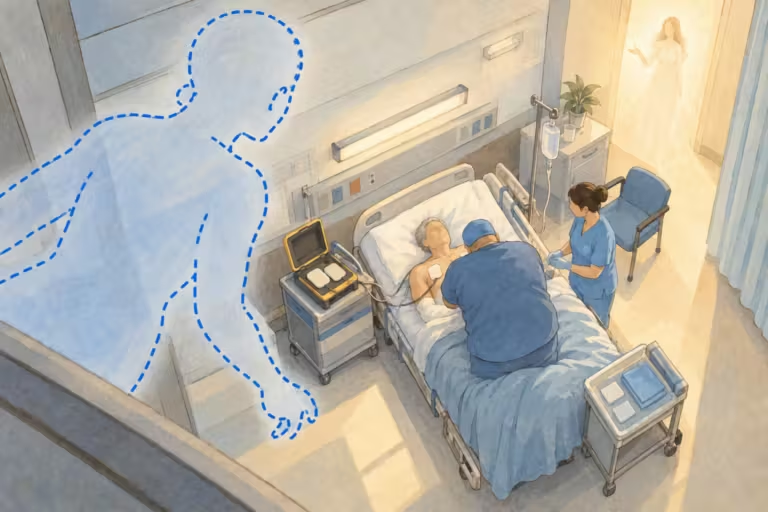
AWARE study, 2014
The blue-cap patient
He was resuscitated after a cardiac arrest in a hospital taking part in a study. He said he saw himself from the ceiling during the resuscitation, heard the defibrillator’s voice, and saw a man in a blue cap. His medical records confirm part of what he said.
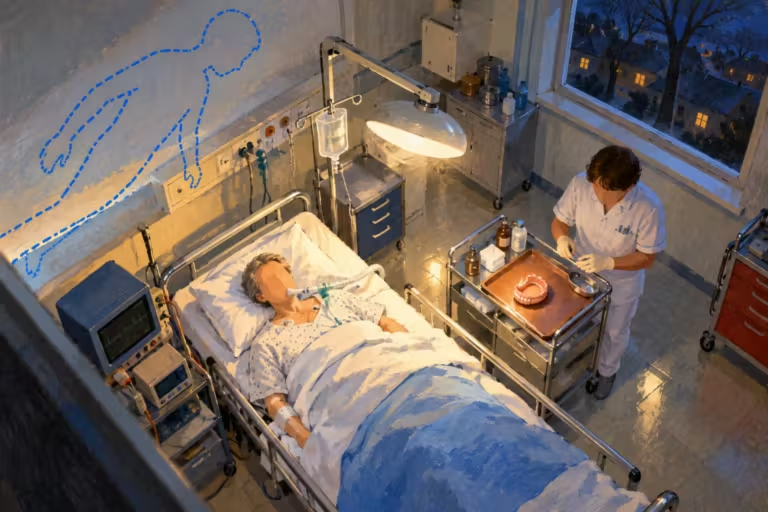
The Netherlands, 1979
The man with the dentures
A man arrived ice-cold and with no pulse at a hospital. A nurse took out his dentures to resuscitate him. According to the nurse, more than a week later the man told him where he had left them.

Hartford, 1985
The red shoe patient
In 1985, a woman resuscitated in a Hartford hospital said she saw a red shoe from above the roof. According to the nurse, a skeptical doctor went up and found it.

Reincarnation: The top 5 people who remember past lives
We asked them the same five questions as this story. A 32-page PDF, free in your inbox.
Check your email
We have sent you an email. Open it and press the button to confirm. If you cannot see it, check your spam folder.