
A study · Iceland, published in 2009
337 encounters with the dead in Iceland: the Haraldsson study (2009)
Icelandic psychologist Erlendur Haraldsson interviewed hundreds of people between 1980 and 1986. All of them said they had seen, heard, or felt someone who had died. He checked the national records to find out who the dead were and what they died of. Many had died violently. And some encounters came close to the time of death.
The question is: what are the encounters with the dead that people describe like, and what can be checked about them? Haraldsson believed these encounters support the idea that something survives death. We go through it step by step. If you only want to know what he found, skip to the results.
Step 1
Iceland, 1980 · The question
A psychologist wants to know what encounters with the dead are like

In 1974, a survey in Iceland questioned 902 people chosen at random. Almost a third said they had at some point had an encounter with someone who had died.
Erlendur Haraldsson, a psychologist at the University of Iceland, wanted to know more. He wanted to know what those encounters were like, who the dead were, and what they had died of.
For that he needed many cases, described in detail.
Step 2
1980 and 1981 · According to the study
He asks for cases in five magazines, and about 700 people reply

Haraldsson placed a one-page questionnaire in five magazines. Two were for fishermen and sailors, two were about spiritualism and spirituality, and one was widely read in the countryside.
The questionnaire asked whether they had ever seen, heard, or felt a person who had died while they were awake. About 700 people answered yes.
- He left out dreams and anything that happened in sessions with mediums.
- If a person had had several encounters, he asked them to describe the one that impressed them most. The others weren’t studied.
Next, someone had to talk to each person.
Step 3
1980 to 1986 · The interviews
He interviews each person by phone and records the conversation
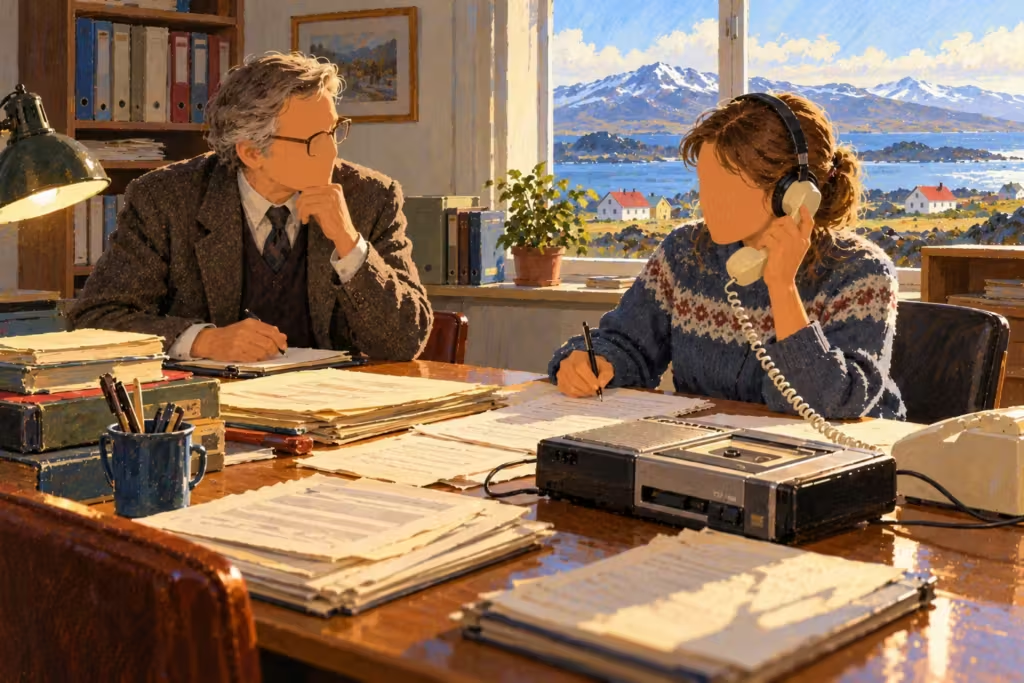
Haraldsson and his assistants called people in the order their questionnaires arrived, until the money ran out. They recorded every interview.
First, each person described what they had experienced in their own words. Then they answered 86 questions. For example, who the dead person was, what they died of, how they were related, and whether the person interviewed was grieving.
In the end there were 337 cases. 30 of them came from the 1974 random survey.
Haraldsson checked some things, but not everything.
Step 4
The checks · According to the study
He checks the national records for who each dead person was and what they died of
Iceland keeps national records of its whole population. Haraldsson used them to check three things:
- That the dead person existed, with their name and their years of birth and death.
- What they died of.
- Whether anyone else experienced it at the same time. When the person interviewed said someone else had noticed it too, the team found that person and interviewed them.
Everything else was accepted as people told it. The records gave the year of death, not the day or the time.
So the time of each encounter always comes from the memory of the person who had it.
Step 5
The results · What the encounters were like
Most people see the dead person, while awake and not grieving
These are the features of the 337 encounters:
- Almost seven in ten saw the dead person. Almost three in ten heard them. Some felt a touch, or noticed a smell.
- Half were active or working. Almost three in ten were falling asleep or waking up.
- Only one in five was grieving.
- In three cases out of ten, the dead person was a stranger. Some were identified later.
What struck Haraldsson most was how they had died.
Step 6
The results · Violent deaths
Three in ten of the dead had died violently

For 267 of the dead, we know what they died of. Three in ten died violently: in an accident, by suicide, or by murder.
In Iceland, fewer than one death in ten was violent between 1951 and 1970.
- The more distant the relationship with the dead person, the more violent deaths there were. Among relatives, almost two in ten had died violently. Among strangers, six in ten had.
- The cases from the random survey gave almost the same result, three in ten.
Haraldsson thought that a violent death makes it more likely that someone will perceive the dead person.
Step 7
The results · Close to the time of death
Some encounters come close to the time of death, before anyone knew the person had died
In some cases the time of death is known. In those cases, 14% of the encounters came within 24 hours before or after the death. Half of those encounters came within the same hour as the death.
In almost all of those cases, the person who had the encounter didn’t know that the other person had died or was dying.
Overall, in one case in five, the person who had the encounter didn’t yet know that the other person had died.
These are the study’s shared-death cases.
Step 8
The results · The second witnesses
Of 30 people who experienced it at the same time, 21 confirm it
39 of the people interviewed said someone else had noticed the same thing. Seven of those people had died, and two couldn’t be found. The team interviewed the other 30.
- 21 confirmed the account.
- Three didn’t remember it or didn’t want to talk.
- In six cases, it wasn’t clear whether they were confirming the same thing.
Two cases with a second witness are the strongest in the study.
Step 9
October 1962 · Jacob’s case
A woman sees a patient in her doorway at night, and in the morning she learns he has died
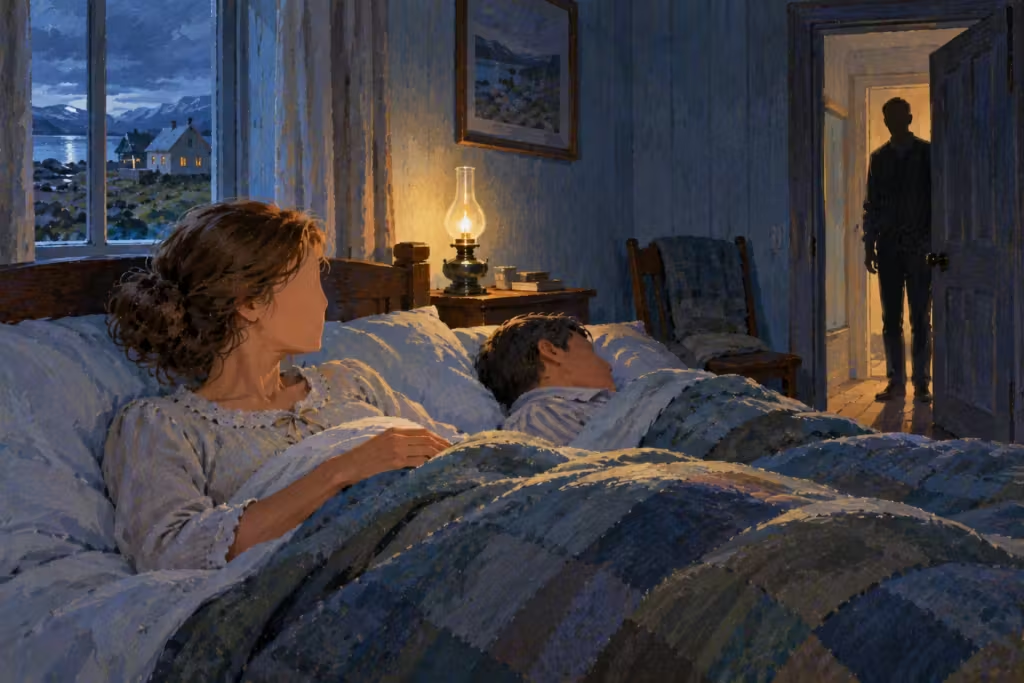
A woman worked at a sanatorium. One of the patients, Jacob, was sometimes depressed. That day, she invited him to her home, and he promised to come.
That night, she woke up unable to move and saw Jacob in the bedroom doorway, his face covered with blood. She woke her husband and told him. In the morning she called the sanatorium. There she was told that Jacob had taken his own life that night.
The husband confirmed that she told him in the middle of the night. In 2002, the team found the police report and the autopsy.
It is the only case in the study with documents from the time. The full story is on its own page.
Step 10
Date unknown · Margret’s case
A man senses a woman at night who tells him her name
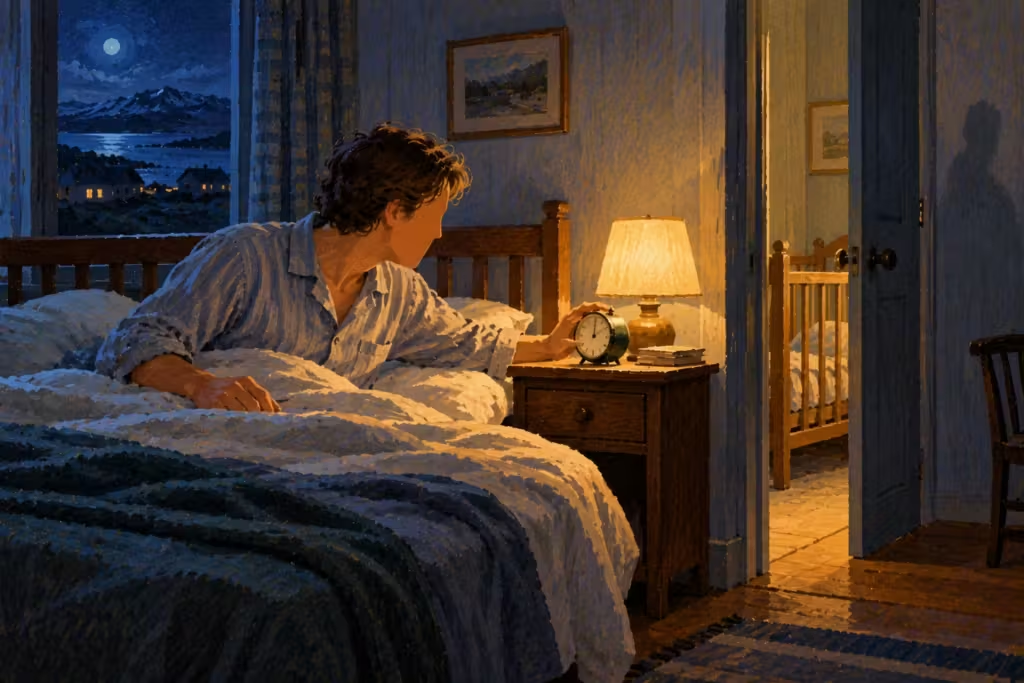
A man was fostering a little girl of two and a half. One night he woke up and felt as if a woman were standing beside the bed. She said to him: “My name is Margret.” Then she left through the door. He looked at the clock. It was exactly three thirty.
That day or the next, he learned that the girl’s grandmother had died of a heart attack in another part of the country. She had died at that same minute. Her name was Margret. He says he had never seen her and isn’t sure he even remembered her name.
His wife confirmed that he told her about it the next morning, before they knew anything about the death.
The time of death comes from what he says. The records only give the year. The full story is on its own page.
Step 11
What can’t be concluded
The study only collects the encounters that matched something
The study has limits that come from the way it was done:
- It only collects hits. It asked about encounters with the dead. If someone sees a living person and nothing happens, that doesn’t make it into the study. Without those cases, there is no way to work out how many matches chance alone would produce.
- Each person described the encounter that impressed them most. The most impressive ones tend to be those involving violent deaths or those that match the time of death.
- The time comes from the memory of the person who had the experience, some twenty years later.
- The study doesn’t compare by age. Young people’s deaths are violent more often than older people’s.
- Many strangers were identified through local stories. Those stories tend to remember violent deaths above all.
The question from the beginning remains: what can be said about these encounters? Let’s look at what could be found out and what couldn’t.
What they died of
The table compares the 267 dead people whose cause of death is known with all deaths in Iceland between 1951 and 1970.
| Cause | Encounters | Iceland |
|---|---|---|
| Disease | 70% | 91.3% |
| Accident | 24% | 7.2% |
| Suicide | 4.5% | 1.5% |
| Murder | 1.5% | 0.1% |
The second witnesses
These are people who noticed the same thing at the same time, according to the person interviewed.
| Stage | People |
|---|---|
| Said someone else noticed it | 39 |
| Interviewed | 30 |
| Confirmed the account | 21 |
What these figures don’t tell you
- How many people have encounters like these. The cases came in through magazines, and each person described the one that impressed them most.
- The encounters that matched no death. The study doesn’t collect them.
Where this page comes from
The study
- Erlendur Haraldsson (2009), “Alleged encounters with the dead: The importance of violent death in 337 new cases,” Journal of Parapsychology 73, pages 91-118Read for free
To understand more
- The census of hallucinations: 17,000 people and the apparitions that coincided with a deathRead
- Sensing a loved one after their death: Elsaesser’s survey of 991 peopleRead
- Jacob: the vision on the night he died, the best-documented case in the studyRead
- The 24 dreams in “Phantasms of the Living” (1886)Read
- More shared-death experiencesRead
Our archive
- Our reading of the full paper, as of October 21, 2026
More studies
AWARE: the pictures hidden on the shelves
Fifteen hospitals put up pictures that could only be seen from the ceiling, to check whether anyone saw them during a cardiac arrest.
AWARE II: a random picture and the brain on the screen
Above the patient was a tablet with a random picture. Headphones said the names of three fruits. And the doctors measured the brain during resuscitation.
Van Lommel: 344 cardiac arrest survivors in ten hospitals
Ten hospitals asked every cardiac arrest survivor what they remembered. They saw them again after 2 and 8 years.