A real-life story · Iceland
“My name is Margret”: a shared-death experience in Iceland
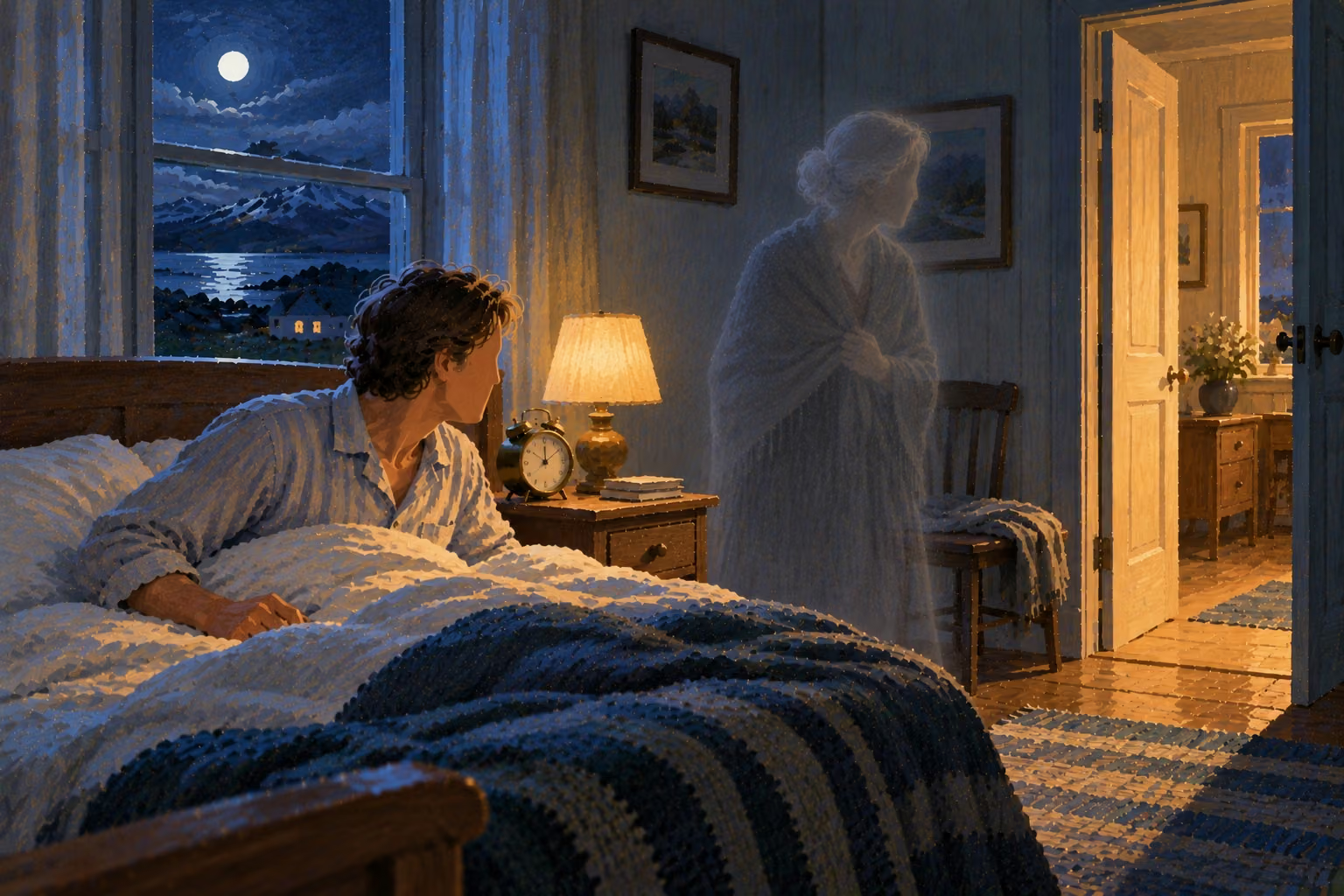
One night, a man in Iceland woke up and felt a woman beside the bed, who said to him, “My name is Margret.” He looked at the clock. It was three thirty. He and his wife were fostering a little girl. Soon after, the man learned that the girl’s grandmother had died of a heart attack at that same minute, in another part of the country. The grandmother’s name was Margret.
Margret’s case is one of the clearest in the study by the psychologist Erlendur Haraldsson. The man’s wife confirms that he told her about it in the morning, before they knew anything about the death. How could he have known?
Step 1
A house in Iceland · The man’s account
A couple is fostering a little girl of two and a half

A man and his wife lived in Iceland. They were fostering a little girl about two and a half years old.
The girl’s grandmother lived in Hvammstangi, a town in another part of the country.
The man didn’t know her. He had never seen her.
Step 2
One night · The man’s account
The man says he woke up and felt a woman standing beside the bed
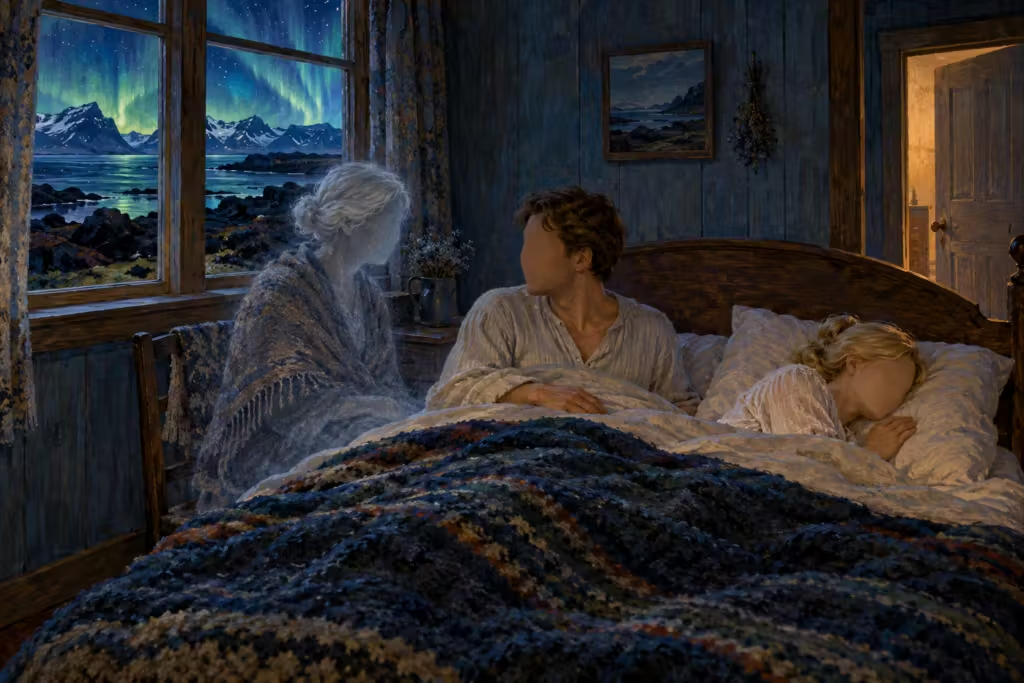
One night he woke up. He felt as though a woman were standing beside the bed.
The woman said to him:
“My name is Margret.”
Then the woman vanished out the door.
Step 3
At that moment · The man’s account
He looks at the clock: it is exactly three thirty
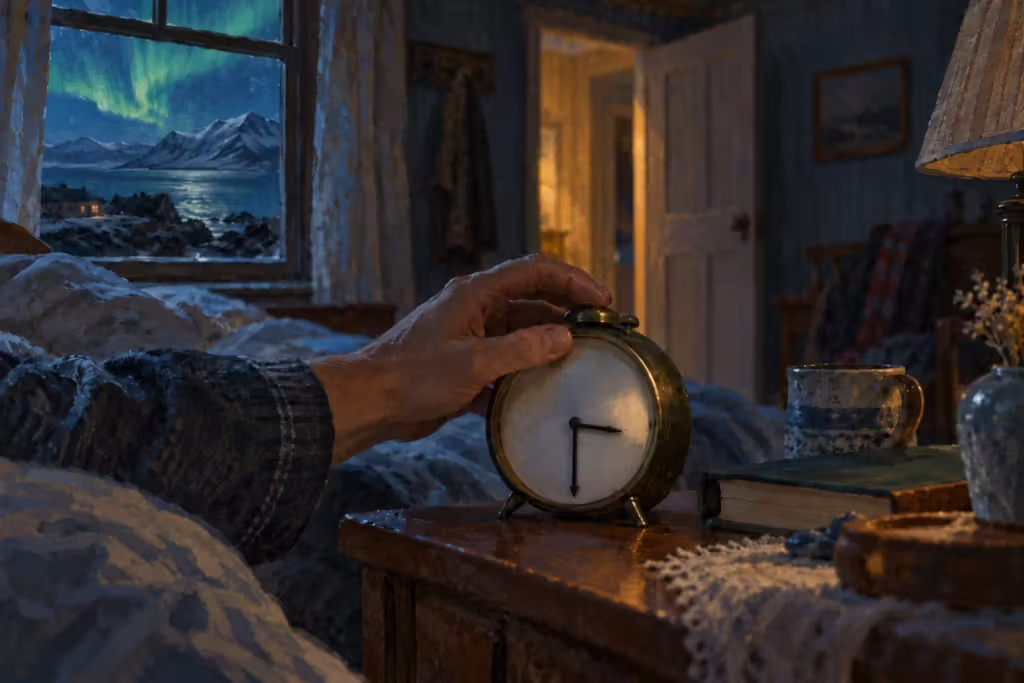
The man looked at the clock. It was exactly three thirty.
He didn’t write it down anywhere. The time comes from his memory.
Step 4
The next morning · His wife’s account
In the morning he tells his wife, before they know anything

The next morning, the man told his wife what he had experienced during the night.
They still knew nothing about anyone’s death.
His wife later confirmed this to the researcher. The study doesn’t say whether he told her the name and the time.
Step 5
That day or the next · The man’s account
He learns that the girl’s grandmother died of a heart attack at that same minute
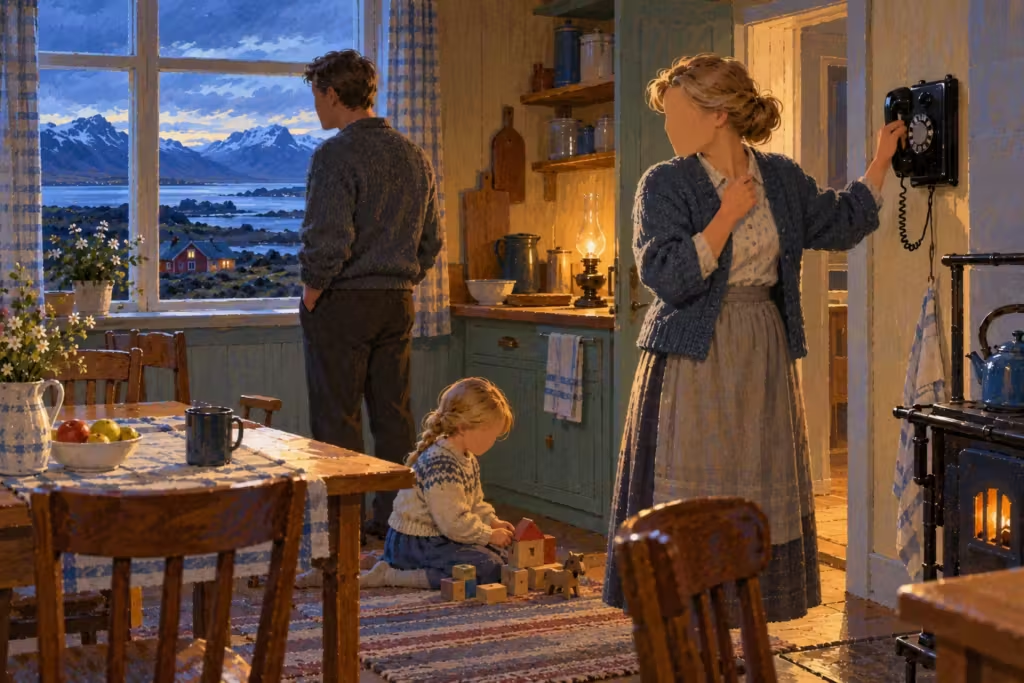
That same day, or the day after, the man learned of a death. The girl’s grandmother had died of a heart attack in Hvammstangi. According to what he was told, it happened at that same minute.
The grandmother’s name was Margret.
The man says he knew nothing about her health. And he isn’t even sure he remembered her name.
Margret is one of the most common women’s names in Iceland.
Step 6
Years later · The study
A psychologist records the case and checks the death in the national registry

Between 1980 and 1986, the psychologist Erlendur Haraldsson interviewed hundreds of Icelanders who said they had perceived someone who had died. The man was one of them.
Haraldsson also spoke with the man’s wife. He checked in Iceland’s national registry that the girl’s grandmother had existed and that she died of a heart attack. The registry gives the year of death, not the time.
Haraldsson published the case in 2009. On the study’s page we explain how that study was done and what can be checked in it.
One question remains: how did the man know the name of a woman he had never met, on the night she died?
Where this story comes from
Studies
- Erlendur Haraldsson (2009), “Alleged encounters with the dead: The importance of violent death in 337 new cases,” Journal of Parapsychology 73, pages 91-118, case 2180Read for free
Case documents
- The interviews with the man and his wife, in the study
- The death and its cause, in Iceland’s national registry, which Haraldsson consulted
Learn more
- The Haraldsson study: 337 encounters with the dead in IcelandRead
- Jacob: the vision on the night he died, the other strong case from the same studyRead
- More shared-death experiencesRead
Our archive
- Our full reading of the study and its scoring against our five criteria, as of October 21, 2026
Keep reading

England, 1875
Annie Harriss
Annie Harriss dreamed that her mother was dying and told a friend. An hour later the letter arrived: her mother had died the previous afternoon.
England, 1885
Mrs. Humphry
She dreamed that someone told her, “Mr. John Jarvis is dead,” and told another servant. Five days later she learned that John Jarvis had died in the early hours of that same night.

United States
Julie McFadden
A hospice nurse says goodbye to a dying patient and goes out to her car. There, she says, she hears his voice, full of joy. After about thirty seconds the voice fades, and just then she gets a message saying he has died.

Reincarnation: The top 5 people who remember past lives
We asked them the same five questions as this story. A 32-page PDF, free in your inbox.
Check your email
We have sent you an email. Open it and press the button to confirm. If you cannot see it, check your spam folder.