A real-life story · Iceland, 1962
The night Jacob appeared in the doorway: a shared-death experience
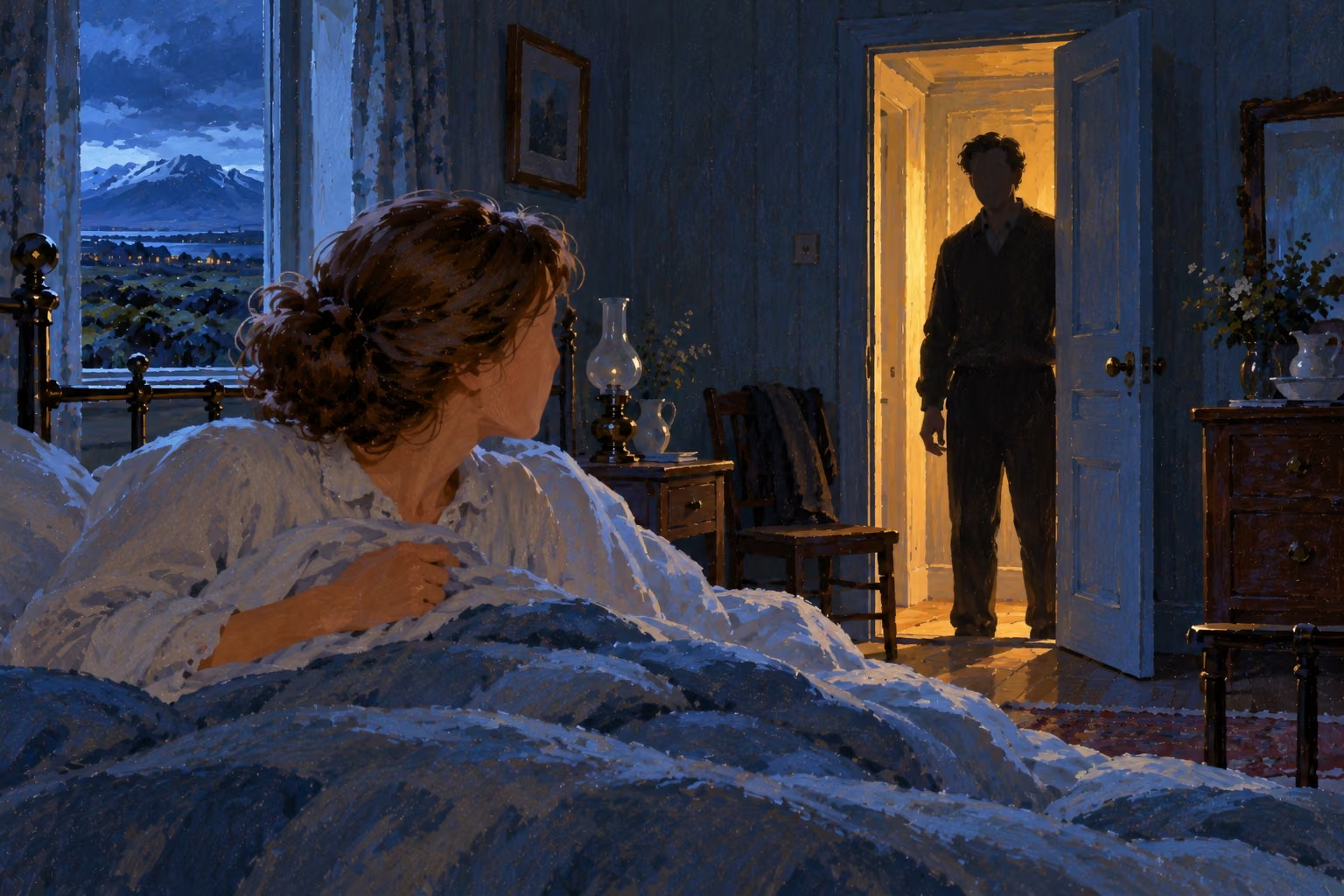
A woman who worked at a sanatorium in Iceland woke up one night in October 1962. She saw Jacob, a patient at the sanatorium, in her bedroom doorway, his face covered with blood. She woke her husband and told him. In the morning she learned that Jacob had taken his own life that night.
Jacob’s case is the best-documented one in the study by the psychologist Erlendur Haraldsson. The husband confirms that she told him that night, and the autopsy confirms how Jacob died. How could she have known?
Step 1
1962 · At the sanatorium · The woman’s account
A woman tries to cheer up a patient who is sometimes depressed
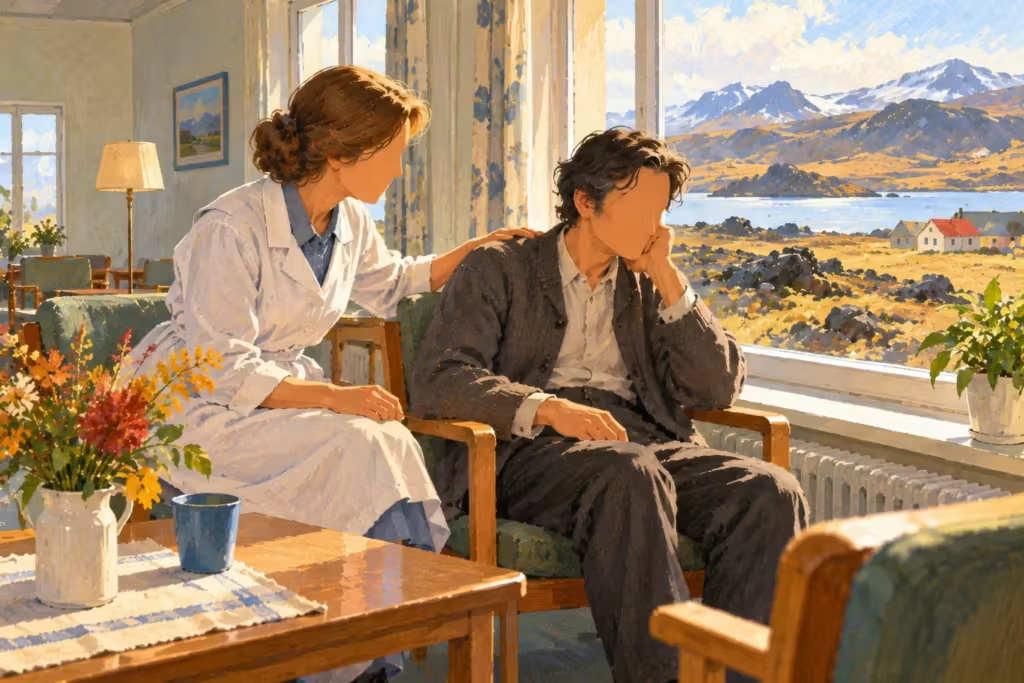
The woman worked at a sanatorium in Iceland. Jacob was one of the patients. He was sometimes depressed.
She tried to brighten his stay with a bit of humor.
One day she gave him an invitation.
Step 2
October 7, 1962 · The woman’s account
She invites him to her home, and Jacob promises to come the next day
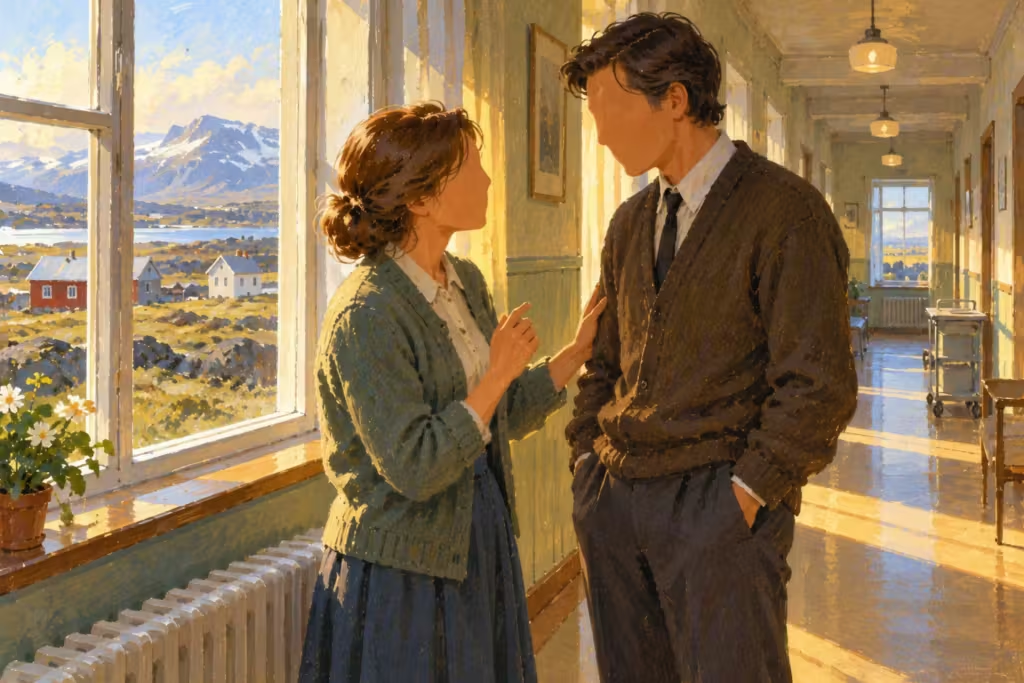
Jacob came from the same county as the woman’s husband. She thought they would enjoy talking about the people from there, so she invited him to her home.
Jacob said yes and was glad. She said to him: “You promise to come tomorrow.” He answered: “Yes, yes, I promise.”
That night, the woman went home to sleep.
Step 3
The night of October 7 to 8 · The woman’s account
The woman says she woke up unable to move and saw Jacob in the doorway
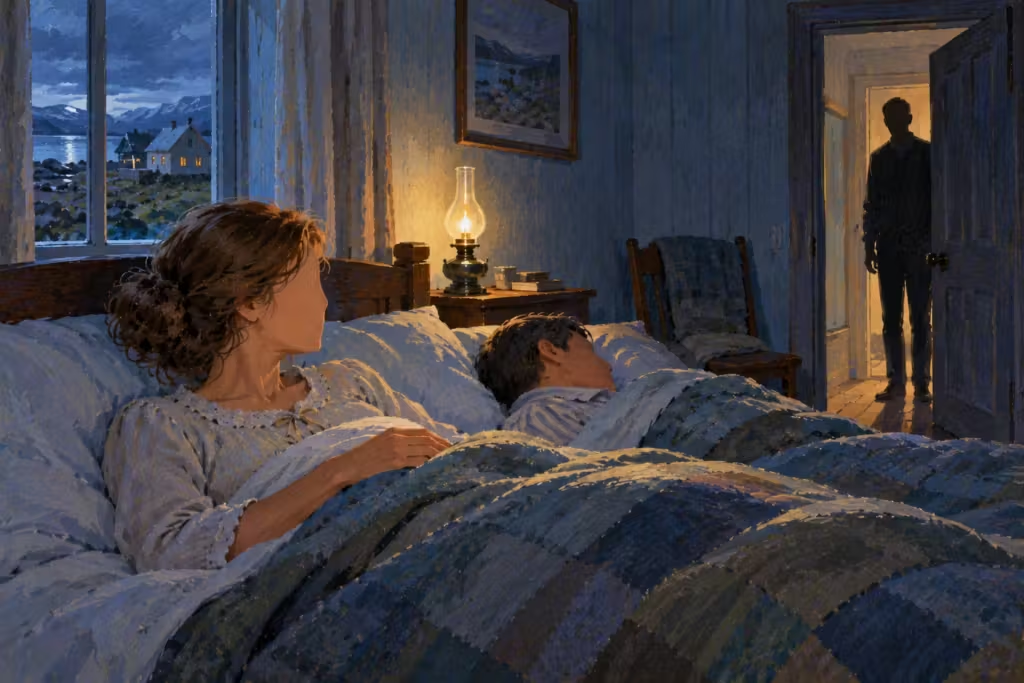
She woke up during the night. She felt as if all her strength had been taken away. She couldn’t move.
Suddenly she saw the bedroom door open. Jacob was standing on the threshold, his face covered with blood.
She looked at him for a good while, unable to speak or move. Then Jacob disappeared, and she felt as if he closed the door behind him.
Then she came back to herself.
Step 4
In the middle of the night · The woman’s account
She wakes her husband: “I can swear that something has happened at the sanatorium”
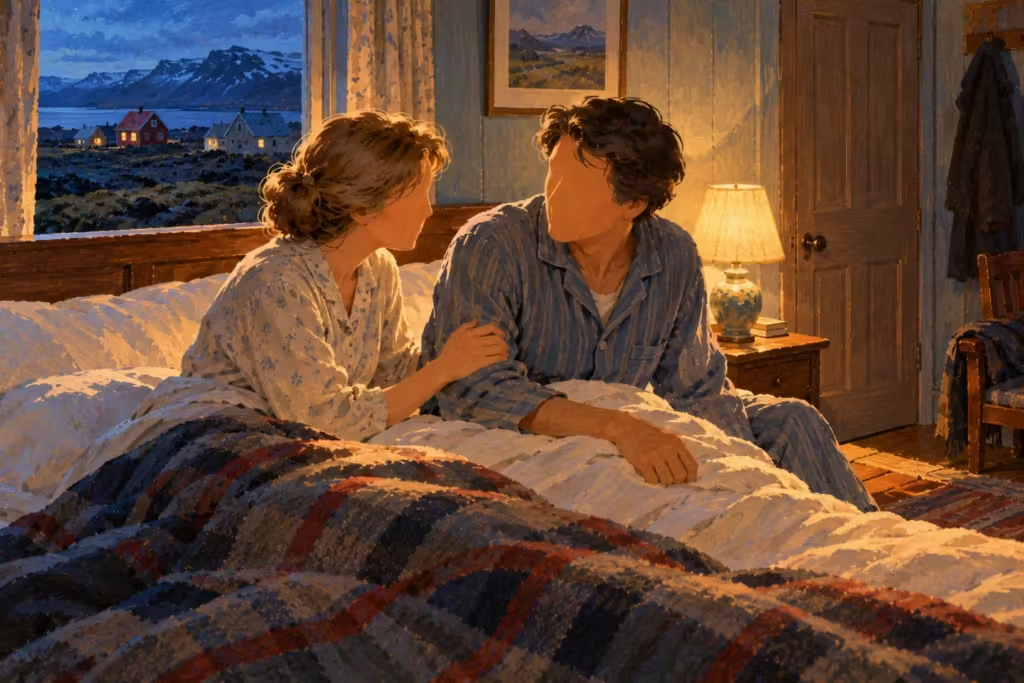
She called her husband and told him what she had seen. She said to him:
“I can swear that something has happened at the sanatorium.”
They knew nothing more. They waited for morning.
Step 5
That same night · What came to light in 2002
Jacob had climbed out through the window, and a girl saw him in the middle of the night
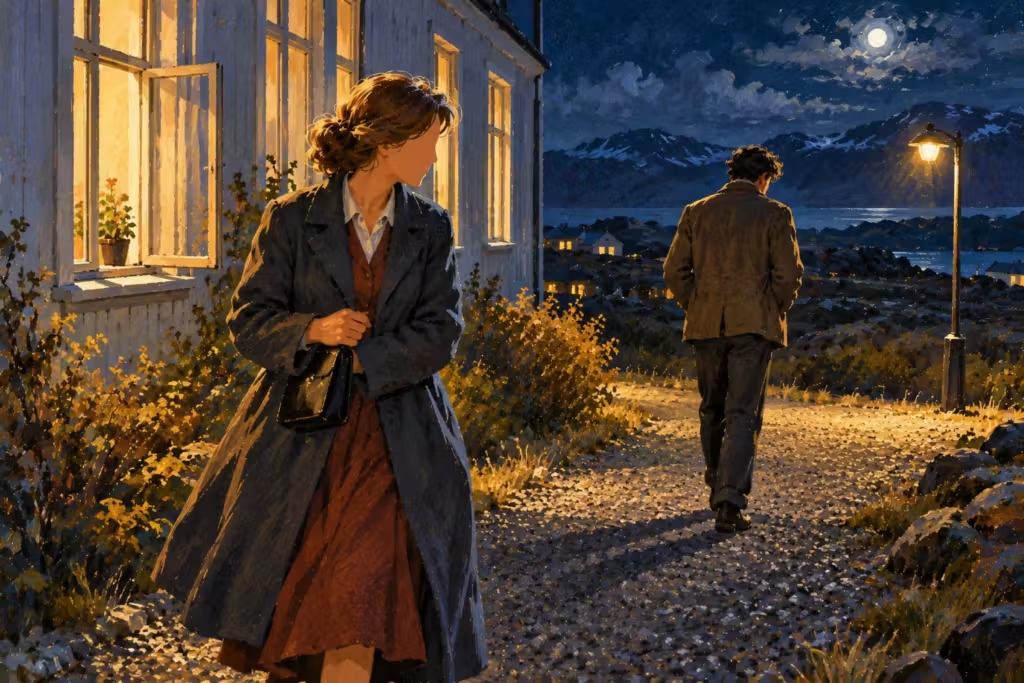
Jacob got out of his room through the window.
A girl who worked at the sanatorium was coming home from a dance in the middle of the night. She ran into him briefly. Jacob told her he had gotten out through the window. As he walked off into the darkness, he asked her to give his greetings to his wife.
The girl never saw him again.
Step 6
October 8, in the morning · The woman’s account
The woman calls the sanatorium and learns that Jacob died by suicide that night
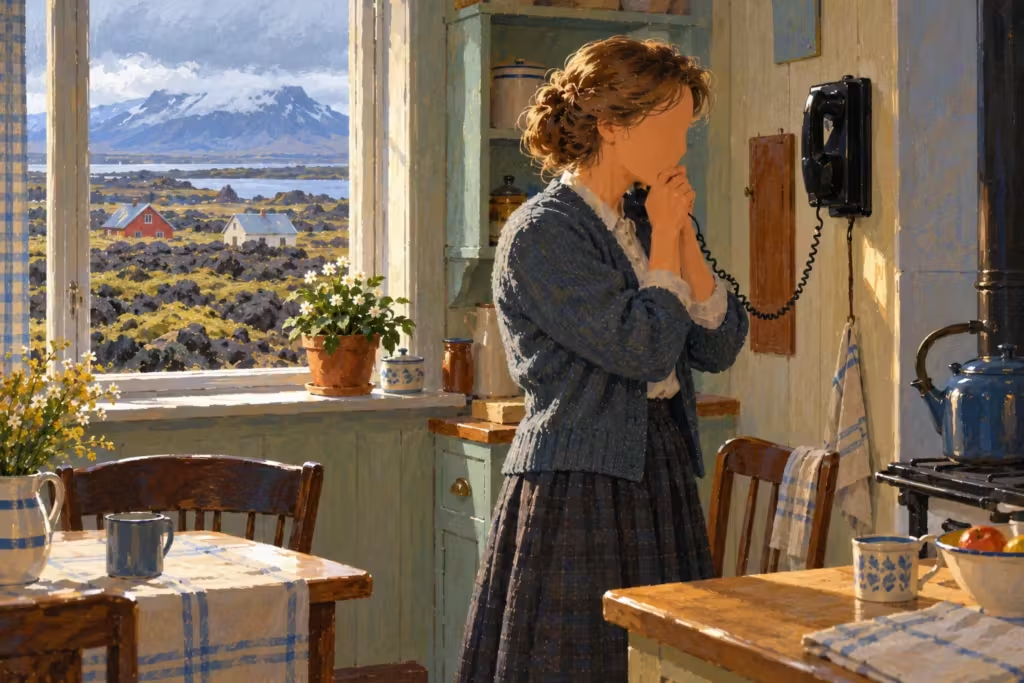
In the morning, the woman phoned the sanatorium. She asked whether everything was all right with Jacob.
“No,” the nurse said, “he committed suicide this night.”
That same day, the police found him.
Step 7
October 8, 1962 · According to the police report and the autopsy
The autopsy says he drowned, with two large wounds on his head
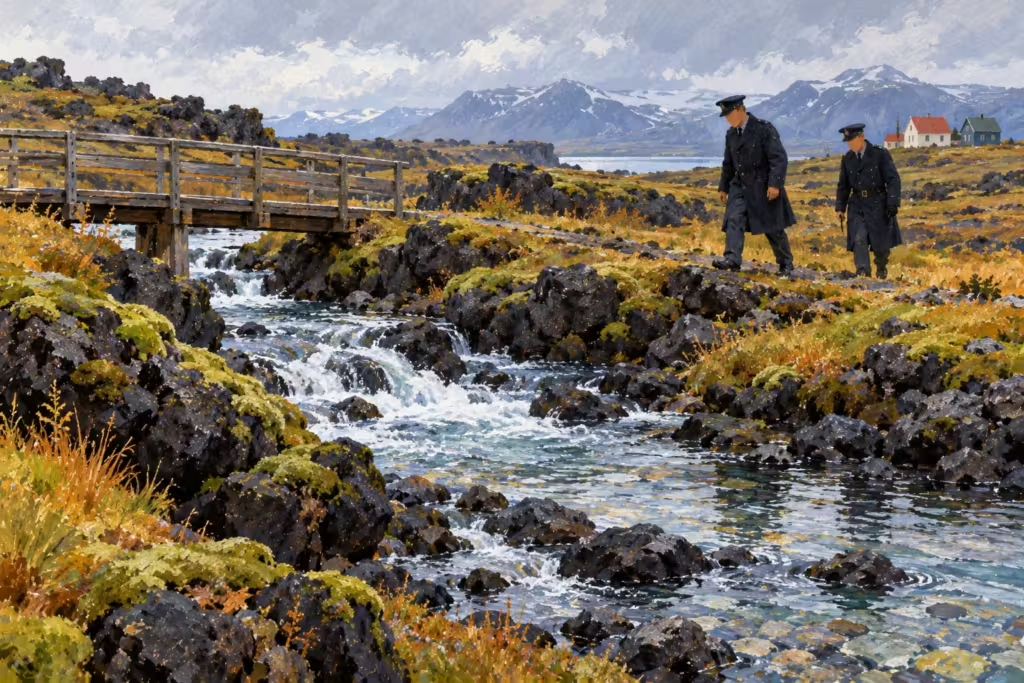
In the morning, Jacob was missing from his room. The police were called. A few hours later he was found drowned, about a hundred yards downstream from a footbridge near the sanatorium.
The autopsy says it was suicide by drowning. It also says he had two large wounds on his head and a badly broken skull.
The river is shallow, but it runs over sharp lava rocks. According to Haraldsson, that explains the wounds.
The woman had seen Jacob with his face covered with blood.
Step 8
1982 · The interview
Twenty years later, the husband confirms that she told him in the middle of the night
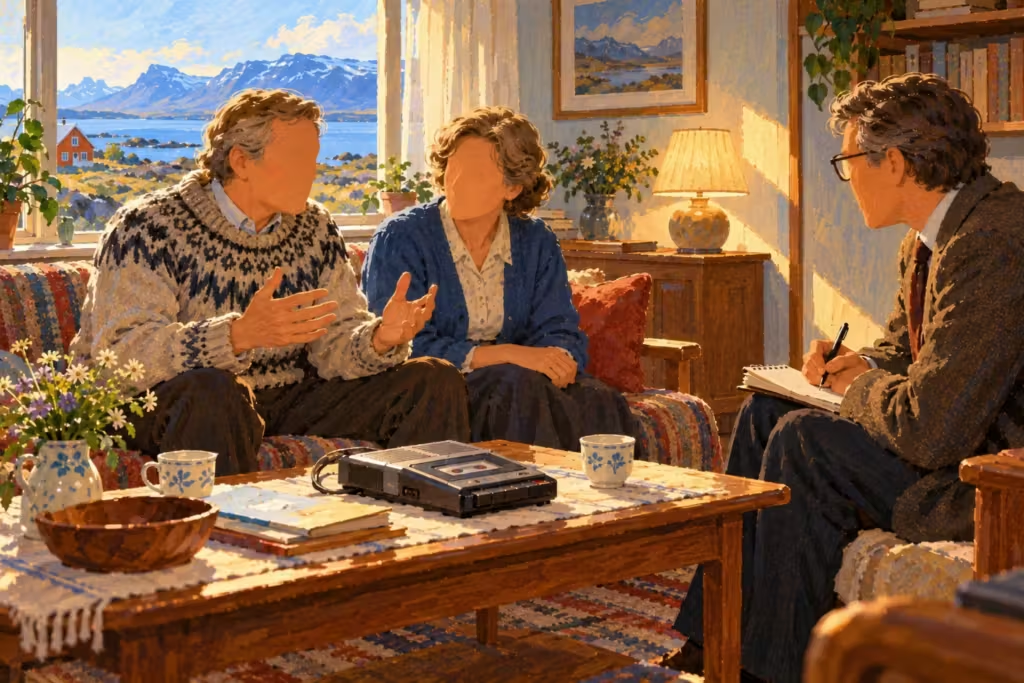
In 1982, the psychologist Erlendur Haraldsson interviewed the woman for his study of encounters with the dead in Iceland. She didn’t know Jacob’s surname.
Haraldsson also interviewed the husband. He confirmed that his wife woke him in the middle of the night and told him what she had seen. He also confirmed that they knew nothing about Jacob until the morning.
The study doesn’t say whether the husband remembered the blood.
Step 9
2002 · The documents
The team finds the 1962 police report and autopsy
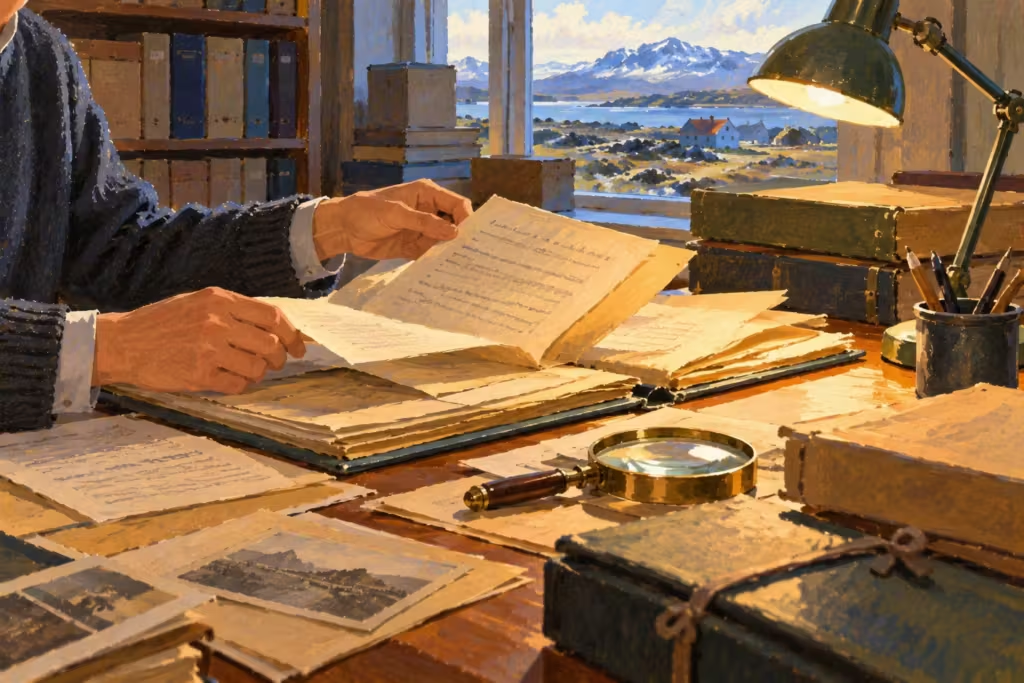
In 2002, Haraldsson’s team identified Jacob and found the police report and the autopsy. That is where what we know about that night comes from.
Haraldsson published the case in 2009, in a study of 337 encounters with the dead. On the page about the study we explain how it was done and what can be checked about it.
The question remains: how did the woman know that night that something had happened to Jacob?
Where this story comes from
Studies
- Erlendur Haraldsson (2009), “Alleged encounters with the dead: The importance of violent death in 337 new cases,” Journal of Parapsychology 73, pages 91-118, case 5076Read for free
Case documents
- The 1982 interviews with the woman and her husband, in the study
- The 1962 police report and autopsy, which Haraldsson’s team located in 2002 and summarizes in the study
Learn more
- The Haraldsson study: 337 encounters with the dead in IcelandRead
- Annie Harriss: the dream of her mother’s death, another shared-death experienceRead
- More shared-death experiencesRead
Our archive
- Our full reading of the study and its scoring against our five criteria, as of October 21, 2026
Keep reading
United States
Julie McFadden
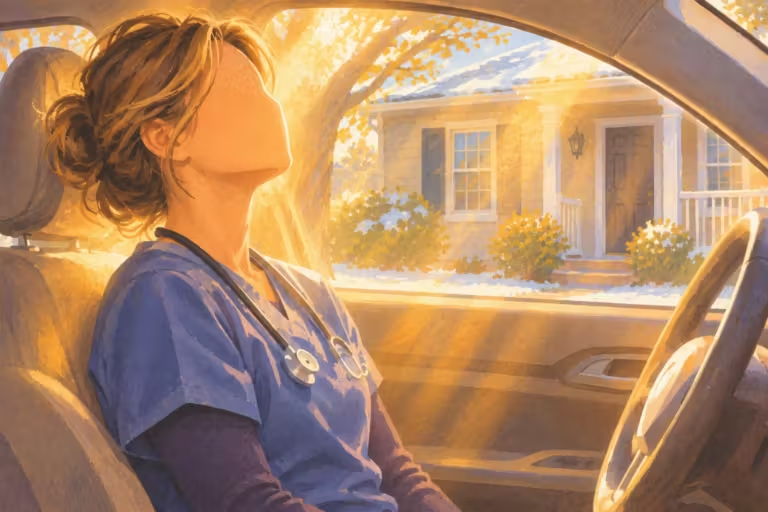
A hospice nurse says goodbye to a dying patient and goes out to her car. There, she says, she hears his voice, full of joy. After about thirty seconds the voice fades, and just then she gets a message saying he has died.
California and England, 1892
John Owen
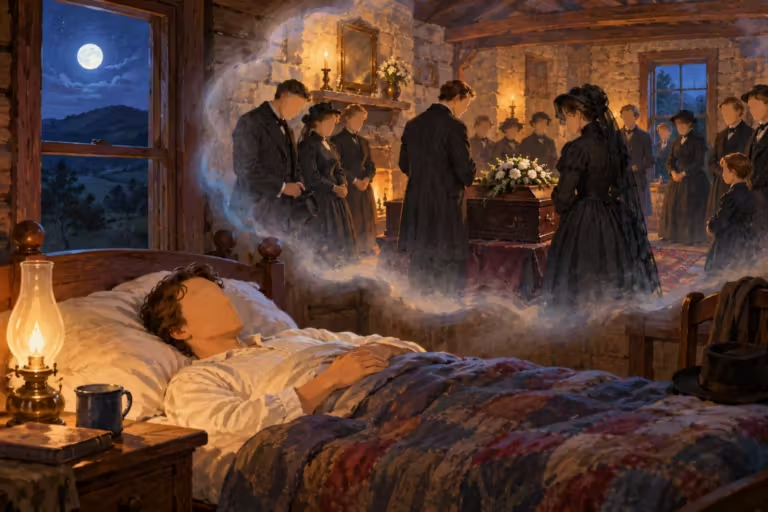
He dreamed in California of the funeral of his mother, who lived in England. He wrote it in a letter before learning she had died.

England, 1875
Annie Harriss
Annie Harriss dreamed that her mother was dying and told a friend. An hour later the letter arrived: her mother had died the previous afternoon.
Reincarnation: The top 5 people who remember past lives
We asked them the same five questions as this story. A 32-page PDF, free in your inbox.
Check your email
We have sent you an email. Open it and press the button to confirm. If you cannot see it, check your spam folder.