A study · online survey, published in 2024
The Martial study: 31 people compare their NDE with a psychedelic trip
A near-death experience, or NDE, is a very intense experience that some people have when they are about to die. In 2024, the neuropsychologist Charlotte Martial and two researchers in London surveyed 31 people who had been through two things. They had had an NDE, and they had also had an experience with a psychedelic drug, almost always LSD or mushrooms. Each person compared their two experiences. The two were alike in the peace, the light, and the feeling that everything was connected. Almost the same number of people said that both were “more real than daily life.” What set the NDE apart was the feeling of dying. And after the NDE, the fear of death dropped more than after the drug.
The study’s question is: how alike are an NDE and a psychedelic trip, when the same person describes both? We tell it step by step: whom they asked, how, and what came out. If you only want to know what is known, skip straight to the results.
Step 1
Before 2024 · The question
Other studies had compared NDEs and drugs, but always in different people
Psychedelic drugs, such as LSD, magic mushrooms, or DMT, change for a while what a person perceives and feels. During these trips, some people describe things that are reminiscent of an NDE. For example, an intense light, a very deep peace, or the feeling of leaving the body.
Before 2024, several teams had compared the two experiences. In 2018, a team gave DMT to healthy volunteers and measured their experience with the NDE scale. This is a questionnaire that scores how many features of an NDE an experience has. In 2019, another team compared thousands of written accounts of drug experiences with NDE accounts. We cover this in the DMT study.
In those studies, the people who took the drug and the people who had the NDE were different people. With different people, no one can tell whether the two experiences are truly alike or are only described in similar words.
What was missing was to ask people who had been through both.
Step 2
2023 and 2024 · Liège and London · As the study tells it
An NDE researcher and two psychedelics researchers join forces

Charlotte Martial is a neuropsychologist at the University of Liège, in Belgium. Her group has studied NDEs for years, and she led the 2019 study that compared the written accounts.
Robin Carhart-Harris and Christopher Timmermann worked at the psychedelic research center of Imperial College London. Timmermann had led the 2018 study in which volunteers were given DMT.
The three wanted to know two things. First, how the two experiences are alike and how they differ while they are happening. Second, what they leave behind.
To find out, they looked for people who had had both.
Step 3
2023 · The survey · As the study tells it
Of 45 people who start the survey, 31 meet the conditions

The team advertised the survey on social media, in the local press, and on the websites of the two centers. No one was paid to answer. Forty-five people started it, and 31 met all the conditions.
Each person had to have had at least one NDE and at least one experience with LSD, magic mushrooms, ayahuasca, DMT, or mescaline. The NDE had to reach a minimum score on a questionnaire of NDE features. It also had to have happened in a life-threatening situation. If someone had had several of each, they were asked about the most intense one.
Each person answered the same questions for both experiences. Some measured what is experienced, others how much is remembered, and others what changed afterward. The order of the two sets of questions was drawn at random for each person.
The drug in the experience being compared was LSD for 14 people and mushrooms for 13. The other four people took ayahuasca, DMT, or mescaline. And 24 of the 31 people had had their NDE before their experience with the drug.
The first thing that came out was that the two experiences had a lot in common.
Step 4
2024 · What is alike · As the study tells it
The peace, the light, and the sense of unity come out the same in both experiences

27 of the 31 people said they felt peace in their NDE, and 27 in their drug trip. The bright light came out the same: 21 in each. The feeling that everything was connected, intense joy, and a sense of something spiritual also came out almost the same. A life review is seeing scenes from your own life pass before you. It appeared in 13 NDEs and in 15 drug trips.
Measured with the NDE scale, 27 of the 31 drug trips reached the minimum to count as an NDE. The NDE scored a little higher on average, but the difference was small.
Both were remembered in the same detail. People said that both had been equally intense. And that both had changed their life and the way they see the world almost equally.
But on some points the two experiences clearly parted ways.
Step 5
2024 · What is different · As the study tells it
In the NDE they more often feel dead, and on the drug they see more images
Feeling dead or dying was much more common in the NDE. Twenty-six of the 31 people felt it in the NDE, and 17 on the drug. The feeling of being outside the body was also stronger in the NDE.
On the drug, by contrast, they saw many more images with their eyes closed, such as shapes, colors, or scenes. They noticed more strange sensations in the body. And the things around them seemed to take on a different meaning.
The clearest difference came afterward. After the NDE, people were less afraid of death than after the drug trip.
Reaching a border that could not be crossed and coming back to life came up more in the NDE. But the authors calculated this in two ways and got different results, so it is unknown whether that difference is reliable.
The study also asked how real the two experiences had seemed to them.
Step 6
2024 · What felt real · As the study tells it
Both experiences seemed “more real than daily life” to them

Many people say their NDE was more real than ordinary life. The team asked how real each experience seemed at the time it happened, and how real it seems to them now. The scale went from “a complete hallucination” to “more real than daily life.”
At the time it happened, 25 of the 31 people said the NDE was more real than daily life. For the drug, 23 said so. With so few people, that difference could be chance.
Today, looking back, people rate the NDE as more real than the drug trip, and that difference was clear.
About half said that both experiences were supernatural: 17 of 31 for the NDE and 16 of 31 for the trip.
With all this, the authors drew their conclusions.
Step 7
August 2024 · The conclusion · As the study tells it
The authors think psychedelics can help study the spiritual side of the NDE

The authors conclude that the two experiences agree in their spiritual side and in what they leave behind. And that they differ in what is seen and what is felt in the body. That is why they think psychedelics can help study the spiritual side of NDEs.
The brain makes some substances that act on the same sites as these drugs. The authors propose that these substances could be behind some features of the NDE. They did not test this in this study.
They also acknowledge limits. The people volunteered on their own and answered from memory, sometimes years later. The team made up some of the questions, and these had not been tested before. And since almost everyone had the NDE first, the drug trip may have been lived or remembered in the light of the NDE.
The question from the beginning remains: are an NDE and a psychedelic trip alike? Let’s see what is known and what isn’t.
The same person, two experiences
How many of the 31 people said each thing about their NDE and about their drug trip.
| Feature | NDE | Drug |
|---|---|---|
| Peace or well-being | 27 | 27 |
| Bright light | 21 | 21 |
| Life review | 13 | 15 |
| More real than daily life, at the time | 25 | 23 |
| Supernatural | 17 | 16 |
| Feeling dead or dying | 26 | 17 |
What these figures don’t tell
- These are 31 volunteers. Many had taken psychedelics dozens of times.
- Each person described the most intense experience of each kind. These are not their usual experiences.
- These are memories. The average age was 25 at the time of the NDE, and 41 when answering the survey.
Frequently asked questions
Is a near-death experience the same as a psychedelic trip?
No. They have a lot in common, but they are not the same. In a 2024 study, 31 people who had been through both agreed on the peace, the light, and the sense of unity. But in the NDE they felt they were dying much more often, and afterward they lost more of their fear of death.
Are NDEs more real than a psychedelic trip?
It isn’t clear. In Charlotte Martial’s 2024 study, 31 people compared their NDE with a psychedelic trip. Almost as often, they said that both were “more real than daily life” at the time. Today, looking back, they rate the NDE as more real than the trip.
Which drug produces the experience most like an NDE?
According to a 2019 study that compared written accounts, ketamine is the drug whose accounts are most like NDEs. Several psychedelic drugs come next, among them DMT. We cover this in the DMT study.
Where this page comes from
The study
- Charlotte Martial, Robin Carhart-Harris, and Christopher Timmermann, “Within-subject comparison of near-death and psychedelic experiences: acute and enduring effects,” Neuroscience of Consciousness 2024(1):niae033 (2024)Read for free
Assessments and critiques
- Interview with Jeffrey Long on Mayim Bialik’s channel (2025), at around minute 49Watch on YouTube
To understand more
- The study on DMT and NDEs, with the 2025 study by Michael and othersRead
- The NEPTUNE model: a 2025 attempt to explain NDEs through the brainRead
- How does life change after a near-death experience?Read
- What does science say about near-death experiences?Read
Our archive
- A full reading of the article by Martial, Carhart-Harris, and Timmermann, with its tables, as of October 30, 2026
More studies
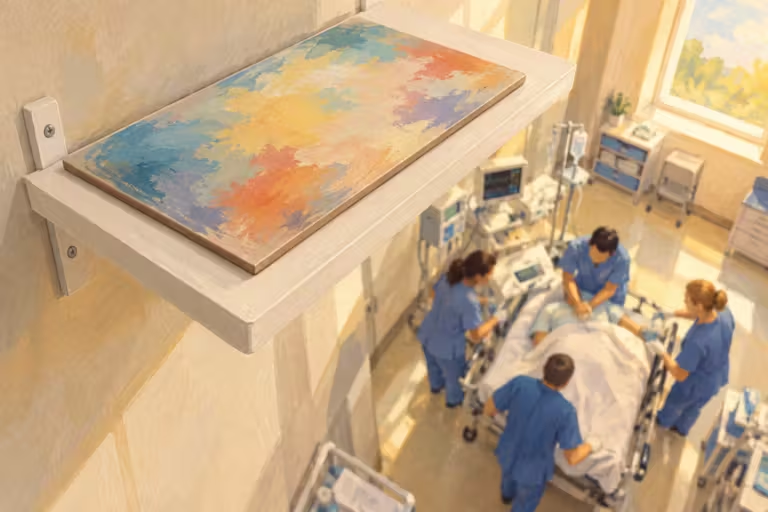
AWARE: the pictures hidden on the shelves
Fifteen hospitals put up pictures that could only be seen from the ceiling, to check whether anyone saw them during a cardiac arrest.
AWARE II: a random picture and the brain on the screen
Above the patient was a tablet with a random picture. Headphones said the names of three fruits. And the doctors measured the brain during resuscitation.
Van Lommel: 344 cardiac arrest survivors in ten hospitals
Ten hospitals asked every cardiac arrest survivor what they remembered. They saw them again after 2 and 8 years.