A study · the EEG of a single patient, published in 2022
Vicente’s study: the brain of an 87-year-old man, recorded as he died
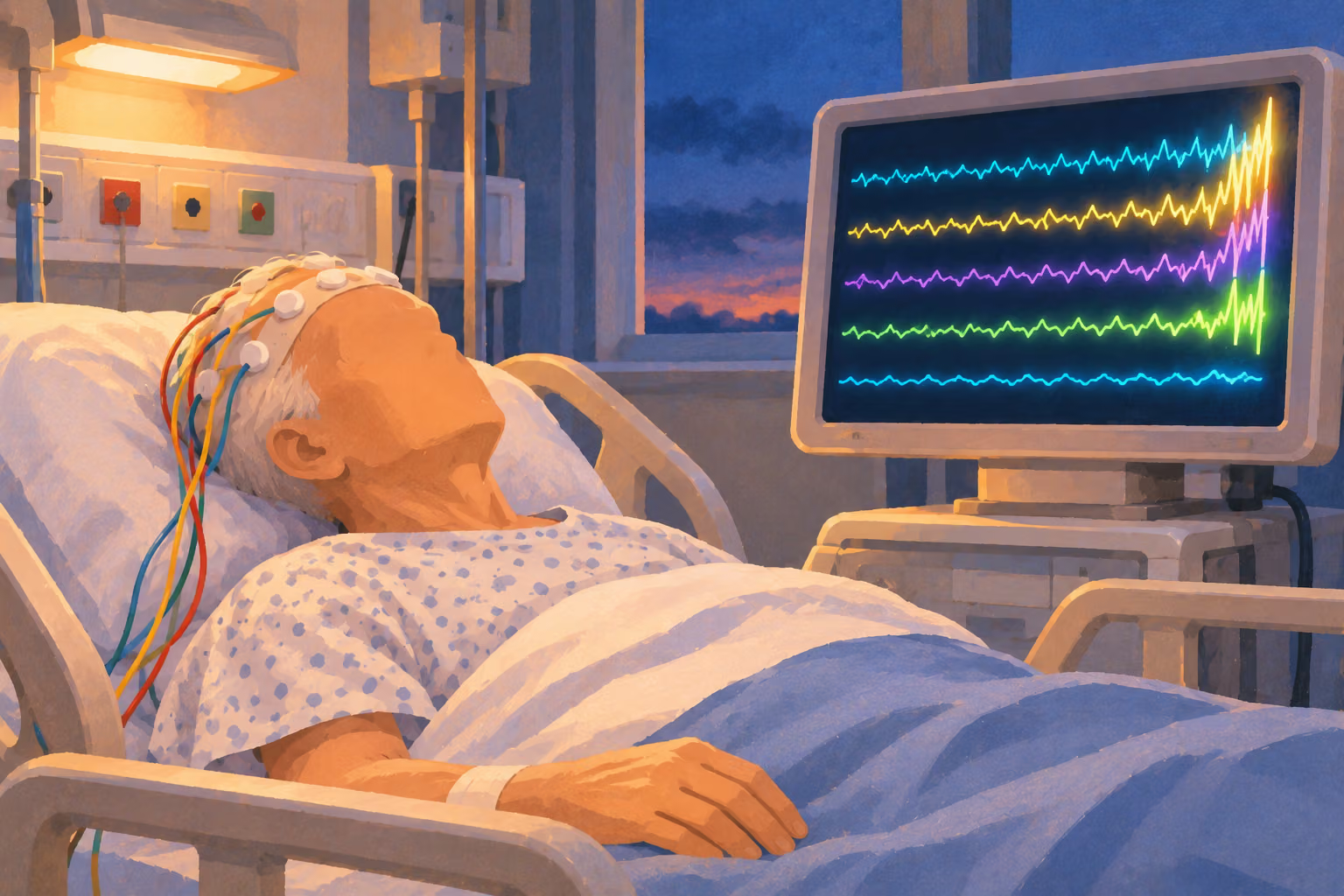
An 87-year-old man died in a hospital with the sensors of an electroencephalogram on his head. According to the authors, it was the first time the brain of a person dying had been recorded this way, with sensors all over the head. An international team, with the researcher Raul Vicente as first author, analyzed the last 15 minutes of the recording. The fastest brain waves, the gamma waves, rose just before the heart stopped and fell afterward. The authors suggest, as speculation, that at death the brain might run one last replay of a person’s life. The press reported that idea as a discovery. The patient died without being able to tell anyone anything.
The study asks: what does a person’s brain do at the moment of death? We go step by step through how it was recorded, what was measured, what the press said, and how the critics responded. If you only want to know what it found, go straight to the results.
Step 1
Before 2022 · The question
No one had a full EEG of a person’s brain at death
For a long time, it was taken for granted that the brain shuts down within seconds when the heart stops. In 2013, a lab in Michigan saw something different in rats. When their hearts were stopped, their brains gave off a burst of gamma waves for about 30 seconds. Gamma waves are the fastest waves an EEG picks up, and they are linked to attention and memory. We cover this on our page on gamma waves in the dying brain.
Some people who have had a near-death experience say they saw their life flash by in a few moments. What was missing was knowing what happens in the brain of a person at death. That kind of recording can’t be planned, because no one knows when a patient is going to die.
One patient died with the EEG on.
Step 2
Before he died · The patient · According to the study
An 87-year-old man falls, bleeds inside his head, and starts having seizures
The man came to the emergency room after a fall. At first he was awake and oriented, and then he got worse very quickly. The scan showed blood collected between the skull and the brain, on both sides of the head, more on the left. The surgeons opened his skull and removed the blood on the left side.
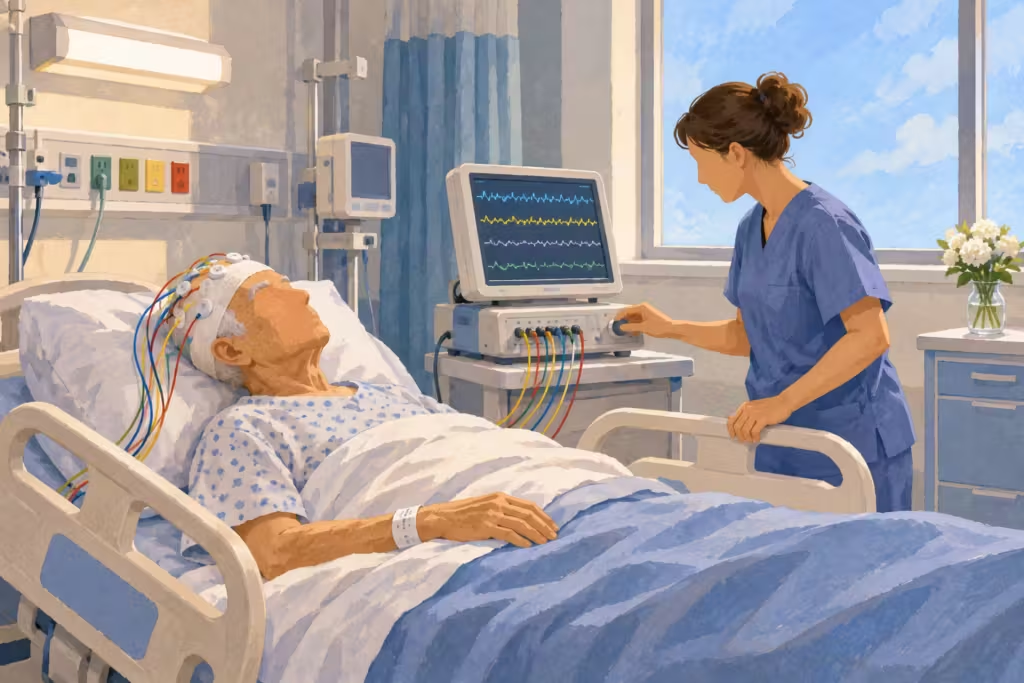
He spent two days stable in the ICU. Then he got worse, and his legs jerked suddenly. The doctors gave him two anti-seizure drugs and put him on an EEG. The EEG showed he was having seizures on the left side of the brain, with no visible convulsions. The EEG picked up at least 12.
The EEG kept recording as the patient got worse.
Step 3
The last 15 minutes · How it was done · According to the study
The EEG records the 15 minutes in which the patient dies
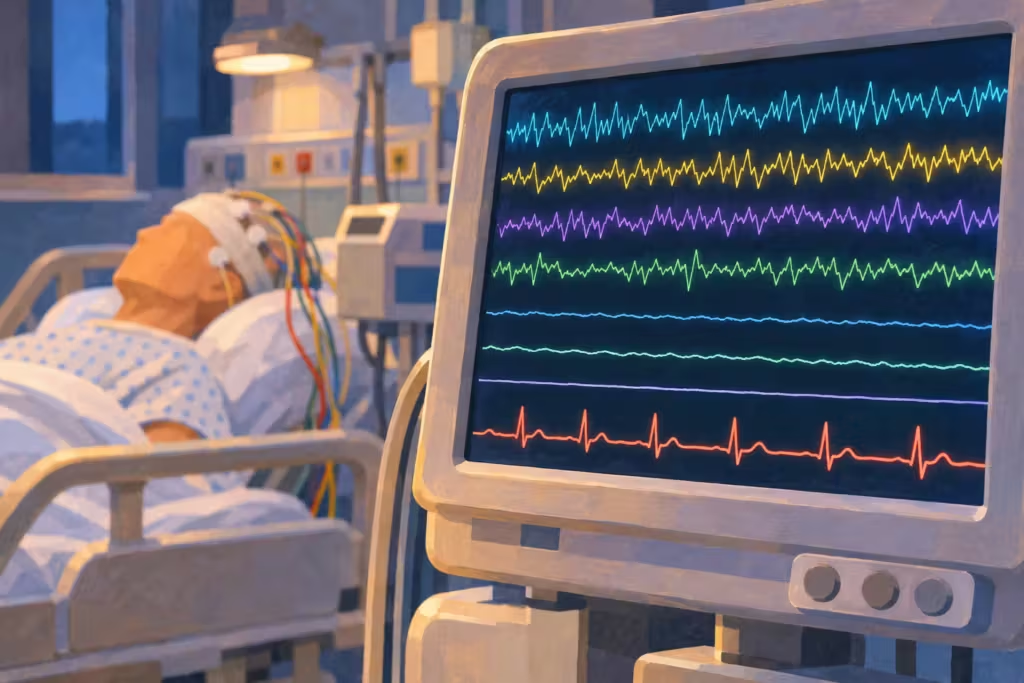
After the seizures, activity on the left side of the brain faded, and then on both sides. Then the heart went into ventricular tachycardia, which is a very fast, disorganized rhythm, and his breathing became irregular. The authors call that moment, with that rhythm and that breathing, cardiac and respiratory arrest. The patient had a do-not-resuscitate order. The doctors spoke with the family, gave him no further treatment, and the man died.
The team analyzed 15 minutes of the recording. It had 16 sensors, eight on each side of the head, plus the electrocardiogram, which records the heart’s activity. For comparison, the team chose four 30-second stretches. The first is between seizures. The second is with activity on the left side almost gone. The third is with activity on both sides almost gone, just before the arrest. The fourth starts a minute and a half after the arrest. The first minute and a half after the arrest was not measured.
There was no EEG from when this man was healthy to compare with, because it all happened suddenly.
The team measured how much activity there was in each type of wave.
Step 4
Before and after the arrest · According to the study
Gamma waves rise just before the arrest and fall afterward
An EEG picks up slow waves and fast waves. The study split the gamma waves into two groups, the slower ones and the faster ones. In the stretch just before the arrest, with activity on both sides of the brain almost gone, the gamma waves rose. The slower gamma waves had more than twice the power they had between seizures. The faster gamma waves had about five times the power they had between seizures.
After the arrest, all the waves had less power, including the gamma waves. The gamma waves had less power than in any of the three earlier stretches. What rose was the share of gamma waves in all the brain’s activity, compared with the stretch between seizures. Most of the other waves fell more than the gamma waves. So the gamma waves became a larger part of the total. Between seizures, the slower gamma waves made up a little more than 1 in every 100 parts of the activity, and the faster ones a little less than 1. After the arrest, both made up a little more than 2 in every 100.
The team also looked at whether some waves set the rhythm of others.
Step 5
Before and after the arrest · According to the study
Slower waves keep setting the rhythm of the gamma waves, even after the arrest
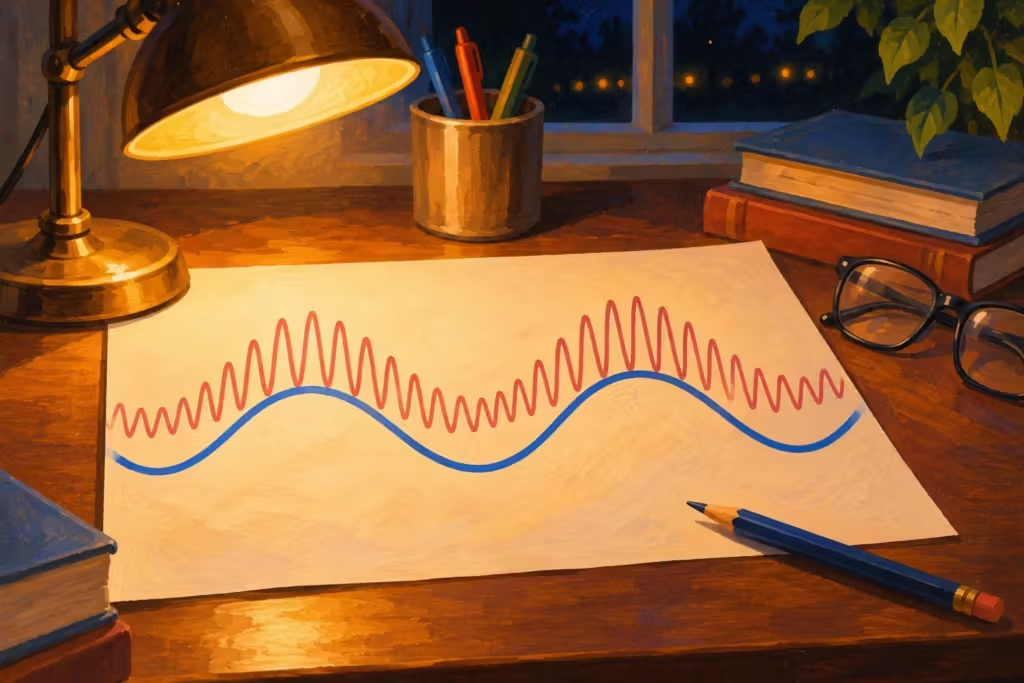
In a healthy brain, slower waves called alpha waves can set when the gamma waves rise and fall. This happens, for example, when we remember something. In this patient, alpha waves and other slow waves set the rhythm of the gamma waves on the left side of the brain in all four stretches. That rhythm was strongest when activity on the left side was already almost gone. After the arrest, the alpha waves were still setting the rhythm.
The team also measured whether different areas of the brain were in step with each other. After the arrest, the slow waves were less in step than before. The slower gamma waves were slightly more in step.
With these data, the authors ventured an idea.
Step 6
February 2022 · The conclusion · According to the authors
The authors suggest, as speculation, a final replay of life

According to the authors, the human brain may be able to produce coordinated activity near death. They point out that the rhythm the alpha waves set for the gamma waves plays a part in thinking and remembering. That is why they write that it is tempting to speculate about a final replay of life. It would be like the one some people who have had a near-death experience describe. The study did not measure any memory, and the patient died without being able to tell anyone anything.
The authors themselves give six reasons not to draw general conclusions:
- The patient’s brain was damaged by the bleeding, the swelling, and the seizures.
- The anesthesia from the surgery changes brain waves.
- Some drugs that alter perception and some mental illnesses also make gamma waves rise.
- The patient was taking high doses of anti-seizure drugs.
- Lack of oxygen and too much carbon dioxide in the blood can increase coordination in the brain.
- There was no normal recording of that brain to compare with.
The press told it differently.
Step 7
February 2022 · According to the press
Headlines say life may flash before your eyes when you die

The paper came out on February 22, 2022. In the following days, media in many countries ran headlines saying that life may flash before our eyes when we die. Zemmar told the press that the brain might play back the important moments of life one last time, just before death. He compared it with the replay described in these experiences. In the paper, that idea is speculation. In the headlines, it looked like a discovery.
Another claim also circulates online: that the brain stays active for seven minutes after death and replays memories during that time. That figure does not appear in this study. It was already circulating before, at least since 2014. A Facebook post repeated it on December 19, 2021. The fact-checking site Lead Stories debunked it ten days later. In Vicente’s recording, brain activity fell after the arrest.
Three months later, three near-death experience researchers responded in the same journal.
Step 8
May 2022 · According to the critics
Three critics respond that the gamma waves fall, that they may come from the muscles, and that the heart may not have stopped yet
Three doctors published a commentary on May 18, 2022. They are the psychiatrist Bruce Greyson, of the University of Virginia, the Dutch cardiologist Pim van Lommel, and the English neuropsychiatrist Peter Fenwick. All three have argued that consciousness might not depend only on the brain. They make three objections.
- After the arrest, the gamma waves had less power than before. Only their share of the total went up.
- Signals from the muscles can leak into an EEG and look like gamma waves. The rise was in the faster gamma waves, which is where those signals leak in the most. And it was mostly in the sensors on the forehead and temples, which are the ones that pick them up the most. There is no way to know where the rise came from, because the team calculated it by pooling all the sensors.
- The critics point out that, by the criteria cardiologists use, cardiac arrest is ventricular fibrillation or asystole. Ventricular fibrillation is when the heart quivers without pumping, and asystole is when it has no electrical activity at all. The figure in the paper shows ventricular tachycardia, and the electrocardiogram still shows activity after the moment the team marks as the arrest. For the critics, when the gamma waves rose, the heart had not yet stopped. That definition falls short. Resuscitation guidelines, such as those of the American Heart Association, also count as cardiac arrest a ventricular tachycardia without a pulse, and a heart with electrical activity but no pulse. Activity on the electrocardiogram does not show that the heart was pumping. The paper marks the arrest when they could no longer find a pulse, although it does not explain how they measured it.
They also point to other studies. According to them, when a person in cardiac arrest is being monitored with an EEG, the EEG goes flat within 10 to 20 seconds. The authors did not reply in the journal.
Other recordings of people as they died came later.
Step 9
2023 to 2025 · What came next
Other recordings find fast activity at death, mostly while oxygen is running out
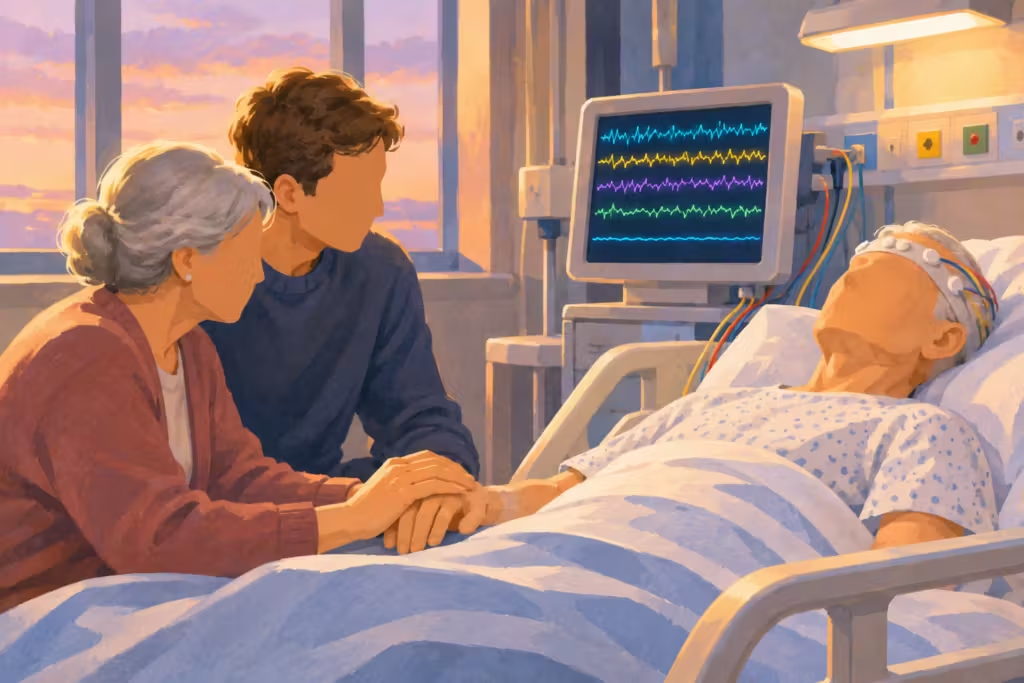
In 2023, the Michigan lab published the EEGs of 4 patients in a coma whose breathing support was withdrawn. In 2 of them, there was a burst of gamma waves while the heart was still beating. In one of those two, the coordination between waves continued through 33 seconds of asystole. We cover this on our page on gamma waves in the dying brain.
In 2025, a team from Germany and the United States published the EEG of a 73-year-old man in a coma. He had no seizures, and an MRI showed no widespread damage from lack of oxygen. The sensors were only on his forehead. His life support was withdrawn. There was fast activity about 45 minutes before his heart stopped, and again between 5 and 3 minutes before. Both times, his oxygen level was dropping. In the last 5 minutes, the EEG was almost flat. The authors don’t know whether part of that activity came from the muscles. They write that they would not go so far as to infer from it that he was conscious.
In 2025, Greyson, van Lommel, and the Brazilian researcher Bruno Angeli-Faez reviewed these recordings. They write that in all of them the fast activity appears before the arrest, while the brain is running short of oxygen. They also write that this activity has not been recorded once circulation has stopped. One of the Michigan patients doesn’t fit that statement. In that patient, the coordination continued through the 33 seconds of asystole. For them, the press was wrong to say that these studies explain near-death experiences. They also write that Vicente’s patient had a history of epilepsy, something the paper does not say. According to the paper, his seizures began after the fall.
That leaves the question we started with: what does a person’s brain do at the moment of death? Let’s look at what is known and what isn’t.
The gamma waves in the four stretches of the recording
Each stretch lasts 30 seconds. Power is given in square microvolts, the unit used in the study. The share of the total says how many of every 100 parts of the activity were gamma waves.
| Between seizures | Left side almost gone | Both sides almost gone | After the arrest | |
|---|---|---|---|---|
| Power of the slower gamma waves | 0.06 | 0.05 | 0.14 | 0.02 |
| Power of the faster gamma waves | 0.04 | 0.04 | 0.20 | 0.02 |
| Share of the total, slower gamma waves | 1.37 | 2.55 | 5.56 | 2.33 |
| Share of the total, faster gamma waves | 0.94 | 1.95 | 8.44 | 2.35 |
What these figures don’t tell
- They come from a single person. There is no group to compare with, and no recording of that brain while healthy.
- They pool all 16 sensors. They don’t say which area of the head each wave comes from, so they can’t separate the brain from the muscles.
- They don’t cover the first minute and a half after the arrest. The last stretch starts a minute and a half later.
Frequently asked questions
Does your brain replay memories when you die?
Unknown. Some people who have had a near-death experience say they saw their life flash before their eyes. Vicente’s study, from 2022, recorded the brain of an 87-year-old man as he died. Its authors speculate about a final replay of life. They did not measure any memory, and the patient died without telling anyone anything.
Does the brain stay active for seven minutes after death?
We have not found any study that shows it. The seven-minute figure was circulating online before 2022, and it does not appear in Vicente’s study. In that recording, brain activity fell after the heart stopped.
What does the brain do when a person is dying?
The few recordings that exist show that it doesn’t always shut down all at once. That is what Vicente’s 2022 study shows, and so do others from 2023 and 2025. In those recordings, fast activity rose while the patients were short of oxygen, mostly before their hearts stopped. None of those patients could tell anyone anything.
Does Vicente’s study prove that near-death experiences are produced by the brain?
No. It is a single patient, with a damaged brain, who died without telling anyone anything. Nor does it prove the opposite, that these experiences happen while the brain is shut down.
What are gamma brain waves?
They are the fastest waves an electroencephalogram picks up. They are linked to attention, perception, and memory. They also rise with some seizures and some drugs, and muscle signals can look like them.
Where this page comes from
The study
- Raul Vicente, Michael Rizzuto, Can Sarica, Kazuaki Yamamoto, Mohammed Sadr, Tarun Khajuria, Mostafa Fatehi, Farzad Moien-Afshari, Charles S. Haw, Rodolfo R. Llinás, Andres M. Lozano, Joseph S. Neimat, and Ajmal Zemmar, “Enhanced Interplay of Neuronal Coherence and Coupling in the Dying Human Brain,” Frontiers in Aging Neuroscience 14:813531 (2022)Read for free
Assessments and critiques
- Bruce Greyson, Pim van Lommel, and Peter Fenwick, “Commentary: Enhanced Interplay of Neuronal Coherence and Coupling in the Dying Human Brain,” Frontiers in Aging Neuroscience 14:899491 (2022)Read for free
- Bruno Angeli-Faez, Bruce Greyson, and Pim van Lommel, “Near-death experience during cardiac arrest and consciousness beyond the brain: a narrative review,” International Review of Psychiatry (2025)View in the journal (paywalled)
- Stéphane Charpier, “Between life and death: the brain twilight zones,” Frontiers in Neuroscience 17:1156368 (2023)Read for free
What came next
- Sebastian Zinn et al., “Parametrization of the dying brain: A case report from ICU bed-side EEG monitoring,” NeuroImage 305:120980 (2025)Read for free
- Nathan A. Shlobin, Jaan Aru, Raul Vicente, and Ajmal Zemmar, “What happens in the brain when we die? Deciphering the neurophysiology of the final moments in life,” Frontiers in Aging Neuroscience 15:1143848 (2023). A review by the same authorsRead for free
The press and the seven minutes
- Kelly Hayes, “Life may indeed flash before our eyes when we die, brain wave study suggests,” FOX TV Digital (February 25, 2022)Read
- Marlo Lee, “Fact Check: NO Evidence There's '7 Minutes Of Brain Activity Left' After Death,” Lead Stories (December 29, 2021)Read
To understand more
- Gamma waves in the dying brain: 9 rats in 2013 and 4 patients in 2023Read
- What does dying feel like?Read
- What does science say about near-death experiences?Read
Our archive
- A full reading of the 2022 paper, the commentary by Greyson, van Lommel, and Fenwick, and the 2025 recording, compared page by page, as of November 3, 2026
More studies
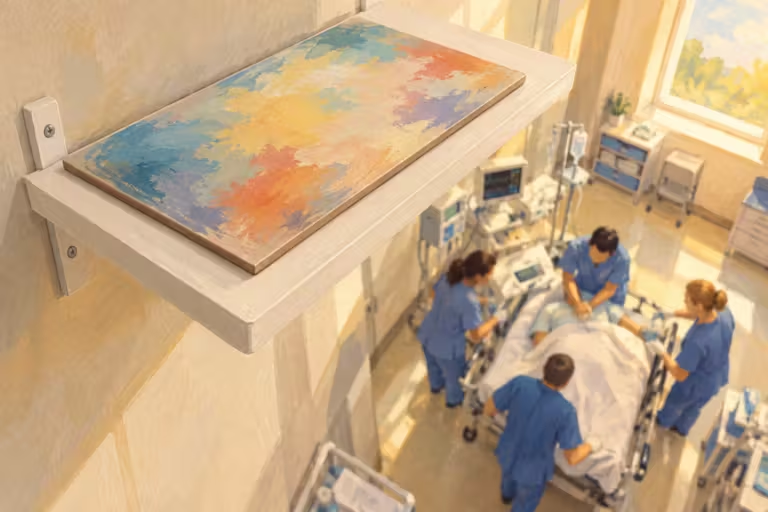
AWARE: the pictures hidden on the shelves
Fifteen hospitals put up pictures that could only be seen from the ceiling, to check whether anyone saw them during a cardiac arrest.
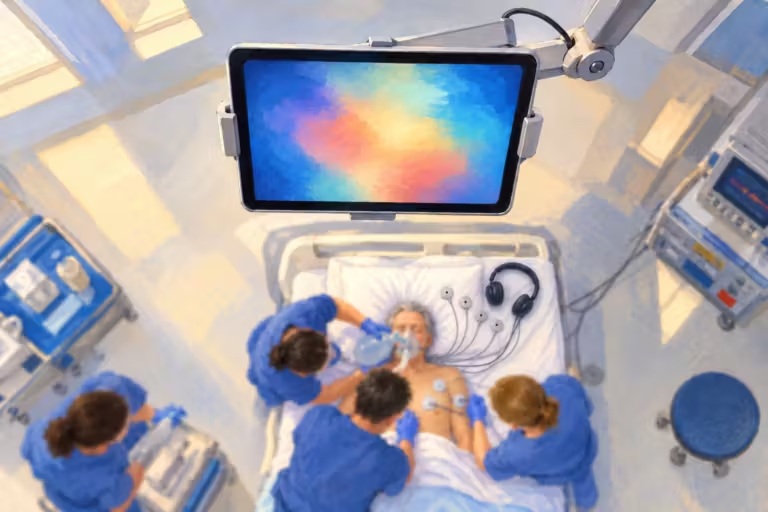
AWARE II: a random picture and the brain on the screen
Above the patient was a tablet with a random picture. Headphones said the names of three fruits. And the doctors measured the brain during resuscitation.

Van Lommel: 344 cardiac arrest survivors in ten hospitals
Ten hospitals asked every cardiac arrest survivor what they remembered. They saw them again after 2 and 8 years.