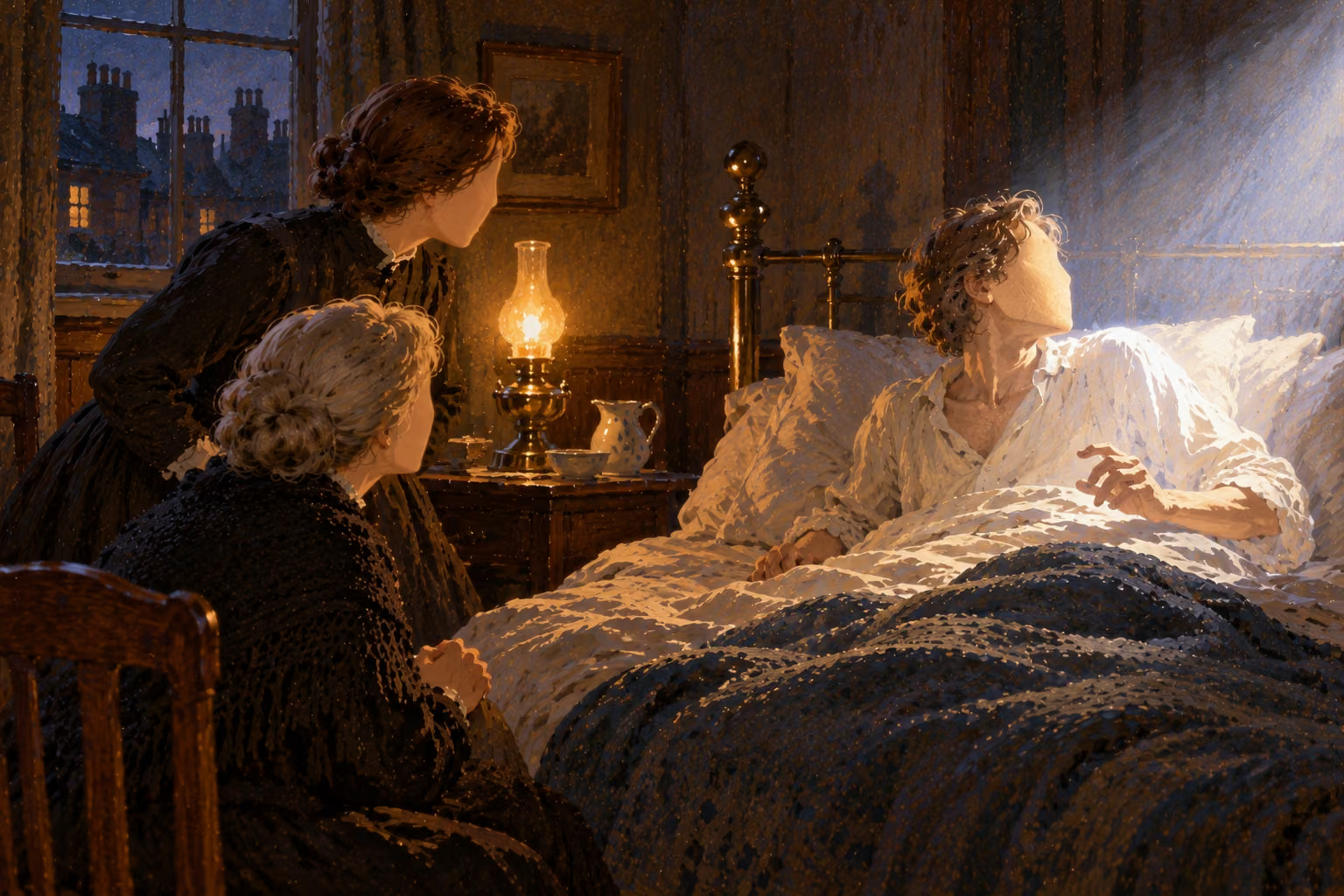
A real-life story · Leeds, England, 1880
John Ogle’s deathbed vision: George Hanley
In 1880, John Ogle was dying in Leeds, in the north of England. An hour before he died, he said he could see one of his brothers, who had died many years earlier. Right after that, he said the name of an acquaintance, George Hanley, in surprise. According to his mother, George Hanley had died ten days earlier. No one had told John.
The physicist William Barrett included this case in his book about what dying people see. It is one of the few cases in that book that can be partly checked. Today the civil register records the death of a George Hanley from the area where that acquaintance lived, before John’s death. We tell the story step by step and then look at what could be checked. If you only want the evidence, go straight to what can be checked.
Step 1
Summer 1880 · Told by his sister Harriet
John Ogle is dying in Leeds, and his mother arrives from the village where George Hanley lived
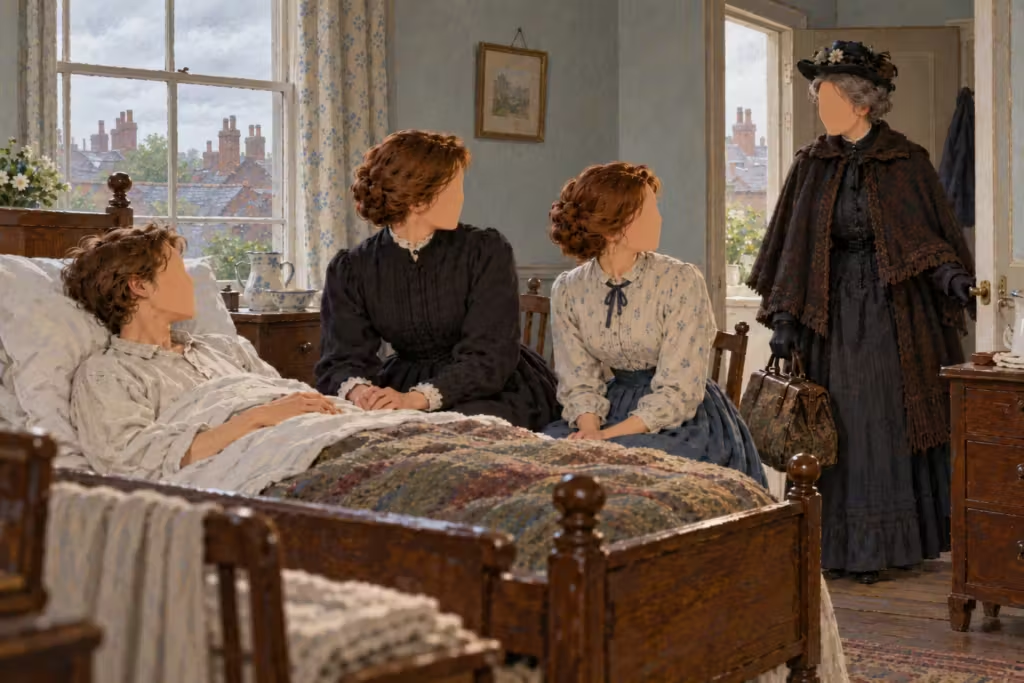
John Ogle was 35 and lived in Leeds, a city in the north of England. That summer he was dying. The account doesn’t say what from.
His family was with him. His sister Harriet was there, and so was a sister-in-law of Harriet’s. And his mother was there. She had come from Melbourne. This Melbourne is a village in Yorkshire, England, not the city in Australia. According to Harriet, it is about 40 miles from Leeds.
George Hanley lived in Melbourne. He was an acquaintance of John’s, but not a close friend.
Harriet, his sister, wrote it all down four years later.
Step 2
An hour before he died · Told by Harriet
John looks up and calls out to Joe, his dead brother
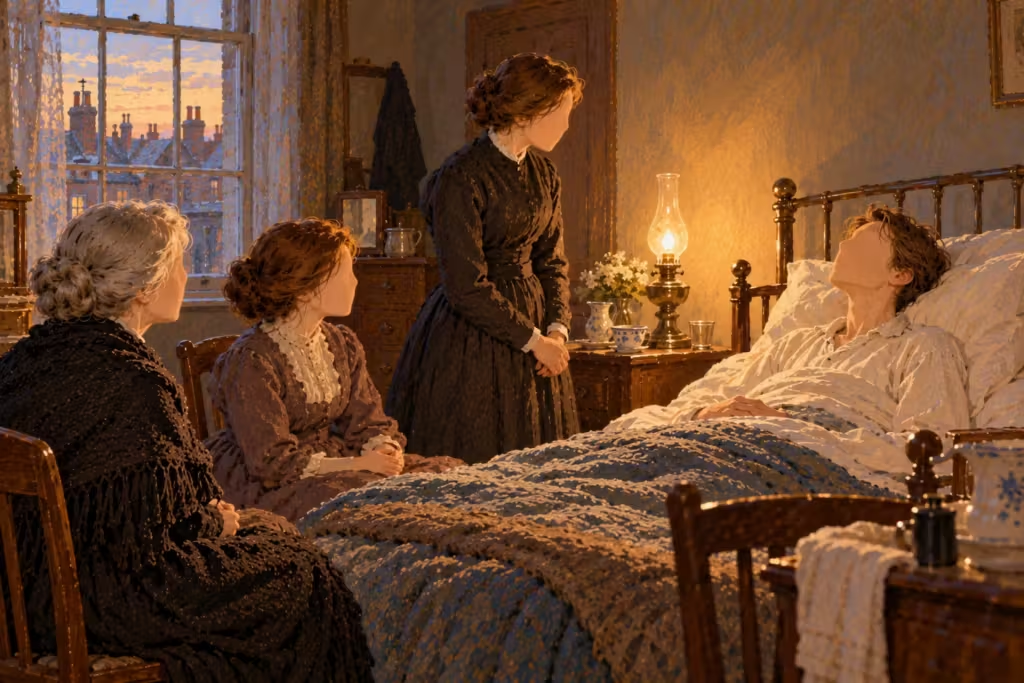
An hour before he died, John looked up with a fixed, interested gaze. He seemed to see someone. He said:
“Joe! Joe!”
Joe was another of John’s brothers. He had died about sixteen years earlier.
Right away, John said another name.
Step 3
Right after · Told by Harriet
John cries out George Hanley’s name in surprise
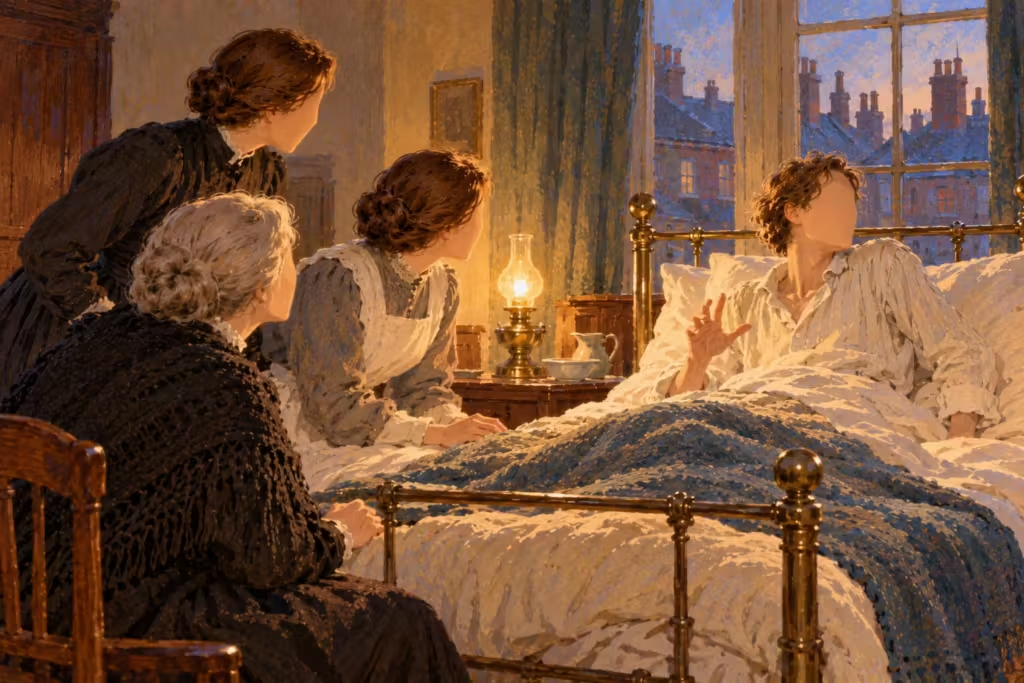
Immediately afterward, John exclaimed with great surprise:
“George Hanley!”
George Hanley wasn’t family. He was the acquaintance from Melbourne, the mother’s village.
His mother was the most surprised of all.
Step 4
At the bedside · Told by Harriet
His mother says George Hanley had died ten days earlier
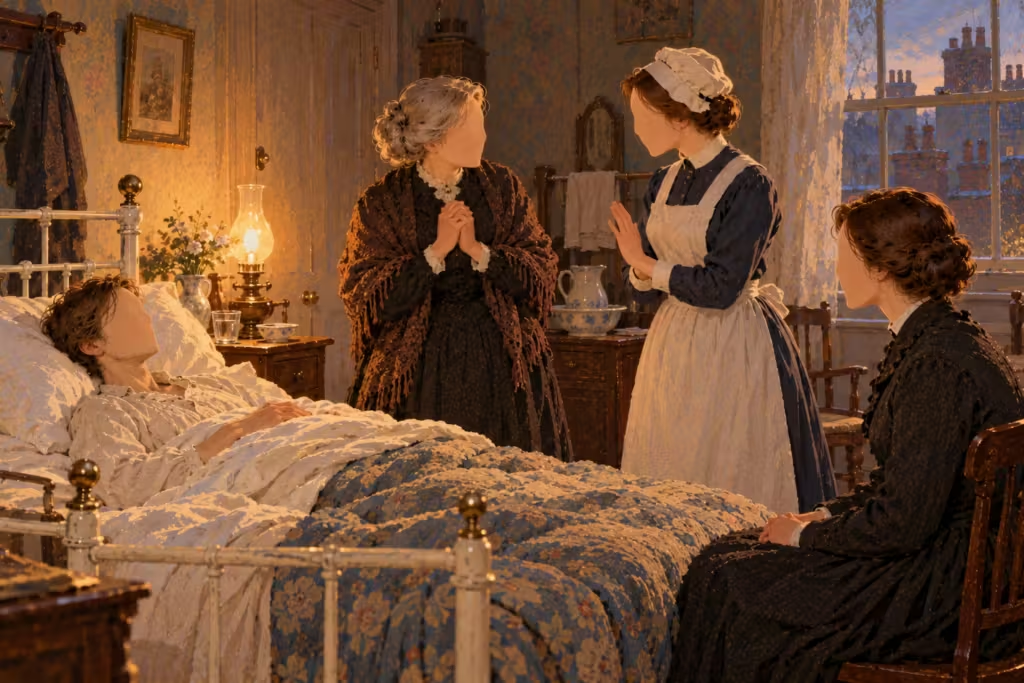
His mother was astonished. Harriet wrote down what she said:
“How strange he should see George Hanley; he died only ten days ago.”
Then the mother asked Harriet’s sister-in-law whether anybody had told John that George Hanley had died. The sister-in-law answered that no one had.
According to Harriet, the mother was the only person in the room who knew George Hanley had died.
John died soon afterward. Harriet was there, and four years later she signed a statement saying she had witnessed it all.
Step 5
From 1884 to 1926 · Told by William Barrett
Harriet signs her account in 1884, and the case ends up in a book
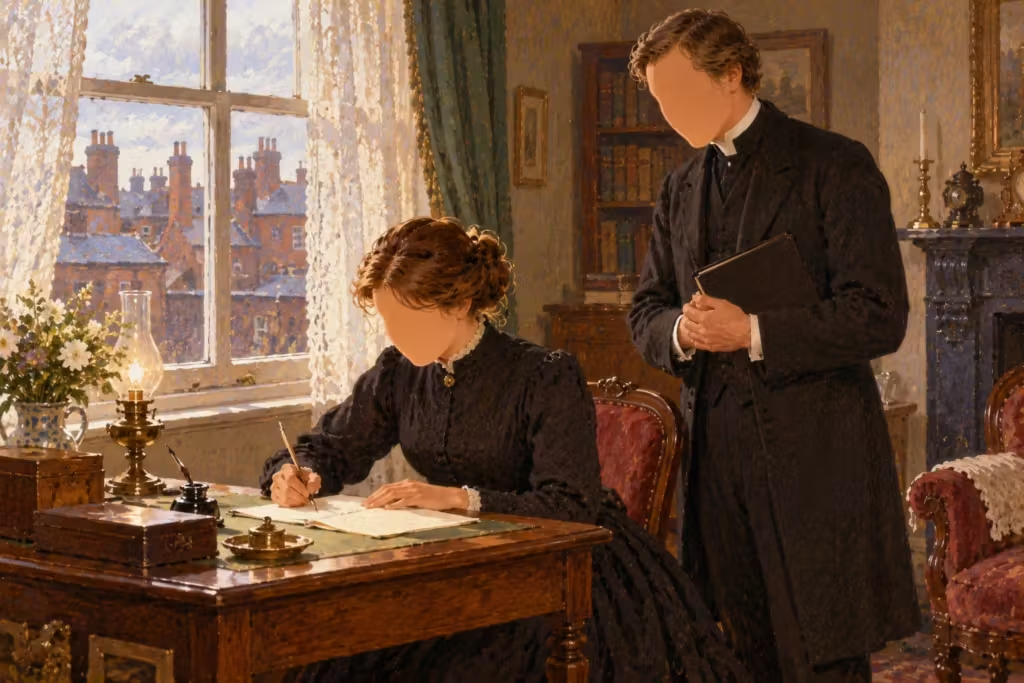
In 1884, Harriet lived in Manchester. There she wrote down and signed what she had seen. She gave it to the Reverend J. A. Macdonald. Macdonald collected cases for the Society for Psychical Research. It was a London society that studied apparitions, visions, and other things science couldn’t explain.
Later, the society asked Harriet a few questions. Harriet answered that John was neither delirious nor unconscious. She also said that George Hanley was an acquaintance, not a close friend. And she added that no one spoke of George Hanley’s death in John’s hearing.
The society published the case in its journal. In 1926, the physicist William Barrett copied it into his book Death-Bed Visions. On the page about William Barrett’s book, we explain what the book is like and what can be checked in its other accounts.
Harriet wrote that John died on July 17, 1879, a year earlier than the date we give here. The civil register lets us check it.
Step 6
Today · The civil register
The civil register records both deaths in 1880, George Hanley’s first
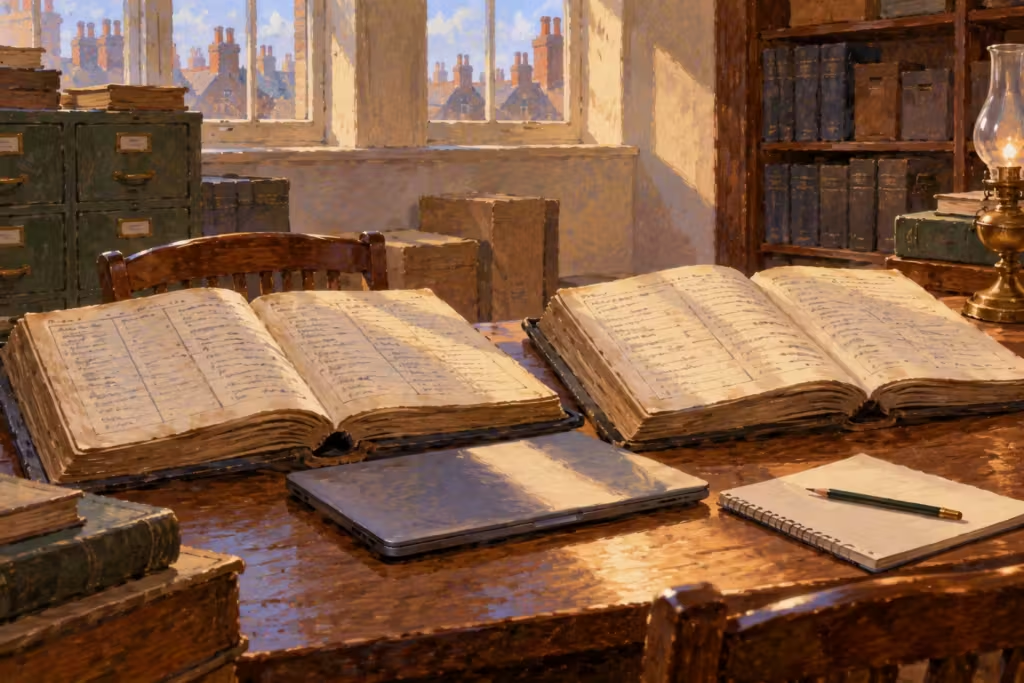
In England, every death is recorded in a civil register. Its indexes can be searched online today. They record deaths by quarter of the year.
- John Atkin Ogle, aged 35, died in Leeds between July and September 1880. In 1879 there is no death of an adult John Ogle in Leeds. Harriet got the year wrong.
- George Hanley, aged 69, died between April and June 1880 in the Pocklington district. Melbourne is one of the villages in that district.
So a George Hanley from the Melbourne area died before John. He is very probably John’s acquaintance. It isn’t completely certain, because the dates don’t fit well with the ten days the mother mentioned. We explain this further down.
The question remains: how could John name George Hanley, if no one had told him he had died?
Frequently asked questions
What is a “Peak in Darien” case?
It is when a dying person says they see someone they believed was alive. Later it turns out that person had already died. The name comes from The Peak in Darien, an 1882 book by the writer Frances Power Cobbe, who collected cases like this. The case of John Ogle and George Hanley is one of those William Barrett includes in his book. There is more about these cases on the page about Barrett’s book.
Is the Melbourne in John Ogle’s case the city in Australia?
No. It is Melbourne, a village in Yorkshire, in the north of England. George Hanley lived there, and John Ogle’s mother came from there when she arrived in Leeds.
Is John Ogle’s vision a near-death experience?
Not exactly. In a near-death experience, the person survives and tells afterward what they went through. John Ogle didn’t survive. He said what he was seeing out loud an hour before he died, and his sister Harriet told it.
Where this story comes from
Books
- William Barrett, Death-Bed Visions (Methuen, London, 1926), chapter 2, pages 20 to 21, at the Wellcome CollectionRead for free
Case documents
- The signed statement of Harriet H. Ogle, John’s sister, written in Manchester in 1884 and collected by the Reverend J. A. Macdonald. Published in the Proceedings of the Society for Psychical Research, volume 5, page 460, and copied in Barrett’s book. The book spells the name “John Alkin Ogle”
- Harriet H. Ogle’s answers to the society’s questions, in the same places
- The death index of the civil registration of England and Wales: John Atkin Ogle, aged 35, Leeds, third quarter of 1880 (volume 9b, page 348), and George Hanley, aged 69, Pocklington, second quarter of 1880 (volume 9d, page 47), searched on FreeBMDSearch FreeBMD
Learn more
- William Barrett’s book: what dying people see, with its 61 accountsRead
- Doris’s deathbed vision, the other strong case in the same chapterRead
- What is a near-death experience?Read
Our archive
- Our reading of the case in the original book, our search for John Ogle and George Hanley in the death register, and its score on our five criteria, as of October 24, 2026
Keep reading
Asturias, Spain, 2005
María Teresa Álvarez Aramendía
She says that while she was in a coma she saw her doctor call another doctor from the health center at 8:10. According to her, months later he told her that he had made that call.

Colombia, around 1985
Luding Coenen
She had a hemorrhage in childbirth and says she saw her grandparents and a light. She says that years later she saw buildings falling at two in the morning. It was the time of an earthquake in Turkey.

San Diego, 2004 or 2005
Randy Kay
Randy Kay, a medical-company executive in San Diego, was hospitalized with blood clots in his lungs and caught a very serious infection in the hospital. He said his heart stopped, that he met Jesus, and that when he came back he heard beside him the same song he had heard with Jesus.

Reincarnation: The top 5 people who remember past lives
We asked them the same five questions as this story. A 32-page PDF, free in your inbox.
Check your email
We have sent you an email. Open it and press the button to confirm. If you cannot see it, check your spam folder.