A real-life story · Paris, France, 1985
Howard Storm’s near-death experience
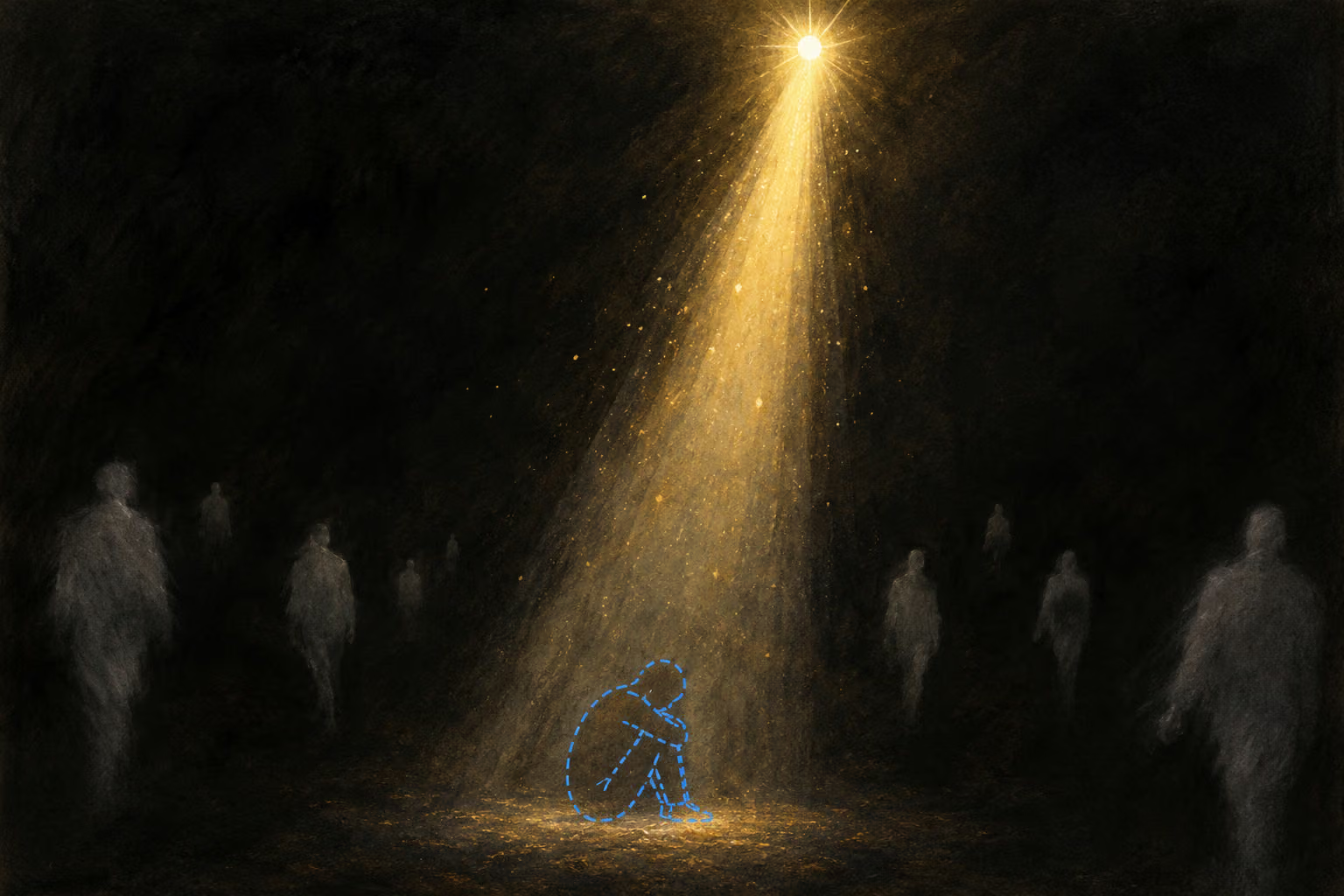
Howard Storm was an art professor who did not believe in God. In 1985 he nearly died in a Paris hospital. He later said that he left his body and that beings dragged him into total darkness. He also said that when he called for help, a light rescued him.
Howard’s story is one of the best-known distressing experiences. It doesn’t begin with peace and light, but with fear. And it happened to a man who was sure there is nothing after death. What happened to him that night?
Step 1
Before · Saturday, June 1, 1985 · Doing fine
An art professor who doesn’t believe in God
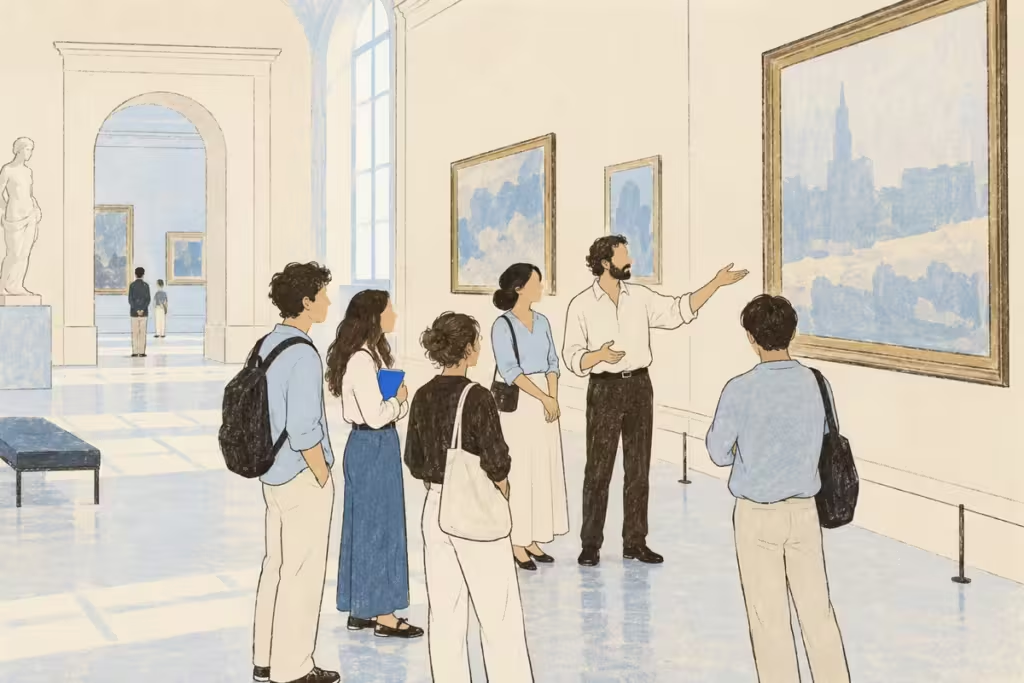
Howard Storm is 38. He teaches art at a university in Kentucky, in the United States. He paints and makes sculptures.
He is in Paris with his wife, Beverly, and a group of students. It is the next-to-last day of a tour of Europe’s museums.
He doesn’t believe in God. He is sure that it’s all over when you die. The body stops working and nothing is left.
Step 2
11 a.m. · Critically ill · Howard’s account
A pain that knocks him to the floor
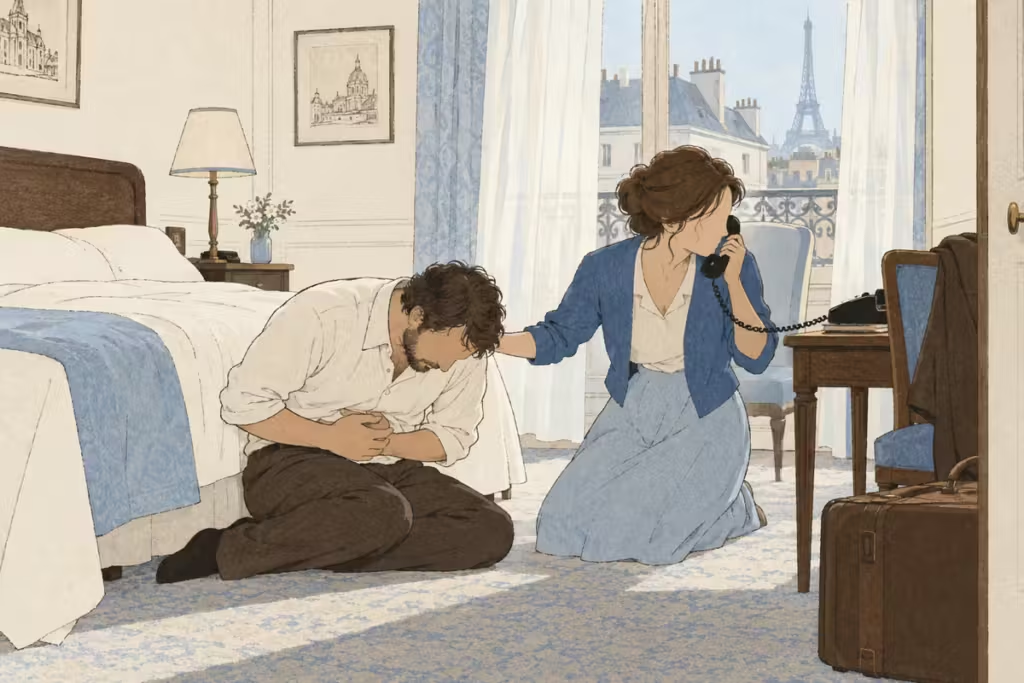
In the hotel room, he is suddenly hit by the worst pain of his life. His duodenum has perforated. That is the first part of the intestine, just past the stomach. Digestive juices are leaking into his abdomen.
A doctor arrives. He gives Howard a shot of morphine for the ambulance ride and tells him he needs surgery as soon as he gets to the hospital. If he doesn’t have surgery, he will die.
Step 3
For ten hours · Critically ill and awake · Howard’s account
Ten hours without a surgeon
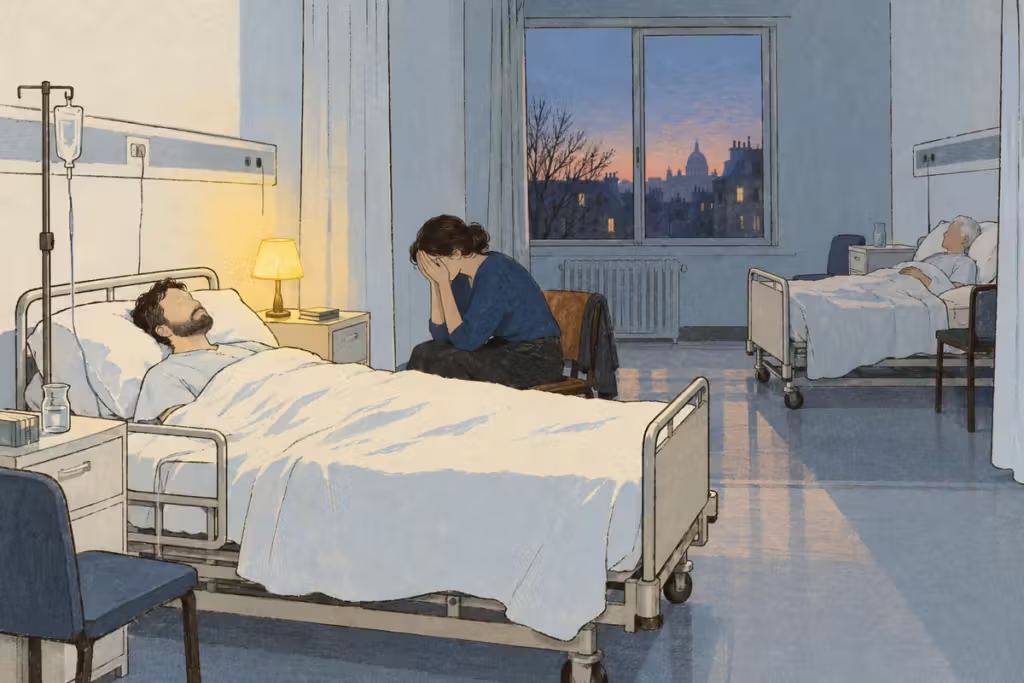
At the hospital, they leave him in a room. It is the weekend. Howard says there is only one surgeon on call for the whole hospital. The hours go by, and no one operates.
No one gives him anything for the pain, either. Only the surgeon could prescribe it, and the surgeon doesn’t show up. In the afternoon they give him a shot to relax his stomach, but it has no effect.
After dark, they tell him there will be no surgery until the next day. He feels he is dying. He tells his wife it is time to say goodbye. She cries. He closes his eyes.
Step 4
That night · Unconscious · Howard’s account
Howard says he sees himself standing by the bed
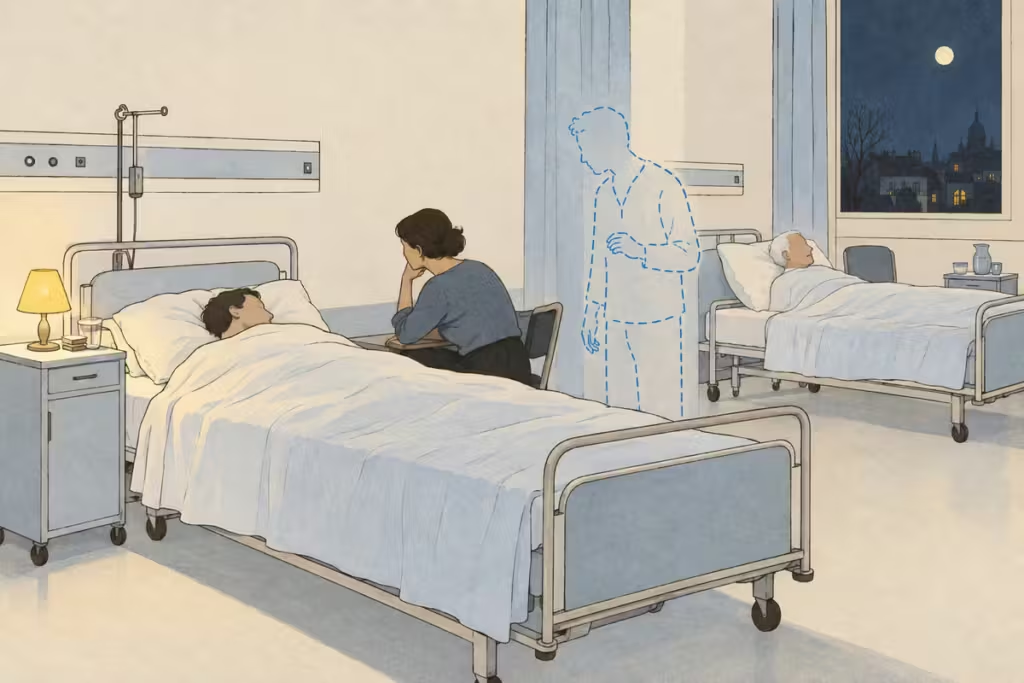
Suddenly he is standing next to the bed. He feels better than ever. He sees, hears, and touches everything more intensely than at any time in his life.
He speaks to his wife, but she doesn’t hear him. His roommate is a kind 68-year-old Frenchman. Howard shouts at him, but he doesn’t react either.
In the bed lies a body covered with a sheet. It looks like him. He refuses to believe it is him. He is alive, standing right there.
Step 5
Unconscious · Howard’s account
Howard says people call to him from the hallway
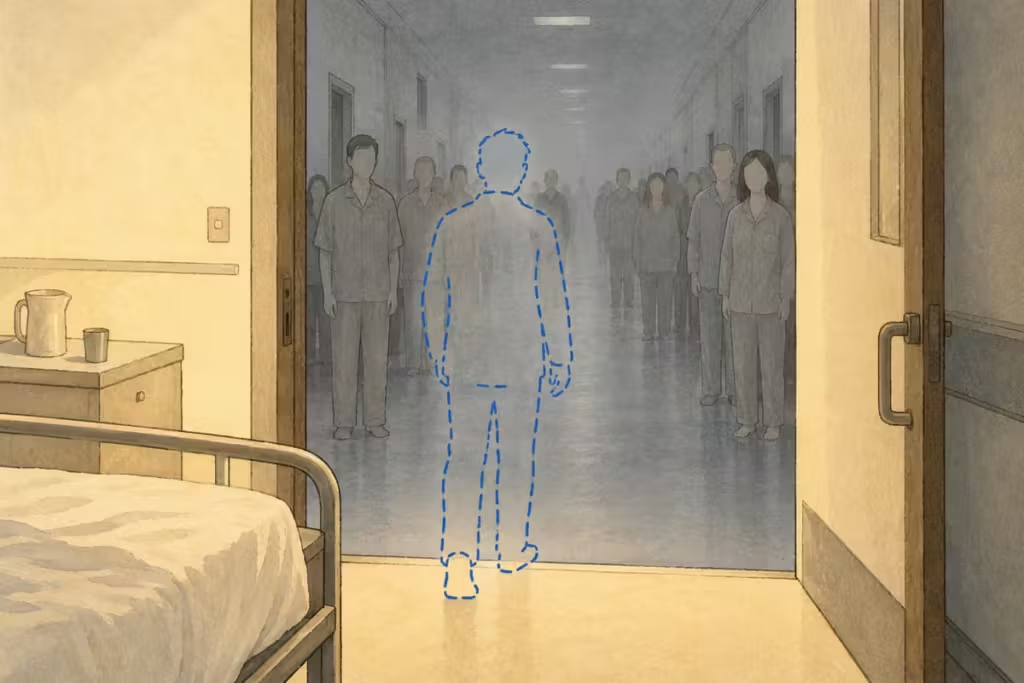
Voices call him by name from outside the room:“Howard, Howard, hurry up.”
In the hallway there is a group of men and women. They are very pale and dressed in gray. He thinks they have come to take him to surgery. “We know all about you,” they tell him. He follows them.
The walk is very long. There are no walls, no ceiling, no stairs. It keeps getting darker. And they keep getting ruder. They start to mock him.
Step 6
Unconscious · Howard’s account
Howard says he is attacked in the dark
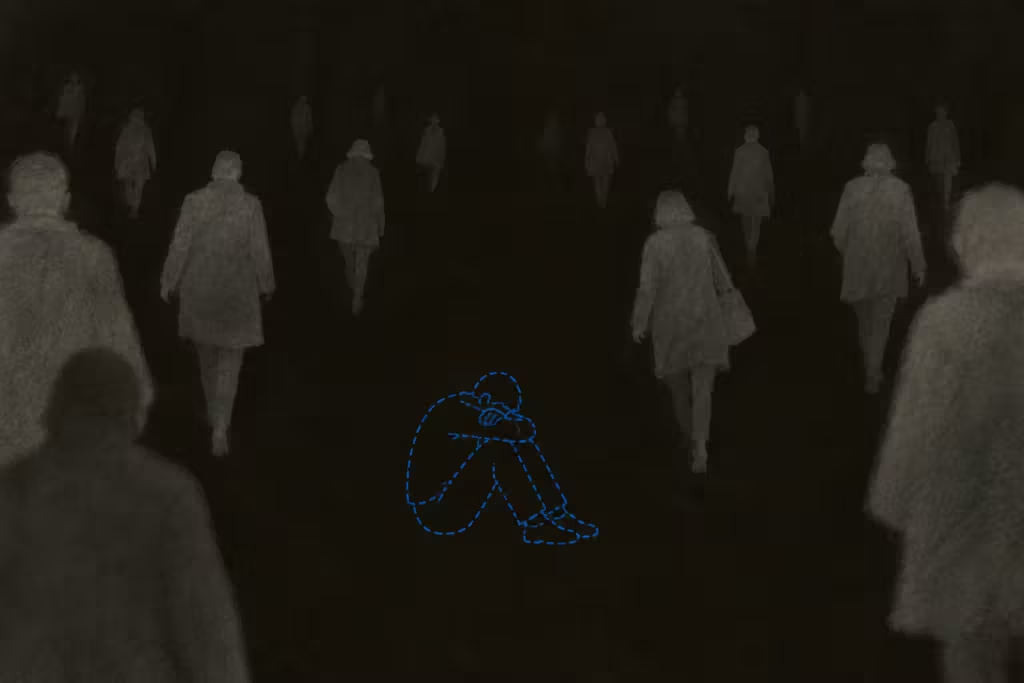
They reach a place with no light at all. By now there are a great many of them, perhaps hundreds. Howard tells them he won’t go any farther.
Then they push him, scratch him, and bite him. He fights back, but it does no good. He says that what they want is to hurt him and laugh.
In the end he is left lying on the ground, “like roadkill.” He is still alive. And there is no way out.
Step 7
Unconscious · Howard’s account
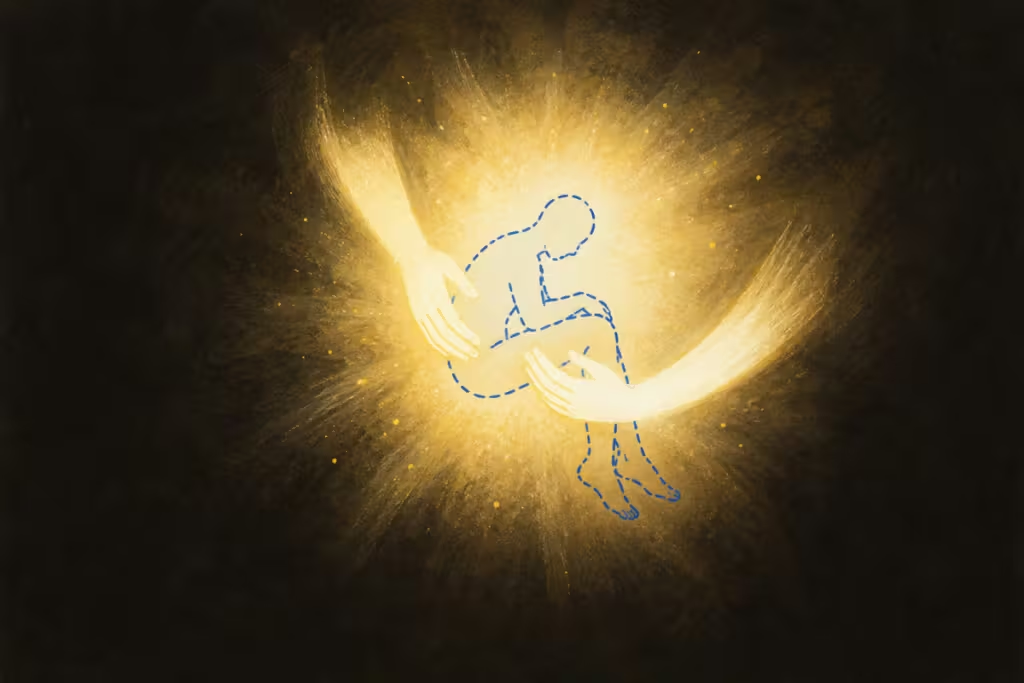
Howard says he prays and a light appears
He hears a voice tell him: “Pray to God.” He doesn’t believe in God and doesn’t know how to pray. He thinks back to the Sunday school he went to as a boy. And he says out loud the little he remembers of a psalm.
The beings around him fly into a rage and shout that there is no God. But the more he says God’s name, the farther they retreat into the darkness. He is left alone for a long time.
Then he remembers a song he used to sing as a child: “Jesus Loves Me.” And he calls out: “Jesus, please save me.”
A small light appears, like a star.
It grows until it is brighter than the sun. Arms reach out of it, lift him up, and hold him. His wounds disappear. Howard cries like a child. He says the light was Jesus.
Step 8
Unconscious · Howard’s account
Howard says he reviews his life with beings of light
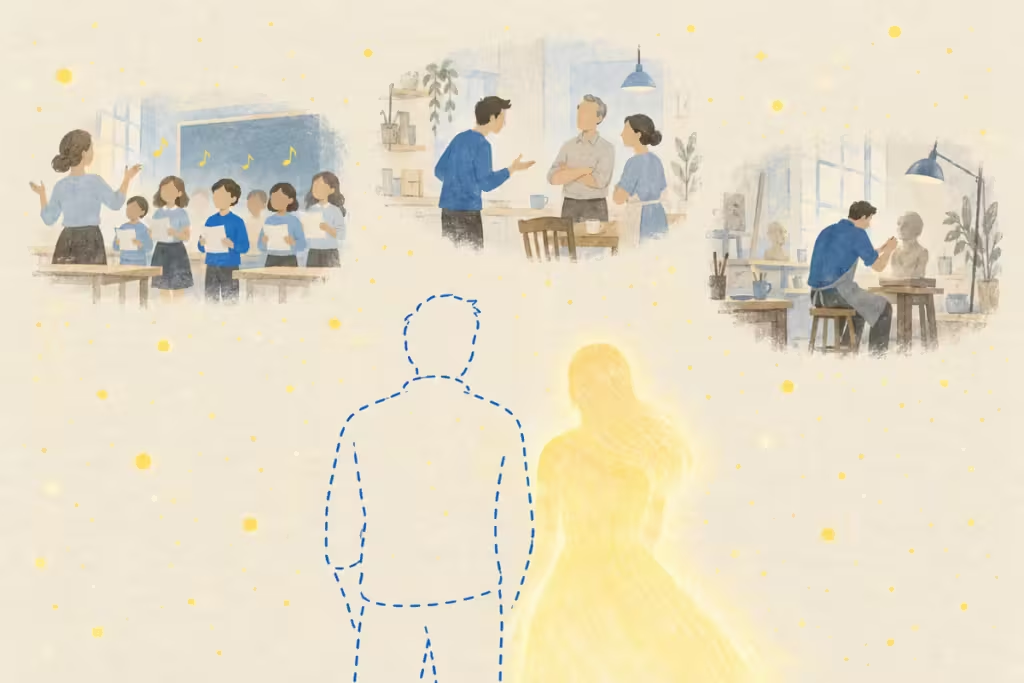
Together they rise toward something that looks like a galaxy. But these are not stars. They are beings of light. Howard feels dirty and thinks they have made a mistake about him. The light answers him without words: “We don’t make mistakes.”
Angels show him his life, in order. He sees the harm he did to his mother, his father, and his friends by being selfish. They teach him that what mattered was being kind.
Then he can ask all the questions he wants. And they give him bad news: he has to go back. He doesn’t want to.
Step 9
Around 9 p.m. · Awake · Howard’s account
He returns to his body, and the surgeon arrives
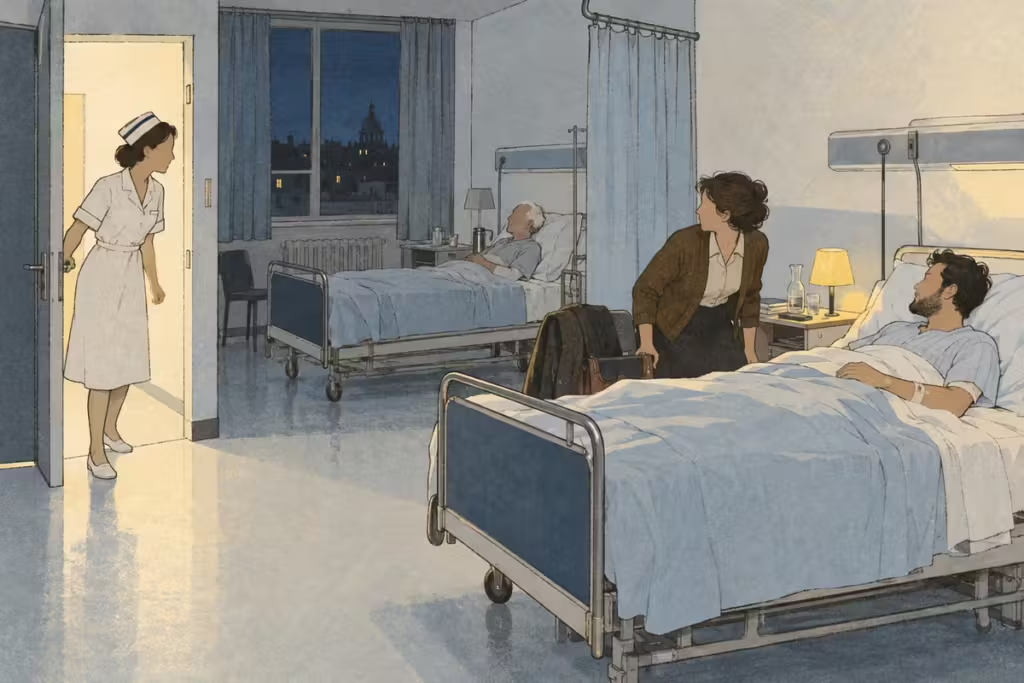
He is back in his body and feels the same pain. At that moment the nurse comes in. A doctor has arrived, and they are going to operate.
They operate that same night. When he wakes up from surgery, he knows that the most important thing in his life has just happened to him.
Step 10
The years that followed · Howard’s account and the press
He leaves the university and becomes a pastor
It takes him months to recover. When he gets back to the United States, he spends more than a month in a hospital. He spends several weeks on the critical list. He has an abdominal infection and pneumonia.
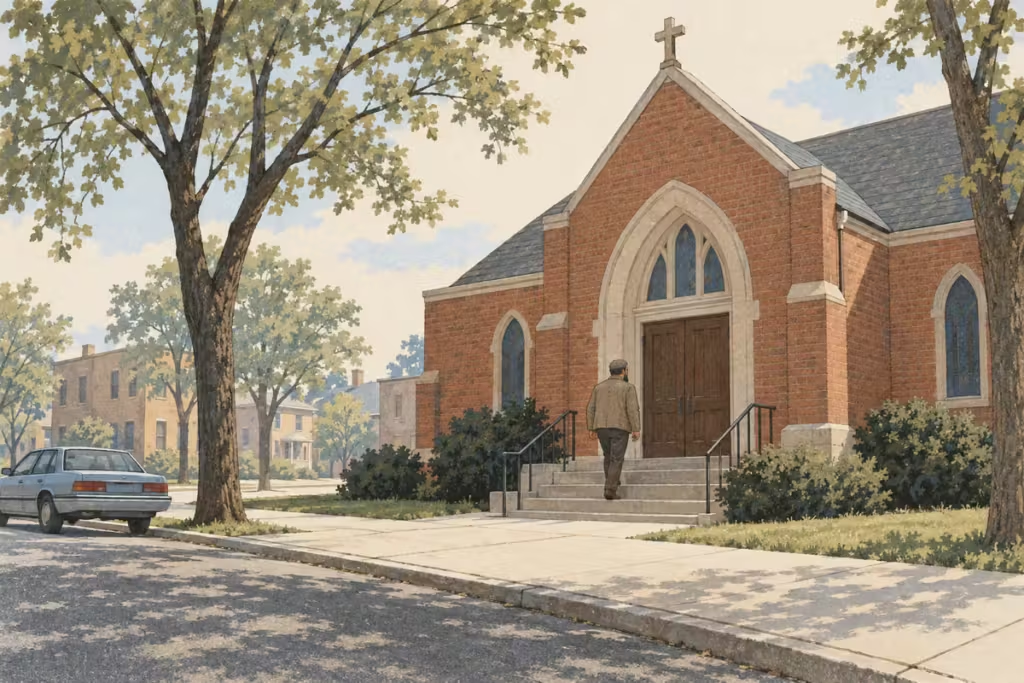
He starts going to a church near his home. Later he gives up his teaching post, studies at a seminary for three years, and becomes the pastor of a small church in Cincinnati.
In 2000 he published a book about his experience, My Descent Into Death. Since then he has told his story hundreds of times.
How many near-death experiences are distressing?
Howard is not an isolated case. Most people who report a near-death experience remember it as something good. But not all of them.
Imagine 100 people who have had one:
Each dot is a person. The 11 filled-in dots are the people who went through it with fear or distress. That is what the University of Virginia found in 2023, when it reviewed 546 accounts in its archive.
The other 89 experienced it as pleasant or neutral.
| Who and when | People | Distressing experiences |
|---|---|---|
| University of Virginia archive, 2023 | 546 | 11% |
| Intensive care patients who remembered something, United States, 1979 | 36 | 22% |
| Review of thirty years of studies, 2014 | — | up to 20% |
What these figures don’t tell you
- They are reported less often. People who have a distressing experience tend to keep quiet about it. Many of these people hide or disappear when asked about it. Two researchers wrote this in 2014. One is Bruce Greyson, of the University of Virginia. The other is Nancy Evans Bush, of IANDS, the International Association for Near-Death Studies.
- The scales give them low scores. The scales that measure whether something counts as a near-death experience were designed with the pleasant ones in mind. We did the calculation with Virginia’s own data. By that calculation, one in three distressing experiences would not reach the minimum score.
- Almost all of them are accounts people sent in. The figures come from people who chose to share their experience. Hospital studies provide hardly any figures.
That is why no one knows the real figure. Most estimates put it between 11 and 22 in 100. We explain more in What if a near-death experience is frightening? Howard’s case stands out for the way it begins. It doesn’t begin with peace and light, but with fear. And it happened to a man who expected to find nothing.
Frequently asked questions
Is Howard Storm’s near-death experience real, or has it been debunked?
It hasn’t been debunked, and it hasn’t been proven either. What we have of Howard Storm’s experience is his own account, told in his book and in interviews. There are no documents or witnesses to check it against. That is why our method can’t assess it, for or against. This doesn’t mean it didn’t happen to him. It means there is nothing to measure. We explain this in “What can be checked.”
What did Howard Storm see in hell?
Howard Storm says a group of beings led him into total darkness, where they pushed, clawed and bit him. He says that when he called out to Jesus for help, a light appeared and rescued him. In 1997 he said on television: “There’s no doubt in my mind that I went to hell.” We tell it step by step in his story.
Was Howard Storm an atheist?
Yes, by his own account. Howard Storm says that before 1985 he didn’t believe in God and was sure that everything ends when you die. After his experience he spent three years at a seminary and became the pastor of a Christian church. According to his website, he is now the pastor of a church in Kentucky.
What books has Howard Storm written?
The best known is My Descent Into Death, from 2000. In that book he tells the story of his experience. His website lists several more books. My Descent Into Death is listed in the sources at the end.
Did Howard Storm, the near-death experiencer, die?
We have found no report of his death. Another Howard Storm died in May 2026, at 94. He was a television director. The Howard Storm in this story was born in 1946 and was 38 when he had his experience in Paris.
Where this story comes from
Books
- Howard Storm, My Descent Into Death (2000; Doubleday, 2005), his full accountBuy the book
Documentaries
- Regresos inesperados [Unexpected returns] (2024), a 20-minute documentary dubbed into Spanish
- Unsolved Mysteries (NBC, 1997), season 9, episode 5: the segment on HowardWatch on YouTube
Interviews
- Howard Storm tells his story on The Other Side en Español (2023), 13 minutes, dubbed into SpanishWatch on YouTube
- A long interview with Howard Storm (2001), on his channelWatch on YouTube
Press
- A second chance at life, Deseret News (1998), on his career and how his life changedRead for free
Studies
- Bruce Greyson (2023), on the dark side of near-death experiences, Journal of Scientific ExplorationRead for free
- Nancy Evans Bush and Bruce Greyson (2014), on distressing near-death experiences, Missouri MedicineRead for free
To understand more
- How does life change after a near-death experience?Read
Our archive
- His record, with the book, the 1997 segment, and the interviews, as of October 9, 2026
Keep reading

Mauritius, 1982
Ian McCormack
In 1982, Ian McCormack, a 26-year-old surfer from New Zealand, was stung by five jellyfish while diving at night off the island of Mauritius. He said that in the hospital he went through a darkness, that a light brought him out, and that he met Jesus. According to him, his mother dreamed that same night that he was dying.

Los Angeles, 2010
Rajiv Parti
In 2010, Rajiv Parti, a chief anesthesiologist in California, had emergency surgery. He said he watched the operation from the ceiling, heard the anesthesiologist tell a joke, and saw his mother in New Delhi.
Ohio, 1968
Mickey Robinson
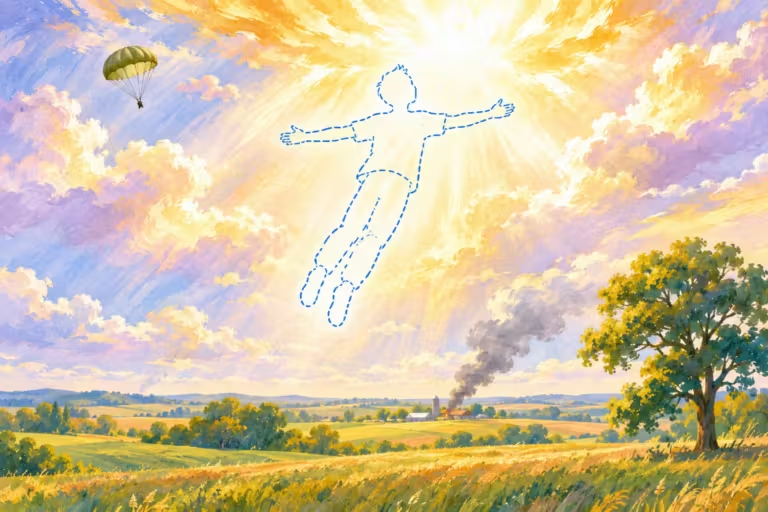
In 1968, Mickey Robinson, a 19-year-old skydiver, survived a burning plane crash in Ohio. He said he left his body, came before God, and saw scenes of his future that later came true.
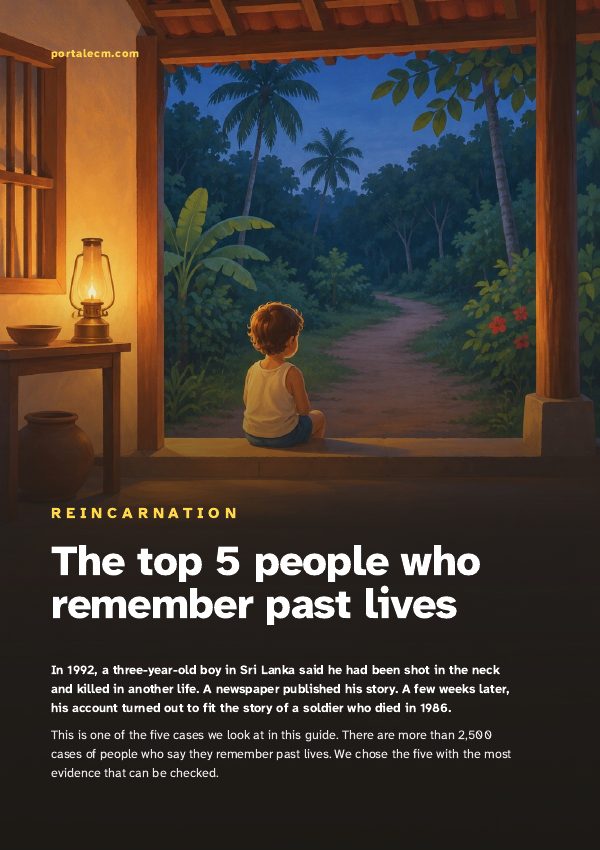
Reincarnation: The top 5 people who remember past lives
We asked them the same five questions as this story. A 32-page PDF, free in your inbox.
Check your email
We have sent you an email. Open it and press the button to confirm. If you cannot see it, check your spam folder.