A real-life story · Hong Kong, 2006
Anita Moorjani’s near-death experience
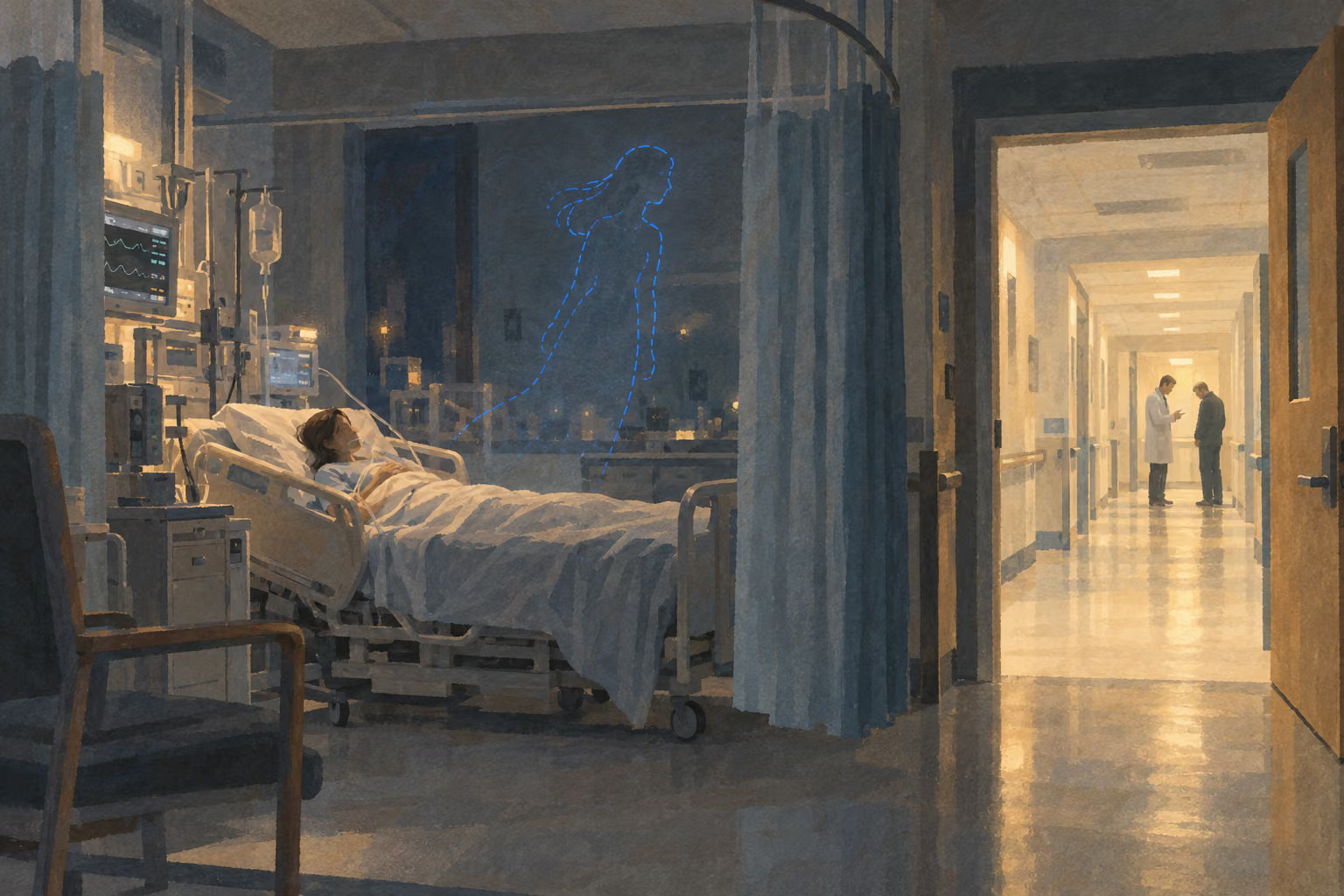
Anita Moorjani had lived with cancer of the lymph nodes for four years. In February 2006 she fell into a coma in Hong Kong. She later said that she left her body. She said she heard a doctor in the hallway tell her husband she would not survive the night. She also said that she met her father, who had already died, and that she chose to come back.
Anita’s book is called Dying to Be Me, and it has been read around the world. Also, hers is one of the few cases in which two oncologists reviewed her medical records. She says she overheard a conversation about 12 meters from her bed. Can that be checked?
Step 1
Before · Anita’s account
A life between three cultures

Anita is born in Singapore to Indian parents and grows up in Hong Kong. At home the family speaks Sindhi. At school she speaks English. On the street she speaks Cantonese.
Her father is strict and wants her married young, as their culture expects. Her family goes as far as arranging her engagement to a man she has met only twice. A few days before the wedding, Anita breaks it off.
At the end of 1992 she meets Danny Moorjani. They marry on December 6, 1995. She describes herself as someone full of fears.
Step 2
April 26, 2002 · Anita’s account
She is diagnosed with lymphoma
In 2001 her best friend, Soni, is diagnosed with cancer. Soon after, Danny’s brother-in-law is diagnosed with cancer too. Anita starts reading everything she can find about cancer. And she starts to believe that everything causes cancer.
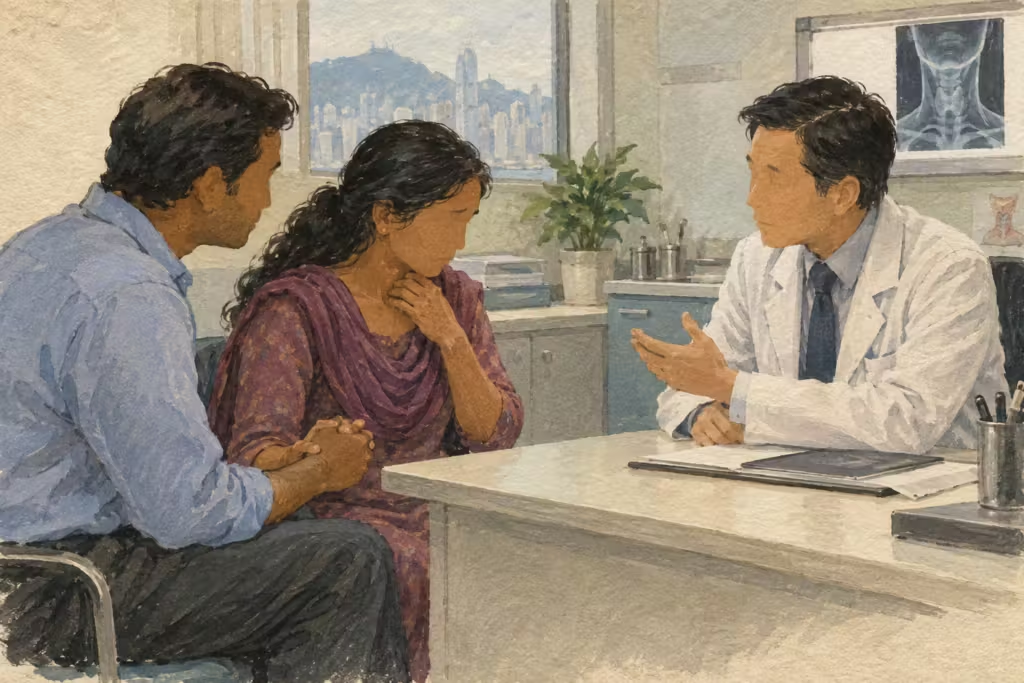
In April 2002 she finds a lump at the base of her neck. On April 26 she is told it is early-stage Hodgkin lymphoma. It is a cancer of the lymph nodes.
She sees what chemotherapy is doing to Soni. Her mind is made up: “I will not have chemotherapy!”
Step 3
2002 to 2005 · Anita’s account
Four years looking for another cure

Soni dies of cancer. Anita is frightened and desperate. She tries hypnotherapy, meditation, prayer, mantras, and Chinese herbs. She quits her job and spends six months in the Indian city of Pune. There she studies with a teacher of yoga and Ayurveda. Ayurveda is the traditional medicine of India. She comes home convinced she is cured.
Back in Hong Kong, people ask her what she did, and they don’t believe her. Her doubts come back. She moves from Chinese medicine to naturopathy, and each one tells her the opposite of the last. She becomes afraid of almost any food.
And her health starts to decline fast.
Step 4
Late 2005 and January 2006 · Anita’s account
At home, unable to lie down
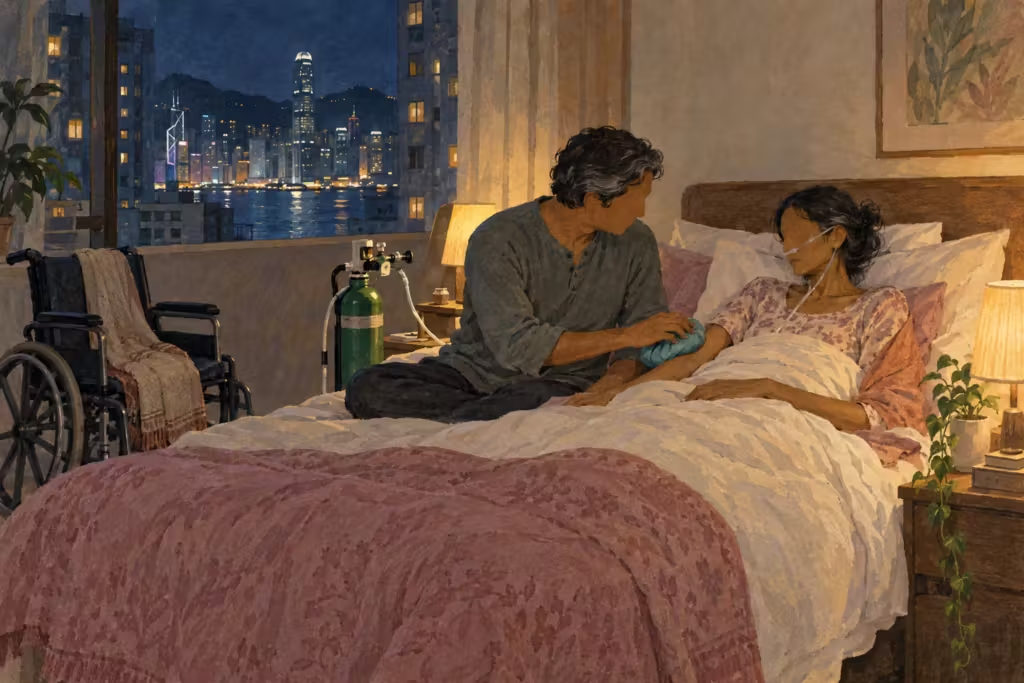
Her lungs are full of fluid. She carries an oxygen tank everywhere and cannot lie down, because she chokes. Open sores appear on her skin. She uses a wheelchair and can barely lift her head off the pillow.
A doctor speaks to Danny alone. He tells him that Anita has three months at most. He also tells him it is too late even for chemotherapy. Danny does not tell her until months later.
On February 1, 2006, Anita feels at peace for the first time in a long while. She is given morphine and falls asleep.
The next morning she does not open her eyes. Her face, arms, and legs are swollen.
Step 5
February 2, 2006 · In a coma · Anita’s account
Anita says she had never felt better
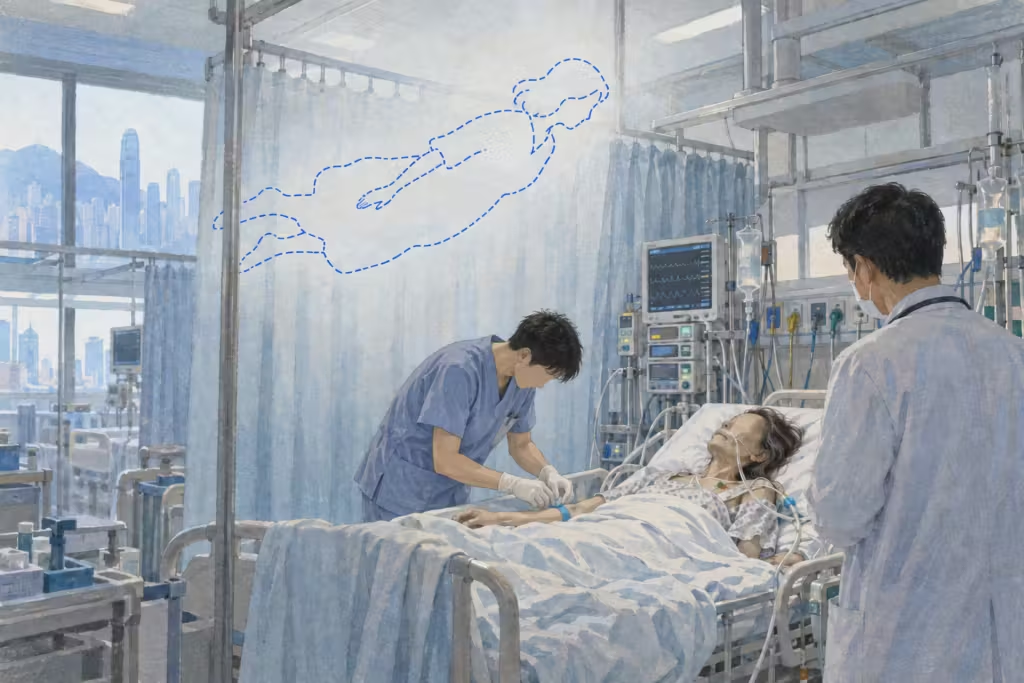
Danny takes her to one of the largest hospitals in Hong Kong. She has never been treated there. Anita arrives in a coma. “Your wife’s heart may still be beating,” the oncologist tells Danny, “but she’s not really in there.”
Anita says she hears all of it. “I’ve never felt better in my life!” she thinks. Her mother is crying. Anita wants to tell her, but she cannot make a sound.
Her eyes are closed, but she says she knows who comes in and what they do. In the ICU she hears a male nurse say, in a panic: “I can’t find her veins!”
She feels no pain. She feels light and free, as if she had walked out of a prison.
Step 6
February 2 · In a coma · Anita’s account
Anita says she hears a doctor in the hallway
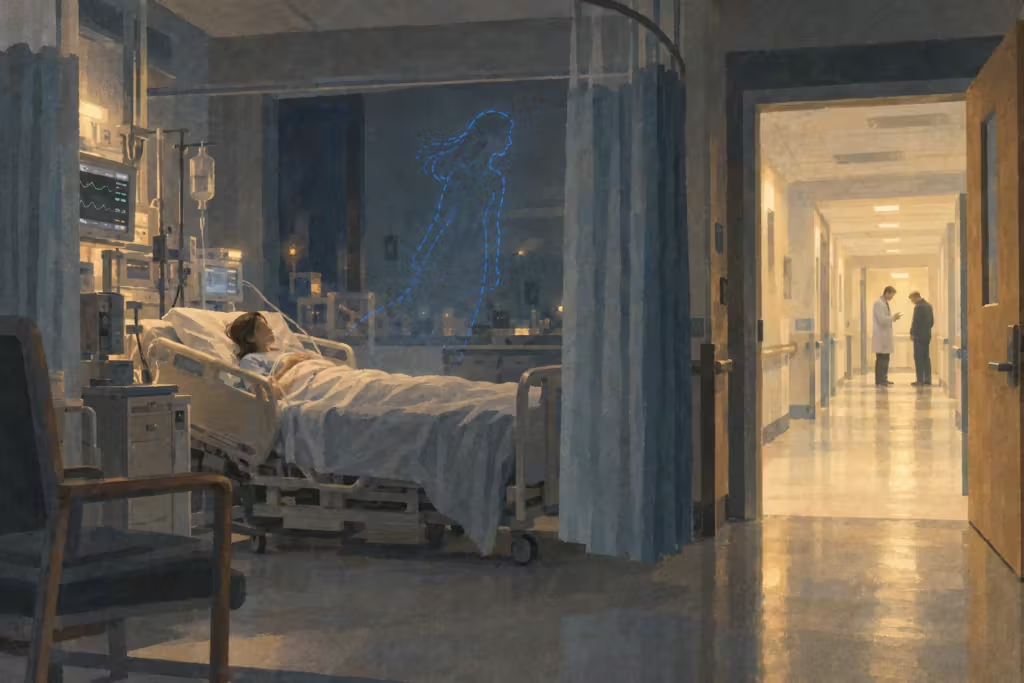
A doctor is talking with Danny outside the ICU, in the hallway. They are about 12 meters from Anita. Anita says she can hear them, and that this does not strike her as strange at all.
She has never seen this doctor before. The doctor explains to Danny that Anita’s organs have shut down and that she has tumors throughout her lymphatic system.
“She won’t even make it through the night.”
“I don’t want to lose her,” Danny answers. Anita wants to shout to him that she is fine. But Danny cannot hear her.
Step 7
In a coma · Anita’s account
Anita says she sees her brother on a plane
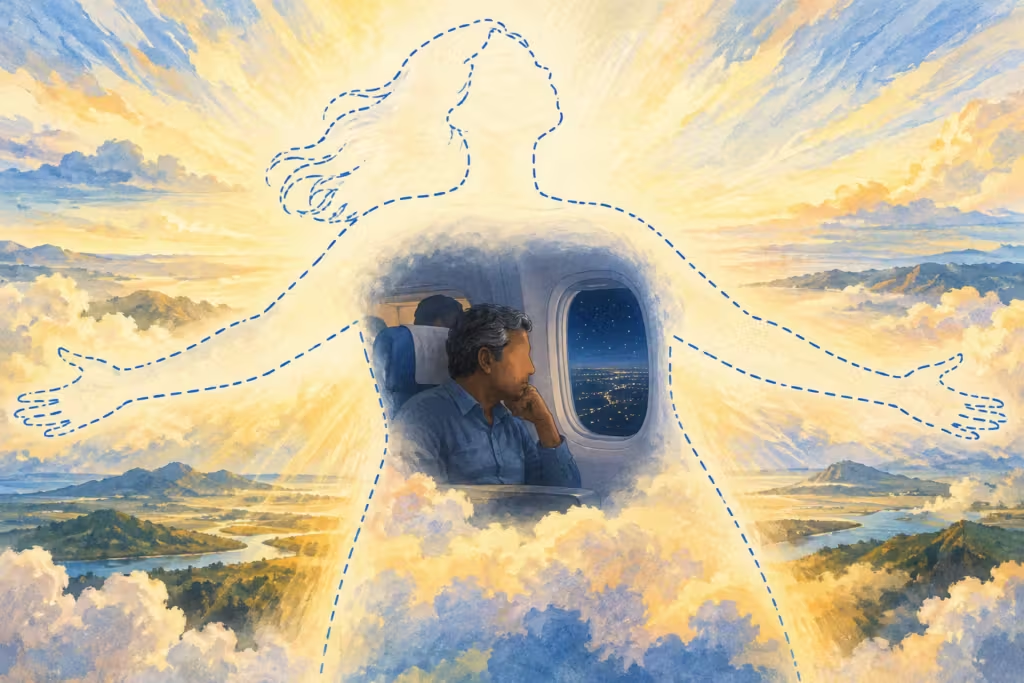
Anita feels herself expanding until she fills everything. There is no longer any separation between her and everything else. She says she feels a love that no words can describe.
At the same time, she says she sees her brother Anoop thousands of miles away. He is on a plane to Hong Kong, worried about her. “Oh wow, there’s Anoop! He’s on an airplane.”
She wants her body to hold on until he gets there.
Step 8
In a coma · Anita’s account
Anita says she meets her father and Soni
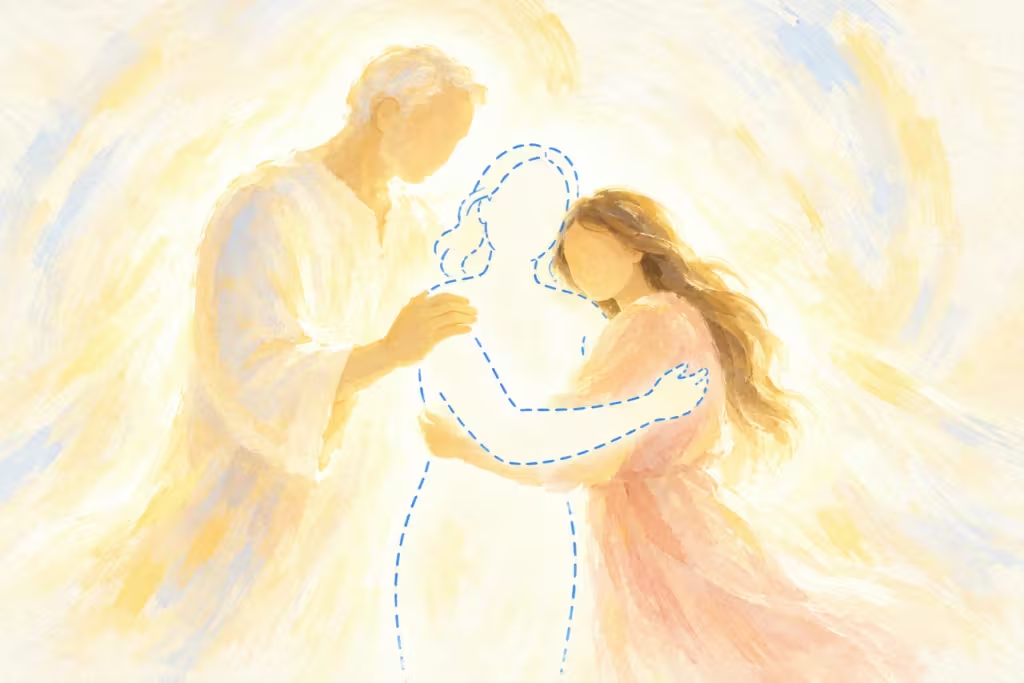
Anita senses the presence of her father, who died ten years earlier. They were never very close. But Anita says that there, all she feels is that her father loves her. They use no words. They understand each other through what they feel.
Then she recognizes her friend Soni, who had died of cancer three years earlier. She feels Soni embrace her.
Her father tells her it is not her time yet: “But it’s still your choice whether you want to come with me or go back into your body.”
Step 9
In a coma · Anita’s account
Anita says she decides to come back
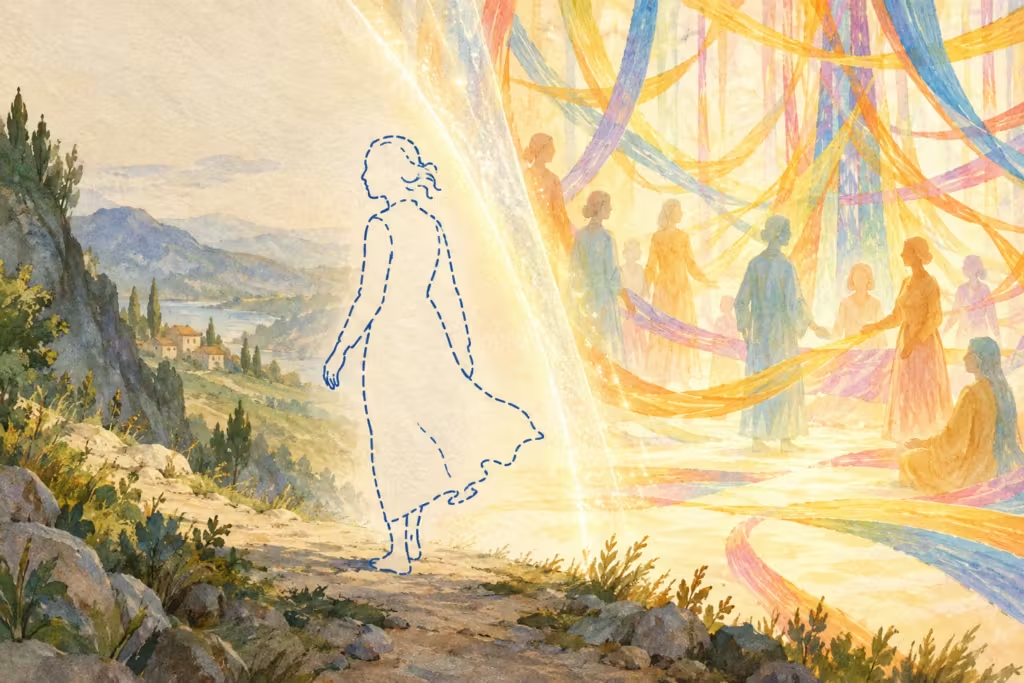
Anita sees her life as a tapestry, with a thread for every person she has known. She says she understands there that the cancer was not a punishment. It was the form her many fears had taken.
At first she does not want to go back to a body that has brought her nothing but suffering. She reaches a boundary she cannot see. Her father tells her: “This is as far as you can go, sweetheart. If you go any further, you cannot turn back.”
Then she senses that her body will heal within days if she goes back. Her father and Soni tell her to “go back and live your life fearlessly!”
Step 10
February 3 · Around 4 a.m. · Anita’s account
Fluid is drained from her lungs
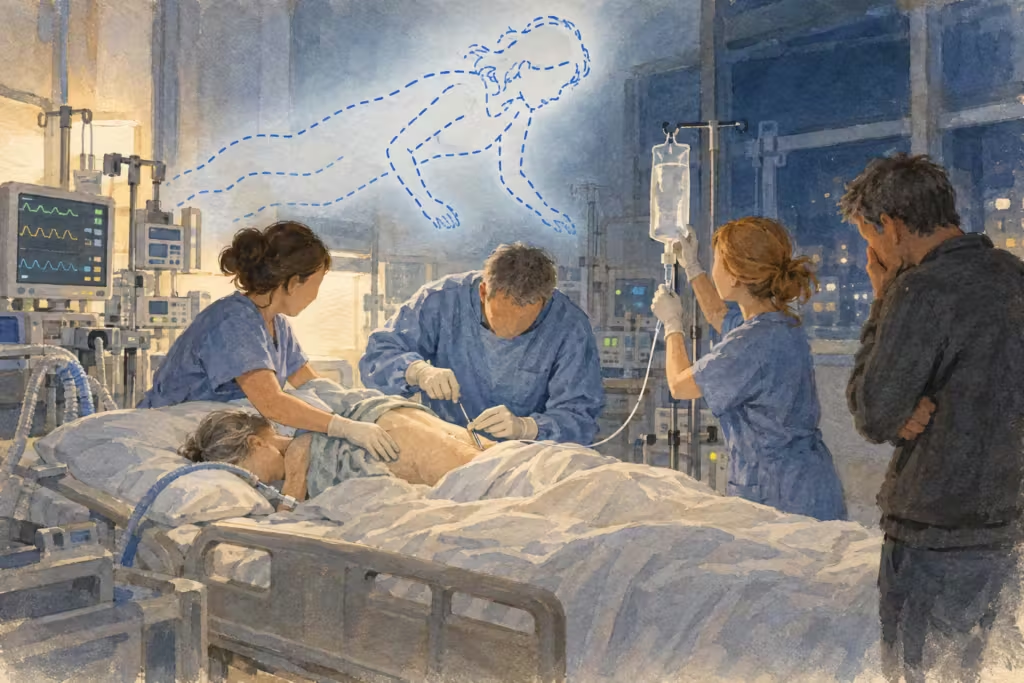
In the early hours she starts choking. Danny sounds the emergency alarm. The nurses turn her on her side and thump her on the back.
The doctor takes about twenty minutes to arrive. He pushes a long needle through her back into her lung. He draws out fluid several times, until a bag holds about a liter.
Anita says she watches it all from outside her body. And she says that now she is breathing more easily.
Step 11
February 3 · Around 4 p.m. · Awake · Anita’s account
She wakes up and greets Dr. Chan
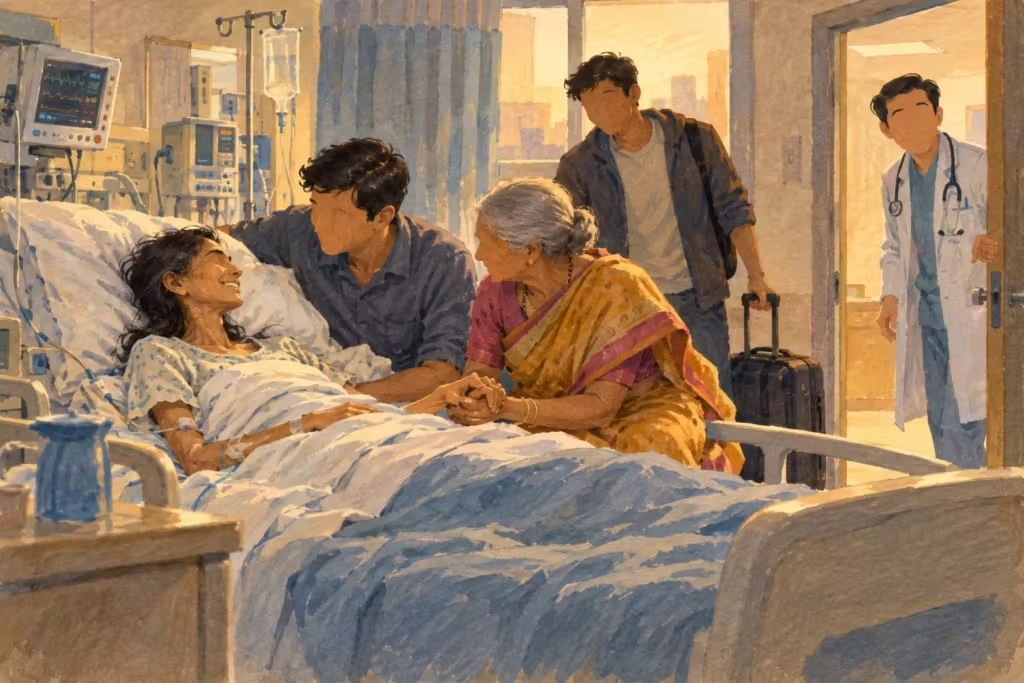
Anita opens her eyes about thirty hours after slipping into the coma. Her brother Anoop has just arrived from the airport with his suitcase. “I saw you coming on the plane,” she tells him.
A doctor walks in. “It’s good to see you again, Dr. Chan,” she says. “How did you recognize me?” he asks. She tells him he was the one who drained the fluid from her lungs in the middle of the night. The doctor answers: “Yes, but you were in a coma the whole time. Your eyes were closed!”
After Dr. Chan leaves, she asks Danny if he is the doctor who told him she wouldn’t make it.
Danny asks how she knows, and adds: “He didn’t say that in this room. We had that conversation down the corridor, about 40 feet away!”
Days later, Anita recognizes the nurse who couldn’t find her veins. Her brother confronts him about what he said. Anita says the nurse apologizes: “I had no idea she could hear me!”
Step 12
February to July 2006 · Anita’s account and her medical records
She recovers, with chemotherapy
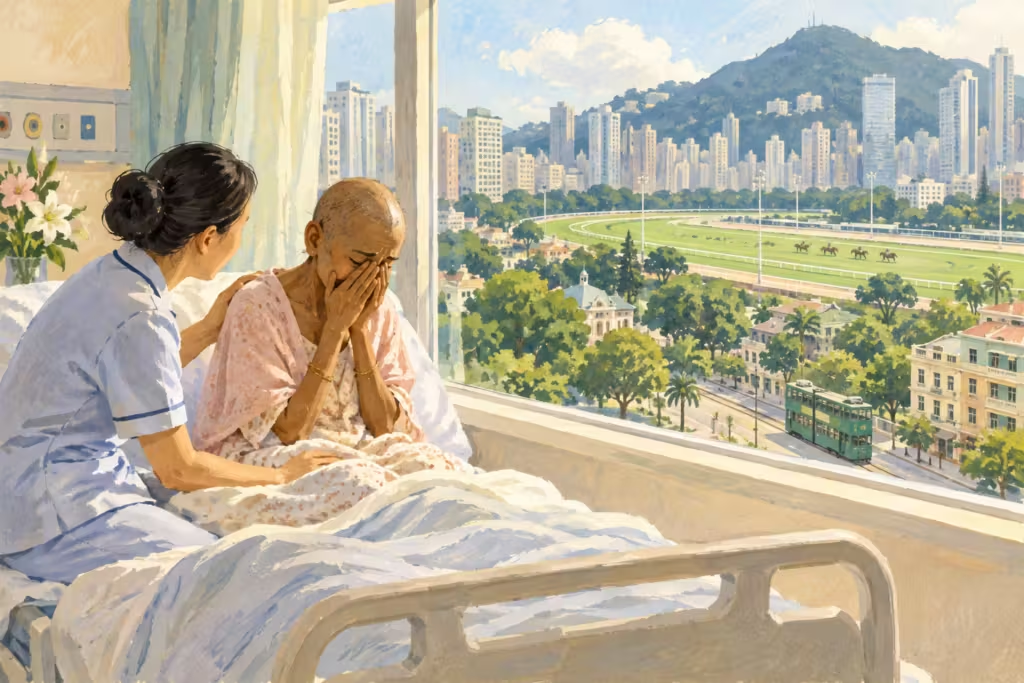
Anita says that within three days the tumors have shrunk a great deal. She weighs less than 40 kilograms. When she is moved out of the ICU, she sees Happy Valley from the window. It is the neighborhood where she grew up, with its trams. And she bursts into tears.
She receives chemotherapy, the treatment she had feared so much. According to the summary of her medical records, the chemotherapy began the same night she was admitted, before the experience. She says she had no nausea.
The biopsies find no cancer. Two weeks earlier, the scans were full of tumors. Now a radiologist cannot find a single suspicious lymph node. The sores on her skin heal on their own.
She is discharged on March 9. After six cycles of chemotherapy, a test on July 24 comes back clear. The last two cycles are dropped.
Step 13
Since 2006 · Anita’s account
Two oncologists, two explanations
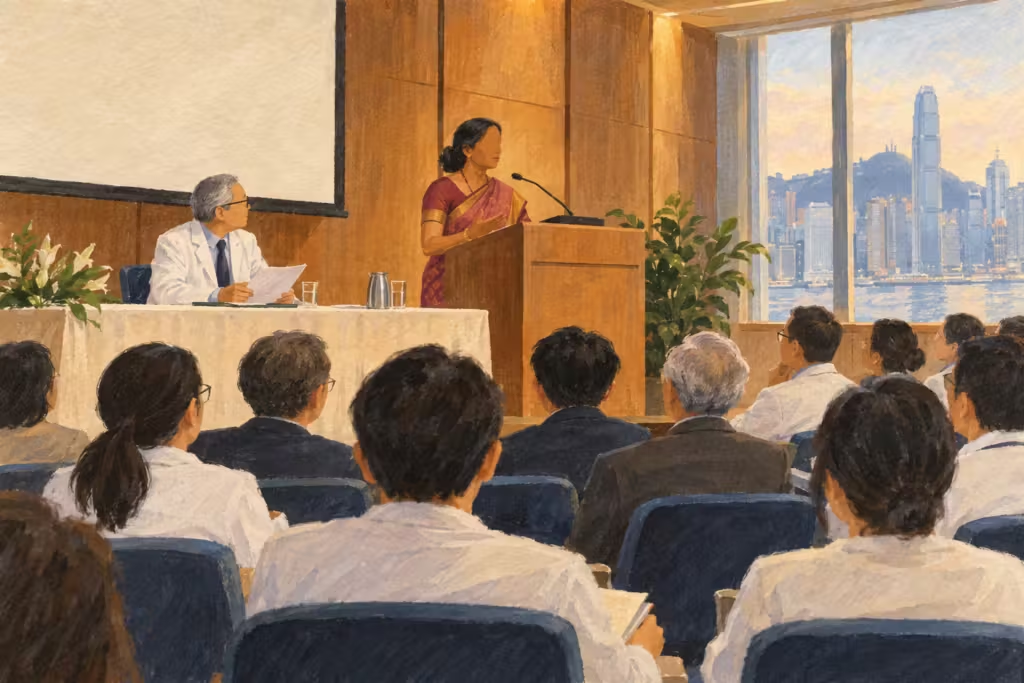
Around the summer of 2006, Anita posts an account of her experience on NDERF, a website that collects NDE accounts. Peter Ko, an oncologist in the United States, reads it. He travels to Hong Kong and reviews her medical records. They fill a file about eight centimeters thick. Ko also organizes a conference with doctors from the university hospital.
Ko writes that the recovery cannot be put down to the chemotherapy. The oncologist who treated Anita says the opposite. In 2007, that oncologist told a Hong Kong newspaper that the draining of her lungs and the chemotherapy cured her. He also said that with lymphoma it is never too late.
In 2012, Anita publishes her book. Today she gives talks around the world. Her message is to live without fear.
Can Hodgkin lymphoma be cured?
Anita’s story is often told like this: she refused chemotherapy, had an experience, and the cancer disappeared. But Anita did receive chemotherapy. And her cancer is one of the kinds that respond best to that treatment.
Picture 100 people in the United States diagnosed with Hodgkin lymphoma at the most advanced stage, stage IV:
Each dot is one person. The 83 filled dots are the people still alive five years later. The figure leaves out deaths from other causes that would have happened anyway. Data from 2016 to 2022.
At earlier stages, the figure is even higher:
| Stage at diagnosis | Still alive |
|---|---|
| Stage I, a single area | 93% |
| Stage II, several areas | 95% |
| Stage III, on both sides of the diaphragm | 88% |
| Stage IV, widespread | 83% |
| All stages | 89% |
What these figures don’t tell you
- They describe people who were treated, and they are recent. Almost all of them get treatment from the time of diagnosis, and treatments have improved since 2006.
- They don’t tell us what Anita’s chances were. She arrived with her organs failing, after four years without treatment. An average does not describe a case this extreme.
- They don’t settle who is right. One of the oncologists who reviewed her records believes chemotherapy cannot account for such a fast recovery. The one who treated her believes it can.
These figures do tell us one thing. Hodgkin lymphoma is one of the cancers most often cured with treatment, even at an advanced stage.
Frequently asked questions
Is Anita Moorjani’s story true, or has it been debunked?
No one has shown it to be false. But what Anita says she heard outside her body hasn’t been confirmed either. Her cancer and her coma on February 2, 2006, are real, because they are in her medical records. Anita says she overheard a doctor say something in the hallway. Those words are known only through her, and they change from one account to another. We explain this in “What can be checked.”
Did Anita Moorjani’s cancer go away because of her near-death experience?
Unknown. Anita did receive chemotherapy, starting the night she was admitted, before her experience. The oncologist who treated her believes the draining of her lungs and the chemotherapy cured her. Peter Ko, another oncologist who reviewed her medical records, believes chemotherapy can’t explain such a fast recovery.
What books has Anita Moorjani written?
Her best-known book is Dying to Be Me (2012). In it she tells the story of her illness and her experience. You can find it in the sources at the end of the page. She has since written others, including What If This Is Heaven? (2016) and Sensitive Is the New Strong (2021).
What religion is Anita Moorjani?
Anita grew up in a Hindu family and went to a Catholic school run by nuns. But in her book she doesn’t present herself as a Christian. Since her experience she rarely talks about religion. She says death goes beyond every religion. To her, it doesn’t matter whether you believe in Jesus, Buddha, Shiva, Allah, or none of them.
What does Anita Moorjani say about heaven and hell?
Anita says she came back convinced that heaven is a state, not a place. In Dying to Be Me she doesn’t talk about hell. But she says she understood that there is no judgment after death, not even for the worst terrorists. That is her own conclusion from what she went through. It can’t be proven either way.
Where this story comes from
Books
- Anita Moorjani, Dying to Be Me (Hay House, 2012). Includes Dr. Peter Ko’s summary of her medical recordsBuy the book
Her first account
- Her account on the NDERF website, written around 2006Read for free
Interviews
- Interview on Next Level Soul (2023), in a version dubbed into SpanishWatch on YouTube
Articles
- Hazel Parry, South China Morning Post, February 3, 2007, with the views of both oncologistsView in the newspaper (paywalled)
Data
- U.S. National Cancer Institute, SEER program: Hodgkin lymphoma, five-year survival (2016–2022)See the data
To understand more
Our archive
- Her record, the comparison of her accounts, and our assessment of the case, as of October 10, 2026
Keep reading
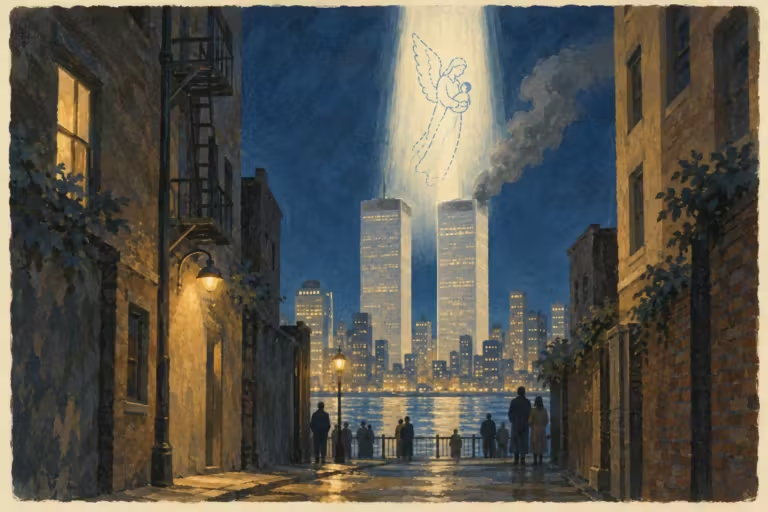
Mexico City, 2001
José Manuel Ramos Montalvo
He says he was in a coma after being hit with a rock and that he saw the Twin Towers burn on September 11. The attack is public record. Only he says he knew about it before anyone told him.

Madrid, Spain, 2019
Luis Miguel Domínguez
He says he was in a coma after a stroke and that he drank “fossil water” in New York. While he was in the coma, a large reservoir of water under the sea off the coast of New York was announced. He and his wife, Mónica, say no one told him about it.
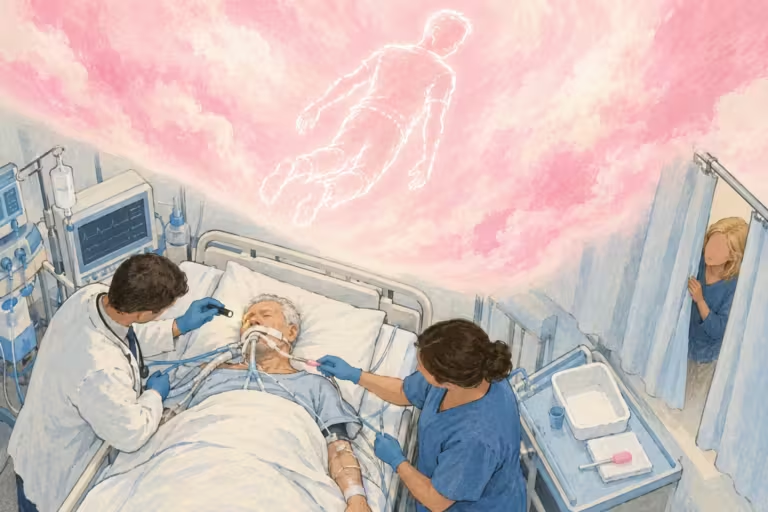
Wales, United Kingdom
Patient 10
A man in intensive care said he saw what the doctor, the nurse, and the physical therapist were doing. A researcher was right beside him and confirms it.
Reincarnation: The top 5 people who remember past lives
We asked them the same five questions as this story. A 32-page PDF, free in your inbox.
Check your email
We have sent you an email. Open it and press the button to confirm. If you cannot see it, check your spam folder.