
A real-life story · Madrid, Spain, 2019
Luis Miguel Domínguez’s near-death experience
In May 2019, the naturalist Luis Miguel Domínguez had a stroke, a bleed in the brain. He spent more than a month in a coma in a Madrid hospital. He later said that during the coma he walked naked through beautiful landscapes, drank water beside five Iberian wolves, and heard a voice telling him it was not his time. He also said he traveled to New York several times in search of a water he called “fossil water” (agua fósil in Spanish; his words here are translated from Spanish). He also said that after he woke up, a piece of news reached him. Scientists in New York had announced a huge reservoir of fresh water under the sea, off that coast.
The news is real, and it has a date. Columbia University, in New York, announced it on June 20, 2019. By then, Luis Miguel had been in a coma for a little over a month. He says no one told him. Where did New York’s “fossil water” come from?
Step 1
Before · May 2019 · He is well · Luis Miguel’s account
A naturalist who stands up for the wolf

Luis Miguel Domínguez is a naturalist who makes nature documentaries. He lives in Madrid. He has traveled to every continent and spent several years living in the Amazon.
In Spain he is well known for defending the Iberian wolf, the wolf that lives in Spain and Portugal. He heads Lobo Marley, an association that works to protect it.
That fight has made him enemies. He says that in May 2019 he was coming out of a very stressful time. Lies about him were going around on social media.
He says he had gotten married nine days earlier. His wife is Mónica, and his son is Darío. That weekend they go to lunch at some friends’ house.
Step 2
May 2019 · In the afternoon · Luis Miguel’s account
A licorice stick falls from his hand

Lunch is over, and everyone is lingering at the table. He is calm and relaxed. He remembers it as a Sunday afternoon. The newspapers at the time say it was Saturday, May 18.
Suddenly, in a fraction of a second, his face twists. He starts slurring his words, as if he were drunk.
His son had given him a licorice stick. He was holding it in his left hand, and it drops to the floor. The whole left side of his body has gone weak.
He does not lose consciousness. He says that in that moment he thinks he is going to die right there, in front of his family.
Mónica and the friend who invited them recognize right away that it is a stroke. They call 112, Spain’s emergency number. He says that saved his life.
Step 3
That night · In the hospital · Critically ill
Doctors put him to sleep so his brain can rest

The ambulance takes him to a hospital in Madrid. It is a hemorrhagic stroke. An artery in his brain has burst, and blood has flooded the brain.
The bleed is very large. Luis Miguel says that at midnight the doctors decide to put him to sleep with drugs so his brain can rest. This is called an induced coma.
Five days later, the Spanish press reports the news. It says the naturalist is in an induced coma and that his condition is serious. He is in the intensive care unit, the ICU.
He says the doctors warn Mónica. If he comes back, he may be left in a vegetative state, with his eyes open but not connecting with anything.
Step 4
May to summer 2019 · In a coma · Luis Miguel’s account
Weeks in a coma, with visitors talking into his ear

He spends about six weeks in a coma in the ICU, although he remembers it as about two months. He is put under on the night of May 18 and starts to wake up on June 29 or 30. His wife, Mónica, gave those dates in 2023 in an interview with Alejandro Agudo.
Luis Miguel says he has read the doctors’ report. According to that report, several of his organs fail at once. He is put on dialysis because his kidneys are not working. He has pneumonia in both lungs. They make an opening in his neck so a machine can help him breathe. That report has not been published. Alejandro Agudo’s 2023 interview quotes one sentence from the report. It says that when he woke up he was communicative and eager to talk.
Meanwhile, his family and friends come to see him. They talk into his ear. They play wolf howls to wake him up.
He says he heard none of it, neither his family’s voices nor the howls.
He remembers nothing of what went on in the room. He remembers something else.
Step 5
In a coma · Luis Miguel’s account
Luis Miguel says he walks naked toward a tiny light
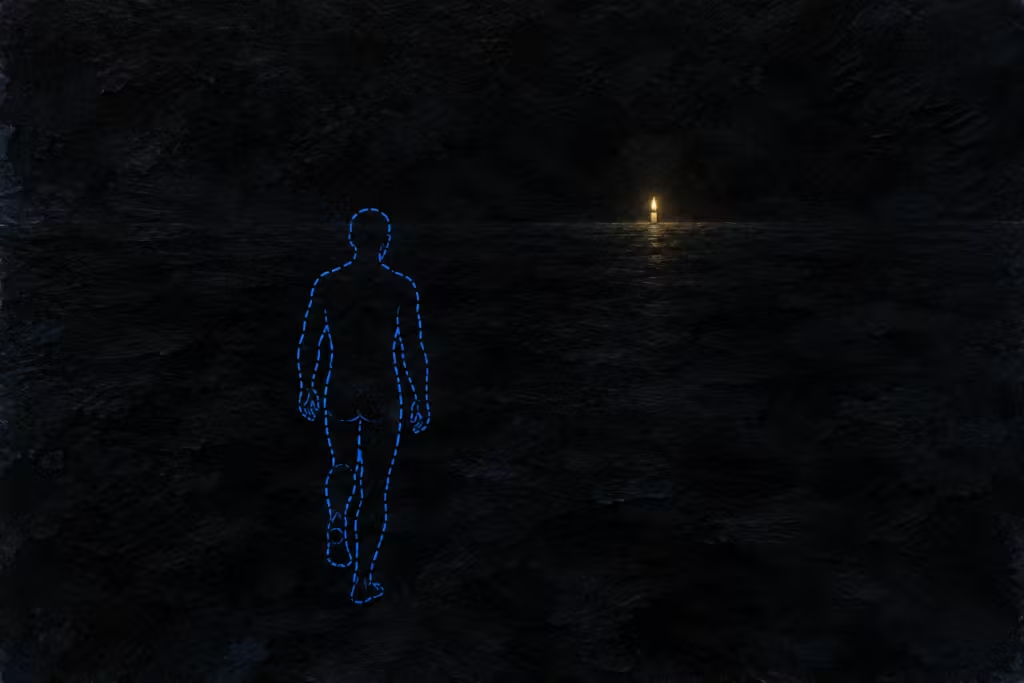
For Luis Miguel, everything fades to black, like in the movies. It is a deep black, with a shine to it. Years later he recognized that black in a painting by Hieronymus Bosch. The painting is called Ascent of the Blessed.
In the distance he sees a tiny light, like a lit candle. He walks toward it. He is naked and barefoot. He is alone, but he feels that someone or something is with him, protecting him.
He does not remember Mónica or his son. He does not miss anyone. He feels like a newborn. He sees himself as handsome, strong, immortal.
He has not always told the same story about what happened to his body. In 2024 he said he did not feel himself leave it. He said he saw himself from above, out in the countryside, not in the hospital bed. In the 2025 interview he said he saw his body “parked” in the bed.
At first he is a little afraid, but it passes. Above all he is curious, as on any of his trips. He decides not to miss a thing.
Step 6
In a coma · Luis Miguel’s account
Luis Miguel says a blanket of love covers him
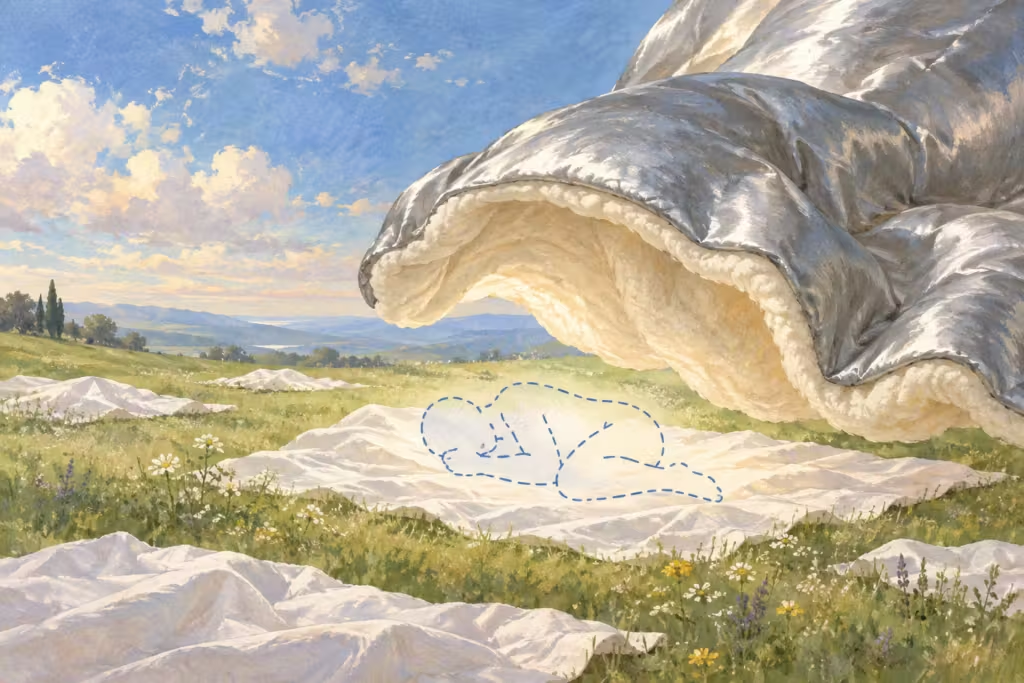
He says he walks through landscapes more beautiful than anything he has seen on his travels. White sheets lie spread out on the grass.
He takes a running start, jumps onto them, and curls up in a ball, like a baby. Then a huge blanket comes and covers him. On the inside it is very soft. But if he puts his hand out and touches the outside, it is made of steel.
He calls it “a blanket of love.” He says he got hooked on it. All he wanted was to stay like that, covered and protected.
He feels connected to everything alive, to a tree, to an ant, to an elephant. He compares it to being in a great library of everything there is to know.
He says that when he woke up, he learned how many people had been thinking of him. Then he understood that this was the blanket. But what draws him most in that place is the water.
Step 7
In a coma · Luis Miguel’s account
Luis Miguel says he looks inside the water
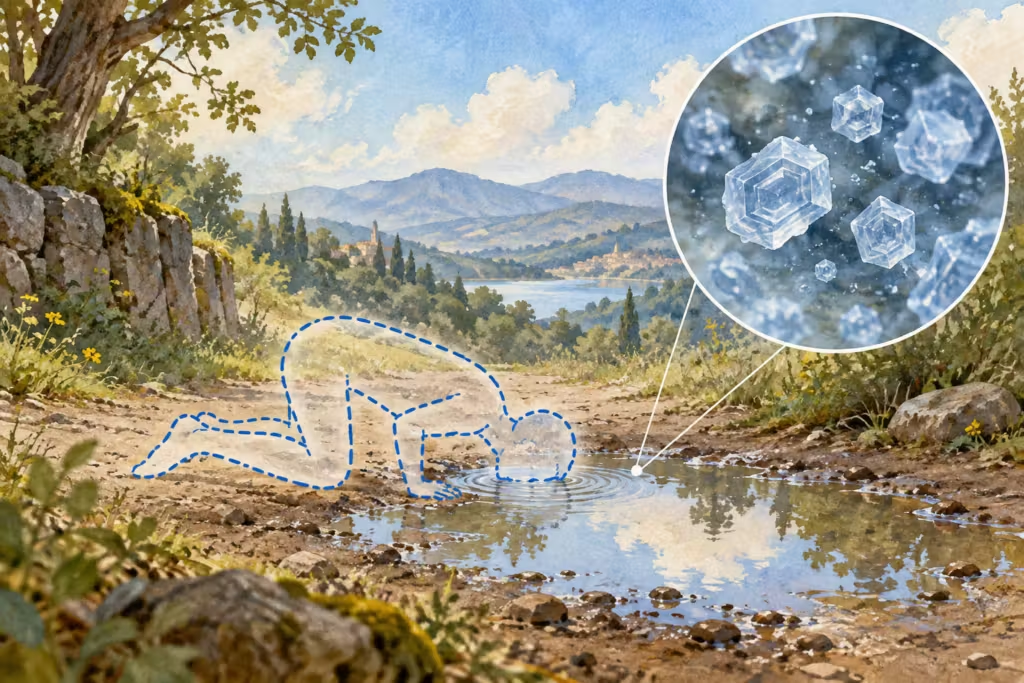
He does not want the water to drink it. He wants to know how it is made. He says he wants to reach “the mother of water.”
He puts his face into the puddles along the path and opens his eyes underwater. His eyes work like a microscope. He sees the particles of water, like tiny transparent crystals. He picks them up in his hands. He cries with emotion.
There he can do things you cannot do here: walk through walls, climb, dive. If he thinks about being at the top of a tree, he is already there.
That is how, in an instant, he travels to New York. It is a place he did not expect.
Step 8
In a coma · Luis Miguel’s account
Luis Miguel says he drinks “fossil water” in New York

He says he goes to New York four or five times, looking for “his water.” He himself finds it strange. He could have gone to the Amazon, the Congo, or Antarctica. He knows New York because he has been there three times, but he says it is not a place he is obsessed with.
He arrives naked and barefoot in Central Park, the big park in the middle of the city. There, fresh water springs from some rock walls. He cups his hand and drinks. The water is ice-cold. The more he drinks, the more his body lights up. Luis Miguel first wrote this down in his 2021 book. In the book, the water is not in Central Park. It is “on the banks of the Hudson River,” in some freshwater springs that form ponds and pools. Central Park appears in his interviews from 2023 on.
From the start he calls it “fossil water”. He thinks it is water that has been stored for millions of years without any living thing touching it.
He says he did not know the expression. He had never heard it, or read it in any scientific paper.
Later, this fresh, “fossil” water in New York can be compared with a real news story. He sees it in some rocks in a park, on land. And he wants to protect it.
Step 9
In a coma · Luis Miguel’s account
Luis Miguel says a Japanese general is going to bomb the park
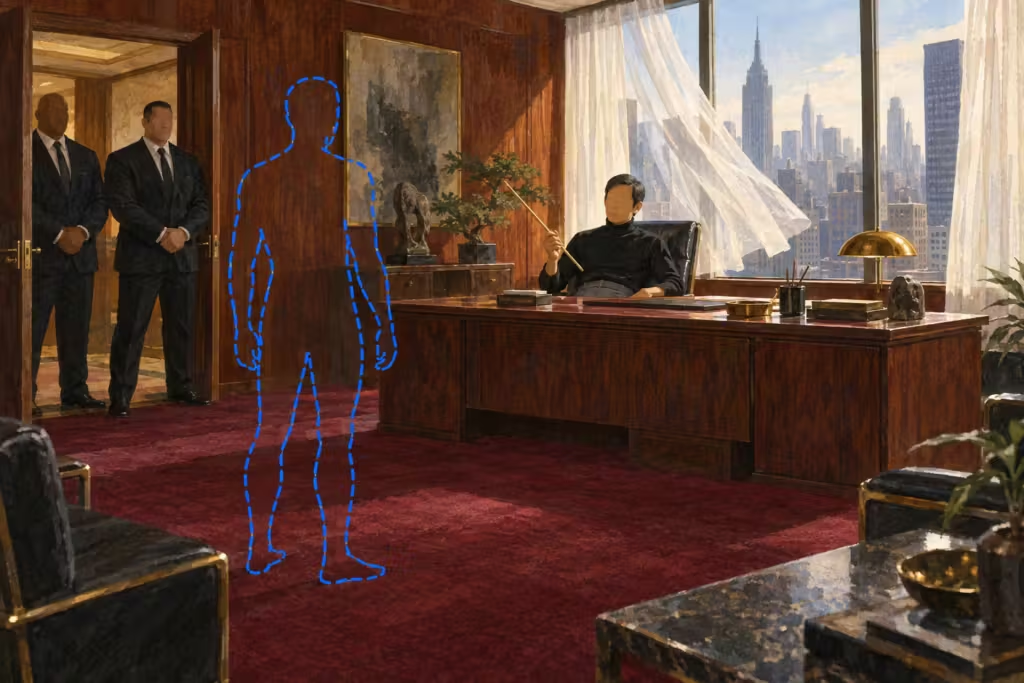
The water forms ponds and a small wetland in the park. Luis Miguel thinks it needs to be protected. A man walking beside him turns and speaks to him in Spanish. He tells him that if he wants to protect it, he has to talk to “the warlord.”
Suddenly he is in the office of a Japanese general, in a 1970s skyscraper. The general is about 50. He wears a black turtleneck and carries a bamboo cane. When Luis Miguel raises his voice, the general strikes the desk with the cane. Two bodyguards come in and take him out.
In the end, the general looks him in the eye: “I’m sorry, Luis Miguel, but those are my orders.” He is going to bomb the area.
He runs back to Central Park. The trees are broken and burned. Kerosene floats on the water. He drops to his knees and cries. He feels that, once again, nature has lost.
Step 10
In a coma · Luis Miguel’s account
Luis Miguel says he drinks with five Iberian wolves

He has left New York. He is climbing a mountain that seems to him to be in Spain. He is terribly thirsty. He himself thinks that thirst had to do with the tube that helped him breathe in the hospital.
Then he sees five wolves coming. He knows they are Iberian by the dark stripe on their front legs. The leader of the pack comes behind them all. He has honey-colored eyes.
The lead wolf tells him, without speaking: “Come, come with us.”
They take him to a pool of ice-cold water. Luis Miguel gets down on all fours and drinks beside a wolf’s muzzle. His thirst goes away.
In 2023 he said he thought, “How lucky.” In 2024 and 2025 he says the wolves came floating, and that he did not want to touch them out of respect. Years later he read that the ancient Iberians saw the wolf as the animal that guides the souls of the dead. Since then, that is how he understands them. Then he reaches a valley.
Step 11
Near the end of the coma · Luis Miguel’s account
Luis Miguel says a voice tells him it is not his time
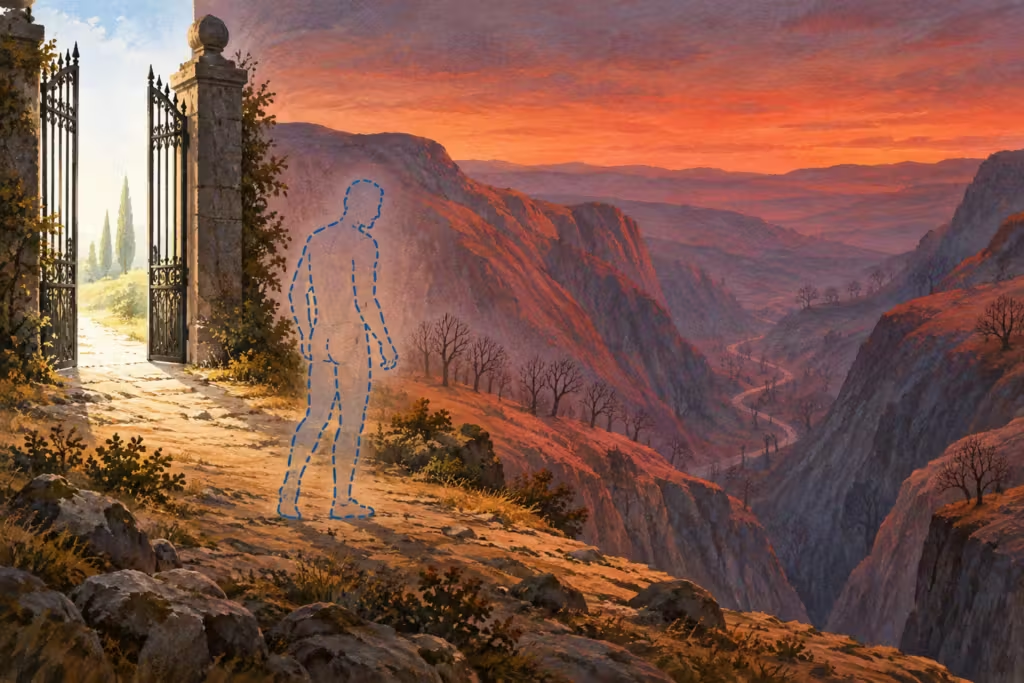
It is a very deep valley with gentle slopes. In 2023 he said it reminded him of the Liébana valley, in Cantabria, in northern Spain. In 2024 he called it “the valley of death.” He felt there were thousands of souls down there.
The sun has just set, and everything is bathed in red light. In the distance he sees a beautiful path between leafless trees. He feels the path pulling him. He decides to go.
Just then, a very clear voice tells him: “No, Luis Miguel, don’t go. It’s not your time. Go back.”
He turns around, angry, looking for whoever spoke. He turns back and goes through an enormous gate. A white light, like summer at noon, blinds him.
Years later he came to the conclusion that that voice was his own.
Step 12
Summer 2019 · Awake · Luis Miguel’s account
Luis Miguel says he asks Mónica to write down what he went through

He does not wake up all at once. He says that, from what he was told, he first opened his eyes without connecting with anything. Mónica says he started to wake up on June 29 or 30.
When he does, Mónica is sitting on his bed. He tells her, “Darling, I’ve come back from heaven itself.”
At first he still has the breathing tube and cannot speak. Mónica gives him a small whiteboard. The first thing he writes is “everything is surreal.”
On July 7 the tube is taken out. Now he can talk, and he is eager to tell what he has been through. He asks Mónica to bring a notebook the next day to write it down.
The notebook exists. Mónica showed it in 2023, in the interview with Alejandro Agudo. The page begins: “Madrid, July 8. First night without the respirator.” It mentions a Japanese military man and a “fossil water.”
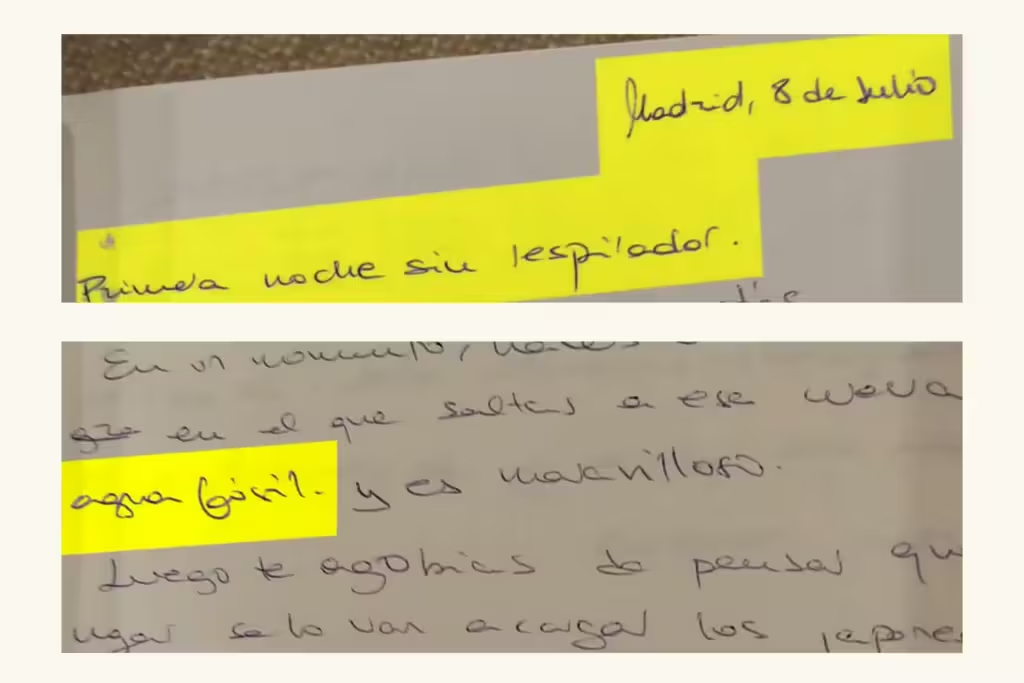
In 2025 he added that a Brazilian friend who visited him in the hospital also wrote it down. That note from the friend has not been seen. And a few days later, a message arrives from Brazil.
Step 13
Days after waking up · Luis Miguel’s account
Luis Miguel says a friend sends him the news from Brazil

The Brazilian friend, Daniel Garibotti, sends them an article from a São Paulo newspaper. Mónica says it arrived on July 11. That was the day Luis Miguel left the ICU. It was three days after the notebook entry. In 2024 Luis Miguel said it arrived a week later. In 2025 he said the friend sent it on WhatsApp three days after getting back to Brazil.
The article says that Columbia University, in New York, has discovered an enormous body of water under the sea, off that coast. He remembers that the article called it “fossil water.”
He says the news came out just when he was at his worst. In 2025 he said it was “the very same day” he was dying, when the doctors were already thinking about donating his organs.
He swears “on my honor” that he had not read anything about it, and that no doctor or nurse whispered it in his ear.
In 2024 he said he had written to Columbia University and had not heard back.
The news exists, and it has a date. At the end, we look at exactly what it said.
Step 14
Today · Luis Miguel’s account
He walks with a wolf-headed cane
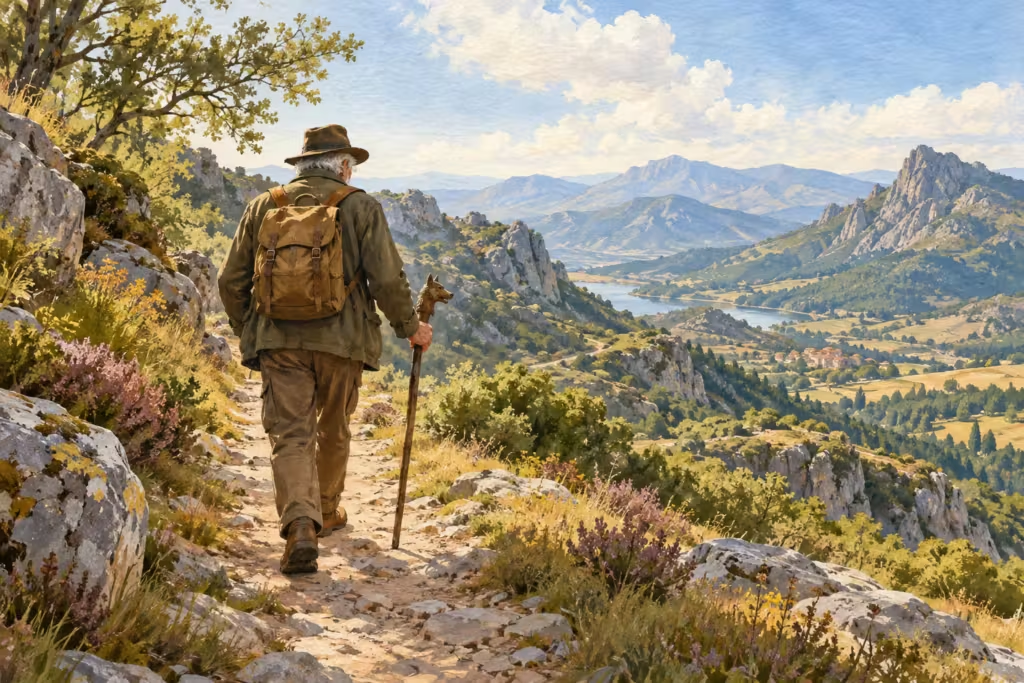
The stroke left the left side of his body paralyzed. His left hand does not work. He was told he would never walk again. After many months of rehabilitation, he walks with a cane topped with a wolf’s head.
He types with one finger. Since the stroke he has published several books. Of his book about the wolf, he says it felt “dictated.”
He says he did not know about these experiences before, and that he had never given the paranormal much importance. He considers himself an agnostic. That means he neither believes nor rules out that God exists. Today he is not afraid of death, and he believes there is another way of existing afterward.
The question from the beginning remains: where did New York’s “fossil water” come from? Let’s look at what can be checked.
How many people have an NDE after many days in the ICU?
Luis Miguel is not a one-off case. His experience did not happen during a cardiac arrest but during a coma of more than a month in intensive care. In 2023, a Belgian team did a study in their hospital in Liège. They asked every patient leaving the ICU after a stay of more than seven days.
Picture 100 of those people:
Each dot is one person. The 15 filled-in dots are the ones who described a near-death experience: 19 of 126 patients.
The other 85 described none. Almost none of these people had had a cardiac arrest. In both groups, only 5 in 100 had had one.
| In the ICU | With an NDE | Without an NDE |
|---|---|---|
| Were sedated | 89% | 63% |
| Were on a breathing machine | 84% | 58% |
| Had had a cardiac arrest | 5% | 5% |
What these figures don’t tell you
- It is a single hospital. Earlier, similar studies were done in other intensive care units. Bruce Greyson did one in 2003 in the United States, in a cardiac unit. Penny Sartori did another in Wales in 2005. Cristina Lázaro did another in Murcia, Spain, in 2016. None of them looked only at people who spent more than seven days in the ICU.
- Patients who were confused when they left the ICU were left out. And no one measured whether they had delirium while they were in the ICU. The authors themselves list this as a limitation of the study.
- Sedation does not explain it on its own. The authors looked at all the factors together. What weighed most was a person’s tendency to disconnect from what they are going through, and their spirituality.
Luis Miguel’s case is not part of that study. What sets it apart is what he describes. His experience is full of his life as a naturalist, with water and the wolf at its center. And it has a “fossil” water in New York that matches a news story from those weeks in two words.
Frequently asked questions
What illness did Luis Miguel Domínguez have?
Luis Miguel Domínguez had a hemorrhagic stroke. On May 18, 2019, an artery in his brain burst, and doctors kept him in a medically induced coma. He says it lasted about two months. Going by the dates his wife, Mónica, gives, it was about six weeks. The stroke left the left side of his body paralyzed, and today he walks with a cane.
Can Luis Miguel Domínguez’s near-death experience be verified?
Only one part of it can be checked. It is the “fossil water” in New York. The news of a huge reservoir of fresh water under the sea off New York is real. It came out on June 20, 2019, while Luis Miguel Domínguez was in a coma. But what he describes looks very little like what was discovered. And the note his wife took when he woke up is from July 8, almost three weeks after the news was published. We explain it in “What can be checked.”
What books has Luis Miguel Domínguez written?
Luis Miguel Domínguez has written several books, all in Spanish. In 2024 he said he had published six since his stroke. Corazón valiente [Brave heart] (2021) tells the story of his stroke, what he went through in the coma, and his recovery. The “fossil water” is already there, on the banks of the Hudson River. The book is listed in the sources at the end of the page. Since then he has published, among others, El tren de los Cárpatos [The Carpathian train] (2024) and Lobo. Historia, ciencia y conciencia [Wolf: History, Science, and Consciousness] (2024), about the wolf.
Is Luis Miguel Domínguez still alive?
Yes. In May 2026, Luis Miguel Domínguez gave an interview about the wolf to the Spanish news agency EFE, as president of the Lobo Marley association. We have found no report of his death.
Where this story comes from
Interviews
- Alejandro Agudo, “Zahorí en Nueva York” [A dowser in New York] (June 2023): Luis Miguel and Mónica tell the fossil water story, with the dates and the notebook, in Spanish with English subtitlesWatch on YouTube
- On Somos Alma [We Are Soul] (May 2023), the first interview we have found with the fossil water, in SpanishWatch on YouTube
- Luis Miguel Domínguez tells his story on Experiencias Cercanas a la Muerte [Near-Death Experiences] (November 2024; posted again on October 22, 2026), in SpanishWatch on YouTube
- On Lo Invisible [The Invisible], with Esteban Vigouroux (2025), in SpanishWatch on YouTube
- On The Other Side en Español (March 2023), a short summary, without the New York part, in SpanishWatch on YouTube
- Alejandro Agudo, “En busca de la vida” [In search of life] (April 2021), one of his first interviews about the experience, without the New York part, in SpanishWatch on YouTube
Books
- Luis Miguel Domínguez, Corazón valiente [Brave heart] (2021), in Spanish, where he tells the story of his stroke, what he went through in the coma, and the “fossil water”Buy the book
The press in May 2019
- El Español (May 24, 2019), the stroke and the induced coma, in SpanishRead for free
- elDiario.es (May 23, 2019), the date of the stroke, in SpanishRead for free
The water under the sea
- Chloe Gustafson, Kerry Key, and Rob Evans (2019), the study of the reservoir, Scientific Reports 9:8709Read for free
- Lamont-Doherty Earth Observatory, Columbia University (June 20, 2019), the press releaseRead for free
- BBC Mundo (June 25, 2019), the news in Spanish, reprinted by La Prensa of NicaraguaRead for free
Studies
- Rousseau, Martial, and colleagues (2023), near-death experiences after a long stay in the ICU, Critical Care 27:76Read for free
- Bruce Greyson (2003), near-death experiences in a cardiac care unit, General Hospital Psychiatry 25:269-276View in the journal (paywalled)
- Penny Sartori (2008), The Near-Death Experiences of Hospitalized Intensive Care Patients, her five-year study in an ICU in WalesBorrow it on archive.org
- Cristina Lázaro Pérez (2016), La conciencia en el umbral del tránsito [Consciousness at the threshold of passing], a University of Murcia thesis with a study in the ICU of the Reina Sofía hospital, in SpanishOur page on the study
- Studies of NDEs in the ICU, collected by Alejandro Agudo on ecms.es, in SpanishRead
Learn more
- How many people have a near-death experience?Read
Our archive
- Our record on him, with a comparison of his versions, and our assessment of what he said about the fossil water, as of October 16, 2026
Keep reading
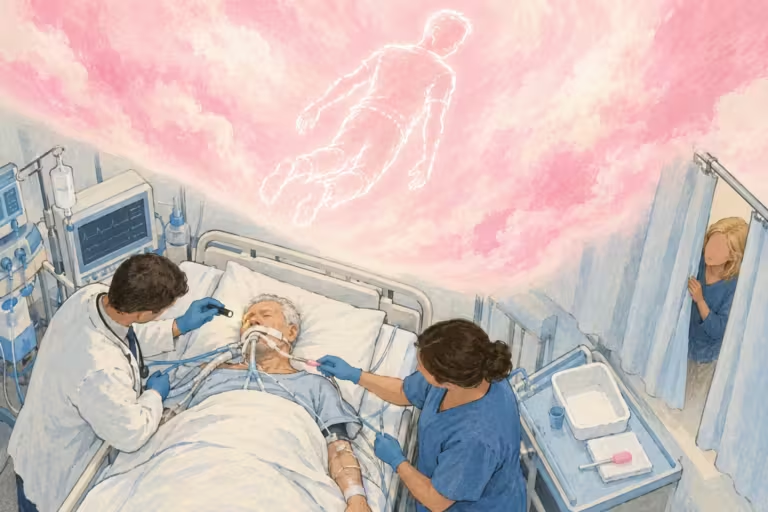
Wales, United Kingdom
Patient 10
A man in intensive care said he saw what the doctor, the nurse, and the physical therapist were doing. A researcher was right beside him and confirms it.

United States, 2008
Eben Alexander
Eben Alexander was in a coma with meningitis. He says a young woman was with him. Later he recognized that young woman in a photo of a sister he never met. The coma is in his medical records. The resemblance appears only in Eben’s own account.

Virginia, United States, 1973
Holly
Holly was unconscious in the emergency room after an overdose. She later said she had seen her doctor talking with her roommate in another room. And she said the doctor’s tie had a tomato stain on it.
Reincarnation: The top 5 people who remember past lives
We asked them the same five questions as this story. A 32-page PDF, free in your inbox.
Check your email
We have sent you an email. Open it and press the button to confirm. If you cannot see it, check your spam folder.