A real-life story · Boston, 1899
The man who dreamed the result of a yacht race two weeks early and wrote it down in the office pool
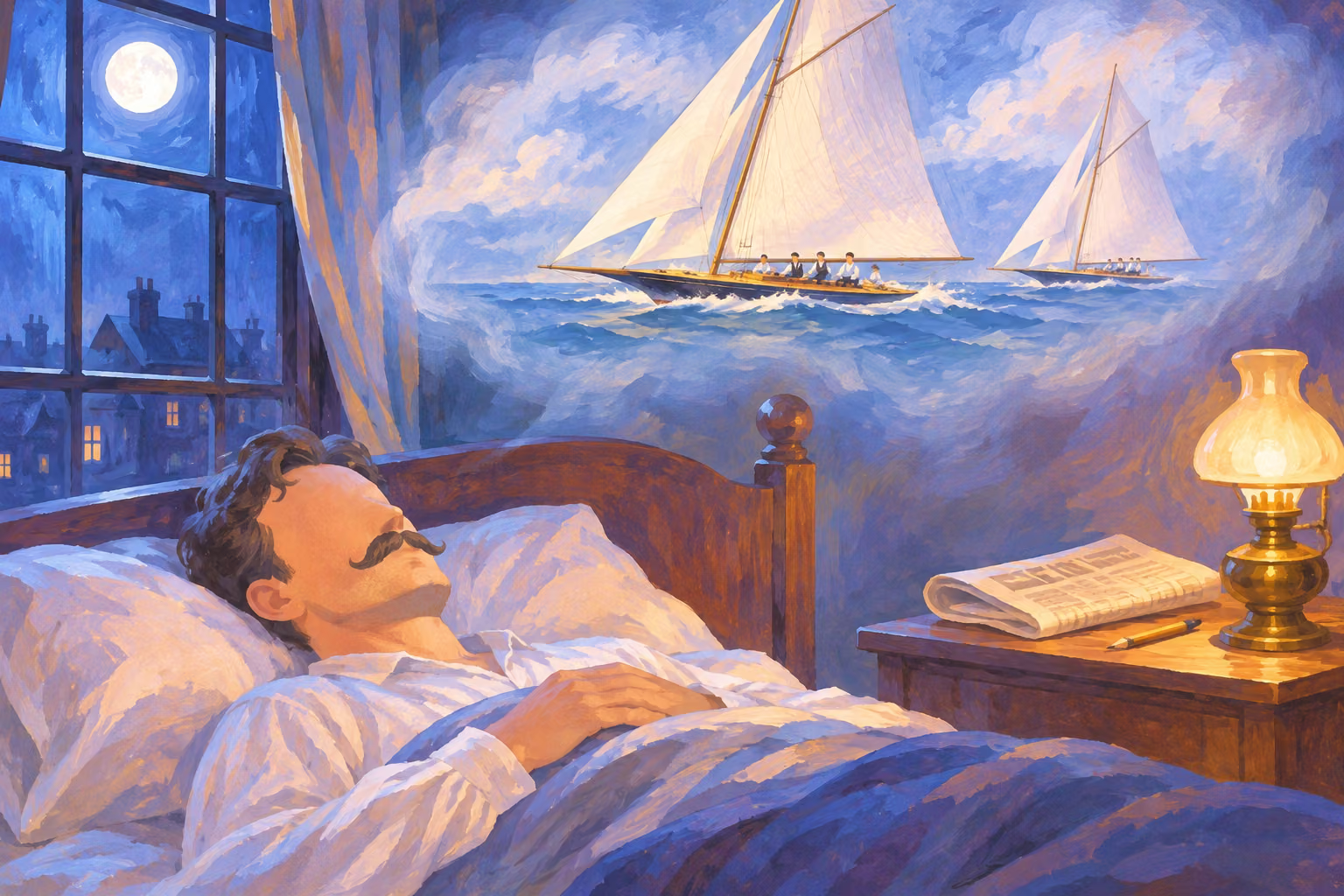
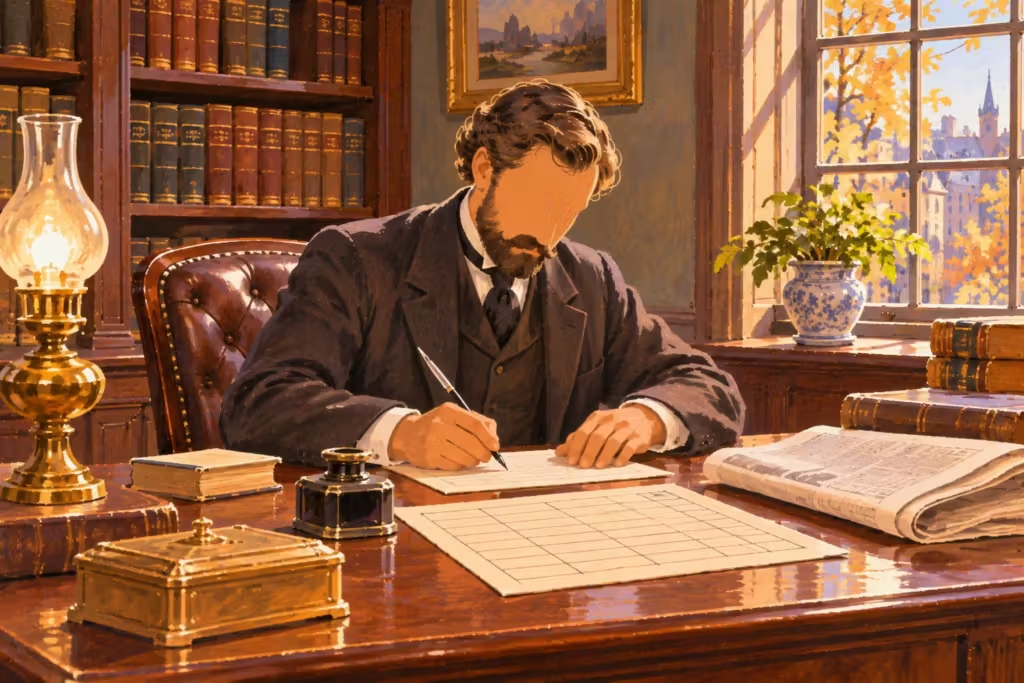
On the night of October 1, 1899, Carlos B. Clark, a Boston bookkeeper, dreamed of the newspaper headline from the day after a yacht race: “Columbia wins by 10 min. 14 sec.” The next day he told the people at his office, and they set up an office pool. The race was sailed two weeks later, and the Columbia won by 10 minutes and 14 seconds.
In this story, nobody dies. We include it with the shared-death stories because it is the same kind of case. Someone dreams of something that has not happened yet, or that is happening far away. What Clark dreamed was written down before the race, on a betting sheet with his name and those of seven of his coworkers. We tell the story step by step and then look at what can be checked. Did Clark dream the result, or was it a lucky calculation?
Step 1
Sunday, October 1, 1899 · Boston · Carlos B. Clark’s account
A Boston bookkeeper reads the Sunday paper and works out some figures on a yacht race

Carlos B. Clark was a bookkeeper at Waldo Brothers, a company in Boston. On Sunday, October 1, 1899, he read a lot about a yacht race in the Boston Globe, a newspaper in the city.
The America’s Cup races were about to start that week. The America’s Cup is a famous sailing competition. Two great yachts were racing each other, the Columbia and the Shamrock. The first race was set for Tuesday, October 3.
According to George Ernst, a lawyer and a friend of Clark’s employer, Clark worked out some figures using the measurements of the two yachts and the time each one might take.
Clark says he slept very deeply. Many mornings he thought he had dreamed something, but he could never remember what.
Step 2
The night of October 1, 1899 · Carlos B. Clark’s account
That night, Clark dreams of the newspaper headline from the day after the race

That night, Clark dreamed he was holding the Boston Globe from the morning after the first race. On the front page, in very large letters, it said this:
“Columbia wins by 10 min. 14 sec.”
The dream was so vivid that it seemed real to him for a long time after he woke up.
Step 3
Monday, October 2, 1899 · Boston · The accounts of Clark and his coworker C. S. Robbins
Clark tells his dream at home and at the office, and his coworkers laugh at him
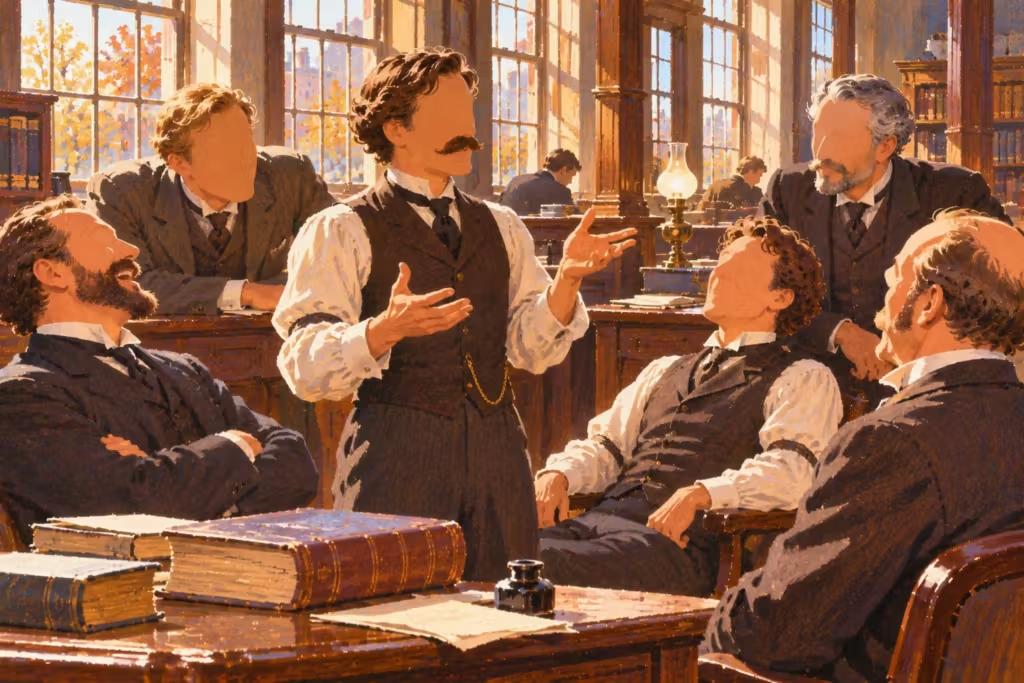
In the morning, Clark told his wife about the dream. He told her that the Columbia won the first race, and also by how much time. He told his neighbors too, Mr. and Mrs. Hatch.
At the office he told almost everyone, and they laughed at him a lot. His coworker C. S. Robbins put it in writing. His statement reached some researchers in November 1899:
“I can testify that Mr. C. B. Clark told me of his dream as above two weeks before the first race was won and that he stated the time 10 min. 14 sec.”
At the office, they decided to set up a pool on the race.
Step 4
Around October 3, 1899 · Boston · According to the office pool sheet
Clark writes down what he dreamed in the pool, and a coworker bets the same time on the other yacht
In these races, each yacht gets a small advantage or disadvantage based on its measurements. The corrected time is the time each yacht takes after that advantage is applied. It is the one that counts for the official result.
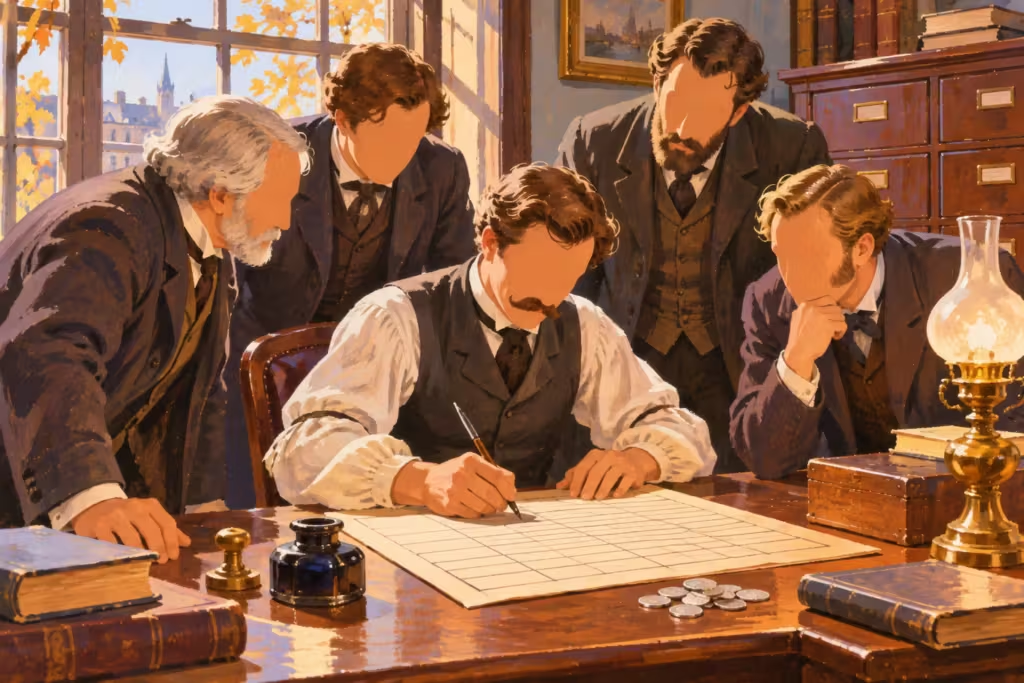
The pool sheet set out the rules. Each person had to guess by how much corrected time the winning yacht would win the first race. Each bet cost 25 cents, and whoever came closest took the pot.
Eight coworkers placed bets, and Clark was the first on the list. He wrote down what he had dreamed. He bet on the Columbia, by 10 minutes and 14 seconds. Six coworkers guessed between 3 minutes 20 seconds and 7 minutes.
Second on the list was Robbins. He bet the same as Clark, but on the other yacht. This is how he explained it to Clark:
“You may have made a mistake in the boat, so I’ll take the same time for the Shamrock.”
The heading on the sheet says “Thursday’s race, Octo. 5.” That was the second attempt to sail the first race. The first attempt was on Tuesday, October 3. That day the yachts started, but they could not finish in time for lack of wind.
George Ernst was a lawyer and a friend of Clark’s employer. In November he wrote that he believed Clark had signed the sheet on October 3. He also wrote that the first race was to have been sailed on October 5. Clark, on the other hand, said that the Sunday of the dream was two days before the races were scheduled to begin.
Step 5
October 3 to 17, 1899 · According to the Boston Globe
Because of bad weather, the first race isn’t finished until October 16, and the Columbia wins
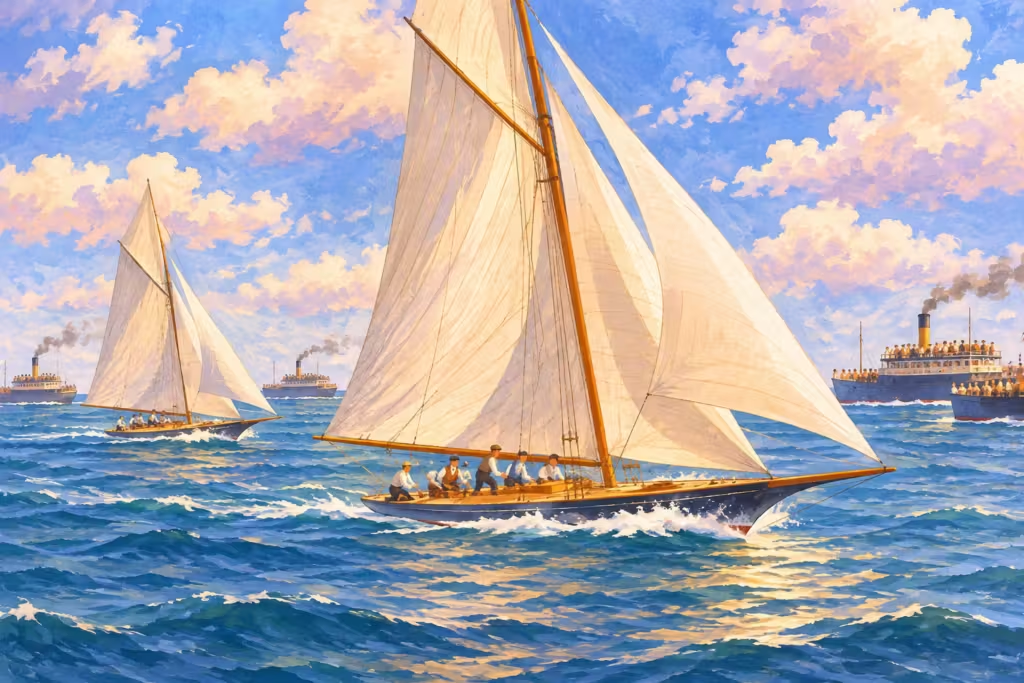
There were seven attempts that came to nothing. On October 3, 5 and 7, the yachts started, but lack of wind kept them from finishing in time. On October 10, 12, 13 and 14, fog or calm kept them from even starting. The first race was not finished until Monday, October 16, two weeks after the dream.
The Columbia won. It sailed the course in 10 minutes and 14 seconds less than the Shamrock, and that is the actual sailing time. The Columbia crossed the finish line 10 minutes and 11 seconds ahead of the Shamrock. The gap is smaller because the Shamrock had crossed the starting line 3 seconds earlier.
The Shamrock had a 6-second advantage because of its measurements. So, in corrected time, the official result was that the Columbia won by 10 minutes and 8 seconds.
The next day, the Boston Globe carried the news in large letters. The headline said this:
“COLUMBIA’S FIRST VICTORY / BEAT SHAMROCK 10 m. 8 s.”
Below it, the newspaper gave both figures. The Columbia won by 10 minutes and 14 seconds of actual time, and by 10 minutes and 8 seconds of corrected time.
Step 6
October 1899 to December 1912 · Boston and New York · According to their letters and the journal
The pool sheet reaches some researchers, who publish the case thirteen years later
On October 24, 1899, the lawyer George Ernst wrote to the physician Henry Bowditch. He asked whether Bowditch was still interested in the Society for Psychical Research, which studied cases like this. He told him about the dream and said he had the bet that Clark wrote down two weeks before the race.
Ernst also told him about the many people who were betting on the race:
“There must of necessity be some one among the hundreds of people who amused themselves by guessing to hit the exact time by mere accident; the remarkable thing, if there is anything remarkable about it, is the fact of the dream.”
On November 8, 1899, the researcher Richard Hodgson received the original pool sheet. It came with Clark’s account and Robbins’s statement. In 1906, a person named L. Edmunds went to look at the Boston Globe of October 17, 1899, and copied the headline and the figures.
The journal of the American Society for Psychical Research published the case in December 1912, under the title “Apparent premonition.” Its editor, James Hyslop, did a calculation. If the margin were up to an hour, getting the minutes and the seconds right by pure chance would be one chance in 3,600. He himself said that assuming an hour was absurd. With a margin of 20 minutes, it would be one in 1,200. With Clark’s figures, perhaps one in fifty, although he admitted that he knew nothing about yacht racing.
Hyslop also looked closely at Robbins’s bet. Robbins bet the same time as Clark without having dreamed it. If the Shamrock had won by that time, Robbins would have been right by pure chance. That is why Hyslop urged caution before ruling out that Clark was also right by chance.
The question remains: did Clark dream the result of the race, or was it a lucky calculation?
Where this story comes from
Periodicals
- Journal of the American Society for Psychical Research, volume 6, number 12, December 1912, pages 746-750, “Apparent premonition”Read for free
- Journal of the American Society for Psychical Research, volume 9, number 9, September 1915, pages 474-478, “Premonitory dreams,” by James HyslopRead for free
Books
- Winfield M. Thompson and Thomas W. Lawson, The Lawson History of the America’s Cup, Boston, 1902, pages 207-209 and 374-375. It gives the dates of the seven attempts, the official times of the October 16 race and the margins of earlier CupsRead for free
Press
- Los Angeles Times, September 5, 1899, page 4, with the trial race between the Columbia and the DefenderRead for free
- Fresno Weekly Republican, October 19, 1899, with the margins of earlier CupsRead for free
Case documents
- The office pool sheet for the race of October 5, 1899, with the eight bets, copied in the journal
- Carlos B. Clark’s account and C. S. Robbins’s statement, received by Richard Hodgson on November 8, 1899, published in the journal
- George Ernst’s letters of October 24 and November 7, 1899, published in the journal
- The headline and figures from the Boston Globe of October 17, 1899, copied in 1906 and published in the journal
Learn more
- The Rome Stock Exchange dream: a dream written down in the middle of the night, hours after an explosionRead
- Boirac’s book: a dream told in a letter the next dayRead
- More shared-death experiencesRead
Our archive
- Our full reading of the case and its scoring against our five criteria, as of October 21, 2026
Keep reading
Denmark, 1907
Free in four years
In February 1907, a Dane dreamed that his friend told him, full of joy, that in four years he would be free. He wrote it down and had two witnesses sign it. His friend died in February 1911.

United States, 1897
J. F. Morse
He woke up convinced that his wife had died that night in a sanatorium. A doctor wrote it down with the time and mailed it before the news arrived.

New York, 1907
Boirac’s book
On the night of October 10, 1907, a New York woman dreamed of a French professor who was going to write something. She described it in a letter the next day. Months later, she wrote to him, and he replied that he was preparing a book and that he was in mourning.

Reincarnation: The top 5 people who remember past lives
We asked them the same five questions as this story. A 32-page PDF, free in your inbox.
Check your email
We have sent you an email. Open it and press the button to confirm. If you cannot see it, check your spam folder.