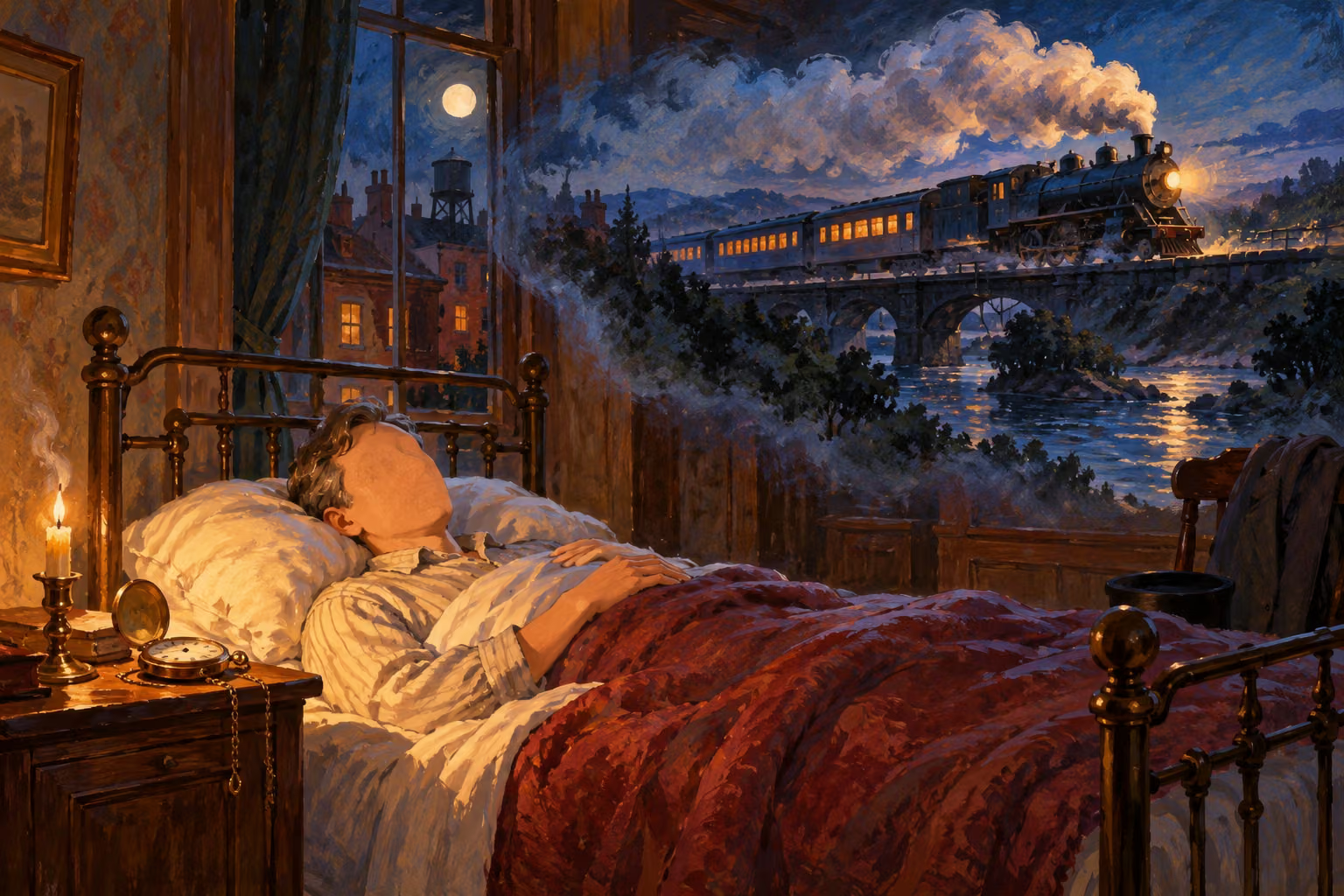
A real-life story · New York and Pennsylvania, United States, 1897
“I believe my wife died last night”: the shared-death experience of J. F. Morse
In July 1897, a New York man named J. F. Morse woke up convinced that his wife had died that night in a sanatorium in Pennsylvania. At half past ten he told a doctor friend. The doctor wrote it down on the spot in a letter and mailed it. In the evening, Morse sent the doctor a telegram with the news. His wife had died the night before.
It is one of the best-documented cases of its time. The doctor’s letter bears an 11.30 a.m. postmark. News of the death did not reach the doctor until 7.15 in the evening. Only one thing is missing. Nobody found out whether some earlier message reached Morse, for example a telegram from the family. We tell it step by step and then look at what could be checked. If you’re in a hurry, go straight to the check. How did Morse know?
Step 1
Wednesday 14 and Thursday 15 July 1897 · Told by Morse in a letter
Morse’s wife enters a sanatorium, ill, for many months

Caroline Morse was 53 and had been ill for some time. She was from Dayton, in the state of Ohio, and lived with her husband, J. F. Morse, in New York.
On Wednesday 14 July she entered a sanatorium in the village of Delaware Water Gap, in Pennsylvania. Her sister and her brother went with her. Her husband stayed in New York.
The next day, Morse wrote a thank-you letter to his friend Dr. M. L. Holbrook, a New York doctor. He said his wife would stay at the sanatorium “until improved, perhaps many months.”
Morse wrote that letter before anything happened. It shows he was not expecting a death soon.
Step 2
Before July 1897 · Told by Dr. Holbrook
A man who had dreamed things that later happened all his life
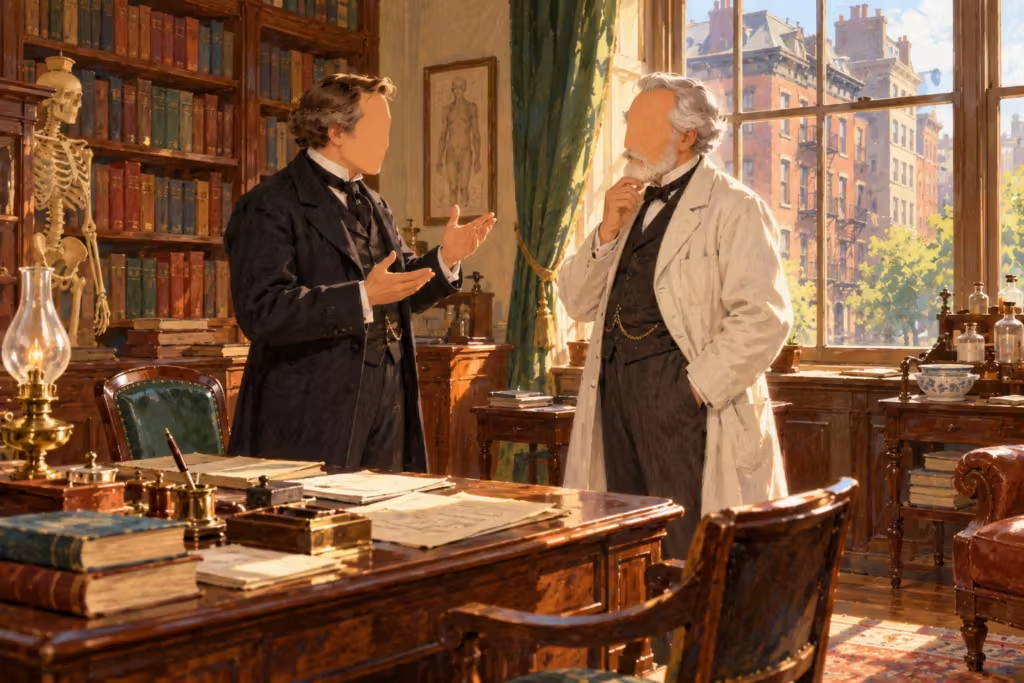
According to Dr. Holbrook, Morse had all his life had dreams that later came more or less true. Holbrook worked with the Society for Psychical Research, which studied such cases. That is why he had asked Morse to tell him about any vivid dream before it came true.
After the death, Morse told Holbrook about a dream he had had a month before. His wife came to his bedside with a clock in her hands. She took off the hands and the face and showed him the works, all broken. At the time he gave it little importance. Later he took it as a warning of his wife’s death.
It is not known how many dreams he told Holbrook about that did not come true.
Step 3
Friday 16 July, at the sanatorium · Told by the sanatorium doctor
Caroline gets worse quickly, and the family sends a telegram

The sanatorium doctor was Dr. F. Wilson Hurd. According to him, Caroline arrived very exhausted and kept getting worse. Her pulse was very fast, she had a fever, and blood was not reaching her fingers properly.
On Friday morning, the doctor spoke to Caroline’s sister. He told her that Caroline could not hold out much longer unless she improved markedly within a few hours. He also told her he thought Caroline would not live more than 24 hours. The family sent a telegram to New York at once, at about nine. It was addressed to Mr. McKinney, a brother-in-law of Morse.
McKinney tried to find Morse in several places, but failed. He went to the sanatorium and arrived at four in the afternoon. From there he sent Morse another telegram.
Caroline died on Friday at 9.15 in the evening, peacefully. Morse was still in New York and, according to him, knew nothing.
Step 4
The night of Friday 16 to Saturday 17 · Asleep · Told by Morse
Morse dreams of a long train journey in mourning

That night, in New York, Morse dreamed he was dressed in mourning and taking a long journey by train.
In the dream nobody told him anything about his wife. When he woke up he felt the dream was about her, and that she was already dead.
In the morning he went to see Dr. Holbrook.
Step 5
Saturday 17 July, 10.30 a.m. · Written down by Dr. Holbrook
Morse tells the doctor, and the doctor writes it down on the spot
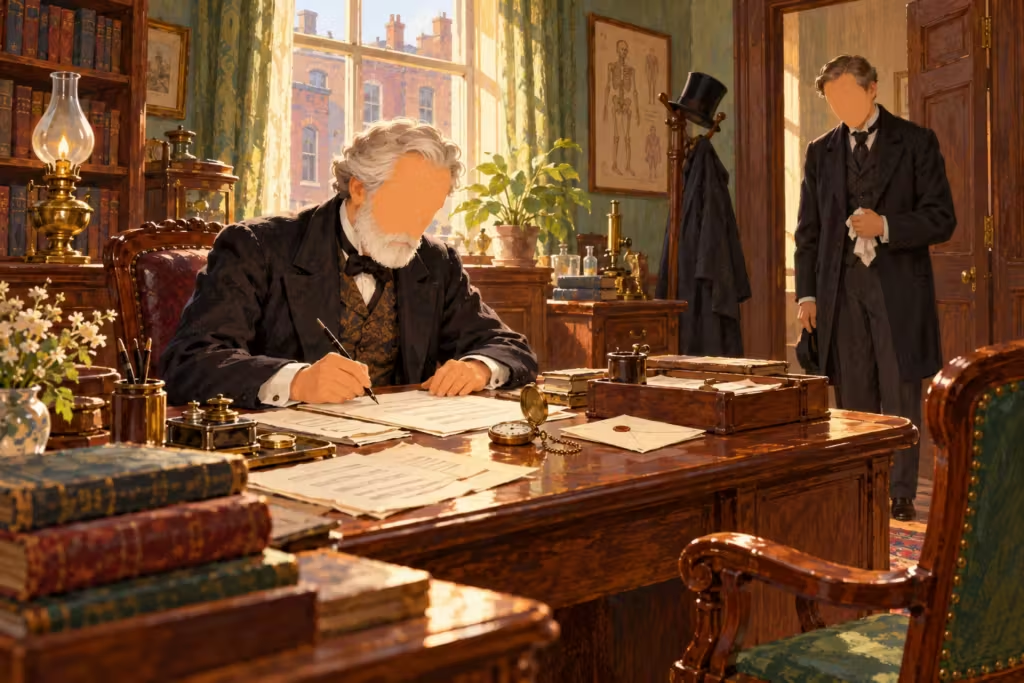
At about half past ten, Morse went to Holbrook’s room. Holbrook sat down to write a letter to Richard Hodgson, a Boston researcher of the same society. He put the time at the top, 10.35, and began like this:
“Five minutes ago Mr. J. F. Morse […] came to my room and said, ‘I believe my wife died last night, for I had a dream of a most remarkable nature which indicates it.’”
Holbrook added that Morse looked like someone who had just lost a dear friend, with tears in his eyes. And he wrote that he would mail the letter before hearing anything more.
He put Morse’s Thursday letter in the envelope, the one saying “perhaps many months.” He went out to drop the envelope in a street mailbox as soon as he finished, at about 10.45. The postmark reads “New York, July 17, 11.30 a.m.”
Holbrook had not yet received the news. Morse later said that he had not received any message either.
Step 6
Saturday 17, 7.15 p.m. · Told by Dr. Holbrook
Nine hours later, Morse sends him a telegram: his wife has died

At 7.15 in the evening, Holbrook received a telegram from Morse himself. It read: “My wife died last night. News kept from me to-day.” The telegram does not say who kept the news from him that day. Days later, Morse wrote to him that he had sent the telegram on Saturday evening, when he learned of the death.
The next day, Holbrook sent Hodgson another letter with the telegram inside. He told him it seemed to verify Morse’s dream.
Hodgson received both letters together on Monday 19 in Boston, because there was no mail delivery on Saturday evening or on Sunday. That same Monday, Hodgson noted the postmarks on each envelope.
Holbrook had heard Morse about nine hours before receiving that telegram.
Step 7
18 to 21 July · Told by Morse and the newspapers
Morse makes a long train journey with his wife’s body

Caroline was buried in Dayton, her home town. Morse took his wife’s body by train to Dayton. Holbrook later pointed out that Morse really did make a long railroad journey, as in his dream.
In Dayton, according to Morse, another brother of Caroline’s who lived there told him he already knew she had died. A few nights before Morse arrived, this brother, Wil, had dreamed that he saw her gliding out of his room. As she passed through the door, she turned and said to him: “Don’t you know me, Wil?” Only Morse tells this, in a letter he wrote from Dayton.
On 21 July, two Dayton newspapers published the death notice. Both say Caroline died on Friday at Delaware Water Gap. Holbrook sent them to Hodgson.
Step 8
July to November 1897 · Told by Dr. Holbrook and the sanatorium doctor
The telegrams nobody sorted out
In September, Holbrook spoke with Morse again. Morse insisted that nobody had told him about the death before he saw Holbrook that morning.
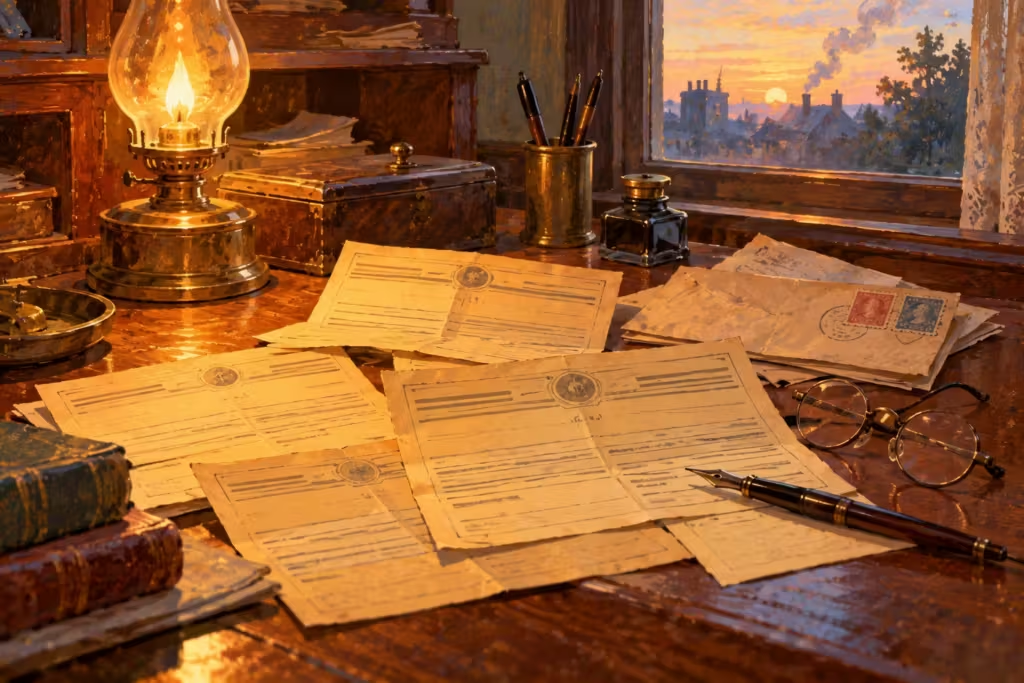
The sanatorium doctor had written to Holbrook in July. His letter mentions three telegrams. The first went out on Friday at nine in the morning to the brother-in-law. The second was sent by McKinney from the sanatorium. And the third went out on Saturday at about 7.30 in the morning, to Morse’s home and office. According to Morse, his brother-in-law McKinney lived with him. That Saturday, shortly after Morse left home, a message arrived for McKinney. This does not quite fit the doctor’s letter, because according to the doctor McKinney had been at the sanatorium since four o’clock on Friday afternoon.
Holbrook wrote that the question of the telegrams “seems rather mixed” and that he had not had time to unravel it. The Society for Psychical Research published the case in November 1897. It said it hoped to find out why the first telegram, Friday’s, did not reach Morse. We have not found that it ever did.
The question from the beginning remains: how did Morse know his wife had died? Let’s see what could be checked.
Frequently asked questions
What did J. F. Morse dream the night his wife died?
He dreamed he was dressed in mourning and taking a long journey by train. When he woke up he felt his wife had died. The next morning he told a doctor, who wrote it down with the time before the news arrived. His wife had died that night, in July 1897.
Could J. F. Morse have learned of his wife’s death through a telegram?
Unknown. The family sent telegrams on Friday and on Saturday morning, before Morse spoke to the doctor. Morse insisted that no message had reached him. The doctor asked about those telegrams, but never established whether any reached Morse in time.
Where this story comes from
Case documents
- Case L. 1094, Journal of the Society for Psychical Research 8 (November 1897), pages 134 to 139, public domain. It brings together the letters of Dr. M. L. Holbrook, J. F. Morse and Dr. F. Wilson Hurd, and Richard Hodgson’s notes on the envelopesRead for free
- The death notices in the Dayton Evening Herald and the Dayton Daily Journal of 21 July 1897, cited in the same issue
To understand more
- Dreams that warned of a death: the 24 cases of “Phantasms of the Living”Read
- John Owen (1892): the dream of his mother’s funeral, written down before the newsRead
- The census of hallucinations: 17,000 people and the apparitions that coincided with a deathRead
- More shared-death experiencesRead
Our archive
- Our assessment of the case with the five questions of the check, as of October 23, 2026
Keep reading
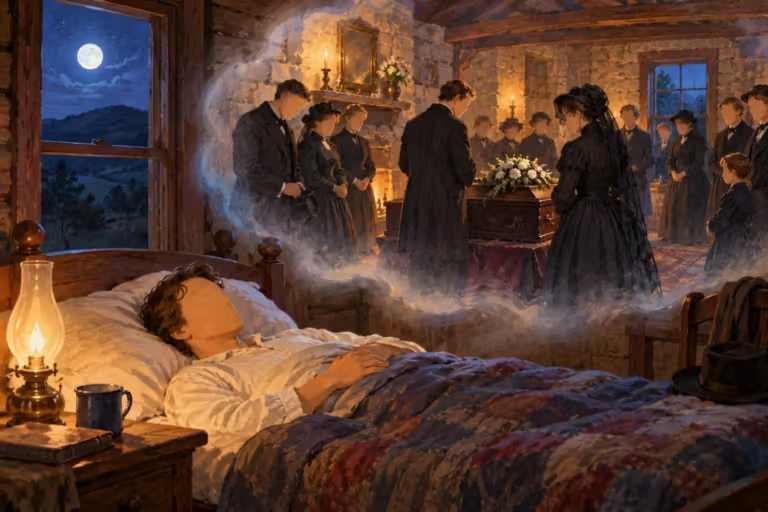
California and England, 1892
John Owen
He dreamed in California of the funeral of his mother, who lived in England. He wrote it in a letter before learning she had died.
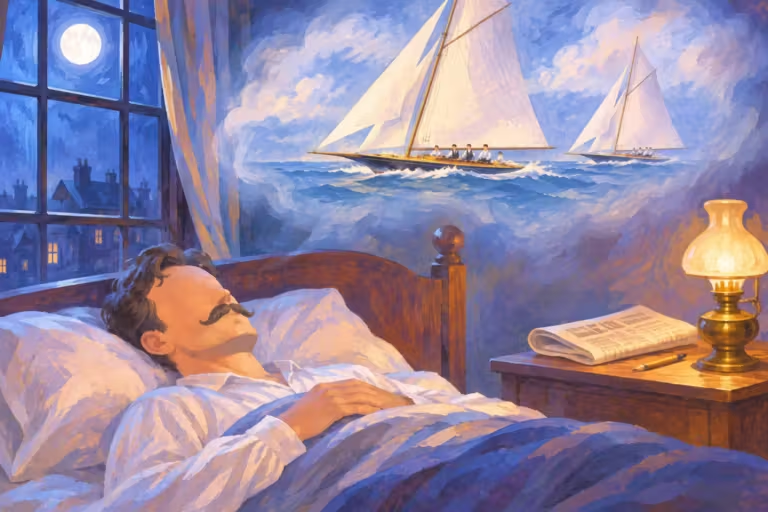
Boston, 1899
The Columbia yacht race
On the night of October 1, 1899, a Boston bookkeeper dreamed that the Columbia won a yacht race by 10 minutes and 14 seconds, and wrote it down in the office pool. Two weeks later, the Columbia won by that time.

United States
Julie McFadden
A hospice nurse says goodbye to a dying patient and goes out to her car. There, she says, she hears his voice, full of joy. After about thirty seconds the voice fades, and just then she gets a message saying he has died.

Reincarnation: The top 5 people who remember past lives
We asked them the same five questions as this story. A 32-page PDF, free in your inbox.
Check your email
We have sent you an email. Open it and press the button to confirm. If you cannot see it, check your spam folder.