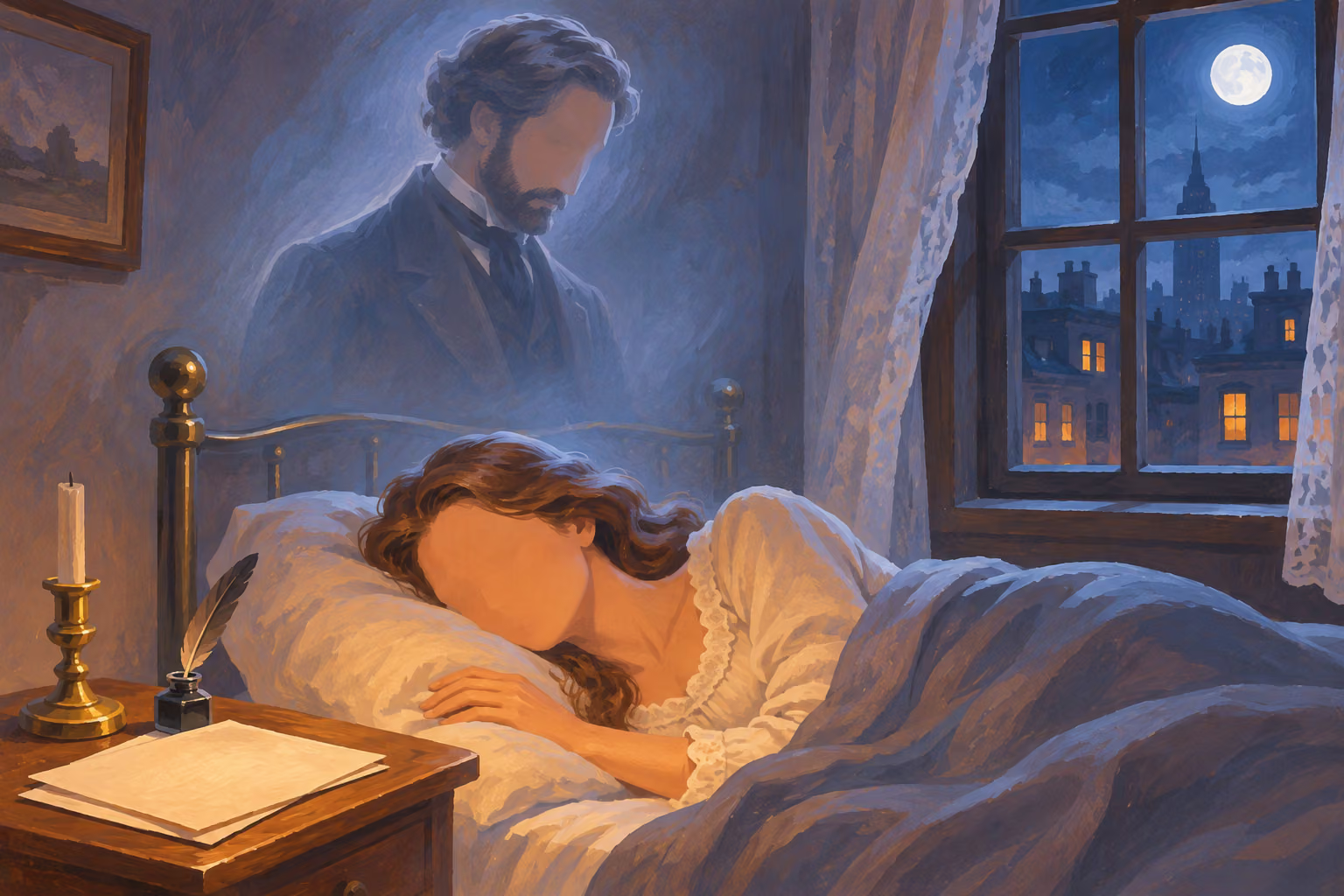
A real-life story · New York, 1907
The night a New York woman dreamed of a French professor who was preparing a piece of writing
On the night of October 10, 1907, Rose de Vaux-Royer dreamed of a French professor she had not been in touch with for nine years. The next day she described the dream in a letter. According to the letter, the professor was going to write something and wanted her to take part. Rose later wrote to Boirac. In January 1908, he replied that he was about to publish a book and that he was in mourning.
In this story, no one dies on the night of the dream. We include it with the shared-death stories because it is the same kind of case. Someone dreams of something happening far away. Rose described the dream in a letter the next day, and the letter carries a postmark with the date. We tell the story step by step and then look at what can be checked. Did Rose dream of what the professor was preparing, or was it a coincidence?
Step 1
1896 to 1898 · Paris · Rose de Vaux-Royer’s account
A New York woman studies hypnosis in Paris and meets a professor who researches the paranormal
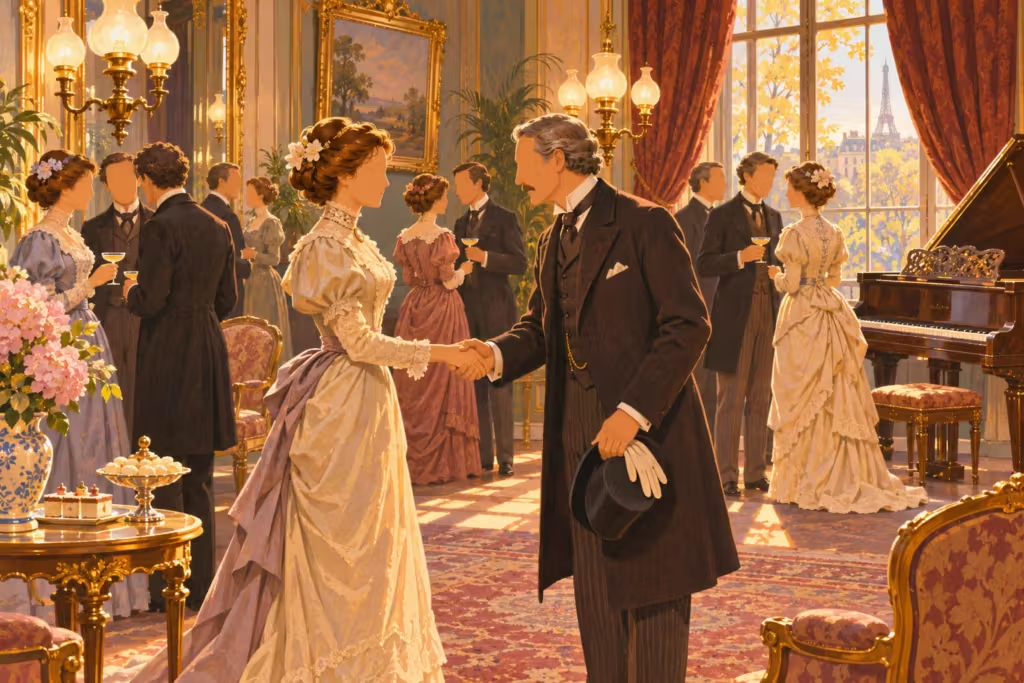
Rose de Vaux-Royer was an American poet. She lived in Paris from 1896 to 1898. There she studied hypnosis with the doctor Edgar Bérillon. She went to his classes at a hypnosis society in the city and at the Sorbonne, the University of Paris.
In Paris she also met Émile Boirac, a professor of philosophy and psychology at a school in the city. Boirac came to a reception Rose gave to bring together men of science. Afterward he invited her to his home to show her what he was achieving in his own experiments on paranormal phenomena.
In 1898, Rose went back to the United States. She had not been in touch with Boirac since then.
Step 2
The night of October 10, 1907 · New York · Rose de Vaux-Royer’s account
Rose dreams that Boirac is standing in front of her and asking for her help with something he is going to write

That night, Rose dreamed of Boirac. In the dream, he was standing in front of her and they were talking. He spoke in English, and she tried to answer in her French, which was not good.
She asked him if he liked America. Boirac named two French doctors, Baraduc and Bérillon. In the dream, Rose thought of calling Bérillon on the telephone, but it seemed to her that he was too far away.
It seemed to her that Boirac was going to write something, perhaps with the two doctors, and that he wanted her to take part. According to Rose, Boirac told her this:
“We wish a soul that can go out of the body and visit places and report to us.”
In the dream, Rose answered that she could do it.
In an account she wrote in 1909, Rose added more details. She said that in the dream she saw Boirac in mourning, with a band of black crepe on his coat sleeve. She felt the mourning was for a woman. She also said that something made her understand that Boirac was writing a new book.
When she woke up, Rose believed there had to be something behind a dream so real.
Step 3
October 11, 1907, at noon · New York · According to her letter
The next day, Rose describes the dream in a letter to an acquaintance in Cleveland

The next day, Rose wrote to Maurice Zeliqzon, an acquaintance of hers in Cleveland. Zeliqzon and Rose were members of the same society in Paris as Boirac and Bérillon. In the letter, Rose told him about the dream and asked him for Boirac’s address. This is how she began to describe the dream:
“Shall I tell you of a telepathic communication I had last night? I cannot explain it but perhaps you can.”
The letter carries a New York postmark of October 11, 1907, at twelve noon. Zeliqzon received it and kept it.
The letter speaks of something Boirac was going to write, but it doesn’t say it was a book. It doesn’t mention any mourning either. The letter was published years later in a journal, with some passages left out and marked with asterisks.
Step 4
The night of October 18 to 19, 1907 · France · Boirac’s account
Eight days after the dream, an aunt of Boirac’s dies in southwestern France
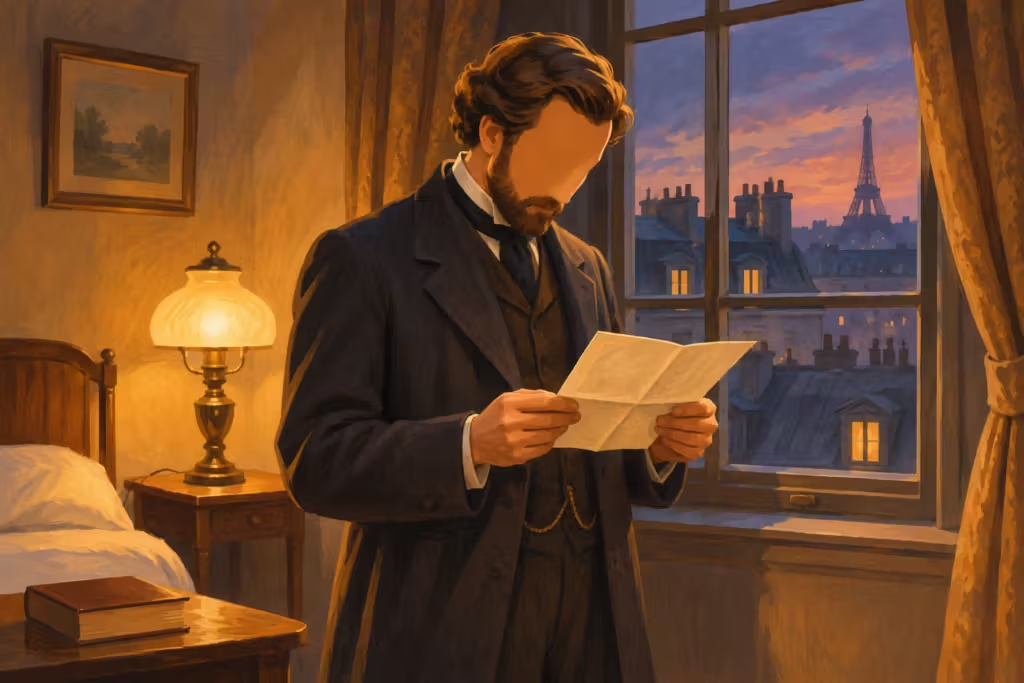
Boirac was in Paris from October 16 to 26, 1907. A telegram reached him there. His aunt, a sister of his father’s, had died in the Gironde, in southwestern France. She was the last one still alive of his father’s brothers and sisters.
Boirac had visited her there in August and September, and he knew she was very ill. She was very old, so the news did not surprise him. He was sorry he could not go to the funeral.
Boirac gave the date in two letters from 1909. In January he thought she had died on October 17 or 18. In May he said she died on the night of Friday the 18th to Saturday the 19th, and that the funeral was on Sunday the 20th.
When the aunt died, Rose had not yet written to Boirac. She still did not have his address.
Step 5
November 10, 1907, to February 2, 1908 · Cleveland, New York, and Dijon · According to their letters and Rose
Rose writes to Boirac, and he replies that he is in mourning and is about to publish a book
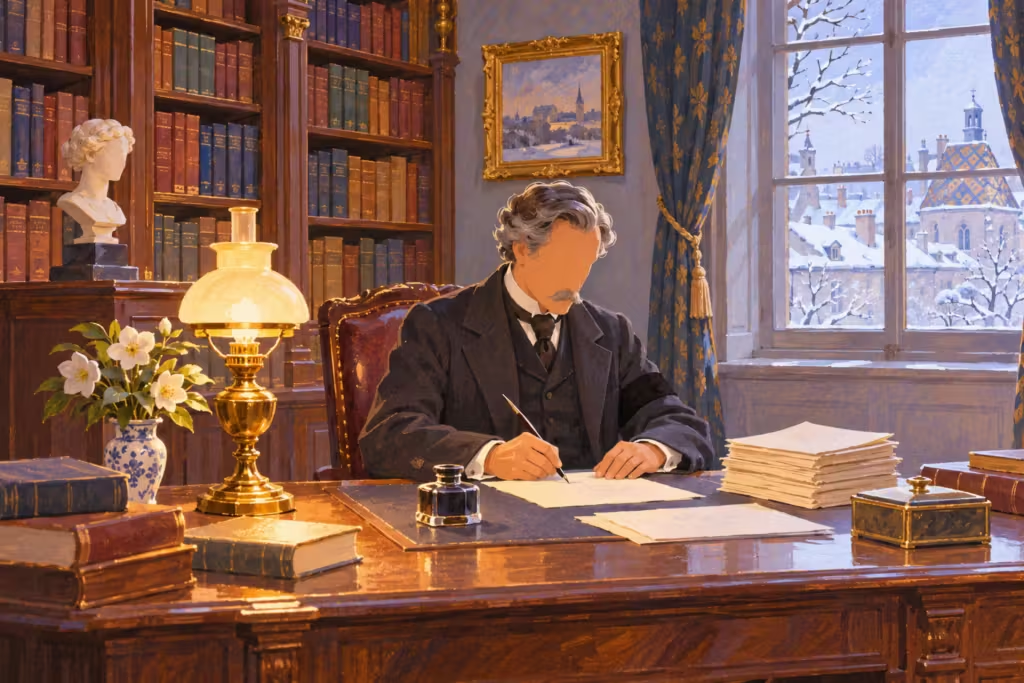
Zeliqzon took a month to reply. On November 10, he sent Rose the address of Boirac, who no longer lived in Paris. He was rector of the University of Dijon, in eastern France. Zeliqzon also asked her whether, on the day before the dream, she had read anything by Boirac or by Bérillon.
Rose then wrote to Boirac. That letter was not published. According to Rose’s 1909 account, she told him what had struck her most in the dream. She told him she had seen him writing a new book. She also told him she had seen him in mourning, with a band of black cloth on his sleeve.
Boirac replied from Dijon on January 15, 1908. This is what he wrote to her:
“Indeed, I have been in mourning since last autumn. An aunt, my father’s sister, the last survivor of his brothers and sisters, died at the end of October.”
In the same letter, Boirac told her that in February he was going to publish a book on the psychic sciences. It is called La psychologie inconnue, which in English would be “The unknown psychology.” It was published in 1908 by Félix Alcan, a publisher in Paris.
According to its introduction, the book mostly brought together articles Boirac had written between 1893 and 1903. He had revised them and added some unpublished ones. The introduction cites a book published in 1907.
On February 2, 1908, Zeliqzon wrote to Rose that he found the dream remarkable. He reminded her that, in the October letter, she had said Boirac was going to write another book. The published part of that letter says “something.”
Step 6
1909 to 1910 · Dijon and New York · According to their letters and the journal
Boirac doubts that the dream fully fits, and a New York journal publishes the case
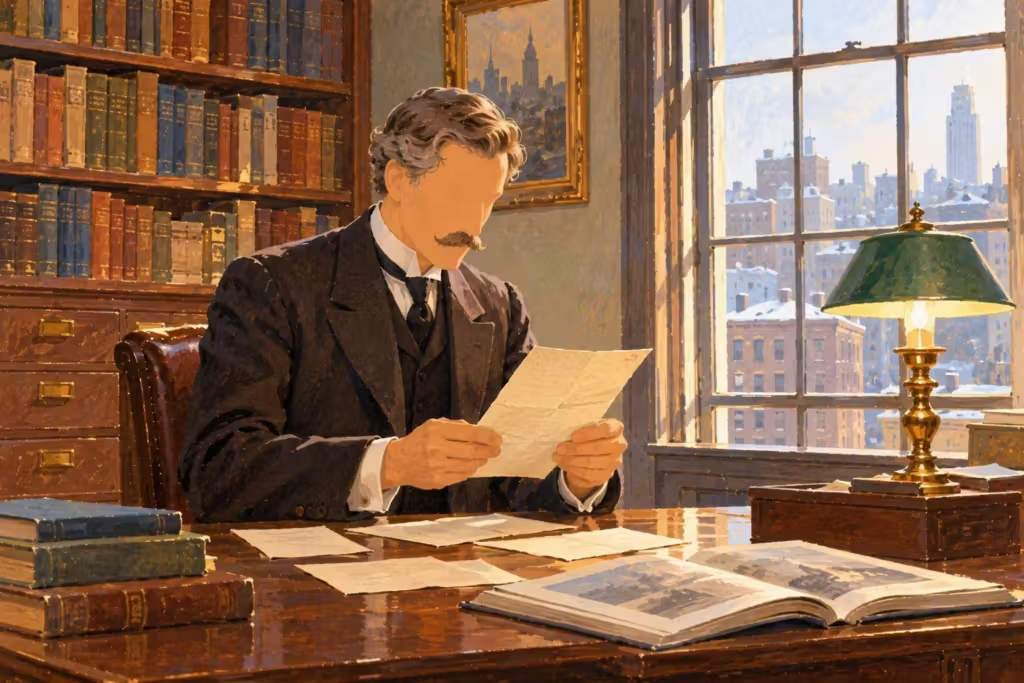
Rose wanted to publish the case. On January 30, 1909, Boirac wrote to her in English. He gave her the details of his aunt’s death. But he was not sure the dream fully fit what had happened to him:
“I am not fully sure that the circumstances of your dream or vision are in perfect agreement with the objective case to which it relates.”
In the same letter, Boirac told her that Esperantists in the United States were asking him to come to a congress in America. Esperanto is a language invented for everyone in the world to speak, and Boirac was president of its international academy. In May 1909 he still did not know whether he would go.
Rose asked James Hyslop for his opinion. He was the secretary of the American Society for Psychical Research. It was a society in New York that studied cases like this. Hyslop replied that he remembered little of the case. He told her that, in general, he thought it very likely that spirits played a part in cases like these. But he could not say so as a scientist without gathering many similar cases.
The Society’s journal published the case in June 1910, with the letters, some of them cut, under the title “Unclassified experience.”
The question remains: did Rose dream of what Boirac was preparing, or was it a coincidence?
Where this story comes from
Periodicals
- Journal of the American Society for Psychical Research, volume 4, number 6, June 1910, pages 323-332, “Unclassified experience”Read for free
- Light, volume 32, number 1,660, November 2, 1912, page 517, “Notes by the Way”Read for free
- Light, volume 37, number 1,913, September 8, 1917, page 281, “Notes by the Way”Read for free
- W. J. Colville, “Mme. de Vaux-Royer: a sketch,” Mystic Light Library Bulletin, volume 2, number 7, March 1912, pages 3-5. It tells who Rose was
Books
- Émile Boirac, La psychologie inconnue, Félix Alcan, Paris, 1908, in French. The link goes to a 1912 editionRead for free
Case documents
- Rose de Vaux-Royer’s letter to Maurice Zeliqzon of October 11, 1907, with the New York postmark, published in the journal
- Rose de Vaux-Royer’s letter to Zeliqzon of January 26, 1908, published in the journal
- Zeliqzon’s letters of November 10, 1907, and February 2, 1908, published in the journal
- Émile Boirac’s letters of January 15, 1908, January 30, 1909, and May 6, 1909, published in the journal
- James Hyslop’s letter of May 26, 1909, published in the journal
Learn more
- The Rome Stock Exchange dream: a dream written down in the middle of the night, hours after an explosionRead
- Lady Dufferin’s footman: a sweetheart’s dream, copied into a diary in those same daysRead
- More shared-death experiencesRead
Our archive
- Our full reading of the case and its scoring against our five criteria, as of October 21, 2026
Keep reading
England, 1925
The nephew in the ditch
On the night of Monday, January 26, 1925, a woman dreamed that her nephew fell into a ditch with the pony on top of him, and she wrote it down in a notebook. A few hours earlier, her other nephew had fallen from his horse during a hunt.
Tasmania, 1888
Rose Hervey
In 1888, in Tasmania, Rose Hervey saw her cousin Ethel coming up the stairs, dressed in gray, and she wrote it down in her diary. Ethel was ill with typhus in Dublin and died 32 hours later.
Boston, 1899
The Columbia yacht race
On the night of October 1, 1899, a Boston bookkeeper dreamed that the Columbia won a yacht race by 10 minutes and 14 seconds, and wrote it down in the office pool. Two weeks later, the Columbia won by that time.

Reincarnation: The top 5 people who remember past lives
We asked them the same five questions as this story. A 32-page PDF, free in your inbox.
Check your email
We have sent you an email. Open it and press the button to confirm. If you cannot see it, check your spam folder.