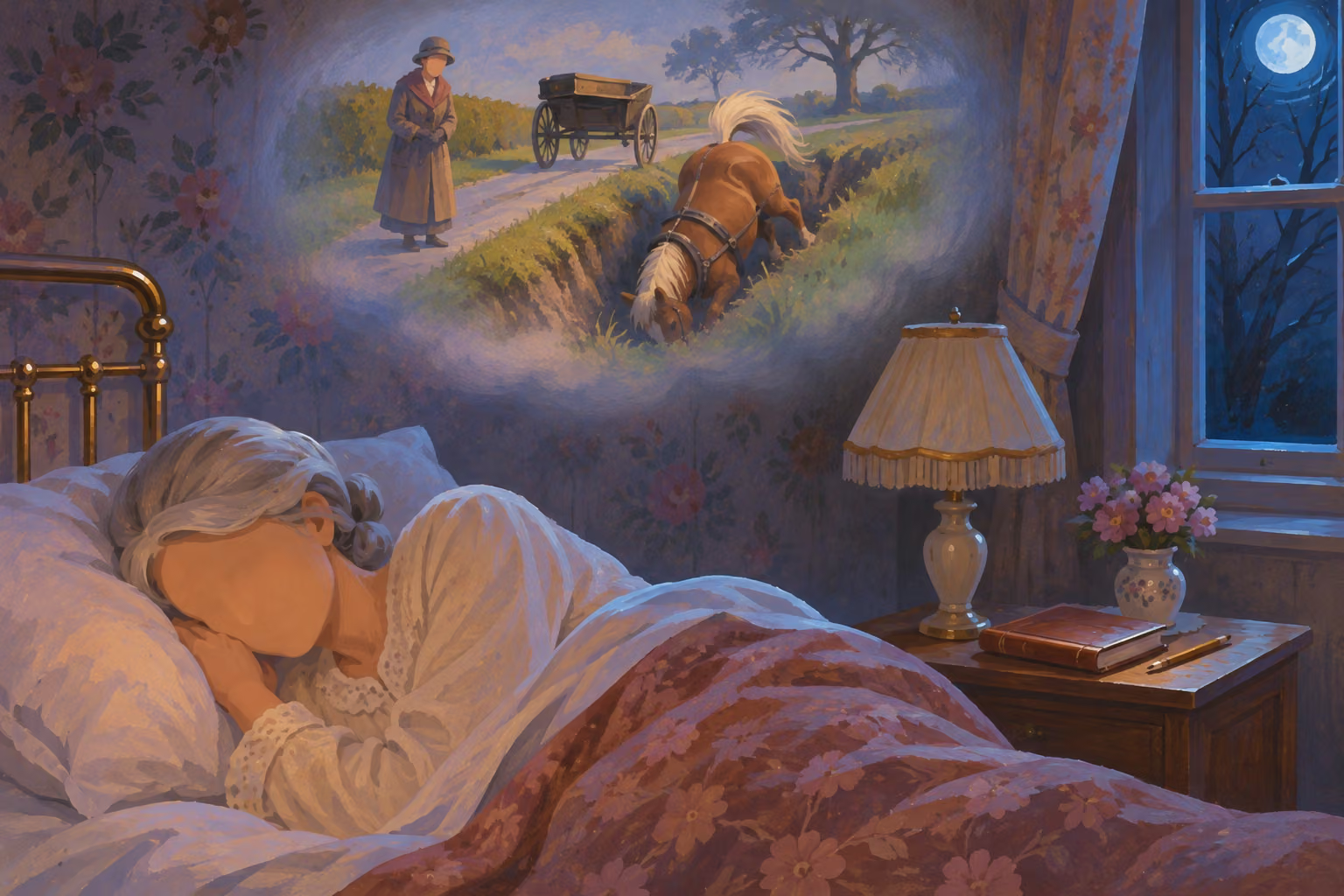
A real-life story · England, 1925
The night a woman dreamed that her nephew fell into a ditch with the pony on top of him
On the night of Monday, January 26, 1925, F. S. Boucher James dreamed that one of her nephews fell into a very deep ditch with his pony on top of him. The next day, she wrote it down in a notebook. Four days later, she learned what had happened that same Monday, a few hours before the dream. Her other nephew had fallen from his horse during a hunt and had been knocked unconscious.
In this story, nobody dies. We include it with the shared-death stories because it is the same kind of case. Someone dreams of a misfortune that has just happened far away. The cutting from the notebook with the dream reached researchers in London, along with the newspaper report. We tell the story step by step and then look at what can be checked. Did the woman dream of her nephew’s fall, or was it a coincidence?
Step 1
Before 1925 · F. S. Boucher James’ account
A woman sleeps with a notebook by her bed to write down the dreams that strike her
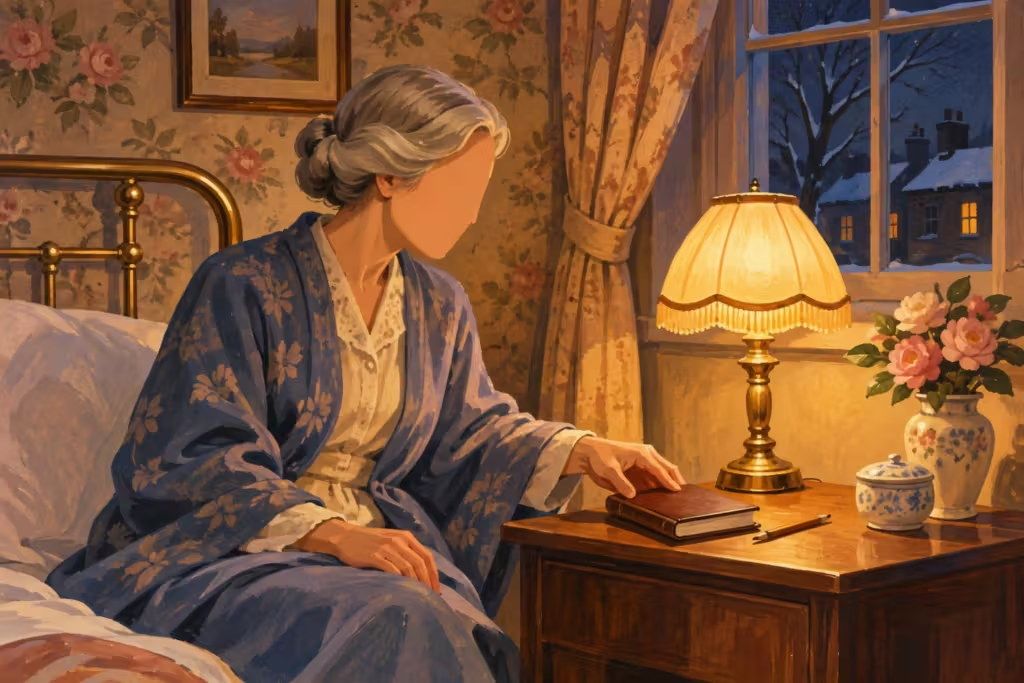
F. S. Boucher James lived in London. She was a member of the Society for Psychical Research, a society in London that studied cases of dreams and visions. In November 1922 she had a dream that interested her a great deal because of the way her memory had worked in it. The Society published it in its journal in 1923. After that dream, at the end of 1922, she began keeping a notebook by her bed. In it she wrote down, in a few words, the dreams that made an impression on her.
She usually wrote them down the next day. She dated them with the morning after the dream.
She also took part in telepathy experiments that the Society’s secretary ran in London. In them, one person thought of something and the others tried to pick it up. On Monday, January 19, 1925, it was Boucher James’s turn to think of something for the others to pick up. That was one week before the dream.
She had two nephews in the county of Devon, in the southwest of England. B., the older one, was Colonel Boucher Charlewood James. Since 1922 he had been master of the Stevenstone Hunt, which went out after foxes with hounds in the area. He handled the hounds himself during the hunt. T., the younger one, often lent his horses to others, or said he was too busy to go out.
She says herself that if she had pictured either of them hunting, she would have thought of B., not T.
Step 2
Monday, January 26, 1925, during the day · Devon · According to the newspaper and Boucher James’ sister
In the middle of a hunt, B.’s horse falls while jumping a bank and partly rolls over him
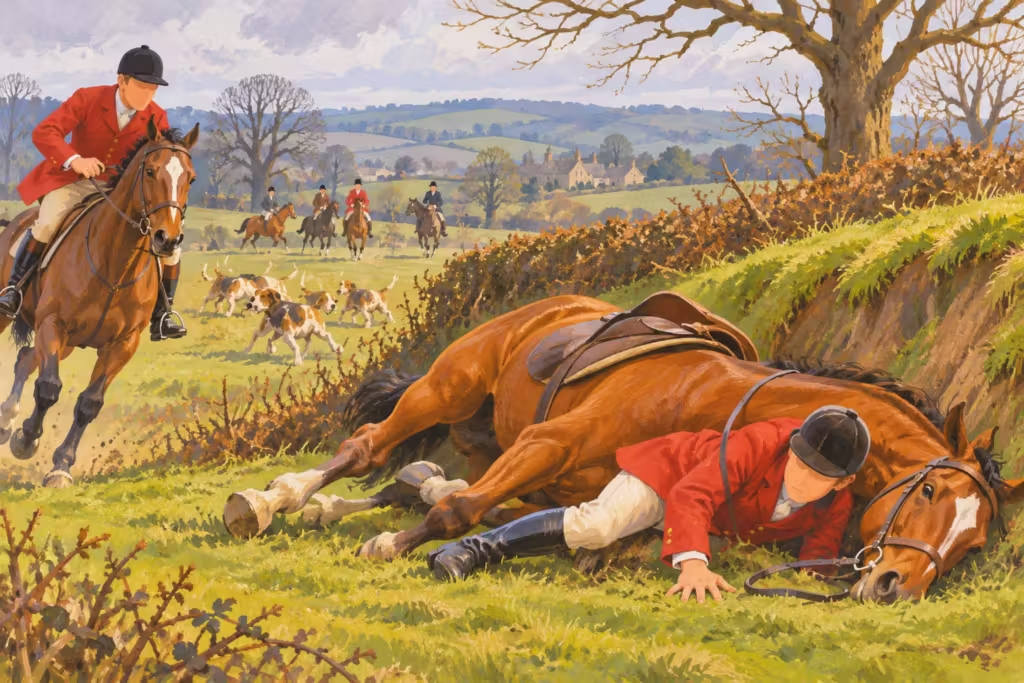
That Monday, the hounds had been chasing a fox for three hours. B.’s horse refused a bank three times. B. took it to an easier place, but the horse did not get over. The horse fell with B. and partly rolled over him.
B. took a hard kick to the head. His brother T. saw him fall and, as usual, was the first to reach him. According to the newspaper, his brother found him on the ground, unconscious. According to Boucher James’ sister, T. kept saying he wished it had happened to him instead.
B. did not break any bones, but he had a concussion.
Step 3
The night of Monday, January 26, into Tuesday, January 27, 1925 · F. S. Boucher James’ account
That night, Boucher James dreams that her nephew T. falls into a very deep ditch, under a pony
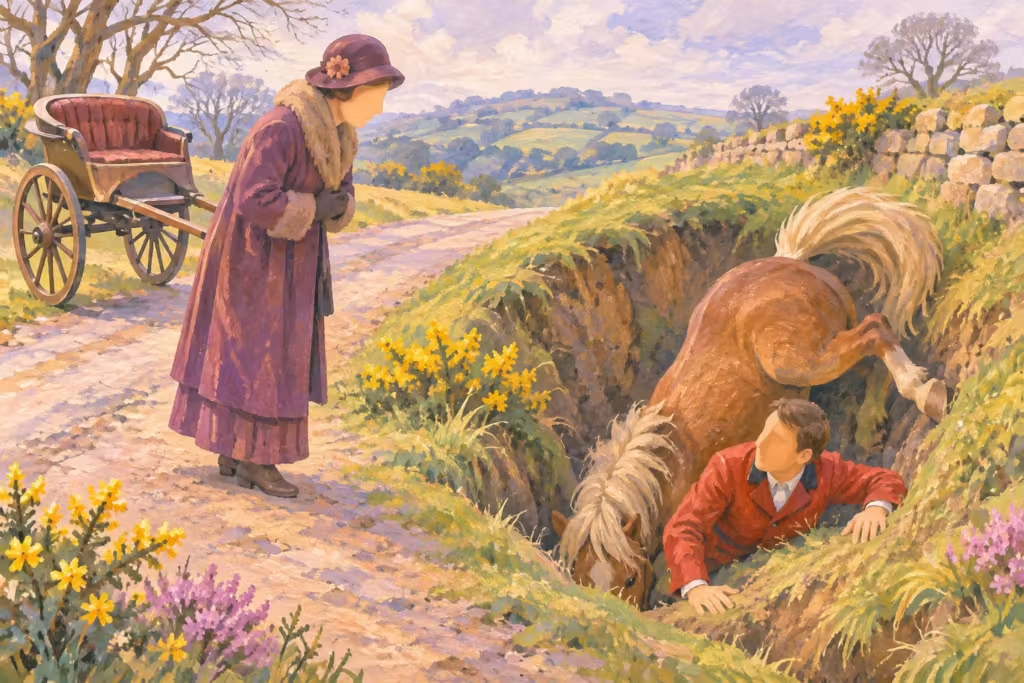
That night, Boucher James dreamed that she was going to a hunt with other people. Her younger nephew, T., was there. So was a lady she calls Mrs. O., who never missed a hunt. At a crossroads they stopped and changed vehicles. Mrs. O. went on in a pony cart, and T. was leading the pony up the hill by the reins.
Mrs. O. hit the pony. Boucher James thought this was a mistake and felt the pony was doing its best. She turned away. A moment later she heard a scream. When she turned back, she saw the pony head first in a very deep ditch, with her nephew underneath.
She could hear T. groaning and gasping. Then, to her relief, T. got to his feet, but he was very dazed and shaken. Later, in another letter, Boucher James added that in the dream she saw T. with very red eyes.
In the morning, Boucher James remembered the dream.
Step 4
Tuesday, January 27, 1925 · According to her notebook
That Tuesday, Boucher James writes the dream down in her notebook, in a single line
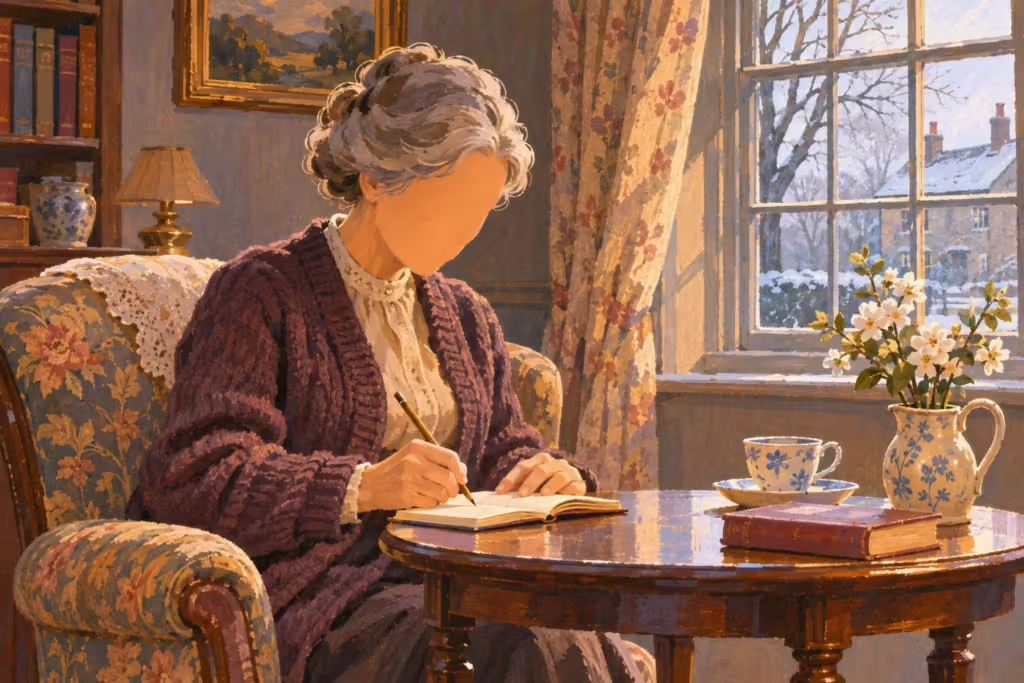
She did not write it down as soon as she woke up. She remembers thinking once or twice during the day that she had to write it down, and she believes she did so that afternoon. This is what she wrote:
“Jany. 27. Dreamt Mrs. O—— and pony and T—— T. in deep ditch, pony on top.”
In the notebook, the entry before this one is dated January 20, and the next one February 5. There are no entries between January 27 and February 5.
The note says that the one who falls is T., under a pony and into a ditch. The one who actually fell was B., under a horse and while jumping a bank.
Step 5
Friday, January 30, 1925 · F. S. Boucher James’ account
Four days later, a postcard from her sister tells her that B. has had an accident
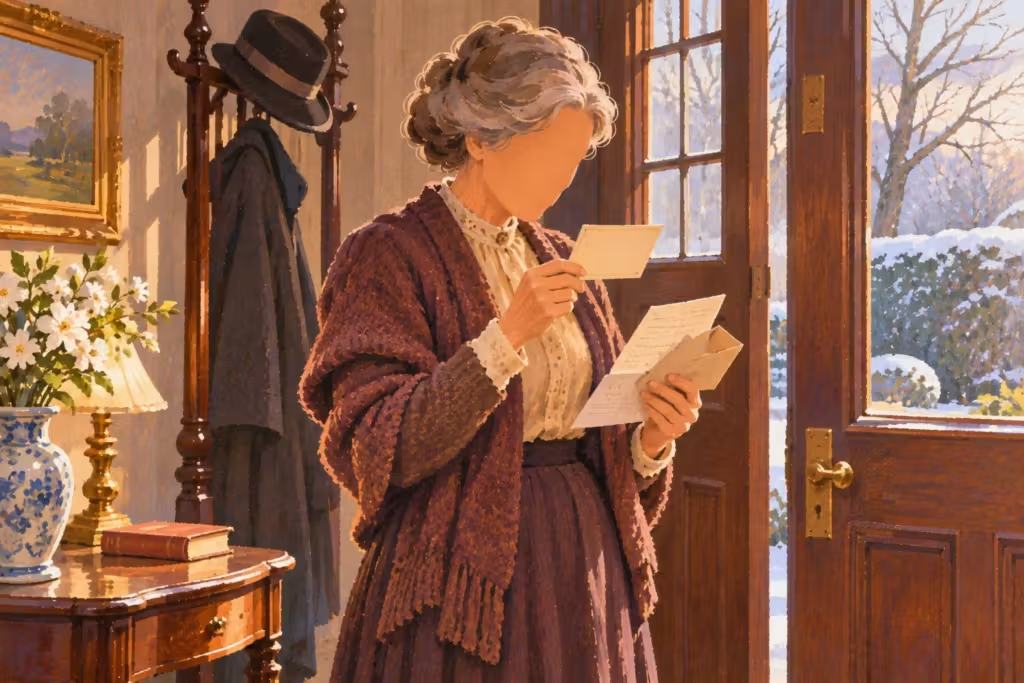
On Friday, a letter and a postcard from her sister arrived in the same post. The letter had no date. The postcard was marked “Thursday” and said that B. had slept for six hours. According to Boucher James, that postcard was the first she knew that something was wrong with B.
In the letter, her sister told her about the fall during the hunt.
On February 3, a Devon newspaper, the Bideford Gazette, reported the accident of B., Colonel B. C. James, at the hunt the Monday before.
Step 6
February to May 1925 · London and Devon · According to her letters and the journal
Boucher James sends the page of her notebook to the Society, which publishes the case

Boucher James told the dream to Miss Newton, the secretary of the Society for Psychical Research. On February 2, she sent it to her in writing, as Miss Newton had asked. Later she sent her sister’s letter, the newspaper cutting, and the piece of the notebook with the note of the dream, cut out of the notebook.
At the end of February, Boucher James saw her nephew T. in Devon and asked him about his brother’s fall. T. told her that one of B.’s eyes had swollen badly from a blow. She asked him whether he had been afraid for the eye when he saw him fall. This is what T. answered:
“Oh, no,” he said, “I thought he was dead.”
The Society’s journal published the case in May 1925, under the title “An apparently telepathic dream.” The researchers say they see no reason to doubt that Boucher James wrote the note before she knew anything about the accident.
The question remains: did Boucher James dream of her nephew’s fall, or was it a coincidence?
Where this story comes from
Periodicals
- Journal of the Society for Psychical Research, volume 22, May 1925, pages 70-72, case L. 1265, “An apparently telepathic dream”Read for free
- Journal of the Society for Psychical Research, volume 21, October 1923, pages 136-137, “Dream Memory”. This is the November 1922 dream that led her to start the notebookRead for free
- Ina Jephson, “A Report on Experiments in Thought Transference”, Journal of the Society for Psychical Research, volume 24, June 1927, pages 79-90. The experiment of January 19, 1925 is on page 83Read for free
- Proceedings of the Society for Psychical Research, volume 38, 1928-1929, list of members with her address in LondonRead for free
Books
- William Scarth Dixon, Fox-hunting in the Twentieth Century, London, 1925, pages 292-293. It says that Colonel B. C. James had been master of the Stevenstone Hunt since 1922 and handled the hounds himselfRead for free
Press
- The Times, July 4, 1930, obituary “Lieut.-Colonel B. C. James”. It gives his full name, Boucher Charlewood James, and says he was master of the Stevenstone HuntRead for free
Case documents
- The entry in F. S. Boucher James’ dream notebook of January 27, 1925, received by the Society and copied in the journal
- Boucher James’ letters to the Society’s secretary in February 1925, published in the journal
- Her sister’s letter about the fall, quoted in the journal
- The report in the Bideford and North Devon Weekly Gazette of February 3, 1925, copied in the journal
Learn more
- The Rome Stock Exchange dream: a dream written down in the middle of the night, a few hours after an explosionRead
- Lady Dufferin’s footman: a sweetheart’s dream, copied into a diary in those same daysRead
- More shared-death experiencesRead
Our archive
- Our full reading of the case and its scoring against our five criteria, as of October 21, 2026
Keep reading
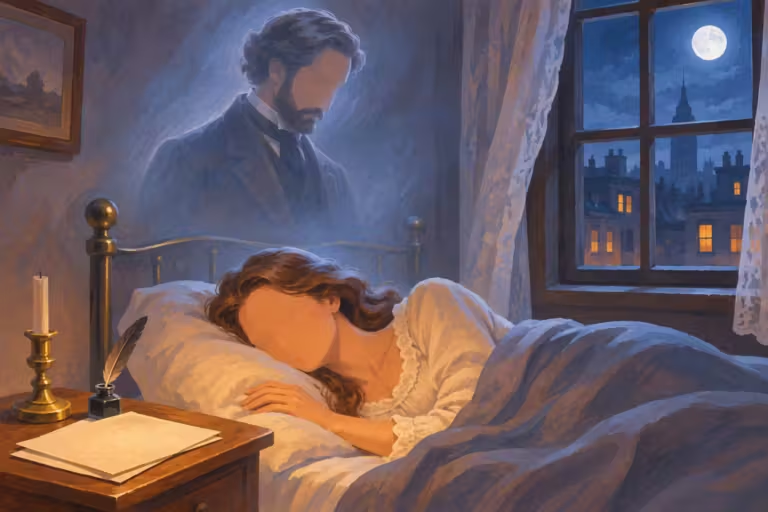
New York, 1907
Boirac’s book
On the night of October 10, 1907, a New York woman dreamed of a French professor who was going to write something. She described it in a letter the next day. Months later, she wrote to him, and he replied that he was preparing a book and that he was in mourning.
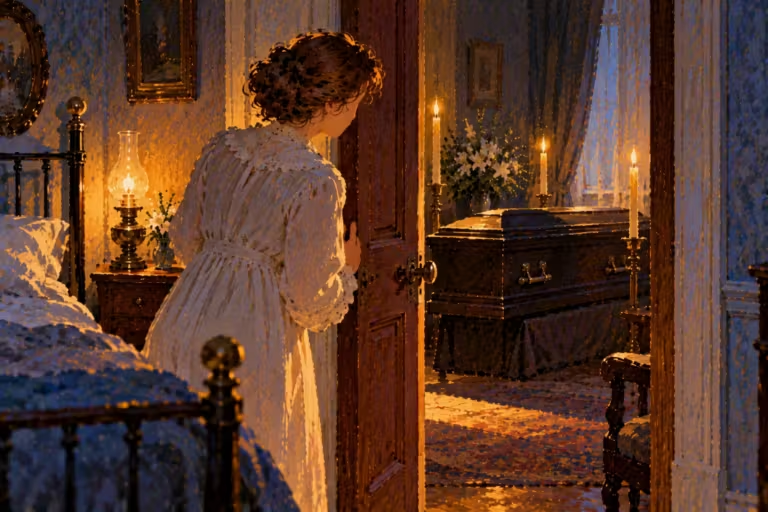
United States, 1910
Sister Dorothy
In December 1910, Mrs. Sutton dreamed of her old teacher, Sister Dorothy, in a coffin. She believed the nun had already died, but the nun was alive and died eighteen days later.
Denmark, 1907
Free in four years
In February 1907, a Dane dreamed that his friend told him, full of joy, that in four years he would be free. He wrote it down and had two witnesses sign it. His friend died in February 1911.

Reincarnation: The top 5 people who remember past lives
We asked them the same five questions as this story. A 32-page PDF, free in your inbox.
Check your email
We have sent you an email. Open it and press the button to confirm. If you cannot see it, check your spam folder.