A real-life story · India, 1868
The night Vicary Boyle, in India, dreamed of his father-in-law lying pale in a bed in England: a shared-death experience
In November 1868, R. Vicary Boyle was living with his wife in Simla, in northern India. One night, in the small hours, he dreamed of his father-in-law, lying pale in a bed in Brighton, England. He woke up convinced that his father-in-law had died, and he wrote it down in his diary. Fifteen days later, a telegram arrived. His father-in-law had died in Brighton on November 1. In India it was already the 2nd, but in England it was still the 1st, a few hours after the death.
The dream was written down in his diary before the news came, and a newspaper from the time confirms the day of the death. But the diary note only says that he dreamed of his father-in-law, not that his father-in-law had died. And the dream came a few hours after the death, not at the same time. We tell the story step by step and then look at what can be checked. How could he dream of his father-in-law so few hours after his death?
Step 1
1868 · Simla and Brighton · Vicary Boyle’s account
Vicary Boyle and his wife live in India, and her parents live in England

R. Vicary Boyle and his wife, Elionore, lived in Simla, a town in the mountains of the Himalayas. It was where the British governor of India spent the summer.
Elionore’s parents lived in Brighton, on the south coast of England. Her father, William Hack, was 72. He had moved to Brighton a few months earlier for his health, though he was no frailer than an older brother of his who was still alive in 1884.
They had had no news from them for weeks, and there was no reason to worry.
Step 2
November 2, 1868, in the small hours · Simla · Vicary Boyle’s account
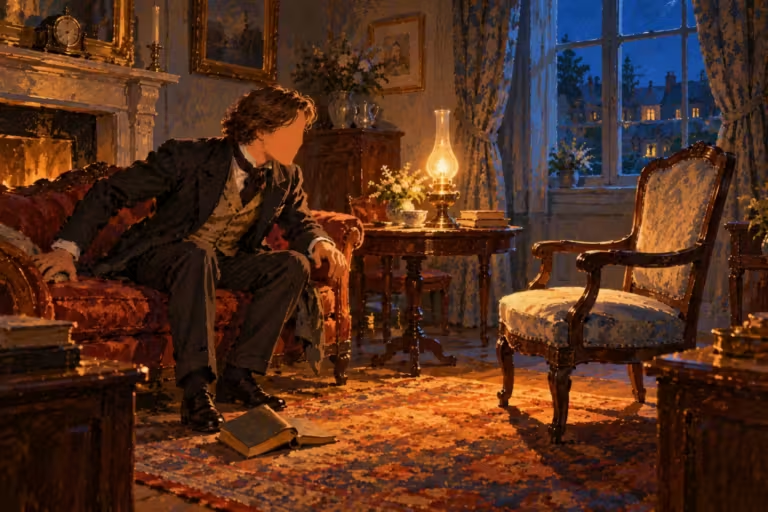
He dreams he is standing in the doorway of a bedroom in Brighton and sees his father-in-law, pale in bed
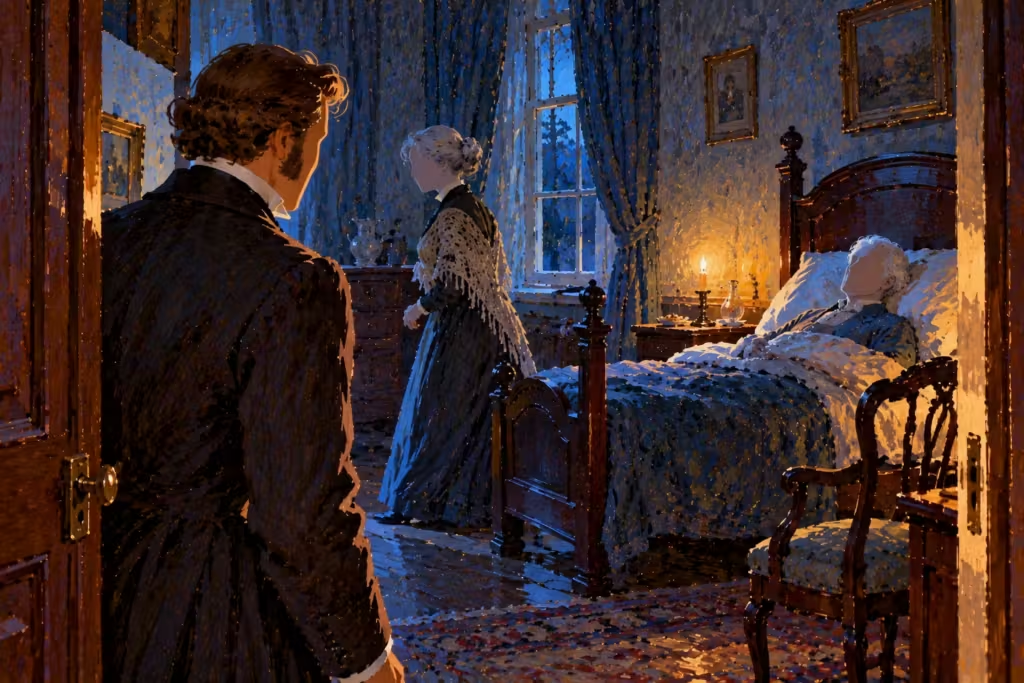
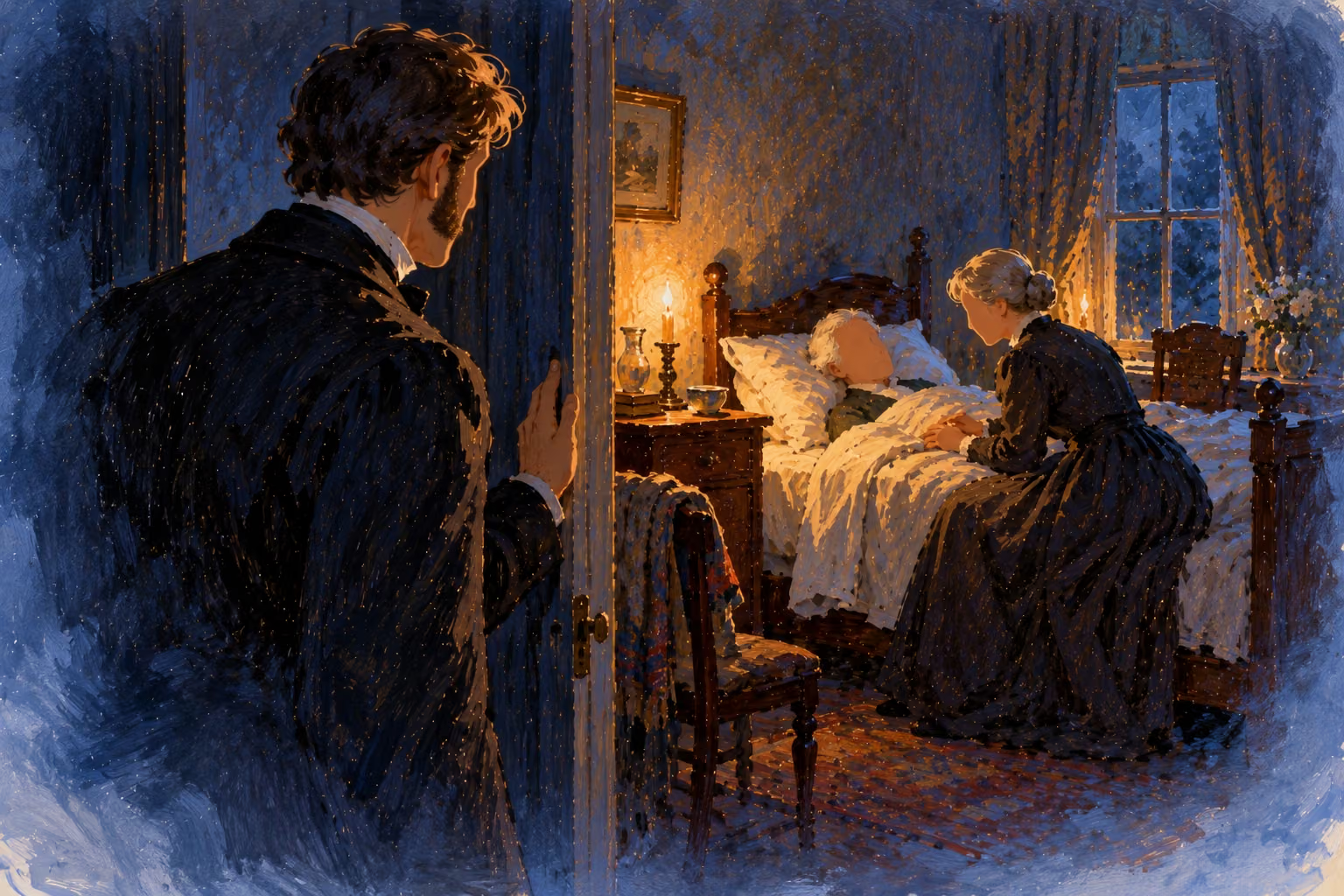
In the small hours, Vicary had a very vivid dream. He was standing in the open doorway of a bedroom, in a house in Brighton. By the light of a candle, he saw his father-in-law lying in bed, very pale. His mother-in-law was crossing the room quietly, looking after him.
He woke up for a moment, and the dream came again. Then he went on sleeping for a while.
When he was fully awake, he had a very clear impression that his father-in-law had died.
Step 3
That same morning, before dressing · Vicary Boyle’s account
Before getting dressed, he writes the dream down in his diary and tells his wife

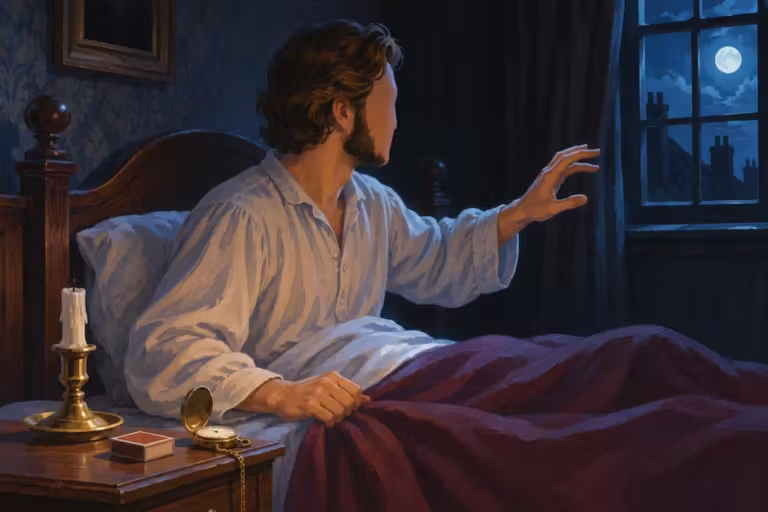
Vicary got up, as usual, between six and seven. Before dressing, he wrote the dream down in his diary. This is what he wrote:
“Nov. 2. Dreamed of E’s F[ather] early this morning. Written before dressing.”
Then he told his wife what he felt. They talked it over at length and could find no reason for such a strong impression.
The note doesn’t say that his father-in-law had died. It only says that he dreamed of him.
Step 4
November 2 to 17, 1868 · Vicary Boyle’s account
The telegraph line to England is down, and fifteen days later a telegram arrives

The telegraph between England and Simla had been working for some time, but in those days it went down for about two weeks.
On November 17, fifteen days after the dream, a telegram finally arrived from Louis Hack, Elionore’s brother. It said that their father had died in Brighton on November 1. Vicary noted in his diary that the telegram had arrived.
Vicary says the news neither caught him unprepared nor surprised him.
Step 5
November 4, 1868 · According to the newspaper The Times
A London newspaper reports the death of William Hack on November 1

On November 4, the London newspaper The Times published this notice: “On 1st Nov., at Brighton, William Hack, late of Dieppe, aged 72.”
What was still missing was the time of his death.
Step 6
November 1, 1868 · Brighton · According to the diary of a sister-in-law of William Hack
The letters say he died at night, but a sister-in-law’s diary says it was at two in the afternoon
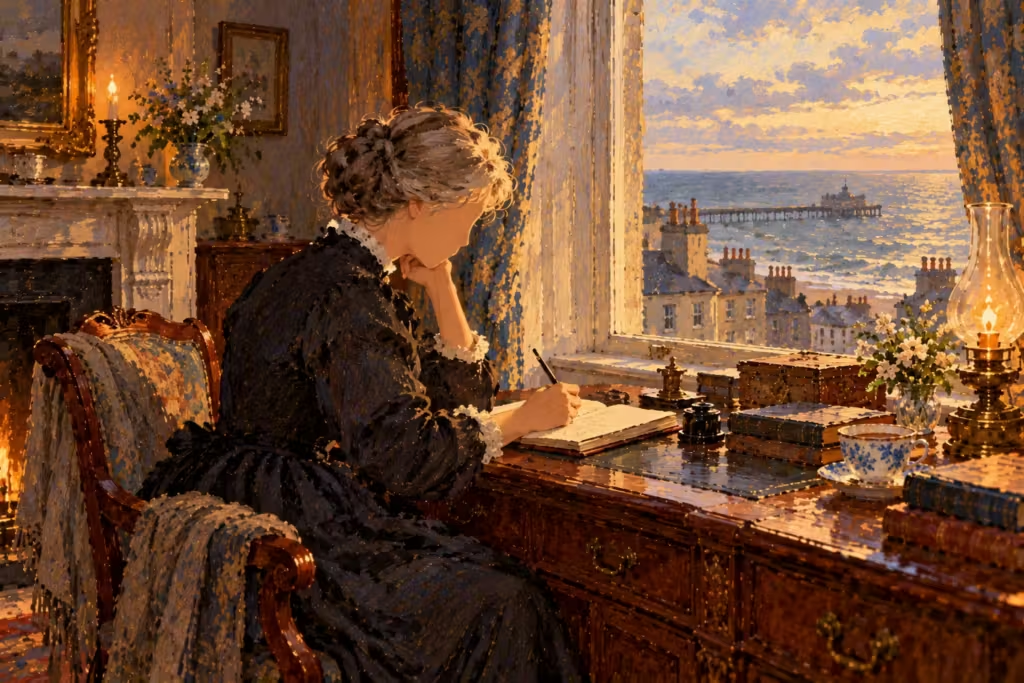
The letters that came later said that William Hack had died during the night. So Vicary added the words “the night of” to his diary note, above what he had written. That way, the note linked the dream to the night of the death.
But a sister-in-law of William Hack wrote in her diary, that same Sunday, November 1, how his last hours had gone. A niece copied that entry for the researchers. It says: “At a few minutes after 2 o’clock he ceased to breathe.” The journal that published the case adds that it was two in the afternoon.
Because of the time difference, Vicary worked out that when he had his dream in the small hours in Simla, it was 10 or 11 at night on November 1 in England. If his father-in-law died at two in the afternoon, the dream came about eight or nine hours after the death.
The researchers of the Society for Psychical Research think the letters were wrong to speak of the night, and that the right time is the one in the sister-in-law’s diary.
Step 7
1884 to 1888 · The account of Vicary Boyle, his wife, and the researcher Edmund Gurney
Vicary and his wife tell the case to researchers in London, who publish it in 1888

In 1884, Vicary Boyle wrote his account for the Society for Psychical Research, a London society that studied cases like this. In 1887, his wife confirmed it in writing. She remembered that one November morning in 1868 her husband told her he had dreamed that her father was dying.
Vicary told the researcher Edmund Gurney that he sleeps very deeply and almost never dreams. It is the only dream he has ever written down. He also said that his wife and his mother-in-law wrote to each other often, and that the latest letters had not mentioned her father.
The Society published the case in its journal in May 1888.
The question remains: how did Vicary dream of his father-in-law, pale in bed, so few hours after his death?
Where this story comes from
Journals
- Journal of the Society for Psychical Research, volume 3, May 1888, pages 265–266, case L. 323Read for free
Case documents
- R. Vicary Boyle’s account of July 30, 1884, and that of his wife, Elionore A. Boyle, of August 6, 1887, published in the journal
- Vicary Boyle’s diary entries of November 2 and 17, 1868, copied by Edmund Gurney
- The death notice in The Times of November 4, 1868
- The copy of an entry of November 1, 1868, from the diary of a sister-in-law of William Hack
Learn more
- The captain’s voice: another experience written down in a diary, with the same doubt about the timeRead
- More shared-death experiencesRead
Our archive
- Our full reading of the case and its scoring against our five criteria, as of October 28, 2026
Keep reading
London, 1882
Bruce’s brother
On the night of April 10, 1882, a London man woke up sure that his friend Bruce’s father had died, and wrote it down with the time. Four days later he learned that Bruce’s brother had died, in China.
France and England, 1880
Frederick Wingfield
One night in 1880, in France, Frederick Wingfield dreamed that his brother was sitting in front of him, and he wrote it down in his notebook. Three days later he learned that his brother had died that night in England.

England, 1885
Mrs. Humphry
She dreamed that someone told her, “Mr. John Jarvis is dead,” and told another servant. Five days later she learned that John Jarvis had died in the early hours of that same night.

Reincarnation: The top 5 people who remember past lives
We asked them the same five questions as this story. A 32-page PDF, free in your inbox.
Check your email
We have sent you an email. Open it and press the button to confirm. If you cannot see it, check your spam folder.