A real-life story · France and England, 1880
The night Frederick Wingfield saw his brother in a dream: a shared-death experience
Frederick Wingfield lived in Brittany, in northwestern France. One night in March 1880, he dreamed that his brother Richard was sitting in a chair in front of him. When he woke up, he wrote the date in his notebook and added “God forbid!” Three days later, the news reached him that Richard had died in England that same night.
It is one of the best-known cases in Phantasms of the Living, an 1886 book that collected hundreds of accounts like this. The researcher who published the case held the note from the notebook in his hands. Newspapers from the time confirm the death, and one of them gives the time. We tell the story step by step and then look at what can be checked. Why did Frederick dream of his brother on that very night?
Step 1
1879-1880 · In Brittany · Frederick Wingfield’s account
Frederick lives in a small town in France, far from his brother

Frederick Wingfield was English. He had been living for about twelve months in Belle-Isle-en-Terre, a small town in Brittany, in northwestern France.
His brother Richard lived in England. His full name was Richard Baker Wingfield-Baker, and the family called him Richard Baker. The two brothers hadn’t been in touch for some time. Frederick knew that Richard was in good health and that he was an excellent rider.
Frederick describes himself as a skeptic. He says he has even been accused of not believing in anything he can’t explain.
He was in the habit of reading late before going to sleep.
Step 2
Thursday, March 25, 1880, at night · Frederick’s account
Frederick dreams that his brother is sitting in a chair in front of him

That night he went to bed after reading late.
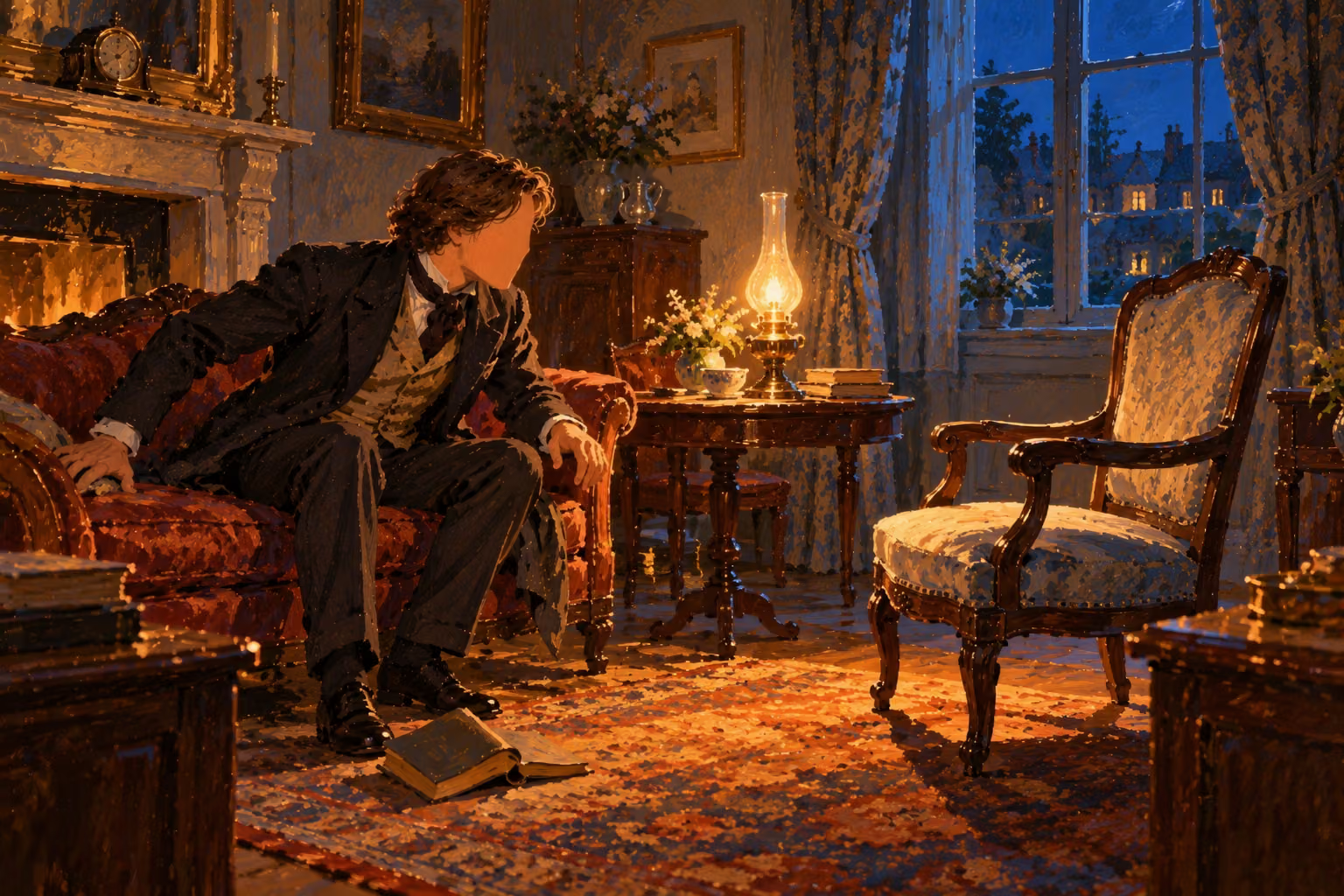
He dreamed that he was lying on the sofa, reading. When he looked up, he saw his brother Richard sitting in the chair across from him. He saw him very clearly.
In the dream, Frederick spoke to him. Richard didn’t answer. He only bowed his head, got up, and left the room.
Then Frederick woke up.
Step 3
That same night · Frederick’s account
He wakes up standing by the bed, trying to say his brother’s name
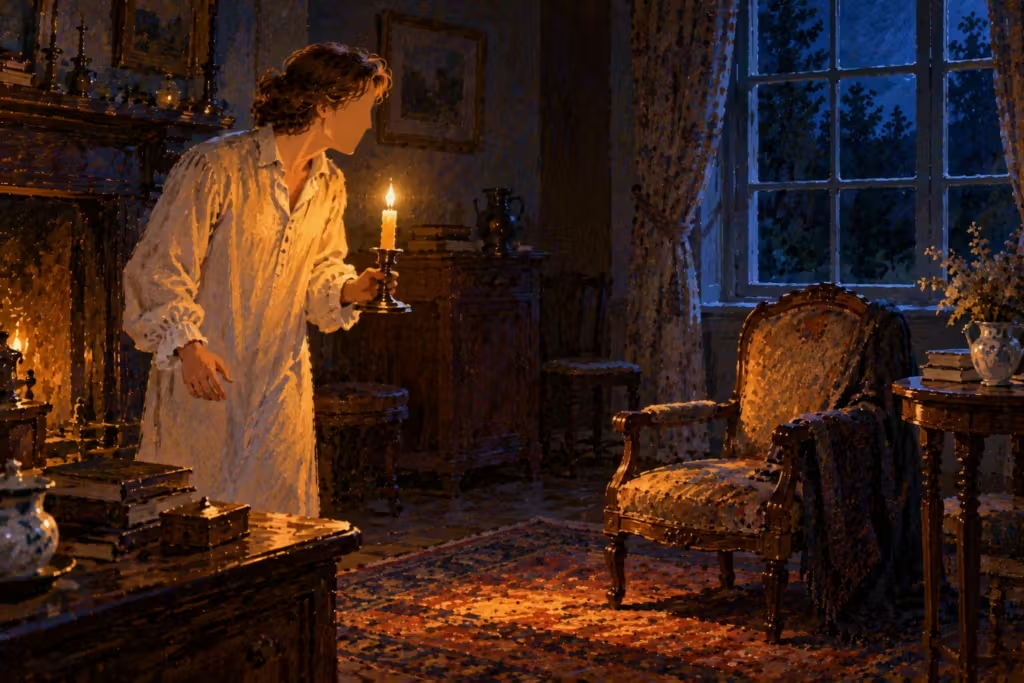
When he woke up, he had one foot on the floor and the other on the bed. He was trying to speak and say his brother’s name.
Richard’s presence felt so real that he left the bedroom to look for him in the sitting room. He looked at the chair where he had seen him sitting.
He went back to bed. He wanted to fall asleep again so he could see him again, but he was too upset. He fell asleep around dawn.
In the morning, the dream was still just as vivid.
Step 4
The next morning · Frederick’s account
He writes the date, four initials, and “God forbid!” in his notebook

Frederick had a feeling that something bad was going to happen. He wrote this note in the notebook where he kept track of things:
“Appearance — Thursday night, 25th of March, 1880. R. B. W. B. God forbid!”
There is an explanation for the four letters. Frederick had recognized his brother’s face. Even so, that night he thought the figure also looked a little like William Bigge. William Bigge was a colonel and his best friend, and he wore his beard the same way as Richard. So he wrote R. B. for Richard Baker and W. B. for William Bigge.
He didn’t tell anyone. In those days he had no friends nearby.
Step 5
Three days later · Frederick’s account
The news arrives: Richard died that Thursday night after a fall from his horse
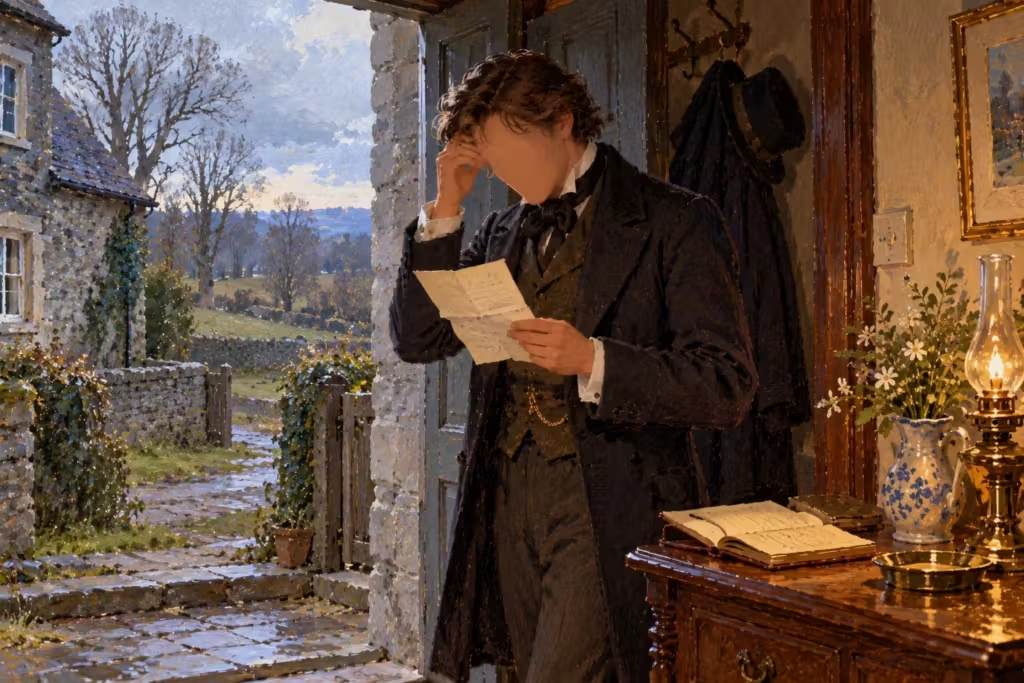
Three days later, Frederick received the news. His brother Richard had died on the night of Thursday, March 25, 1880. He had fallen from his horse during a hunt in England, and he died of his injuries.
Frederick looked at the note in his notebook again. Only then did he notice that the four letters together, R. B. W. B., were also the initials of his brother’s full name, Richard Baker Wingfield-Baker.
According to Frederick, Richard died at 8:30 in the evening, the same night as the dream.
Step 6
March 30, 1880 · According to the newspapers
Two English newspapers confirm that Richard died on March 25

The Times published the obituary on March 30, 1880. It says that Richard Wingfield-Baker, of Orsett Hall, in the county of Essex, died on the 25th.
An Essex newspaper, the Essex Independent, gives the same date. It adds that he died around 9 p.m.
Frederick dreamed of his brother later, once he had gone to bed. According to the researcher who published the case, the dream came a few hours after the death, not at the same time.
Step 7
Sunday, April 4, 1880 · The Prince de Lucinge’s account
A friend arrives from Paris, and Frederick shows him the note in his notebook
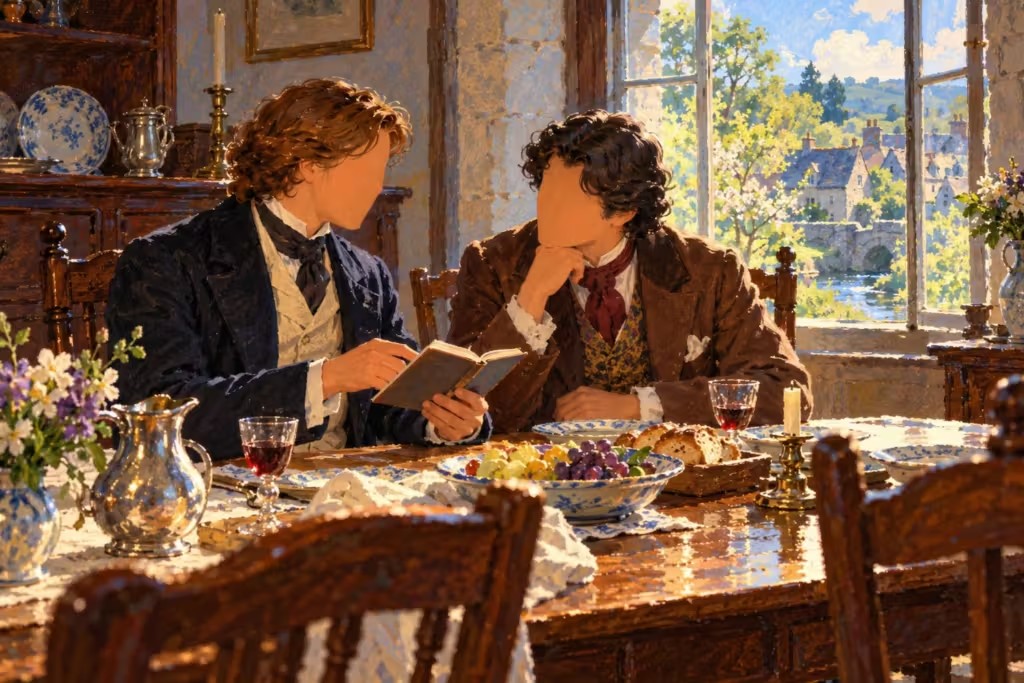
The Prince de Lucinge-Faucigny was a friend of Frederick’s. He arrived from Paris on April 4 to spend a few days in Brittany, and they had lunch together that Sunday.
The prince found Frederick deeply shaken by his brother’s death. Frederick told him about the dream and showed him the note in his notebook. By then he already knew that Richard had died.
Four years later, the prince recalled it in a letter. He remembered that Frederick saw his brother next to the bed, got up, and spoke to him, and that the figure then vanished. In the letter, the prince says the note was dated February 24 or 25, not March. Gurney thinks the prince made a slip when he wrote “February.” He reasons that the prince gets the day of the month right and writes that it was “a few days before” the news.
Years later, the notebook ended up in London.
Step 8
1883-1886 · Edmund Gurney’s account
Frederick sends his notebook to a researcher in London

Edmund Gurney was an English researcher who was collecting cases like this for a book. In December 1883, Frederick wrote to him and told him what had happened. He gave his word of honor that it was all true, and he admitted this about his note:
“As evidence, of course, this is worthless.”
In February 1884, Frederick sent him the notebook. Gurney found the note among business memos and notes on books. Frederick added that he had never had another dream like it, and that he had never again seen anyone who wasn’t really there.
Gurney and his colleagues published the case in 1886, in Phantasms of the Living. On the page about that study we explain how it was done and what can be checked about the 24 dreams the book brings together.
The question remains: why did Frederick dream of his brother on the very night he died?
Where this story comes from
Books
- Edmund Gurney, Frederic Myers, and Frank Podmore (1886), Phantasms of the Living, volume 1, chapter 5, case 23, pages 199-202Read for free
Case documents
- Frederick Wingfield’s letters to Edmund Gurney, dated December 20, 1883, and February 4, 1884, and the note from his notebook, copied by Gurney
- The letter from the Prince de Lucinge-Faucigny to Frederick Wingfield, dated February 2, 1884, in French, reproduced in the book
- The obituary in The Times of March 30, 1880, and the report in the Essex Independent, cited by Gurney
Learn more
- The study: the 24 dreams in Phantasms of the LivingRead
- Annie Harriss: the dream of her mother’s death, another shared-death experienceRead
- More shared-death experiencesRead
Our archive
- Our full reading of the case and its scoring against our five criteria, as of October 27, 2026
Keep reading
England, 1882
Mrs. Williams
One night in 1882, Mrs. Williams dreamed that her uncle was asking her to come and see him, and then she saw him in a coffin. Seven weeks later she learned that her uncle had died that same night.
India, 1868
Vicary Boyle
In 1868, in India, Vicary Boyle dreamed of his father-in-law lying pale in a bed in Brighton and wrote it down in his diary. His father-in-law had died that same day, a few hours earlier.

Canada, 1873
Lady Dufferin’s footman
In 1873, a footman drowned on a remote river in Canada. Knowing nothing, his sweetheart wrote him a letter. She told him she had dreamed he was drowning. Lady Dufferin, the woman he worked for, copied that letter into her journal.

Reincarnation: The top 5 people who remember past lives
We asked them the same five questions as this story. A 32-page PDF, free in your inbox.
Check your email
We have sent you an email. Open it and press the button to confirm. If you cannot see it, check your spam folder.