
A real-life story · England, 1879
The morning a woman heard the voice of an old friend who died that day in India: a shared-death experience
One October morning in 1879, a woman heard a distressed voice calling her by her first name. She recognized the voice of an old friend, an army officer in India. She wrote it down in her diary before breakfast. A few days later, she learned that her friend had died of cholera that same day.
This case has something unusual. The woman says she wrote down the voice in her diary before she knew anything, and a researcher later saw that page with its date. The day matches, but the time doesn’t. She heard the voice in the morning, and he died that night in India. We tell the story step by step and then look at what can be checked. How could she hear her friend on the same day he died, thousands of miles away?
Step 1
1879 · England and India · The woman’s account
A woman living in England has an old childhood friend who is serving with his regiment in India
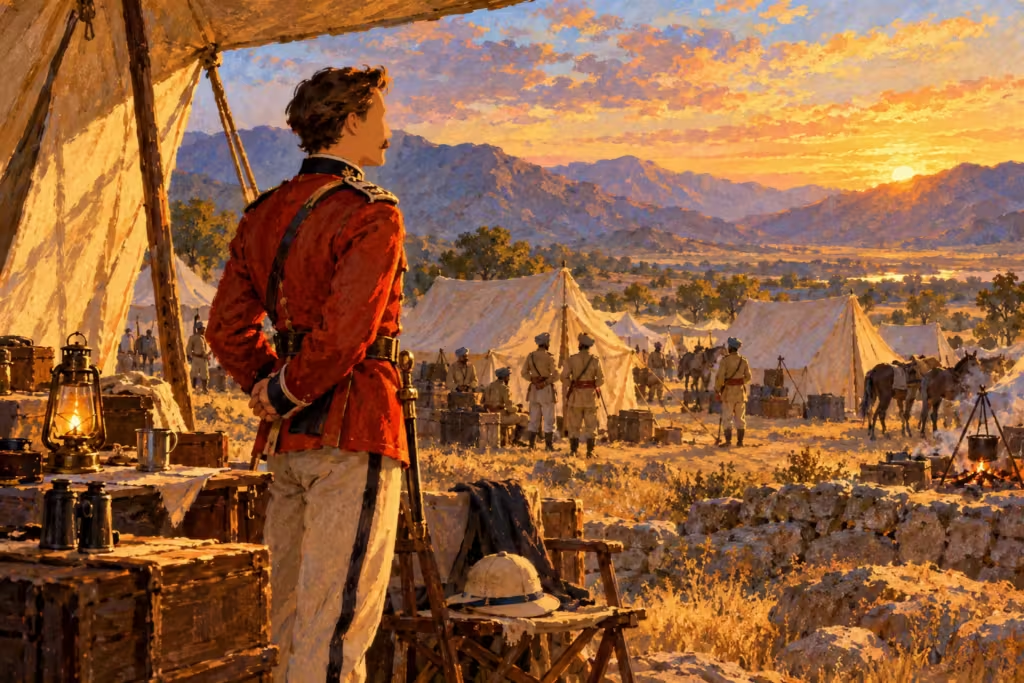
The woman did not want her name published. From what Gurney writes, she lived in England. She had an old friend she had more or less grown up playing with.
Her friend was an army officer, and he was with his regiment in India. At the time, India was ruled by Britain. She knew her friend was there, but she didn’t know he had been sent to the front.
She had not thought about him for weeks, perhaps months. Nothing had reminded her of him.
Step 2
Monday, October 27, 1879, in the morning · The woman’s account
One morning she hears a distressed voice calling her by name, again and again

She was in good health and had been awake for some time. Suddenly she heard a voice calling her by her first name. Five years later, she described it like this:
“I heard myself called by my Christian name by an anxious and suffering voice, several times in succession.”
She recognized the voice at once. It was her old friend’s.
Step 3
That same morning, before breakfast · The woman’s account
Before breakfast, she writes the date and what she heard in her diary
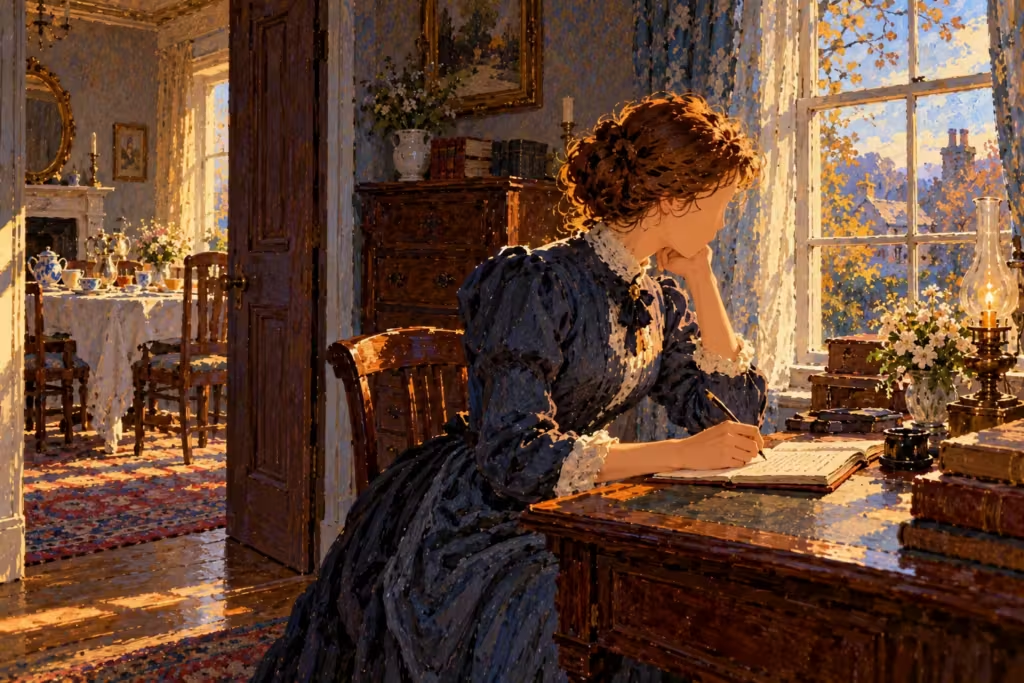
The experience made such a strong impression on her that she opened her diary. Before breakfast, she wrote down the date and what she had heard.
She believes she didn’t tell anyone, because she had guests staying in her house at the time.
The note was written before any news came from India.
Step 4
A few days later · The woman’s account
A few days later, she learns that her friend has died of cholera
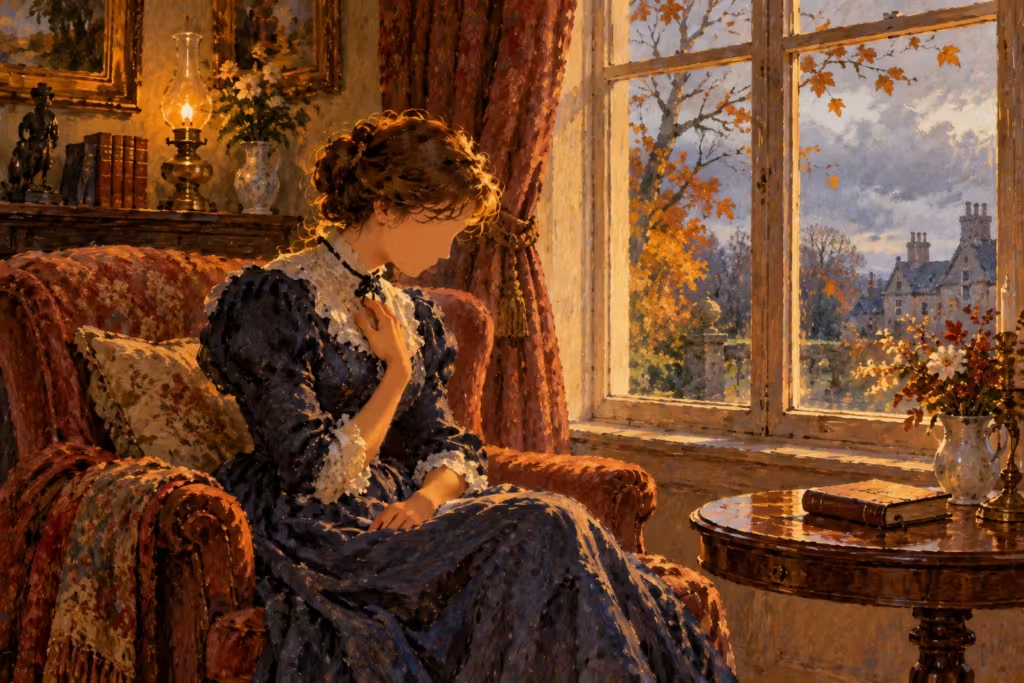
A few days later, the woman learned that her friend had died of cholera in India.
She understood that he had died on the same morning she heard his voice.
The woman kept that diary.
Step 5
1884 to 1886 · The researcher Edmund Gurney’s account
Five years later, the woman writes down what she heard for a researcher, who sees the diary page
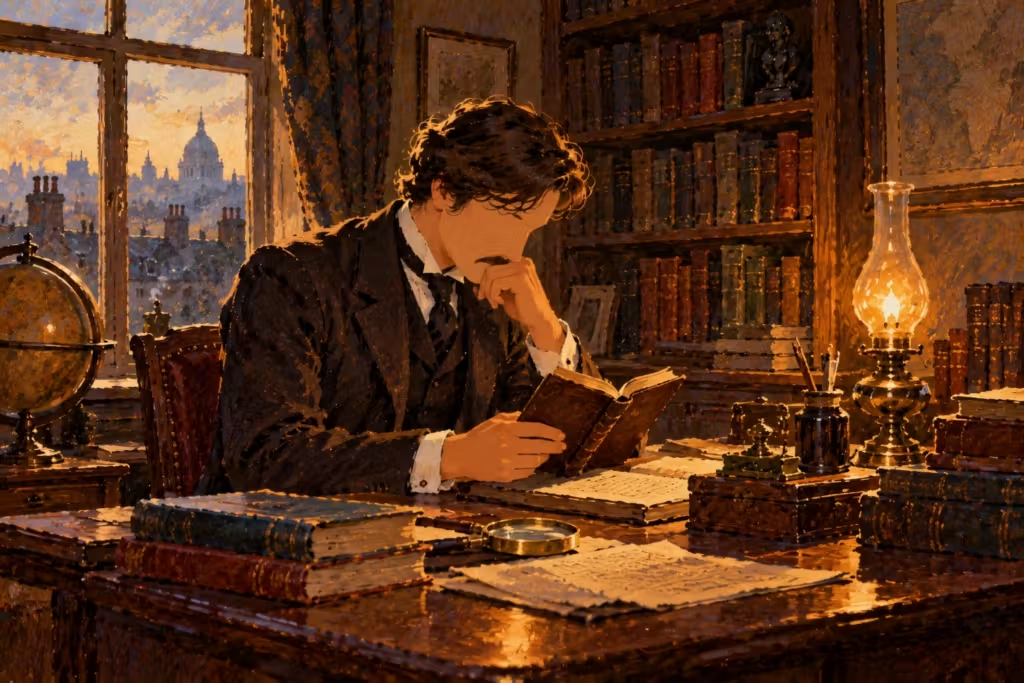
In 1884, the woman wrote her account for Edmund Gurney and his colleagues. They were researchers in London who collected cases like this. She asked that neither her name nor her address be published.
Gurney describes her as a very sensible person with no taste at all for the extraordinary. She told him she had never heard any other voice when no one was speaking.
Gurney saw the diary page. Under the date of Monday, October 27, 1879, was the note about what she had heard. Gurney did not copy what the note said.
Next, Gurney looked into who the friend was and when he had died.
Step 6
November 1879 and January 1880 · According to an army register and The Times
An army register and The Times confirm the day and the cause of death

Gurney looked up the friend in the official register of British officers in India. The January 1880 register says that her friend, Captain John B., died on October 27, 1879, at Jhelum. Jhelum is a town in the north of what was then British India. Today it is in Pakistan.
Captain John B. was an officer in an infantry regiment of Indian soldiers. Gurney published only the first letter of his last name.
The death notice published in The Times on November 4, 1879, says he died of cholera.
What was still missing was the time of his death.
Step 7
1884 to 1886 · The woman’s and Edmund Gurney’s account
The woman finds out the time of death, and it doesn’t match the time of the voice

Gurney asked the woman to find out the exact time of death. She learned that her friend had not died in the morning, as she had thought. He died at ten at night at Jhelum. In England, it was about five in the afternoon. She put it to Gurney herself:
“So that would not make the time agree with the hour of hearing his call. The cry may have come, however, when the illness began first.”
Gurney and his colleagues published the case in 1886, in the book Phantasms of the Living. Gurney writes that the voice came a few hours before the death. That is why he thinks the voice had to do with how ill her friend must already have been that morning, and not with the moment of his death.
The question remains: how did the woman hear her friend’s voice on the same day he died?
Where this story comes from
Books
- Edmund Gurney, Frederic Myers, and Frank Podmore (1886), Phantasms of the Living, volume 1, case 33, page 221Read for free
Case documents
- The woman’s 1884 account and her replies to Gurney, published in the book
- Her diary page for Monday, October 27, 1879, which Gurney saw and did not copy
- The East India Service Register, the register of British officers in India, for January 1880, cited by Gurney
- The death notice in The Times of November 4, 1879, cited by Gurney
Learn more
- Mrs. Williams: the dream of her uncle, another shared-death experience from the same bookRead
- Frederick Wingfield: the dream of his brother, another shared-death experience from the same bookRead
- More shared-death experiencesRead
Our archive
- Our full reading of the case and its scoring against our five criteria, as of October 27, 2026
Keep reading
Canada, 1873
Lady Dufferin’s footman
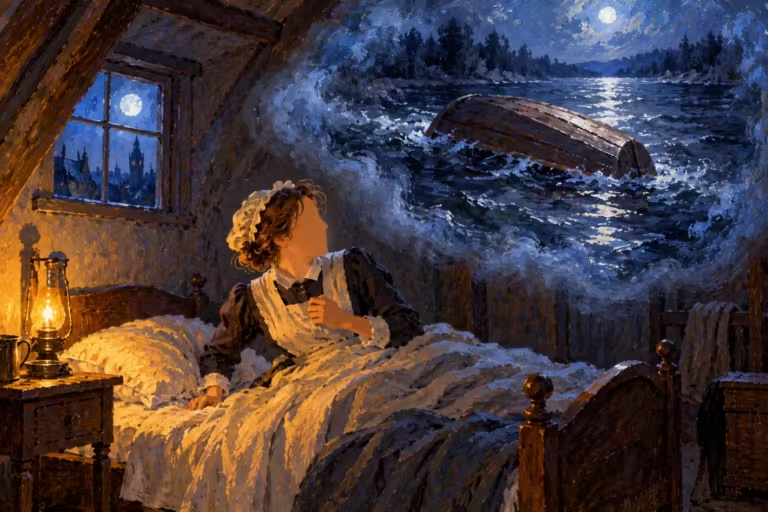
In 1873, a footman drowned on a remote river in Canada. Knowing nothing, his sweetheart wrote him a letter. She told him she had dreamed he was drowning. Lady Dufferin, the woman he worked for, copied that letter into her journal.
England, 1854
Andrew Jukes
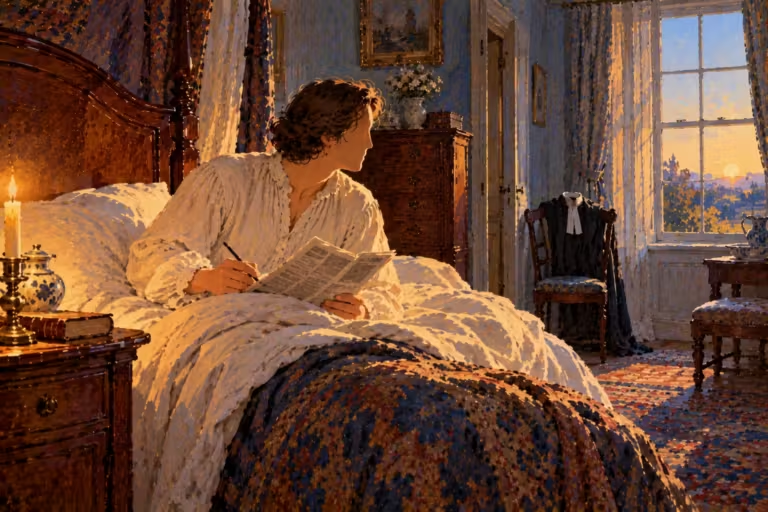
In 1854, the Reverend Andrew Jukes woke up hearing a voice that told him his brother and sister-in-law had died. He wrote it down. Both of them died of cholera in America over the following days.
England, 1882
Mrs. Williams
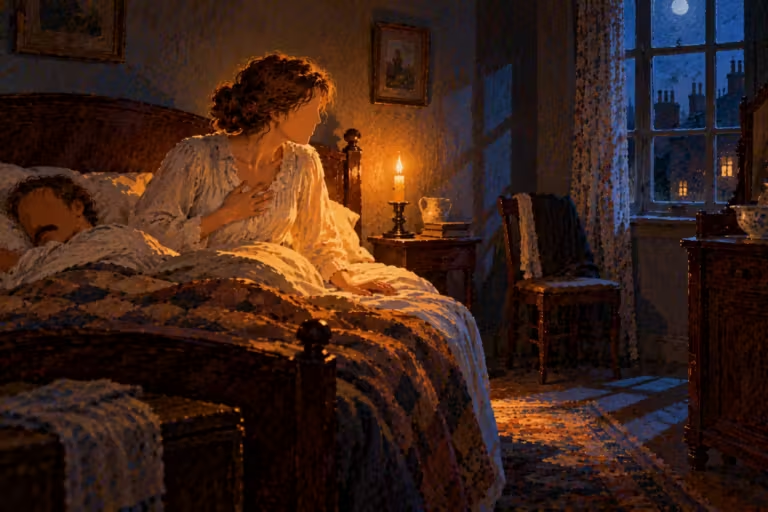
One night in 1882, Mrs. Williams dreamed that her uncle was asking her to come and see him, and then she saw him in a coffin. Seven weeks later she learned that her uncle had died that same night.

Reincarnation: The top 5 people who remember past lives
We asked them the same five questions as this story. A 32-page PDF, free in your inbox.
Check your email
We have sent you an email. Open it and press the button to confirm. If you cannot see it, check your spam folder.