A real-life story · Kerala, India, around the early 2000s
The clip patient’s near-death experience
A woman from Kerala, in southern India, had surgery on her thyroid. About twenty years later, she told two doctors that in the middle of the operation she saw herself from the ceiling. She says she saw the doctors working in a rush and a steel clip fastened next to her chin.
Two doctors from Kerala who had not operated on her published it in 2025 in a scientific journal. One is a surgeon and the other an anesthesiologist. They believe it is the first case from India in which someone outside their body says they saw something that can be checked. And the woman had never heard of these experiences. We tell it step by step and then look at what can be checked. If you only want the evidence, skip straight to what can be checked. How did she know there was a clip next to her chin?
Step 1
About twenty years before she told it · Kerala, India · The patient’s account
A woman who is afraid of operations needs thyroid surgery
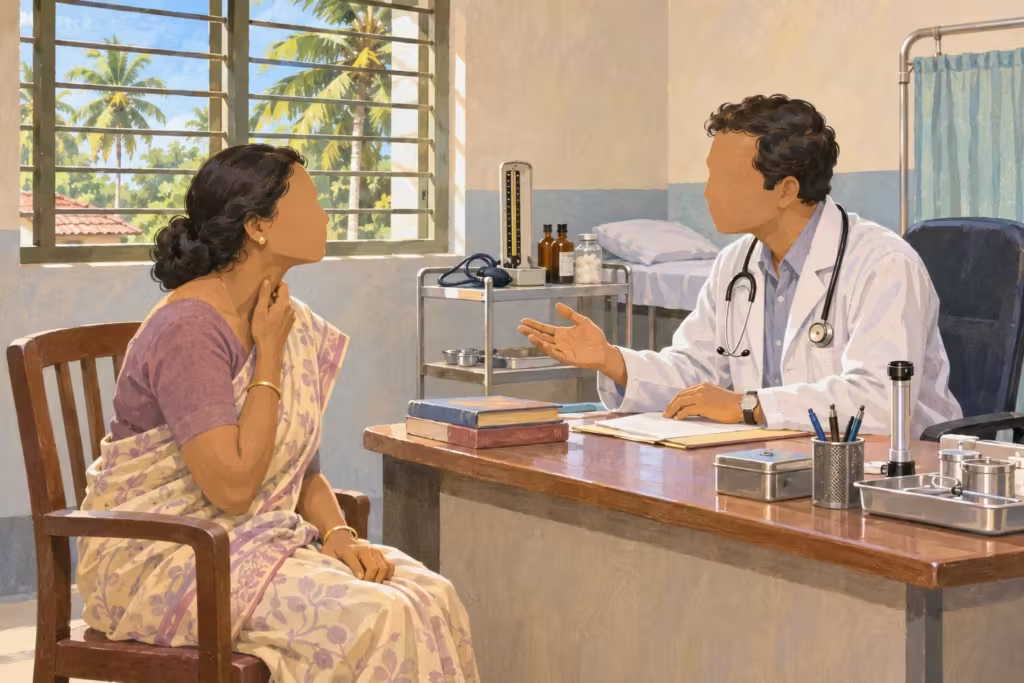
She lived in a semi-urban area of Kerala, a state in southern India. She had studied literature and worked as a clerk in the civil service until she retired. She is a Christian, though she says she is not very religious. Her name is not known. The researchers who published her case kept her anonymous.
Not long before, she had had her gallbladder removed. There were complications, she was seriously ill, and she spent many days in the hospital. Once she had recovered, a lump appeared on her neck. After an ultrasound and a needle biopsy, the doctors told her it had to be operated on. The lump was in her thyroid, a gland at the front of the neck.
She was very afraid of going back into an operating room. The surgeon reassured her. He told her it was nothing serious and that she would only be in the hospital for two days.
So she agreed to the surgery.
Step 2
The day of the surgery · In the operating room · The patient’s account
She is put under general anesthesia for the operation
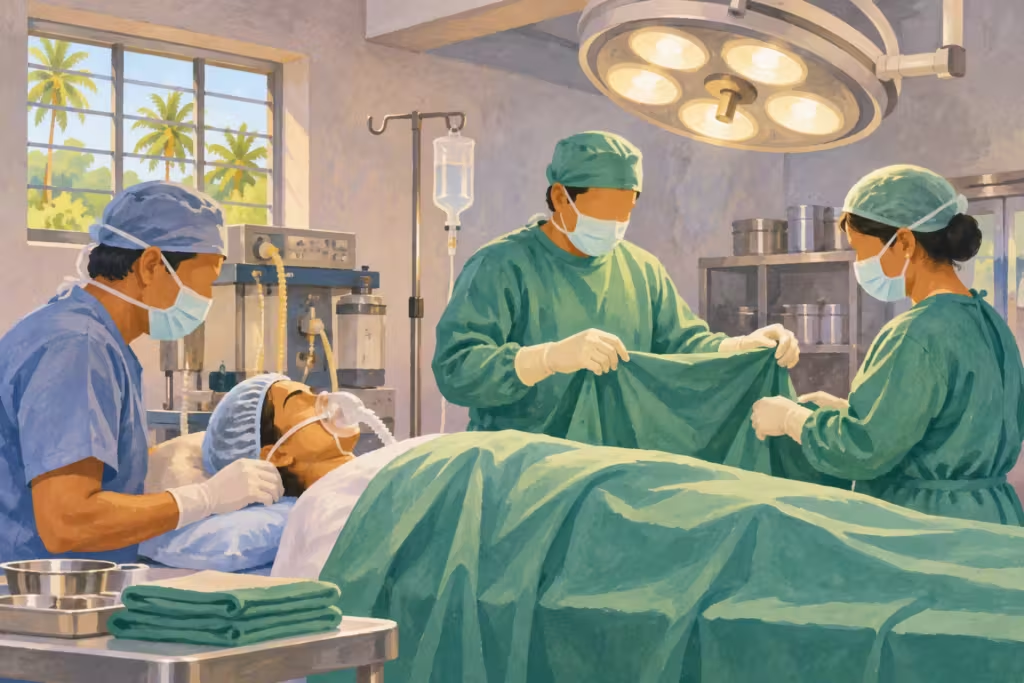
She waited her turn at the door of the operating room. It was the fourth operation of the day. She says she was calm. The surgeon talked with her and took her inside. The anesthesiologist put her to sleep. She clearly remembers the names of the surgeon and the anesthesiologist. She says she has never forgotten them.
In this operation, the neck is left open and the rest of the body is covered with surgical drapes. Years later, her surgeon said he always covers the whole face too, as is usual. The drapes are held in place with a towel clip. It is a large steel clip that grips the cloth so it doesn’t move. Sometimes it grips the skin as well.
The next thing she remembers is that, all of a sudden, she was somehow awake.
Step 3
In the middle of the operation, according to her · The patient’s account
She says she rises toward the ceiling and sees the doctors working in a rush
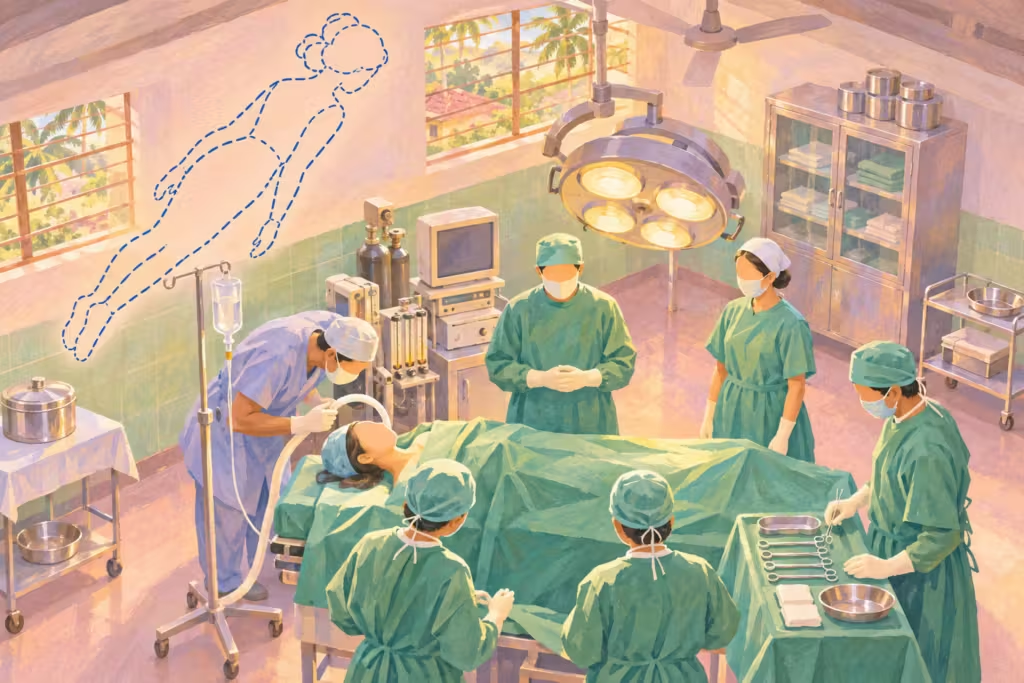
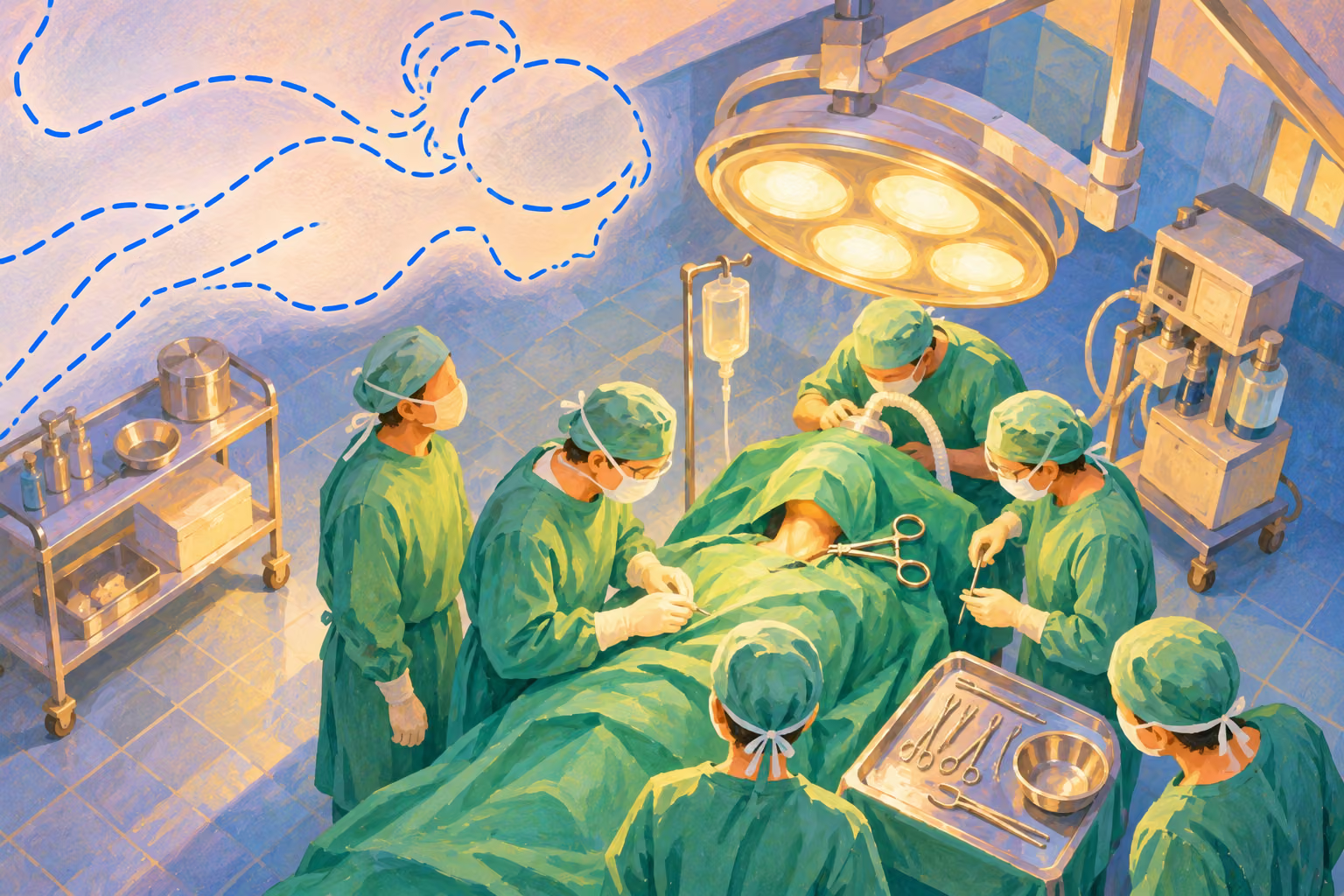
Suddenly she felt she was rising up from the table. She could see herself lying there. She tried to move her hands away from the IV stand, which was in her way as she rose. She got almost up to the ceiling, which was made of concrete, and was afraid of hitting it. Then she looked down.
She says she saw the surgeon standing still, as if frozen, staring. The nurse was the same. The anesthesiologist came running to the head of the table. They were all grabbing instruments in a rush. She saw the anesthesiologist put something white like a hose into her mouth. There were three other people around the table. They wore masks, and she recognized them by their eyes.
She felt no pain and no fear. She felt light, as if she were made of cotton. Many years later, she told it in Malayalam, the language of Kerala. This is how she put it:
“I am just rising up into the air from the table.”
Then she noticed her own body.
Step 4
In the middle of the operation, according to her · The patient’s account
She says she sees a steel clip fastened next to her chin
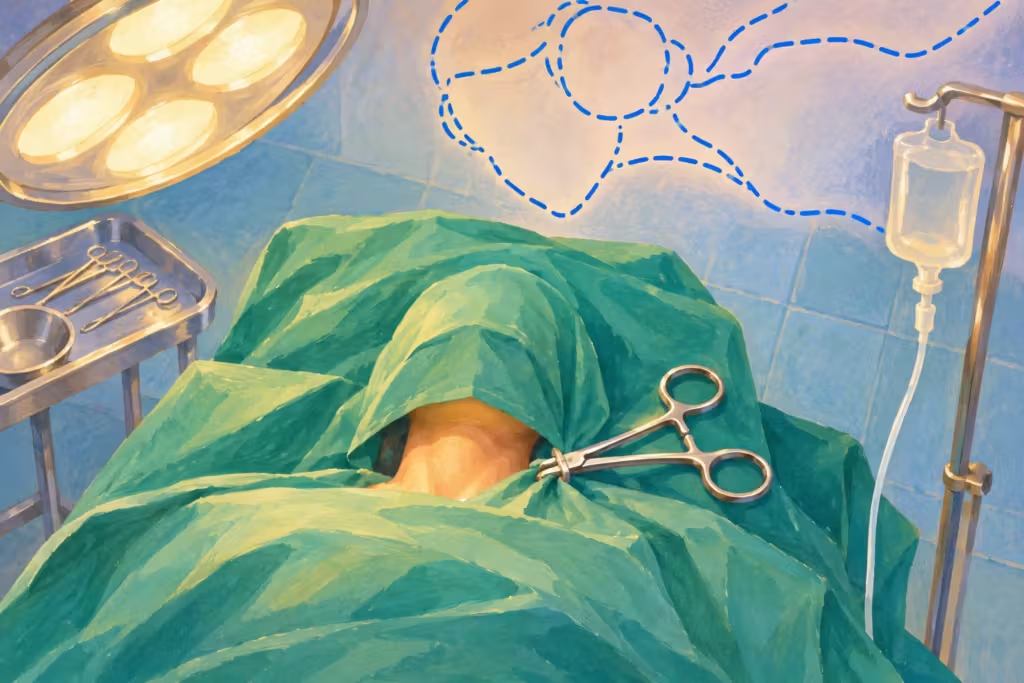
She saw her body fully covered with green drapes, with her neck open. She couldn’t see her face. But next to her chin, on the left side, she saw a clip. She says it was large and steel-colored, and that it ran down from her chin toward her neck. She says she has never seen another one like it anywhere. This is how she described it:
“It is similar to the steel clip you use for hanging clothes, but not the same.”
Then she felt heavy again. She dropped suddenly onto the table, back into her body. Everything hurt. She says she felt the table shake when she fell.
She didn’t fully wake up until that night.
Step 5
That night and the following days · In the hospital · The patient’s account
She wakes up with sores in her mouth, and a cardiologist sees her
She was taken up to the ward very late. Her mother was anxious and made a scene. According to the patient, a nurse told her mother she was under observation because there had been a problem with her heartbeat. Later a cardiologist saw her.
At about ten at night she woke up fully. She had small cuts and scrapes in her mouth and on her face. She was told they came from the anesthesia, because the breathing tube had had to be put in through her mouth several times.
The next day she began to think she might have died. She asked many people what had happened to her. They all told her it was nothing, or that she had imagined it.
She still had to ask the surgeon.
Step 6
At the checkups afterward · In the doctor’s office · The patient’s account
She asks the surgeon about the clip, and he tells her she dreamed it
She went back for several checkups. According to her, the surgeon would say she was a patient who had given him a real scare. She didn’t understand why.
At one of the checkups her jaw hurt. She asked him whether it could be because of the clip he had put on her. This is how she remembers the surgeon’s answer:
“What clip? How did you know there was a clip?”
According to her, the surgeon explained that they fasten the drape to the chin during the operation, but that this was not the cause of the pain. Then she told him she had risen up to the ceiling. He told her she must have dreamed or imagined it, and that she should not think or talk about it anymore.
She told many people and asked other patients whether anything similar had happened to them. No one believed her. She also told a relative when the relative began studying medicine. The relative told her it might have been the anesthesia or the medications.
About twenty years went by.
Step 7
About twenty years later · Kerala · The researchers’ account
Two doctors from Kerala interview her and look for the surgeon and the anesthesiologist
Jimmy Mathew is a professor of plastic surgery, and Jerry Paul is a professor of anesthesiology. Both work at Amrita University in Kochi, a city in Kerala. They were doing a study on near-death experiences in India, where they have hardly been studied. At their hospital, in 2022 and 2023, they asked 100 people who were there with patients. 58 of them had never heard of these experiences.
They looked for cases through ads on social media. The patient’s relative worked with Mathew. She remembered what the patient had told her and told him about her. Mathew interviewed the patient in Malayalam and recorded the conversation. She was 63. At the end, she told Mathew that at last someone understood her.
Then they looked for the surgeon and the anesthesiologist who had operated on her. The anesthesiologist would not talk about it or give any details. The surgeon vaguely remembered a cardiac arrest during an operation, a long time before. The article doesn’t say whether the surgeon thought that cardiac arrest was hers. He did confirm that his habit is to cover the whole face and fasten the drapes with a towel clip.
Mathew and Paul published the case in 2025 in a scientific journal devoted to these experiences. They did not publish the year, the hospital, the names, or any record of the operation.
The question remains: how did she know there was a clip next to her chin?
How many people have an NDE?
The clip patient is not a one-off. For more than thirty years, several teams of doctors have asked people who survive a cardiac arrest what they remember. They do it in the hospital, a few days afterward.
Picture 100 of those people:
Each dot is a person. The 18 filled-in dots are the ones who described a near-death experience. That is what the largest study found. It was done in the Netherlands in 2001, with 344 people.
The other 82 didn’t describe one. Many remember nothing of their cardiac arrest.
| Where and when | People interviewed | Described an NDE |
|---|---|---|
| England, 2001 | 63 | 6% |
| Netherlands, 2001 | 344 | 18% |
| United States, 2002 | 30 | 23% |
| United States, 2003 | 116 | 10% |
| United Kingdom, United States, and Austria, 2014 | 101 | 9% |
| Vienna, Austria, 2023 | 126 | 4% |
| United States and United Kingdom, 2023 | 28 | 21% |
What these figures don’t tell you
- Only some people are asked. In the 2014 study, 330 people survived, but only 140 could be interviewed, and 101 reached the second interview. The rest died later, were too ill, or didn’t respond.
- Most cardiac arrests are never counted. These studies run in a few hospitals for a limited time. Outside them, no one keeps track. Also, the 2003 study interviewed 1,595 cardiology patients, not just the 116 with cardiac arrest in the table, and 81 of them described an NDE from an earlier occasion. The study did not count them, because it only counted those from that hospital stay.
- Some people keep quiet. In the accounts in our archive, at least 13 people say they kept their experience to themselves for a while. They kept quiet because they weren’t believed or because they were afraid of how others would react.
- It depends on how you count. If you count any memory of the cardiac arrest, the numbers go up. If you use a strict scale, they go down. In England in 2001, 7 of 63 people remembered something. But on the scale, only the memories of 4 people qualified as an NDE.
That’s why no one knows the real figure. But every study shows that it isn’t rare. Between 4 and 23 of every 100 survivors who are asked describe an NDE. Almost all of these studies have been done in Europe and the United States. The clip case is one of the few that come from India. And the woman who tells it had never heard of these experiences.
Frequently asked questions
What is the case of the Kerala clip patient?
It is a near-death experience that a woman from Kerala, in India, went through during thyroid surgery. She told it about twenty years later. She says she saw herself from the ceiling and saw a steel clip next to her chin. Her surgeon says that in this operation he usually covers the face. The doctors Jimmy Mathew and Jerry Paul published it in 2025. Here we explain what can be checked.
Are there near-death experiences in India?
Yes, although they have been studied very little. According to Mathew and Paul, all the Indian studies together hold just under 50 cases with useful data. Many mention Yamraj, the Hindu god of death. They say they were taken by mistake, in place of someone else, and then sent back. The clip case has none of that. It is an out-of-body experience, like the ones described in Europe and the United States.
What is a towel clip?
It is a large steel clip used in operations to hold the drapes that cover the patient, so they don’t move. Sometimes it grips the skin as well. In thyroid surgery, one of the drapes is usually fastened at the level of the chin.
Where was the Kerala clip case published?
In the Journal of Near-Death Studies, in summer 2025, under the title “The Paucity of Indian Near-Death Experiences in the Professional Literature and a Rare Indian Near-Death Experience With Veridical Out-of-Body Perception.” It is signed by Jimmy Mathew and Jerry Paul, of Amrita University in Kochi.
Where this story comes from
The study
- Jimmy Mathew and Jerry Paul, “The Paucity of Indian Near-Death Experiences in the Professional Literature and a Rare Indian Near-Death Experience With Veridical Out-of-Body Perception,” Journal of Near-Death Studies 43(2), 2025, pages 107 to 118. It includes the full interviewView in the journal
- Jimmy Mathew, Sreelakshmi Rajeev, Jerry Paul, and Subramnia Iyer, “How Widely Are Near-Death Experiences Recognized in Indian Society and Health Care? A Preliminary Survey,” International Journal of Transpersonal Studies, 2024. The survey at their hospitalRead for free
How the patient is covered in this operation
- “Thyroidectomy – How I Do It,” a 1986 surgical technique guide. A drape wraps the face and is fastened at the level of the chinRead
- Ziv Gil and Snehal Patel, “Surgery for thyroid cancer,” Surgical Oncology Clinics of North America, 2008. A clear drape over the face so the anesthesia tube can be seenRead
Learn more
- What is a near-death experience?Read
- What does science say about near-death experiences?Read
- How we check each storyRead
Our archive
- Our reading of the 2025 article and the 2024 survey, our search for other publications on the case, and the case’s score on our five criteria, as of November 18, 2026
Keep reading
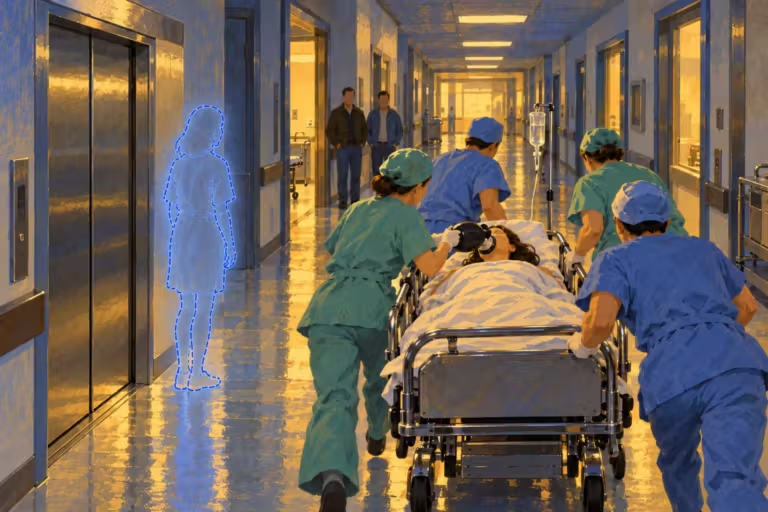
California (United States), 1991
Nancy
She went blind after a biopsy. She said she left her body and saw her partner and her son’s father standing still in the hallway. Her partner confirms they were there.
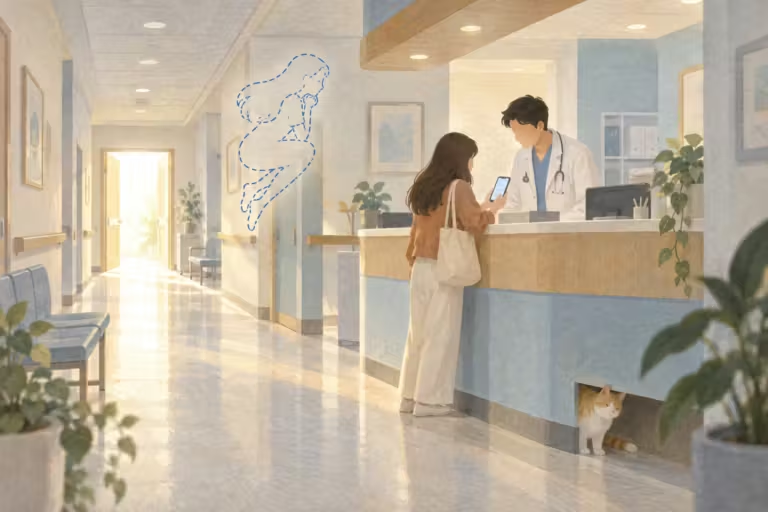
Chile, 2019
Ana Magallanes
Ana Magallanes says that while she was having open-heart surgery, she saw her friend on another floor with a doctor. According to Ana, her friend later told her it was a video call with Ana’s parents.
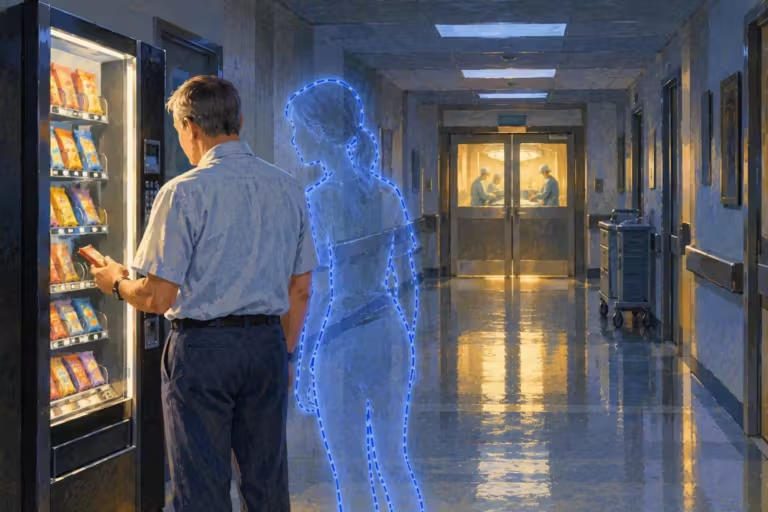
Texas, 1994
Tricia Barker
She broke her back in a car crash. She says she left her body in the operating room and saw her stepfather get a candy bar in a hallway.

Reincarnation: The top 5 people who remember past lives
We asked them the same five questions as this story. A 32-page PDF, free in your inbox.
Check your email
We have sent you an email. Open it and press the button to confirm. If you cannot see it, check your spam folder.