
A real-life story · Alberta, Canada, 1980
Peter Panagore’s near-death experience
In March 1980, Peter Panagore was 21. He spent a whole night climbing down a wall of ice in the Canadian Rockies, frozen and with no food. Before dawn, hanging from the rope, he felt his last breath leave him. He later said that a darkness pulled him out of his body and that he reached the gate of heaven. He says that there he felt all the harm he had done in his life, and that he chose to come back.
For twenty-one years, Peter told almost no one. In the meantime he became a Protestant minister. In 2001 he finally told his church, in a small town in Maine. A journalist who was there wrote about it in 2015. We tell it step by step, in his words, and then look at what can be checked. If you only want the evidence, skip straight to what can be checked. What did Peter go through that night on the mountain?
Step 1
Winter 1980 · In Montana, United States · Peter’s account
A 21-year-old student goes ice climbing in Canada
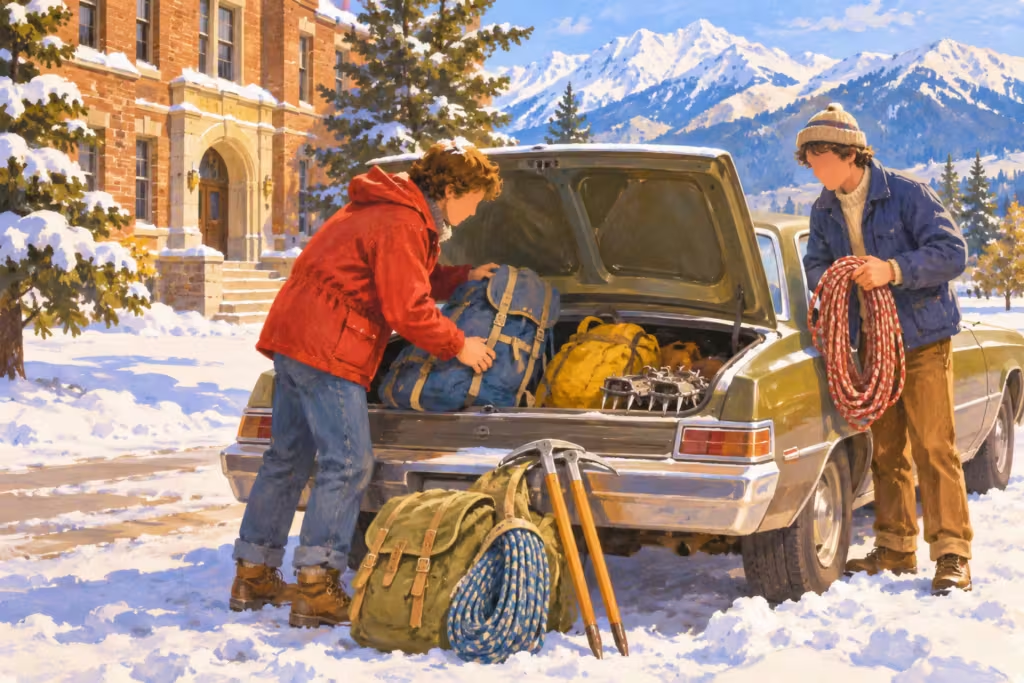
Peter Panagore was from Massachusetts, in the eastern United States. He was a college senior, and that year he was studying in Montana, in the West, on an exchange program. He skied with the ski patrol and had learned first aid. So he knew the signs of hypothermia, which is when the body gets so cold that it stops working properly.
He had been raised in a Catholic family. He says that in 1980 he had never heard of near-death experiences. In a 2019 interview, he said that as a boy of five or six, he had once seen himself asleep in his bed from outside his body. His sister Andrea had left home as a teenager, and his parents had been suffering over her for years.
In March he went climbing in Canada with Tim, an experienced partner. For Peter, it was his first ice climb.
On March 20, 1980, they started up.
Step 2
March 20, 1980 · A frozen waterfall in Alberta · Peter’s account
A seven-hour climb that takes twelve

The wall is called the Lower Weeping Wall. It is a frozen waterfall next to a highway in Banff National Park, in the Canadian Rockies. It is about 140 meters high, as tall as a 45-story building. In the morning, Peter and Tim signed the park warden’s logbook and started to climb.
The climb was supposed to take about seven hours. It took almost twelve. The other parties had already come down when the sun began to set, and the two of them were still on the wall. Like the others, they had brought only enough for one day and nothing for a night out. They had run out of water and food.
They decided not to wait for daylight. They would go down in the dark, hanging from the rope, before they froze to death.
They started down by starlight.
Step 3
The night of March 20, 1980 · Coming down the wall · Peter’s account
They climb down in the dark with frozen hands
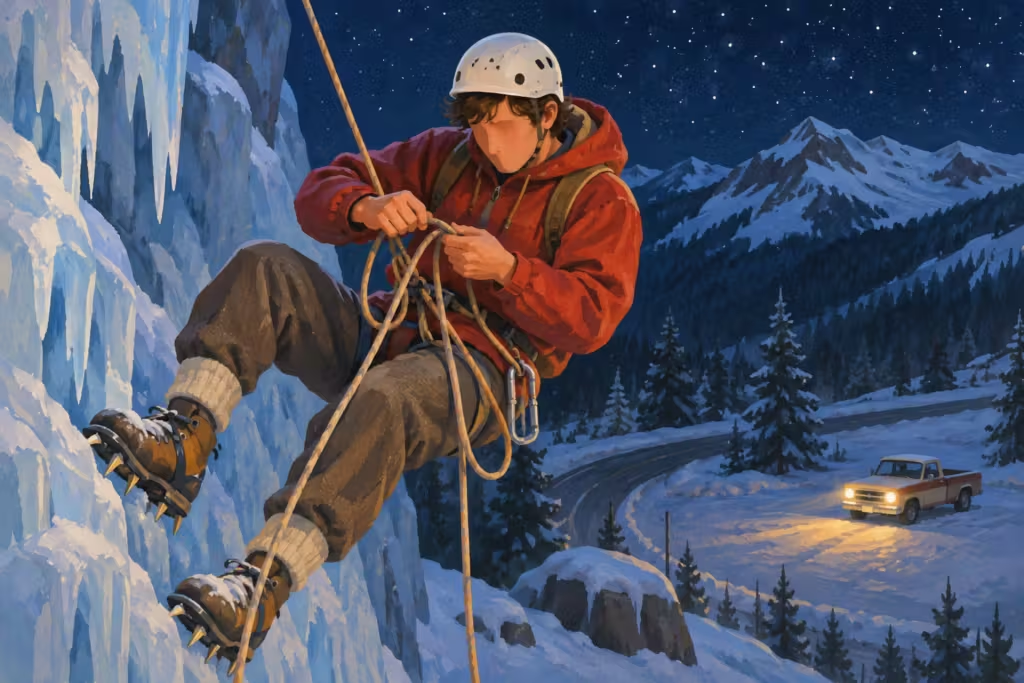
To get down, they tied the rope at the top and slid down it to the next ledge. The rope kept tangling, and Peter had to take off his mittens to free it with his bare hands. His fingertips froze.
Around midnight they saw headlights in the parking lot across the highway. Someone was turning them on and off. Then the car drove away.
Peter began to notice the signs he had learned about. He was clumsy, and his speech was slurred. Suddenly he felt very hot in his chest. That is one of the last stages of hypothermia.
An hour or two before dawn, sleep overcame him.
Step 4
Before dawn on March 21 · On a ledge on the wall · Peter’s account
Peter falls off the ledge and feels he can no longer breathe
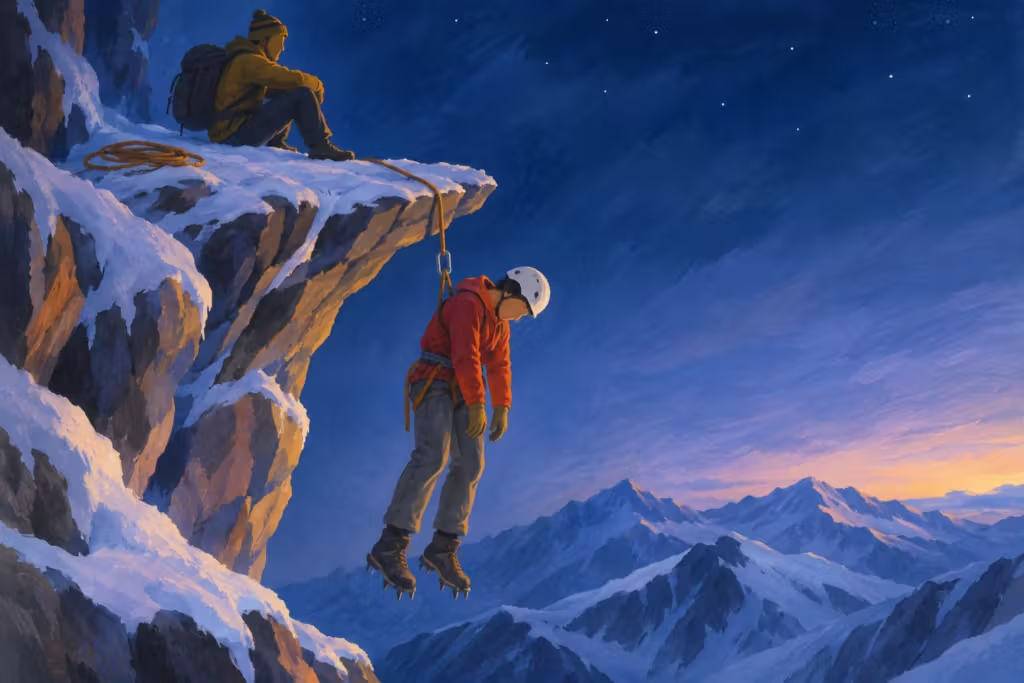
Peter says he felt a peace that seemed to him like a way of giving up, and that he didn’t let himself go. He fell asleep and slipped off the ledge, hanging from the rope. His face and helmet hit the rock, and he woke up. It happened twice, three times or more.
The last time, he says, he watched the darkness close around him and his sight shrink to a smaller and smaller circle of light. This is how he put it in his 2015 book:
“I felt my last breath leave my body. I tried to take in one more and I could not.”
Peter says that this is when the rest began.
Step 5
Hanging from the rope · Peter’s account
Peter says a living darkness pulled him out of his body

Peter says that suddenly he was inside a darkness, wide awake. A living darkness came for him, like a void that was sucking him in. He tried to resist, and the darkness tore him out of his body.
Then he knew that he was no longer his body. He was only a soul, and the body had been the place where he lived. He says he could see without eyes, in every direction at once.
Peter doesn’t say that he saw his body from outside, or the mountain, or Tim.
Floating in that darkness, he came to a gate.
Step 6
Hanging from the rope · Peter’s account
Peter says he reached a huge gate and heard his true name

Peter says the gate was gigantic, about ninety meters high, and liquid, like a waterfall of light. Behind it was a tunnel of darkness. He touched it and felt that it was alive.
Then he heard his true name, without words. He says it was spoken by a voice that was God. He felt completely known, and loved just as he was.
Peter calls that place the threshold of heaven. He says he never went through the gate.
Next, he says, he went through his own hell.
Step 7
Hanging from the rope · Peter’s account
Peter says he felt all the pain he had caused in his life
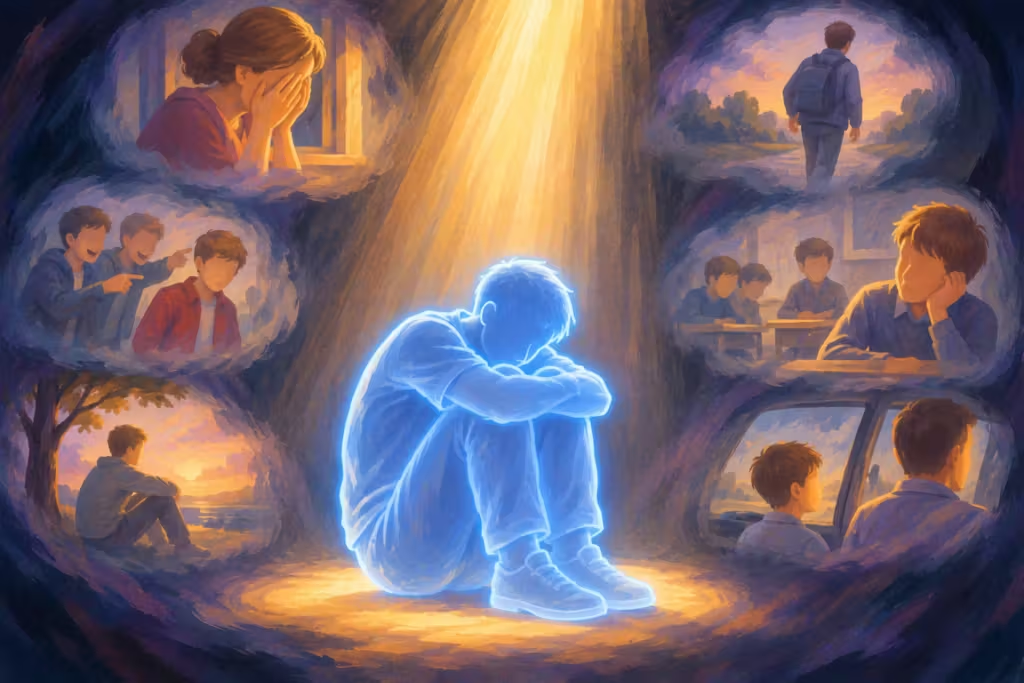
Peter says he saw and felt all the harm he had done to other people, from each person’s point of view. He felt their pain as if it were his own. At the same time, he remembered the excuses he had made for causing it. He judged himself guilty.
All the while, he says, the voice kept telling him: “I forgive you.” He says the forgiveness came all at once, and that he had done nothing to deserve it.
For Peter, that was his hell. He says no one put him there, and that he made it himself.
Then he asked the voice whether he was dead.
Step 8
Hanging from the rope · Peter’s account
Peter says he chose to come back for his parents

Peter says he asked, without words, whether he was dead, and that the voice answered yes. Then he thought of his parents and of his sister Andrea. He also thought of his college theater company, which had a tour coming up.
He says God showed him the whole Earth at once, and then his parents up close. Their hearts were broken. God told him his parents would be all right. Peter understood that a life is as brief as a wink.
He says God let him choose. He didn’t want to go back to the world, but he chose to go back for his family.
Peter says he went back into his body slowly and painfully, twisting.
Step 9
Before dawn on March 21 · On the wall · Peter’s account
He comes back to his body, and Tim shouts that he thought he was dead
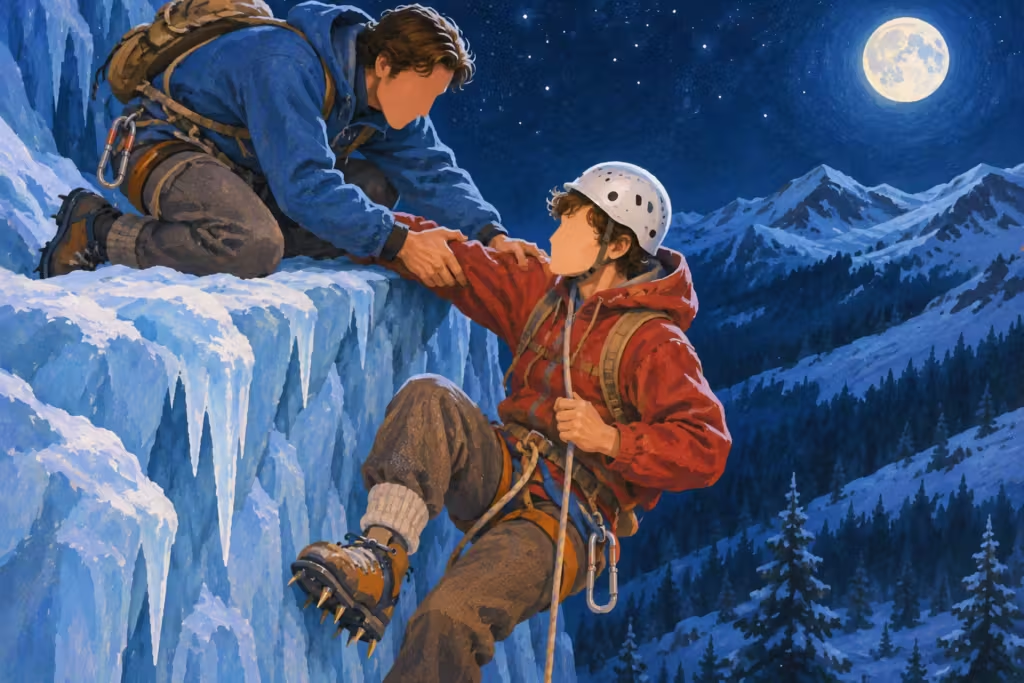
Peter was hanging below the ledge. A man was shouting at him and pulling on him, and Peter didn’t understand who he was or what he was saying. It took him minutes to realize that he was back in his body and that the man was Tim.
According to the book, Tim was crying and shouting at him: “DON’T DIE! DON’T DIE. WAKE UP! WAKE UP! … IF YOU DIE, I WILL DIE.” When Peter climbed back onto the ledge, Tim kept saying: “I thought you were dead.”
The book doesn’t say that Tim took his pulse or checked whether he was breathing. No one timed how long he was like that.
The rope had been stuck on the rock. Peter pulled on it, freed it, and they kept going down.
Step 10
The morning of March 21, 1980 · At the foot of the wall · Peter’s account
At dawn the warden shows up: he had come to see if they were alive
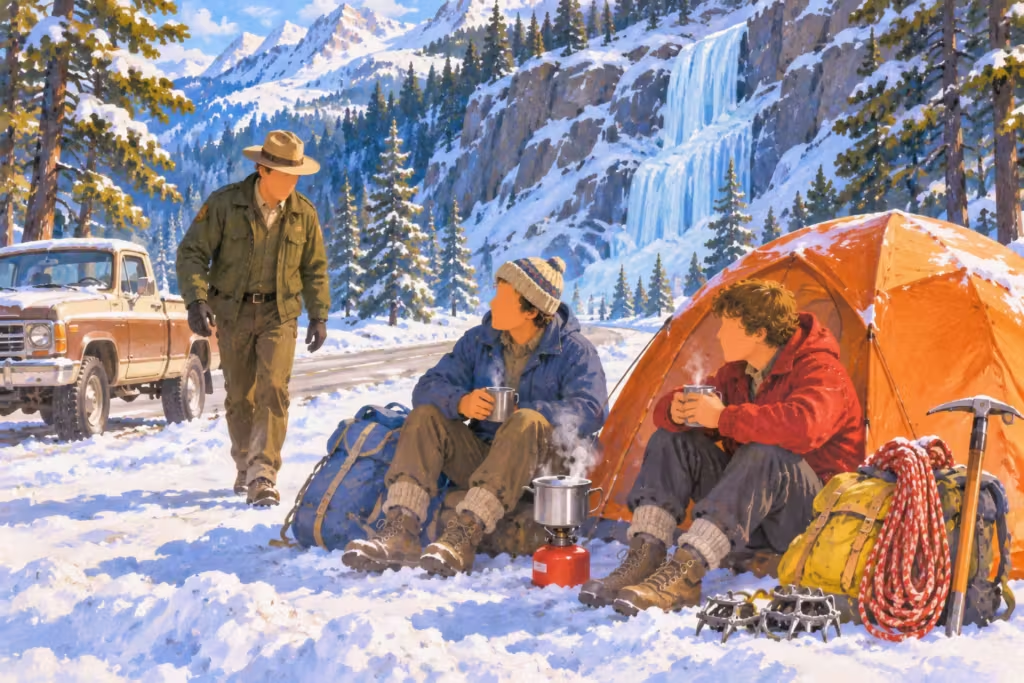
They reached the bottom at dawn. In the tent, they warmed up with tea and a camp stove. No doctor ever saw them.
In the morning a park warden came by. He told them he had been watching them the night before from his truck in the parking lot. The headlights had been his. According to the book, he said he had come to see whether they were alive, or whether he needed to call the helicopter to bring down the bodies.
On the drive home they had a car crash, and a police officer gave them a ticket. The next morning, Peter was stuttering. It had never happened to him before. At the time, he thought it came from the crash. His fingertips, he says, have hurt every time it is cold ever since.
Peter decided not to tell anyone what he had been through.
Step 11
1980 to 2001 · In Connecticut and Maine, United States · Peter’s account
He keeps it to himself for twenty-one years, becomes a minister, and tells his church
He studied theology at Yale and became a minister in a Protestant church, the United Church of Christ. He often sat with people who were dying.
Peter says that for years he felt he had to keep it secret. He was afraid people would think he was crazy. He never told his parents. Around 2016 he asked them how he had seemed when he came back from Canada. As he told it in 2019, they said he had come back changed, kinder, and that they didn’t know why. His book says that before 2001 he told only two people. He told his fiancée the night before their wedding, in 1985, and in 1986 he told a friend he was studying for the ministry with. In a 2020 article he speaks of three people. He told a friend a year or two later, one night when they were sleeping out in the mountains. He told his fiancée the night before the wedding. And later that same year, he told another man. The article doesn’t say whether either of those two men is the friend in the book.
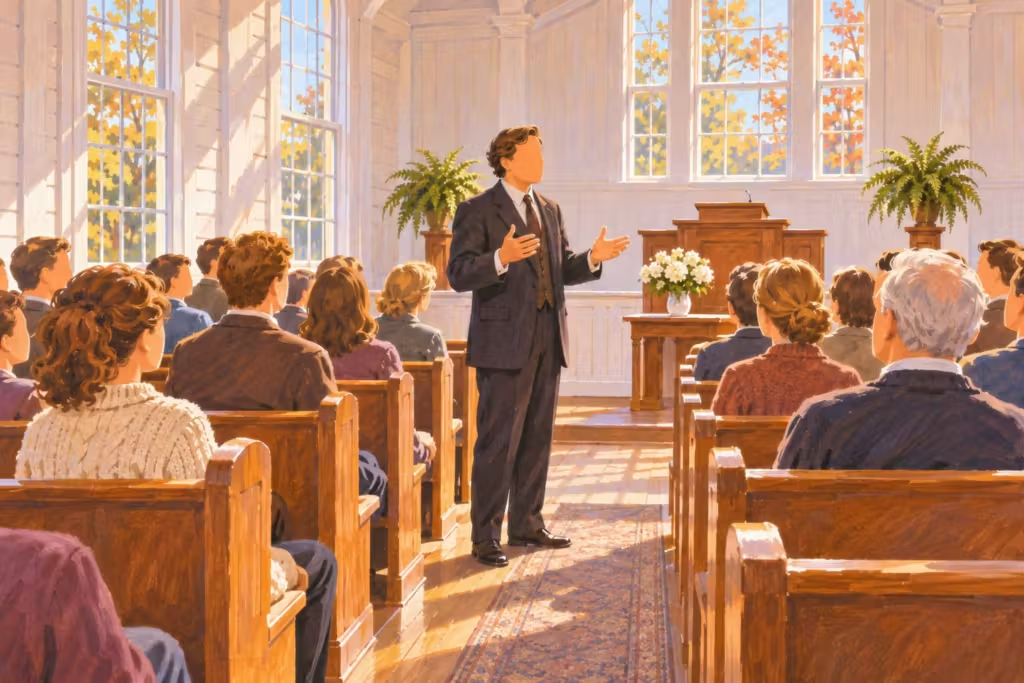
In 2001, at the church in Boothbay Harbor, a town on the Maine coast, he finally told the congregation about his experience. Lisa Kristoff, a journalist who belonged to that church, wrote in 2015 that she was there that day. From 2003 to 2018, Peter hosted a short daily religious program on Maine television.
In 2015 he published his book. That summer, his heart failed.
Step 12
Summer 2015 · In an ambulance · Peter’s account
A heart attack thirty-five years later, and a second experience
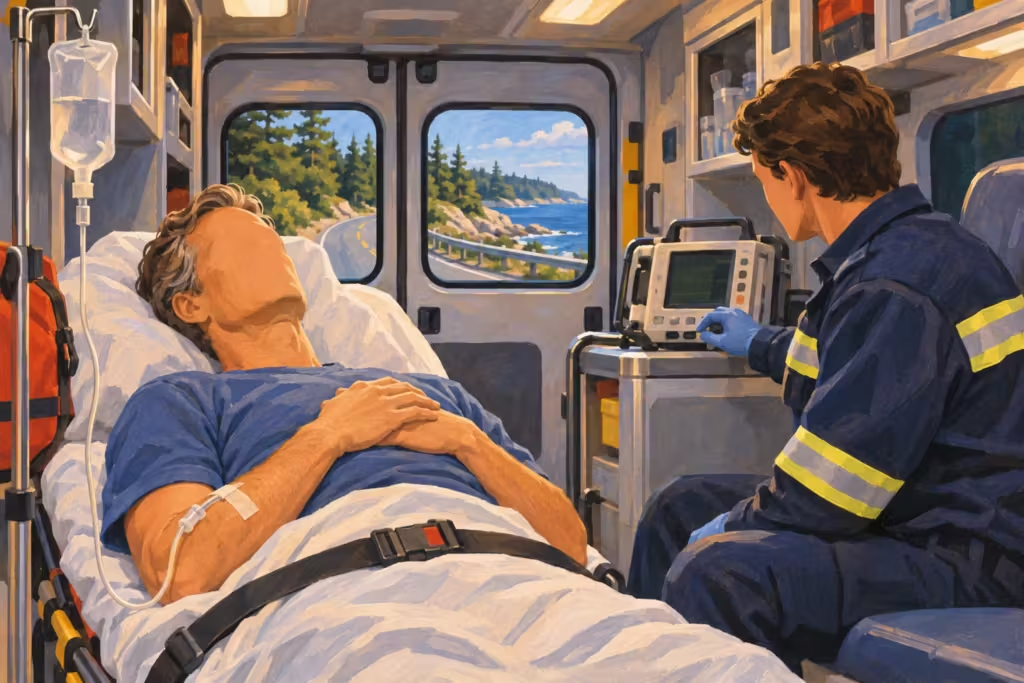
In 2015 his book came out, Heaven Is Beautiful. That summer, according to a Maine newspaper in 2016, Peter had a severe heart attack.
In a 2020 article he described it like this. One of the arteries of his heart was completely blocked, and he rode for an hour and a half in an ambulance. He refused strong painkillers and began to meditate. He says the “angel of death” came for him again. He thought of his newborn granddaughter, and once more he came back.
Peter says that since that night in 1980 he has lived with one foot in each world. He says he is not afraid of death.
What can be checked of what Peter Panagore told?
Do you have to be close to death to have an NDE?
In Peter’s case, we don’t know what state his body was in during the experience, because no one measured it. That is why it helps to look at a study that checked other people’s medical records to see whether they had really been close to death.
In 1990, three researchers at the University of Virginia reviewed the medical records of 58 people who described an NDE. Most of them believed they had been close to death.
| According to their medical records | People | Saw a very bright light |
|---|---|---|
| Had really been close to death | 28 | 21 |
| Had not been close to death | 30 | 12 |
What these figures don’t tell you
- The experiences were very similar in both groups. The same share of people in both groups said they had left their body. The tunnel and believing they were dying came up a little more often among those who had really been close to death, but the difference was so small it could have been chance. Only two things stood out among those who had really been close to death. They more often saw a bright light, and they more often said they were thinking more clearly.
- These are people who wrote to the university on their own. Half of them did so seven years or more after their experience.
So an NDE alone doesn’t tell you how close someone came to dying. With no one there to measure it, there is no way to know how ill Peter was that night. We also explain this in a 2014 Belgian study of people who had an NDE without being in danger.
Frequently asked questions
Who is Peter Panagore?
Peter Panagore is a Protestant minister from Maine, in the United States. In 1980, at 21, he nearly froze to death on an ice climb in Canada. He says he had a near-death experience, and in 2015 he published it in the book Heaven Is Beautiful.
What did Peter Panagore see in his near-death experience?
Peter Panagore says a living darkness pulled him out of his body. He says he reached a huge gate of light, where he heard his true name. He says he felt all the pain he had caused in his life, that God forgave him, and that he chose to come back for his parents.
Did Peter Panagore really die on the mountain?
No one knows. Peter says he felt himself stop breathing, and his partner Tim shouted that he thought he was dead. No one took his pulse, and no doctor saw him. Here we explain what can be checked.
Where this story comes from
His book
- Peter Baldwin Panagore, Heaven Is Beautiful (Hampton Roads, 2015)Buy the book
Interview and article
- Buddha at the Gas Pump, episode 497, April 6, 2019Watch
- Peter Baldwin Panagore, “My Deaths Direct My Life: Living with Near-Death Experience,” Narrative Inquiry in Bioethics 10(1), 2020, pages E3–E6 (33–36 in the full issue)Read for free
Press
- Lisa Kristoff, “A story of hope for humanity,” Wiscasset Newspaper, November 18, 2015Read
- Matthew Stilphen, “Pastor details near-death experience,” Boothbay Register, May 6, 2016Read
To understand more
- What is a near-death experience?Read
Our archive
- Our reading of his book, the 2019 interview, the 2020 article, and the Maine press, as of November 18, 2026
Keep reading

Mauritius, 1982
Ian McCormack
In 1982, Ian McCormack, a 26-year-old surfer from New Zealand, was stung by five jellyfish while diving at night off the island of Mauritius. He said that in the hospital he went through a darkness, that a light brought him out, and that he met Jesus. According to him, his mother dreamed that same night that he was dying.
Ohio, 1968
Mickey Robinson
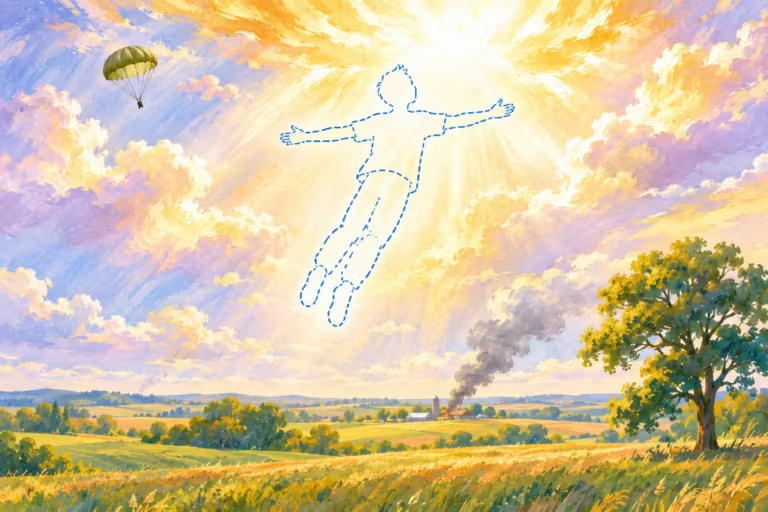
In 1968, Mickey Robinson, a 19-year-old skydiver, survived a burning plane crash in Ohio. He said he left his body, came before God, and saw scenes of his future that later came true.
Bogotá, 1995
Gloria Polo
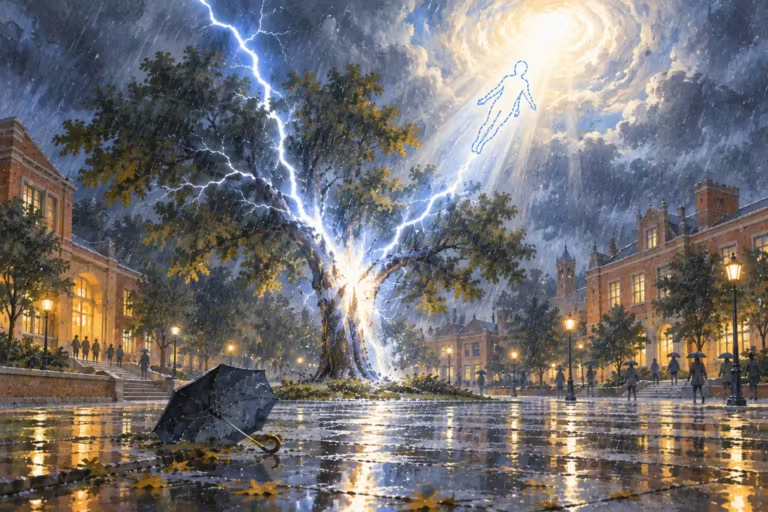
A dentist was struck by lightning in Bogotá, and her heart stopped. She says she hugged her daughter, who was somewhere else, and then saw her whole life.
Reincarnation: The top 5 people who remember past lives
We asked them the same five questions as this story. A 32-page PDF, free in your inbox.
Check your email
We have sent you an email. Open it and press the button to confirm. If you cannot see it, check your spam folder.