A real-life case · Sri Lanka, 1960
Gnanatilleka’s reincarnation case
Gnanatilleka Baddewithana was a girl from a village in Sri Lanka who talked from a very young age about other parents and another home. In 1960, a journalist wrote down 57 things she said, with dates, before identifying anyone. Then a truck driver read the story in the newspaper and pointed to the family of a boy who died in 1954.
It is one of the most cited cases of Ian Stevenson, the psychiatrist who studied these cases the most. What the girl said was written down before the other family was found, something almost no case has. Also, in 2024, three researchers reviewed everything using Stevenson’s field notes, which had never been published. That review says which of the girl’s statements were right and which were not. It also says how she may have learned some of them. We tell it step by step and then look at what can be checked. If you only want the evidence, skip straight to what can be checked. Did Gnanatilleka remember the life of a boy she never met?
Step 1
1957 to 1960 · Gnanatilleka is one to four years old · Told by her family and Ian Stevenson
A girl talks about another mother, another father, and many sisters
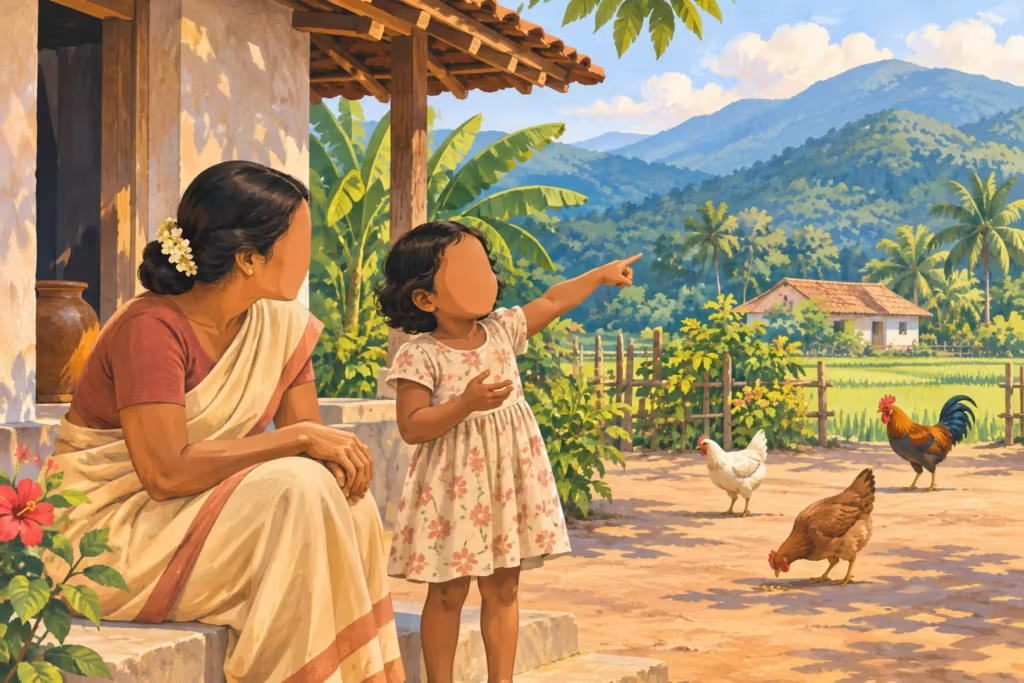
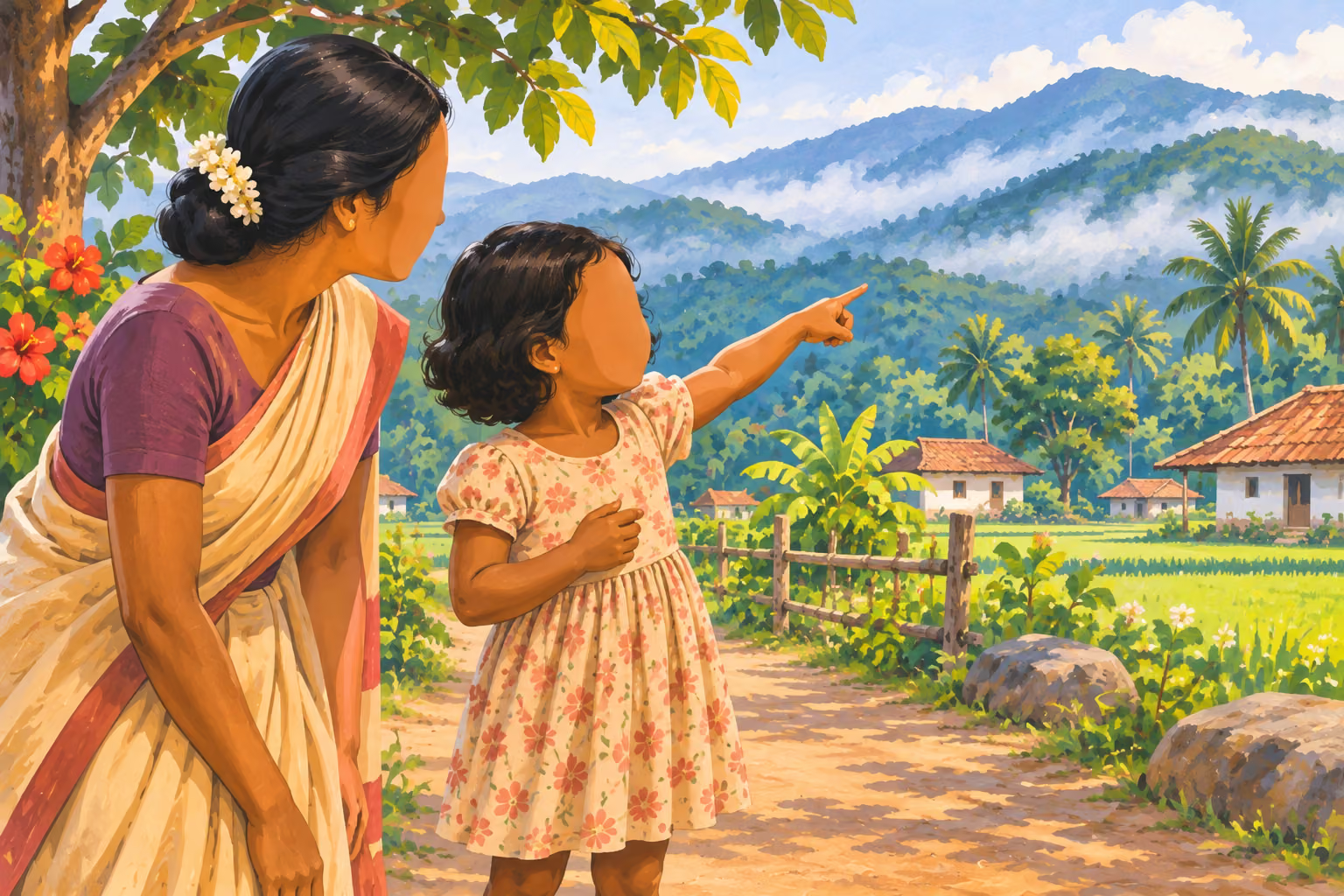
Gnanatilleka Baddewithana was born on February 14, 1956, near Hedunawewa, a village in a valley in central Sri Lanka. According to her family, at age one she was already talking about another mother and another father. At age two, she said clearly that she had other parents somewhere else, two brothers, and many sisters.
At first she didn’t say where that other place was. One day, a family from the village who had spent a month in Talawakele, a town in the mountains, visited the house. According to Stevenson, when she heard them say they came from Talawakele, the girl said her other parents were there.
According to Stevenson, Talawakele is about 26 kilometers from Hedunawewa. But the road was bad, and people from Talawakele almost never went to the village.
From then on, the girl kept asking to be taken to see her other parents.
Step 2
September 1960 · Gnanatilleka is four years old · Told by the 2024 reanalysis and Nissanka’s book
Her brother takes her to Talawakele
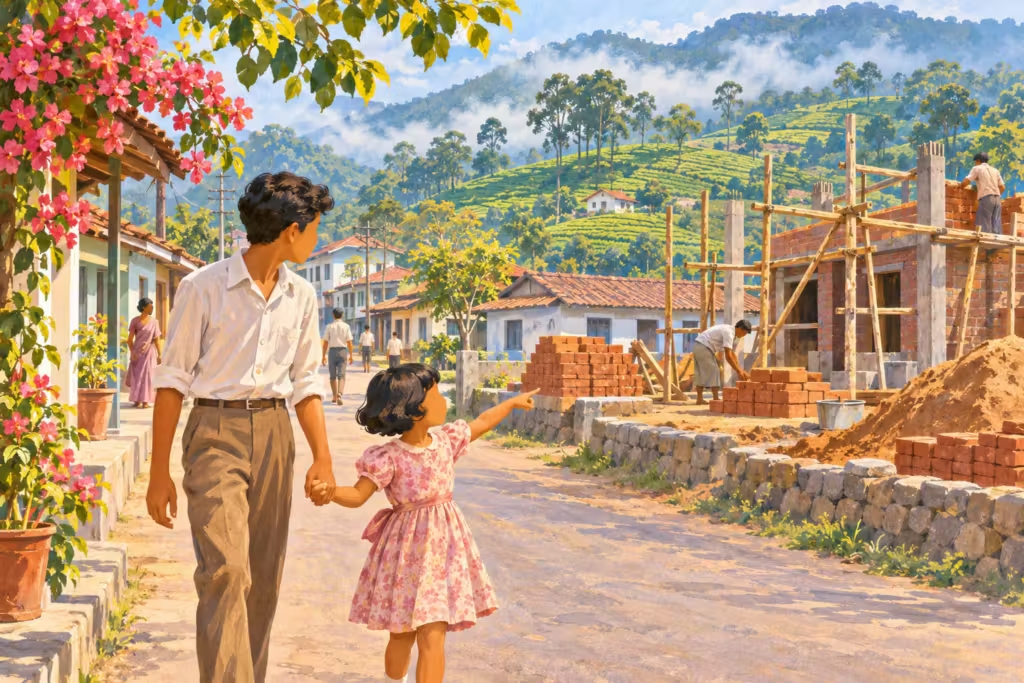
In early September 1960, before anyone wrote anything down, her older brother took her to Talawakele. According to Stevenson’s notes, the girl recognized several buildings in the town. She led her brother to the place where she said her house was, but there was a construction site there. The house no longer existed. H. S. S. Nissanka, who investigated the case, tells of that trip in his book without giving it a date, and says they went to the temple.
That day they didn’t look for the family the girl talked about, and no one met them.
Weeks later, the story reached a journalist.
Step 3
October 27 to November 13, 1960 · Told by H. S. S. Nissanka, in his book, and the newspaper “Silumina”
A journalist writes down 57 things the girl says
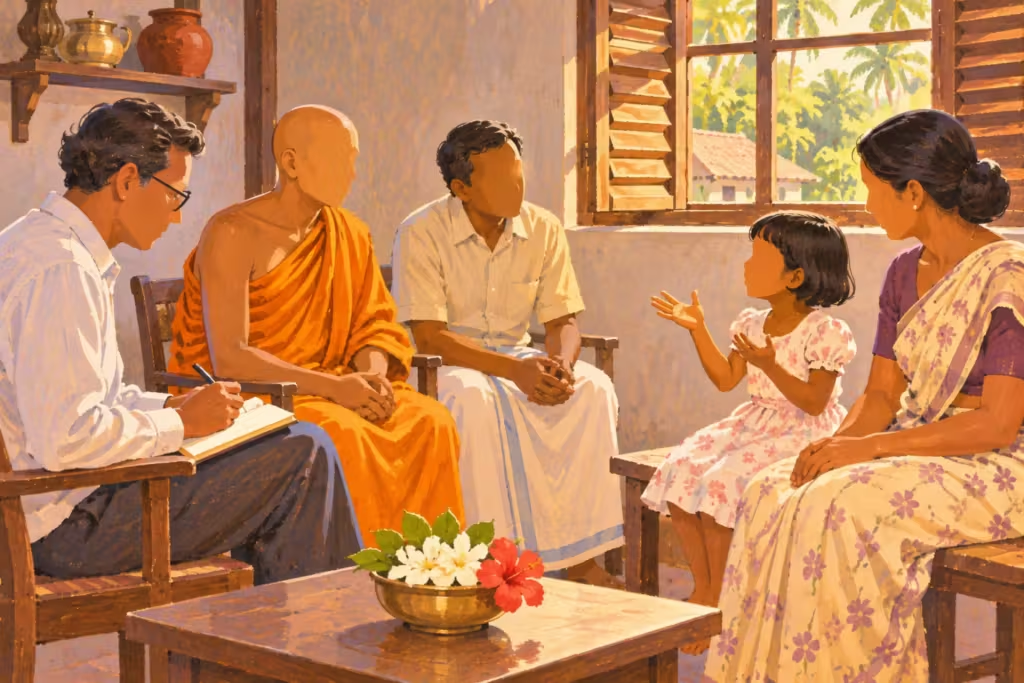
H. S. S. Nissanka wrote feature stories for the newspaper “Silumina.” He received a letter dated October 27, 1960, with the first things the girl said. It was his first case, and he asked a well-known Buddhist monk, Piyadassi, to go with him. On November 1, they went to the village with a teacher, Sumathipala, and other people. They interviewed the girl and, according to Nissanka, wrote down her answers on the spot.
“Silumina” published the case on November 6 and 13. The November 13 article already said that the girl talked about six sisters and two boxes of paints. In all, before anyone was identified, 57 things the girl said were written down. Most were general, such as that she lived in Talawakele, that she had brothers, or that she went to school.
In our view, six were more specific, because they wouldn’t fit just any family in the area. She said that in that other life she had six older sisters and a sister named Dora, and that her father at the time lived apart. She talked about Adam’s Peak, a sacred mountain in Sri Lanka. She said she bought blue cloth with the money from her piggy bank, and that she had two boxes of paints.
According to the 2024 reanalysis, some of the first questions put to her already contained the answer, and they were asked that way on purpose.
On November 6, the journalist and the monk found a family that fit part of what the girl said.
Step 4
November 19, 1960 · Told by Nissanka, Stevenson, and the 2024 reanalysis
A truck driver reads the newspaper and points to a family
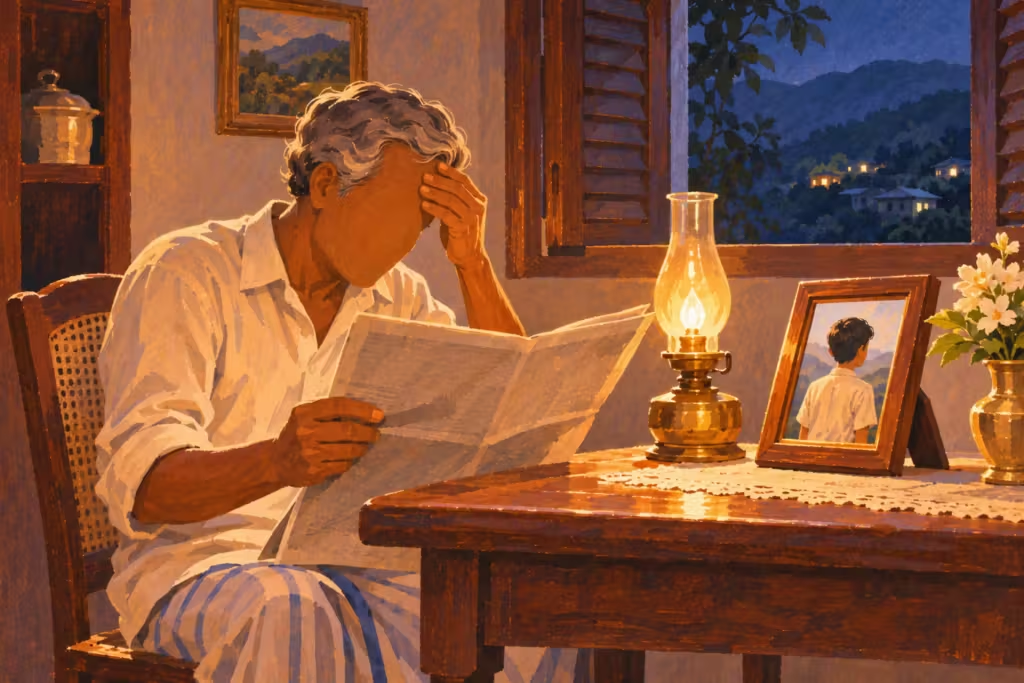
The first family the team found had a daughter named Lora and had lost a son. Lora is close to Dora, the name of the sister the girl talked about. They ruled it out only because the date of that son’s death didn’t fit.
On November 19, 1960, Nissanka took the girl and her father to Talawakele. At the temple, they were told about a truck driver, Martin Singho, who had read the “Silumina” articles. The truck driver had in mind the family of a boy who had died six or seven years earlier. A brother-in-law of the boy confirmed it and showed a sheet printed for the funeral, with the date of death. That day, the team spoke with the boy’s mother and two of his sisters. The father lived apart and wasn’t there. The boy’s name was Tillekeratne. He had been born on January 20, 1941, and had died on November 9, 1954, at age thirteen. The team concluded that he was the person the girl was talking about. In the 2024 reanalysis, his name is spelled another way, Turin Thilakaratne.
That same day, the girl walked around Talawakele with Nissanka and her father. She saw the station, the temple, and the post office, and she pointed out the site of the house again. The two families did not get to meet.
Until then, no one had written down that the girl said she had been a boy. She said it on November 27, eight days after a boy was identified, when she answered a question.
On December 18, the two families met for the first time.
Step 5
December 17 and 18, 1960 · Told by Nissanka and Stevenson
The girl recognizes the boy’s family
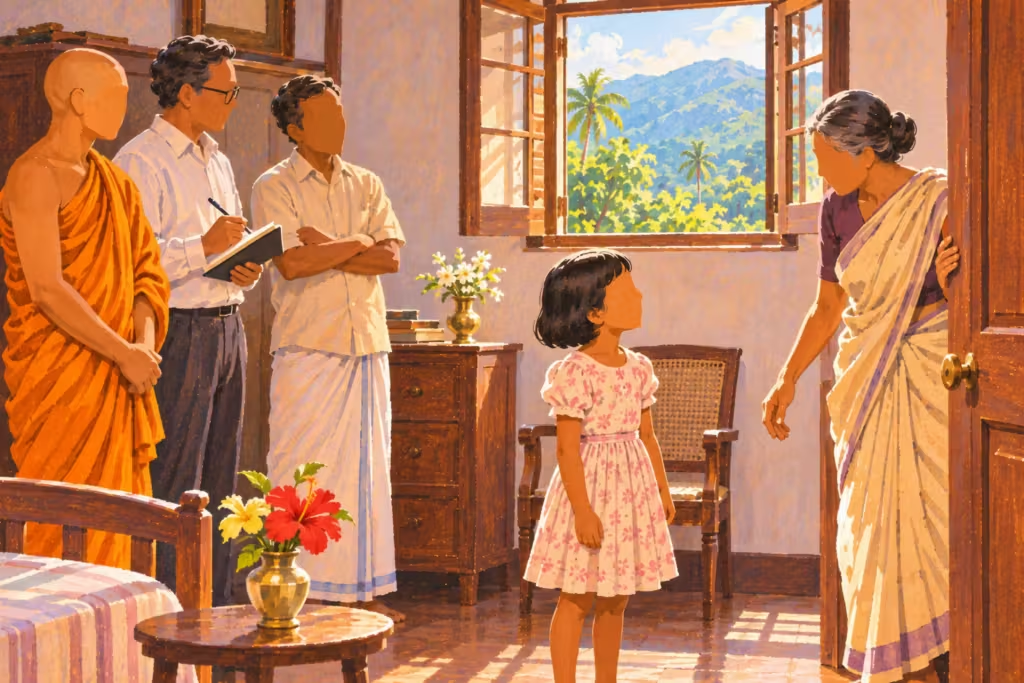
Tillekeratne had studied at a school in Hatton, about 19 kilometers from Talawakele. On December 17, three men from that school visited the girl in her village. Only one had been Tillekeratne’s teacher. According to Nissanka, the girl recognized him and said she didn’t know the other two.
The next day, the girl was taken to a guesthouse in Talawakele. She was left with her family in an upstairs room, so that she wouldn’t see the other family arrive. According to Nissanka, he, the monk, the girl’s mother, and a photographer were in the room. There she was introduced to relatives and acquaintances of Tillekeratne. They usually came in one at a time, and once three sisters came in together. They asked her about each one: “Do you know this person?” According to Stevenson, she recognized seven members of the family and two other people from the town.
Many people were waiting in the street. Stevenson says those people couldn’t have given the girl any clues, because the recognitions were done upstairs, in a separate room.
In the summer of 1961, Stevenson went to check it on his own.
Step 6
1961 to 2024 · Told by Stevenson and the reanalysis by James Matlock, Akila Weerasekera, and Michael Nahm
Sixty years later, three researchers review everything

Stevenson visited Talawakele, Hatton, and the girl’s village in 1961, and he returned in 1966 and 1970. Both families told him they hadn’t known each other before the case. The girl’s father had stopped in Talawakele only once, twenty years earlier.
But Stevenson also learned of two ways the girl could have picked things up. A man who had lived in the girl’s village was from Talawakele, knew Tillekeratne’s family, and went to his funeral. According to the girl’s family, that man didn’t visit them until the case became known. And the girl’s older brother had spent a night in Talawakele in 1954, when Tillekeratne was still alive.
In 2024, three researchers, James Matlock, Akila Weerasekera, and Michael Nahm, reviewed the case with Stevenson’s unpublished notes. Of the 57 things written down before Tillekeratne was identified, they count 45 hits, 8 that could not be checked, 2 half hits, and 2 misses. In our view, only 6 of those hits are specific. They are the ones that wouldn’t fit just any family in the area.
The first question remains. Did Gnanatilleka remember Tillekeratne’s life?
Frequently asked questions
Who is Gnanatilleka Baddewithana?
Gnanatilleka Baddewithana was born in Sri Lanka in 1956. As a small child she talked about other parents and another house in Talawakele. In 1960, the journalist H. S. S. Nissanka wrote down what she said, and the psychiatrist Ian Stevenson studied the case. It was concluded that she was talking about Tillekeratne, a boy from Talawakele who died in 1954.
Why is Gnanatilleka’s case important?
It matters because what the girl said was written down with dates before Tillekeratne was identified, the boy she was concluded to be talking about. And because in 2024 it was reviewed with the notes of the psychiatrist Ian Stevenson, which had never been published. That reanalysis marks what fits, what fails, and how the girl could have learned things.
Has Gnanatilleka’s case been proven?
No. In our view, six specific facts fit, and no one has found how the girl could have known them. But the essentials of the case could have come from some neighbors and a trip to Talawakele before anyone wrote anything down. Here we explain what can be checked.
Where this story comes from
The books and the studies
- H. S. S. Nissanka, The Girl Who Was Reborn (2001). The book by the journalist who investigated the case, with the interview of November 1, 1960, and the death certificate
- Ian Stevenson, Twenty Cases Suggestive of Reincarnation (2nd edition, 1974). The case of Gnanatilleka BaddewithanaBuy the book
- James G. Matlock, Akila Weerasekera, and Michael Nahm (2024), reanalysis of Gnanatilleka’s case with Stevenson’s field notes
- Abraham Kovoor, Gods, Demons and Spirits (1980). The chapter on Gnanatilleka, based on the research of H. S. D. SenaratneRead for free
Learn more
- Reincarnation: the cases we have studiedRead
Our archive
- Our reading of Stevenson’s book, Nissanka’s book, the 2024 reanalysis, and Kovoor’s criticism, and the scoring against our five criteria, as of November 11, 2026
Keep reading

Louisiana, United States, 2000
James Leininger
James Leininger was two years old when he began screaming in his sleep that a plane was going down in flames. His parents say he talked about a ship called “Natoma” and a pilot named Jack Larsen. In 2002 his father found a pilot who fit, James Huston, who died in 1945.

Sri Lanka, 1992
Chatura Karunaratne
Chatura Karunaratne was three years old when he began saying that in another life he was a soldier who was attacked in a truck. A national newspaper published what he said in June 1992. Then the father of a soldier who died in 1986 read the article and recognized his son.
Germany, 1952
Ruprecht Schulz
Ruprecht Schulz was a Berlin businessman when, in the middle of the war, he began seeing a ruined merchant shoot himself. In 1952 he wrote letters to find him. The city hall of Wilhelmshaven answered that a timber merchant had killed himself there.
Reincarnation: The top 5 people who remember past lives
We asked them the same five questions as this story. A 32-page PDF, free in your inbox.
Check your email
We have sent you an email. Open it and press the button to confirm. If you cannot see it, check your spam folder.