A real-life case · Sri Lanka, 1992
Chatura Karunaratne’s reincarnation case
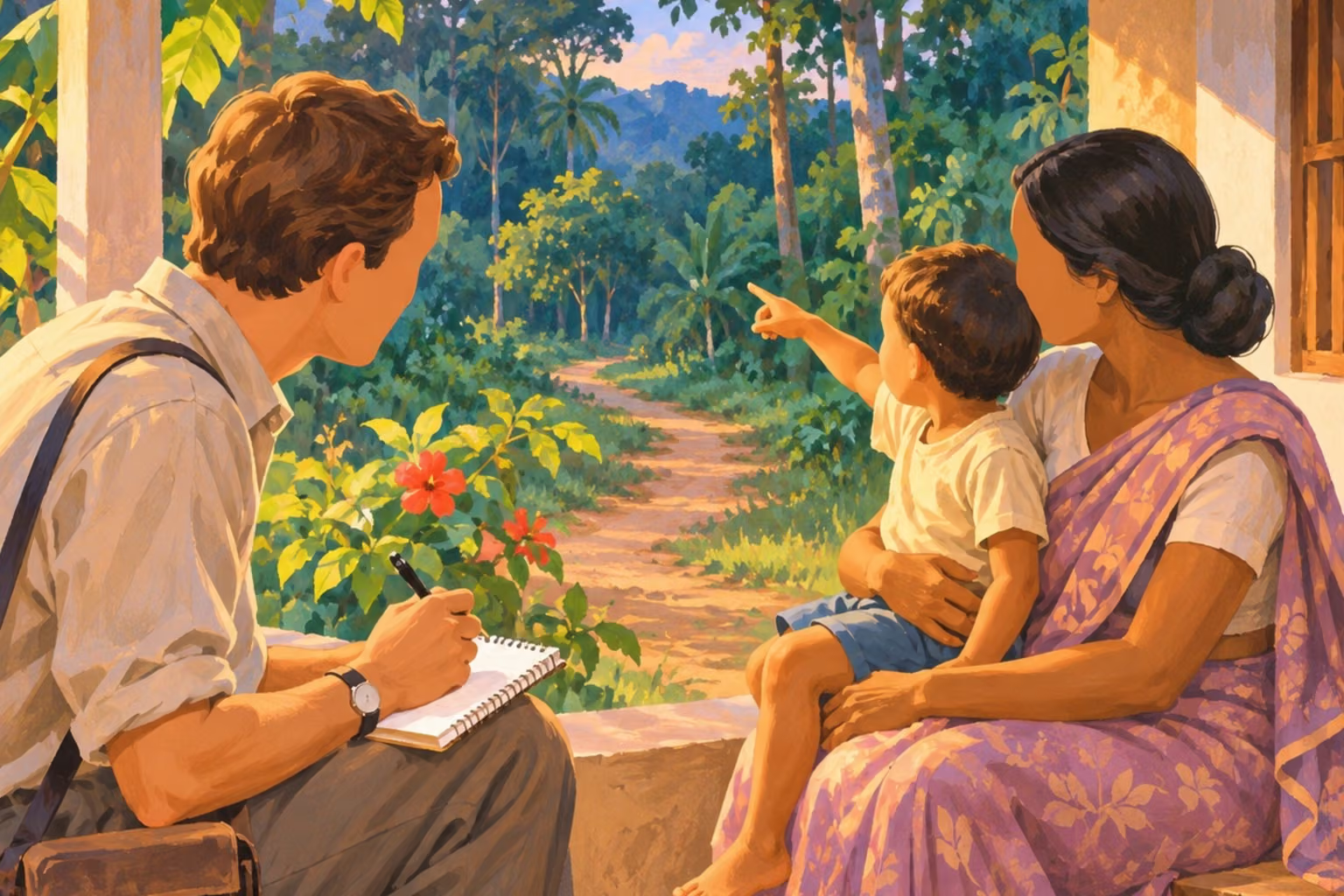
Chatura Karunaratne was three years old when he began saying that in another life he was attacked while riding in a truck through the forest. A Sri Lankan newspaper published what he said in June 1992. Weeks later, a man read the article and recognized his son in it, a soldier who died in 1986.
It is the first in our top 5 reincarnation cases. It has something that is almost never there. What the boy said appeared in a national newspaper before anyone knew who he was talking about. Journalists who belonged to neither family wrote it, and the articles are dated. Afterward, a psychologist checked, one by one, everything the boy had said. We tell it step by step and then look at what can be checked. If you only want the evidence, skip straight to what can be checked. Did Chatura remember the life of a soldier he never met?
Step 1
Around 1992 · Chatura is three years old · Told by his mother
A three-year-old says that in another life he was shot
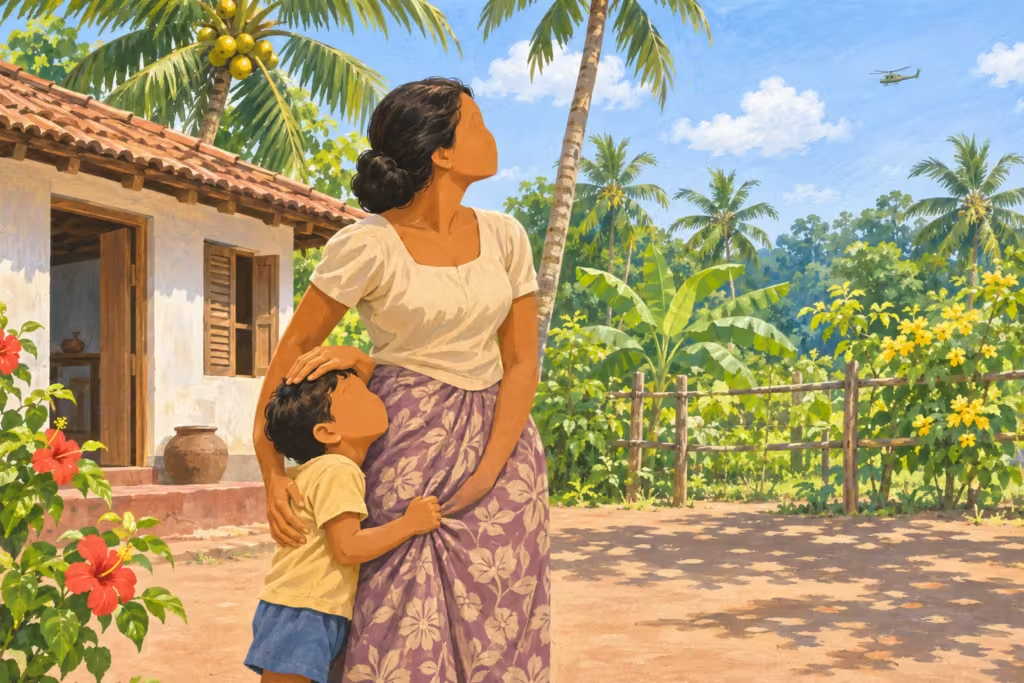
Chatura Karunaratne was born on April 20, 1989, in Metiyagane, a countryside area in the Kurunegala district of Sri Lanka. His father was a clerk at a bus company, and his mother was a nurse at a traditional medicine hospital.
According to his mother, he began talking about another life at age three. He said he was shot in two places and taken to the hospital in a helicopter. He said his other parents lived near Narammala, a town in the same area. According to her, the only name from that life that he gave was the name of that town. And he said his mother in Narammala was not thin like his mother now, but fat.
His mother says Chatura got scared every time he heard a helicopter. He was afraid of the other children’s balls, because he thought they could be bombs. He often talked about army trucks, camps, and soldiers.
Chatura has two birthmarks by his left ear, one on the jaw and one on the neck. He has another on the inside of one arm. His mother said the boy pointed to the two on the neck and said they were where he was shot. She said this in November 1992, when they already knew the other family. Neither the articles nor the notes from June mention the birthmarks.
His family looked in Narammala for the person the boy was talking about and found no one.
Step 2
June 7, 1992 · Published by the newspaper “Divaina”
A national newspaper publishes what the boy says
M. D. Banda, a local journalist, heard about the case from his wife. He went to see the boy with the village head and sent a report to “Divaina.” It is a newspaper from Colombo, the capital, sold all over the country. On June 7, 1992, “Divaina” published a shortened version of that report.
The article lists 14 things Chatura said. He lived in a town near Narammala, in a pink house with a tile roof. Nearby there was a hut with a thatched roof and, inside it, a small shop. Near the house there was a lake, and turtles lived in the lake. He was riding in a truck through the forest when a group of people shot at him and hit him in the neck. And his family had a tractor.
The article put on record what the boy said. What was missing was whether any person fit what he described.
Step 3
June 12 to 14, 1992 · Told by two journalists and an assistant of the psychologist Erlendur Haraldsson
They take him to Narammala to look for his house, and find no one
On June 12, Tissa Jayawardane visited the family and wrote down what the mother said. He worked with Erlendur Haraldsson, a psychologist at the University of Iceland who studied reincarnation cases in Sri Lanka. According to Tissa’s notes, the boy said that in that other life he was called Suduputha.
Around those days, Banda returned with Nandasena Suriyarachchi, another “Divaina” journalist. They took the boy to Narammala, where he said he could find his house. They found no one whose life fit what he said.
On June 14, “Divaina” published a second article, with 29 things the boy said. Many were already in the first one. This time, Chatura said he had been a soldier and that a helicopter took him and others to the doctor. He talked about a parrot that could talk, which his mother in that other life fed. And he gave names. His father was called Perera, his mother Mangalika, and his sister Kumari.
Twenty-five kilometers from Chatura’s house, a man had heard about the first article.
Step 4
Late June 1992 · Told by M. P. Martin, the soldier’s father
A dead soldier’s father reads the article and recognizes his son
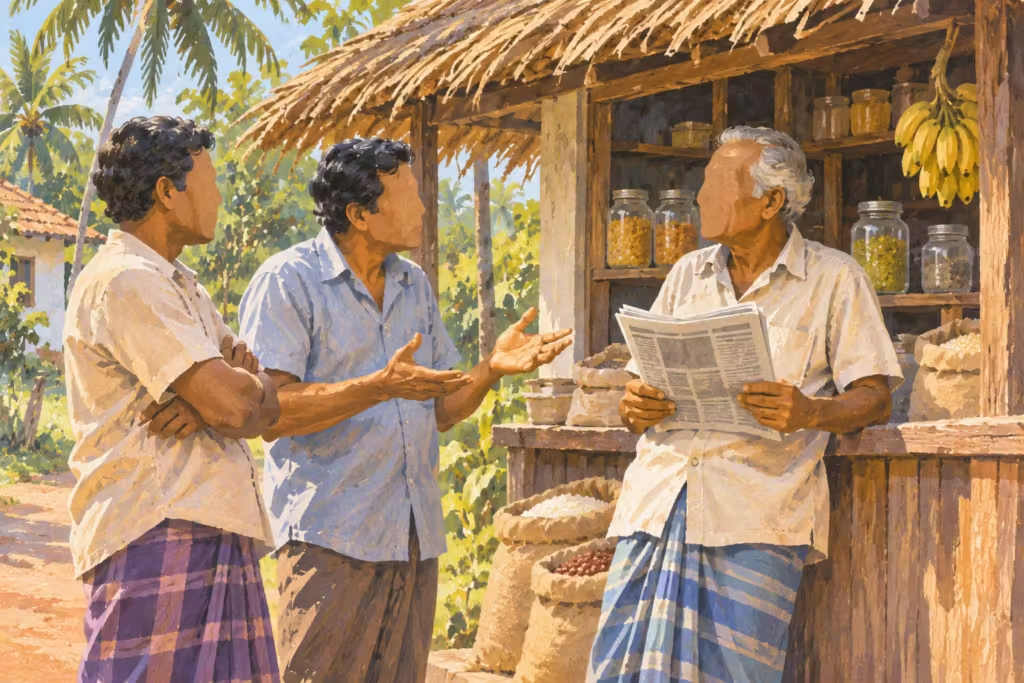
M. P. Martin was a retired farmer and bricklayer from Henegedara, a village near Narammala. In a shop, he heard neighbors talking about the June 7 article. He got the newspaper and read it.
He thought of his son Dayananda. He was a soldier and had died in April 1986, after an explosion. The family then lived in a house with a tile roof. Next to it, in a thatched hut, Martin had built him a shop, and Dayananda sold groceries and sweets there. Nearby there was a small lake. According to Martin, turtles lived in that lake.
Martin didn’t want to go alone and went with the head of his village. Chatura’s house was 25 kilometers by road from his, in the opposite direction from Narammala, the town the boy named. The next day he came back with his wife. Martin and his wife became convinced that the boy was talking about their son. About two weeks had passed since the first article.
The two families say they didn’t know each other before.
In early July, a journalist took Chatura to Dayananda’s parents’ house.
Step 5
Early July 1992 · Told by “Divaina” in a third article, from July 5
Chatura visits Dayananda’s house, according to the newspaper
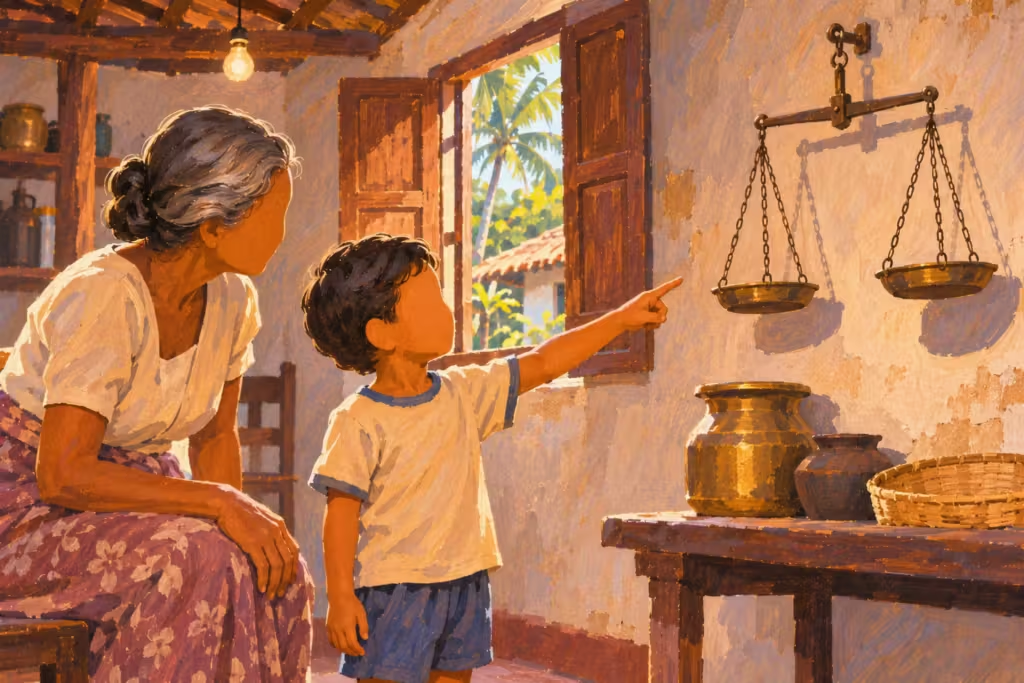
Nandasena Suriyarachchi took the boy, who was three, to Dayananda’s parents’ house. According to the newspaper, they welcomed him like a son. The mother brought out some of Dayananda’s old clothes. The boy complained that only his long trousers were left of his clothes, and that they were torn and someone else had worn them.
She asked him if he remembered the house. According to the newspaper, Chatura said he hadn’t lived in that house but in another one. That was true. The family had recently moved to a new house on the same land, and the old house was about a hundred meters away. In the old house, an elderly woman asked him if he remembered her. Chatura looked at her for a while and said she was his grandmother. Dayananda had lived longer with his grandmother than with his parents.
Inside the old house, according to the newspaper, Chatura said they now had electric light. When Dayananda was alive, they didn’t have it. He saw the shop’s scale hanging on the wall and asked if they no longer had the shop. The shop had been torn down. He also recognized Gamini in the crowd, a friend and brother-in-law of Dayananda.
The journalists asked Martin about the tractor. Martin said Dayananda planned to buy him a tractor at an army auction, but died first.
All this happened when the two families already knew each other. So it doesn’t count among what the boy said before they met.
In November, Haraldsson began checking everything.
Step 6
1992 to 1999 · Told by Erlendur Haraldsson and the army documents
A psychologist compares what the boy said with the soldier’s life

Haraldsson interviewed the two families in November 1992 and came back four times, until 1999. He saw the tile-roofed house and the lake, a quarter of an hour’s walk away. The turtles are reported by Dayananda’s father. With the help of a general, he obtained the army papers on Dayananda.
According to those papers, on April 15, 1986, Dayananda was on a patrol of two army trucks. A mine blew up one of the trucks. Dayananda was found unconscious next to the overturned truck. A helicopter took him to a hospital, and he died three days later in Colombo without waking up. According to Haraldsson, the report implies there was no clash with the enemy.
The report doesn’t say where he was wounded. It says no wounds could be seen on the outside. His parents say he had bandages on his head, his neck, and his left ear, and that’s how he appears in a photo from his funeral. No autopsy was found.
Haraldsson put together what the two articles and his assistant’s notes recorded, from before Martin appeared. Not counting repeats, there were 33 things. He checked them one by one. Sixteen fit Dayananda’s life, 15 don’t, and 2 others couldn’t be checked. All the names fail. According to Haraldsson, in Sri Lankan cases it is almost normal for the names to fail.
The question from the beginning remains. Did Chatura remember Dayananda’s life?
Frequently asked questions
Who is Chatura Karunaratne?
Chatura Karunaratne was born in Sri Lanka in 1989. At age three, he began talking about another life, in which he was a soldier who died when his truck was attacked. A national newspaper published what he said in June 1992. The psychologist Erlendur Haraldsson studied the case and published it in 2000.
Who was Dayananda, the soldier Chatura Karunaratne was linked to?
M. P. Dayananda was a Sri Lankan army soldier, born in 1964 near Narammala. Before joining the army, he sold groceries in a shop next to his parents’ house. A mine overturned his truck on April 15, 1986, and he died three days later in Colombo.
Has the Chatura Karunaratne case been proven?
No. What the boy said was published before Dayananda’s family was found, and part of it fits the army papers. But almost half of what he said fails, and all the names fail. Here we explain what can be checked.
What did Erlendur Haraldsson conclude about the Chatura Karunaratne case?
Haraldsson concluded that two things seem to go beyond chance. One is the nine things the boy repeated in the two June 1992 articles and in his assistant’s notes. The other is his birthmarks. He also wrote that, counting everything the boy said, chance explains the case better than a memory of another life.
Where this story comes from
The study
- Erlendur Haraldsson (2000), “Birthmarks and claims of previous-life memories: II. The case of Chatura Karunaratne,” Journal of the Society for Psychical Research, 64, pages 82 to 92. It reproduces what “Divaina” published on June 7 and 14, 1992, sentence by sentence
Learn more
- Reincarnation: the cases we have studiedRead
- Reincarnation: the top 5 people who remember past livesRead
Our archive
- Our reading of Haraldsson’s article, and the scoring against our five criteria, as of November 10, 2026
Keep reading
Sri Lanka, 1972
Sujith Jayaratne
Sujith Jayaratne was about two years old when he began saying that he was called “Gorakana Sammy” and that a lorry had run him over. A Buddhist monk wrote down what he said before checking it. In Gorakana he found the family of Sammy Fernando, who died that way in 1969.
Sri Lanka, 1960
Gnanatilleka
Gnanatilleka Baddewithana talked from a young age about other parents in Talawakele, in Sri Lanka. In 1960, a journalist wrote down 57 things she said before identifying anyone. Then a truck driver who read the story pointed to the family of a boy who died in 1954.
India, 1958
Swarnlata Mishra
Swarnlata Mishra was three years old when she asked for the truck to turn toward “my house” in Katni, a city where she had never lived. Years later, a researcher wrote down how she described the house, went to Katni, and found it.
Reincarnation: The top 5 people who remember past lives
We asked them the same five questions as this story. A 32-page PDF, free in your inbox.
Check your email
We have sent you an email. Open it and press the button to confirm. If you cannot see it, check your spam folder.