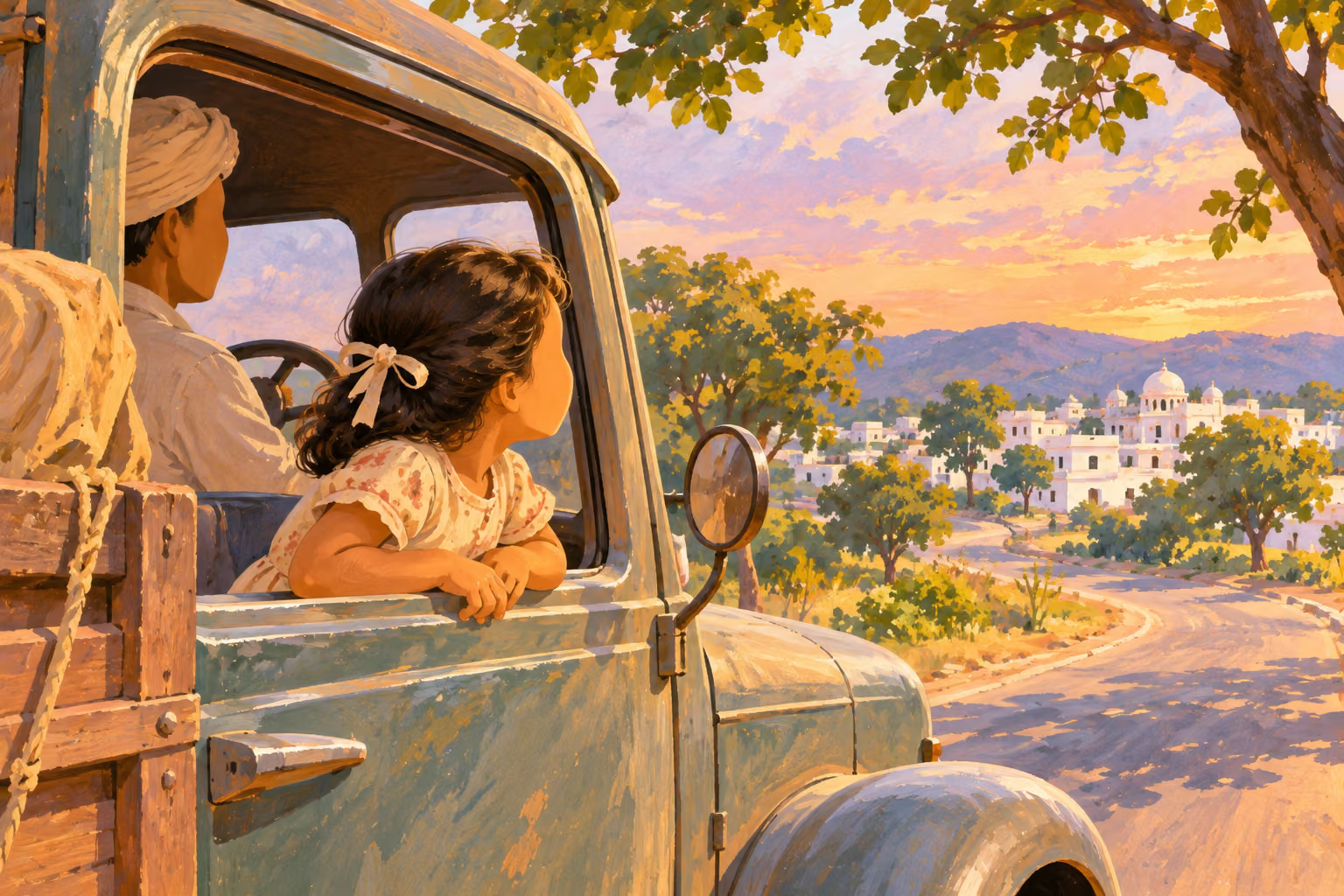
A real-life case · India, 1958
Swarnlata Mishra’s reincarnation case
Swarnlata Mishra was a girl from central India. When she was three, she asked for the truck she was riding in to turn toward “my house,” in a city where she had never lived. For years she talked about her life as a woman from that city, Katni. In 1958 her father began writing down what she said, and in 1959 a researcher wrote down how she described the house and went to look for it.
The psychiatrist Ian Stevenson included it in his best-known book, from 1966. It is one of the two cases in the book in which what the girl said was written down before anyone was looked for. The girl also sang and danced to songs in a language no one in her home spoke. We tell it step by step and then look at what can be checked. If you only want the evidence, skip straight to what can be checked. Did Swarnlata remember the life of a woman who died nine years before she was born?
Step 1
Around 1951 · Swarnlata is three years old · Told by her father
A three-year-old girl asks for the truck to turn toward “my house”
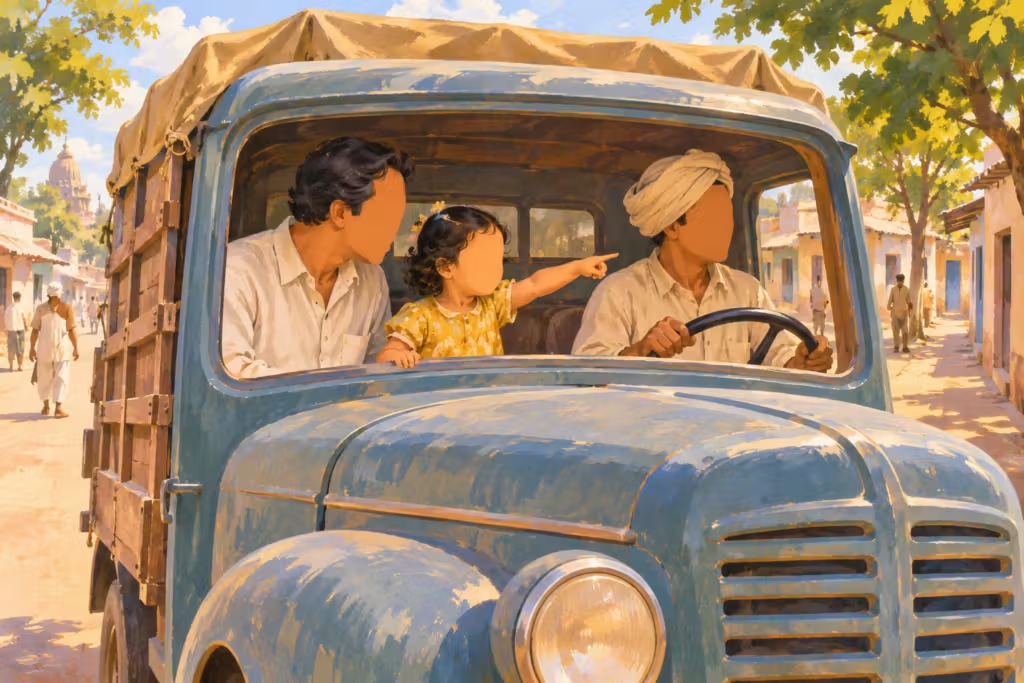
Swarnlata Mishra was born in March 1948 in Shahpur, a town in central India. Her father, M. L. Mishra, was a government employee in the school inspection office, and the family moved several times because of his job.
When she was about three, Swarnlata was riding back from the city of Jabalpur with her father in a truck. As they passed through the city of Katni, she asked the driver to turn down a road toward “my house.” A little later, when they stopped for tea in Katni, she said they could get much better tea at “her” house nearby.
No one in her family had a house in Katni.
Step 2
1951 to 1958 · Told by her father and her siblings
Swarnlata describes a white house in Katni and a rich family

In the years that followed, Swarnlata told people, mostly her brothers and sisters, that she had been a woman from the Pathak family of Katni. She said her house was white, with black doors and iron bars, and that four rooms were well finished, with smooth walls, and the others weren’t. Behind it there was a girls’ school. From the house you could see the railway and some lime furnaces. The family had a car, which was rare in India at the time.
She also said she had two sons, whom she called Krishna and Shiva, and that she died of a throat illness. She gave the name of the doctor who treated her in Jabalpur. She said her name was Kamlesh and that the head of her family was Hira Lal Pathak. One of her brothers remembers that she also said another name, Biya.
She also began to do something no one in her home knew how to do.
Step 3
Around 1953 · Swarnlata is five or six years old · Told by her father
The girl sings and dances to songs in Bengali, a language no one in her home speaks
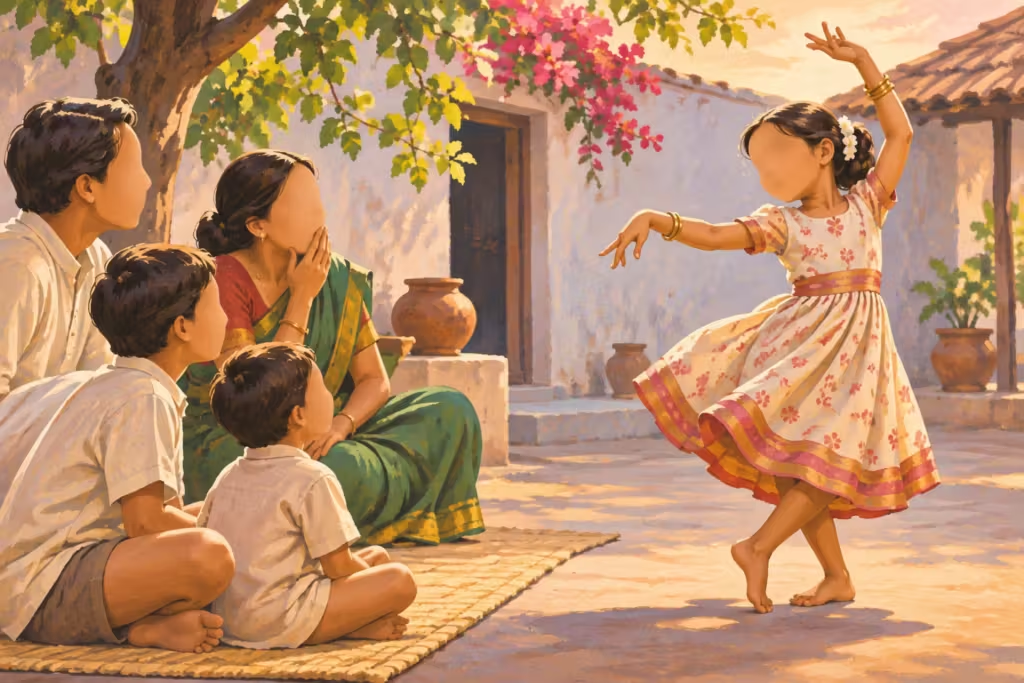
When she was about five or six, Swarnlata began to sing three songs, with their dances. They were in Bengali, the language of eastern India. No one in her family spoke it, and she didn’t understand what she was singing.
She said they came from another life, between the one in Katni and her present one, in Sylhet, a city that is now in Bangladesh. According to her father, the family had no radio until the girl was eight, and she had never been to the movies. There were a few Bengali families in the towns where they lived, but none of them was friends with hers before the girl began to sing.
Around 1958, the family moved to the city of Chhatarpur.
Step 4
July and September 1958 · Swarnlata is ten years old · Told by her father and Professor Agnihotri
At a professor’s home, the girl says she recognizes a woman from Katni
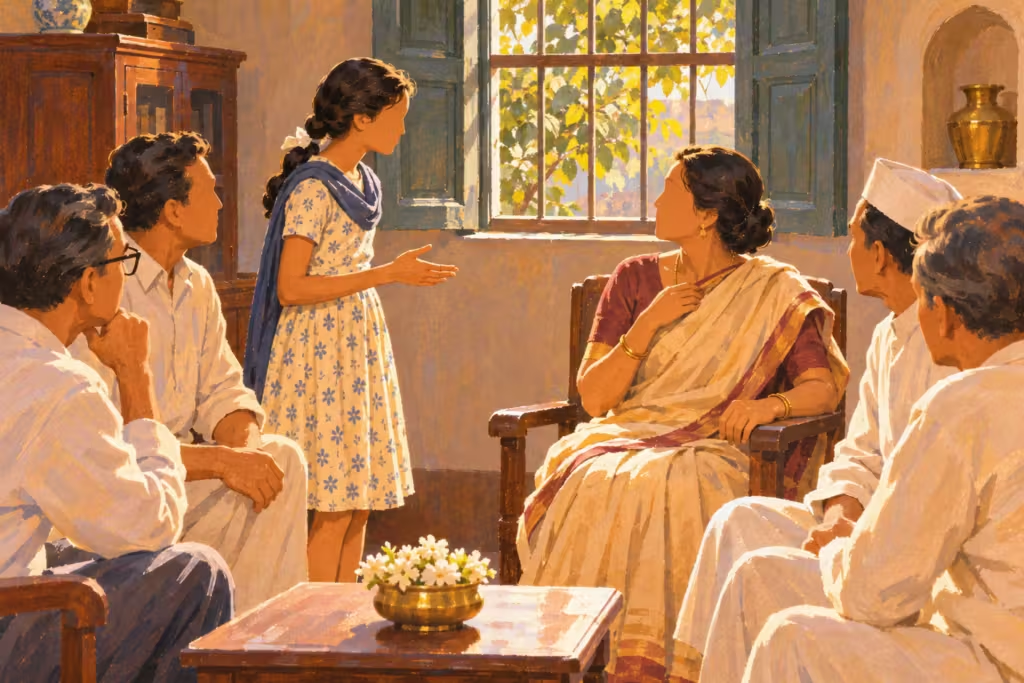
In Chhatarpur, a professor, R. Agnihotri, had heard about the girl. In July 1958 he invited her and her father to his home, so she could talk about her other life in front of some friends. Swarnlata asked to see the professor’s wife, who came from the Katni area, and said she knew her.
She reminded her of a wedding in a nearby village where the two of them had trouble finding a latrine. The professor’s wife confirmed the story. She had known the woman from Katni the girl was talking about. Ian Stevenson is the psychiatrist who studied the case later. He writes that this is how the father first checked that something his daughter said was true.
Two months later, in September, the father began writing down some of the things the girl said. Those notes have never been published.
In March 1959, a researcher arrived.
Step 5
March 1959 · Told by Ian Stevenson, from what H. N. Banerjee told him
A researcher writes down what the house is like and finds it in Katni
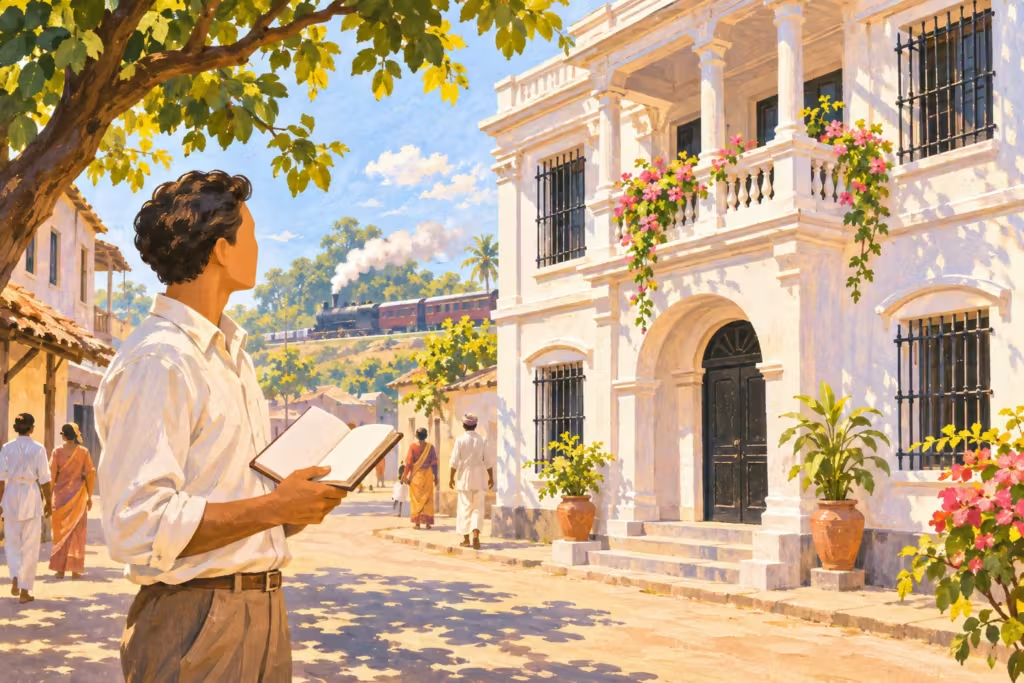
H. N. Banerjee studied these cases at a university in India. He spent two days in Chhatarpur with the family. According to Stevenson, before going to Katni he wrote down about nine things the girl said about the house. Then he went to Katni, and he said those notes led him to the house.
It was the house of the Pathaks, a well-known family in Katni. According to Banerjee, the Pathaks didn’t know the girl’s family. Only one of Biya’s brothers was slightly acquainted with a cousin of Swarnlata’s mother. Behind the house there was a girls’ school. Across the road ran the railway, and on the land next door there were lime furnaces. The house had been remodeled, but it used to be the way the girl described it.
The Pathaks had a daughter, Biya, who had married a man from another town, Maihar, and had died in 1939. According to her brothers, she was treated for her throat in Jabalpur and died months later, of heart trouble. She had two sons, Murli and Naresh.
That summer, the two families met.
Step 6
Summer 1959 · Swarnlata is eleven years old · Told to Stevenson by the two families, in 1961
The girl recognizes Biya’s family, according to the two families
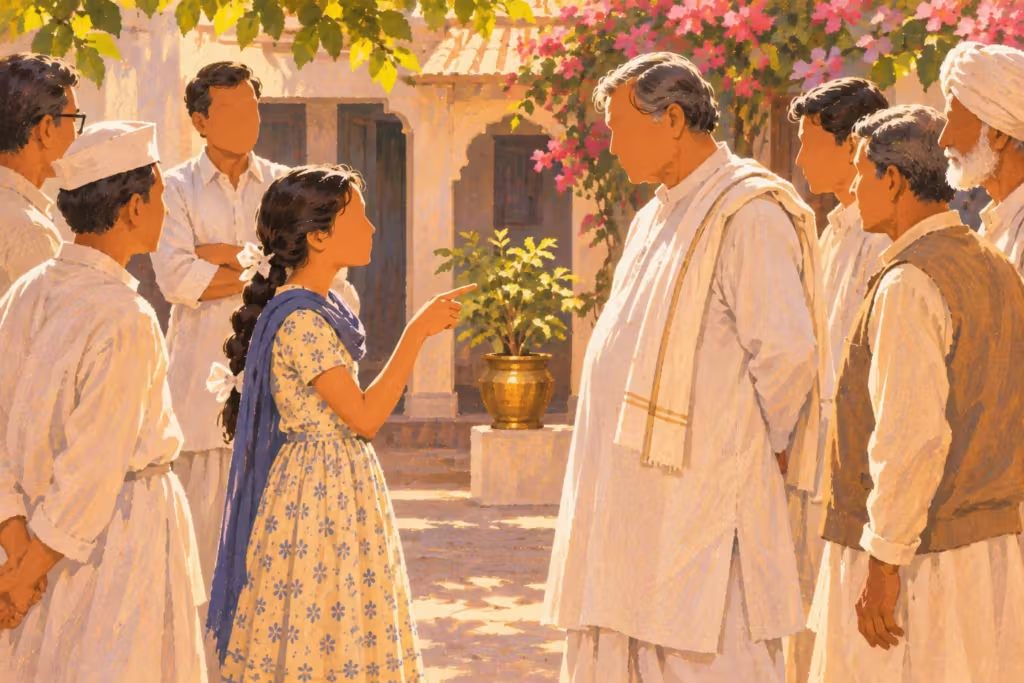
First, one of Biya’s brothers, Hari Prasad, showed up in Chhatarpur unannounced. According to those present, the girl recognized him. At first she called him Hira Lal, the wrong name she had given before. Then she called him “Babu,” which was what Biya called that brother. Next came Biya’s husband and her son Murli. According to those who were there, the girl recognized them among other men who weren’t part of the family.
The girl told the husband that, when she was Biya, he had taken 1,200 rupees from a box. He later said it was 1,000, and that only he and his wife knew about it. He told his son, and his son told Stevenson years later.
Later, the girl went to Katni and Maihar. According to the two families, she recognized about twenty people and noticed changes in the house. Her father didn’t tell Banerjee about those visits, because he was afraid the girl would fail in public. No one from outside the two families saw those recognitions. The Pathaks accepted her as Biya reborn.
In 1961, Ian Stevenson arrived.
Step 7
1961 to 1973 · Told by Stevenson and Professor P. Pal
Stevenson studies the case, and the songs turn out to be by a famous poet
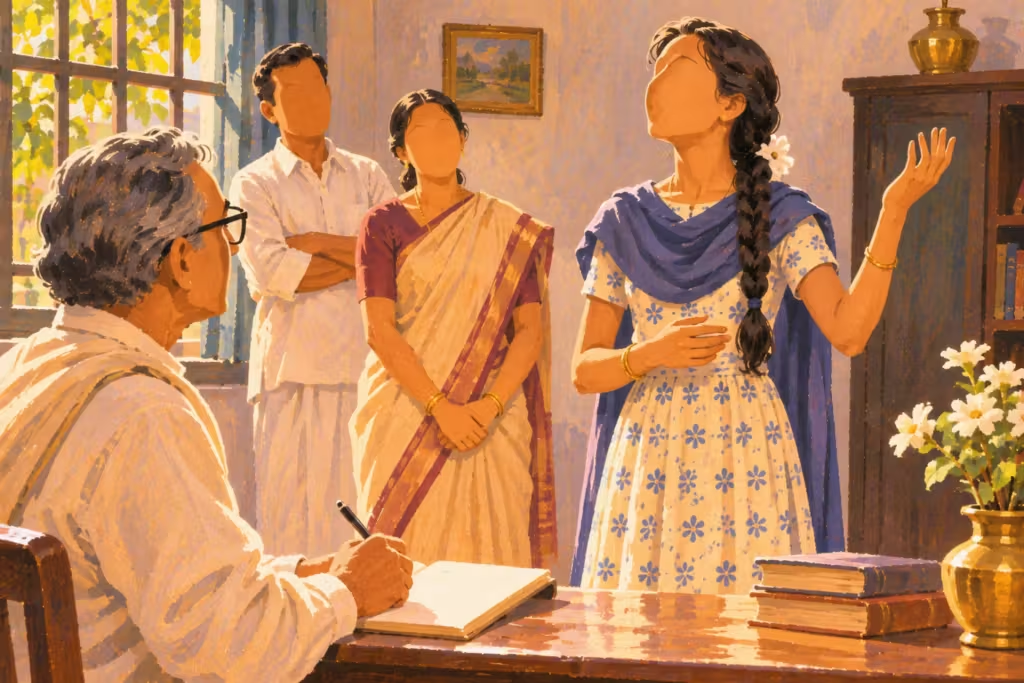
Ian Stevenson was a psychiatrist at the University of Virginia, in the United States, who spent forty years studying children who talked about another life. He spent four days with the two families in 1961 and went back in 1971. He published the case in 1966, with a table of what the girl said and of what fit and what didn’t. He also described the ways she could have learned some things.
In 1963, Professor P. Pal, who spoke Bengali, wrote down the words of the songs. Two were by the poet Rabindranath Tagore, winner of the Nobel Prize in Literature. One is sung at the harvest festival and the other at the spring festival. Both had been released on records before the girl was born. The life in Sylhet that she linked them to was never found.
Swarnlata studied botany, became a teacher, and married in 1973. As an adult, she told the researcher K. S. Rawat that her memories had become very faint, and that she still sang one of the songs.
That leaves the question from the beginning. Did Swarnlata remember Biya’s life?
Frequently asked questions
Who is Swarnlata Mishra?
Swarnlata Mishra was born in 1948 in central India. As a child, she said she had been Biya Pathak, a woman from the city of Katni who died in 1939. The psychiatrist Ian Stevenson published her case in 1966, in his book Twenty Cases Suggestive of Reincarnation.
What songs did Swarnlata Mishra sing?
She sang three songs in Bengali, with their dances. Two were by the poet Rabindranath Tagore, one for the harvest festival and the other for spring. The third has not been identified. Swarnlata said they came from another life in Sylhet, which was never found.
Has the Swarnlata Mishra case been proven?
No. A researcher found the house in Katni with what he had written down, and the description fit. But those notes have not been published. And before her father began writing down what she said, the girl talked with a woman who had known Biya. Here we explain what can be checked.
Where this story comes from
The books
- Ian Stevenson, Twenty Cases Suggestive of Reincarnation (2nd edition, 1974). The case of Swarnlata Mishra, with the table of what she saidBuy the book
- Ian Stevenson, Children Who Remember Previous Lives (1987). His assessment of the case, years later
The articles
- KM Wehrstein, “Swarnlata Mishra (reincarnation case),” Psi Encyclopedia, Society for Psychical ResearchRead
- K. S. Rawat, “Swarnalata Remembers,” an interview with Swarnlata as an adult
Learn more
- Reincarnation: the cases we have studiedRead
Our archive
- Our reading of Stevenson’s book, the Psi Encyclopedia, and Rawat’s interview, and the scoring against our five criteria, as of November 11, 2026
Keep reading

Japan, 2020
Takeharu
Takeharu was three years old when he began asking to be taken to see the Yamato, a Japanese battleship sunk in 1945. He said he had died on it. When he was eight, a researcher gave him some tests to look for that man.
Sri Lanka, 1992
Chatura Karunaratne
Chatura Karunaratne was three years old when he began saying that in another life he was a soldier who was attacked in a truck. A national newspaper published what he said in June 1992. Then the father of a soldier who died in 1986 read the article and recognized his son.

Turkey, 1997
Kemal Atasoy
Kemal Atasoy was six years old when he told a psychologist that in another life he was Karakas, a rich Armenian from Istanbul. The psychologist wrote it down before looking for anyone. Then he found the house, and a local historian who remembered Karakas.
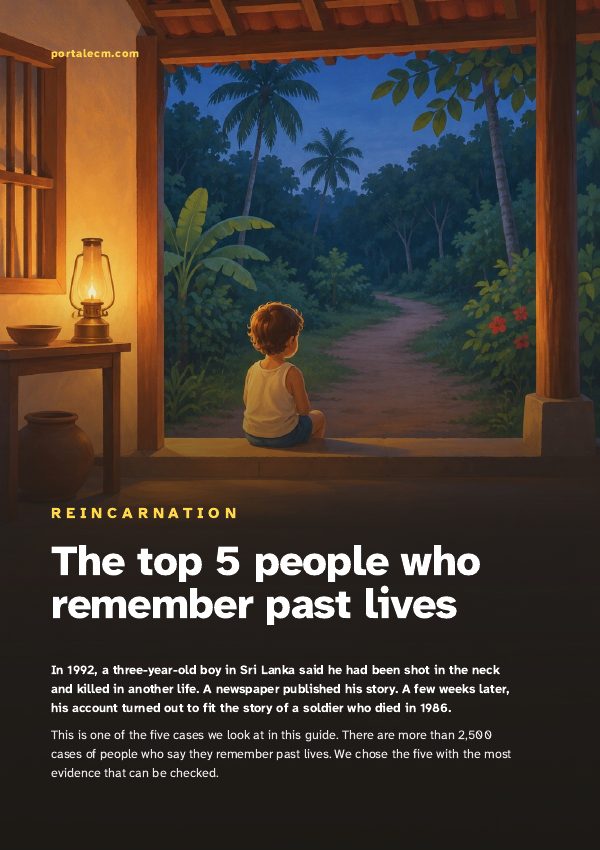
Reincarnation: The top 5 people who remember past lives
We asked them the same five questions as this story. A 32-page PDF, free in your inbox.
Check your email
We have sent you an email. Open it and press the button to confirm. If you cannot see it, check your spam folder.