A real-life story · Charleston, South Carolina, United States, 1991
Mary Helen Hensley’s near-death experience
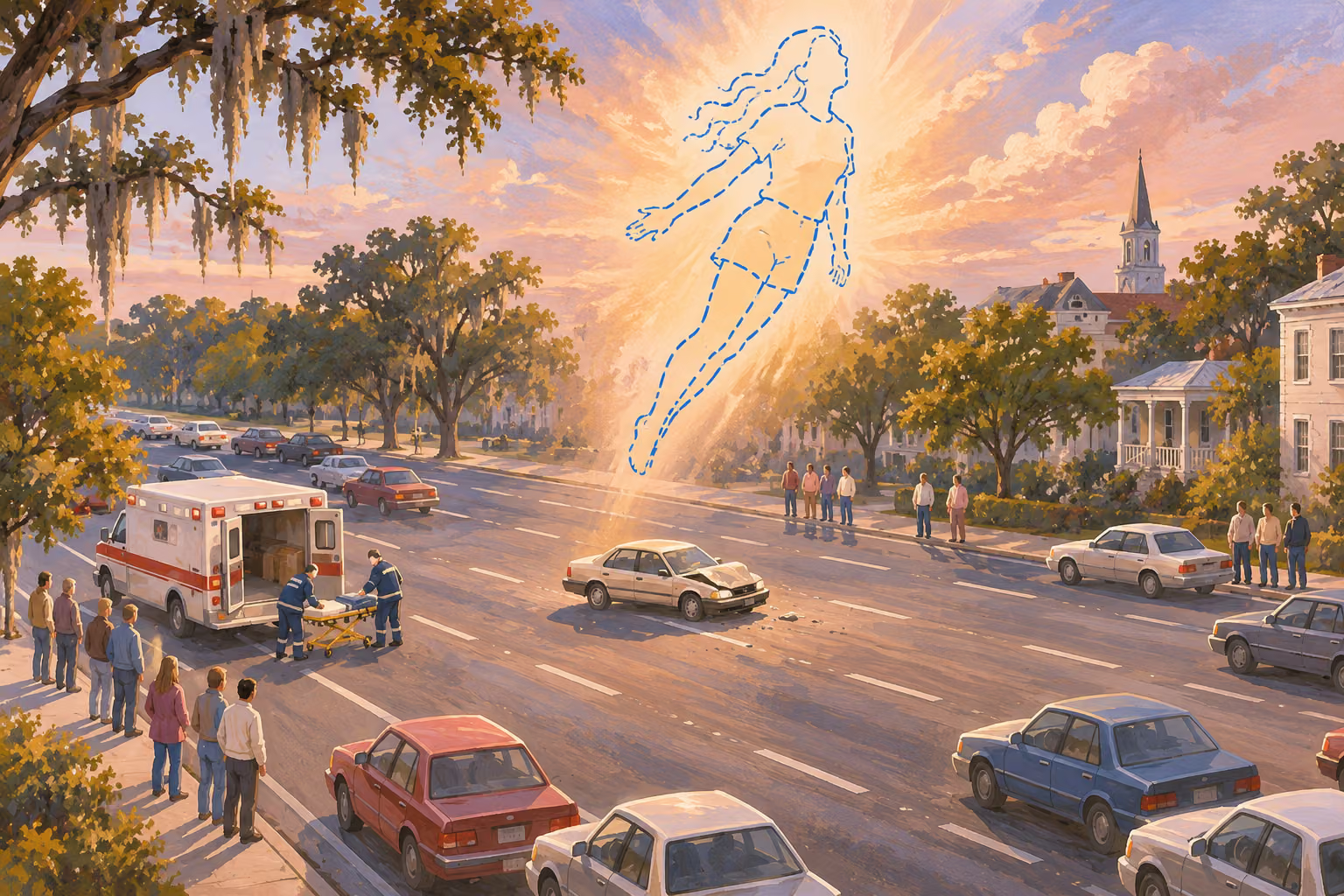
Mary Helen Hensley had just finished college when a car ran a red light and slammed into hers in Charleston, in the United States. It was December 1991, and she broke her neck. She later said she left her body just before the impact and watched the crash from above. From there, she says, she saw a friend waiting in her car at the light, a man in uniform turning off the engine, and a woman leaving a piece of paper with her phone number on the seat. Then two beings showed her her whole life.
Mary Helen says that in the emergency room she told all this to a police officer who had been at the accident. And that he replied she couldn’t know any of it, because it all happened while she was unconscious and trapped in the car. We tell her story step by step in her own words and then look at what can be checked. If you only want the evidence, skip straight to what can be checked. What did Mary Helen Hensley see while her car was being wrecked?
Step 1
December 14, 1991, in the afternoon · Charleston · Mary Helen’s account
A car runs a red light and heads straight for her
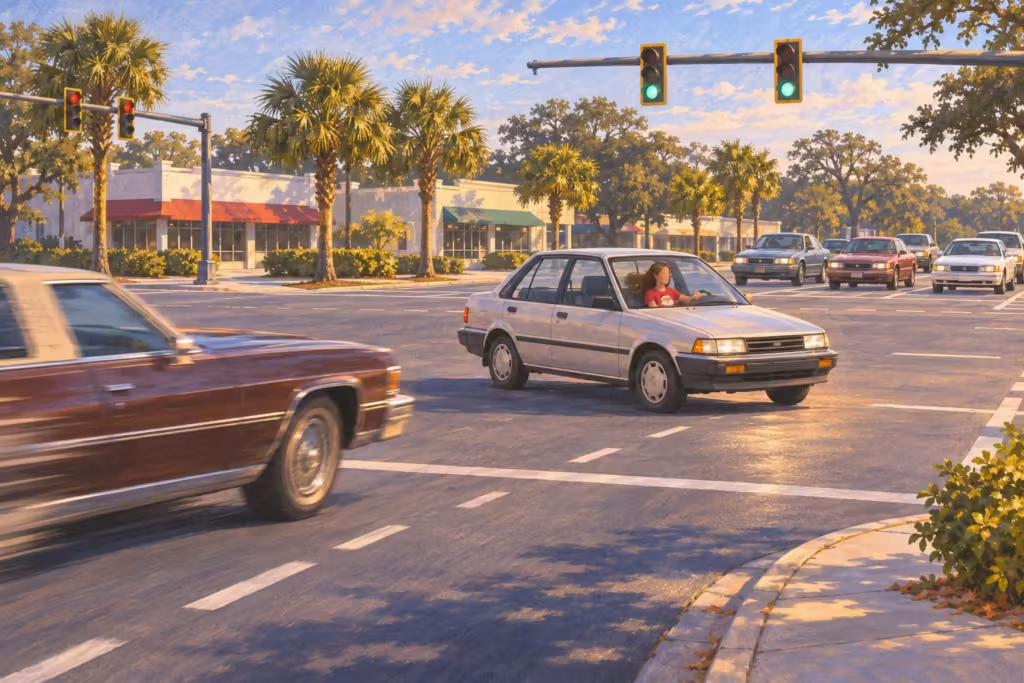
Mary Helen Hensley was the daughter of a Baptist minister from Virginia. She had just finished college in South Carolina and was working for a sign company in Charleston. In her book she says she was two months away from turning 22. But going by the birth date she gives in the same book, February 23, 1969, she was already 22. She says that ever since she was a child she had dreams that came true, and that she talked with her grandfather, who had died when she was a baby.
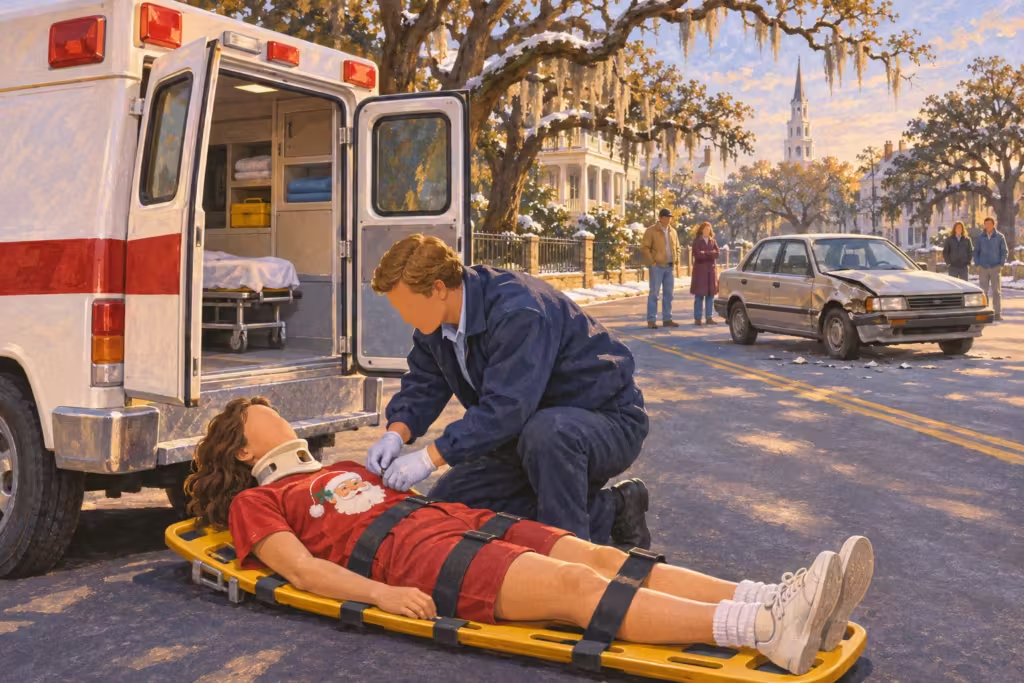
That afternoon she was on her way to her company’s Christmas party. She was wearing a Santa Claus T-shirt, red Bermuda shorts, and a necklace of jingle bells. She stopped at the light on the big highway at the end of her street, Highway 17. When it turned green, she started across the lanes to turn toward downtown.
When she reached the last lane, she looked to her left. A big car was coming very fast and wasn’t going to stop at the red light. It was driven by an 81-year-old man.
Mary Helen says that at that moment time stood still.
Step 2
A moment before the crash · Mary Helen’s account
Mary Helen says she chose to leave her body before the impact
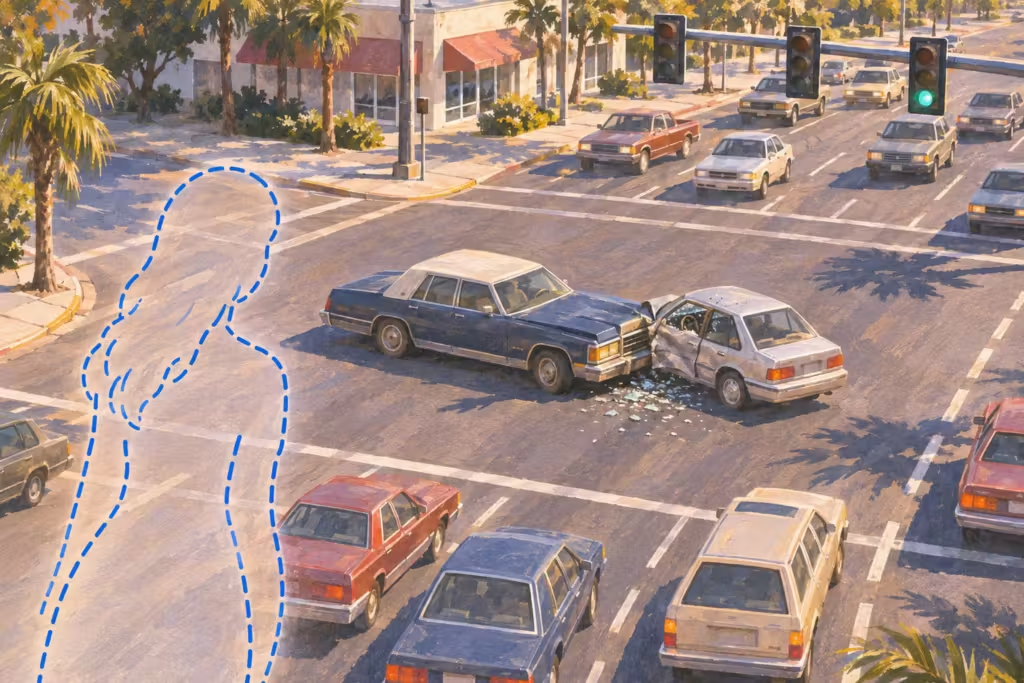
Mary Helen says she wasn’t afraid. She felt she could choose between staying in her body and feeling the impact, or leaving it and not feeling it. It seemed the most natural thing in the world, like something she had done many times before. She chose to leave.
She heard a low buzzing sound and found herself up above, watching. From there, she says, she saw the other car slam into the driver’s side. Her head broke the window, and she heard the bells on her necklace jingle. Her small Toyota Corolla buckled, and the seat folded under her body. The car came to a stop in the middle of the road and blocked all six lanes.
She looked at her trapped body without any sorrow. She compares her body to the dirty clothes you leave by the washing machine before you take a good shower.
Then she noticed what was happening around the car.
Step 3
After the crash · Trapped in the car · Mary Helen’s account
From above, she says she saw her friend, a man in uniform, and a woman with a note
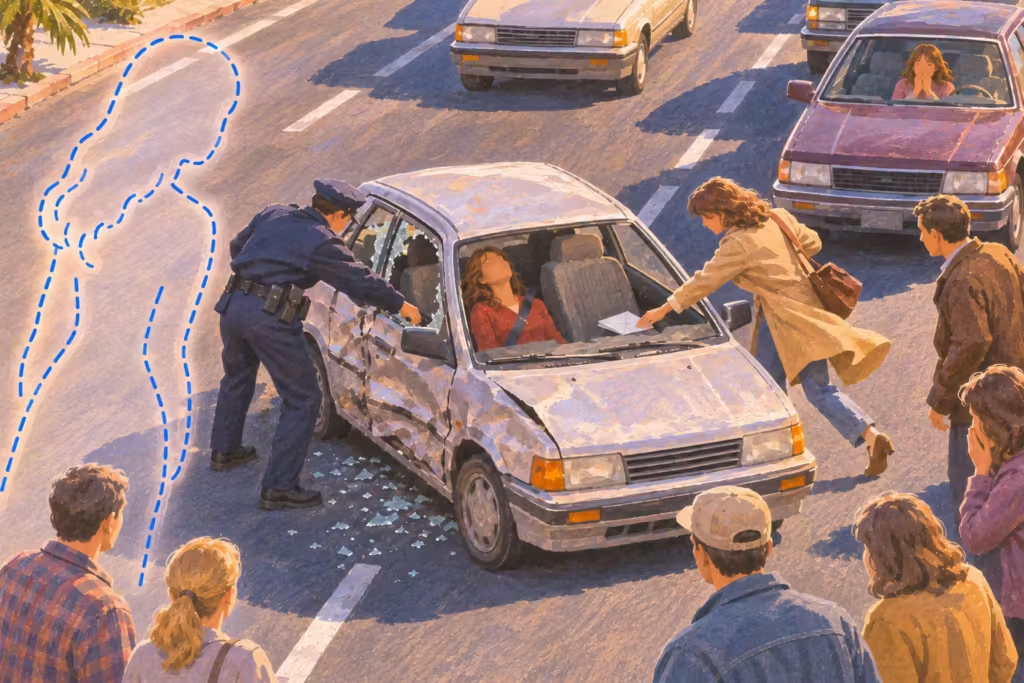
Mary Helen says that a few cars back, at the same light, was a college classmate who lived in Charleston. She saw that her friend was horrified when she recognized Mary Helen’s car. She says she felt what her friend was feeling, as if she were seeing her up close.
Then she saw people arrive. A woman ran up to the car, left a piece of paper with her name and phone number on the passenger seat, and hurried away. A man in uniform reached in through the window and turned off the engine. He tried to get her out, but the left side of her body was pinned between the seat and the door.
According to Mary Helen, her body was still unconscious inside the car.
Then the buzzing changed pitch.
Step 4
While she was still trapped · Mary Helen’s account
Mary Helen says she reached a coppery light, where two beings were waiting for her
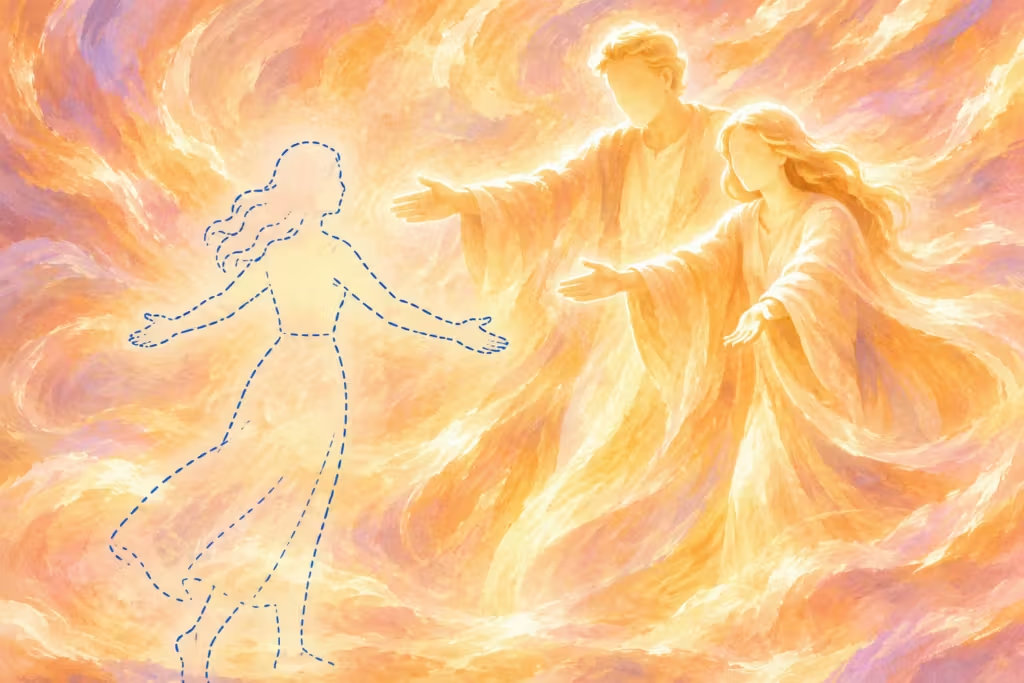
The buzzing turned into beautiful music, which she says she has spent her whole life trying to reproduce. She calls it “the Music of the Spheres.” Suddenly she was somewhere else, in a light of a color that doesn’t exist here. She describes it as coppery and caramel, with a mother-of-pearl sheen.
She says she had no body, but she still had a form, and she knew perfectly well who she was. As a child, she had been afraid that she would stop existing when she died. There, that fear disappeared.
The light took shape in front of her. It was two beings who looked human, dressed in caramel-colored robes that seemed to be part of them. At other times she has described them as two old people, and she says they took that form because she loved old people as a child. They weren’t relatives of hers. At first she didn’t know how she knew them. In the end she felt she had loved them since the beginning of time.
Mary Helen expected to meet Jesus and her grandfather. Neither of them was there.
The two beings showed her her life.
Step 5
While she was still trapped · Mary Helen’s account
Mary Helen says she saw her whole life at once, as if in a 360-degree movie theater
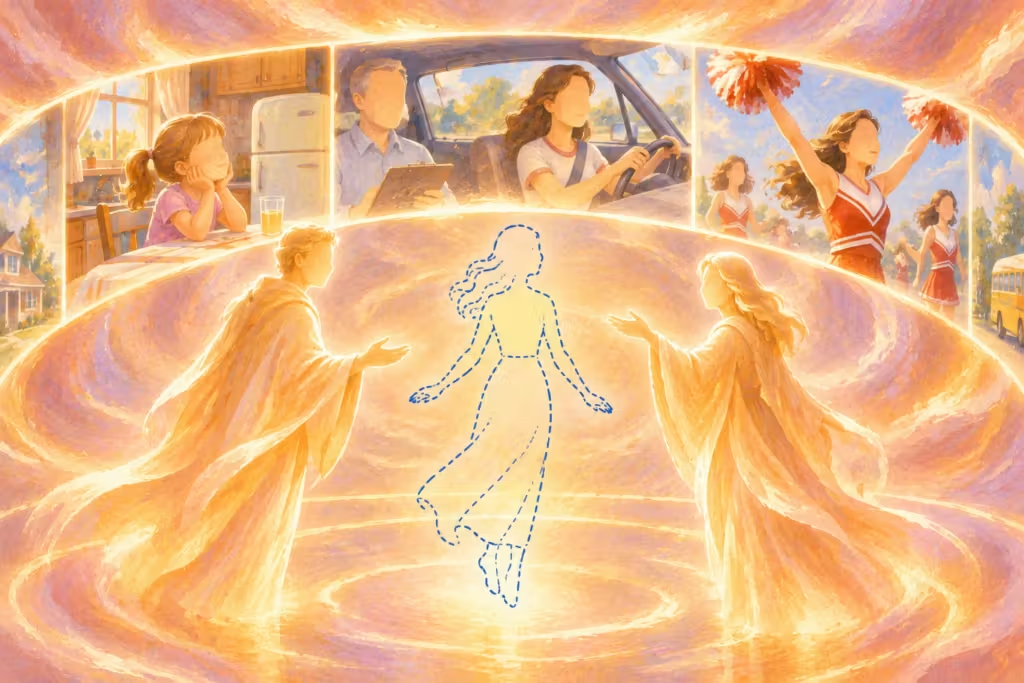
She says a movie screen opened up around her and surrounded her completely. She didn’t see her life in order. She was at the kitchen table at age 4, getting her driver’s license at 16, and in many other moments, all at the same time.
She saw how small kindnesses of hers had changed other people’s lives. And she saw how much harm her thoughtless words had done. She watched herself like an actress critiquing her own performance.
No one judged her. There was no God with a beard, no pearly gates, and none of the hellfire she had heard about in church. She says she understood that the one who had to judge her was herself.
Then she knew she could choose again.
Step 6
On the ground and in the ambulance · Mary Helen’s account
She decides to come back and wakes up on the asphalt in terrible pain
Mary Helen says no one made her come back. She knew her body could be repaired, but that she would come back with many lasting injuries. She liked her life, her family, and who she was, and she felt she wasn’t finished yet. The beings let her understand that if she came back, she would have new gifts.
She heard a deafening noise and felt something suck her back into her body. She compares it to jumping into a swimming pool in snow boots and a coat. She was already out of the car, lying on the asphalt. She doesn’t remember how they got her out.
She says she came to before the ambulance arrived. She tried to stand up and collapsed. She vaguely remembers talking with her boyfriend’s sister, first on the phone and then in person, when the sister got to the scene before they took her away. She says she had scattered moments when she was lucid.
They strapped her to a board to keep her neck and back still. In the ambulance she cried. A woman riding with her stroked her hair and told her they weren’t going to let her die. Mary Helen answered that she had already died.
In the emergency room, when she opened her eyes, she recognized someone.
Step 7
That same day · Hospital emergency room · Mary Helen’s account
She tells a police officer what she saw, and he replies that she couldn’t have known it
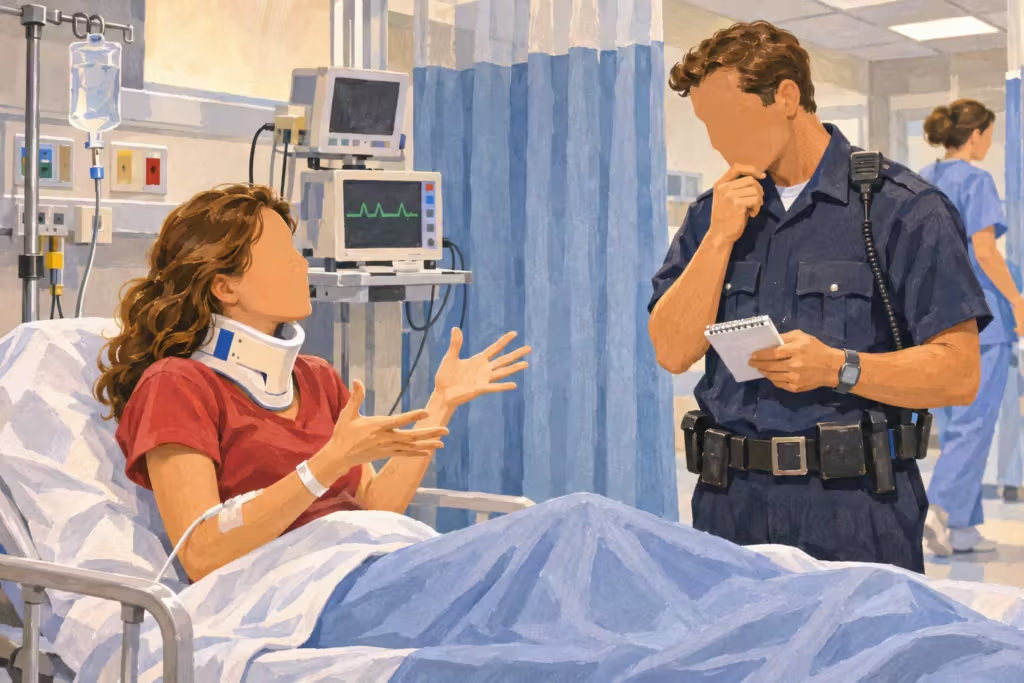
Mary Helen woke up in a curtained bay in the emergency room. Her whole body hurt. Next to the bed stood a police officer, who said in a strong Southern accent, “You’re one lucky little lady.”
She recognized him. “You were at the accident,” she told him. He asked whether she remembered anything that would help him understand how it had happened. Mary Helen told him to talk to her college friend, who had been a few cars back and had seen everything. She asked whether they had found the piece of paper a woman had left on the seat with her name and phone number. And she told him that a man in uniform had turned off the engine.
According to Mary Helen, the officer became very uncomfortable. He asked how she knew about the woman and about her friend, and she told him she had seen them. That is how she tells it in her 2015 book: he replied that there was no way she could have seen any of it, because it all happened while she was still unconscious and trapped in the car. In the end he left the room without another word. In a 2022 interview, Mary Helen adds two things the book doesn’t mention: that this officer was the man who had turned off the engine, and that he closed his notebook before leaving.
That same night she was already home.
Step 8
The years that followed · Mary Helen’s account
She is sent home without an X-ray, and years later she becomes a chiropractor
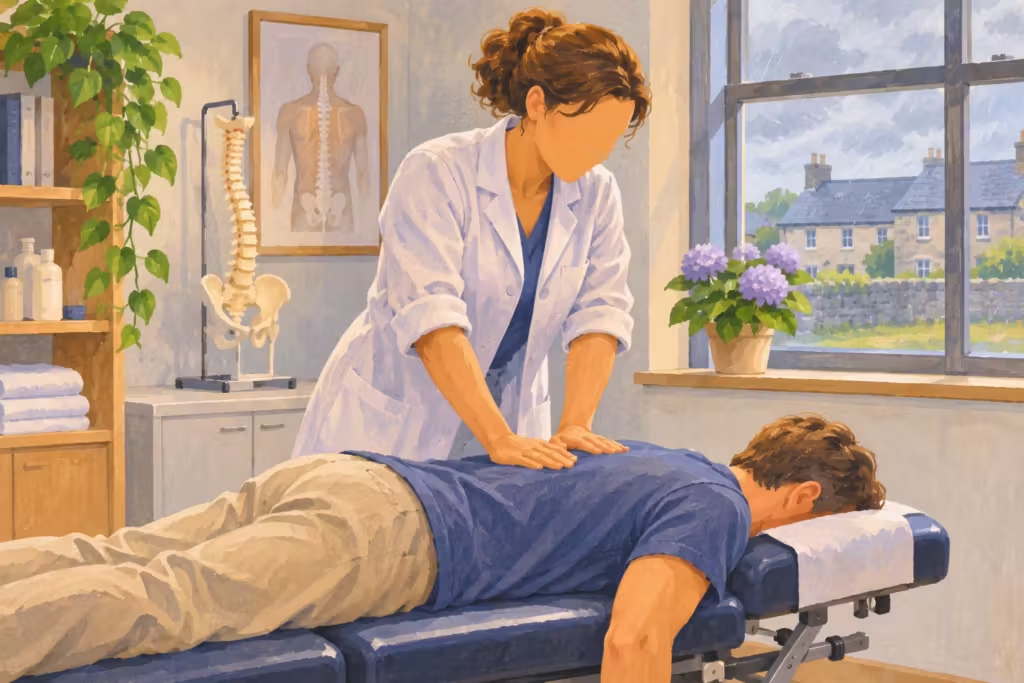
Mary Helen says she was discharged soon afterward, without a scan or an X-ray. Her boyfriend took her home. She told her parents over the phone that she’d had a minor accident.
She says her injuries showed up over time. She had a broken bone in her neck and a twisted spine. She lost much of the hearing in her left ear, and the retina in one of her eyes was damaged.
It wasn’t until 1993 that she told her mother the whole experience. She says that soon after, her late grandfather told her to study chiropractic, and she did. In 1999 she moved to Ireland and opened her practice there. Since then she has told her story in books, on the radio, and in talks.
Can any of what Mary Helen Hensley described be checked?
How many people have an NDE?
Mary Helen Hensley is not a one-off. The most reliable figures come from people who survive a cardiac arrest. For more than thirty years, several teams of doctors have asked them what they remember. They do it in the hospital, a few days afterward.
Picture 100 of those people:
Each dot is a person. The 18 filled-in dots are the ones who described a near-death experience. That is what the largest study found. It was done in the Netherlands in 2001, with 344 people.
The other 82 didn’t describe one. Many remember nothing of their cardiac arrest.
| Where and when | People interviewed | Described an NDE |
|---|---|---|
| England, 2001 | 63 | 6% |
| Netherlands, 2001 | 344 | 18% |
| United States, 2002 | 30 | 23% |
| United States, 2003 | 116 | 10% |
| United Kingdom, United States, and Austria, 2014 | 101 | 9% |
| Vienna, Austria, 2023 | 126 | 4% |
| United States and United Kingdom, 2023 | 28 | 21% |
What these figures don’t tell you
- Only some people are asked. In the 2014 study, 330 people survived, but only 140 could be interviewed, and 101 reached the second interview. The rest died later, were too ill, or didn’t respond.
- Most cardiac arrests are never counted. These studies run in a few hospitals for a limited time. Outside them, no one keeps track. Also, the 2003 study interviewed 1,595 cardiology patients, not just the 116 with cardiac arrest in the table, and 81 of them described an NDE from an earlier occasion. The study did not count them, because it only counted those from that hospital stay.
- Some people keep quiet. In the accounts in our archive, at least 13 people say they kept their experience to themselves for a while. They kept quiet because they weren’t believed or because they were afraid of how others would react.
- It depends on how you count. If you count any memory of the cardiac arrest, the numbers go up. If you use a strict scale, they go down. In England in 2001, 7 of 63 people remembered something. But on the scale, only the memories of 4 people qualified as an NDE.
That’s why no one knows the real figure. But every study shows that it isn’t rare. Between 4 and 23 of every 100 survivors who are asked describe an NDE. Mary Helen Hensley doesn’t describe a cardiac arrest. She had her experience in a car accident.
Frequently asked questions
Who is Mary Helen Hensley?
Mary Helen Hensley is an American chiropractor who has lived in Ireland since 1999. In 1991, just out of college, she was in a serious car accident in Charleston, South Carolina. She says she had a near-death experience, and she has told it in several books, such as “Promised by Heaven” (2015).
What did Mary Helen Hensley see in her near-death experience?
Mary Helen Hensley says she left her body just before the crash and saw the accident from above. Then she reached a coppery light where two beings were waiting for her. There she saw her whole life at once, as if in a 360-degree movie theater. She says she chose to come back.
What did the police officer tell Mary Helen Hensley in the emergency room?
Mary Helen Hensley says she told the police officer about her friend, about a woman who left a note, and about a man who turned off the engine. According to her, the officer told her she couldn’t have seen it, because all of that happened while she was unconscious and trapped in the car. The officer is not named and has not said anything on his own. Here we explain what can be checked.
Where this story comes from
Her book
- Mary Helen Hensley, Promised by Heaven (Atria Books, 2015). It brings together her two books published in Ireland, Promised (2009) and Circles of Light (2010)Buy the book
Interview
- Next Level Soul Podcast with Alex Ferrari, August 23, 2022View
Press
- “Out of the ordinary,” Westmeath Independent (Ireland), December 1, 2010. The oldest version we haveRead
- Adam Parker, “How a terrible car accident in Charleston opened the door to a new realm of healing power,” The Post and Courier, July 25, 2019, partly paywalledRead
Learn more
- What is a near-death experience?Read
Our archive
- Our reading of her 2015 book, the 2022 interview, and the 2010 and 2019 articles, and the scoring against our five criteria, as of November 18, 2026
Keep reading
Málaga, Spain, 2007
Miguel Ángel Pertierra
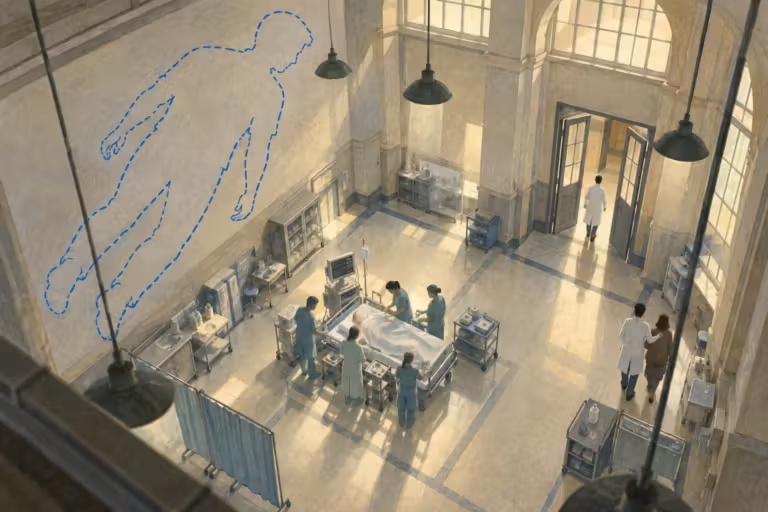
A doctor says that after an accident he saw himself from the ceiling of his own hospital’s ER. He also says he saw the on-call colleague walk in. He says he later checked for himself that what he saw was real.

Austin, 1977
Gary Wimmer
In 1977, a car hit Gary Wimmer and he got up without a scratch. Gary says he saw the future, and that in 2001 he recognized the attack on the Twin Towers on television.

Colorado, United States, 2014
Nancy Rynes
Nancy Rynes, a technical writer and an atheist, was left with 24 broken bones after being hit on her bike in 2014. She said that during her surgery she reached a meadow where a teacher showed her how to look at her life. Years later she said she knew, without anyone telling her, that a faraway friend was pregnant.
Reincarnation: The top 5 people who remember past lives
We asked them the same five questions as this story. A 32-page PDF, free in your inbox.
Check your email
We have sent you an email. Open it and press the button to confirm. If you cannot see it, check your spam folder.