A real-life story · Ireland and Australia, 1891
William Little’s dream: he saw his friend in Ireland dead and told him so in a letter, not knowing he had died. A shared-death experience
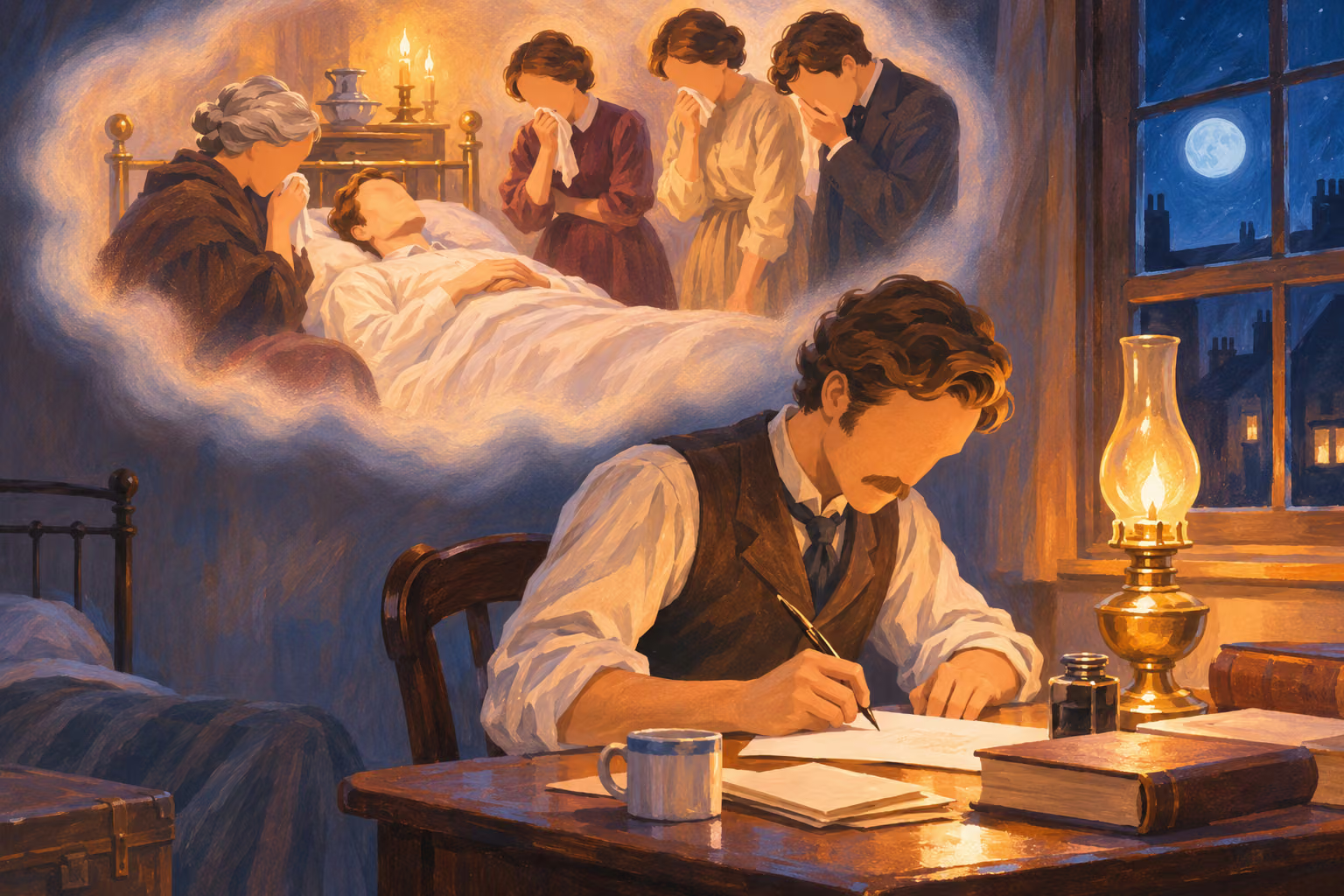
In 1891, William Little was living in Melbourne, in Australia. His childhood friend, James Croom, died in Ireland in January, and William didn’t know. Weeks later, one night, William dreamed that James was lying dead on a bed, with his family crying around him. In April, he wrote James a letter and told him about the dream.
This case is different from almost all the others, because the dream was written down in a postmarked letter before William Little knew anything. The letter was addressed to the dead man himself, and his family kept it. We tell the story step by step and then look at what can be checked. How did William Little know who was standing by his friend’s bed?
Step 1
Years before 1891 · Derry, in the north of Ireland · Told by W. Croom, James’s brother, and William Little
William Little spends almost every evening at the Crooms’ house in Derry
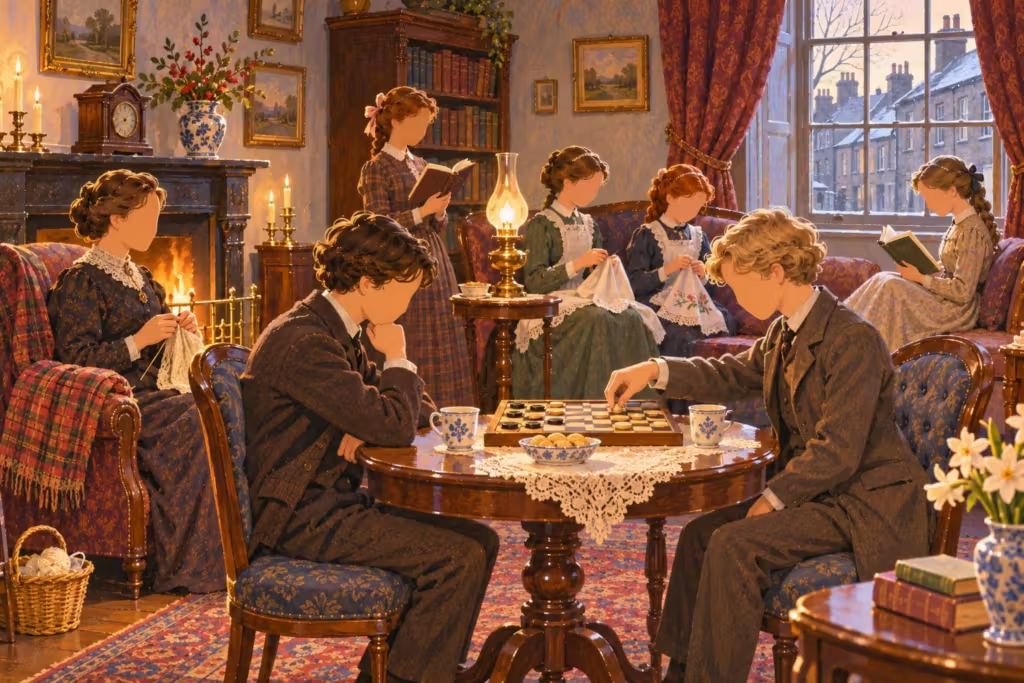
William Little and James Croom went to school together in Derry, a city in the north of Ireland that is also called Londonderry. According to W. Croom, James’s brother, William spent almost every evening at their house.
The Croom family was a big one. James had a brother, W. Croom, and six sisters. He had suffered from asthma since he was a child, and he was often ill.
One day, William left Derry to look for work.
Step 2
A few years before 1891 · From Ireland to Australia · W. Croom’s account and William Little’s letter
William goes away to work, loses touch with the Crooms, and ends up in Melbourne

William wasn’t doing as well in Derry as he wanted. He found a job in Armagh, another city in the north of Ireland, and after a year or two the Crooms lost track of him. They no longer wrote to each other.
Years later, William crossed the ocean and settled in Melbourne, in Australia. James’s brother says his family had heard nothing of him for years, and didn’t know he was in Melbourne.
Between Ireland and Australia, a letter took more than a month.
Step 3
January 8, 1891 · Derry · The death record and W. Croom’s account
James Croom dies at his home in Derry, with his mother, his brother, and two sisters in the room
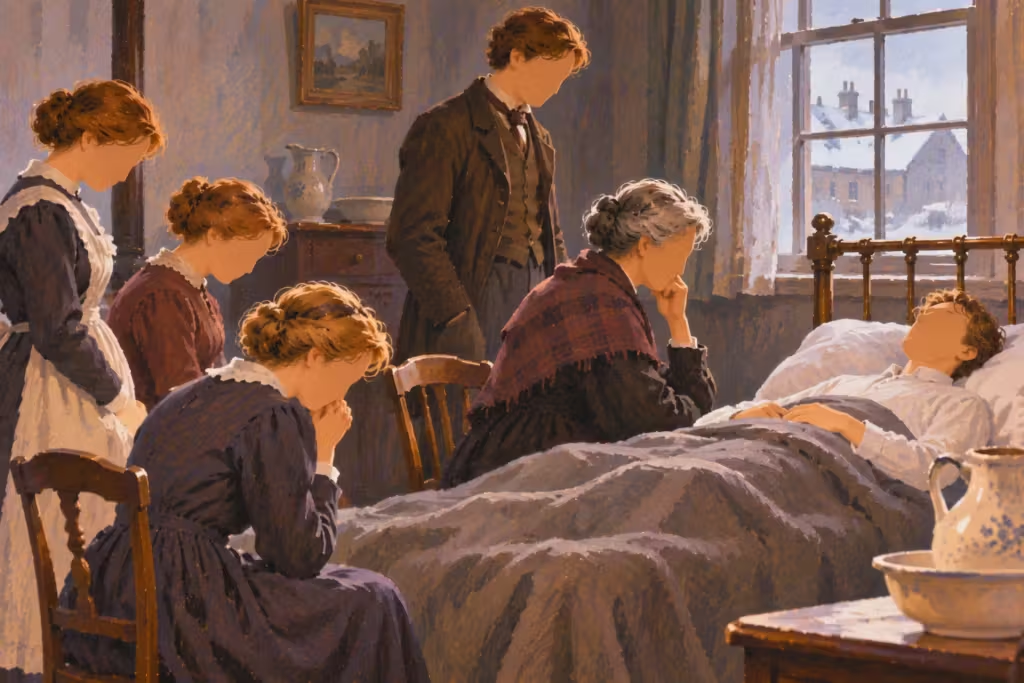
James Croom died on January 8, 1891, at his home on Nicholson Terrace, in Derry. He was 32 and an architect. According to the civil death record, he died of the asthma he had had since childhood and of tuberculosis he had been living with for three or four years.
According to his brother, the only people in the room were their mother, himself, and two of the six sisters. The death record gives another name. The person who registered the death was a sister called Lily Croom, and the record says she was present.
In Melbourne, William Little knew nothing about it.
Step 4
Early February 1891, as he remembers it · Melbourne · William Little’s account
William dreams that James is lying dead on a bed, dressed in white, with his family crying around him
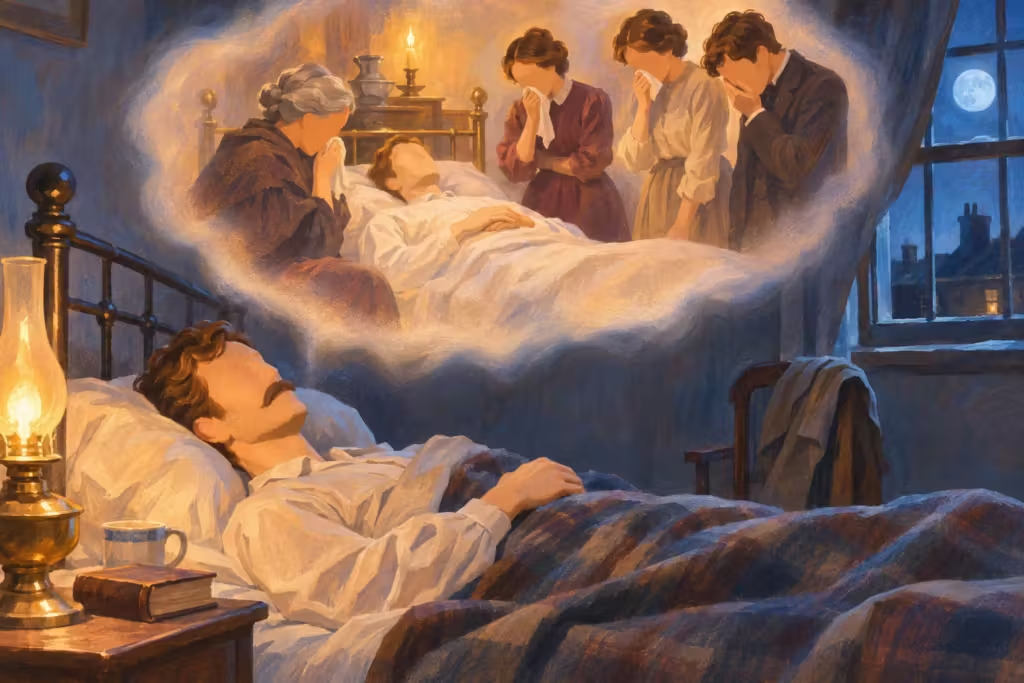
One night, William dreamed about James. He saw him stretched out on a bed, all dressed in white. Standing around him and crying were his mother, his brother Willie, and two of his sisters, Jessie and Mary. From what the family said later, Willie was his brother, W. Croom.
A year later, William said the dream came in early February, around the first five days of the month. He admits he isn’t sure of the date, because he didn’t write it down at the time. He didn’t tell anyone about it either.
If his memory is right, James had been dead for almost a month.
Step 5
February 19 to March 25, 1891 · From Derry to Melbourne · The envelope and William Little’s account
William’s mother writes to him with the news, and the letter sits waiting at a cousin’s house
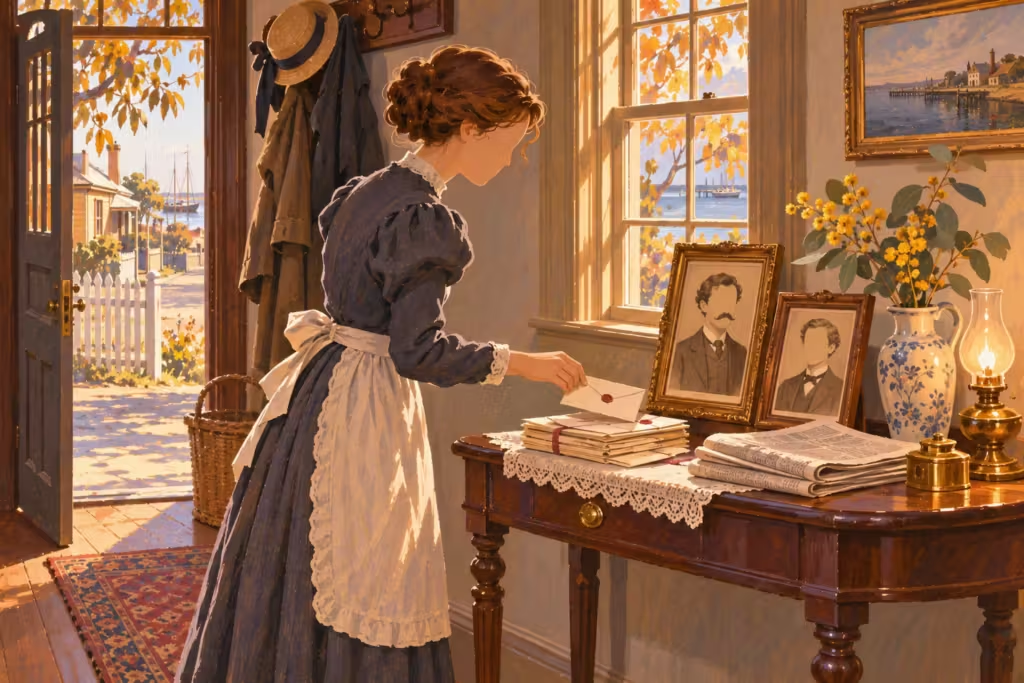
William’s mother wrote to him from Ireland to tell him that James had died. The envelope has two postmarks: Londonderry, February 19, 1891, and Melbourne, March 25.
William had given his cousin Annie Lingley’s house in Williamstown, near Melbourne, as his address. The letter stayed there, with other letters and newspapers, because he didn’t go to pick it up.
On April 10, William sat down to write to James.
Step 6
April 10, 1891 · Melbourne · William Little’s letter
William writes James a long letter and, at the end, tells him about the dream
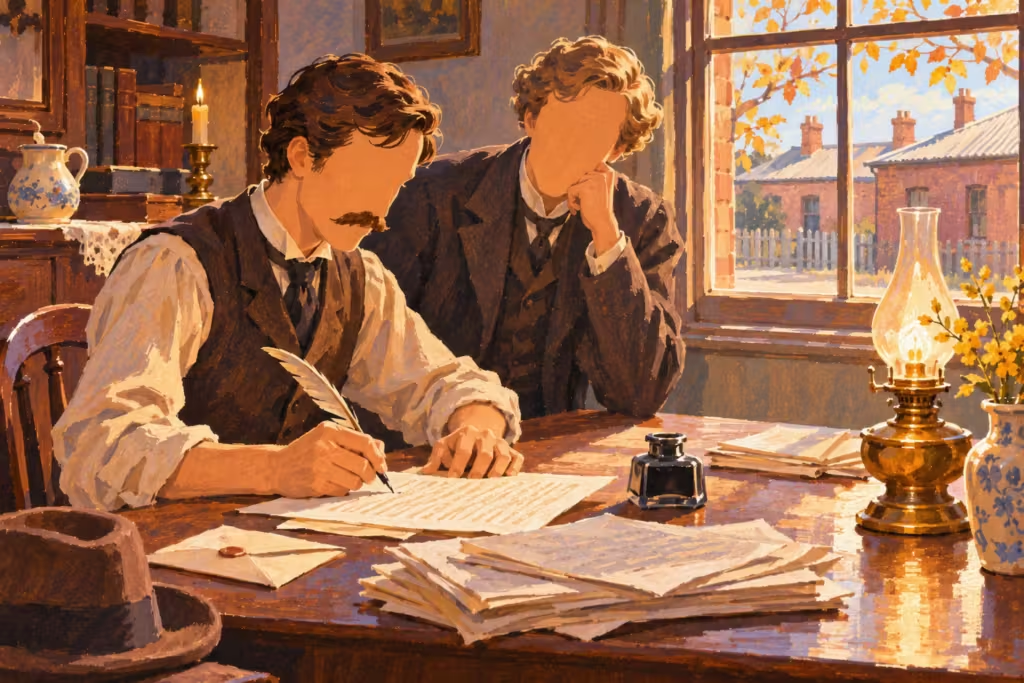
William wrote to James at his home in Derry, as if he were alive. He called him by a nickname from their school days, “Dubose.” He told him why he had left Armagh, what the voyage out had been like, and how things were going for him in Melbourne. The letter ended like this:
“So good-bye, Dubose, until we meet, but I am afraid never, as I thought I saw you dead, as I had a dream one night and saw you stretched out on a bed all dressed in white, and your mother, Jessie, Willie and Mary all standing round you crying. I do not believe in superstition, but I saw the picture before my eyes, as plain as I see the paper I am writing on; but of course it was only a dream and a fancy of the mind recalling old associations.”
The envelope has a Melbourne postmark of April 15, 1891.
On April 18, his cousin sent him a note.
Step 7
April 18 and 19, 1891 · Williamstown · The cousin’s note and William Little’s account
His cousin tells him she has letters for him, and William learns that James has died
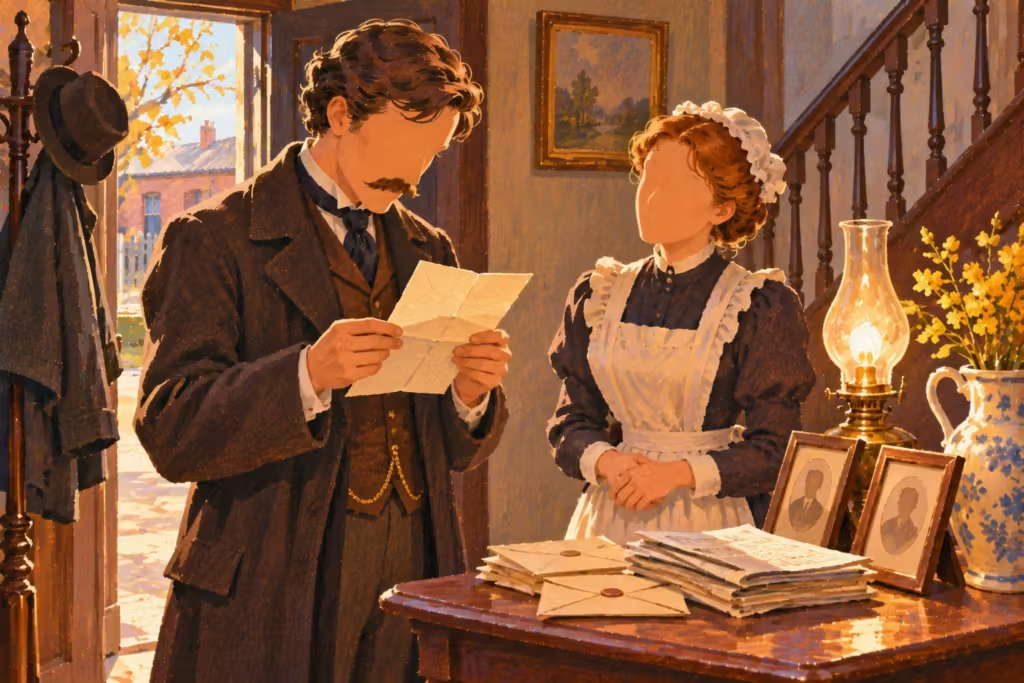
On April 18, his cousin wrote him a note. She asked him to come and pick up the letters, newspapers, and portraits that had been at her house for three weeks. William says he went the next day, April 19. Among those letters was his mother’s, with the news.
William kept his cousin’s note and his mother’s envelope. Later he sent them to some researchers in London.
His own letter, meanwhile, was on its way to Derry.
Step 8
1891 to 1893 · Ireland, Australia, and London · Told by W. Croom, William Little, and the journal of the Society for Psychical Research
James’s family reads the letter, and the case reaches some researchers in London
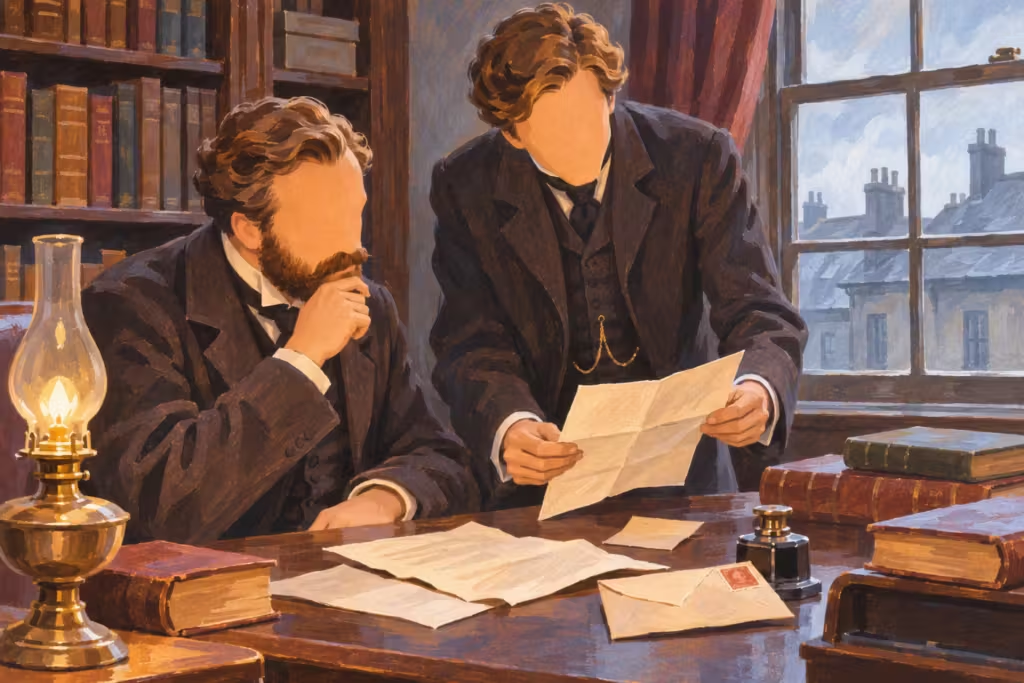
William’s letter arrived at the house in Derry, addressed to James. According to his brother, it caused a good deal of surprise among the family’s friends. The Society for Psychical Research in London, which collected cases like this, heard about it through a friend of the Crooms.
In January 1892, James’s brother wrote to them. He said the description of the death was “quite correct.” And he said that, of his six sisters, only the two that William names were in the room, with their mother and himself.
In March 1892, William told the dream again, from memory, for the researchers. This time he spoke of James’s mother and sisters, “Jessie, Bella, Nelly, and the rest,” and said he believed the brother was there too. He said that, seeing the worried faces, he thought James was ill with asthma, not dead. And that something prompted him to write that they would never see each other again.
The researchers published the case in their journal in May 1893. They pointed out that, in the second version, William added more people, and that this might be a lapse of memory.
The question remains: how did William Little know who was standing by his friend’s bed?
Where this story comes from
Journals
- “G. 235. Dream,” Journal of the Society for Psychical Research, volume VI, May 1893, pages 84–85. It includes William Little’s letter, the 1892 letters from W. Croom and William Little, the cousin’s note, and the postmarksRead for free
Case documents
- James Croom’s death record, Irish civil registration, City of Derry No. 2, 1891, entry 391View the record
- William Little’s letter of April 10, 1891, with a Melbourne postmark of April 15, which the researchers saw
- The envelope of the letter from William’s mother, with postmarks from Londonderry, February 19, and Melbourne, March 25, 1891, and his cousin’s note of April 18
Learn more
- Andrew Jukes: a voice written down in a diary before two deaths happenedRead
- More shared-death experiencesRead
Our archive
- Our full reading of the case and its scoring against our five criteria, as of November 20, 2026
Keep reading
India, 1868
Vicary Boyle
In 1868, in India, Vicary Boyle dreamed of his father-in-law lying pale in a bed in Brighton and wrote it down in his diary. His father-in-law had died that same day, a few hours earlier.

England, 1882
Miss L. B.
One morning in 1882, a girl of about 14 saw a neighbor who had gone to Texas. She made some marks in her diary. Weeks later she learned that he had been found dead there.
England, 1885
Mrs. Humphry
She dreamed that someone told her, “Mr. John Jarvis is dead,” and told another servant. Five days later she learned that John Jarvis had died in the early hours of that same night.

Reincarnation: The top 5 people who remember past lives
We asked them the same five questions as this story. A 32-page PDF, free in your inbox.
Check your email
We have sent you an email. Open it and press the button to confirm. If you cannot see it, check your spam folder.