A real-life story · England, 1882
The morning a 14-year-old girl saw a neighbor who had died in Texas: a shared-death experience
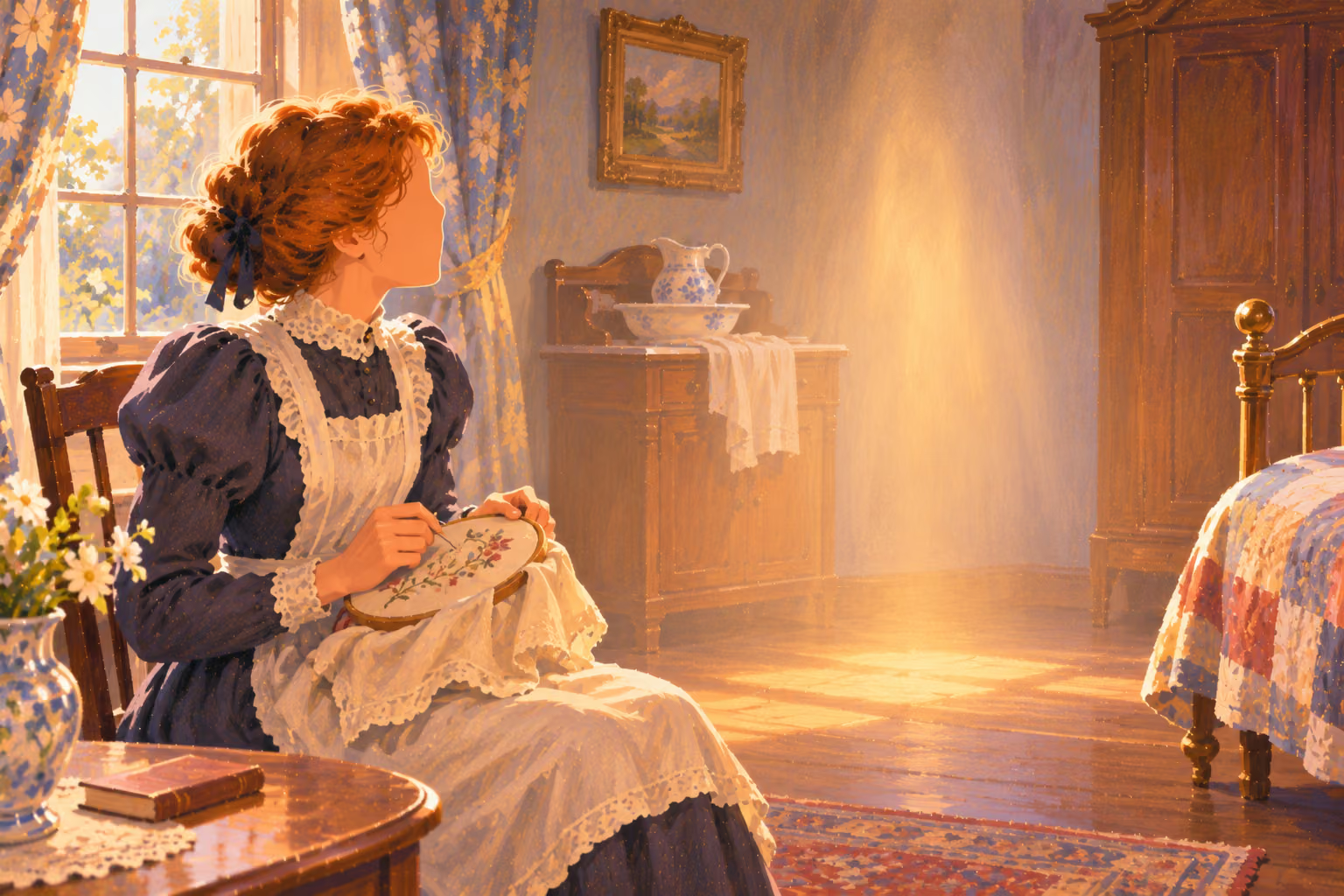
In September 1882, a girl of about 14 was on vacation in Gloucestershire, England. She signed only with her initials, L. B. One morning she got up early to embroider a present with her sister. She looked up and saw a young neighbor who had gone to Texas standing in front of her. He vanished at once. Weeks later they learned that he had been found dead there.
It is one of the cases in the Census of Hallucinations, a large survey carried out in England and published in 1894. It has something that almost no other case of the time has. According to her and her sister, she made some marks in her diary that same day, before she knew anything about the death. A researcher saw that diary eleven years later. Do the marks match the day that neighbor died?
Step 1
Late August 1882 · L. B.’s account
A young neighbor leaves for Texas to learn farming

L. B. was 14 and was studying painting. Every summer, the whole family went away on vacation. In late August 1882, just as they were leaving, a neighbor of about 19 left for Texas. He was going to the United States to learn to work on a farm.
She hardly knew him. According to the researcher who spoke with her later, they had perhaps talked once or twice. But L. B. was sorry to see him go. She wanted to paint well enough, by the time they got back from vacation, to ask him to sit for a picture.
The family spent those weeks in a country cottage in the west of England.
Step 2
Around September 14, 1882 · L. B.’s account
The two sisters spend a day and a night distressed by a sound
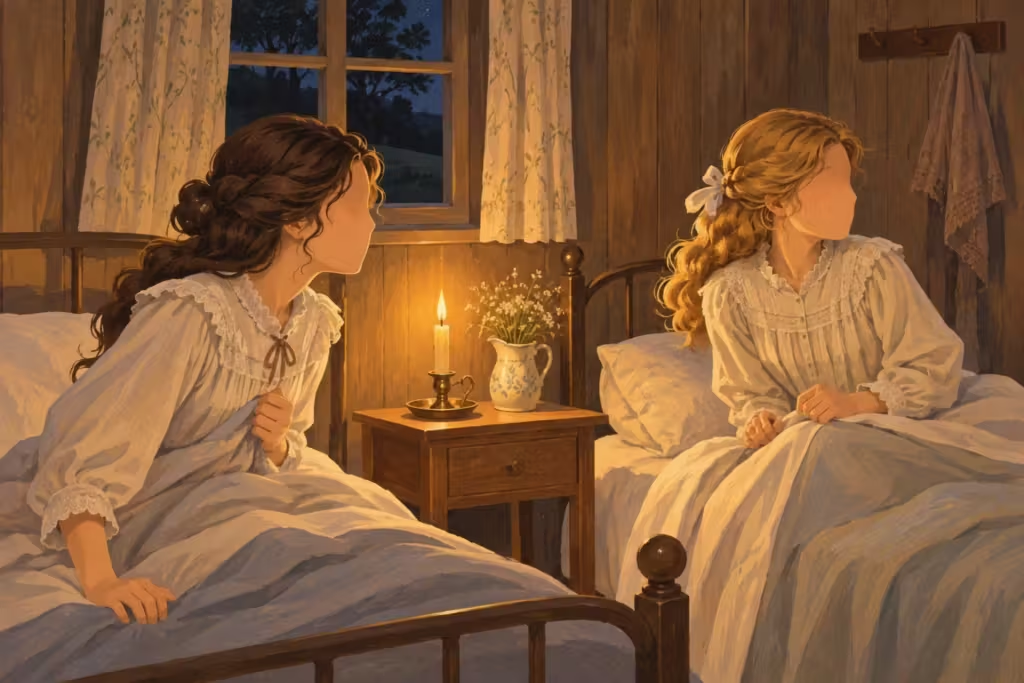
L. B. and her sister shared a room. Around September 14, for a whole day and a whole night, they heard the tapping of the “death watch.” That was the name in England for the sound of a wood-boring beetle. Popular belief said it foretold a death. Both sisters were worried and sad.
The next morning they got up earlier than usual.
Step 3
The next morning, around 6 a.m. · L. B.’s account
While embroidering a present, L. B. sees the neighbor standing in front of her

They got up around six to finish some presents for their mother’s birthday, which was on October 4. While they were embroidering a cushion and talking, L. B. looked up. The neighbor was standing in front of her, looking at them.
She turned to her sister, who saw nothing. She looked again, and he was gone.
The two agreed not to tell anyone. L. B. wanted to write it down in her diary, which she hadn’t used for some time, but she was afraid to put it in writing. So she made some marks to help her remember.
Some time later, news came from Texas.
Step 4
October 1882 · L. B.’s account
The sisters learn that the neighbor was found dead in the woods in Texas

Some time later they learned that the neighbor had been found dead in the woods in Texas. He had arrived there only a day earlier. L. B. says they didn’t know whether he had taken his own life or had been killed. According to the researcher who spoke with her later, he had been murdered.
According to L. B., when she looked at her diary, her marks matched the date of the death. She didn’t tell her parents until years later.
Eleven years later, a researcher went to see that diary.
Step 5
April 8, 1893 · The researcher Frank Podmore’s account
The researcher finds three marks in the diary, under the 14th, the 15th, and the 16th

Frank Podmore was one of the researchers on the Census of Hallucinations, a large survey by the Society for Psychical Research in London. On April 8, 1893, he visited the two sisters. He saw the cushion they had been embroidering that morning. The sister confirmed everything L. B. said.
He looked at both diaries. In the sister’s diary, the entry for September 15, 1882, read: “Up at 6.30 a.m. working at present.” In L. B.’s diary, the last part of the year was almost entirely blank. There were only three small marks, one under September 14, another under the 15th, and another under the 16th.
Neither sister remembered the exact date of the death, but they knew it had been in the newspaper. The researchers looked it up in the “Standard” of October 9, 1882. The neighbor had died on September 14.
Did L. B. see the neighbor on the same day he died?
Where this story comes from
The articles
- Henry Sidgwick, Alice Johnson, Frederic Myers, Frank Podmore, and Eleanor Sidgwick (1894), “Report on the Census of Hallucinations,” Proceedings of the Society for Psychical Research 10, case 442.17, pages 213 and 214, in the public domainRead for free
Case documents
- L. B.’s account, sent in September 1893, in the report
- Frank Podmore’s notes from his visit on April 8, 1893, with what he saw in the two diaries, in the report
- The news of the death in the “Standard” of October 9, 1882, quoted in the report
Learn more
- The 1894 Census of Hallucinations: what they asked and what they foundRead
- More shared-death experiencesRead
Our archive
- Our reading of the case in the original report and its score on our five criteria, as of November 16, 2026
Keep reading
London, 1882
Bruce’s brother
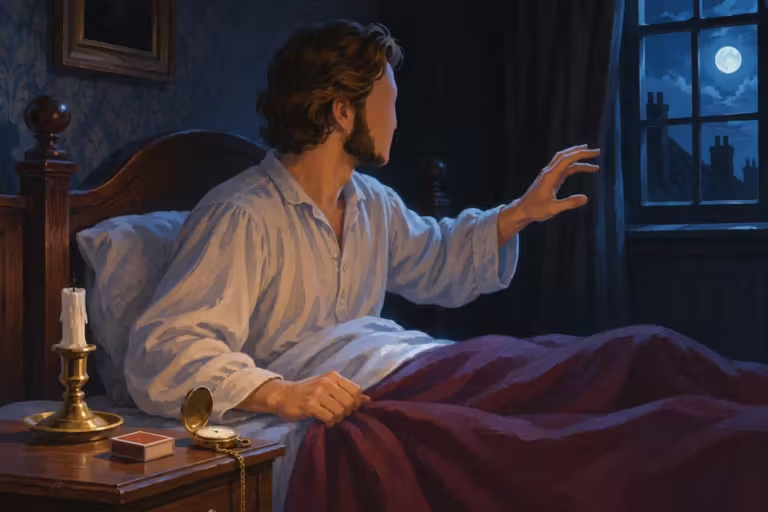
On the night of April 10, 1882, a London man woke up sure that his friend Bruce’s father had died, and wrote it down with the time. Four days later he learned that Bruce’s brother had died, in China.
Ireland and Australia, 1891
William Little
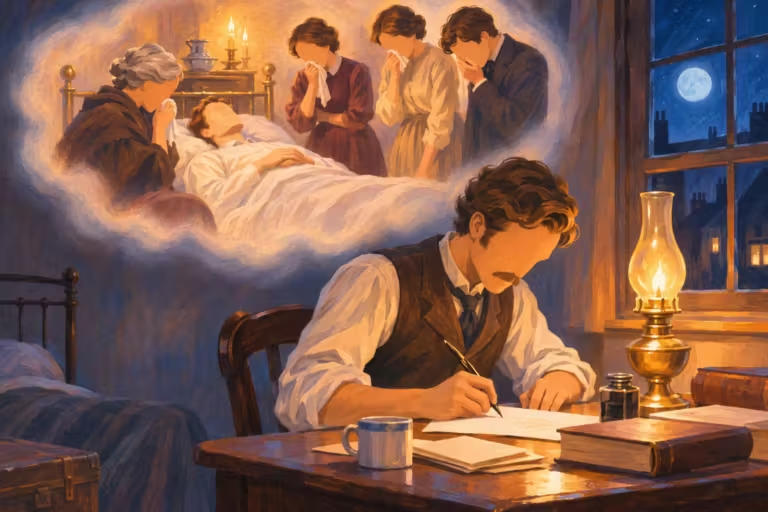
In 1891, in Melbourne, William Little dreamed that his friend James Croom lay dead in Ireland, with his family crying around him. He told him so in a letter. James had died in January.
England, 1882
Young Tracy
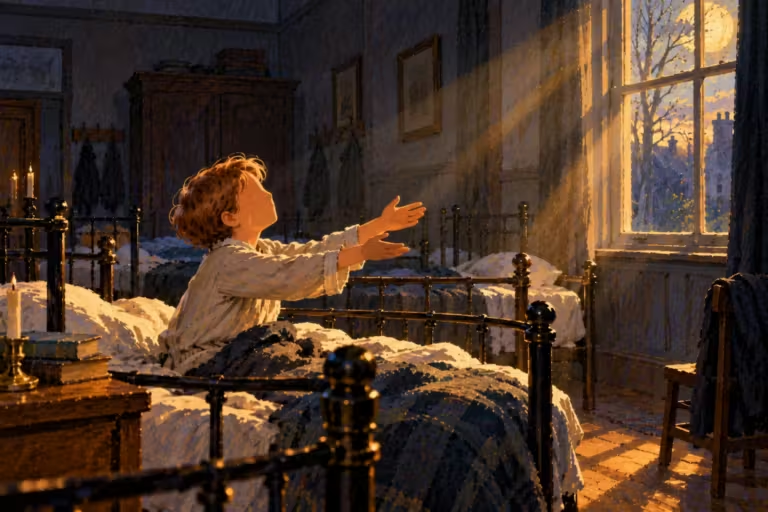
A nine-year-old blind boy was living at a boarding school far from home. He dreamed that his mother had died on the same night she died suddenly. The letter came two days later.

Reincarnation: The top 5 people who remember past lives
We asked them the same five questions as this story. A 32-page PDF, free in your inbox.
Check your email
We have sent you an email. Open it and press the button to confirm. If you cannot see it, check your spam folder.