A real-life case · England and Ireland, 1953 to 1993
Jenny Cockell and Mary Sutton: the Irish mother she said she remembered
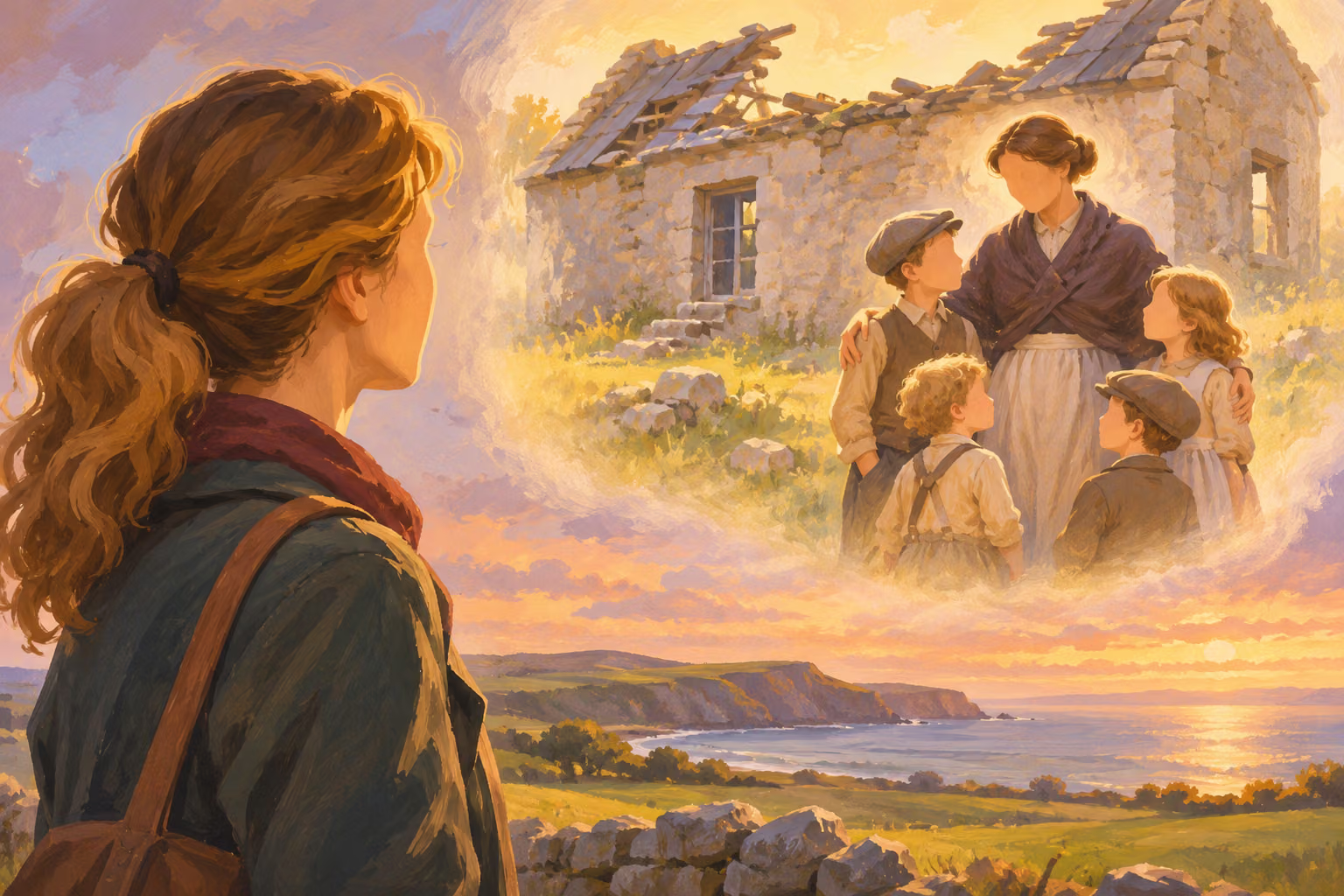
Jenny Cockell was born in England in 1953. From childhood, she said she remembered the life of Mary, an Irish mother who died young and left her children behind. As an adult, she used maps, hypnosis, and letters to look for her. In 1990, she found Mary Sutton, who had died in 1932 near Dublin, and her children, who were by then elderly.
It is one of the best-known reincarnation cases in the world. Jenny told it herself in a 1993 book, and that same year a British TV channel filmed her meeting with Mary’s children. Her case is different from almost all the others. No outside researcher investigated it. She did it herself, as an adult. We tell it step by step and then look at what can be checked. If you only want the evidence, skip straight to what can be checked. How did she know what she said about an Irish family she had never met?
Step 1
The 1950s and 1960s · England · Told by Jenny
An English girl dreams that she dies far from her children
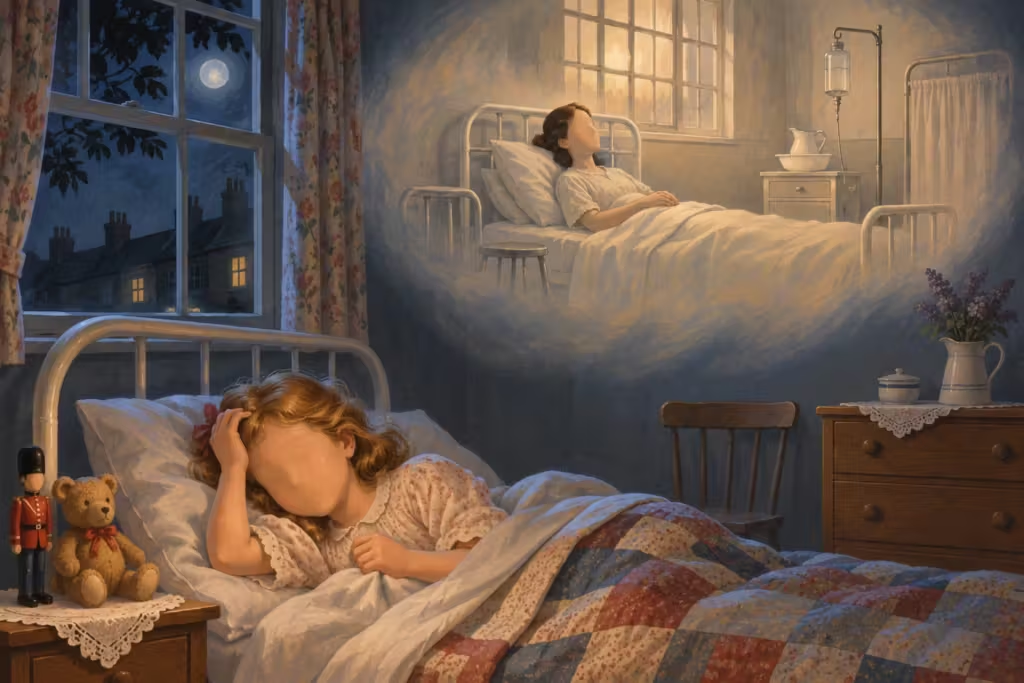
Jenny Cockell grew up in the south of England. She says that as a child she had a dream that kept coming back. In the dream, she was a woman called Mary who was dying alone in a white room, feverish and short of breath. What hurt most was leaving her children.
She also had memories during the day. She saw the children, seven or eight of them, and a blonde girl with blue eyes. She saw a small stone cottage with a sagging roof, the first one on a lane, with a vegetable garden behind it. She saw herself at dusk on a small wooden jetty, waiting for a boat. She says she knew it was Ireland and that the time was roughly from 1898 to the 1930s. And she felt that something was wrong in that family, without knowing what.
She says that before she was four, she asked her mother why they never talked about “our other lives.” For years, only her mother knew about Mary.
As soon as she could hold a pencil, she began to draw the village.
Step 2
Childhood and 1980 · England · Told by Jenny
She draws the village again and again and picks Malahide in a school atlas
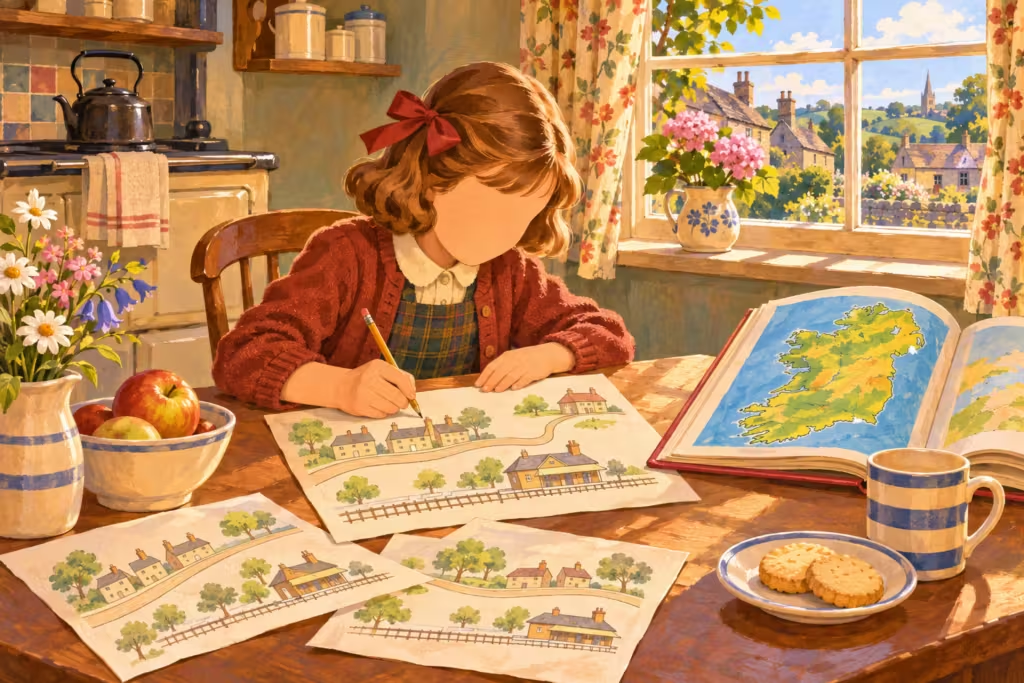
Jenny drew maps of Mary’s village. She put the shops on a street running north to south, a small church, some wooden gates, the station a little apart, and Mary’s house outside the village. A road led to a big city.
She says that one day she opened her school atlas at the page for Ireland. She closed her eyes several times, let herself be guided, and always came back to the same spot on the map: Malahide, a village north of Dublin.
In 1980, by then married, she ordered a map of that area from a bookshop. According to her, the bookseller helped her compare it with her drawings. The roads, the station, and the road to Dublin were where she had put them.
Even so, she was missing the main thing: who Mary had been.
Step 3
1988 · Northampton, England · Told by Jenny
She tries hypnosis, and new details come out, along with names that don’t fit
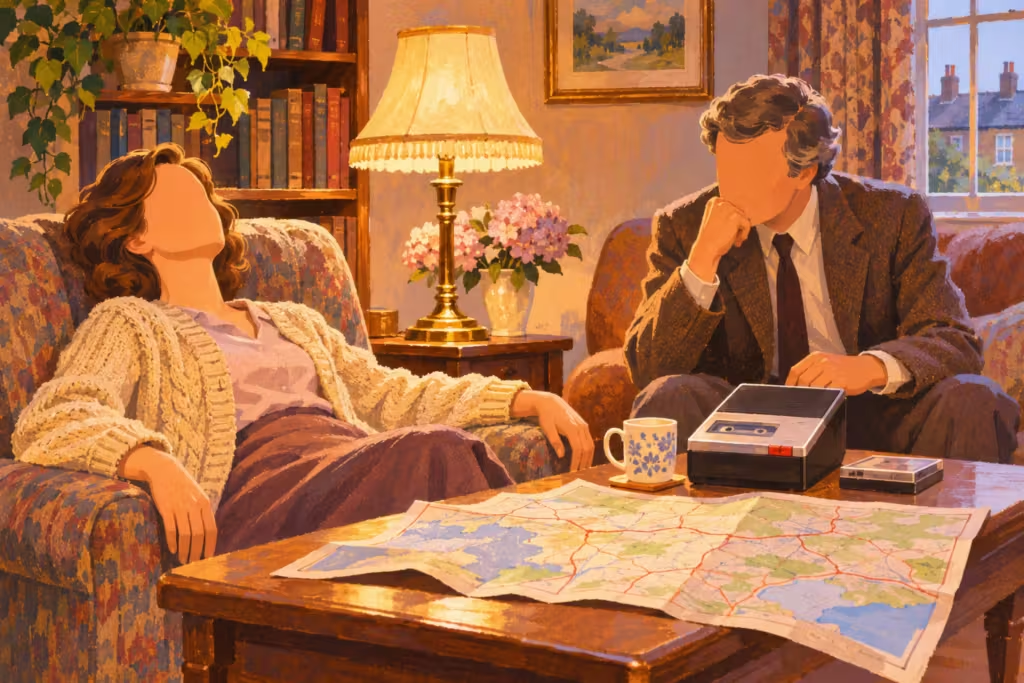
In 1988, she signed up for hypnosis sessions with an amateur hypnotist, who recorded them. New details came out. She saw a butcher’s shop and a church with a large pointed roof. She also saw a day when the children came running because there was a hare in a trap.
Names came out too. She said the husband was called Bryan, that they married in 1921, and that the surname was O’Neil. She wrote to several O’Neil families in Dublin, sending her map, with no result. None of those names turned out to be right.
That year, a retired acquaintance of Irish origin, Mr. Coulter, brought her a more detailed map from Ireland. On it, a place name jumped out at her, next to the lane where she put the house: Gay Brook, now spelled Gaybrook. A street map of Malahide also told her that the lane was called Swords Road.
In June 1989, she traveled to Ireland for the first time.
Step 4
June 2 to 4, 1989 · Malahide, Ireland · Told by Jenny
On her first trip to Malahide, she recognizes the butcher’s shop and the church
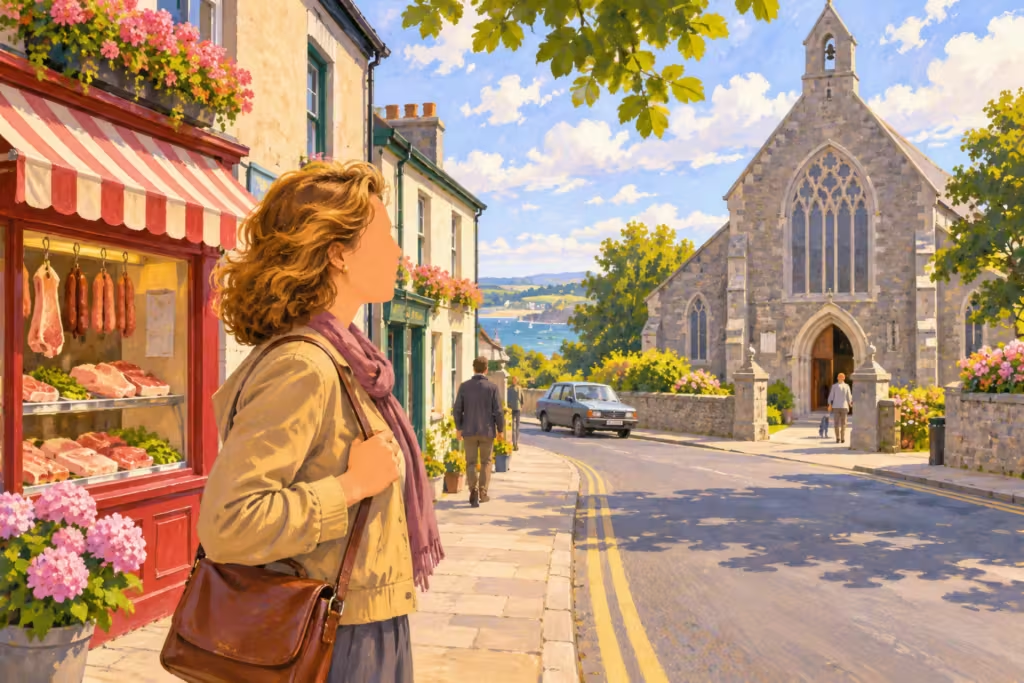
She spent a weekend in Malahide. She found the jetty she remembered, now made of concrete, and the station as she had described it. She found a butcher’s shop in the place she had named under hypnosis. And she found St Andrew’s Church, with the pointed roof she had drawn.
She says she began to shake. For her, it was proof that her memories were real.
Not everything fit. She didn’t find the wooden gates from her drawings. And on Swords Road, she couldn’t tell which house had been Mary’s. The one that seemed most likely to her didn’t exist in the 1930s.
Back in England, she kept writing letters.
Step 5
Fall 1989 and early 1990 · By letter · Told by Jenny
A man from Malahide gives her a surname: Sutton
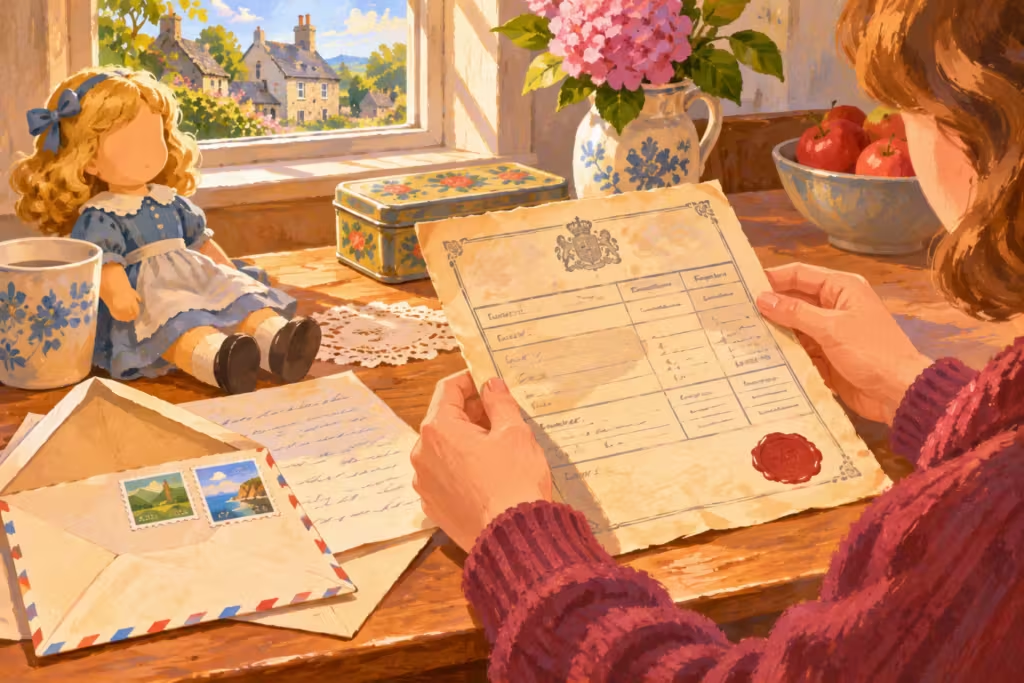
Through an acquaintance, Jenny got in touch with Mr. Mahon, the owner of a barn on Swords Road. He wrote to her that only one family with many children on that road had lost their mother in the 1930s. Jenny wrote to him again with more details, including Mary’s name. In his second letter, Mahon sent her a list of the 19 families who lived on that road in the 1920s. And he told her that the mother who died was Mrs. Sutton.
Jenny wrote to many orphanages. In February 1990, the priest at a children’s home in Dublin sent her the baptism records of six of the Sutton children. In March, a woman got hold of the death certificate for her. Mary Sutton, of Gaybrook, Malahide, had died on October 24, 1932, in a Dublin hospital. She was 35. Most of her children ended up in orphanages.
Jenny says that she then remembered something. As a child, she had named her blonde, blue-eyed doll Elizabeth. Mary’s youngest daughter was called Elizabeth.
She still had to find the children, who would by then be elderly.
Step 6
April and May 1990 · By phone · Told by Jenny
She talks to Sonny, the eldest son, by phone, and the BBC interviews him before they meet
Jenny had a letter published in a Dublin newspaper asking for help. On April 20, 1990, she received an unsigned note with the address of a Sutton. That lead took her to one of Mary’s granddaughters, who confirmed that Mary had had eight children. She gave Jenny the address of the eldest, Sonny, who was 71 and lived in England.
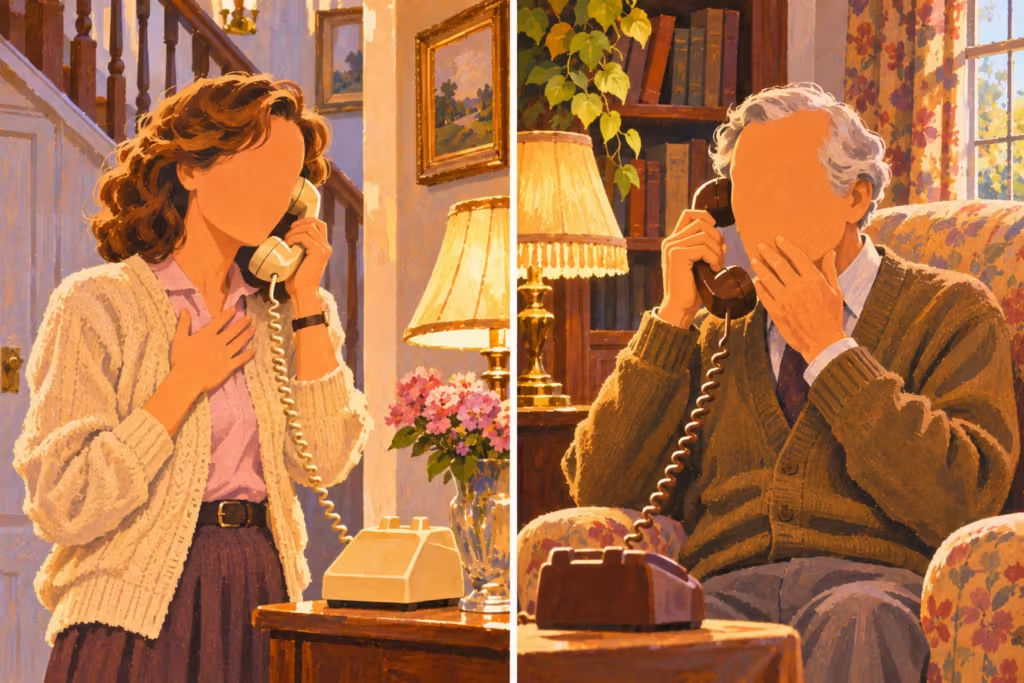
On May 15, 1990, Jenny called him. She told him she remembered his family through dreams and described the house to him. He confirmed where the house was.
Jenny was already in touch with Gitti Coats, a BBC researcher who was preparing a documentary. The BBC decided to interview Sonny before the two of them met. The BBC asked Jenny not to speak with him again until then. Afterward, the researcher compared what Jenny said with what Sonny said, in a list several pages long. The documentary was never made. Years later, in 2021, Jenny published that list in an appendix to another book of hers.
In September, Jenny and Sonny finally met.
Step 7
September 23, 1990 · Leeds, England · Told by Jenny
Sonny confirms the hare in the trap and the jetty
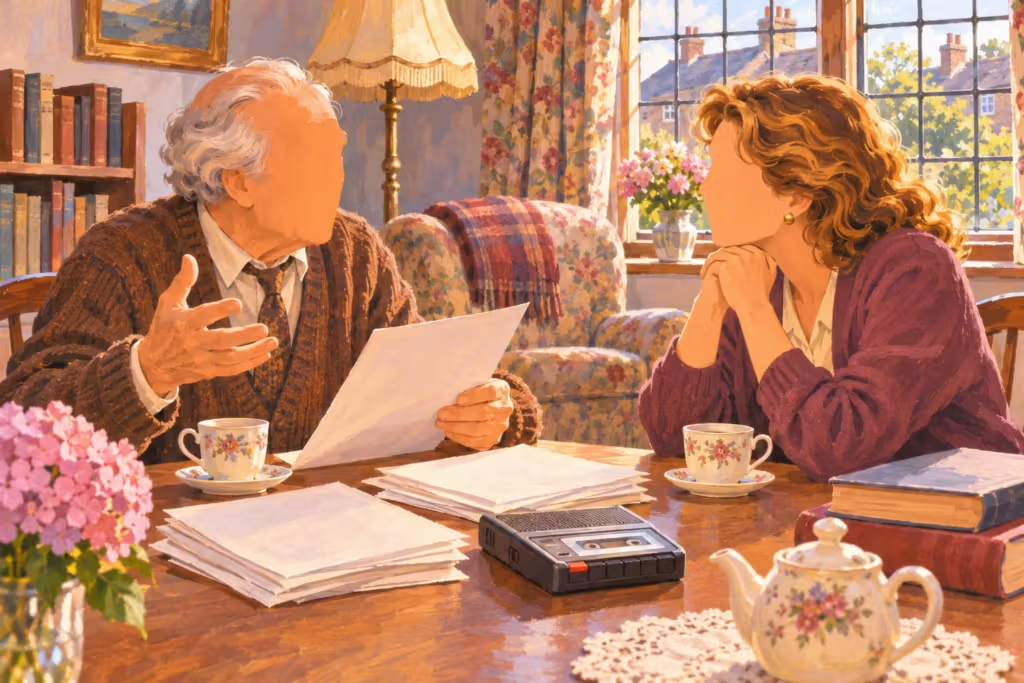
Jenny visited Sonny at his home, and they went through the BBC researcher’s list point by point. She had a tape recorder with her, but she didn’t use it.
According to Jenny, Sonny confirmed many things. The house was as she described it. The children set traps for rabbits and hares, and he asked her how she knew about the live hare. He also explained the jetty. As a boy, he caddied for golfers on a course on an island. In the evening he came back by boat, and his mother waited for him on the jetty.
Sonny also explained why Jenny felt that something was wrong in the family. His father, John Sutton, drank and mistreated them. In the 1993 TV program, he put it like this:
“My mother was a loving person … but my father was the opposite.”
Then came the other brothers and sisters.
Step 8
1990 to 1993 · Ireland and England · Told by Jenny and the Suttons
Mary’s children come together for the first time in sixty years
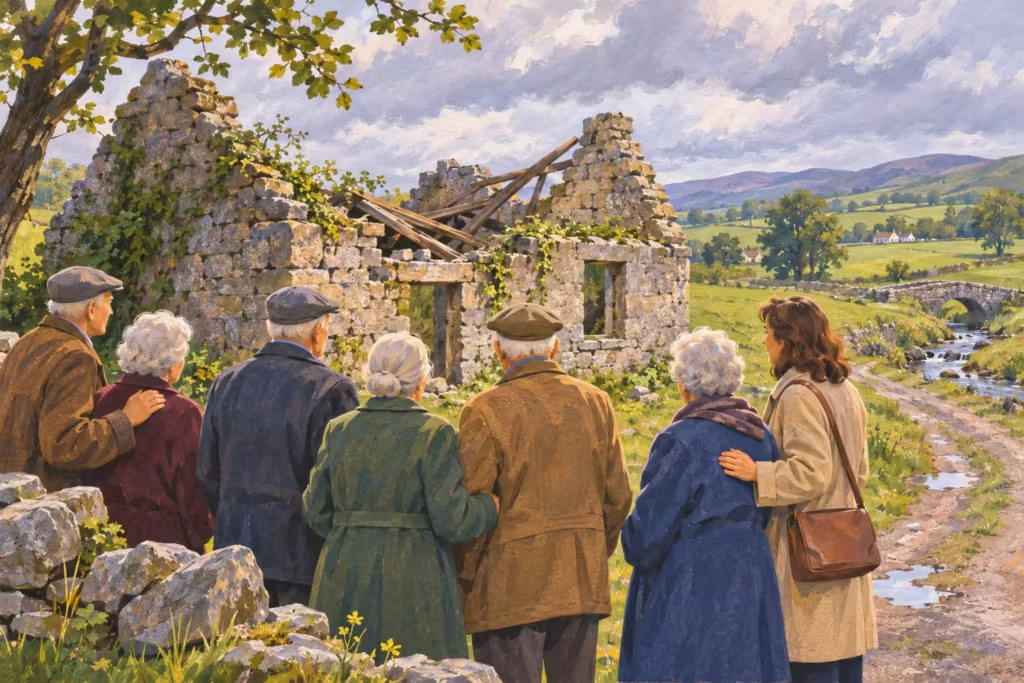
Jenny found the others one by one. In 1992, Sonny saw his sister Betty again after about sixty years. Another sister, Phyllis, brought Jenny the only photo of Mary that exists. In early 1993, Jenny went back to Malahide and found the ruins of the house.
That year, a British TV channel, ITV, filmed the brothers and sisters together. They didn’t all see it the same way. Christopher, another of the sons, said a priest had told him this was their mother’s doing, calling them from heaven through Jenny. His brother Frank didn’t believe in reincarnation. One sister, Bridget, never appeared.
Jenny says that when she found them, the guilt she had felt all her life for leaving those children went away.
The question from the beginning remains. How did she know what she said about a family she had never met?
Frequently asked questions
Who is Jenny Cockell?
She is an English podiatrist, born in 1953, who says that since childhood she has remembered the life of Mary Sutton, an Irish mother who died in 1932. She found Mary’s family and told the story in her 1993 book, Yesterday’s Children. Here we tell her story.
Who was Mary Sutton?
Mary Sutton was a woman from Malahide, north of Dublin, married to John Sutton. She had eight children and died on October 24, 1932, in a Dublin hospital, at 35 according to her death certificate. Most of her children ended up in orphanages.
Has the Jenny Cockell case been checked?
In part. What has been checked is that Mary Sutton existed and that her son Sonny confirmed many details. Nothing written by Jenny, with a date, from before the family was identified has been published. Here we explain what can be checked.
Is there a movie about Jenny Cockell?
Yes. The American network CBS made a TV movie based on her book, Yesterday’s Children, with Jane Seymour playing both Jenny and Mary. In 1993, ITV had already aired a program showing the reunion of Mary’s children.
Where this story comes from
Jenny Cockell’s account
- Jenny Cockell, Yesterday’s Children: The Extraordinary Search for My Past Life Family, Piatkus, London, 1993. We read the 1994 large-print editionView in the Internet Archive library
- Strange But True?, ITV, 1993. The reunion of Mary’s childrenWatch on YouTube
The documents and studies of the case
- Death certificate of Mary Sutton, civil registration of Ireland, Dublin, October 24, 1932
- Robert McLuhan and James G. Matlock, “Jenny Cockell (Mary Sutton reincarnation case),” Psi Encyclopedia, Society for Psychical ResearchRead for free
- Joe Nickell, “A Case of Reincarnation – Reexamined,” Skeptical Briefs 8(1), 1998. The critiqueRead for free
Learn more
- The ranking of the best-checked reincarnation casesRead
- Tucker’s book: over 2,500 children who say they remember another lifeRead
Our archive
- Our full reading of the 1993 book, the ITV program, and the death certificate, and the scoring against our five criteria, as of November 20, 2026
Keep reading
Sri Lanka, 1983
Subashini Gunasekera
Subashini Gunasekera was three years old when she began saying that, in another life, a hill fell on her house in Sinhapitiya. The landslide happened, in 1977. The researchers found the family of a girl who died in it.

India, 1958
Swarnlata Mishra
Swarnlata Mishra was three years old when she asked for the truck to turn toward “my house” in Katni, a city where she had never lived. Years later, a researcher wrote down how she described the house, went to Katni, and found it.
Sri Lanka, 1985
Thusitha Silva
Thusitha Silva was about three when she began to say she was from Kataragama and that a boy had pushed her into the river. A researcher wrote it down before going to look. Among the flower stalls, one family had lost a daughter in that river.
Reincarnation: The top 5 people who remember past lives
We asked them the same five questions as this story. A 32-page PDF, free in your inbox.
Check your email
We have sent you an email. Open it and press the button to confirm. If you cannot see it, check your spam folder.