A real-life story · England, 1872
The night a woman saw her husband, who was in Australia: a shared-death experience
One night in December 1872, a teacher in England saw her husband walk around her bed and vanish. He was in Australia. Months later a letter reached her. It said her husband had died that same day. But the letter also gave the time, and that time complicates the coincidence.
It is one of the cases that some researchers in London gathered in 1886. We tell it because it shows what happens when a document with the exact time turns up. The widow kept the letter from Australia, and the letter says when her husband died. Did she see him before or after he died?
Step 1
December 18, 1872, around 11:20 p.m. · Her account
After a concert by her pupils, she sees her husband walk around the bed
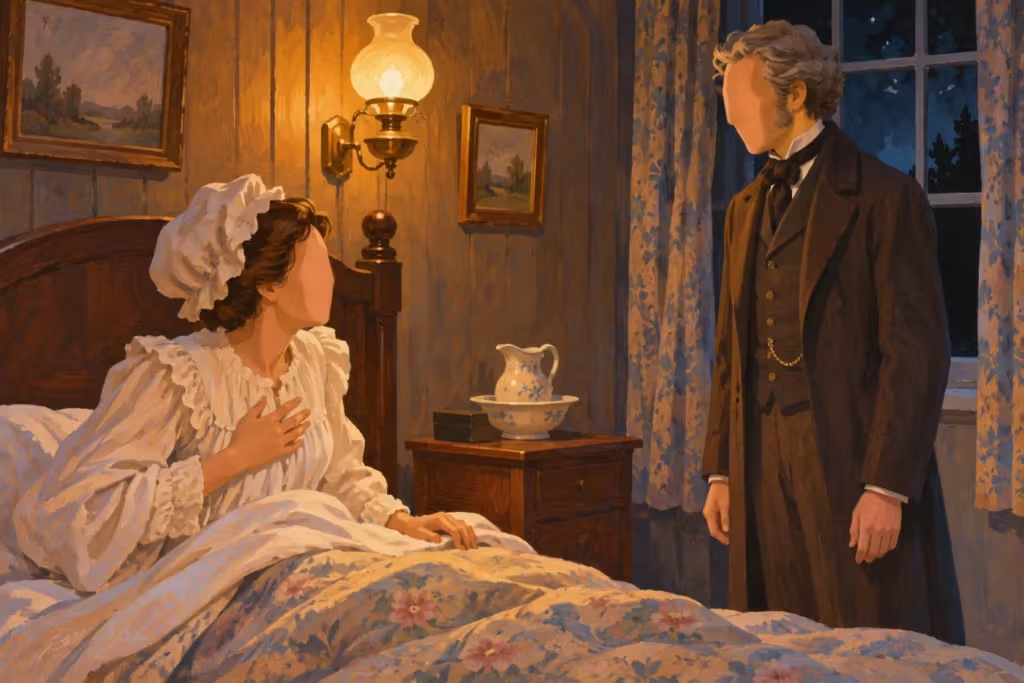
She was a teacher in England, in a position of responsibility, and she preferred not to give her name. Her husband was in Australia, and he had been ill for years. As far as she knew, he was no worse than usual.
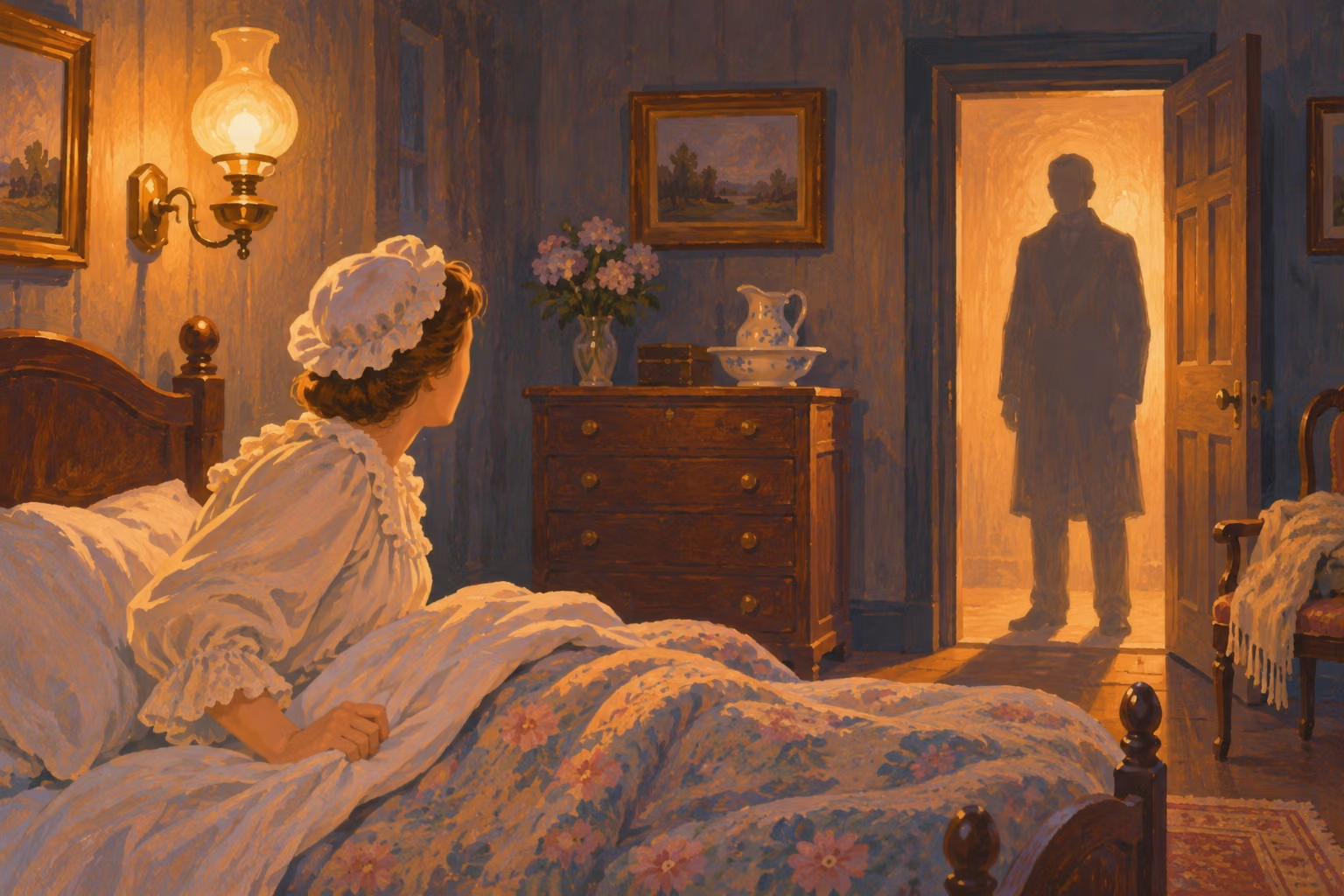
On the night of December 18, 1872, her pupils gave a concert. She went to bed around eleven, with the gas light on, as usual. She had been in bed for about twenty minutes, thinking about the concert, when she saw her husband by the door. He walked quickly around the bed until he reached her side, and suddenly he vanished.
Without meaning to, she called him by name. She says she wasn’t asleep and hadn’t heard any sound.
The next morning, she didn’t want to frighten her daughters.
Step 2
December 19, 1872, and the days after · Her account and her daughters’
She tells her daughters it was a dream, and tells two friends the truth
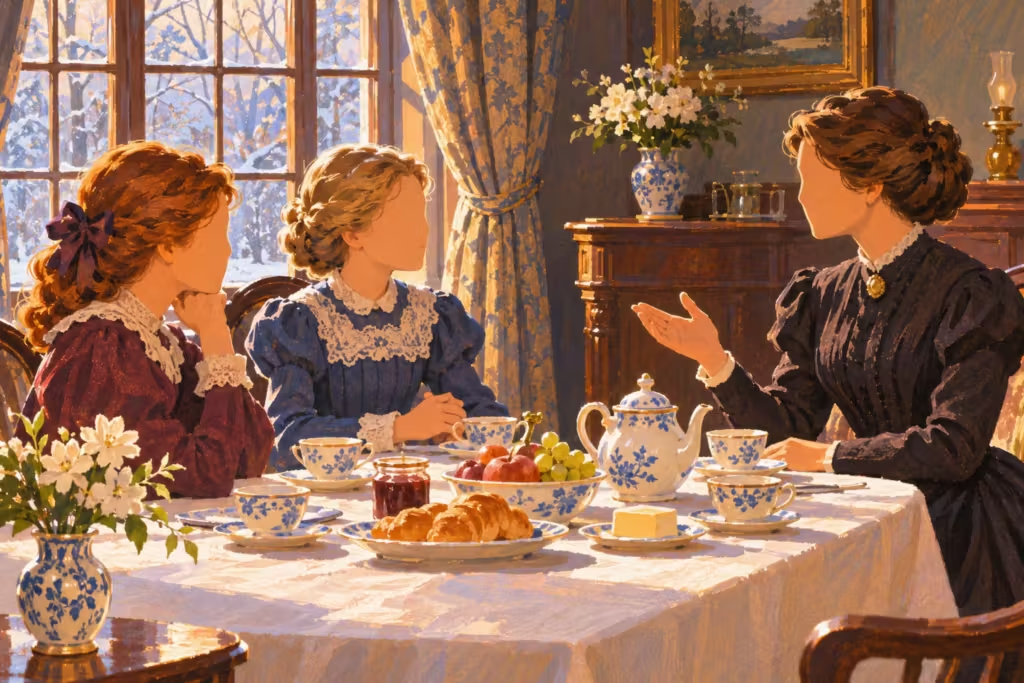
At breakfast she told her daughters she had had “a strange dream.” She called it that so as not to frighten them. Years later, the daughters remembered that breakfast well.
She told two friends what had really happened, one the next day and the other a week later. According to her, when the two friends learned that her husband had died, each of them reminded her of what she had told them.
News from Australia took weeks to arrive.
Step 3
December 30, 1872, and March 4, 1873 · Her account
Two letters from Australia: a serious accident, and then his death
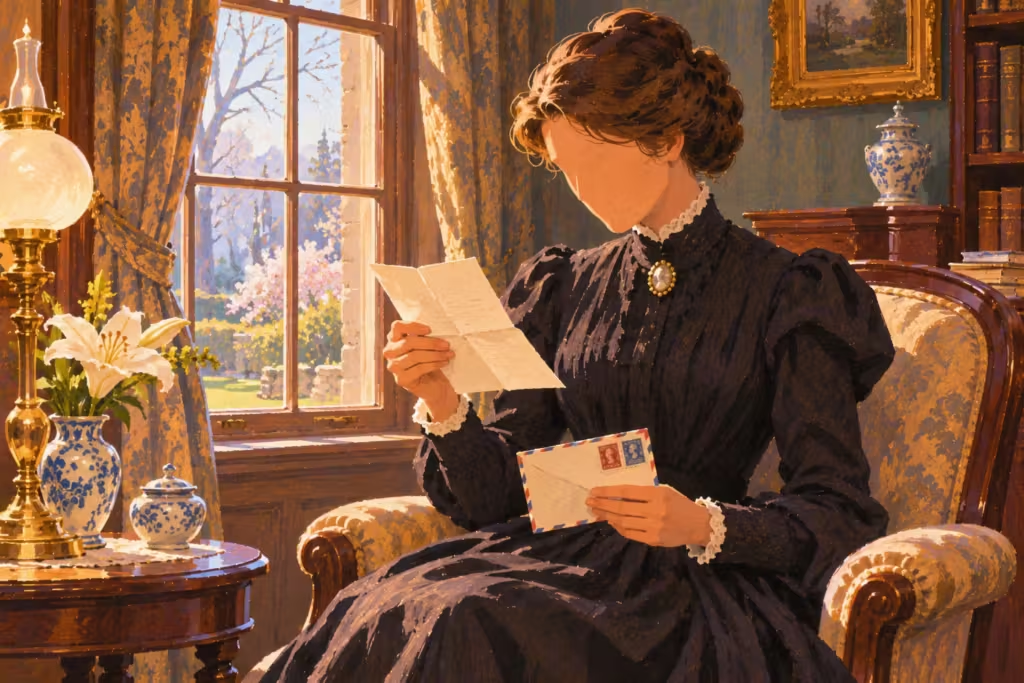
On December 30, a letter reached her from a friend of her husband’s. It told her that her husband had had a serious accident. On March 4, 1873, another letter came from the same friend. Her husband had died on December 18, 1872.
She kept that letter. It also gave the time. He died at about half past four in the afternoon in Australia, which was half past six in the morning in England.
If the vision was that night, it came many hours after the death.
Step 4
May 1886 · Her account, her daughter’s, and the researcher Edmund Gurney’s
Fourteen years later, the researcher does the math

In 1886 she told Edmund Gurney about her experience. He was one of the researchers at the Society for Psychical Research in London. Gurney checked the date of the death in the obituary in the “Daily Telegraph.” One daughter looked for the concert program and couldn’t find it. But her two daughters were sure it was December 18, a Wednesday.
Gurney did the math. If the vision was on the night of the 18th, it came about seventeen hours after the death. The researchers only counted something as a coincidence if it happened within twelve hours before or after a death.
Later, she wrote to Gurney to correct a detail one of her daughters had reminded her of. On concert nights they usually went to bed late, around two in the morning, not at eleven. That leaves two possibilities. If the concert was on the 17th, the vision was around half past two in the morning of the 18th, about four hours before the death. If it was on the 18th, the vision was in the early hours of the 19th, many hours later.
She also remembered that, talking with one of her friends, she remarked that the times didn’t match. The friend answered that they did match, once the time difference with Australia was taken into account. For Gurney, that fits better with the early hours of the 19th. Perhaps they counted the ten hours’ difference the wrong way.
Did she see her husband before or after he died?
Where this story comes from
Books
- Edmund Gurney, Frederic Myers, and Frank Podmore, Phantasms of the Living, vol. 2 (Trübner, London, 1886), case 500, pages 462 and 463, in the public domainRead for free
The articles
- Henry Sidgwick and others (1894), “Report on the Census of Hallucinations,” Proceedings of the Society for Psychical Research 10, case 118.20, page 232, in the public domainRead for free
Case documents
- Her account, dated May 2, 1886, and her daughter’s letter, dated May 13, 1886, in the book
- The letter from Australia with the time of death, which she kept, quoted in the book
Learn more
- The 1894 Census of Hallucinations: what they asked and what they foundRead
- More shared-death experiencesRead
Our archive
- Our reading of the case in the original book and its score on our five criteria, as of November 16, 2026
Keep reading
England, 1882
Young Tracy
A nine-year-old blind boy was living at a boarding school far from home. He dreamed that his mother had died on the same night she died suddenly. The letter came two days later.
France and England, 1880
Frederick Wingfield
One night in 1880, in France, Frederick Wingfield dreamed that his brother was sitting in front of him, and he wrote it down in his notebook. Three days later he learned that his brother had died that night in England.
London, 1882
Bruce’s brother
On the night of April 10, 1882, a London man woke up sure that his friend Bruce’s father had died, and wrote it down with the time. Four days later he learned that Bruce’s brother had died, in China.

Reincarnation: The top 5 people who remember past lives
We asked them the same five questions as this story. A 32-page PDF, free in your inbox.
Check your email
We have sent you an email. Open it and press the button to confirm. If you cannot see it, check your spam folder.